Dota 2 for Beginners: How a Match Works
Dota 2 is a free 5v5 game where you win by destroying the other team's Ancient, and almost everything else (lanes, gold, levels, items) exists to get you there. Here is the whole loop of a match, with Valve's own hero numbers.
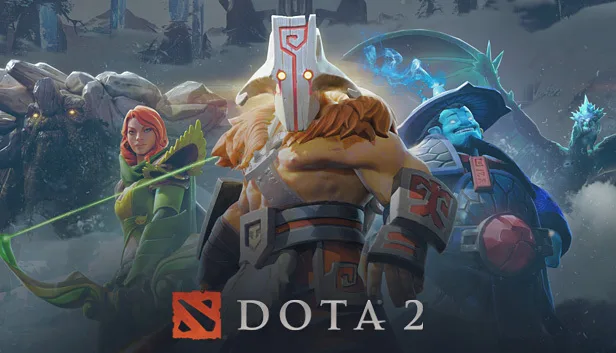
Dota 2 looks impossible from the outside for one reason: there are 127 heroes, a huge item shop and a decade of jargon. The game underneath it is a single sentence. Two teams of five each defend a base, and the first team to destroy the other team's Ancient wins. Everything below is just the machinery that gets you there.
The whole game in one line
Dota 2 is Valve's free-to-play team game for Windows, macOS and Linux; its Steam page lists a release date of July 9, 2013. A match is 5v5. One team is the Radiant and the other is the Dire, and each has a base on its own side of the map. Per the Dota 2 Wiki, each base holds an Ancient, a large structure that is the game's main objective: to win, you destroy the enemy Ancient while keeping yours alive.
You cannot just walk up and hit it. The Ancient is invulnerable until both of the towers standing in front of it (the Tier 4 towers) are destroyed, and those in turn are protected by the towers before them. So a match is really a long march through your opponent's defences, with a fight over each step.
The map: three lanes, eleven towers
Three lanes (top, middle and bottom) connect the two Ancients. According to the wiki, a new wave of lane creeps spawns for each team at each of its barracks at 0:00, right after the game horn, and then every 30 seconds. The first waves are 3 melee creeps and 1 ranged creep. These computer-controlled units walk down the lanes on their own, fight whatever they meet, and give gold and experience when killed, which is why the opening minutes happen in the lanes.
| Structure | Count per team (Dota 2 Wiki) | What it does |
|---|---|---|
| Towers | 11 | Three per lane (Tier 1, 2, 3), plus two Tier 4 towers guarding the Ancient |
| Barracks | 6 | A melee and a ranged barracks in each lane; destroying one upgrades your creeps in that lane |
| Ancient | 1 | Destroy the enemy's to win |
A tower is invulnerable until the lower-tier tower before it in the same lane is destroyed, and the Tier 1 towers are invulnerable until the game begins. That gives every lane a natural order: Tier 1, then 2, then 3, then the two at the Ancient.
Two lane names will come up in every game. The safe lane is the lane where your Tier 1 tower is closest to the point your creeps meet the enemy's, so it is the easiest to retreat from. For the Radiant that is the bottom lane and for the Dire it is the top lane. The offlane is the opposite lane, with your Tier 1 tower farther back. The wiki's lane page carries an "outdated" banner, and Valve has nudged lane layouts in several patches (its 7.41 notes adjusted the creep meeting point toward the offlane and moved the safe-lane Tier 1 towers), but the safe-lane/offlane definition by tower position is the one the community still uses.
The rest of the map is neutral territory. Neutral creep camps in the jungle give gold and experience. There are also neutral bosses: Roshan, whose death drops the Aegis of the Immortal (per the wiki), and the Tormentor mini-boss, which Valve's 7.33 patch notes added. You do not need either on day one.
Heroes by attribute
You pick one hero per match, and Valve's own dota2.com hero feed currently lists 127 of them. Every hero has a primary attribute, and the feed splits them like this:
| Primary attribute | Heroes |
|---|---|
| Strength | 36 |
| Agility | 35 |
| Intelligence | 34 |
| Universal | 22 |
Strength gives health and health regeneration, agility gives armor and attack speed, and intelligence gives mana and mana regeneration. A hero's primary attribute also adds to its attack damage. Universal heroes get attack damage from all three attributes; the wiki puts it at 0.7 per point of each. The attribute does not lock a hero into a job, but it is a decent first hint: the wiki's attributes page leans on the same pattern: Strength heroes often take initiator and tank roles, Agility heroes often take carry and gank roles, and Intelligence heroes tend to rely on their abilities.
The same feed gives each hero a complexity rating from 1 to 3 (the pips you see on the heroes page). 55 heroes are rated 1, 59 are rated 2 and 13 are rated 3. If you are new, the rating-1 list includes Axe, Crystal Maiden, Juggernaut, Sven, Lich and Zeus, which is a sensible place to start. The rating-3 list includes Invoker, Meepo, Rubick and Arc Warden, which Valve rates as the hardest to play.
Roles: official, and the five positions
Valve classifies every hero against nine official roles: Carry, Support, Nuker, Disabler, Jungler, Durable, Escape, Pusher and Initiator. Each hero gets a rating in each of them. Anti-Mage, for example, is rated 3 as a Carry and 3 for Escape, 1 as a Nuker and 0 in the rest. Think of them as descriptions of what a hero can do, not slots on a team.
The carry is the role the wiki sums up as becoming more useful later if they gain a significant gold advantage; the support needs less gold and uses abilities to help the team.

The numbers players actually say in a lobby are different. "Position 1" to "position 5" is community shorthand, not one of Valve's nine roles, and I could not find the numbering written down on the wiki's role or lane pages. It is how teams split the five lanes and the gold, so you will hear it constantly:
| Position | Usual nickname | Where it usually plays | Gold priority |
|---|---|---|---|
| 1 | Carry, safe lane core | Safe lane | Highest |
| 2 | Mid | Middle lane | High |
| 3 | Offlaner | Offlane | Medium |
| 4 | Soft support | Roams, helps a lane | Low |
| 5 | Hard support | Safe lane beside the carry | Lowest |
The table is the common convention, not a rule, and heroes get played out of position all the time. What it does capture is the idea behind every team: a few heroes (cores) take the gold, the others (supports) spend theirs on wards and help. Valve's ranked matchmaking reflects the same split: per the wiki, the Ranked Roles queue lets you choose a role, and separate ratings are kept for Core and Support.
Gold, levels and the item shop
Per the wiki, every hero starts with 600 gold and one Town Portal Scroll, and you also receive gold passively over time. The big gold comes from last hits on enemy creeps, kills, destroyed buildings and bounty runes. Experience makes you level up, and 30 is the highest level a hero can reach.
You spend gold at a shop. The wiki's Items page describes two kinds of shop: the base shop inside your fountain area, and secret shops near the middle of the map (either team can use them) that sell items you cannot buy at base. The older side-lane shops were removed in patch 7.23. A hero holds six items in the main inventory and three in the backpack. You do not have to run home to shop: a courier carries items bought at base out to you.
The shop sorts items into basic categories (Consumables, Attributes, Equipment, Miscellaneous, Secret) and upgraded ones (Accessories, Support, Magical, Armor, Weapons, Artifacts). Most big items are built from smaller ones plus a recipe, so you can buy the components as you go. Neutral items are the exception: they are not for sale and come from the neutral camps instead.

The loop of a match
Every match, whatever the heroes, runs through the same sequence.
- Draft. Players pick heroes before the game starts. Players who do not pick in time lose gold, per the wiki. Pick something you can play, not something that looks cool in a tier list.
- Strategy and pre-game. You choose your lane and buy starting items with your 600 gold. The creeps do not spawn until the horn at 0:00.
- Laning. The first minutes are spent in your lane: hit the enemy creeps for the killing blow to get their gold, deny your own low-health creeps when you can, and avoid trading hits you cannot afford. A carry is trying to get the gold; a support is trying to protect them and keep the lane fair.
- Roaming and runes. Bounty runes give gold, and power runes give timed buffs. They sit in set spots on the map, so someone on your team should be watching the clock.
- Taking towers. As the first towers fall, the lanes open up. Pushing a lane with your creep wave is much safer than walking in alone.
- Team fights and bosses. Mid-game fights decide who gets Roshan, the next towers and the barracks. Destroy a barracks and your creeps in that lane turn into stronger super creeps; destroy all of them and you get mega creeps.
- Ending. Break the towers in front of the Ancient, then the Ancient itself. If you die, you can pay gold to buy back and respawn immediately; the price changes, so check the current cost in game.
What to do in your first games
Three habits are worth more than any build guide.
- Pick from the complexity-1 list and play the same hero for a while. Learning your own spells is the real onboarding.
- Stay near your creeps in the first minutes. Standing where your creeps fight the enemy's is where gold and levels come from.
- Buy a Town Portal Scroll when your starting one is used, and learn the courier. Items sitting in the stash do nothing.
This is deliberately a mechanics guide. The meta (which heroes and items are strong right now) changes with every patch, and Valve's patch list currently runs to 7.41f, so check the current patch notes on dota2.com once you know the basics.
Frequently Asked Questions
What is the goal of Dota 2?
How many heroes are in Dota 2?
What are the roles in Dota 2?
What are the lanes in Dota 2?
Is Dota 2 free to play?
How much gold do you start with in Dota 2?
Keep Reading
- Dota 2 on Steam: free to play, July 9, 2013 release date, Windows/macOS/Linux
- Dota 2 heroes: Valve (hero list, attributes and complexity; the hero counts here come from the page's datafeed at dota2.com/datafeed/herolist)
- dota2.com hero list datafeed: 127 heroes with primary attribute and complexity
- dota2.com hero data feed: per-hero role ratings (nine roles), example Anti-Mage
- Buildings: Dota 2 Wiki (towers, barracks, Ancient)
- Lane creeps: Dota 2 Wiki (spawn timing and wave makeup)
- Lane: Dota 2 Wiki (safe lane and offlane; page flagged outdated)
- Role: Dota 2 Wiki (official roles)
- Gold: Dota 2 Wiki (starting gold)
- Experience: Dota 2 Wiki (level 30 cap)
- Game Modes: Dota 2 Wiki (hero-pick timer and gold loss for not picking)
- Items: Dota 2 Wiki (shop categories, inventory slots, shops)
- Ranked Matchmaking: Dota 2 Wiki (role selection, separate Core and Support ratings)
- Dota 2 7.41 patch notes: Valve (lane creep meeting point, safe-lane tower move)
- Dota 2 patch list: Valve (latest 7.41f)
- Dota 2 7.33 patch notes: Valve (Tormentor added)