Cookie Run: Kingdom Cookie Rarities Explained
The color of a cookie's frame tells you two things: how hard it is to get and roughly how strong it can become. But rarity is not a clean power ranking — a fully built Epic beats an under-built Legendary, and three of the seven Ancients sit below the meta. Here's what every rarity tier actually means for pull rates, soulstones, and where a new player should put their resources.

The color of a cookie's frame is doing two jobs at once, and new players almost always read only one of them. Rarity tells you how hard a cookie is to pull, and it tells you roughly how high that cookie's power ceiling can climb. What it does not tell you is which cookie wins a fight today — because a fully built Epic beats an under-built Legendary every single time, and three of the seven Ancients, the rarest tier in the game, sit below the current meta. Rarity is a measure of scarcity and potential, not a clean strength ranking. Read it as the latter and you'll burn your first month of resources on the wrong cookies.
This is the plain-English breakdown of every rarity bracket in Cookie Run: Kingdom — what each one means for power, how you actually obtain those cookies, what soulstones have to do with any of it, and where a new or free-to-play player should point their resources. There are technically eleven rarity categories in the game, but most of them collapse into a handful of tiers that actually matter for how you play and spend.
What rarity actually tells you
Two things, and only two:
- Scarcity. How likely the gacha is to hand you that cookie, and how many soulstones you'll need to unlock or promote it. Higher rarity means lower pull odds and a heavier soulstone grind.
- Power ceiling. How strong the cookie can get when fully invested — base stats, skill multipliers, and access to systems like Awakening. Higher rarity generally means a higher ceiling.
The trap is assuming those two map directly onto "who's better right now." They don't, for one reason: a cookie's contribution depends on how built it is, not just its frame color. An Epic you've ascended to full with Magic Candy and a clean topping set will out-perform a Legendary you pulled once and can't level because you don't have the soulstones. Rarity sets the ceiling; investment decides where in that range the cookie actually sits. The whole point of the early game is building cookies you can finish — which is exactly why our best beginner cookies guide is a list of Epics, not Legendaries.
The rarity tiers at a glance
Here's the full ladder, lowest to highest, with the gacha pull rate per cookie on the standard banner so you can see just how steep the climb gets:
| Rarity | Gacha cookie rate | How you mainly get them | Role on your account |
|---|---|---|---|
| Common | ~1.28% | Story / standard gacha | Tutorial cookies, benched early |
| Rare | ~0.37% | Story / standard gacha | Early-game bridge bodies |
| Epic | ~0.030% | Standard + featured gacha | The farmable backbone — build these |
| Super Epic | ~0.036% | Event gacha (Glittering Pins) | Niche, event-gated power picks |
| Dragon | ~0.047% | Gacha | Top bracket; lore-flavored |
| Legendary | ~0.047% | Gacha | Top bracket; meta carries live here |
| Ancient (base) | ~0.047% | Gacha | Top bracket; Awakening payoff |
| Beast | ~0.037% | Gacha | The rarest pull in the game |
| Special / Guest | n/a | Events / collaborations | Free, often situational |
Two things jump out of that table. First, the gap between Common (~1.28%) and any high-rarity cookie (under 0.05%) is enormous — you'll pull dozens of Commons for every Legendary. Second, Legendary, Dragon, and Ancient sit at essentially the same pull rate, which is the wiki's own framing: those three top tiers are "largely interchangeable in terms of both power and availability, and are split primarily for lore reasons." The rarity name above S-tier is mostly story, not a power gap.
Common and Rare: the starter cookies

These are the cookies the game hands you for free, and the ones you'll outgrow first. The tutorial gives you GingerBrave (Common) and a handful of others, and the standard gacha drops Commons at roughly 1.28% and Rares at 0.37% — by far the most likely things you'll pull early.
What rarity means here: low ceiling. Common and Rare base stats and skill multipliers don't scale into real content, so even fully leveled they hit a wall in mid-game. That's not a knock on them as starters — a built Rare wall like Knight or Avocado genuinely holds the line better than a Common while your Epics are still cooking. The mistake new players make is pouring Skill Powder into Commons because the tutorial keeps pushing them forward. Ride the Rare bodies through the early stages as a bridge, then bench them. Don't sink finite resources into a frame color that caps out — that's one of the core lessons in our beginner mistakes guide.
Epic: the backbone of every account
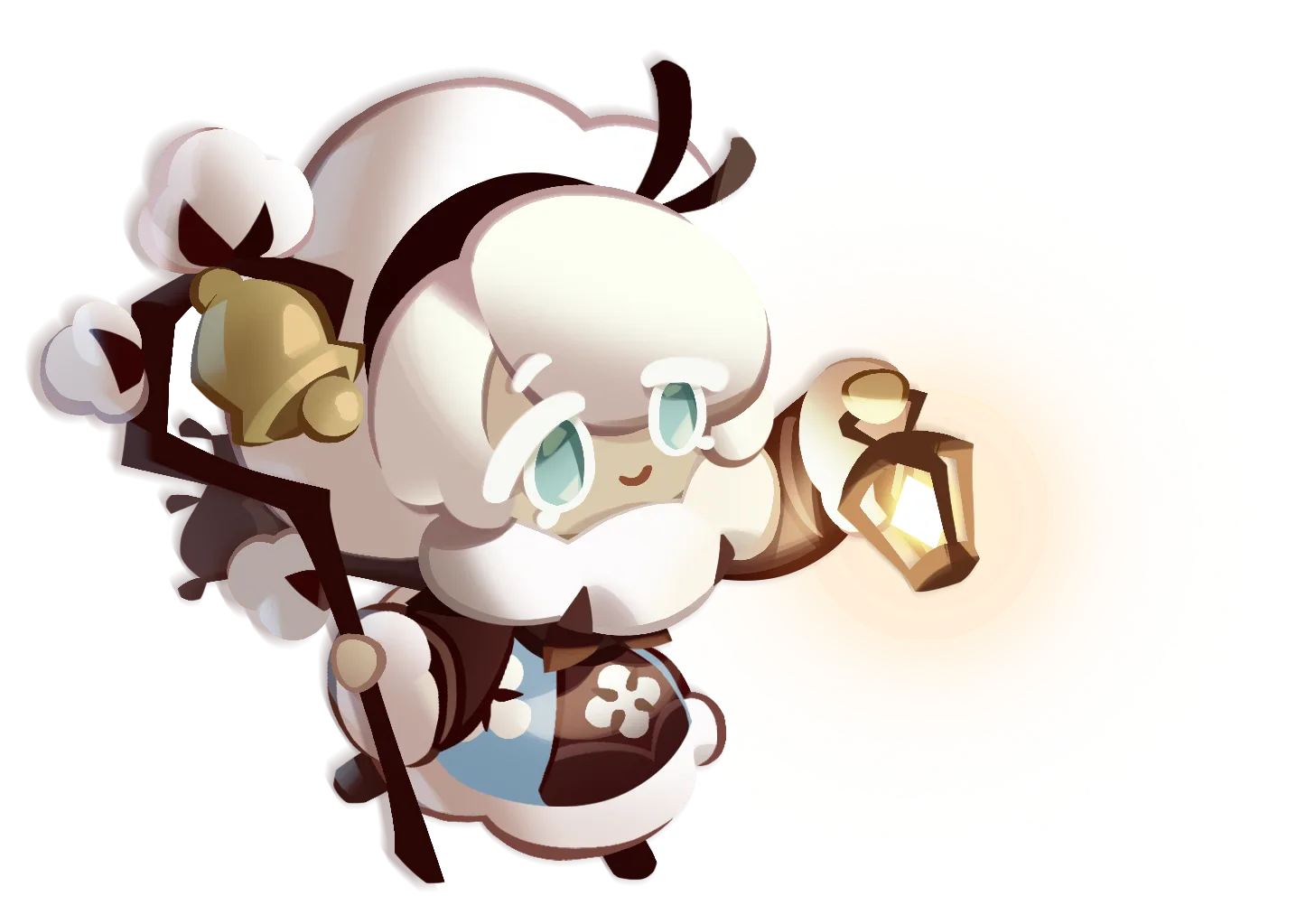
This is the most important tier to understand, because Epics are where the game is actually won. They pull rarely from the gacha — around 0.030% per Epic on the standard banner — but here's the thing that makes them the backbone of every account: Epic soulstones drop from regular content. You don't need gacha luck to own a full Epic. You farm their soulstones by playing the game, which means a free-to-play player can ascend any Epic to full and unlock its Magic Candy without a single lucky pull.
That farmability is everything. The strongest Epics — Cotton, Wildberry, Milk, Eclair — aren't "good for their rarity." They hold slots in top-tier comps years after release, and you can own and max every one of them as a free player. The featured banner also bumps the rate-up cookie way up (a featured cookie jumps to roughly 1.44%), so the Epic you're actively chasing is much more attainable than the base rate suggests. The practical rule that falls out of this: build your Epics before you chase anything rarer. A maxed Epic core is the foundation a new account stands on. Our best Epic cookies ranking is the priority list.
Super Epic: the event-only tier
Super Epic is the tier that confuses people because it sits between Epic and Legendary in name but doesn't behave like either. These are the Gods, Kings, and Queens of the universe — high-ceiling, distinctive cookies — but you don't pull them on the normal banner. Super Epics come from their own event gachas, lifted with Glittering Pins you earn by completing event quests, and their soulstones are limited to sources like the Medal Shop and Town Square Shop rather than the general soulstone pool.
What that means for you: Super Epics are time-gated, not just luck-gated. If you miss a Super Epic's event, you wait for a rerun. Their power is real and some are genuinely meta-relevant, but you can't grind one up on demand the way you can an Epic, and you can't reliably chase one on the standard banner the way you can a Legendary. Treat them as opportunistic — grab the soulstones when the event is live, and don't build your whole plan around a cookie you can only get during a window.
Legendary, Dragon, and Ancient: the top bracket
Here's where new players over-index on the frame color, so let's be precise. Legendary, Dragon, and Ancient pull at essentially the same rate — around 0.047% per cookie on the standard banner — and the wiki itself describes them as largely interchangeable in power and availability, split mostly for lore reasons. The name above the cookie is telling you a story, not a strength tier.
What separates them in practice is their kits and their upgrade paths, not their rarity letter:
- Legendary. The home of many of the game's defining carries and crowd-control cookies — Frost Queen, Sea Fairy, Stormbringer. Hard to pull, but obtainable without the months-long material grind an Ancient's Awakening demands.
- Ancient. The kingdom founders plus a couple of later additions — there are exactly seven. Several of them are built for the Awakening: a base Ancient can be unremarkable while its Awakened form anchors the meta. That Awakening is a long materials farm on top of the soulstone grind.
- Dragon. A small, lore-flavored slice of the top bracket that shares the bracket's rates and ceiling.
The honest reality of this bracket: rarity does not equal power here. Our best Ancient cookies ranking puts three of the seven Ancients at A-tier, not because they're bad, but because the meta rewards fast magic burst and shield-stacking and a few of the older founders offer neither. A Legendary carry can sit comfortably above an Ancient in actual usefulness. Build the kit, not the frame.
Beast: the rarest pull in the game
The Beasts — the Five Beasts: Shadow Milk, Mystic Flour, Burning Spice, Eternal Sugar, and Silent Salt — are their own bracket and the rarest pull in the game, at roughly 0.037% per cookie, even below the Legendary/Ancient bracket. They're roughly comparable in power to Awakened Ancients, which is exactly why players constantly misfile them as Ancients — a fully built Beast feels Ancient-tier in a fight.
But they are not Ancients, and conflating the two is the single most expensive rarity mistake a saver can make. Beasts pull from different banners, and their soulstones enter the gacha on their own schedule. If you're a free-to-play player budgeting one or two big chase targets a year and you save for "an Ancient" as a vague category, you can dump months of resources on a Beast banner thinking it's the same thing. Plan per cookie, not per rarity bracket. Our beast cookies guide covers which of the five are actually worth the chase.
Special and Guest cookies
The last two brackets sit outside the gacha entirely. Special cookies come from events rather than the banner — you earn them through play, often during a limited window. Guest cookies are collaboration cookies, brought in from other franchises for crossover events. Both are typically free if you show up while they're available, and their power ranges from genuinely useful to purely collectible.
The thing to know: their rarity color doesn't follow the same scarcity logic as the gacha tiers, because you don't pull them. A Special or Guest cookie's value is about its kit and whether it fills a gap on your team — not about a pull rate. Grab them when they're offered, build the ones with a real role, and treat the rest as collection. (The game also has a couple of edge-case categories — a Witch bracket introduced with Dark Enchantress and the customizable MyCookie — but they don't change how you spend, so they're not worth fussing over as a beginner.)
How soulstones change the rarity math
Soulstones are the hidden mechanic that makes rarity make sense, and they're the reason "just pull the rare one" is bad advice. Pulling a cookie once unlocks it. To make it strong, you need soulstones — duplicate stones that promote and ascend the cookie. And how you get those stones depends entirely on rarity:
- Epic soulstones drop from regular content. This is the whole reason Epics are the F2P backbone — you can farm a complete, ascended Epic just by playing.
- High-rarity soulstones (Legendary, Dragon, Ancient, Super Epic, Beast) are scarce. They come from the gacha itself, specific shops, and limited sources — not the general grind. So a high-rarity cookie isn't "done" when you pull it; it's the start of a long ascension project.
That's the math that flips the intuition: a rare cookie you can't gather soulstones for is stuck at a low ascension, while a farmable Epic climbs to full power on its own. The reroll guide covers which early pulls are worth keeping with that long soulstone grind in mind.
Where a new player should invest
Pulling it all together, here's how rarity should actually steer your spending on a new or F2P account:
- Build Epics first. They're farmable to full, they hold up in endgame comps, and they're the foundation everything else stands on. A maxed Epic core beats a roster of half-built rares-and-up.
- Don't pour resources into Common or Rare past the early game. Ride Rare walls as a bridge, then bench them. Never Skill-Powder a Common.
- Chase one top-bracket cookie at a time. Legendary, Dragon, and Ancient all demand a heavy soulstone commitment, and the Ancients add a months-long Awakening farm. Spreading stones across five leaves all five unfinished. Pick one, pour everything in, then start the next.
- Treat Super Epics and Beasts as deliberate, planned targets — they're event- or banner-gated with their own soulstone sources, so grab Super Epic stones during events and save specifically for a named Beast, never for "a Beast" as a category.
- Grab Special and Guest cookies when offered, build the ones with a real role, and don't stress the rest.
For the full picture of which cookies across every rarity are actually worth your resources right now, the master CRK tier list ranks the whole roster against the current meta.
Quick Action Checklist
- Rarity = scarcity + ceiling, not current strength. A built Epic beats an under-built Legendary, every time.
- Build Epics first — their soulstones drop from regular content, so F2P players can max them without a lucky pull.
- Bench Commons and Rares after the early game; ride Rare walls as a bridge, never Skill-Powder a Common.
- Legendary, Dragon, and Ancient share the same pull rate (~0.047%) and are split mostly for lore — judge them by kit, not frame.
- Several Ancients are built for the Awakening — the base cookie can be middling while the Awakened form anchors the meta.
- Beasts are the rarest pull (~0.037%) and are NOT Ancients — different banners, different soulstones. Save per cookie, not per rarity.
- Super Epics are event-gated (Glittering Pins), with limited soulstone sources — grab them opportunistically.
- Special and Guest cookies are free event/collab pickups — build the ones with a real role.
- Chase one top-bracket cookie at a time — spreading soulstones leaves everything unfinished.
Frequently Asked Questions
What are all the cookie rarities in Cookie Run: Kingdom?
What is the rarest cookie rarity in Cookie Run: Kingdom?
Is a Legendary cookie better than an Ancient cookie in CRK?
Should I build Epic or Legendary cookies first in Cookie Run: Kingdom?
How do soulstones relate to cookie rarity?
How do you get Super Epic cookies in CRK?
Keep Reading
Related Guides

CRK Kingdom Pass Guide: Every Reward And Whether To Pay
The premium Kingdom Pass costs $4.99 and hands you 1,000 Crystals at level 29 alone. That's the whole argument, and it's over before it starts. Here's the full 30-level reward table, both mission boards, and the one purchase in the pass that is an actual trap.
Cookie Run Kingdom Bear Jelly Train Guide
The Bear Jelly Train is the single best source of Rarities in Cookie Run: Kingdom, and most players feed it whatever's cheapest and wonder why the loot is garbage. There's an actual optimization here. This guide covers unlocking, upgrading, the produce-and-ship loop, and the craft-time trick that decides your rewards.
CRK Seaside Market Guide: What to Buy (2026)
The Seaside Market quietly hands you Epic soulstones, toppings, and skill powders every six hours for free — and most players walk past it. Here's what to grab and what to skip.
CRK Tree of Wishes Guide — Stop Wasting Your Golden Wishes
The Tree of Wishes quietly pays out crystals, Radiant Shards, and six-figure coin totals every day — if you hit the right breakpoints. Most players fulfill wishes at random and leave half of it on the table.

CRK Tier List — PvE & PvP Rankings (Timeline of Fate)
Timekeeper rewrote the Arena rulebook, Ash Salt is bullying World Exploration, and Eternal Sugar finally dropped a tier. Here is the CRK tier list for the Timeline of Fate meta, sorted for PvE, PvP, and Guild Battle, with the F2P investment picks that actually matter.
CRK Toppings Guide — Standard Sets, Sub-Stats & Rerolls
Here is every Cookie Run: Kingdom topping type, the hard caps on what sub-stats can reach, the best set for each role, and the reroll math that tells you when "good enough" actually wins.