Drafting Prismari at MagicCon: I Forced One Archetype in Every Match but One
At MagicCon I drafted Prismari in every match but one and won about 75% of my matches. That is a small sample and I will say so up front — but the reason it held up is structural, not lucky. Secrets of Strixhaven put the U/R payoffs at common, and the Opus mechanic pays you for the expensive spells every other Limited deck is trying to cut. Here is the archetype, card by card, straight off Scryfall.
Forcing an archetype is the thing every Limited article tells you not to do, right up until somebody does it and it works.
At MagicCon I drafted Prismari in every match but one, and I won about 75% of my matches. That is the entirety of my personal evidence and it is thin: one player, one event, no control group. But the reason it held up is not "I opened good rares." It held up because Secrets of Strixhaven put the Prismari payoffs at common, and because the mechanic that defines the archetype pays you for exactly the cards every other deck is trying to cut.
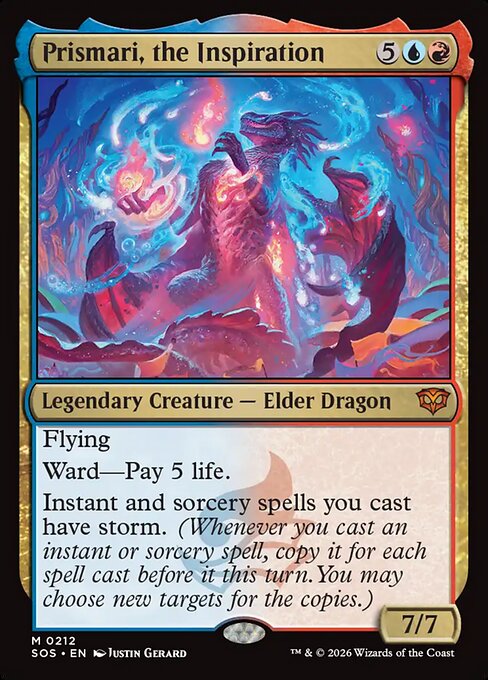
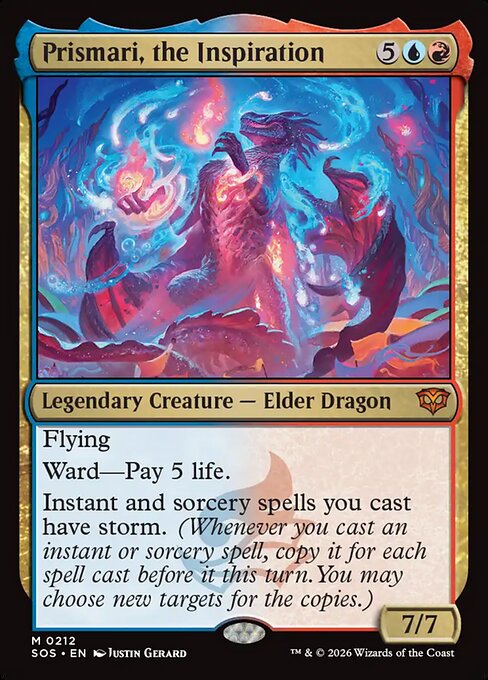
One detail I enjoyed more than I should have: the oversized card on the prize wall was Prismari, the Inspiration. Same archetype, considerably larger.
Ground rules
Every rules text below comes from Scryfall's Oracle data, not from memory. Half the bad Limited advice online is somebody misremembering a trigger by one word, and in this set one word separates a good card from a trap.
This post stays on the draft tables. For convention coverage, see our MagicCon Las Vegas 2026 recap; if you have never drafted at all, start with the Limited beginner guide.
What Prismari is doing in Secrets of Strixhaven
Prismari is the blue-red college, and here it is a spells-matter deck with a tax attached.
The mechanic is Opus, and every Opus card is worded identically: whenever you cast an instant or sorcery spell, you get a small effect — and if five or more mana was spent to cast that spell, you get a bigger one instead.
That second clause is the format. Most spells-matter archetypes track one number: how many instants and sorceries you cast. Prismari tracks two — how many, and how expensive. The instincts you brought from every other Izzet deck are slightly off here, and slightly off in Limited is how you go 1-2.
Note the trigger is on cast, not resolve: countered spells and fizzled removal still fire Opus.
Opus and the five-mana line
What the upper mode is actually worth:
- Elemental Mascot ({1}{U}{R} common, 1/4 flying vigilance): +1/+0 baseline. At five-plus it exiles the top card of your library for you to play until the end of your next turn. Card advantage on a common.
- Expressive Firedancer ({1}{R} common, 2/2): +1/+1 baseline, plus double strike at five-plus. On a creature that just grew, that is the biggest damage swing in the common pool.
- Deluge Virtuoso ({2}{U} common, 2/2 that enters tapping and stunning a creature): +1/+1 becomes +2/+2. Tackle Artist ({3}{R} common, 4/3 trample) turns one +1/+1 counter into two — counters, not temporary pumps, so it compounds.
- Thunderdrum Soloist ({1}{R} uncommon, 1/3 reach): 1 damage to each opponent becomes 3. This is how Prismari kills you through a board stall.
- Muse Seeker ({1}{U} uncommon, 1/2): draw a card, then discard unless five or more mana was spent. Looting below the line, a straight extra card above it.
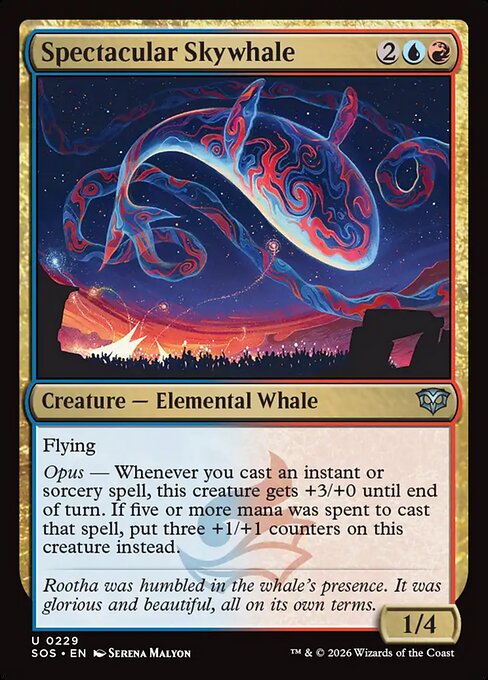
Spectacular Skywhale, the uncommon that shows the five-mana split most clearly. Card image via Scryfall; card art (c) Wizards of the Coast.
Spectacular Skywhale ({2}{U}{R} uncommon, 1/4 flying) is the cleanest illustration: +3/+0 until end of turn is a one-shot 4/4 flying attack, but at five-plus mana it gets three +1/+1 counters instead — permanently. A 1/4 flier becomes a 4/7 flier that stays a 4/7 flier.
Add it up: a free card, double strike, a permanent +3/+3 on an evasive body, three to the face. That is a real second axis, and it means you cannot jam eleven cheap cantrips and call it a deck.
The commons that make the archetype draftable
This is the actual argument for forcing Prismari, and it is structural rather than vibes-based: the payoffs are common.
- Elemental Mascot — {1}{U}{R} 1/4 flier with vigilance. Vigilance is the underrated word. It attacks and still blocks while you hold instants up, which is the turn sequence this deck wants every game.
- Stadium Tidalmage — {2}{U}{R} 4/4 that draws then discards whenever it enters or attacks. No Opus ability and it does not need one. It also stocks your graveyard, which matters below.
- Expressive Firedancer, Deluge Virtuoso, Tackle Artist — mono-coloured Opus bodies, so they come out of both halves of your pair and a drafter who is not in the spells deck has no reason to prioritise them.
- Visionary's Dance — {5}{U}{R} sorcery for two 3/3 flying Elemental tokens. Seven mana is a lot; it is playable because of the second line: {2}, discard this card, look at the top two, one to hand and one to the graveyard. And casting it for seven fires every Opus trigger at the upper mode.
Six commons holding the archetype up. You do not need to open a bomb to have a functional Prismari deck, which is not true of every archetype in every set, and it is the biggest reason forcing this one is a smaller gamble than forcing something whose payoff sits at rare.
The uncommons worth a real pick
Prismari Charm ({U}{R} instant) is the pick. Choose one: surveil 2 then draw a card; deal 1 damage to each of one or two targets; or return target nonland permanent to its owner's hand. Two mana, three modes, never dead, every mode fires Opus.
Vibrant Outburst ({U}{R} instant) deals 3 damage to any target and taps up to one target creature — removal that also blanks a second attacker.
Stress Dream ({3}{U}{R} instant) deals 5 damage to up to one target creature and looks at the top two, one to hand and one to the bottom. It costs five, so it clears the Opus threshold by itself. Removal that is also your best enabler is the card this archetype is designed around.
Abstract Paintmage ({U}{U/R}{R}, 2/2) adds {U}{R} at the beginning of your first main phase, spendable only on instants and sorceries. Not generic ramp — ramp aimed precisely at the threshold. With Paintmage out, a {3}{U}{R} spell like Stress Dream is castable off three lands.
Sanar, Unfinished Genius ({U}{R}, 0/4 legendary) enters prepared, and while prepared you may cast a copy of its spell — Wild Idea, a {3}{U}{R} sorcery that tutors an instant or sorcery to your hand. It also taps for a Treasure once you have cast a spell that turn, which is one more way to get a five-mana spell out early.
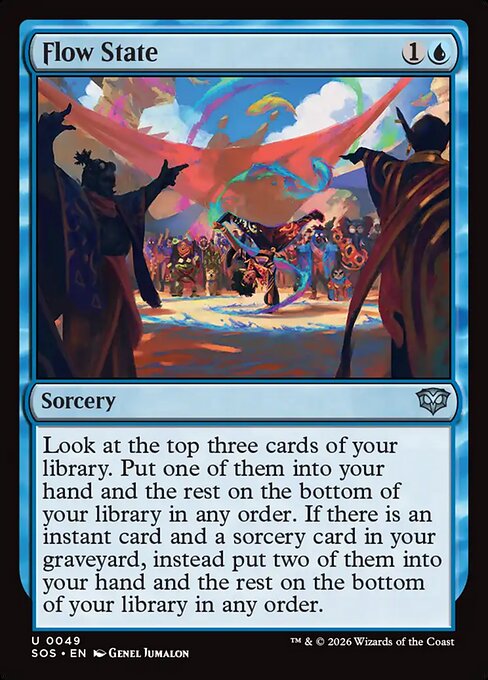
Flow State, a mono-blue two-drop that scales with a stocked graveyard. Card image via Scryfall; card art (c) Wizards of the Coast.
Flow State ({1}{U} sorcery) looks at the top three and puts one into your hand, the rest on the bottom — or two of them if there is both an instant card and a sorcery card in your graveyard. Between Stadium Tidalmage, Muse Seeker and Rapturous Moment, that condition is live far more often than it reads.
Rapturous Moment is the card that ties it together
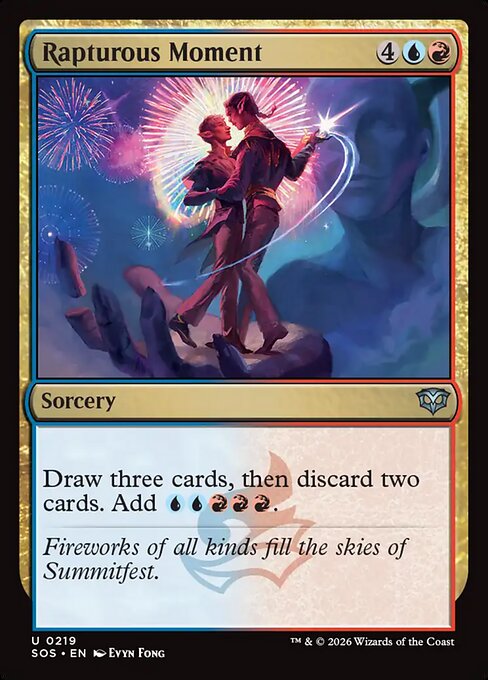
Rapturous Moment, an uncommon that reads like a draw spell and plays like a build-around. Card image via Scryfall; card art (c) Wizards of the Coast.
{4}{U}{R} sorcery. Draw three cards, then discard two cards. Add {U}{U}{R}{R}{R}. Three effects in one card:
- It costs six, so casting it trips every Opus trigger on your board at the upper mode.
- It refunds five mana in your exact colours — enough for a second five-mana spell that same turn, tripping all of those triggers at the upper mode again. Rapturous Moment into Stress Dream on turn six is two full rounds of upper-tier Opus plus a dead creature.
- The two discards turn on Flow State.
Six mana for net one card looks unexciting on a spoiler list. In this deck it is a build-around at uncommon, and it is the one I would take first.
Curve and deckbuilding
The Opus bodies are deliberately under-rate: 1/4, 1/4, 2/2, 1/2, 1/3. You pay up front for stats you only collect when casting spells, and the failure mode is real — a Prismari deck with five instants and sorceries is not a spells deck, it is a pile of bad creatures with flavour text.
- Do not play the Opus payoffs on a thin spell count. If you are not casting a spell on most turns from three onward, take the vanilla creature instead.
- Do not cut to sixteen lands. The whole archetype is built to cast five-mana spells on curve.
- Keep two or three cards that cost five or more. That is the opposite of standard Limited advice and it is correct here, because expensive spells are the payoff, not the cost.
- Prefer instants on close calls. Mascot has vigilance and Skywhale flies; both want you to attack and then fire the trigger on the opponent's turn.
- Two-mana interaction does double duty. Prismari Charm and Vibrant Outburst are better in this deck than their rate suggests.
The top end and an honest take on the mythic
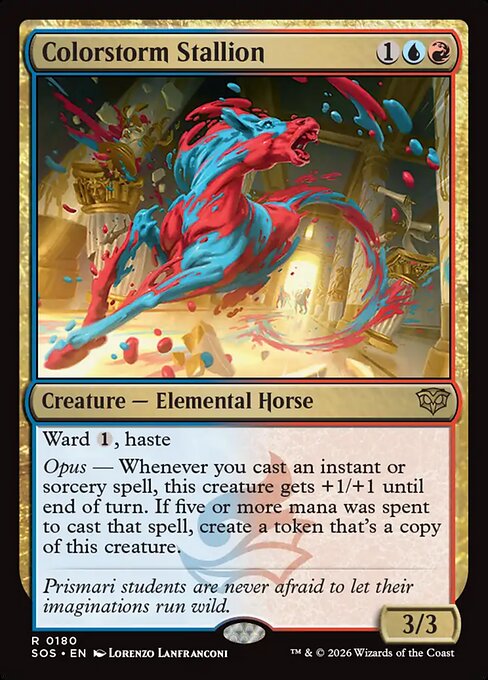
Colorstorm Stallion, a three-mana rare that is above rate before you read the second half. Card image via Scryfall; card art (c) Wizards of the Coast.
Colorstorm Stallion ({1}{U}{R} rare, 3/3) has ward {1} and haste, gets +1/+1 whenever you cast an instant or sorcery, and creates a token copy of itself if five or more mana went into that spell. A three-mana 3/3 with haste and ward is already good; the token copies are how you break a board that has stopped moving.
Prismari, the Inspiration ({5}{U}{R} mythic) is a 7/7 Legendary Elder Dragon with flying and Ward — Pay 5 life, and it gives your instants and sorceries storm.
Honest take: it wins Limited games because it is a 7/7 flier with ward for seven mana, not because of storm. Storm copies a spell once for each spell cast before it that turn, and in a normal Limited turn that count is zero or one — your Charm becomes one Charm, occasionally two. Evaluate the body. Do not contort a deck into casting four spells a turn to improve a seven-drop.
When forcing is right and when it is stubbornness
Forcing is defensible when three conditions hold, and Prismari here hits all three:
- The payoffs are common. Six of them. You are not drafting hoping to catch one card.
- Half the archetype is mono-coloured. Expressive Firedancer, Deluge Virtuoso, Tackle Artist, Muse Seeker, Thunderdrum Soloist and Flow State are all single-colour, so a real share of your picks are cards other drafters can take but usually will not prioritise.
- It wants what everyone else is cutting. Most Limited decks trim expensive spells. Prismari rewards them. Being the only person at the table who values a six-mana sorcery is a genuine edge.
Where it goes wrong: forcing is a strong prior, not a closed mind. If pack one is dry of blue-red and the cheap red removal keeps wheeling, that is information. Take the Prismari card on close picks, hold the plan through the first five or six picks of pack one, and still notice when the seat is not there — two other drafters in your colours and you end up with a twenty-third card that does nothing.
The cost nobody says out loud: forcing makes you worse at reading signals, because you stop practising. That is a real trade for consistency, worth making with your eyes open.
What a 75 percent run does not prove
About 75% of my matches is a number I would be annoyed at somebody else for quoting at me. It is a small sample over a short stretch, and it does not separate "the archetype is strong" from "the pods were soft" from "I drew well."
What I will actually claim is narrower and checkable: Prismari in Secrets of Strixhaven is buildable out of commons, so forcing it costs less than forcing an archetype that needs a specific rare to function. Go read the six commons and count them yourself.
If you want to test it properly, draft it five times and track how often your deck came out playable, not how often you won. Playability is what forcing buys you; wins are downstream and noisy.
Frequently Asked Questions
What is the Prismari archetype in Secrets of Strixhaven?
How does the Opus mechanic work?
Which commons support Prismari in Secrets of Strixhaven?
Is Prismari, the Inspiration good in Limited?
What does Rapturous Moment do and why does it matter?
How do you consistently spend five or more mana on a spell for Opus?
Is forcing one archetype in draft a good idea?
What is the best uncommon for a Prismari deck?
Keep Reading
- Scryfall — Prismari, the Inspiration (Secrets of Strixhaven #212, mythic, {5}{U}{R} 7/7 Elder Dragon with flying, ward and storm-granting)
- Scryfall — Colorstorm Stallion (Secrets of Strixhaven #180, rare, {1}{U}{R} 3/3 with ward {1}, haste and Opus)
- Scryfall — Spectacular Skywhale (Secrets of Strixhaven #229, uncommon, {2}{U}{R} 1/4 flier with Opus)
- Scryfall — Prismari Charm (Secrets of Strixhaven #211, uncommon, {U}{R} modal instant)
- Scryfall — Rapturous Moment (Secrets of Strixhaven #219, uncommon, {4}{U}{R} sorcery, draw three discard two and add {U}{U}{R}{R}{R})
- Scryfall — Flow State (Secrets of Strixhaven #49, uncommon, {1}{U} sorcery with a graveyard-conditional upgrade)
- Scryfall — Elemental Mascot (Secrets of Strixhaven #185, common, {1}{U}{R} 1/4 flying vigilance with Opus)
- Scryfall — Stadium Tidalmage (Secrets of Strixhaven #232, common, {2}{U}{R} 4/4 with draw-discard on enter or attack)
- Scryfall — Visionary's Dance (Secrets of Strixhaven #242, common, {5}{U}{R} sorcery making two 3/3 fliers)
- Scryfall — Expressive Firedancer (Secrets of Strixhaven #114, common, {1}{R} 2/2 with Opus double strike)
- Scryfall — Deluge Virtuoso (Secrets of Strixhaven #42, common, {2}{U} 2/2 with a stun-counter enter trigger and Opus)
- Scryfall — Tackle Artist (Secrets of Strixhaven #133, common, {3}{R} 4/3 trample with counter-based Opus)
- Scryfall — Muse Seeker (Secrets of Strixhaven #60, uncommon, {1}{U} 1/2 with a draw-discard Opus)
- Scryfall — Thunderdrum Soloist (Secrets of Strixhaven #134, uncommon, {1}{R} 1/3 reach with a damage Opus)
- Scryfall — Abstract Paintmage (Secrets of Strixhaven #171, uncommon, 2/2 adding {U}{R} for instants and sorceries)
- Scryfall — Vibrant Outburst (Secrets of Strixhaven #240, uncommon, {U}{R} instant dealing 3 damage and tapping a creature)
- Scryfall — Stress Dream (Secrets of Strixhaven #235, uncommon, {3}{U}{R} instant dealing 5 damage plus card selection)
- Scryfall — Sanar, Unfinished Genius // Wild Idea (Secrets of Strixhaven #223, uncommon, {U}{R} 0/4 with a Treasure ability and a tutor back face)
- Scryfall — Secrets of Strixhaven set data (368 cards, released 2026-04-24)
Related Guides
MagicCon Atlanta 2026: Worlds 32, Badges, Deadlines
The last MagicCon of 2026 is the one the whole competitive year lands on: World Championship 32, a $1,000,000 prize pool, and three rounds of Booster Draft in a set that reaches retail the same morning the doors open. Badge tiers, show hours, application deadlines you can still hit, and an honest list of what Wizards has not published yet.
The MagicCon Prize Wall, Explained: How I Ended Up With an Oversized Prismari, the Inspiration
The prize wall is an arcade ticket counter with a Magic skin on it, and Wizards publishes more of the numbers than most people realise: the tier prices, the event payouts, and the exact rate an unused voucher converts at. Here is the whole economy laid out, plus why a 7/7 Elder Dragon is the right thing to hang on a wall.
MagicCon Las Vegas 2026 Recap: Three Set Reveals, a $500,000 Pro Tour, and a Whole New Game
MagicCon Las Vegas ran May 1 to 3, 2026 at the Las Vegas Convention Center. Wizards used the Friday Preview Panel to put three unreleased sets on stage, ran a 200-plus-player Pro Tour on a format that was seven days old, and handed a full-art promo to every badge that walked in. Here is the sourced version.
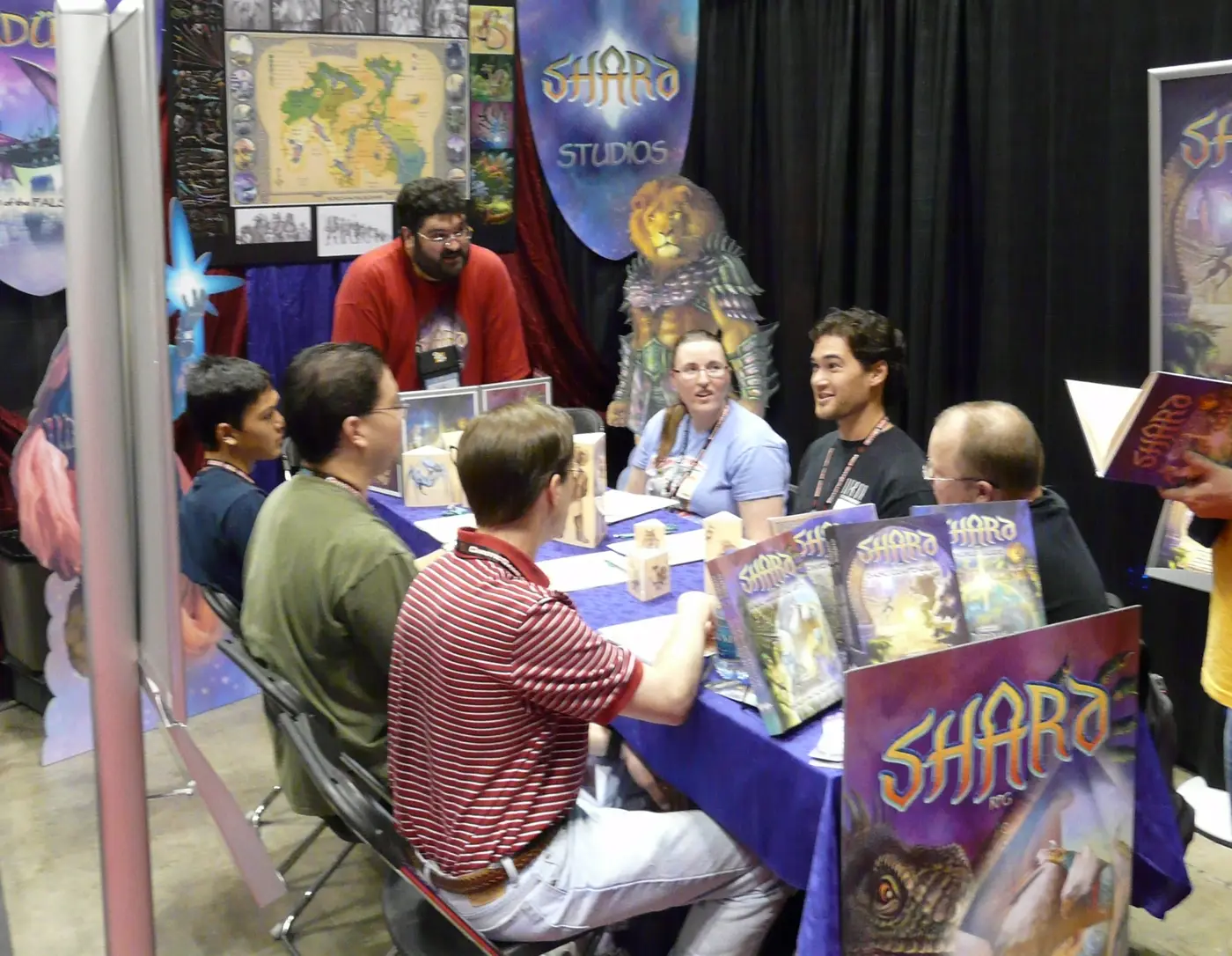
I Learned Six Trading Card Games in One Weekend at Gen Con 2026
Six publishers, one badge, four days, and a stranger with no idea how any of it worked. Pokemon charged $4 for the teach and $26 for the sequel thirty minutes later. Bandai charged nothing and handed me a deck and a promo. WeirdCo sold out a free table for a game that does not hit shelves until November. This is not a ranking. It is what each publisher was willing to spend to get one more person to the table.
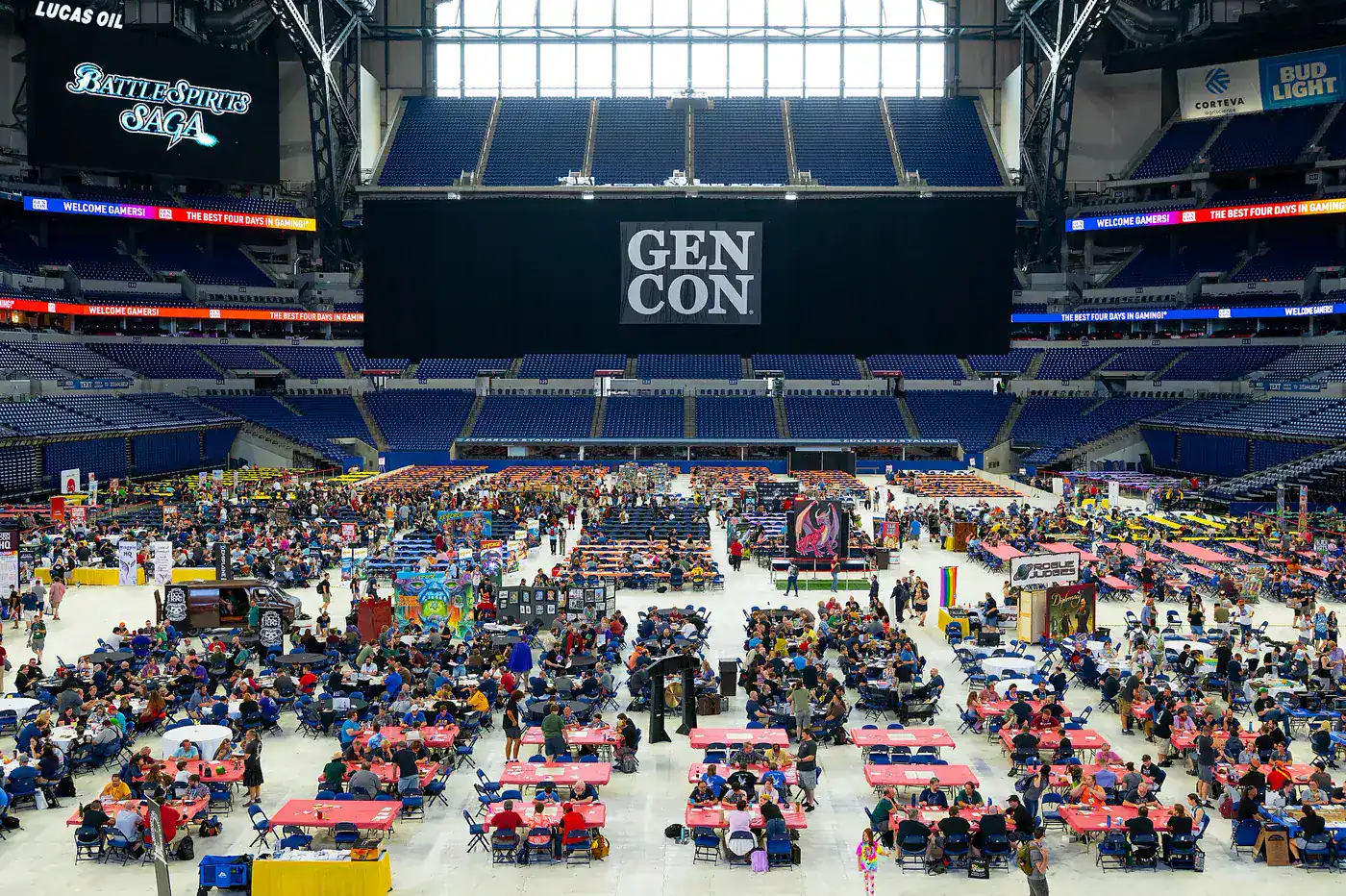
Gen Con: What to Know Before You Go (2026 Numbers, Evergreen Advice)
Badges, the event catalog, the wish list, the two-hour cart, and generic tickets — plus a category-by-category count of what actually sold out at Gen Con 2026, pulled from the public event database. Written to still be useful next year.
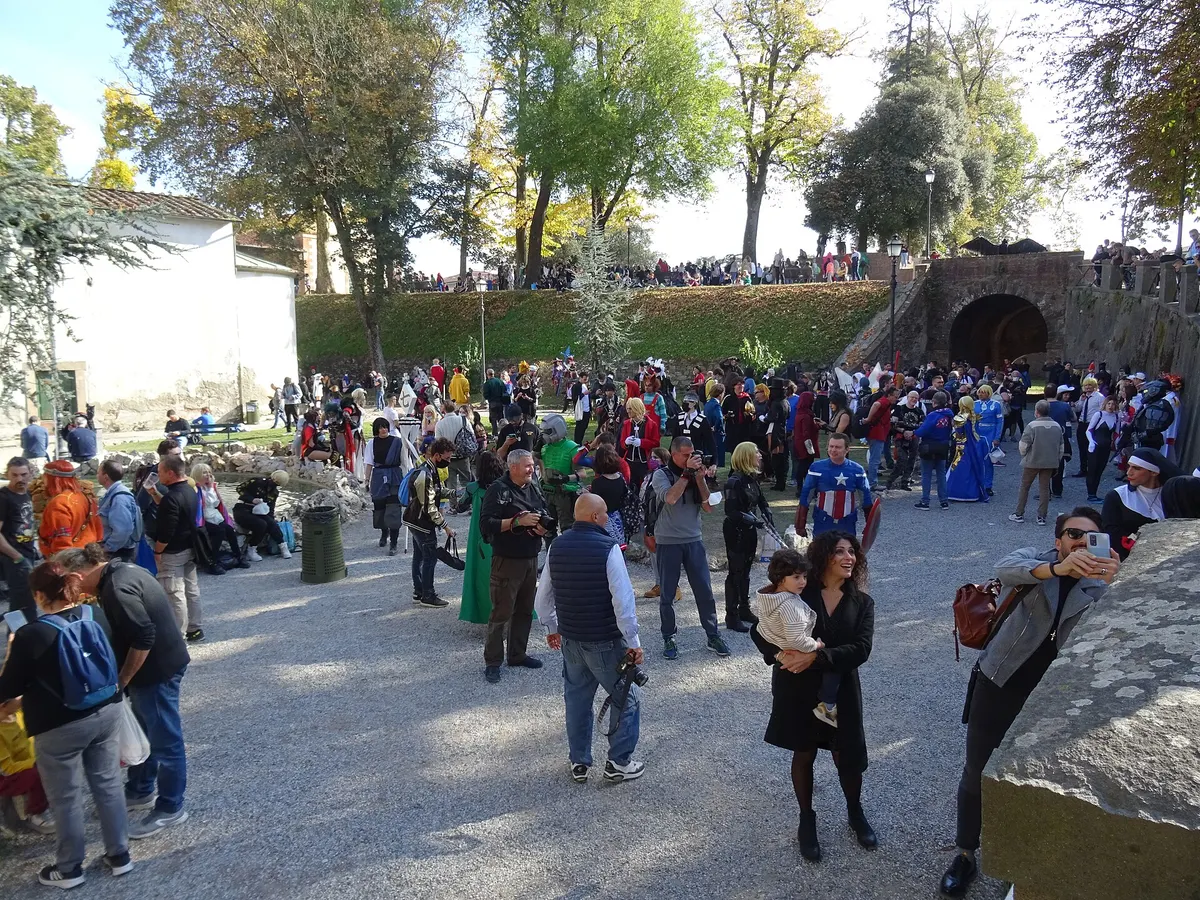
Lucca Comics & Games 2026: Tickets, Wristbands and Games
Lucca Comics & Games 2026, the festival's 60th-anniversary edition, runs October 28 to November 1 across the walled city of Lucca. A ticket on its own gets you into nothing paid: you also need that day's coloured wristband, and the option that posts it to you ends at 10:00 Italian time on Friday, October 16. Here is what every ticket and pass costs, where the welcome desks are, how the free Pikachu card works, and the video game and card game programme, with times.