PUBG Recoil Control Guide: Master Every Spray Pattern
The reason you lose mid-range fights usually isn't your aim — it's that your bullets are climbing into the sky on shot four. Here's how PUBG recoil works, the attachments that fix it, and a spray pattern for every staple AR.
You line up a clean shot at 80 meters, hold the trigger, and watch the first three rounds hit before the rest stitch a line straight up the wall behind your target. He drops you with a controlled burst. Your aim was fine. Your recoil control was not.
That gap is the single biggest reason mid-skill players stay mid-skill in PUBG: Battlegrounds. The aim part — putting your crosshair on a head — most people get to "good enough" pretty fast. The recoil part — keeping a full-auto stream on that head past shot four — is where fights are actually won and lost, and it's a learnable mechanical skill, not a talent. This guide is the PC and console version, where you fight recoil with your mouse or stick. (PUBG Mobile has its own gyro-and-grip economy and doesn't transfer.)
We'll cover how recoil is built, the attachments that cut it, the pull-down technique that beats it, the spray quirks of the staple ARs, and a training-range routine that turns all of it into muscle memory.
Why you lose mid-range fights
Close range, recoil barely matters — the first few bullets land before the gun walks anywhere, and you're tracking more than spraying. Long range, you're tapping or bursting and re-centering between shots, so sustained recoil isn't the issue either. The kill zone for recoil is mid-range, roughly 50 to 150 meters, where you need a sustained full-auto stream to connect but the gun has enough time in the air to climb and drift off target.
That's exactly the band where most PUBG gunfights happen. So "I have bad aim" is usually a misdiagnosis. What you actually have is a gun that's leaving your control on the back half of every spray. Fix the recoil and a huge chunk of your "missed shots" turn into hits without your aim improving at all.
How PUBG recoil actually works
Every automatic weapon in PUBG has a recoil pattern with two components stacked together:
- Vertical recoil — the gun climbing upward as you fire. This is the dominant, predictable part. The longer you hold, the higher your muzzle walks. Vertical recoil is what the pull-down technique counters.
- Horizontal recoil — the gun drifting left and right, often in a semi-random zig-zag. Less predictable than vertical, harder to fully counter, and the reason a long spray "smears" sideways instead of climbing in a clean line.
A few mechanics layered on top:
- Recoil ramps up as the spray continues. The first handful of bullets are relatively tame; the back half of a long magazine is where the gun gets wild. This is why short, controlled bursts beat one long hold at range.
- First-shot recoil is the kick on your opening round when you start fresh, separate from the sustained pattern that follows.
- The same gun behaves differently bare vs. kitted. Attachments don't just shave a flat percentage — they reshape how manageable the climb is, which is why a naked M416 and a fully kitted one feel like two different weapons.
One honest caveat: PUBG does not publish official recoil values, and the studio re-tunes individual guns across patches. So we'll talk in relative, durable terms — "the Beryl kicks harder than the M416," "the compensator reduces recoil" — and skip the fake-precise percentages you'll see floating around (most of which are datamined or lifted from PUBG Mobile anyway).
The attachments that tame recoil
Recoil control starts before you ever pull the trigger — it starts with what you bolted onto the gun. Three slots do almost all the work. (For the full loadout picture, see our PUBG loadouts and attachments guide.)
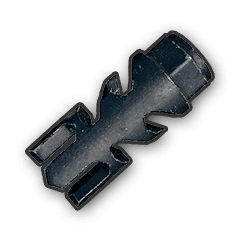
Muzzle — take the compensator. The compensator reduces both vertical and horizontal recoil and is the single biggest recoil upgrade you can attach to an AR. The flash hider is a weaker budget version that helps a little and hides muzzle flash; the suppressor barely helps recoil and exists to keep you off the minimap. For spray control, the compensator wins almost every time.
Foregrip — match it to how you fight. The grip is where you tune the gun to your style:
| Grip | What it helps | Best for |
|---|---|---|
| Vertical foregrip | Reduces vertical recoil | Sustained full-auto spray — the default for spray-heavy ARs |
| Angled foregrip | Reduces horizontal recoil and speeds up ADS | Burst fighters and tap-firers who want a steadier first shot |
| Half grip | A balance of recoil reduction and faster recovery between bursts | Players who mix bursts and sprays |
| Light / thumb grip | Trades one stat for another (faster ADS or steadier hold) | Niche preference picks |
The durable rule: vertical grip if you hold full-auto, angled grip if you burst. The exact values get tuned across patches, so don't obsess over a leaderboard of grips — pick for your firing style and move on.
Stock — grab it on guns that take one. The tactical/AR stock improves stability and shot recovery on the guns that accept it (the M416 takes one; the AKM does not). It's a quiet upgrade that makes sustained fire noticeably steadier. Always take it when the gun supports it.
The full recoil-killing kit on an AR that accepts everything: compensator + vertical grip + tactical stock + extended quickdraw mag. That last one isn't a recoil part, but a longer mag means you don't have to reload mid-spray and re-fight first-shot recoil.
The pull-down technique
Here's the core skill. Because vertical recoil is predictable — the gun climbs upward in a known way as you fire — you counter it by physically dragging your aim downward at the same rate the gun is climbing. Pull down exactly as fast as the muzzle rises and your crosshair stays planted on the target. Pull too little and you spray over their head; pull too much and you stitch into the dirt.
How to actually build it:
- Aim for the upper chest, not the head, when you spray. As recoil climbs, the stream walks up into the head/neck naturally. Starting on the head means the spray immediately leaves the body.
- Pull down smoothly, not in jerks. The climb is continuous, so your counter-motion should be too. Jerky corrections create their own scatter.
- Burst at range, spray up close. Past ~100m, fire in short bursts of 4–6 rounds and let the gun re-center between them — you can't reliably control a 30-round hold at distance. Inside 50m, a full spray is fine because the climb hasn't had time to get bad.
- Horizontal drift you fight reactively. You can't pre-learn the left-right zig-zag the way you learn the vertical climb, so micro-correct sideways as you see the stream pull off. This is why long sprays smear — the longer you hold, the more horizontal you have to chase.
Your mouse sensitivity (or controller ADS/scope sensitivity) determines how far your hand has to move to produce that pull-down. If your spray transfer feels impossible to control, your sensitivity is fighting you — dial it in using our PUBG settings and sensitivity guide before you blame your hands.
Per-weapon spray notes
The staple ARs each have a personality. Same pull-down principle, different amount and shape of kick. (For where each gun sits in the meta, see the PUBG weapons tier list.)
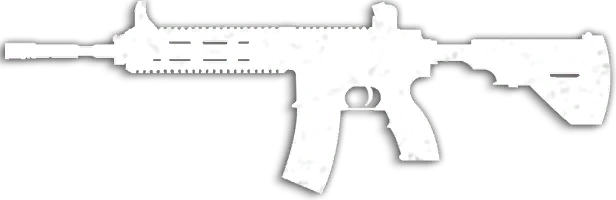
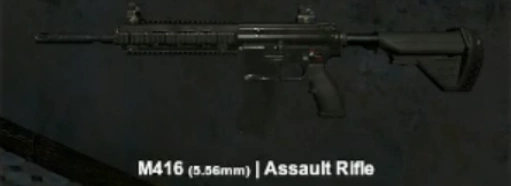
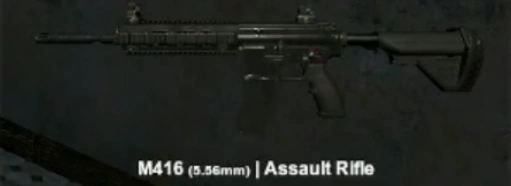
M416 (5.56mm) — the one to learn first. The most controllable full-auto AR in the game once kitted, and it accepts every recoil attachment (comp, grip, stock). Its climb is steep but smooth and predictable — the textbook pull-down gun. If you're learning recoil control, learn it here. Fully kitted, it holds a tight stream well past 100m. This is your benchmark and your default.
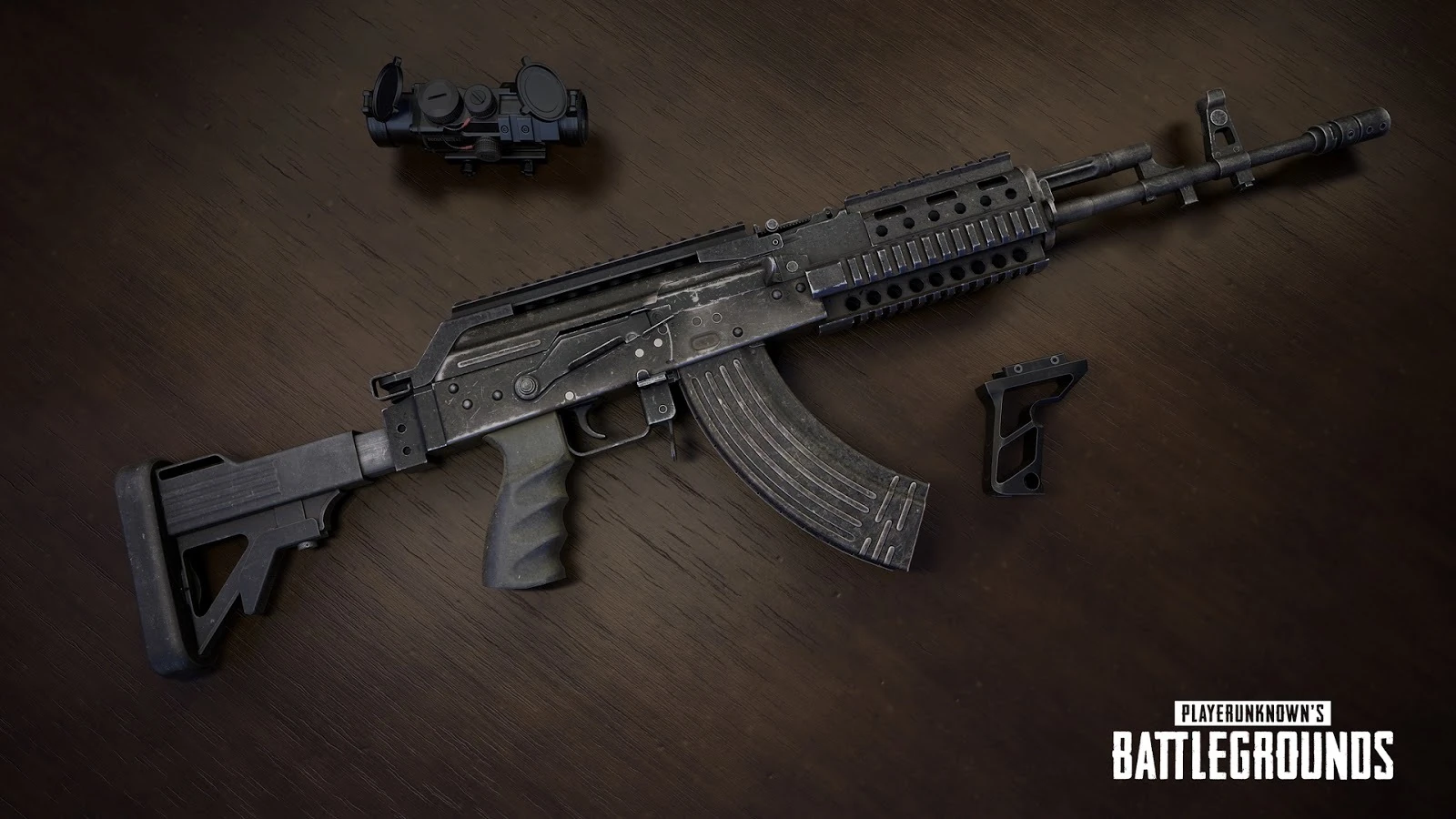
Beryl M762 (7.62mm) — the recoil boss fight. The Beryl hits harder than any 5.56mm AR and is one of the highest-recoil ARs in the game, with aggressive vertical climb and nasty horizontal smear. It rewards a vertical grip, a steady strong pull-down, and short bursts at any real distance. Up close, where the climb has less time to run away, it's a melt button. At range, it punishes lazy hands harder than almost anything. Tame it and you've basically mastered AR recoil.
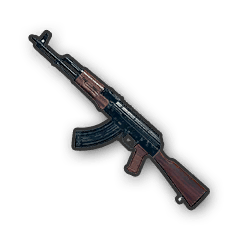
AKM (7.62mm) — burst discipline required. Big per-shot damage, chunky recoil, and crucially no stock slot, so you can't smooth its recovery the way you can the M416's. It also takes fewer attachments overall. The AKM is a burst weapon at range — fire short, re-center, fire again — and a brawler up close. Don't try to laser a full mag at 120m with it; you'll lose that fight to a kitted M416 every time.
SCAR-L (5.56mm) — the easy-mode M416 alternative. Slightly slower fire rate than the M416 but a flatter, more forgiving recoil feel for a lot of players. It accepts the same recoil kit (comp, grip, stock). If you find a SCAR-L before an M416, you're not downgrading by much — it's a comfortable spray rifle and a fine place to practice pull-down.
The pattern across all four: 5.56mm ARs (M416, SCAR-L) are the controllable lasers; 7.62mm ARs (Beryl, AKM) trade control for raw damage and demand more from your trigger discipline. Pick the gun, then respect its kick accordingly.
The training range routine
You don't learn recoil control in real matches — you learn it in the training range where nobody's shooting back, then take it into matches. Here's a 15-minute routine that actually builds the muscle memory:
- Kit the gun first. Grab the M416, put a compensator, vertical grip, and tactical stock on it, and a 4x or 6x scope. Practice with the kit you'll actually fight with, not a bare gun.
- Wall sprays at fixed distance. Stand 100m from a wall, ADS, and hold a full mag. Watch the bullet-hole pattern. Your job: pull down so the holes stay in a tight vertical cluster instead of a long climbing line. Repeat until the cluster is small.
- Walk the distances. Do the same at 50m, 100m, and 150m. The pull-down amount changes with distance and scope zoom — your hand has to learn each one. Most players only ever practice one range and get surprised by the others.
- Burst vs. spray reps. At 150m, deliberately practice 4–6 round bursts with a re-center between them, then compare your hit rate to a full hold. Feel the difference so you trust bursting in a real fight.
- Swap to the hard guns. Once the M416 feels controlled, do the same drills with the Beryl and AKM. They expose every flaw in your pull-down, which is exactly why they're good teachers.
- Cement it daily, briefly. Five focused minutes before you queue beats an hour once a week. Recoil control is muscle memory, and muscle memory decays without reps.
The goal isn't to memorize one gun's pattern like a piano scale — it's to internalize the feel of pulling down at the rate a gun climbs, so you can adapt to any AR you pick up.
Fastest improvements this week
If you do nothing else, do these — ranked by how much they'll move your hit rate fastest:
- Always kit your AR with a compensator, vertical grip, and stock (on guns that take a stock) before trusting it at range
- Aim upper chest, not head, when you spray — let the climb walk the stream up into the head
- Burst at range, spray up close — 4–6 round bursts past 100m, full spray inside 50m
- Pull your mouse/stick down smoothly as you fire to counter vertical climb, not in jerks
- Learn the M416 first, then graduate to taming the Beryl and AKM
- Spend 5 minutes in the training range before queuing to wake up the muscle memory
- Fix your sensitivity if pull-down feels impossible — it's probably your settings, not your hands
- Don't chase fake recoil percentages — PUBG never published them and they shift with patches
Frequently Asked Questions
How do you control recoil in PUBG?
What attachments reduce recoil the most in PUBG?
What is the pull-down technique in PUBG?
Which PUBG gun has the worst recoil?
Should I spray or burst fire in PUBG?
How do I practice recoil control in PUBG?
Keep Reading
Related Guides
Best PUBG Attachments: Muzzles, Grips & Scopes
The same M416 is two different guns naked versus kitted. Here's the best PUBG attachment for every slot, the right pick per weapon class, and the priority order to grab them as you loot.
Best PUBG Assault Rifles, Ranked
The AR you pick decides 90% of your mid-range fights, and most players just grab whatever they trip over. Here's every PUBG assault rifle ranked by recoil, fire rate, ammo, and how often you'll actually find it.
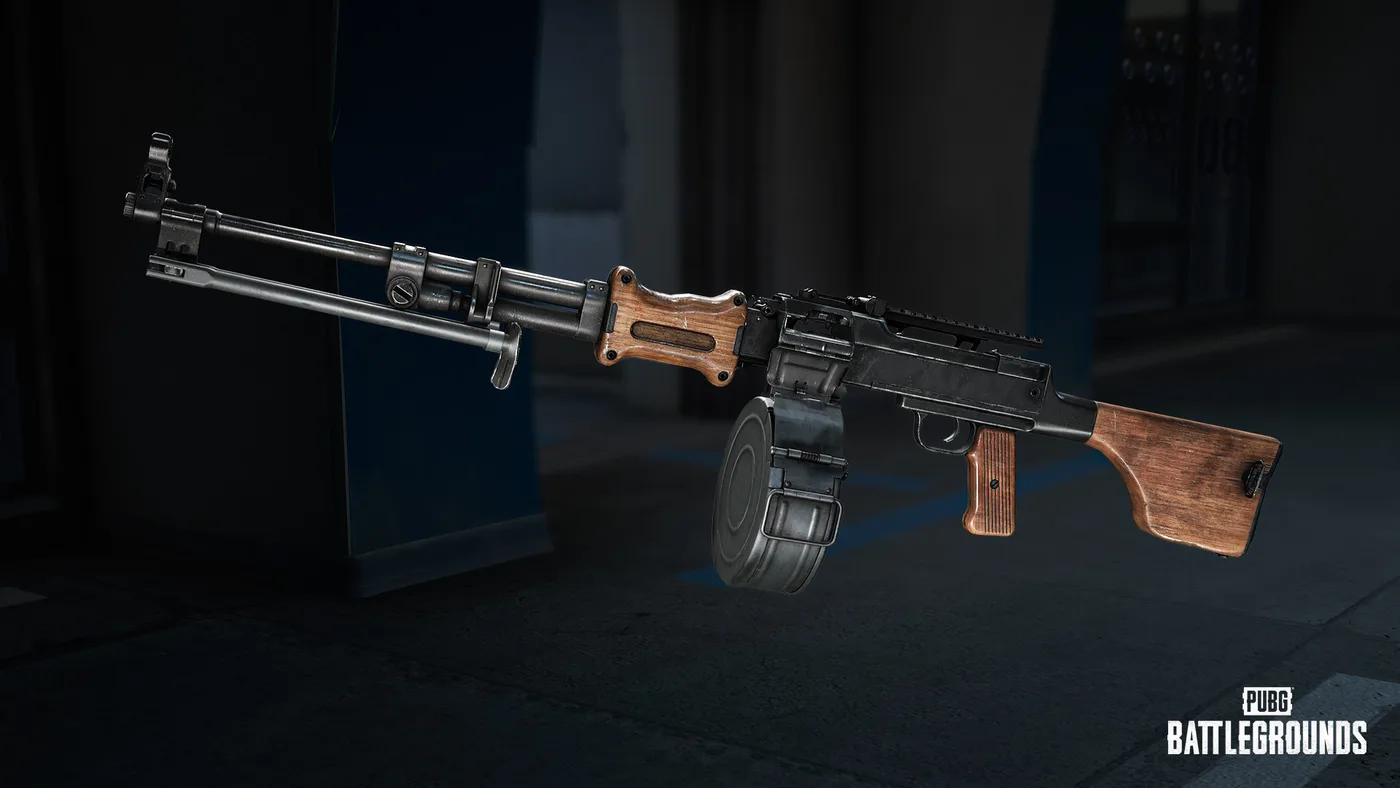
PUBG Meta Rotation: The LMG Season and the New RPD
KRAFTON just made LMGs good on purpose — and put a four-month timer on it. Update 42.3 launches Meta Rotation with a class-wide LMG rebalance and the RPD, PUBG's first new light machine gun in nearly two years. Here are the published numbers, the date the buffs go away — and the 43.1 walk-back that trimmed them four weeks in.
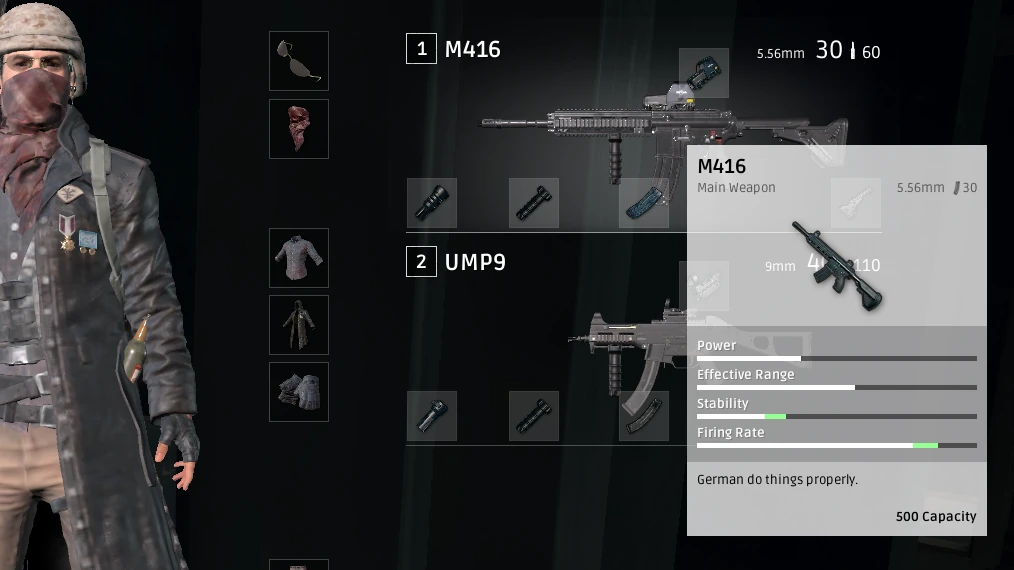
PUBG Ammo Types Explained: What Every Caliber Costs You
Every round you pick up in PUBG has a price tag in inventory space, and nobody reads it. A 7.62 bullet costs 40% more room than a 5.56 one, and a single frag grenade weighs the same as 54 rounds of 5.56. Here's the whole caliber system, priced out.
Best Weapons in PUBG: Tier List
Every PUBG tier list is out of date the moment a balance patch drops. So here's the list, ranked by role, plus the durable logic to re-tier any gun yourself when the next patch shakes things up.
Best PUBG Loadouts & Attachments
A naked M416 and a fully kitted M416 are basically two different guns. Here's how to build the strongest two-gun loadouts in PUBG and the attachment priority that turns loot into recoil control.