Best Roblox Obby Games to Play Right Now
Obbys are the purest thing on Roblox — no economy, no grind, no pay-to-win, just you versus a platforming gauntlet. Here are the ones actually worth your jump button, ranked from gentle beginner courses to towers that will end your evening, plus what separates a great obby from filler.
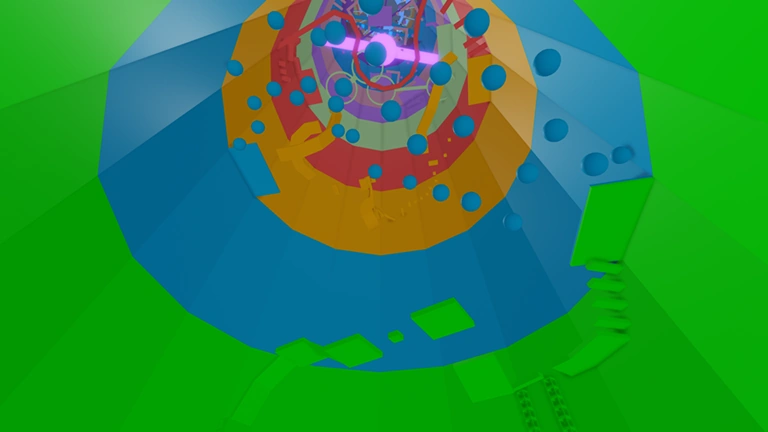
Obbys are the purest thing on Roblox. Strip away the economies, the gacha wheels, the trading scams, and the pay-to-win pressure that defines half the platform, and you're left with the obstacle course: you, a jump button, and a gauntlet that does not care about your wallet. There's nothing to buy that matters because the only currency is your own timing. That purity is exactly why obbys have outlasted a hundred trend-chasing genres — a great obby was great five years ago and will be great five years from now, because precise platforming doesn't go out of style.
This is a ranked tour from the gentlest beginner course to the towers that will genuinely end your evening, plus what actually separates a great obby from the millions of forgettable ones. Roblox has, conservatively, an absurd number of obbys, and most are filler. The ones below earned their spot through real player counts, smart design, or both. If you want the wider genre map of the platform first, our best Roblox games guide covers everything.
What makes a great obby
Most obbys are asset-flip filler — recycled jumps, free models, an ad-bait thumbnail. A handful are brilliant. Here's what separates them, and you can feel all of it within a minute of playing.
- Fair, readable difficulty. A great obby is hard because the jumps demand precision, not because the hitboxes lie or a platform you couldn't see kills you. You should always understand why you died and believe the next attempt is on you. Cheap obbys kill you with off-screen lava and invisible walls; good ones kill you with honest, learnable challenges.
- Smart checkpoint design — or a deliberate lack of one. Checkpoint placement is the single biggest lever on how an obby feels. Frequent checkpoints make a course welcoming; sparse or zero checkpoints make every mistake expensive and every success huge. Both are valid — what matters is that the choice is intentional and consistent, not random.
- A reason to keep climbing. The best obbys give you a hook beyond "reach the end" — a timer, a leaderboard, randomly generated layouts so it's never the same run, or a difficulty ladder you can climb. That's the difference between a one-and-done course and one you'll grind for weeks.
The genre's dirty secret: obby difficulty and obby quality are completely separate axes. A brutally hard obby with unfair hitboxes is bad, and a gentle beginner obby with clean, readable design is good. Don't confuse "this made me rage" with "this is well made" — the best obbys make the difficulty feel earned, not cheap.
If you're brand new to the platform entirely, our beginner's guide to Roblox covers the setup before you start jumping.
Mega Easy Obby: the gentle on-ramp
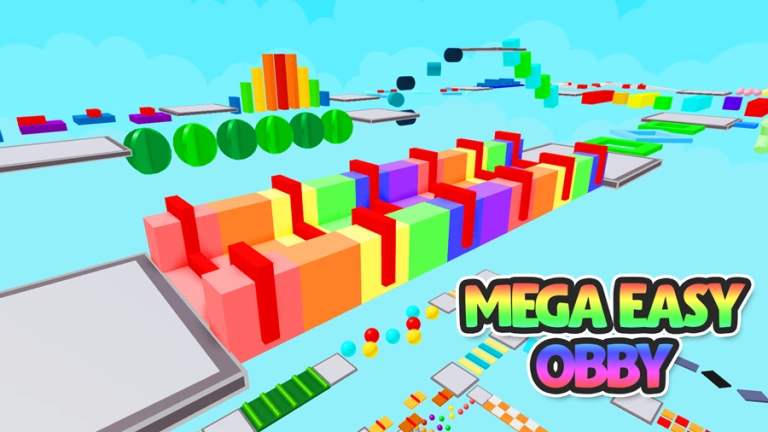
Everyone should start their obby career somewhere forgiving, and Mega Easy Obby (and its close cousin Mega Fun Obby) is the classic on-ramp. The pitch is right there in the name: hundreds of stages, a gentle difficulty curve, and frequent checkpoints so a single mistake never sends you far back. The design is clean and colorful, every stage is completable without frame-perfect timing, and it's the kind of game you can hand to a total beginner — or a younger sibling — without watching them rage-quit in four minutes.
Don't dismiss it as kid stuff, though. Long, checkpoint-friendly obbys like this are also the perfect low-stakes hangout: stick on a call with friends, race through stages, and chat without the white-knuckle tension of a no-checkpoint tower. It's the comfort end of the genre, and there's nothing wrong with that. The hundreds-of-stages format means there's genuinely a lot of content even if no single jump is going to humble you.
Difficulty: Beginner-friendly. Frequent checkpoints, gentle curve. The right first obby for anyone.
Classic themed obbys: the comfort food
Beyond the "easy obby" on-ramp sits the enormous middle of the genre: themed "escape" obbys. Escape the prison, escape the school, escape the carnival of terror, escape the lava — pick a setting and there's an obby built around escaping it. These are the comfort food of Roblox platforming. They drop you into a story-flavored course with checkpoints, a clear goal, and a steady difficulty climb, and they're a perfect ten-minute session.
The catch is variance: this is the part of the genre most flooded with low-effort clones, so your filter matters. Use the like ratio — every game shows likes versus dislikes — and lean on the courses with high visit counts and a ratio comfortably above the mid-80s percent. The well-made escape obbys are genuinely fun, with creative set-dressing and obstacles that fit the theme; the lazy ones are recycled jumps wearing a new thumbnail. This is also the one genre where a low player count doesn't automatically mean "bad," because a clever solo-developer obby can be a hidden gem — so trust the like ratio over raw popularity here.
Difficulty: Easy to moderate, with checkpoints. Great for short sessions. Filter hard by like ratio.
Tower of Hell: the genre benchmark
Tower of Hell is the obby that defines the genre's hard end, and it's the one to play if you want to understand what Roblox platforming is really about. The format is brutal and brilliant: a tall, procedurally assembled tower with absolutely no checkpoints, so a single fall sends you all the way back to the bottom. There's a timer — typically around eight minutes per round — and the layout is randomly generated every time, so you can never memorize a run. It's you versus a fresh gauntlet, every single round.
The no-checkpoint design is the entire hook. Every section you clear matters because losing it costs you everything, which turns an ordinary jump near the top into a heart-pounding moment. It's stayed near the top of the platform for years and it won the Best Obby category at the Roblox Innovation Awards 2024, which is about as official as genre credibility gets on Roblox. It's also weirdly social — everyone in the server is racing the same tower at once, so there's a shared "did you see that fall" energy that a solo course can't match. This is the benchmark. If you only play one hard obby, make it this one.
Difficulty: Hard. No checkpoints, a timer, and a randomly generated tower every round. The genre's defining challenge.
Eternal Towers of Hell: the difficulty ladder
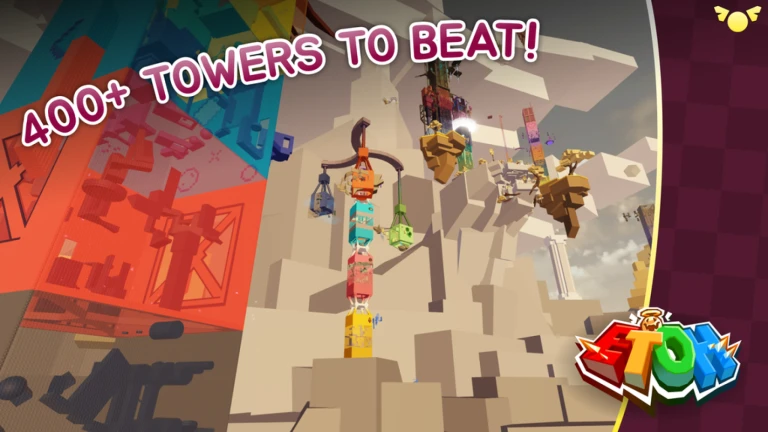
If Tower of Hell is the famous one, Eternal Towers of Hell (formerly Juke's Towers of Hell, and you'll still hear it called JToH) is the obsessive's version. Heads up on the name: the game was renamed to Eternal Towers of Hell after an ownership change in early 2025, so if you search "Juke's Towers of Hell" you're looking for the same thing under its old title. The key difference from Tower of Hell is structure — instead of one randomized tower against a timer, ETOH is a huge collection of distinct, hand-built towers, each with checkpoints, organized into a formal difficulty ranking system.
That difficulty ladder is the whole point. Towers are sorted into named tiers that climb from genuinely approachable up through ranks designed to take serious, practiced players hours or days to clear. You progress by climbing the ladder, which gives the game a long-term goal that Tower of Hell's one-and-done rounds don't have. It's the obby for people who want platforming to be a skill they grind and measurably improve at, with a clear sense of "I cleared a Difficult tower, now I'm working toward Challenging." It's a deep, community-driven rabbit hole and the genre's premier skill-progression game.
Difficulty: Scales from approachable to punishing, with checkpoints. A formal difficulty ladder to climb. For players who want to grind real skill.
Difficulty chart obbys: the brutal end
At the far end of the genre live the "difficulty chart" obbys — courses explicitly built around the towers-of-hell-style difficulty rankings, where the entire point is to attempt jumps rated near the top of the chart. This is where platforming stops being a game you play and becomes a discipline you train. We're talking frame-perfect inputs, jumps that take hundreds of attempts, and a community that treats clearing a top-tier tower like a speedrunning achievement, because that's effectively what it is.
This tier is not for casual players, and that's the honest selling point — it's for the people who've maxed out Tower of Hell and Eternal Towers of Hell and want a wall that actually stops them. The difficulty here is real and earned: these courses are hard because the jumps demand precision you have to build over many hours, not because they cheat you. If you've ever watched an obby speedrun video and thought "that's insane," this is where those runs happen. Treat it as the genre's endgame: a place to aspire to, not where to start.
Difficulty: Brutal. Frame-perfect, hundreds of attempts per section. The genre's endgame, for dedicated players only.
How to pick your obby
The genre lines up neatly on a single axis — how much pain you're signing up for:
| Game / type | Difficulty | Checkpoints | Best for |
|---|---|---|---|
| Mega Easy Obby | Beginner | Frequent | First-timers, relaxed hangouts |
| Classic themed escape obbys | Easy–moderate | Yes | Short sessions, casual play |
| Tower of Hell | Hard | None | The defining hard-obby experience |
| Eternal Towers of Hell | Scaling | Yes | Grinding real platforming skill |
| Difficulty chart obbys | Brutal | Yes | Genre endgame, dedicated players |
Quick rule of thumb: if you've never played an obby, start with Mega Easy Obby to get your jump timing down, then graduate to the classic escape obbys for variety. When you want a real challenge, Tower of Hell is the must-play benchmark. If you catch the bug and want to actually get good, Eternal Towers of Hell gives you a difficulty ladder to climb for months. And when even that stops challenging you, the difficulty chart obbys are waiting at the top.
The best part: every one of these is completely free, there's nothing to buy that affects whether you clear a jump, and nobody can scam you or outspend you. It's pure skill from the first stage to the last. That's also why an obby is the lowest-risk way to ease a hesitant friend onto Roblox — the loop is understood in about four seconds, and the only thing standing between them and the finish is their own timing. And if playing them makes you want to build one, the obby is famously the best first project in Roblox Studio.
Quick Action Checklist
Find your gauntlet and start jumping:
- Brand new to obbys? Start with Mega Easy Obby to learn your timing
- Want variety and short sessions? Play the classic themed escape obbys
- Want the defining hard obby? Tower of Hell — no checkpoints, random tower, a timer
- Want to grind real skill on a difficulty ladder? Eternal Towers of Hell (formerly JToH)
- Maxed everything out? The difficulty chart obbys are the endgame
- Judge an obby by its like ratio, not its thumbnail
- Remember: hard and good are separate — unfair hitboxes are just bad design
- It's all free with zero pay-to-win, so the only thing to improve is you
Frequently Asked Questions
What is the best Roblox obby game?
What is the hardest Roblox obby?
What is a good Roblox obby for beginners?
Is Juke's Towers of Hell still around?
Why does Tower of Hell have no checkpoints?
Are Roblox obby games free?
Keep Reading
Related Guides
Best Roblox Escape Games to Play Right Now
"Escape" on Roblox covers two completely different games: outrun a monster, or out-think a lock. Here are the ones actually worth your panic, ranked by which kind of escape you're signing up for, with the dead clones filtered out.

Roblox Plus Private Servers: What's Changing Sept 24
Roblox Plus launched with unlimited free private servers. On September 24, 2026, that drops to one per game. Here's exactly which server you keep, what expires, what still costs Robux, and why Roblox says it's doing this now.
Best Roblox Zombie Games
Roblox is drowning in zombie games, and most of them are reskinned asset-flips with a horde slapped on top. This list is the ones that actually hold up — wave shooters, looter-survival, and co-op horde defense where shooting the undead feels good, not like clicking a spreadsheet.
Best Roblox Music & Rhythm Games
Rhythm games on Roblox split into two camps: FNF-style note-mashers built for trash talk, and clean tap-the-circle charters built for actual scores. This is the shortlist worth your time across both — Funky Friday for the versus crowd, RoBeats and Sound Space for the people who want real difficulty — and where each one's note highway actually lands.

Best Roblox Games to Play in 2026
Roblox's front page is engagement bait. This is the filtered version: the games with real, sustained player counts and actual staying power, sorted by what you're in the mood for.
How to Get Robux Safely (Legit Ways + Scams to Avoid)
There is no free Robux generator. There never was. Here are the actual legit ways to get Robux without overpaying, the earning methods that really work, and the scams that exist purely to steal your account.