Best Aristocrats & Sacrifice Payoffs in Commander, Ranked
Aristocrats decks don't win by attacking — they win by turning your own creatures into a death machine. Here are the best sacrifice outlets and death-trigger payoffs in Commander, ranked, with the engine logic that tells you which pieces your deck actually needs.
Most decks treat their creatures dying as the bad thing. Aristocrats treats it as the win condition. The whole archetype is a loop: you make a body, you sacrifice it for value, something drains the table when it dies, and you do it again until everyone else is at zero. Done right, it does not care about getting blocked, it laughs at board wipes, and it kills three opponents at the same time without ever swinging a creature into combat.
But aristocrats is also the archetype people build wrong most often, because they jam a pile of cool death-related cards and never assemble an actual engine. An aristocrats deck is three jobs working together: a sacrifice outlet to kill your own creatures on demand, a payoff that punishes the table when they die, and fuel to feed the loop. Miss any one and the deck stalls. So this isn't just a "best cards" dump — it's ranked by job, with the engine logic that tells you what your list is actually missing. Every card here is confirmed real, correctly costed, and Commander-legal on Scryfall.
What aristocrats actually does
The name comes from an old combo of "blood aristocrat" cards — Falkenrath Aristocrat, Cartel Aristocrat — but the modern archetype is bigger than any one card. The plan is to convert creatures into value at instant speed. A token enters, you sac it to draw a card or make mana, a Blood Artist drains an opponent for 1 and gains you 1, and you've turned a 1/1 you were going to lose anyway into card advantage, mana, life, and damage. Stack three or four payoffs and a single board wipe — yours or theirs — becomes a table-wide life-drain that can close the game on the spot.
The reason it's so resilient: most of your value happens when creatures die, so the things that wreck other decks help yours. Wraths? You wanted those creatures dead. Edicts and removal aimed at your board? Same. Aristocrats is the rare archetype that turns the opponent's interaction into your engine fuel, which is exactly why it stays good across every power level. It lives primarily in black, with red (for Mayhem Devil-style ping payoffs) and white (for token-makers and recursion) as the most common splashes.
The three pieces every deck needs
Before the rankings, internalize the engine, because it's the whole archetype:
- A sacrifice outlet — a card that lets you sacrifice a creature whenever you want, ideally for free or for value. Without an outlet, your death triggers only fire when an opponent obliges you. The outlet is what makes the deck yours to control.
- A payoff — a card that does something good every time a creature dies. The classic is the "Blood Artist effect": drain each opponent and gain life on any death. Payoffs are what convert sacrifices into a win.
- Fuel — a renewable supply of creatures to sacrifice. Token generators and recursive creatures that come back from the graveyard keep the loop fed turn after turn.
The magic happens when one death triggers multiple payoffs. Sacrifice one token with two Blood Artist effects and a Mayhem Devil out, and that single death drains the table for 2 and pings something for 1. Now imagine a board wipe killing ten creatures into that same set of payoffs. That's the kill.
The best sacrifice outlets, ranked
A sacrifice outlet's value is set by two things: does it cost mana to activate, and does sacking give you something back. Free outlets (no mana to activate) are the gold standard because they let you respond to removal and go off in a single turn.
- Viscera Seer (B) — The cleanest free outlet in the game. One black mana for a 1/1 that sacrifices any creature for free, with a minor scry attached. No activation cost means you can sac in response to anything, and it's a creature so it can buy itself back with recursion. The default aristocrats outlet.
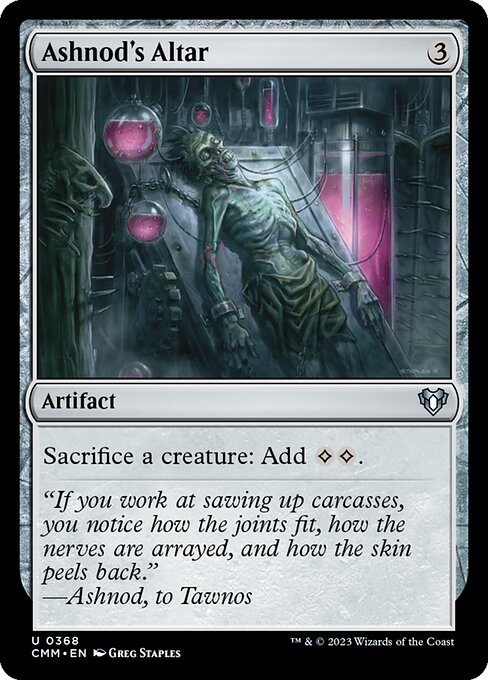
- Ashnod's Altar (3) — A free outlet that makes mana. Sacrifice any creature for two colorless. This is the engine piece that turns aristocrats into a combo deck — with enough token generation and a payoff, Ashnod's Altar fuels arbitrarily large turns. Colorless, so it goes in every deck.
- Phyrexian Altar (3) — Ashnod's older sibling: sac a creature for one mana of any color. Slightly less mana than Ashnod's, but the colored mana enables loops that recast creatures and combos that Ashnod's can't. Premium in dedicated builds.
- Goblin Bombardment (1R) — A free outlet that is a payoff: sacrifice a creature to deal 1 damage to any target. It doubles as removal and reach, and in red aristocrats it's often the cleanest way to convert your board into a kill. One of the best outlets in the format if you're in red.
- Carrion Feeder (B) — A one-mana free outlet that grows as things die and can't block, which barely matters. Like Viscera Seer, it's cheap, repeatable, and a creature you can recur.
- Woe Strider (2B) — A free outlet with scry attached that brings itself back via escape from the graveyard. Self-recurring outlets are gold because they survive wipes and give you fuel and an outlet in one card.
- Bartolomé del Presidio (WB) — A free outlet that grows itself and reaches over to remove opposing creatures and planeswalkers too. A newer Orzhov outlet that's quietly excellent as a commander or in the 99.
The thing that separates the top tier: free activation. Outlets that cost mana per sacrifice (like a generic "1, sacrifice a creature" effect) are playable but clunky — you want to be able to sac your whole board in response to a removal spell without running out of mana. Prioritize the free ones.
The best death-trigger payoffs, ranked
Payoffs are why you sacrifice in the first place. The "Blood Artist effect" — drain each opponent and gain life whenever a creature dies — is the archetype's signature, and stacking several is how you win.
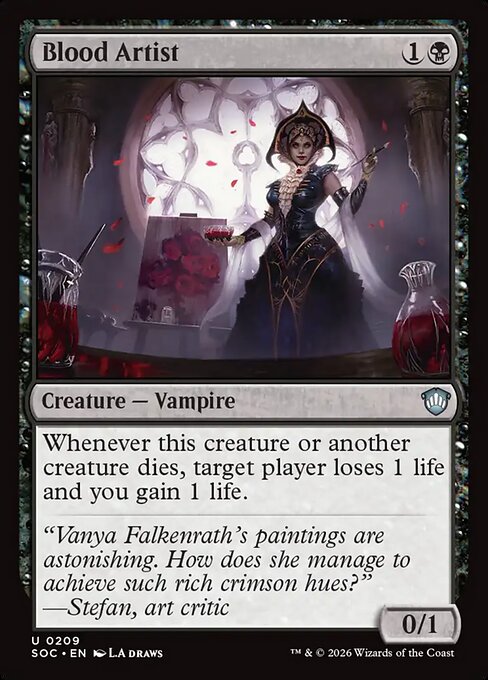
- Blood Artist (1B) — The keystone. Whenever any creature dies — yours or theirs — each opponent loses 1 life and you gain 1. In a multiplayer game that drains the whole table at once, and with a board wipe it can swing 20+ life. The card that defines the archetype.
- Zulaport Cutthroat (1B) — A functional Blood Artist that only triggers on your creatures dying, but drains each opponent (so in a four-player game it's stronger per death than Blood Artist's single-target drain). Run both; they don't overlap, they stack.
- Bastion of Remembrance (2B) — A Blood Artist on an enchantment. Harder to remove than a creature, so it sticks through the board wipes you're building around. A near-mandatory third copy of the effect.
- Cruel Celebrant (WB) — Another Zulaport-style drain on a creature body, in Orzhov colors. More redundancy for the effect that wins the game; in aristocrats, redundancy is the deck.
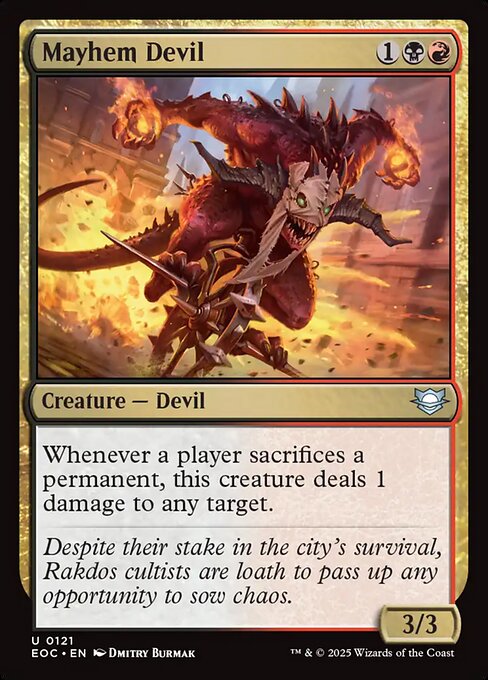
- Mayhem Devil (1BR) — Deals 1 damage to any target whenever a player sacrifices a permanent. Note the trigger: it's on the sacrifice, not the death, and it can hit creatures, planeswalkers, or faces — so it doubles as removal and reach. A blowout in Rakdos aristocrats and a combo piece with free sac outlets.
- Midnight Reaper (2B) — Draw a card whenever a nontoken creature you control dies (for 1 life). This is your fuel-into-cards engine: it refills your hand as your board dies, keeping the loop going. The best card-advantage payoff in the archetype.
- Pitiless Plunderer (3B) — Make a Treasure whenever a creature you control dies. That's ramp and combo fuel — with a free sac outlet and a payoff, the Treasures pay to recast creatures and the loop goes infinite in the right shell. A premium engine piece.
The deckbuilding takeaway: run multiple drain payoffs, because they stack and the deck wins by redundancy. Blood Artist, Zulaport Cutthroat, Bastion of Remembrance, and Cruel Celebrant are all "the same card" — and you want as many copies of that effect as you can fit, because each one multiplies every death.
The best edict effects
Edicts are the other half of black's sacrifice toolkit — instead of sacking your creatures, you force opponents to. These are removal that ignores hexproof and protection, and a few are repeatable engines.
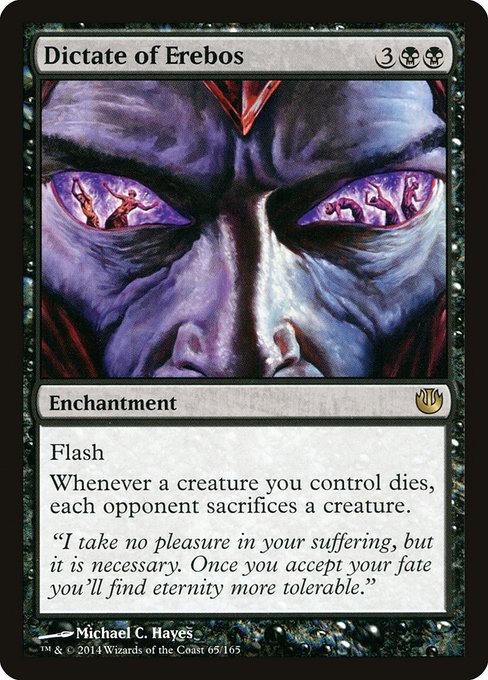
- Dictate of Erebos (3BB) — Whenever a creature you control dies, each opponent sacrifices a creature. Combine it with a free sac outlet and you have a one-sided board wipe on a loop: sac your token, everyone else loses a creature, repeat. It has flash, so you can drop it end-of-turn before your wipe. An archetype-defining enchantment.
- Grave Pact (1BBB) — The original Dictate, same effect (sac one of yours, each opponent sacs one), triple-black in cost. Run both in a dedicated deck; the redundancy turns a single free outlet into a table-clearing engine.
- Butcher of Malakir (5BB) — Grave Pact stapled to a 5/4 flier. Pricey, but it's a body and a Grave Pact effect in one card, and it can come back via recursion. A fine top-end include in creature-heavy lists.
- Sling-Gang Lieutenant (3B) — Comes with two Goblin tokens and can sacrifice each Goblin to drain an opponent for 1 and gain you 1 — a self-contained mini-aristocrats package on a single card. Underrated value.
Edicts are why aristocrats is also a control deck: between Dictate, Grave Pact, and your sac outlets, you can grind every opponent's board to nothing while your own deaths feed your payoffs. For more black removal options, see our best removal spells guide.
The fuel: tokens and recursion
Outlets and payoffs are useless with nothing to sacrifice. Fuel is the renewable creature supply that keeps the engine running:
- Token generators are the cleanest fuel — they make multiple bodies you don't mind losing. Anything that pumps out creatures repeatedly is ideal; our best token generators in Commander guide ranks the top ones, and most are aristocrats all-stars.
- Skullclamp (1) turns your dying 1-toughness tokens into a card-draw engine: equip for 1, the creature dies (or you sac it), draw two, repeat. It's the best fuel-into-cards artifact in the format and borderline an auto-include.
- Recursive creatures — things that return themselves from the graveyard like Woe Strider, or reanimation effects — give you the same body to sacrifice again and again. Our graveyard recursion guide covers the best of these.
- Witch's Oven (1) plus a creature is a tidy little value loop — bake a creature into a Food, get it back, sac it again — and a classic budget fuel engine.
The rule: you want renewable fuel, not a one-time dump. A single 5/5 is one sacrifice; a token engine that makes a body every turn feeds the loop forever.
How many of each to run
A functional aristocrats Commander deck wants roughly:
- 3 to 5 sacrifice outlets, with at least two of them free. You need to draw one reliably, and free outlets let you respond and combo.
- 5 to 8 payoffs, leaning on the stacking drain effects (Blood Artist, Zulaport Cutthroat, Bastion of Remembrance, Cruel Celebrant). Redundancy is the win condition.
- 8 to 12 fuel sources — token generators, Skullclamp, recursive creatures — so you never run out of things to sacrifice.
- 2 to 3 edicts (Dictate of Erebos, Grave Pact) if you want the control plan that grinds opposing boards to dust.
- The usual Commander backbone of ramp, removal, and card draw on top.
Get those ratios right and the deck assembles itself: draw an outlet, a payoff, and some fuel, and every creature that dies — yours or theirs — chips the whole table toward zero. For the full deckbuilding framework, our how to build a Commander deck template lays out the slots.
Quick Action Checklist
- Build the engine, not a pile: a sacrifice outlet, a payoff, and renewable fuel — you need all three.
- Prioritize free sacrifice outlets (Viscera Seer, Ashnod's Altar, Goblin Bombardment) so you can respond and combo.
- Run multiple stacking drain payoffs (Blood Artist, Zulaport Cutthroat, Bastion of Remembrance, Cruel Celebrant) — redundancy is the win.
- Add Mayhem Devil and Pitiless Plunderer for reach and ramp/combo fuel in Rakdos and mono-black shells.
- Include Skullclamp and a couple of token generators as renewable fuel.
- Splash edicts (Dictate of Erebos, Grave Pact) to grind opposing boards while your deaths feed your payoffs.
- Aim for ~3-5 outlets, ~5-8 payoffs, ~8-12 fuel sources in a 100-card deck.
- Lean into board wipes — yours and theirs — because they're your biggest payoff turns.
Frequently Asked Questions
What is an aristocrats deck in MTG?
What are the best sacrifice outlets in Commander?
What is a Blood Artist effect?
How many sacrifice outlets and payoffs should an aristocrats deck run?
Why are board wipes good for aristocrats decks?
Keep Reading
Related Guides
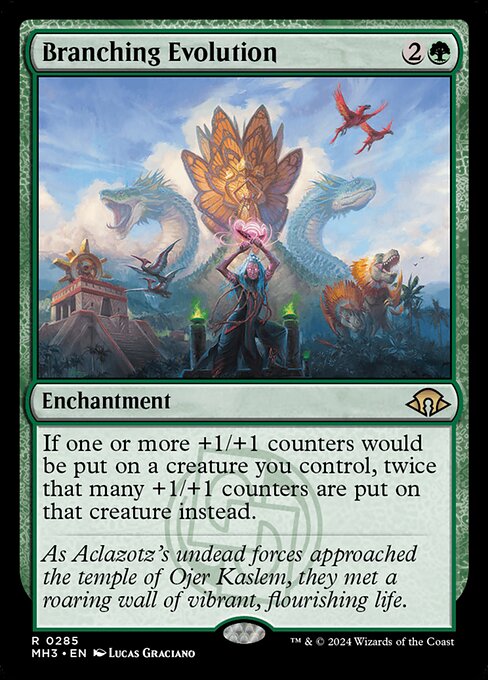
Best +1/+1 Counter Cards in MTG Commander, Ranked
Kill the anthem and the board shrinks. Kill the creature that placed a +1/+1 counter and nothing changes — the counter is already part of the creature. Here are the best +1/+1 counter payoffs and multipliers in Commander, ranked, plus the stacking order that turns one counter into eight.
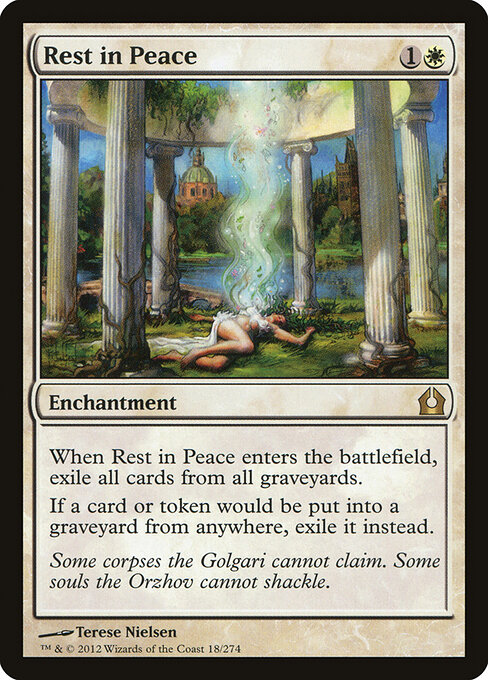
Best Graveyard Hate Cards in MTG Commander, Ranked
Every Commander pod has a reanimator deck, an aristocrats deck, and a guy whose commander says "return target creature card from your graveyard." Here is the best graveyard hate in the format, ranked — and the timing rules that separate a blowout from a wasted card.
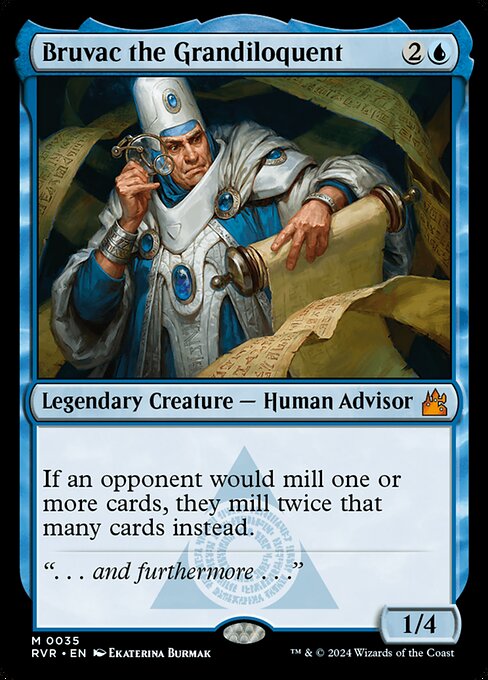
Best Mill Cards in MTG Commander, Ranked
Milling one player out is a chore. Milling three at once, before they punch your face in, is a real deck. Here are the best mill cards in Commander, ranked — plus the doublers and win conditions that make 300 total cards of library actually beatable.
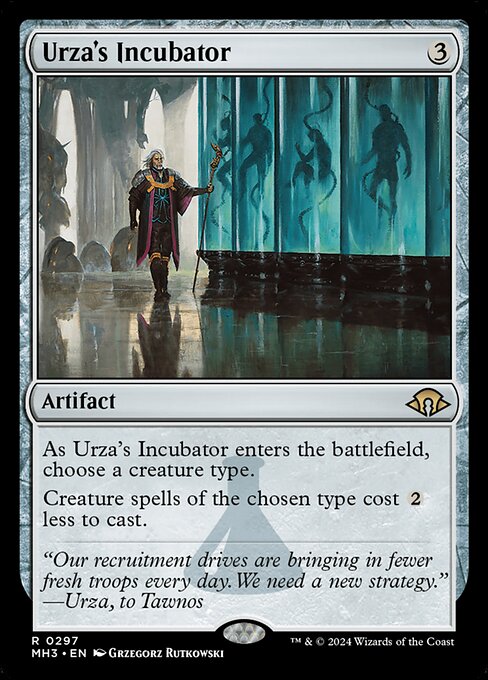
Best Cost Reducers in MTG Commander, Ranked
A Sol Ring gives you two mana once. Urza's Incubator gives you two mana on every creature spell you cast for the rest of the game. Here are the best cost reducers in Commander, ranked — and the honest math on when they beat a mana rock and when they are a trap.

MTG Commander Format Guide — How to Start Playing EDH (2026)
Commander is the most-played MTG format on the planet and the easiest one for new players to start in. The rules look intimidating on paper. They are not. Here is the full beginner guide.

Best Commander Staples Every Deck Wants, Ranked
There's a short list of cards that show up in basically every Commander deck regardless of theme — the silent 25 that make the splashy 75 work. Here are the staples worth a slot in almost any list, sorted by the job they do, with the legality double-checked.