MTG Commander Format Guide — How to Start Playing EDH (2026)
Commander is the most-played MTG format on the planet and the easiest one for new players to start in. The rules look intimidating on paper. They are not. Here is the full beginner guide.
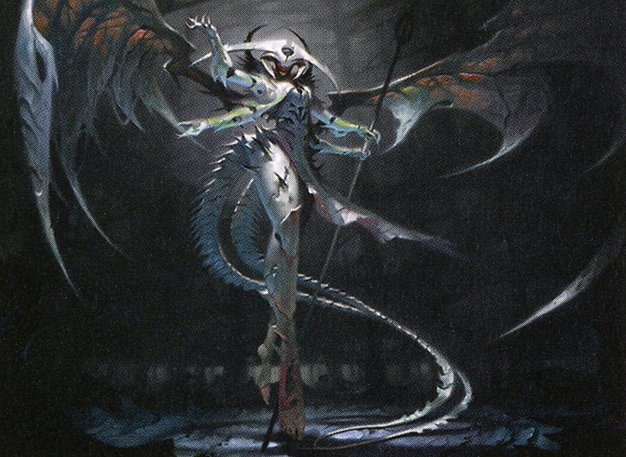
Commander is the most-played MTG format on the planet, and it is also the easiest one for new players to start in. The rules look intimidating on paper. They are not.
You build one deck. You sit down with three other people. You take turns killing each other with a giant legendary creature you actually like. That is the whole game.
This guide walks through every rule that matters, how to pick a commander you will not hate in three weeks, and the etiquette that makes the difference between a fun pod and an early Uber home.
What is Commander in MTG
Commander is a 100-card singleton multiplayer format built around a single legendary creature. That creature is your commander. It sits in a special zone called the command zone before the game starts, and you can cast it from there at any point you have the mana.
The format is multiplayer by default, almost always played as a four-player free-for-all, sometimes three. Two-player Commander exists but it warps how the format works because political plays disappear. The whole social texture of the game assumes a pod.
The format started in the 1990s as EDH (Elder Dragon Highlander), invented by a group of judges who wanted a casual format that used the original five Elder Dragons as commanders. It spread by word of mouth, got formally adopted by Wizards in the late 2000s, and is now managed by Wizards of the Coast itself — the community-run Commander Rules Committee handed the format over to Wizards' game design team in late 2024, and an advisory Commander Format Panel (including former Rules Committee members) now feeds recommendations to Wizards, which maintains the rules and the banned list.
If you have ever heard someone use "Commander" and "EDH" in the same sentence and wondered which is correct, the answer is both. They mean the same format.
The core deckbuilding rules
There are exactly five rules you have to internalize.
- 100 cards exactly. Not 99, not 101. The commander counts as one of those 100.
- Singleton. One copy of every card. The only exception is basic lands, where you can run as many Mountains or Islands as you want.
- Color identity. Your deck can only contain cards whose mana symbols match your commander's color identity. More on this in a second because it trips up everyone.
- 40 starting life. Double the usual 20. Games last longer and big swings hit harder.
- Banned list. Maintained by Wizards of the Coast, with the advisory Commander Format Panel feeding in recommendations. Cards like the original Mox Sapphire and Black Lotus are banned. Demonic Tutor is legal in Commander even though it is banned in Modern and Legacy. Sheoldred, the Apocalypse is legal in Commander but warps Standard so hard it eats banlist conversations there.
The singleton rule is the single biggest mental shift from formats like Standard. You cannot run four copies of your best removal spell. You have to build redundancy through similar effects.
Color identity explained
This is the rule that confuses every new player, so read this section twice.
Your commander has a color identity made up of every mana symbol that appears on the card, including in the casting cost AND the rules text. Atraxa, Praetors' Voice costs 1WUBG, so her color identity is white-blue-black-green (WUBG, sometimes called four-color or "no red"). Every card in your Atraxa deck must only contain mana symbols within that WUBG set.
A red card cannot go in an Atraxa deck. Period.
If you want to play a five-color deck, you need a commander with five-color identity. Niv-Mizzet Reborn and The Ur-Dragon are the two most popular. Hybrid mana counts as both colors, so a card with a blue/red hybrid symbol cannot go in a mono-blue deck.
Basic lands are also color-restricted. A Mountain has an implied red mana symbol, so it cannot go in an Atraxa deck.
The easiest way to check legality is to paste your decklist into Scryfall or EDHREC and let the site flag your color identity violations.
How the game actually plays
You start at 40 life with seven cards. The London mulligan applies: you can mulligan freely, drawing a fresh seven each time, but for every mulligan you take, you put that many cards from your final hand on the bottom of your library. Your first mulligan is "free" in most pods (you still draw seven again without putting anything on the bottom), which is a community courtesy more than an official rule, so confirm your table is using it before you rely on it.
Once the game starts, turn order goes clockwise. There is no formal "active player gets first attack" priority weirdness beyond standard MTG rules.
Two Commander-specific mechanics matter constantly:
The command zone. Your commander starts there. If it gets destroyed, exiled, or sent to your hand or library, you can choose to send it back to the command zone instead. Each time you recast your commander from the command zone, it costs an additional 2 generic mana per previous cast. Cast it three times and it costs the original mana value plus 4. This is called the "commander tax."
Commander damage. If a single commander deals 21 or more combat damage to you across the entire game, you lose immediately, regardless of your life total. This is why a 7/7 unblockable commander is terrifying. Three swings and you are dead even at 40 life.
Other ways to lose: drop to 0 or fewer life, try to draw from an empty library, or get hit by an alt-win like Approach of the Second Sun resolving twice.
How to pick your first commander
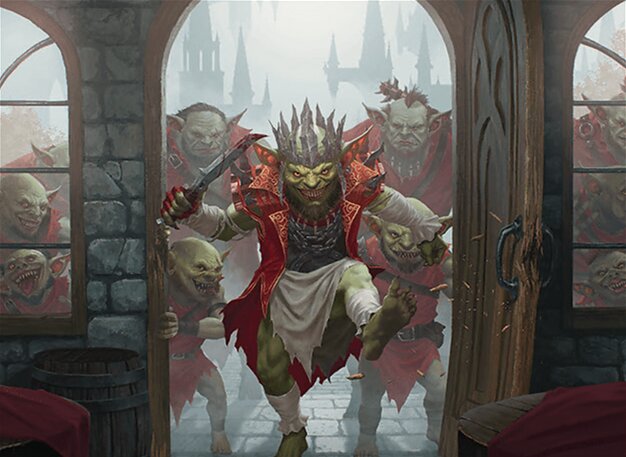
Pick by playstyle, not by power level. The most common new-player mistake is picking the strongest commander on EDHREC, building a janky version of a cEDH deck, and then losing 14 games in a row.
Mono-color decks have the simplest mana base. You play one type of basic land, you never get color-screwed, you have time to think about the actual game. Two-color decks are the sweet spot for most new players: enough flexibility to cover weaknesses, easy enough to fix mana with cheap dual lands. Three-color decks demand a real fetchland or shockland investment to function. Four and five-color decks are technically harder to pilot because every turn you need to ask "do I have the right colors?"
Five solid starter commanders:
- Krenko, Mob Boss. Mono-red goblins. Tap him, make goblins equal to the number you control. Aggressive, simple, hilarious.
- Talrand, Sky Summoner. Mono-blue spellslinger. Every instant or sorcery makes a 2/2 flying Drake. Card draw is built into the strategy.
- Edgar Markov. Mardu (white-black-red) vampires. Eminence ability makes a vampire token whenever you cast another vampire, even from the command zone. The most-played commander on EDHREC for years running.
- Atraxa, Praetors' Voice. 4-color superfriends or +1/+1 counters. Iconic but complex. Save this one for your second deck if you have never built EDH before.
- Yarok, the Desecrated. Sultai (blue-black-green) ETB engine. Every "when this creature enters the battlefield" trigger happens twice. Plug it into any creature-heavy precon and watch value explode.
Three good first deck archetypes for new players
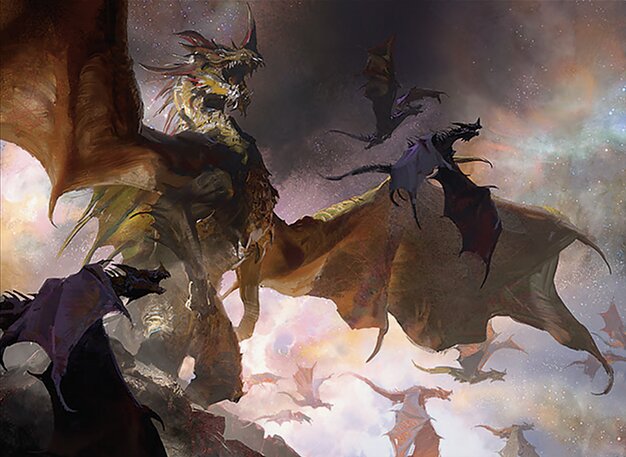
Tribal. Pick a creature type. Build a deck where every creature is that type and where you run cards that reward you for playing that type. Goblins, Elves, Dragons, Slivers, Merfolk, Vampires, Zombies. All of them have deep card pools and proven shells. Tribal decks are forgiving because the synergies are obvious and the lord effects (cards that pump every creature of a type) carry games. Try Krenko for Goblins or The Ur-Dragon for Dragons.
Spellslinger. Instants and sorceries matter. You run a low creature count and lean on cantrips, burn, and counterspells, then reward yourself with payoffs like Talrand or Veyran, Voice of Duality. Most spellslinger commanders sit in Izzet (blue-red) colors. The gameplan plays itself if you build the manabase right.
Voltron. You suit up your commander with equipment and auras until it becomes a one-card win condition through commander damage. Uril the Miststalker, Sram Senior Edificer, and Light-Paws Emperor's Voice are the cleanest builds. Voltron is easy to pilot but suffers when the table has lots of removal, so come ready with protection spells.
Commander etiquette and Rule 0 conversations
Rule 0 is the pre-game conversation where the pod agrees on what kind of game they want to play. It is not optional. Skipping it is how friendships die.
A standard Rule 0 hits four questions:
- What are you playing? (Commander name, archetype.)
- What is your power level on a 1-10 scale?
- Any infinite combos or two-card wins?
- Any salty cards in your deck the table should know about? (Stax pieces, mass land destruction, Cyclonic Rift on an empty board, etc.)
The casual-to-cEDH gap is enormous. A casual "battlecruiser" deck wants to do splashy 8-mana things on turn 8. A cEDH deck wants to win by turn 4 with infinite mana. Putting them at the same table without a heads-up is miserable for everyone.
Wizards announced a formal Bracket System in 2024 that splits Commander into power tiers from "Exhibition" up through "cEDH" to standardize Rule 0. The rollout has been evolving, so treat the exact tier definitions as a moving target. Even if your pod ignores it, knowing the brackets exist makes the power-level conversation easier.
Where to play Commander in 2026
Local Game Store (LGS). The standard. Most stores run Commander nights once or twice a week. Walk in with a deck, ask the staff where the EDH pod is, and you will be playing inside 20 minutes.
Magic Online (MTGO). Paper-equivalent gameplay with full Commander support. The card economy uses event tickets, and a competitive collection will cost real money. Best for grinding and testing.
MTG Arena. Arena does NOT support Commander. It has Brawl, which is a similar singleton format with 25 life and a smaller card pool, but it is 1v1 and the card pool is limited to recent Standard sets. If anyone tells you Arena has Commander, they mean Brawl. They are not the same.
Spelltable. Webcam-based, free, run by Wizards. You play paper cards in front of a camera and Spelltable handles life totals and matchmaking. Best free option for paper-deck owners with no local pod.
Cockatrice. Free desktop simulator, unofficial, supports the full card pool. Older interface but excellent for testing decklists you cannot afford to build in paper.
Common new-player mistakes

- Running fewer than 36 lands. The single most common mistake. You will get mana-screwed half your games.
- Skipping board wipes. Commander pods can build wide armies fast. You need at least 2-3 mass removal pieces like Wrath of God, Damnation, or Blasphemous Act.
- No non-creature removal. Doom Blade kills creatures. It does not kill the enchantment that is locking your team. Run artifact and enchantment removal too.
- Top-heavy curves. A deck full of 7-drops loses to a deck full of 2-drops. Aim for the bulk of your spells to cost between 2 and 4 mana.
- Building infinite combos for a casual table. Drawing your whole deck on turn 6 and winning with Thassa's Oracle in a casual pod is a fast way to never get invited back.
- Forgetting the singleton rule. Yes, you can only run one Sol Ring. No, you cannot run four copies of your favorite removal spell. Build redundancy through similar effects, not copies.
For the manabase that goes underneath any Commander deck, the best Commander lands guide covers the staples in depth. When you are ready to build cheap, the best budget Commander decks under $100 post has seven full lists.
Quick Action Checklist
- Pick a starter commander based on playstyle (Krenko, Edgar, Talrand, Yarok, or Sram).
- Buy a precon under $50 OR build a list on EDHREC using the average decklist as a starting point.
- Run at least 36 lands. Include 8-10 ramp pieces, 8-10 card-draw pieces, 5-7 removal spells, and 2-3 board wipes.
- Validate your color identity on Scryfall before sleeving up.
- Find a pod: LGS, Spelltable, or Cockatrice. Pick whichever fits your schedule.
- Have the Rule 0 conversation before shuffling. Power level, combos, salty cards.
- Play 10 games before you tune the deck. The first few games will tell you what is dead weight.
- Bookmark EDHREC for upgrade ideas and the official Commander rules page for rules questions.
Frequently Asked Questions
What is the difference between Commander and EDH?
How many lands should a Commander deck run?
Can I run any card in Commander?
What is the best first commander for a beginner?
Is Commander free to play?
What is Rule 0 in Commander?
Does MTG Arena have Commander?
Keep Reading
Related Guides

MTG Commander Banned List: Every Card and Why
Wizards' banned list page gives Commander 42 card names and four lines of small print. Scryfall says the real number is 83. The gap is 41 cards banned by category rather than by name — Conspiracies, ante cards, and the seven banned everywhere for offensive content. Here is the entire list, grouped by what each card actually does, plus the one change the Commander Format Panel made this year.

MTG Commander Brackets Explained (The Power-Level System)
"What's your power level?" used to be the most useless question in Commander. WotC's official Bracket system finally gives it real numbers. Here's what Brackets 1 through 5 actually mean and how to use them so nobody gets stomped.
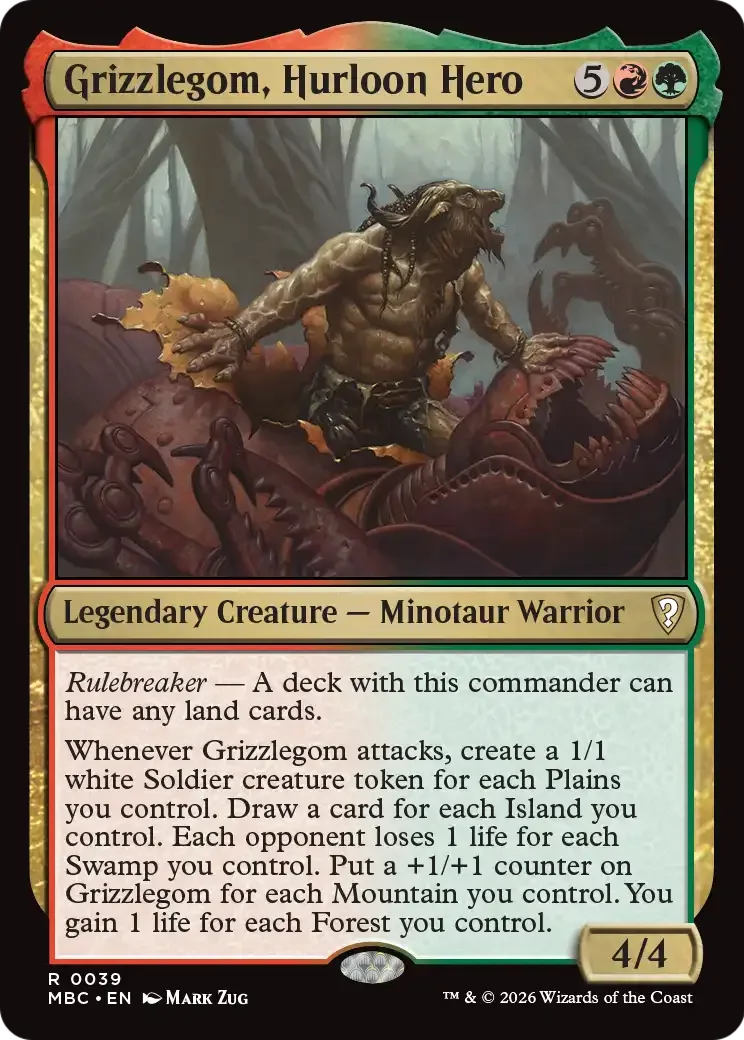
Mystery Booster Commander Edition: Packs, Draft, Legality
Festival in a Box: Atlanta 2026 goes on sale October 19 for $249.99 with a full box of Mystery Booster Commander Edition inside, and one box is exactly one eight-player Commander Draft. Here is the booster slot by slot, the draft rules, all 60 new commanders by color, the eight rulebreakers, and when the cards become legal.
How to Upgrade a Commander Precon (Without Rebuilding It)
Precons are mediocre in predictable ways, and predictable is cheap to fix. Here are the four flaws every Commander precon ships with, the cuts to make first, and a fully priced under-$16 swap menu that takes a stock deck from Bracket 2 to Bracket 3.

Best Commander Staples Every Deck Wants, Ranked
There's a short list of cards that show up in basically every Commander deck regardless of theme — the silent 25 that make the splashy 75 work. Here are the staples worth a slot in almost any list, sorted by the job they do, with the legality double-checked.

How to Build a Commander Deck — The 10/10/10 Template
Most bad Commander decks fail on category balance, not card choice. Here is the 10/10/10 skeleton that fixes ramp, draw, removal, and lands in one move.