The Last of Us PC Requirements and Best Settings
This vertical has told you which version to buy and how each mode plays, but never what your PC actually needs to run it. Here are the official spec tiers for both Part I and Part II Remastered, exactly which upscaler each one supports, whether Steam Deck can handle it, and the patch history that turned Part I from a 59-Metacritic launch into the clean build you'd buy today.

This vertical has told you which version of The Last of Us to buy, how No Return and Factions play, and what changed between the PS3 original and the remakes. What it has never told you is what your PC actually needs to run any of it, or what to change in the settings menu once it is installed. The versions guide notes that the PC launch was rough and got patched — one paragraph, no numbers. This is the PC-specific piece: official spec tiers for both ports, exactly which upscaler each one supports, whether a Steam Deck can actually run this, and the patch history that turned Part I from a 59-Metacritic launch into the clean build you would buy today.
Two different PC ports, two different asks
The Last of Us Part I and The Last of Us Part II Remastered are separate Steam and Epic Games Store listings, with separate installs, separate save files and separate patch histories. Buying one does not get you the other, and a fix that landed in one game's patch notes did not automatically land in the sibling's. Part I is the 2022 remake of the 2013 original, built on the Part II engine, and it hit PC on March 28, 2023. Part II Remastered is the PS5 remaster of the 2020 sequel, and it hit PC over two years later, on April 3, 2025. Treat everything below as two separate buying decisions, because the hardware bar and the feature list are not identical.
The Last of Us Part I requirements by tier
Naughty Dog and porting studio Iron Galaxy publish four official tiers on the PlayStation PC page, not the usual two:
| Tier | Resolution / FPS target | CPU | GPU | RAM | Storage |
|---|---|---|---|---|---|
| Minimum (Low) | 720p / 30fps | Ryzen 5 1500X or Core i7-4770K | Radeon RX 470/6500 XT or GeForce GTX 970/1050 Ti (4GB) | 16GB | 100GB SSD |
| Recommended (High) | 1080p / 60fps | Ryzen 5 3600X or Core i7-8700 | Radeon RX 5700 XT/6600 XT or GeForce RTX 2070 Super/3060 (8GB) | 16GB | 100GB SSD |
| Performance (High) | 1440p / 60fps | Ryzen 5 5600X or Core i7-9700K | Radeon RX 6750 XT or GeForce RTX 2080 Ti | 32GB | 100GB SSD |
| Ultra | 4K / 60fps | Ryzen 9 5900X or Core i5-12600K | Radeon RX 7900 XTX or GeForce RTX 4080 | 32GB | 100GB SSD |
Two things worth flagging before you check your own rig against this. First, 16GB of RAM is the floor at every resolution up to 1440p — this is not a game you can run comfortably on 8GB no matter how strong your GPU is. Second, the jump from Recommended to Performance is mostly a RAM and CPU upgrade rather than a GPU one; a 3060-class card is asked to do 1080p60 and 1440p60 both, just with a beefier CPU feeding it in the second case.

Part II Remastered requirements by tier
Part II Remastered ships the same four-tier structure, and asks for noticeably less GPU at the low end because it is a remaster of a PS4-generation game rather than a ground-up remake:
| Tier | Resolution / FPS target | CPU | GPU | RAM | Storage |
|---|---|---|---|---|---|
| Minimum | 720p / 30fps | Core i3-8100 or Ryzen 3 1300X | GeForce GTX 1650 or Radeon RX 5500 XT | 16GB | 150GB SSD |
| Recommended | 1080p / 60fps | Core i5-8600 or Ryzen 5 3600 | GeForce RTX 3060 or Radeon RX 5700 | 16GB | 150GB SSD |
| High | 1440p / 60fps | Core i7-9700 or Ryzen 7 3700X | GeForce RTX 3070 or Radeon RX 6800 | 16GB | 150GB SSD |
| Very High | 4K / 60fps | Core i7-11700 or Ryzen 7 5700X | GeForce RTX 4080 or Radeon RX 7900 XT | 32GB | 150GB SSD |
The headline number to plan storage around is 150GB, half again as much as Part I's 100GB, and Naughty Dog recommends an SSD for both — the minimum tier will technically install to a hard drive, but load times and texture streaming suffer for it. Note the Minimum tier's GTX 1650 is a genuinely low bar for a PS5-generation remaster; that is the card Naughty Dog itself lists, not a fan estimate.
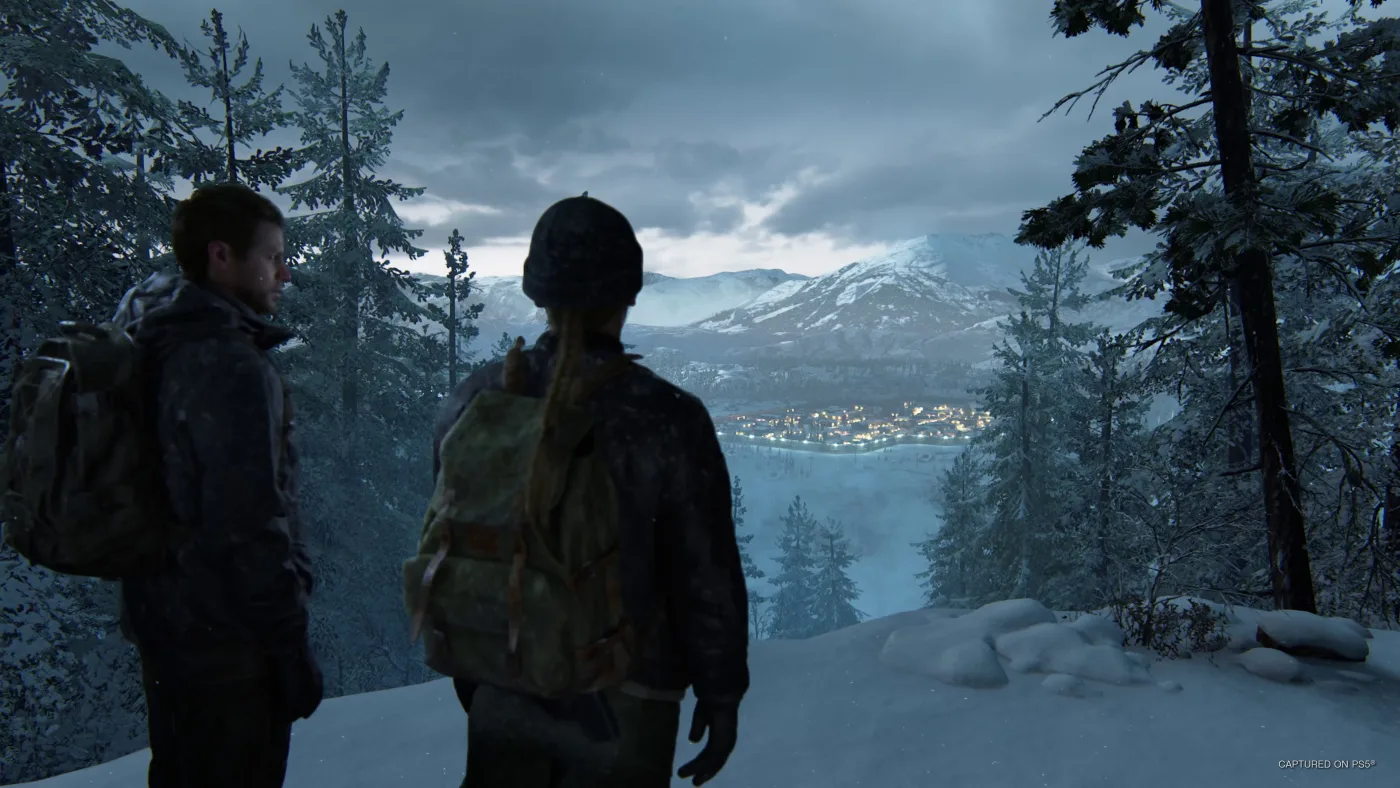
What each game actually supports for upscaling
This is where the two ports diverge the most, because Part I launched in 2023 with what was current then and grew its upscaler support patch by patch, while Part II Remastered launched in April 2025 already carrying the newer stack:
| Feature | Part I | Part II Remastered |
|---|---|---|
| NVIDIA DLSS | Super Resolution only | DLSS 3, plus the newer DLSS 4 Transformer model from day one via an override in the NVIDIA App |
| AMD FSR | FSR 2.2 at launch; FSR 3/3.1 Super Resolution and Frame Generation added by later patches; FSR4 added for Radeon RX 9000-series cards | FSR 3.1 and FSR4 |
| Intel XeSS | Not listed on the official requirements page, and no patch note has added it | Supported |
| Frame Generation | FSR 3.1 Frame Generation only, and it is locked to FSR's own Super Resolution — you cannot pair it with DLSS Super Resolution | DLSS Frame Generation, plus DLSS Multi Frame Generation on RTX 50-series cards |
| Ray tracing | Not implemented | Not implemented; Naughty Dog built the remaster's lighting on physically based rasterization instead |
The ray tracing row matters because it is easy to assume a 2025 remaster on a good GPU ships it — it does not, in either game. If you have seen ray-traced screenshots of Part II Remastered online, that is the Complete RT community shader mod, not anything Naughty Dog shipped.
Best settings for mid-range hardware
Naughty Dog does not publish a "best settings" list, so the closest thing to an authoritative answer is outlet benchmarking. PCGamesN's testing on an RTX 4070 at 1080p found the Ultra preset averaging 97fps and the High preset averaging 119fps, with only a further roughly 10fps gain from dropping to Medium — a small enough difference that the outlet recommends staying off Medium and above the Low preset entirely, since Low introduces visible texture popping. Enabling DLSS in Balanced mode was worth roughly a 40% frame rate increase in the same testing while keeping the image clean at 60fps and above.
If you are settings-limited rather than framerate-limited, prioritize character and texture quality over shadow and ambient occlusion settings — Naughty Dog built Part I's remake specifically around a full performance-capture pipeline for facial animation, and the campaign's dialogue scenes hold on Ellie and Joel's faces at close range throughout, which is exactly where that setting shows. Draw distance is comparatively safe to reduce, especially in the game's many interior and corridor sections where nothing is far enough away to notice.

Steam Deck: verified, but budget your settings
Both games carry Valve's Steam Deck Verified badge today, but they got there on very different timelines. Part I launched on March 28, 2023 without Deck support and did not earn Verified status until patch v1.1.0 on June 13, 2023 — a patch that also fixed crashes, a HUD display bug and a memory leak that had been causing Deck crashes specifically. Part II Remastered, by contrast, was rated Steam Deck Verified before its PC release even shipped, announced around March 31, 2025 ahead of the April 3 launch.
Verified does not mean effortless. Naughty Dog's own recommendation, echoed by outlet testing including PCGamesN's, is to accept the auto-detected graphics profile Steam Deck prompts you with on first launch rather than hand-tuning individual sliders, and to set FSR to Quality rather than chasing a higher framerate through a lower internal resolution — Performance and Ultra Performance FSR modes on Deck's 800p screen introduce a soft, blurry image that is a worse trade than a few missing frames. Realistic expectations on the stock Deck are 30fps in most scenes with drops during heavy combat encounters. None of this is Naughty Dog's official guidance — it is outlet testing on a device with a fixed, modest CPU budget running a AAA-tier game, and your mileage inside any specific encounter will vary.
The patch history that fixed the PC launch
Part I's PC version launched at 59 on Metacritic against the PS5 version's 89 — a 30-point gap for the same game, driven by shader compilation stalls, crashes and graphical glitches. That gap closed over roughly two and a half years of patches:
| Version | Date | What it changed |
|---|---|---|
| 1.0 | March 28, 2023 | PC launch; shader compile stalls, crashes, glitches |
| 1.1.0 | June 13, 2023 | Steam Deck Verified; crash and memory-leak fixes |
| 1.1.3 | March 19, 2024 | Added AMD FSR 3 Super Resolution and Frame Generation |
| 1.1.4 | January 2025 | Added AMD FSR 3.1 Super Resolution and Frame Generation; fixed a DLSS/FSR TV rendering bug |
| 1.1.5 | July 4, 2025 | Added AMD FSR4 support for Radeon RX 9000-series cards; fixed distorted Steam Deck audio; general performance and stability work |
Part II Remastered's PC launch was cleaner, and its patch cadence since April 2025 has mostly been maintenance rather than a repair job:
| Version | Date | What it changed |
|---|---|---|
| 1.0 | April 3, 2025 | PC launch with DLSS 3/4, FSR 3.1, XeSS and Steam Deck Verified already in place |
| 1.1 | April 11, 2025 | Fixed crashes and long stalls in some locations; UI and ultrawide cutscene fixes; Resizable BAR performance gains |
| 1.2 | April 17, 2025 | Fixed mouse and keyboard control issues; improved DLSS Frame Generation |
| 1.3 | May 1, 2025 | Restored a missing blood-drip effect; controller input and animation/lighting fixes |
| 1.5 | July 8, 2025 | Added Chronological mode free, plus hair and cloth physics simulation at higher framerates — see the Chronological mode guide |
If the 2023 PC reviews are the reason you have been holding off on Part I, that reputation predates five point-releases — most recently v1.1.5 in July 2025 — that targeted exactly the crashes and stalls those reviews cited.
Storage, and no Denuvo to fight
Neither PC port uses Denuvo or any comparable always-on DRM layer. That will not affect your performance, but it does mean you are not paying the small but real frame-time tax some Denuvo-protected games carry, and it is one less background process competing for CPU cycles on a Steam Deck or a budget rig. Budget storage as two separate 100GB-plus installs rather than one: Part I asks for 100GB, Part II Remastered asks for 150GB, and there is no shared-asset install that lets owning one shrink the other's footprint.
Quick Action Checklist
- Treat Part I and Part II Remastered as two separate purchases and two separate installs — nothing about owning one lowers the other's requirements or storage cost.
- Budget 16GB of RAM as an absolute floor for either game up to 1440p, and 32GB if you are targeting the 4K/Very High tier in either one.
- On Part I, remember Frame Generation only works through FSR's own Super Resolution — it will not pair with DLSS.
- On Part II Remastered, check the NVIDIA App for the DLSS 4 Transformer model override if you own an RTX card; the in-game DLSS toggle alone will not give you the newer model.
- Neither game supports ray tracing officially — anything you have seen with ray-traced lighting is the unofficial Complete RT mod, not a shipped feature.
- On Steam Deck, accept the auto graphics profile and set FSR to Quality before you start manually tweaking sliders.
- If Part I's 2023 PC reputation is what is holding you back, know that patches through v1.1.5 (July 2025) rewrote most of what made that launch rough.
- Confirm 100GB free for Part I and 150GB for Part II Remastered before you start either download, and put both on an SSD if you have the option.
Frequently Asked Questions
What are the minimum PC requirements for The Last of Us Part I?
What are the PC requirements for The Last of Us Part II Remastered?
Does The Last of Us support DLSS and FSR on PC?
Is The Last of Us Steam Deck verified?
How much storage do I need for The Last of Us on PC?
Does The Last of Us use Denuvo on PC?
Is The Last of Us Part I's PC port still broken?
Can I use ray tracing in The Last of Us on PC?
Keep Reading
- The Last of Us Part I for PC — PC Requirements & Features — PlayStation
- The Last of Us Part II Remastered for PC — PC Requirements & Features — PlayStation
- The Last of Us Part I v1.1.5 Patch Notes for PC — Naughty Dog
- The Last of Us Part I v1.1.4 Patch Notes for PC — Naughty Dog
- The Last of Us Part I Is Now Steam Deck Verified Thanks To New Update — GameSpot
- The Last of Us Part 2 Remastered Has Been Rated Steam Deck Verified Ahead of PC Launch — Steam Deck HQ
- The Last of Us Part 2 Remastered Will Support DLSS 4 & Multi-Frame Gen At Launch — DSOGaming
- Best Last of Us Part 1 settings on PC and Steam Deck — PCGamesN
Related Guides

The Last of Us Part 1 Skins: All 55 and What They Cost
Part I kept all 21 skins from the 2013 game, added 18 outfits and 16 weapon skins, and put the lot in one points shop. Here is the listed price of each skin, filter and modifier, what the Digital Deluxe Edition actually unlocks, and the two Steam-only shirts.
The Last of Us Factions Multiplayer: How It Works
Naughty Dog cancelled its multiplayer sequel in 2023 and Sony killed the PS3 servers in 2019, but Factions itself never actually died — it is still taking matches on PS4 and PS5 in 2026, and this vertical has never explained how it plays. Three modes, two currencies, a 12-week clan you can lose, and 17 maps across three expansions.
The Last of Us Part 2 Accessibility Settings: Every Option
Naughty Dog published its own option-by-option accessibility list for The Last of Us Part II. Here is the whole thing: 82 options across eleven menus, the exact settings each of the three presets switches on, and the menu paths for the ones that are not where you would look.
The Last of Us Part 1 Shiv Doors and Safes: All Locations
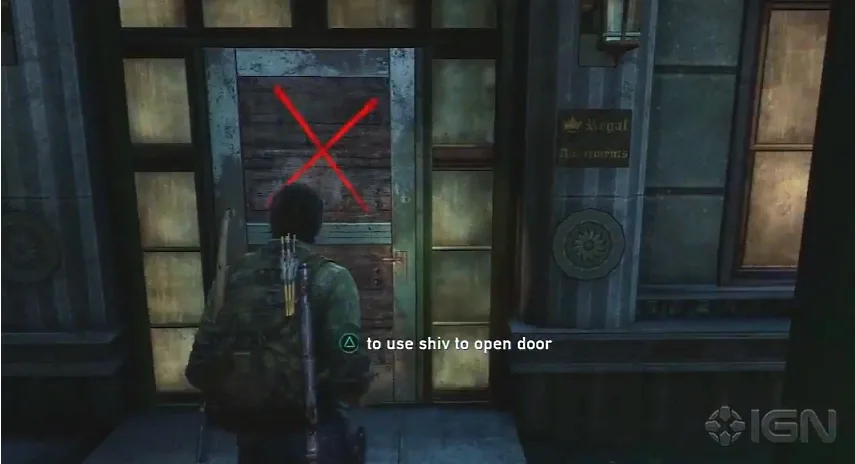
Out of 1,620 parts in a Last of Us campaign, 660 sit behind locks — 460 behind thirteen shiv doors and 200 inside four safes. The game tells you none of their locations. Here is every door, every safe, every combination, and exactly how many parts each lock is holding.
The Last of Us Infected Guide: How to Beat Every Type
A clicker cannot see you and cannot be strangled. Those two facts decide more encounters than any gun you own. Here is how all four infected stages actually work, and what to spend on each.
The Last of Us Versions: Part I vs Remastered vs PS3
The Last of Us exists in seven shipped releases and they are not interchangeable - different trophy lists, different engines, and only the older ones still have multiplayer. Here is what separates the PS3 original, Remastered, Part I, Part II, Part II Remastered and the Complete bundle, with no story spoilers anywhere.