WeirdCo Will Not Reprint Welcome to Night City. Here Is What That Actually Commits To
On 7 August WeirdCo published four supply commitments for Cyberpunk TCG, and one clause does most of the work: after the launch print runs, it will not reprint the same set or configuration again. Five days later Cardmarket committed to full European support, starting after the first fulfilment wave. Together they tell you what a Welcome to Night City single is going to cost you.
A card game telling you what it will not print is more useful than one telling you what it will.
On 7 August WeirdCo published four supply commitments for Cyberpunk TCG under the title "Availability versus Collectibility." Five days later, on 12 August, it announced that Cardmarket — which the announcement calls Europe's biggest TCG marketplace — has committed full support at release. Between them, those two posts answer a question the launch coverage has mostly left alone: when Welcome to Night City sells out, what happens next?
The answer WeirdCo has now put in writing is that it does not come back.
What WeirdCo actually published
Four numbered commitments, each with a heading:
- Reprint cards, not packs.
- Use Kickstarter, distributor and retailer data to set print runs — and stop there.
- Put hobby stores with play space at the centre of distribution.
- Run no further Cyberpunk TCG Kickstarter campaigns.
The load-bearing sentence sits inside point two, and it is worth quoting exactly: "We'll use our data to tightly align our print runs with market demand, and after that's done, we will not reprint the same set or configuration again."
That is a closed-edition policy, published before the product has shipped to a single backer — a decision most publishers keep in their pocket until demand forces it. WeirdCo has said up front that the print run for Welcome to Night City is the print run, and that the Kickstarter existed in large part to size it: 50,773 backers and $28,353,088 is, among other things, an enormous demand survey. The Kickstarter and release breakdown covers those numbers and the fulfilment calendar in full.
Reprint cards, not packs
The distinction is the whole policy. WeirdCo says that if a specific card becomes hard to get at a sane price, it will reprint that card — but "we won't achieve this by printing additional Booster Packs," because more packs means more copies of "our highest rarity chase card variants." The named alternatives are supplementary products, widely accessible promos, and Organized Play prizing.
That only works because of a separate commitment WeirdCo made on 4 July, answering questions about the convention-exclusive Rebecca: Having a Moment promo: "WeirdCo will never make a mechanically unique promo card. Our promos will only ever be variants of cards widely available in Cyberpunk TCG Booster Packs and/or Starter Decks."
Stack those two statements and the promo pipeline stops being a second chase treadmill and starts being a genuine reprint valve. A promo can only ever be another printing of a card you can already obtain, which means WeirdCo can push a scarce staple into circulation through promos without adding a new must-have to the collection.
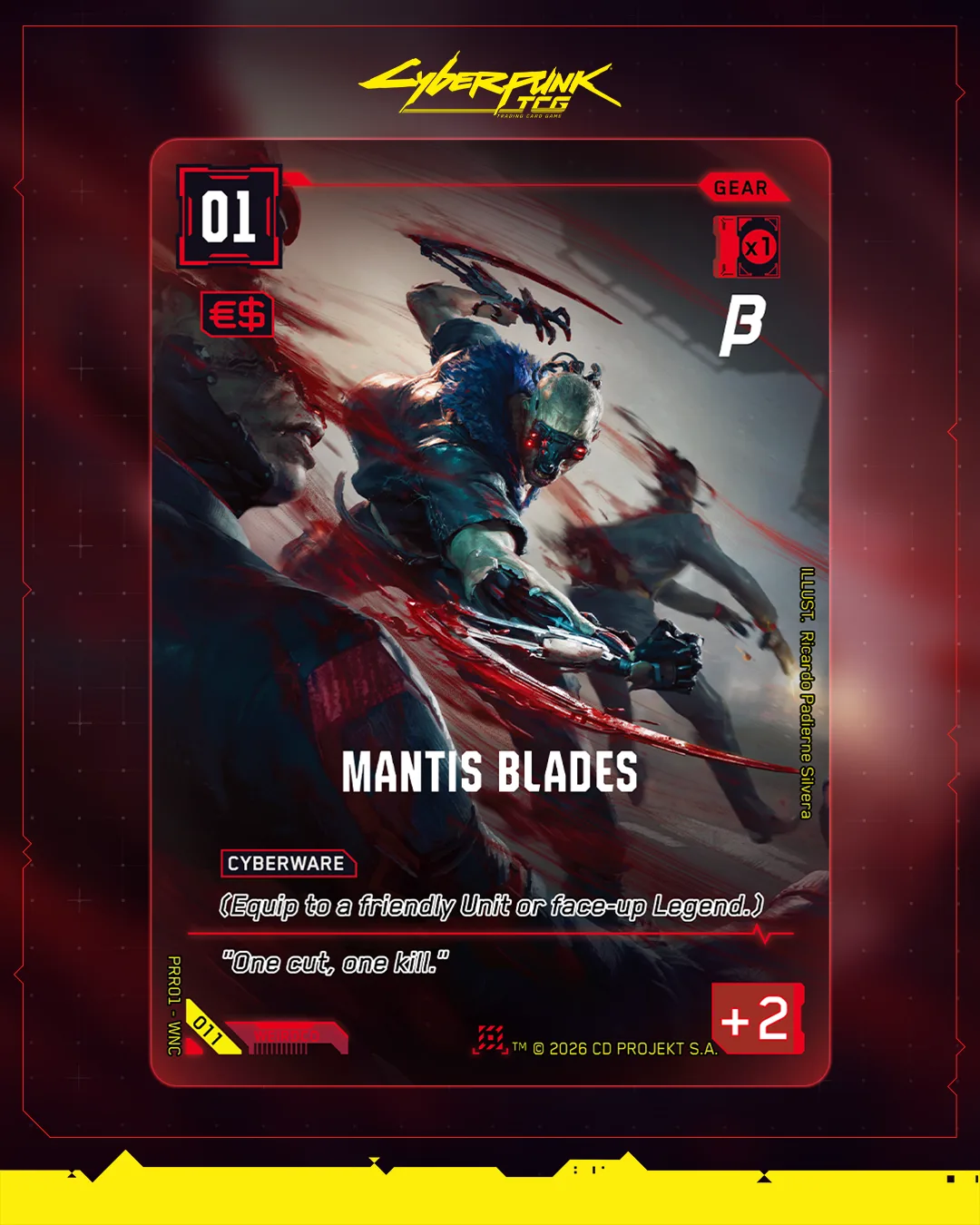
The Mantis Blades promo in the Beta Event Kit is the shape of the thing — a card also available in the set, given a promo treatment and handed out at an event.
Why the word configuration matters
"The same set or configuration" reads like corporate padding. It is not. Cyberpunk TCG already ships Welcome to Night City in two different configurations, and the official card database says so.
The card browser on cyberpunktcg.com runs on Netdeck.gg, and its set filter enumerates twelve product codes: Welcome to Night City — Beta and Welcome to Night City — Retail; Box Toppers — Beta and Box Toppers — Retail; Embracing Power and The Heist as both Beta and Retail starter decks; Pre-Release Beta; Set 1 Promos; and the Arasaka and Merc demo decks. Eight of those twelve codes are one half of a Beta/Retail pair — four products, each printed twice.
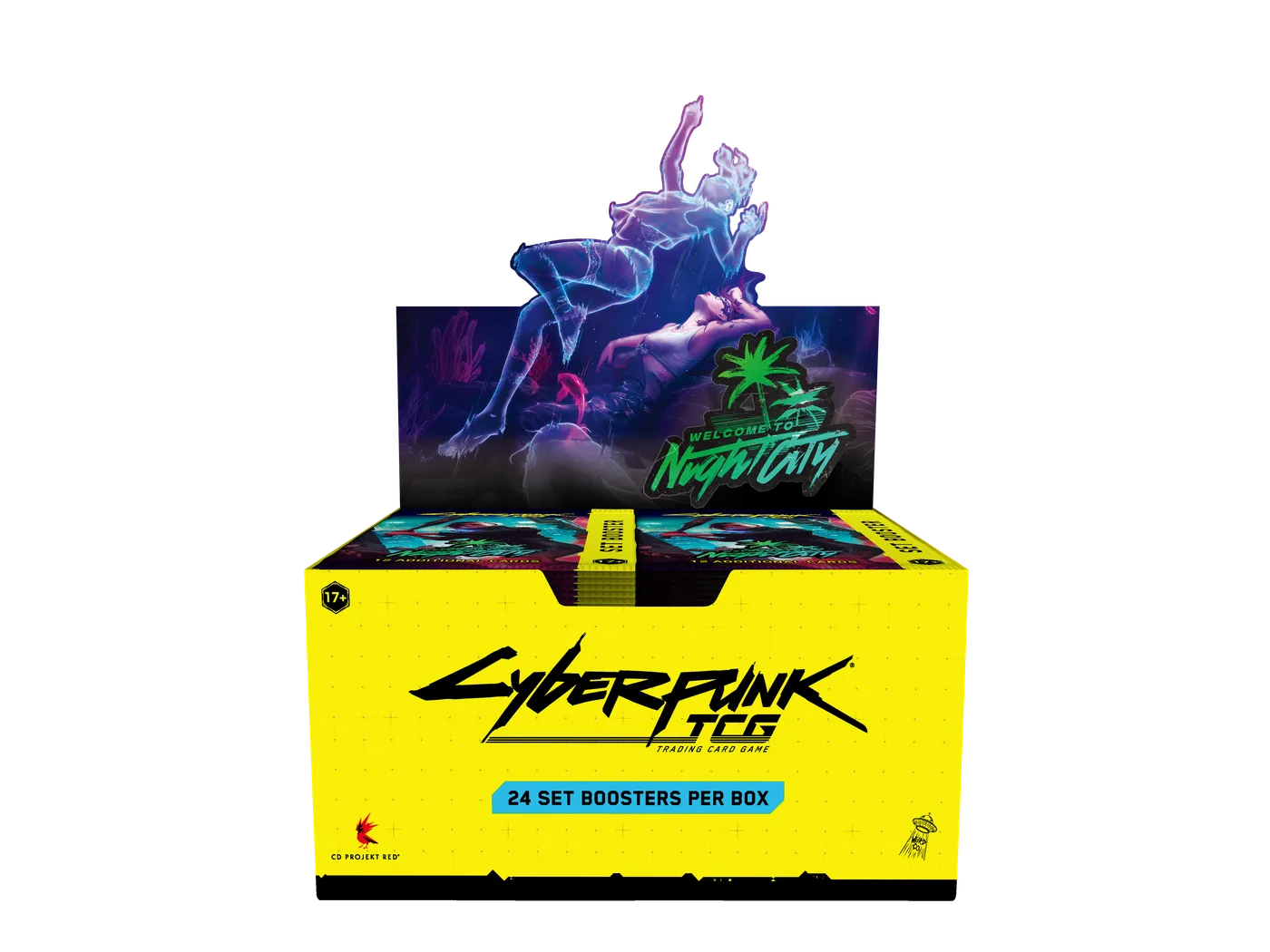
The physical products make the split obvious. A retail booster display holds 24 Set Boosters:
The Kickstarter Beta display holds 36, carries different header art, and wears a beta symbol on the front corner:
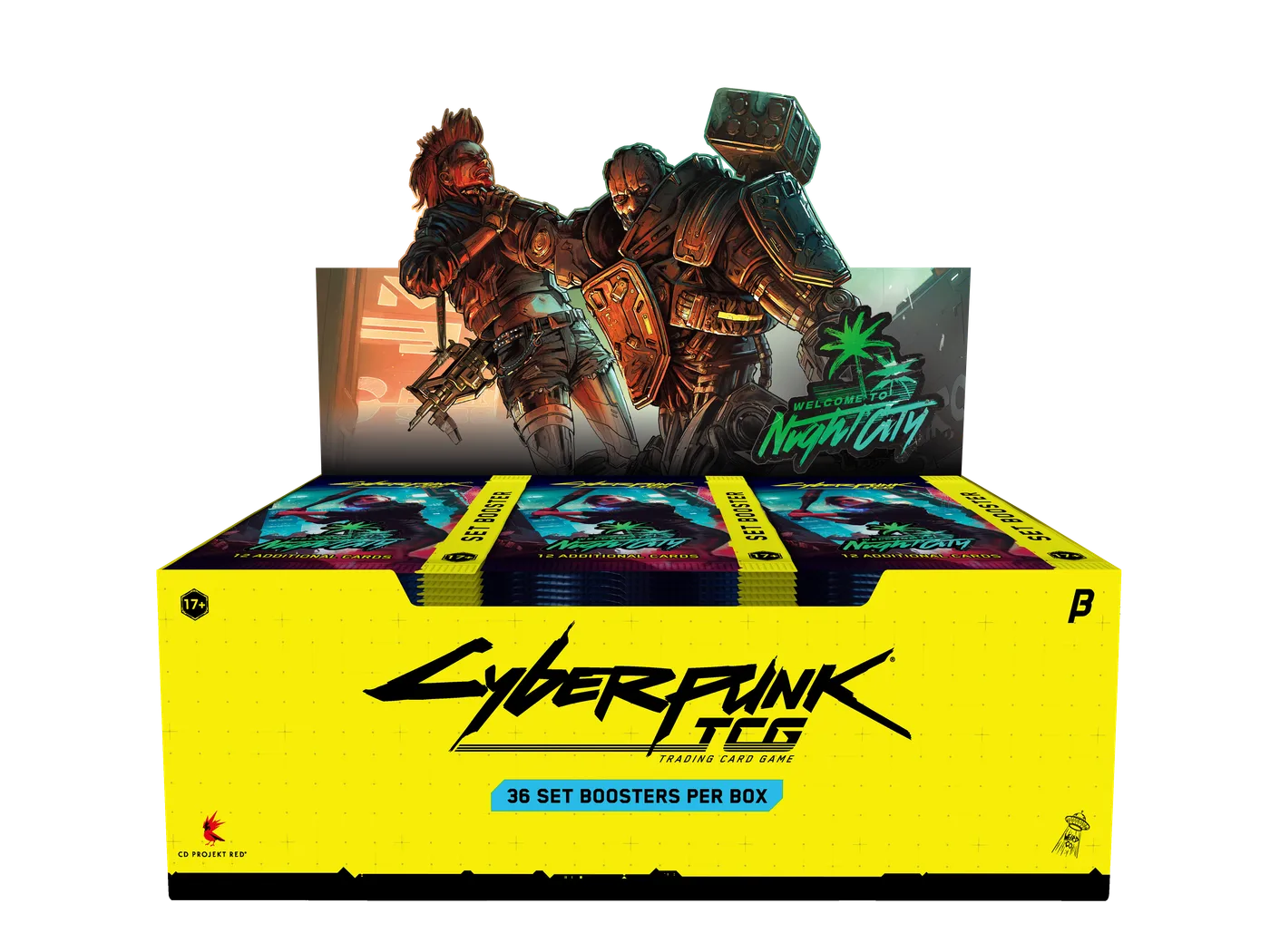
WeirdCo's Kickstarter FAQ spells out the rest: Kickstarter starter decks and booster boxes carry a Beta symbol that retail product does not, and Beta product contains art variants exclusive to it. So the Beta printing was a closed edition the day it went to press. The 7 August policy adds the part that was genuinely unknown — the retail printing is closed too.
The retailer program was already built this way
Commitment three is not new policy. It is a description of a program that has been running since spring, and the retailers page publishes the terms, which is where you should check WeirdCo's homework rather than taking the blog post at face value.
| Term | What the retailers page says |
|---|---|
| Who could order Set 1 retail early | Only brick-and-mortar stores with play space, before 1 May 2026 |
| Allocation guarantee | Order by 1 May 2026 and "you should expect to receive 100% of that order amount" |
| Allocation confirmed by | Before 31 May 2026, communicated by WeirdCo and the distributor |
| Restock | A guaranteed 20% restock, unlocked once the store has successfully run Organized Play events |
| Extra | A demo kit before the full retail release |
WeirdCo also reserves the right to limit allocation, explicitly to stop one store hoovering up a region's supply.
The restock gate is the sharpest part. Twenty per cent more product, but only after you have actually run events — that is a publisher paying stores in inventory for organized play. It is the operational meaning of the line in the blog post that stores supporting Organized Play "will always be prioritized in our distribution plans," and it lines up with the eight named event types covered in the Organized Play breakdown.
One honest caveat, and WeirdCo volunteers it: "we don't have any kind of policy explicitly preventing online sales." Hobby-store priority is an allocation preference, not channel exclusivity — nothing here stops displays reaching marketplaces. The policy is built to make the local store the cheapest reliable route, not the only one.
One distributor per market, and the map is public
The collectibility post says WeirdCo will "use exclusive distributors in every region." The retailers page names sixteen of them, checked 31 August 2026:
| Distributor | Markets |
|---|---|
| GTS | United States |
| Universal Distribution | Canada |
| Let's Play Games | Australia, New Zealand |
| Legendary Games Distribution | Southeast Asia, Taiwan, Macao |
| Saka Saka | Hong Kong |
| Ludus Distributors | Philippines |
| Omni Game Rekreasi Edukatif | Indonesia |
| Rebel | Poland |
| Bliss Distribution | UK, Republic of Ireland, South Africa, Channel Islands, Gibraltar |
| Neoludis | France, Belgium (FR), Luxembourg (FR), Switzerland (FR) |
| Luminous Cards | Germany, Austria, Switzerland, Netherlands, Luxembourg, Belgium, Hungary, Czechia, Slovakia |
| Manicomix | Italy, Turkey, Greece, Cyprus, Malta |
| TCG Factory | Spain, Portugal |
| Spilbræt | Denmark, Sweden, Norway, Finland, Iceland, Latvia, Estonia, Lithuania |
| Zvezdar | Slovenia, Croatia, Serbia, Bosnia and Herzegovina, Montenegro, Kosovo, Albania, North Macedonia, Bulgaria, Romania |
| Geek Culture | Brazil, Mexico, and the rest of Latin America — Guatemala, Honduras, El Salvador, Nicaragua, Costa Rica, Panama, Dominican Republic, Argentina, Chile, Colombia, Ecuador, Paraguay, Peru, Uruguay, Venezuela |
One distributor per market is the data claim made concrete, and WeirdCo says so directly: exclusive distributors exist "to give us the clearest view possible of where our product ends up," which "will help us accurately track consumption and demand, and will form the basis of all future set print run decisions." If several distributors compete inside one country, sell-through data arrives fragmented; with one, WeirdCo gets a clean regional read to size set two against. The retailers page accordingly describes the partners as "market development partners in organized play," not just logistics.
The gap is worth naming, because the page names it too: it closes on "distributors for other regions will be announced soon." As of 31 August 2026 that list carries no partner for Japan, mainland China, Korea, India or the Middle East. Two gaps this post flagged in mid-August have since closed: Hong Kong was carved out of Legendary Games' territory and given to Saka Saka, and Geek Culture's remit was widened from Brazil to Mexico and the rest of Latin America. Retail launch is 6 November. That is not a lot of runway for the rest.
Cardmarket, and the September timing catch
On 12 August WeirdCo announced that Cardmarket has committed full support for Cyberpunk TCG. Cree Gunning, WeirdCo's Head of Marketing, framed it as liquidity: "The easier it is for players to exchange cards and acquire the specific cards they need, the happier and healthier the Cyberpunk TCG community will be." Michael Knelangen, Head of Games Management at Cardmarket, was candid about the filter a new game has to pass: "There are many exciting products launching into the TCG space, and we're always on the lookout for the next big game! It's a difficult calculation to make in such a heavily saturated industry."
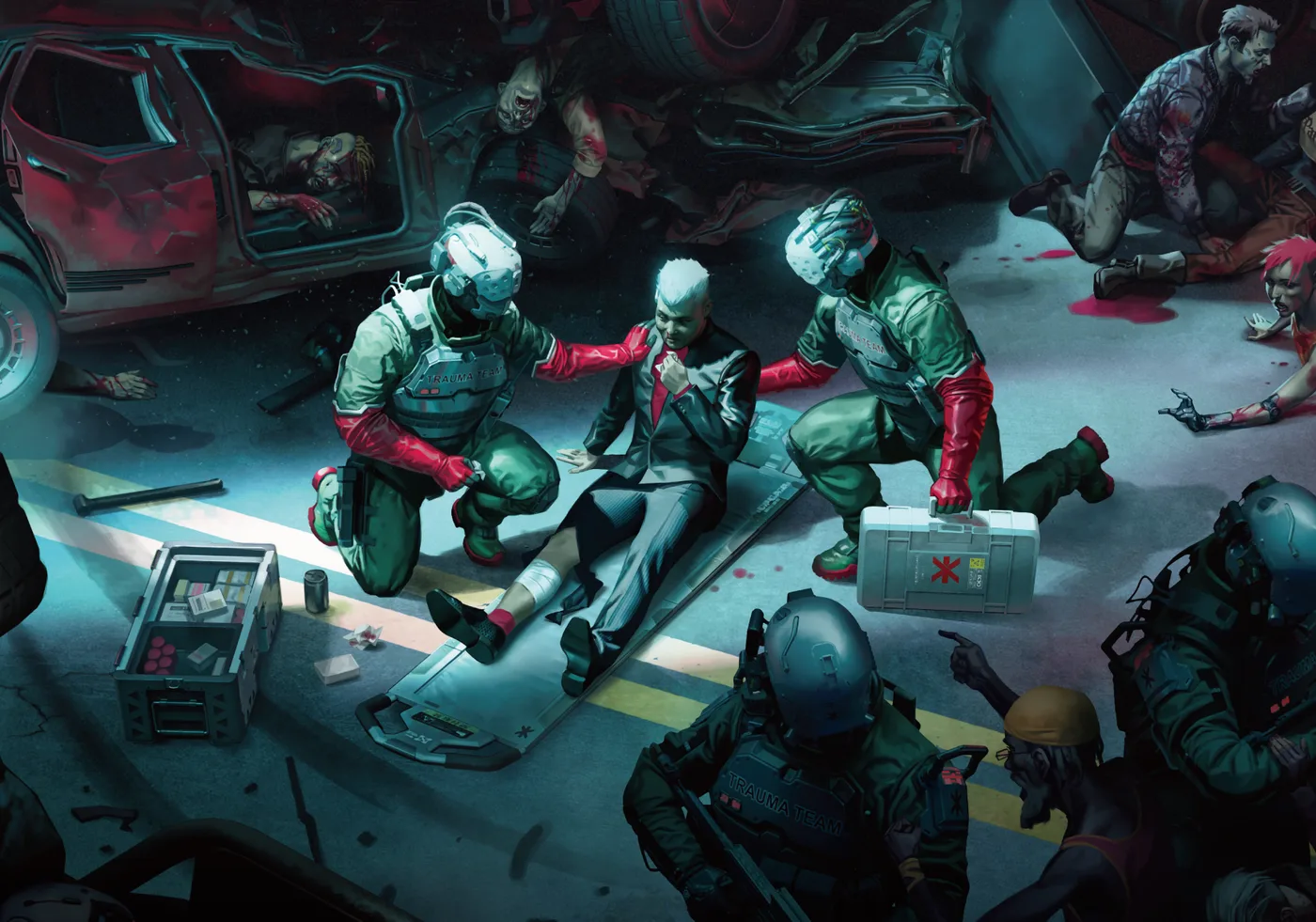
The detail that matters is the last line of the announcement: "Cardmarket support for Cyberpunk TCG will begin following our first wave of Kickstarter fulfillment in September."
Now read that against the Kickstarter FAQ, because fulfilment is split in two. Wave one, beginning Q3 2026 on express shipping, contains starter decks and Beta booster displays — but only for backers at the Netrunner Starter Kit tier and above. Wave two, beginning Q4 2026 on standard shipping, carries the accessories, the Beta Box, the Lucy cards, and the starter decks and Beta displays belonging to the Common Cyberdecks and Quickhacks tiers.
So Europe's secondary market opens on wave-one stock: Beta cards, in the hands of higher-tier backers, with no retail product in existence until the 30 October prerelease weekend and the 6 November launch. Backers on the Common Cyberdecks and Quickhacks tiers spend that stretch watching prices form around product they have not received yet. If you want a specific Beta art variant, the weeks between wave one and the prerelease are the thinnest supply this game has run on so far.
Four places the policy leaves room
None of this is a reason to disbelieve WeirdCo. It is the difference between a policy and a guarantee.
- "Supplementary products" is undefined. Reprinting a scarce staple into a premium boxed product is availability on paper and a second purchase in practice. The commitment names a mechanism, not a price point.
- Starter decks contain mechanically unique cards. Straight from the Kickstarter FAQ: "each starter deck will include 5 mechanically unique cards exclusive to their respective product." The never-mechanically-unique pledge covers promos. It does not cover starter-deck exclusives, which are the other classic way a card becomes hard to get.
- No print-run figure has been published. WeirdCo says it has locked print numbers for the Beta and Retail releases. It has not said what they are. Every scarcity commitment here is a commitment to a process, not to a number you can check.
- Online sales are permitted. Stated plainly in the post itself, alongside interest in conventions and the CD PROJEKT RED Gear Store as additional channels.
To WeirdCo's credit, the post does not pretend otherwise. Its own framing is that collectibility rests on trust, and that "trust takes time. It's built by doing what you say, not breaking promises." Publishing four checkable promises three months before launch is how you make that testable. November is when the test starts.
What to do before November
- Wave-one backers: for a few weeks your Beta cards are the only Welcome to Night City cards in circulation. Whatever you plan to trade meets a very thin market in September, in both directions.
- Retail buyers: find a store with a published Organized Play calendar. That is the store holding a guaranteed 20% restock, and under this policy restock is the only additional booster product coming for the set.
- Collectors: the twelve product codes in the official card database are your edition map. Beta and Retail are separate printings, and the database listed 124 cards across all products on 14 August 2026 — that is the reveal count so far, not a final set size.
- Everyone: if a card you need is expensive in December, the policy says the fix arrives as a promo, a supplementary product, or an event prize. It does not arrive as more boosters.
If you have not played it yet, the dice-driven objective race is the actual reason to care — that is in the full rules breakdown, and what an hour with it feels like is in playing Cyberpunk TCG at Gen Con 2026.
Quick reference
- Policy published: 7 August 2026, "Availability versus Collectibility" on the WeirdCo dev blog.
- Core commitment: "we will not reprint the same set or configuration again" after launch print runs.
- Reprint mechanisms: supplementary products, widely accessible promos, Organized Play prizing. Not additional booster packs.
- Promos: never mechanically unique — only variants of widely available cards (stated 4 July 2026).
- Distribution: one exclusive distributor per market, sixteen named as of 31 August 2026; hobby stores with play space prioritised; online sales not prohibited.
- Retailer terms: 100% of a reasonable order placed by 1 May 2026, confirmed before 31 May 2026, plus a 20% restock unlocked by running Organized Play.
- No further Kickstarters for Cyberpunk TCG.
- Cardmarket: full European support, beginning after the first fulfilment wave in September 2026.
- Fulfilment: wave one Q3 2026 (decks and Beta displays, Netrunner Starter Kit tier and above); wave two Q4 2026 (accessories, Beta Box, Lucy cards, and the Common Cyberdecks and Quickhacks tiers).
- Not published: actual print-run numbers, what counts as a supplementary product, distributors for Japan, mainland China, Korea, India and the Middle East.
For how another licensed newcomer handled its first year of supply, the Riftbound 2026 set schedule is the closest live comparison. For how a more established game runs the promo lever specifically, Lorcana promo cards explained covers the distribution side.
Frequently Asked Questions
Will Cyberpunk TCG Welcome to Night City be reprinted?
What is the difference between Cyberpunk TCG Beta and Retail products?
When does Cardmarket support for Cyberpunk TCG start?
Who distributes Cyberpunk TCG?
Will there be another Cyberpunk TCG Kickstarter?
Can Cyberpunk TCG be bought online?
Keep Reading
- Availability versus Collectibility, 7 August 2026 (WeirdCo, official) - the four supply commitments and the no-reprint clause
- Cyberpunk TCG to be fully supported by Cardmarket in Europe, 12 August 2026 (WeirdCo, official) - Gunning and Knelangen quotes, September start
- Cyberpunk TCG for Retailers (WeirdCo, official) - guaranteed allocation, the 20% Organized Play restock, and the sixteen named distributors
- Kickstarter FAQ (WeirdCo, official) - two-wave fulfilment, Beta symbol versus retail, five mechanically unique cards per starter deck
- Cyberpunk TCG card database, powered by Netdeck.gg (WeirdCo, official) - twelve product codes and the nine rarity labels
- An Update on Rebecca: Having a Moment Promo Card Availability, 4 July 2026 (WeirdCo) - the never-mechanically-unique promo pledge
- Marketing Materials asset library (WeirdCo, official) - Beta and Retail booster display product renders
Related Guides
Cyberpunk TCG Rarities Explained: Iconic, Secret and Nova
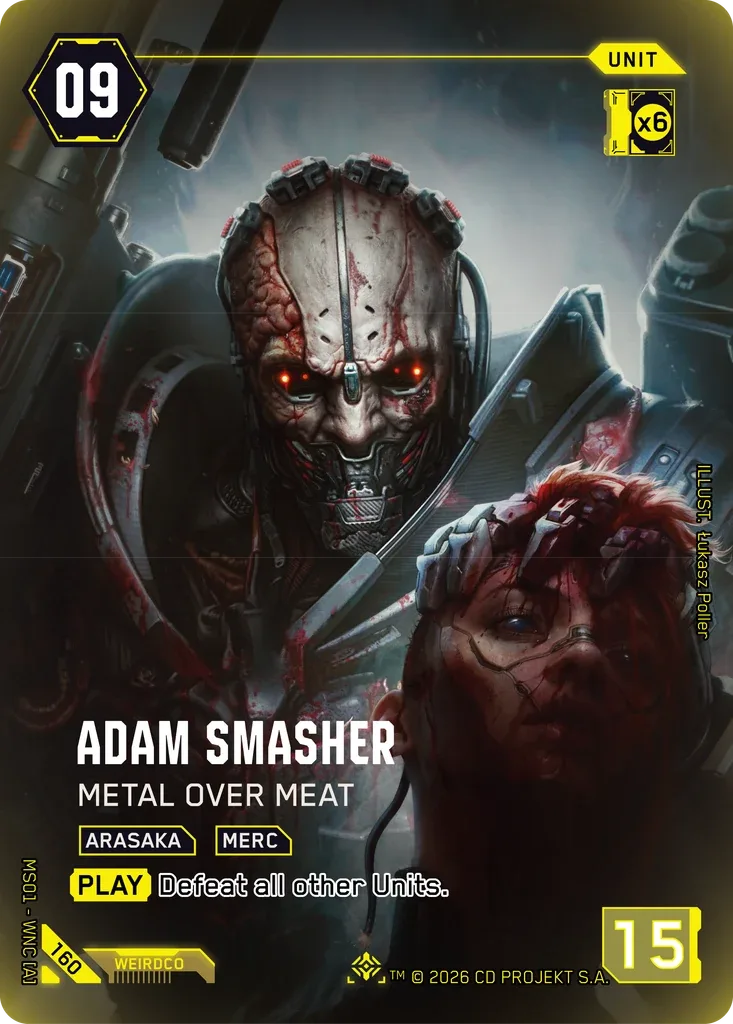
Cyberpunk TCG has seven rarities, and the official card database now lists 31 Iconic Rare printings in Kickstarter Beta and 19 in Retail. Every one of the 19 numbers that exists in both sets carries a different painting in each. Here is the full ladder, from the symbols to the Secret Rares to where Nova Rare actually lives.
Cyberpunk TCG: 11 Cards You Cannot Pull From a Booster
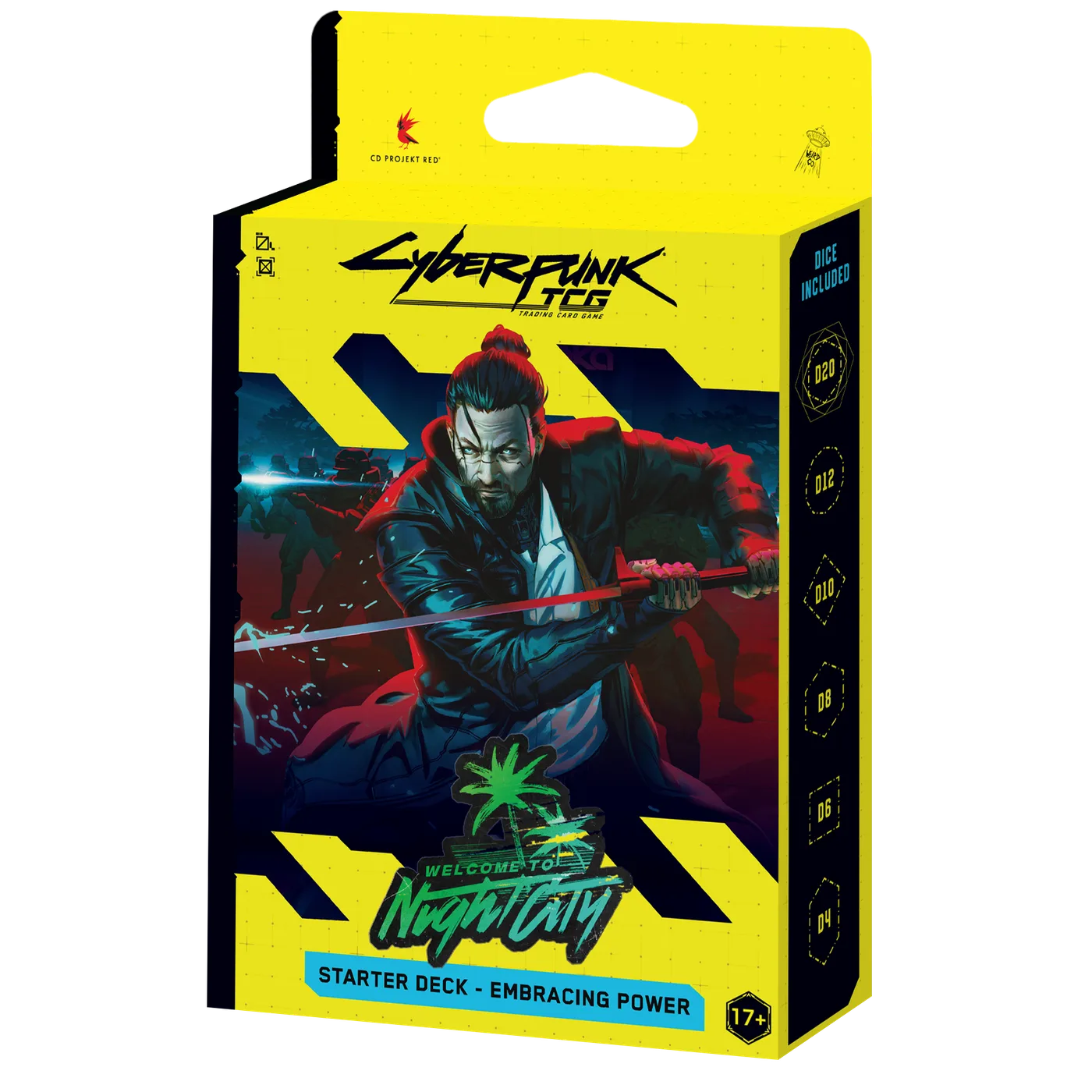
The official Cyberpunk TCG card database now lists 131 cards, and eleven of them have no printing in either Welcome to Night City booster set. Five belong to the Embracing Power starter deck, five to The Heist, and one — Rebecca: Having a Moment — is not in any product you can buy. Seven of the eleven are Legends, which is 28% of a card type you are required to run three of.
Cyberpunk TCG Raised $28.3 Million - Here Is What Actually Ships, and When
WeirdCo took $28,353,088 from 50,773 backers on a $100,000 goal - the most-funded tabletop campaign in Kickstarter history and the third-biggest Kickstarter of any kind, ever. Now it has to ship. Here is the confirmed timeline, the real difference between Beta and retail product, why the 1 October date you keep reading is wrong, and everything WeirdCo has pointedly not said yet.
Cyberpunk TCG Holophone: Factions, Jobs and Launch Date
WeirdCo announced Holophone on 7 October: a text-message story app that connects your Night City Brawl results to jobs for one of three factions. Here is what it is, how you get in, how it lines up with the Organized Play calendar, and the naming clash worth knowing about before it goes live on 30 October.
How to Play the Cyberpunk TCG — Gig Dice, Eddies and Street Cred, Explained
WeirdCo raised $28.3 million to build a trading card game where the win condition is a pile of dice. Here is how the Cyberpunk TCG actually works under the beta rules, what the four colors do, and why the release date most sites are printing is out of date.
Cyberpunk TCG Starter Decks: Embracing Power vs The Heist
WeirdCo's two Welcome to Night City starter decks share no cards and are built on mirror-image Legend lines. Here are both full lists with every card's cost, RAM and power, the five cards each second Legend exists to pay for, the rulings that change how they play, and which box is the better first buy.