The MTG Color Pie, Explained: What Each Color Does
Every card in Magic belongs to a color, and each color has a personality, a set of strengths, and things it flat-out can't do. Here's what White, Blue, Black, Red, and Green each stand for, why the color pie exists, and how to pick yours.
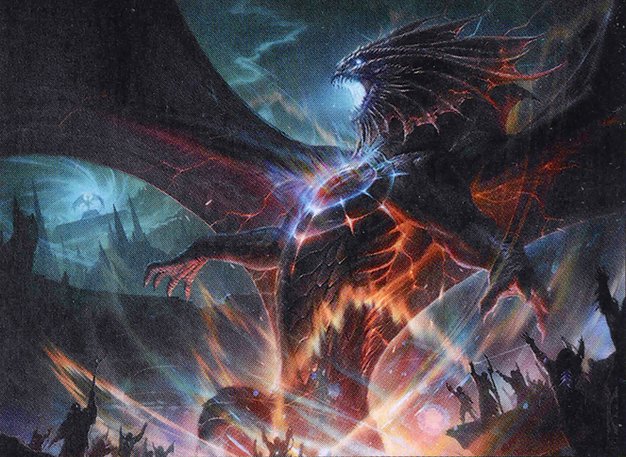
Every card in Magic belongs to a color, and the color isn't just the border art — it's a contract. White cards play by certain rules and can't do certain things. Red cards can do explosive things White never will, and in exchange Red is terrible at others. That set of "this color does this, not that" boundaries is the color pie, and it's the single most important concept for understanding why Magic works the way it does.
The color pie is why you can't build a deck that does everything. Each color is good at some things and deliberately bad at others, and that forced specialization is what makes deckbuilding a real decision instead of a checklist. Once you understand what each of the five colors stands for, you stop seeing a pile of random cards and start seeing five distinct toolkits, each with a personality. Here's the whole thing, color by color, plus what happens when you start combining them.
What the color pie actually is
Magic has five colors: White, Blue, Black, Red, and Green. Each one has a philosophy — a worldview that explains what it values — and that philosophy dictates its mechanical strengths and weaknesses. The colors aren't good guys and bad guys. They're five different answers to the question "how do you make the world better?", and each thinks the other four are doing it wrong.
The five colors sit on a pentagon. The two colors next to each one are its allies (they mostly agree), and the two across from it are its enemies (they fundamentally disagree). That geometry isn't flavor decoration — it's why allied two-color pairs tend to feel smooth and enemy pairs feel tense and powerful in a different way.
Here's the one-line version of each, then we'll go deep:
| Color | Stands for | Best at | Weak at |
|---|---|---|---|
| White | Order, community, peace | Efficient creatures, board wipes, lifegain, protection | Drawing extra cards, raw power |
| Blue | Knowledge, control, perfection | Card draw, counterspells, bounce, "no" | Destroying things on the battlefield, life loss |
| Black | Power, ambition, the price | Killing creatures, tutoring, draw-for-life, recursion | Destroying artifacts/enchantments, prevention |
| Red | Freedom, impulse, emotion | Direct damage, haste, artifact destruction, chaos | Lifegain, card advantage, big stable creatures |
| Green | Nature, growth, instinct | Big creatures, mana ramp, fighting, artifact/enchantment removal | Flying, countering, killing creatures cleanly |
The most important thing the color pie does is define weaknesses. Anyone can list what a color is good at. What makes Magic deep is that each color is intentionally bad at something its enemies handle, so no single color is self-sufficient — which is the entire reason multicolor decks exist.
White — order, the team, and the rules
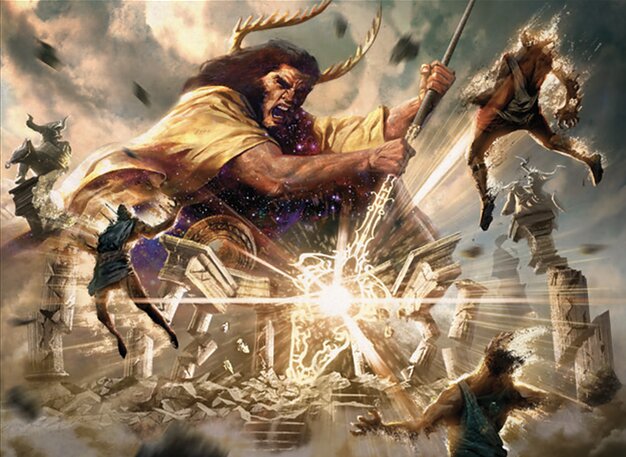
White believes in order, community, and the greater good. Its whole gameplan is the team beating the individual: a board full of efficient small creatures, backed by effects that protect the group and reset the game when things go wrong.
Strengths: The most cost-efficient creatures in the game pound-for-pound, especially small ones that buff each other. The best board wipes (Wrath of God, Day of Judgment) that destroy every creature at once. Lifegain. Protection and prevention effects. Cheap, flexible removal for creatures and enchantments — often exile-based, which is the cleanest kind. Going wide with tokens.
Weaknesses: White is historically the worst color at drawing extra cards. It struggles to generate raw card advantage on its own, and it lacks the explosive individual power of Black or the reach of Red. White grinds; it doesn't go over the top.
The vibe: You like efficient creatures, you don't mind being the deck that resets the board, and you're happy winning with a swarm or a clean answer for everything. White is the backbone of countless aggressive and midrange decks, and it pairs with every other color to cover its card-draw hole.
Blue — knowledge, control, and patience
Blue believes in knowledge, planning, and doing things the right way — which usually means waiting, reacting, and never letting the opponent get away with anything. It's the most powerful color in the abstract and the most hated to play against.
Strengths: The best card draw in the game, full stop. Counterspells — Blue is the only color that can flat-out say "no" to a spell before it happens. Bounce (returning permanents to hand). Card selection (Brainstorm, Ponder) that smooths every draw. Stealing your opponent's stuff. Drawing extra cards and taking extra turns.
Weaknesses: Blue is terrible at permanently destroying things already on the battlefield — it bounces and counters instead of killing. It has almost no lifegain, few efficient creatures for its cost, and historically can't deal direct damage. Blue answers problems before they land; once a threat resolves, Blue often can only delay it.
The vibe: You enjoy holding up mana, reacting to the opponent, and winning the long game on raw card advantage. If "do nothing on your turn and dare the opponent to act" sounds thrilling rather than boring, you're a Blue player. It's the hardest color to pilot well and the most rewarding when you do.
Black — power at any cost
Black believes in getting what it wants, period. It has no moral guardrails — it'll pay life, sacrifice creatures, dig through its own graveyard, whatever it takes. The catch is always a price, and Black is happy to pay it.
Strengths: The best creature removal in the game — "destroy target creature" with few restrictions is Black's signature. Tutors (searching your library for any card), which Black does better than anyone. Drawing cards by paying life. Reanimation and graveyard recursion. Forcing discard. Draining life. Black turns resources you don't think of as resources — life, creatures, your graveyard — into power.
Weaknesses: Black can't deal with artifacts or enchantments well (that's Red and Green and White's job). It has limited prevention or protection. And almost everything good comes at a cost: life, a sacrificed creature, a discarded card. Black's power is real, but you always pay for it.
The vibe: You want the most flexible answers and the most ruthless engines, and you don't mind your own cards hurting you a little. Black is the universal "good stuff" color — it gives any deck premium removal and card advantage, which is why it shows up in so many color pairs.
Red — impulse, chaos, and damage
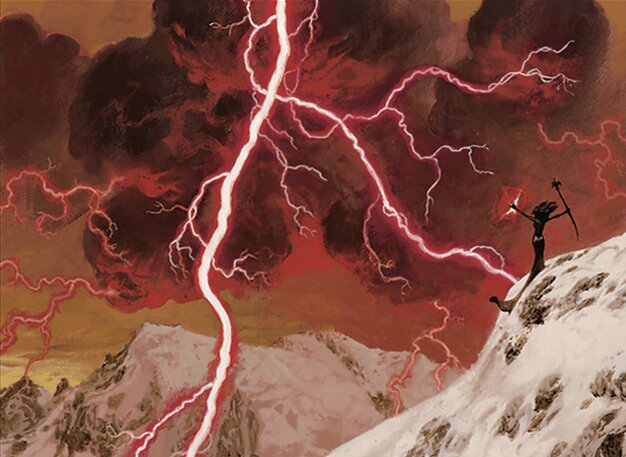
Red is emotion, freedom, and acting now. It doesn't plan; it reacts to its gut. Mechanically that translates to the fastest, most direct gameplan in the game: deal damage, deal it quickly, and don't apologize.
Strengths: Direct damage — Lightning Bolt deals 3 to anything for one mana, and Red can point that at creatures or straight at the opponent's face. Haste (creatures attack the turn they arrive). Cheap aggressive creatures. The best artifact destruction. Temporary effects: "play extra cards this turn," impulsive draw, rituals that make burst mana. Chaos and randomness.
Weaknesses: Red is bad at card advantage — its card draw is usually "exile cards and play them this turn only," so it tends to run out of gas. It has almost no lifegain, few ways to deal with enchantments, and historically can't keep big stable creatures the way Green does. Red wants the game over fast because the long game is where it falls apart.
The vibe: You make decisions fast and end games faster. You'd rather lose quickly than durdle for an hour. Red is the most-recommended starter color because it teaches you tempo and the clock — and Mono-Red aggro has been a real, winning deck in Standard for basically the entire history of the game.
Green — nature, growth, and big creatures

Green believes in nature, instinct, and the natural order — the strong survive and the big win. It's the color of mana acceleration and the biggest creatures in the game, and it would simply like to play a 7-drop on turn four, thanks.
Strengths: Mana ramp — Llanowar Elves and Cultivate-style effects let Green deploy expensive threats far ahead of schedule. The biggest, most efficient creatures. Fighting (Green's version of removal: have my big creature deal damage to your creature). The best artifact and enchantment destruction, paired with White. Drawing cards based on creatures. Raw size and acceleration.
Weaknesses: Green is the worst color at flying, can't counter spells, and historically can't cleanly kill a creature — it fights instead, which requires its own creature to survive. It has limited direct removal for problematic permanents that aren't artifacts or enchantments, and it struggles against evasive threats it can't block.
The vibe: You want to ramp into huge things and smash. Green is the most straightforward color to play and a great starting point — accelerate your mana, drop something enormous, attack. It pairs with everything to add the one thing Green lacks (removal, evasion, or interaction).
The color pie philosophy and the bans
The color pie isn't a loose guideline — Wizards of the Coast treats it as a hard design rule, and they enforce it. Each color has a list of things it's allowed to do and a list of things it isn't, and that list is remarkably stable across 30 years of sets. Blue doesn't get efficient creature removal. Red doesn't get reliable card draw. White doesn't get to draw three cards for two mana. These aren't accidents; they're load-bearing.
Why so strict? Because the weaknesses are what make the colors mean something. If every color could draw cards and kill creatures and ramp, color choice would be cosmetic. The boundaries force tradeoffs: you pick Blue and accept you can't kill the resolved threat, or you pick Green and accept you can't fly over the wall. That tension is the game.
When a card does break the rules, it's usually a mistake the design team flags as a "color pie break," and occasionally one is strong enough to get reworked or pulled. The principle to internalize: each color's weaknesses are as defining as its strengths, and the reason multicolor decks exist at all is to cover one color's holes with another color's strengths.
What two-color pairs feel like
Two-color decks are where Magic opens up, because each pair blends two philosophies into something with its own identity. The ten pairs have guild names from the plane of Ravnica that the community uses everywhere. The allied pairs (colors next to each other on the pentagon) blend smoothly; the enemy pairs (colors across from each other) feel sharper and more powerful in tension.
| Pair | Guild name | What it feels like |
|---|---|---|
| White-Blue | Azorius | Control: counter, wrath, and grind the opponent out |
| Blue-Black | Dimir | Control and theft: card advantage, removal, and sneaky wins |
| Black-Red | Rakdos | Aggressive and ruthless: kill it or burn it, fast |
| Red-Green | Gruul | Big, fast beatdown: ramp into huge creatures and swing |
| Green-White | Selesnya | Go wide with efficient creatures and tokens |
| White-Black | Orzhov | Grindy attrition: removal, lifegain, and value |
| Blue-Red | Izzet | Spells matter: burn, card draw, and combo-y tempo |
| Black-Green | Golgari | Midrange value: removal, recursion, and the graveyard |
| Red-White | Boros | Aggressive go-wide and burn: pressure from two angles |
| Green-Blue | Simic | Ramp and card advantage: big mana into big payoffs |
The point isn't to memorize the table — it's to see how predictable the blends are once you know the single colors. Azorius is just White's board control plus Blue's countermagic. Gruul is Green's big creatures plus Red's haste and burn. If you know what the five colors do, you can reason out what any pair does. For a deeper look at how these identities turn into actual gameplans, our MTG deck archetypes guide maps the colors onto aggro, midrange, control, and combo.
Picking your colors
If you're new and trying to figure out where to start, match the color to how you like to play rather than which one looks coolest:
- You want to attack and end games fast. Start Red (or Red-White Boros). It's cheap, decisive, and teaches you the clock.
- You want to ramp into huge threats and smash. Start Green (or Green-Red Gruul). The most straightforward gameplan in the game.
- You want efficient creatures and clean answers. Start White (or Green-White Selesnya). Go wide and reset the board when needed.
- You want the most flexible removal and ruthless value. Start Black. It slots into almost any deck and gives you premium answers.
- You want to control the game and win the long game. Start Blue (or White-Blue Azorius), but know it's the hardest to pilot well.
Most players have a natural lean, and the trick is to follow it — you'll play your preferred colors better than a "stronger" combination you don't enjoy. When you're ready to actually build something, our how to build a Commander deck walkthrough and the Commander format guide take you from a color identity to a full 100-card deck. And if you want to see the philosophy made concrete, the best removal spells in MTG breakdown is basically a tour of which colors get to kill what — the color pie in action.
Frequently Asked Questions
What is the color pie in Magic: The Gathering?
What is the best MTG color for beginners?
What are allied and enemy colors in MTG?
What is each MTG color's biggest weakness?
What do the two-color guild names mean?
Can a deck use all five colors?
Keep Reading
Related Guides
MTG Two-Color Guild Guide: Every Color Pair Explained
Magic players don't say 'white-blue,' they say Azorius — and the ten guild names carry real meaning about how each color pair plays. Here's every two-color combination, what it's actually good at, and the gameplan it pushes you toward.
How Combat Works in Magic: The Gathering, Explained
Combat is where most Magic games are won, and it is also where most new players misplay. Here is the combat phase broken down step by step — attackers, blockers, damage, and the keywords like first strike, trample, and deathtouch that bend the rules.

MTG Deck Archetypes: Aggro, Midrange, Control & Combo
Every Magic deck ever built is a variation on four ideas. Here is what aggro, midrange, control, and combo actually do, when each one wins, and how to find the archetype that matches the way you like to play.
MTG Arena Competitive Brawl: Rules and Banned Commanders
On October 12, 2026, Wizards banned three more commanders in Competitive Brawl and moved nine cards, Oko and Ragavan among them, from fully banned to banned only as your commander. Here is what Competitive Brawl is, how it differs from the Brawl queue next to it, the full list, and the one card the official page has gone quiet on.
MTG Commander Format Guide — How to Start Playing EDH (2026)
Commander is the most-played MTG format on the planet and the easiest one for new players to start in. The rules look intimidating on paper. They are not. Here is the full beginner guide.

Best Commander Staples Every Deck Wants, Ranked
There's a short list of cards that show up in basically every Commander deck regardless of theme — the silent 25 that make the splashy 75 work. Here are the staples worth a slot in almost any list, sorted by the job they do, with the legality double-checked.