Best Commanders for Beginners, Ranked
The fastest way to bounce off Commander is to pick a five-color combo deck as your first build and lose fourteen games in a row. Here are the legends that teach the format, ranked, with the mana base you'll actually be able to cast.
The fastest way to bounce off Commander forever is to pick the strongest legend on EDHREC as your first deck, build a half-baked version of a combo list, and lose fourteen games in a row without understanding why. It happens constantly. The deck that teaches you the format is almost never the deck that wins the most games — it's the one that's cheap to cast, hard to misplay, and resilient enough to survive your early mistakes.
A good beginner commander does three things. It has a simple, obvious gameplan you can execute on autopilot while you learn the harder parts of the game. It has a forgiving mana base — ideally mono-color, so you never get color-screwed and lose to your own lands. And it keeps working even when the table removes your commander, because every new player loses their commander a lot.
This is a ranked list of the legends that do all three, from the cleanest starting points up through the picks worth graduating into. We're verifying every commander's color identity, mana cost, and Commander legality against Scryfall, and we're flagging the popular "beginner" recommendations that are actually traps. The goal isn't the deck that wins your pod — it's the deck that's still fun on game fifty.
What makes a commander beginner-friendly
Power level is the wrong thing to optimize for as a new player. These four traits matter far more:
- A simple, repeatable gameplan. You want a commander whose ability you can read once and understand fully. "Tap to make goblins" is a gameplan. "Whenever you cast your third spell each turn, if you control a creature with the highest power, draw two cards unless an opponent..." is a homework assignment.
- A clean mana base. Mono-color decks never get color-screwed. You play one type of basic land, you always have the right mana, and you spend your brain on the actual game instead of doing manabase math. This is the single biggest reason a mono-red goblin deck is easier to learn than a four-color superfriends pile.
- Resilience to losing the commander. You will lose your commander to removal, and the commander tax (2 extra generic mana each recast) stacks up fast. The best beginner commanders either work fine without the commander on the board, or are cheap enough to recast a few times without breaking your turn.
- A deck that doesn't need expensive staples to function. A beginner commander shouldn't require fetchlands, dual lands, and tutors to do its thing. If the gameplan only works with a $500 manabase, it's not a beginner deck.
The trap every new player falls into: confusing "powerful" with "good to learn on." The most-played commanders on EDHREC are often the hardest to pilot. Pick the one whose ability fits on a sticky note.
The S-tier beginner commanders
These are the cleanest possible starting points. Every one is mono-color or close, with a gameplan you can run on autopilot.
| Commander | Cost | Colors | The gameplan |
|---|---|---|---|
| Krenko, Mob Boss | {2}{R}{R} | Mono-red | Tap him, make goblins equal to the number you control. Attack |
| Talrand, Sky Summoner | {2}{U}{U} | Mono-blue | Cast an instant or sorcery, get a 2/2 flying Drake. Draw, control, swing |
| Sram, Senior Edificer | {1}{W} | Mono-white | Draw a card whenever you cast equipment, an aura, or a vehicle. Suit up |
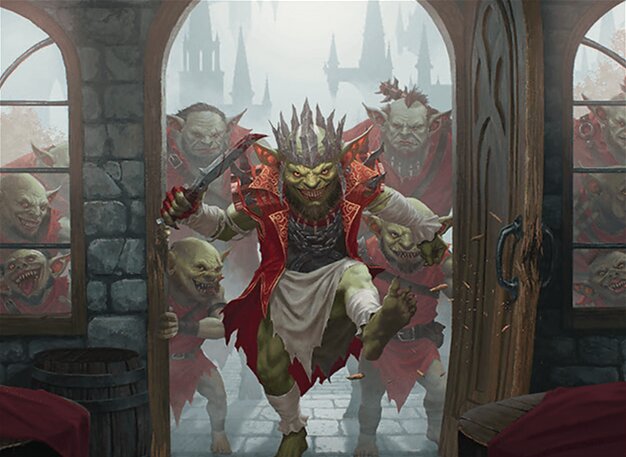
Krenko, Mob Boss is the single best deck to learn Commander on, and it isn't close. He's a mono-red four-drop, so your mana base is twenty-odd Mountains and you will literally never get color-screwed. The gameplan is "make a pile of goblins, then attack with the pile." When the goblin count doubles every time you tap him, the math gets out of hand fast, and you learn how board states and combat work without any subtlety getting in the way. He's also genuinely strong, so you won't feel like you're playing a tutorial deck.
Talrand, Sky Summoner is the spellslinger entry point. Every instant or sorcery you cast makes a 2/2 flying Drake, so the deck is just "play a control shell full of counterspells, card draw, and removal, and get a free flier every time." It teaches you how to hold up interaction and play reactively — the skill that separates new players from intermediate ones — while the Drakes quietly build a win condition. Mono-blue means a clean mana base.
Sram, Senior Edificer is the cheapest to build and the easiest to keep gas flowing. He draws you a card every time you cast an equipment, aura, or vehicle, so a mono-white Voltron deck built around suiting up one creature never runs out of cards. He's a {1}{W} two-drop, so even when he dies you can recast him for next to nothing. The Voltron plan (load up one creature and win with commander damage) is the most intuitive win condition in the format.
Great two-color picks

Once you've played a mono-color deck for a few games and want a little more flexibility, two-color commanders are the sweet spot. The mana base is still easy to fix with cheap dual lands, but you get access to more answers.
- Wilhelt, the Rotcleaver — {2}{U}{B}, Dimir Zombies. Make a 2/2 decayed Zombie token whenever a non-token Zombie dies, and draw cards by sacrificing them. A tribal deck where the synergies are obvious and the engine refuels itself. Forgiving because it grinds value even when behind.
- Lathril, Blade of the Elves — {2}{B}{G}, Golgari Elves. Tap ten or more Elves to drain each opponent for ten — a clean, telegraphed win condition that teaches you how to build a wide board and then convert it. Elf tribal has one of the deepest, cheapest card pools in the game.
- Prosper, Tome-Bound — {2}{B}{R}, Rakdos. Exile the top card each turn and you can play it; make a Treasure whenever you do. A value engine that generates ramp and card advantage automatically, so you always have something to do. From a Commander precon, so it comes ready to play.
Two-color tribal decks like Wilhelt and Lathril are ideal second decks. Tribal is forgiving because the synergies are spelled out on the cards — the "lord" effects that pump every creature of a type carry games, and the gameplan (go wide, then overrun) is easy to read. The two-color mana base only needs a handful of cheap duals to run smoothly, which keeps the build affordable.
When you're ready for three colors
Three-color commanders demand a real mana base — you'll want some dual lands and fixing — but a couple are forgiving enough to recommend once you've got a few games under your belt.
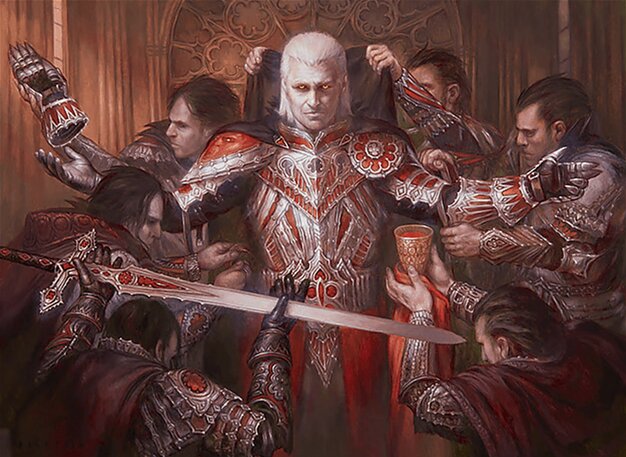
- Edgar Markov — {3}{R}{W}{B}, Mardu Vampires. His eminence ability makes a 1/1 Vampire token whenever you cast another Vampire, even while he's in the command zone. That last part is the magic: he generates value before he ever hits the board and keeps working if he gets removed. One of the most-played commanders in the format for years, and a tribal deck with an enormous, well-supported card pool. The catch is the three-color mana base, which is why he's not in the mono-color S-tier.
- Isshin, Two Heavens as One — {R}{W}{B}, Mardu. A {R}{W}{B} three-drop that doubles your attack triggers. The deckbuilding is more open-ended than tribal, so it's a slightly more advanced pick, but the gameplan (attack with creatures that have combat triggers, get double value) is intuitive once you see it.
Edgar Markov is the standout because the eminence ability sidesteps the biggest beginner frustration: losing your commander. Most decks stall when the table kills your commander and the tax piles up. Edgar keeps pumping out vampires from the command zone regardless, so you're never fully shut off. That resilience is exactly what a newer player wants — it just costs you the simplicity of a single-color mana base, which is the only reason he's not ranked first.
Commanders to avoid as your first deck
Some commanders get recommended to beginners constantly and shouldn't be. They're not bad cards — they're bad first decks.
| Commander | Why it's a trap for beginners |
|---|---|
| Atraxa, Praetors' Voice | Four colors, complex proliferate/superfriends gameplan, demands a tuned mana base. Iconic, but a homework assignment for game one |
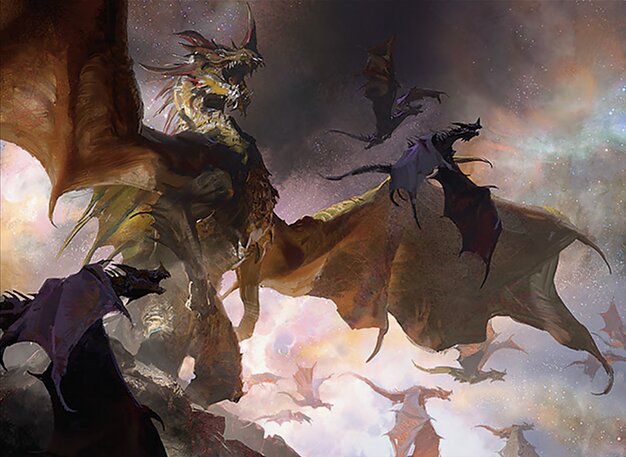
| The Ur-Dragon | Five-color mana base. The Dragons are fun, but you'll get color-screwed constantly without expensive fixing |
| Any cEDH combo commander | Decks built to win on turn 3-4 with infinite combos teach you nothing about how the game is actually played in a casual pod |
| Yarok, the Desecrated | Three-color ETB-doubling engine. Strong and beloved, but the value-stacking gets genuinely complex to track |
The Ur-Dragon deserves a specific callout because Dragons are the single most tempting tribe for new players, and a five-color deck is the single hardest mana base in the game. You will spend your first twenty games unable to cast your own cards because you drew the wrong colors. The Dragons deck is a fantastic third or fourth deck once you understand fixing — just not your first. Same logic applies to Atraxa: it's the most popular commander of all time for good reason, but four colors plus a proliferate engine is a lot to manage while you're still learning what a board wipe is.
If a commander's "average decklist" on EDHREC is full of fetchlands, shocklands, and tutors, it's telling you the deck needs those to function. That's a signal to wait until you've got the fundamentals down — and the budget.
Precon faces vs building your own
You have two ways to start, and both are valid.
Buy a precon. Wizards sells preconstructed Commander decks for roughly $40-$60, and they're tournament-legal out of the box. The face commander is built to work with the ninety-nine cards in the box, so you get a coherent deck with zero deckbuilding knowledge required. Prosper, Tome-Bound and Wilhelt, the Rotcleaver both come from precons and are great picks. The downside: precons are tuned to a low power level, so you'll want to upgrade them eventually.
Build your own around a cheap legend. Krenko, Talrand, and Sram all support cheap, mono-color builds you can assemble from EDHREC's average decklist. This teaches you more — you understand every card because you chose it — but it takes more time and a little more money up front. The advantage is you end up with a deck that's exactly yours.
The honest recommendation: if you've never built a deck before, start with a precon to learn how a finished Commander deck feels, then build your second deck from scratch around one of the mono-color S-tier picks above. By then you'll know what 36 lands and a real ramp package look like, and you won't make the classic mistake of running 30 lands and getting screwed every game.
For the full rules walkthrough before you pick, our Commander format guide for beginners covers color identity, the command zone, and Rule 0. When you're ready to build, the how to build a Commander deck guide lays out the deck skeleton.
Quick Action Checklist
- Start mono-color: Krenko (red goblins), Talrand (blue spellslinger), or Sram (white Voltron)
- Pick by gameplan, not power level — if the ability doesn't fit on a sticky note, skip it for now
- If you've never deckbuilt, buy a precon first (Prosper or Wilhelt are great faces)
- Move to two-color tribal (Wilhelt, Lathril) once your first deck feels automatic
- Save Edgar Markov for when you can afford a three-color mana base — his command-zone value is worth it
- Avoid Atraxa, The Ur-Dragon, and any cEDH combo deck as your first build
- Run at least 36 lands no matter which commander you pick — this is the #1 new-player mistake
- Validate your color identity on Scryfall before you sleeve up
- Play 10 games before tuning — the deck will tell you what's dead weight
Frequently Asked Questions
What is the best commander for a complete beginner?
Should I buy a precon or build my own first commander deck?
Why is a mono-color commander easier for beginners?
Is Atraxa a good first commander?
What makes a commander forgiving to pilot?
How many lands should a beginner Commander deck run?
Keep Reading
Related Guides
How to Upgrade a Commander Precon (Without Rebuilding It)
Precons are mediocre in predictable ways, and predictable is cheap to fix. Here are the four flaws every Commander precon ships with, the cuts to make first, and a fully priced under-$16 swap menu that takes a stock deck from Bracket 2 to Bracket 3.
Mystery Booster Commander Edition: Packs, Draft, Legality
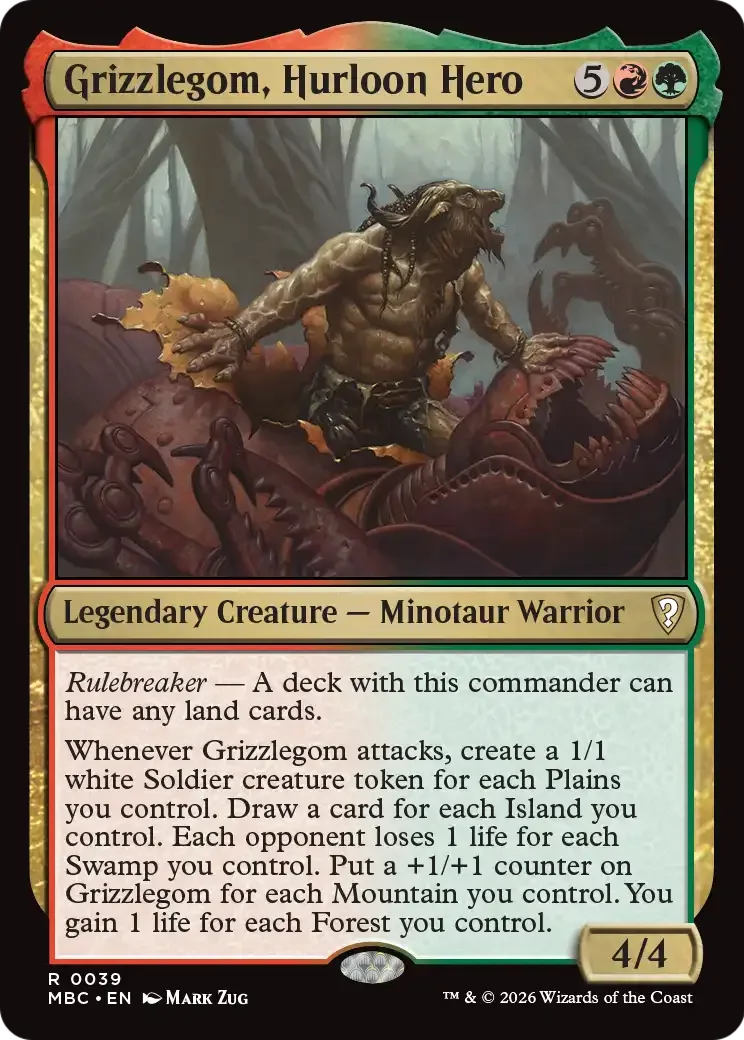
Festival in a Box: Atlanta 2026 goes on sale October 19 for $249.99 with a full box of Mystery Booster Commander Edition inside, and one box is exactly one eight-player Commander Draft. Here is the booster slot by slot, the draft rules, all 60 new commanders by color, the eight rulebreakers, and when the cards become legal.

MTG Commander Banned List: Every Card and Why
Wizards' banned list page gives Commander 42 card names and four lines of small print. Scryfall says the real number is 83. The gap is 41 cards banned by category rather than by name — Conspiracies, ante cards, and the seven banned everywhere for offensive content. Here is the entire list, grouped by what each card actually does, plus the one change the Commander Format Panel made this year.

MTG Commander Brackets Explained (The Power-Level System)
"What's your power level?" used to be the most useless question in Commander. WotC's official Bracket system finally gives it real numbers. Here's what Brackets 1 through 5 actually mean and how to use them so nobody gets stomped.

MTG Commander Format Guide — How to Start Playing EDH (2026)
Commander is the most-played MTG format on the planet and the easiest one for new players to start in. The rules look intimidating on paper. They are not. Here is the full beginner guide.

Best Commander Staples Every Deck Wants, Ranked
There's a short list of cards that show up in basically every Commander deck regardless of theme — the silent 25 that make the splashy 75 work. Here are the staples worth a slot in almost any list, sorted by the job they do, with the legality double-checked.