How the Stack and Priority Work in Magic: The Gathering
The stack is the single rules concept that decides whether you actually understand Magic or just play the cards. Here is how it resolves, when you get priority, how to respond to a spell, and the timing rulings that trip up every new player.

Here is the thing nobody tells you when you learn Magic: casting a spell does not make it happen. You put the spell on a thing called the stack, and then it sits there, doing nothing, while both players get a chance to react. Only once everyone passes does it actually resolve. Miss that one idea and half the game looks like magic in the bad sense — your opponent "responds" to your spell and somehow your removal hits nothing, your big play gets countered, and you have no idea when you were even allowed to do something about it.
The stack is the engine that runs all of that, and priority is the system that decides who gets to touch it. This is a beginner-to-intermediate primer that matches the current comprehensive rules. If you know what an instant is and what tapping a land does, you are ready. By the end you will know exactly when you can respond, why "in response" is a real phase and not a vibe, and the handful of timing rulings that quietly decide close games.
What the stack actually is
The stack is a zone — the same way the battlefield, the graveyard, and your hand are zones. When you cast a spell or activate an ability, it does not immediately do its thing. It goes onto the stack and waits there as an object.
While something is on the stack, it is not yet a permanent, it has not dealt its damage, it has not drawn you cards. It is a promise that will happen once it resolves, and "once it resolves" only comes after every player has had a chance to add more things on top of it.
That waiting period is the whole point. It is why Counterspell exists. Counterspell reads "Counter target spell," and the only window in which a spell is a spell on the stack — rather than a permanent on the battlefield or a resolved effect — is that gap between casting and resolving. The stack is the place where that gap lives.
Last in, first out: the only resolution rule
The stack resolves last in, first out (LIFO). The most recently added object resolves first, then the next one down, and so on until the stack is empty. If you have ever stacked plates, you know this instinctively: the last plate you put on top is the first one you take off.
Concretely. You cast a creature. Before it resolves, your opponent casts a removal spell targeting it. The stack now reads, top to bottom: removal spell (added last), your creature (added first). When players stop adding to the stack, the removal resolves first — but your creature is not on the battlefield yet, it is still on the stack, so the removal often fizzles or has to target the spell, not the creature. (Most creature removal can only target creatures on the battlefield, which is exactly why you cannot "kill" a creature while it is still a spell on the stack.)
The LIFO rule produces the most important practical instinct in the game: the last thing said is the first thing that happens. If your opponent responds to your spell, their response resolves before your spell does. People lose games because they assume the spell they cast first goes off first. It does not. It goes off last.
Priority: the permission to act
You cannot just do things in Magic whenever you feel like it. You can only cast spells and activate abilities when you have priority — the game's formal "it is your turn to act right now" token.
The rules for who has priority are mechanical and worth memorizing:
- The active player (whose turn it is) receives priority at the start of most steps and phases.
- Whenever a player casts a spell or activates an ability, after it goes on the stack, that player keeps priority (they get to act again first).
- When a player has priority and chooses to do nothing, they pass priority to the next player.
- When all players pass priority in succession with the same object on top of the stack, the top object of the stack resolves. Then the active player gets priority again.
- If all players pass priority and the stack is empty, the current step or phase ends.
That third-to-last bullet is the one to tattoo on your brain. Things only resolve when everyone passes in a row. A single new spell or ability resets the chain — now everyone has to pass again on top of the new thing before anything resolves. This is what lets responses pile up.
Responding to a spell: a worked example
"Responding" just means: a spell is on the stack, you have priority, and you add your own instant or ability on top of it. Because of LIFO, yours resolves first.
Walk through a clean sequence:
- Your opponent casts a 2/2 creature with an ability that reads "When this enters, draw a card." They cast the creature spell — it goes on the stack. They keep priority, then pass.
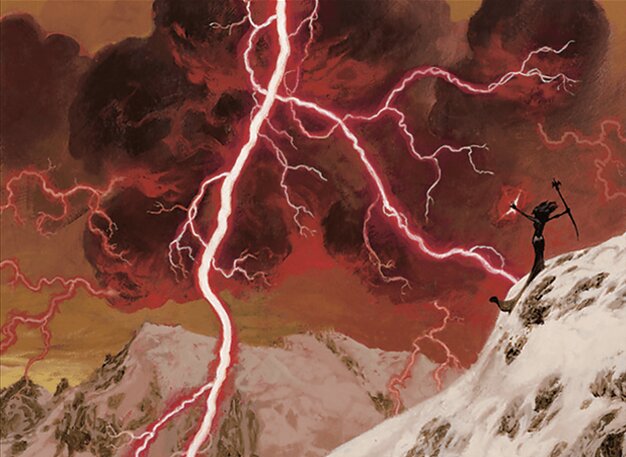
- You have priority. The creature spell is still on the stack (not on the battlefield yet). You cast Lightning Bolt targeting your opponent's face. Bolt goes on top of the creature spell. The stack now reads: Bolt (top), creature spell (bottom).
- You keep priority after casting Bolt, then pass. Your opponent passes too. Both players have passed in succession on top of Bolt, so Bolt resolves first — 3 damage to the opponent.
- Now both players get priority again with the creature spell on top. Both pass. The creature spell resolves: the 2/2 enters the battlefield, and now its enter trigger goes on the stack.
Notice what you could not do: you could not Bolt the creature in step 2, because it was still a spell on the stack, not a creature on the battlefield. Lightning Bolt can hit "any target," but the creature is not a legal creature target until it resolves and enters play. To kill it with Bolt, you wait — let the creature resolve, let the enter trigger resolve, and then in a later priority window you Bolt the now-real 2/2. Knowing the difference between "spell on the stack" and "permanent on the battlefield" is most of what separates a player who understands timing from one who guesses.
Holding priority on purpose
By default, after you cast a spell you keep priority. New players reflexively "pass" by saying "okay, go" or just looking up — and in casual games that is usually read as passing priority. But you can deliberately hold priority to do something before your own spell resolves, and it is a real tool.
The classic use: you cast a creature with an activated ability, and you want to activate that ability before the opponent can respond to the creature's resolution. Or — far more common — you want to chain two of your own spells so the second resolves first. Say you cast a removal spell, hold priority, and cast a second spell on top; your second spell resolves before your removal does.
In a tournament setting, the technically correct way to "respond to your own spell" is to announce you are holding priority. In kitchen-table play the etiquette is looser, but the principle is identical: until you actually pass, the turn to act is still yours, and you can keep stacking things. If you want a window to fire an instant after your spell goes on the stack but before it resolves, do not pass — hold priority and cast it.
Triggered abilities and the stack
Triggered abilities — anything that starts with "when," "whenever," or "at" — also use the stack, but they get there differently. You do not "cast" a trigger. Instead, the moment its condition is met, it is put on the stack the next time a player would receive priority.
A few rules that follow from that:
- Triggers go on the stack above whatever is already there. If two things would trigger at once, the active player's triggers are placed first (so they end up lower and resolve later), then each non-active player's, in turn order. Within one player's batch, that player chooses the order.
- You can respond to a trigger. Because it sits on the stack and players get priority, an enter-the-battlefield trigger or an attack trigger can be countered (by something that counters abilities), redirected, or simply responded to with your own instant.
- Triggers happen whether you want them to or not. A mandatory trigger ("whenever this attacks, you lose 1 life") is not optional. It goes on the stack and resolves. Only triggers that say "may" give you the choice.
This is why "in response to the trigger" is such a common phrase. When a creature with a powerful enter trigger resolves, the creature is already on the battlefield, but its trigger is now a separate object on the stack — and that is your window to react to the trigger specifically, not the creature.
State-based actions: the rules that fire without the stack
Here is the exception that confuses everyone: some things happen automatically and do not use the stack at all. These are state-based actions (SBAs), and they are the game's constant background check.
Whenever a player would receive priority, the game first checks for a list of conditions and instantly corrects them — no stack, no priority, no chance to respond. The big ones:
- A creature with toughness 0 or less is put into the graveyard.
- A creature with lethal damage marked on it (damage equal to or greater than its toughness) is destroyed.
- A player at 0 or less life loses the game.
- A player who tried to draw from an empty library loses (the next time SBAs are checked).
- A player with 10 or more poison counters loses.
- A token or copy in a zone other than where it is allowed ceases to exist.
- The "legend rule" and "planeswalker uniqueness": if you control two legendary permanents with the same name, you choose one to keep and the rest go to the graveyard.
The key consequence: you cannot respond to a state-based action. If your 3/3 takes 3 damage, it dies the next time the game checks — you do not get a priority window to "save it in response to it dying," because dying-from-lethal-damage is not a spell or ability on the stack. To save it, you had to act earlier, while there was still a priority window (for example, pumping its toughness in the combat-damage step before damage was dealt, or before the SBA check). Once the condition exists, the correction is automatic and uninterruptible.
SBAs also explain why some "infinite" boards resolve the way they do, and why a creature reduced to 0 toughness by a -X/-X effect dies even though nothing "destroyed" it — toughness 0 is a state-based action, and indestructible does not save you from it.
What does not use the stack
A short list of things that bypass the stack entirely, because mixing these up is a classic mistake:
- State-based actions (above) — automatic, uninterruptible.
- Mana abilities. Tapping a land for mana does not use the stack and cannot be responded to. The mana is just added. This is why you cannot "respond" to someone tapping a Swamp.
- Playing a land. A land drop is a special action; it does not go on the stack and cannot be countered or responded to.
- Turning a face-down creature face up, and a few other special actions, also bypass the stack.
Everything else — spells, activated abilities (that are not mana abilities), and triggered abilities — uses the stack and can be responded to.
Common timing rulings that trip people up
The rulings I see argued at tables every week:
- "Can I kill it in response to its trigger?" You can respond to the trigger, but if the creature is already on the battlefield, killing it usually does not stop a trigger that is already on the stack — the trigger resolves independently of its source. Read whether the trigger needs the source to still be around.
- "Summoning sickness" and the stack. A creature you cast this turn cannot attack or use tap abilities (without haste), but that is a battlefield restriction, not a stack thing. The creature still resolves normally; it just cannot do certain things once it is in play.
- Fizzling. If a spell or ability has all its targets become illegal before it resolves (the creature it targeted died, gained protection, etc.), it is removed from the stack and does nothing — it "fizzles." It does not resolve and you do not get the effect.
- Brainstorm-style draw-then-respond. Instants like draw spells can be cast at instant speed in response to anything, which is why holding up mana for Brainstorm end of turn is a tempo play, not a misplay.
- Two triggers at once. When both players have triggers, the active player's go on the stack first (and resolve last). This decides a surprising number of close games — order matters.
The throughline for all of it: ask "is this on the stack right now, and do I have priority?" If yes, you can act. If it is a state-based action, a mana ability, or a land drop, you cannot. That single question resolves the vast majority of timing disputes.
Quick Action Checklist
- A spell does not happen when you cast it — it goes on the stack and waits.
- The stack resolves last in, first out: the most recent thing resolves first.
- You can only act when you have priority; after you cast something, you keep priority.
- The top of the stack only resolves when all players pass in succession.
- To respond to a spell, cast your instant while it is on the stack — yours resolves first.
- Hold priority (do not pass) when you want to act before your own spell resolves.
- Triggers use the stack too, and you can respond to them.
- State-based actions (creatures dying, players at 0 life) do not use the stack and cannot be responded to.
- Mana abilities and land drops bypass the stack — you cannot respond to them.
- When in doubt, ask: "Is it on the stack, and do I have priority?"
Frequently Asked Questions
What is the stack in Magic: The Gathering?
How does the stack resolve in MTG?
What does priority mean in Magic?
How do I respond to a spell in MTG?
Can you respond to state-based actions?
What does holding priority mean?
Keep Reading
Related Guides
MTG Turn Structure: Every Phase and Step, Explained
A Shock in your own end step finishes off a 3/3 your attacker already hit for 2. The same Shock in your opponent's upkeep does not. The difference is a step in which nobody normally gets priority: cleanup. Here is the whole Magic turn in order — what the game does automatically at the start of each phase and step, where you get priority and where you don't, checked against the Comprehensive Rules effective September 25, 2026.
MTG Keyword Abilities Explained: From Flying to Ward
Magic packs whole rules into single words. Flying, trample, deathtouch, ward — each keyword is shorthand for a specific effect, and knowing them is the difference between reading a card and understanding it. Here is every common keyword, grouped and explained.
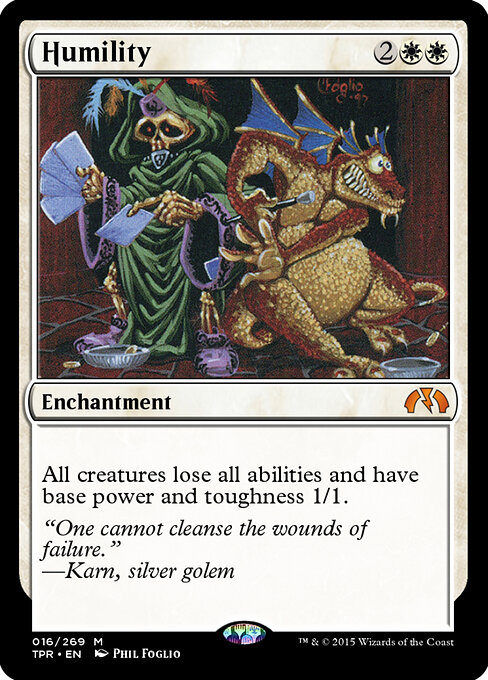
MTG Layers Explained: How Continuous Effects Resolve
Turn to Frog a 5/5 with three +1/+1 counters and you get a 4/4, not a 1/1. That is the layer system doing its job. Here is rule 613 in plain English — all seven layers, the four sublayers of layer 7, timestamps, dependency, and the interactions that actually decide games.

MTG Mulligan Guide: How the London Mulligan Works
More games are lost to bad keeps than to bad draws. The mulligan is the most important decision you make all game, and most players punt it. Here's how to stop.
MTG Commander Format Guide — How to Start Playing EDH (2026)
Commander is the most-played MTG format on the planet and the easiest one for new players to start in. The rules look intimidating on paper. They are not. Here is the full beginner guide.

Best Commander Staples Every Deck Wants, Ranked
There's a short list of cards that show up in basically every Commander deck regardless of theme — the silent 25 that make the splashy 75 work. Here are the staples worth a slot in almost any list, sorted by the job they do, with the legality double-checked.