MTG Keyword Abilities Explained: From Flying to Ward
Magic packs whole rules into single words. Flying, trample, deathtouch, ward — each keyword is shorthand for a specific effect, and knowing them is the difference between reading a card and understanding it. Here is every common keyword, grouped and explained.
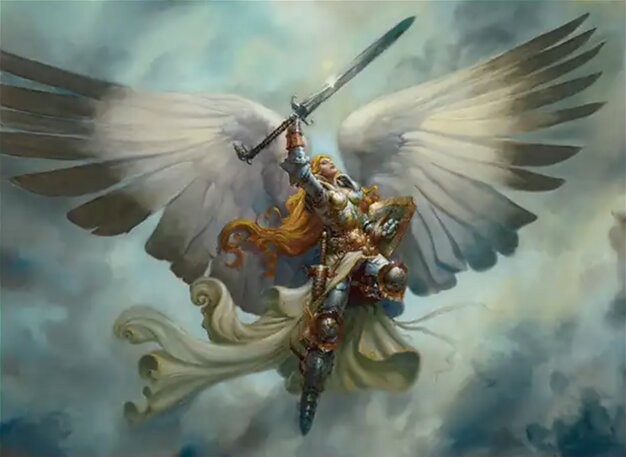
Magic does something clever: it packs an entire paragraph of rules into a single word. When a card says "flying," that one word means "this can only be blocked by creatures with flying or reach," and the game expects you to know that without it being spelled out. These shorthand words are keyword abilities, and learning them is the single biggest jump from "I can read a card" to "I understand what this card does."
The ones that show up in nearly every set are called evergreen keywords — the permanent vocabulary of Magic — and a handful of common non-evergreen ones round out the list you actually need. This guide covers all of them, grouped by what they do rather than alphabetically, because "flying and menace are both evasion" is far more useful to learn than "flying comes before menace in the dictionary." Every definition here matches the current comprehensive rules.
Why keywords exist
A keyword is just a name for a packaged rule. Instead of printing "this creature can only be blocked by creatures that also have flying or have reach" on every flier, the card says "Flying" and you supply the rest. New-frame cards often print the reminder text in parentheses for beginners — that italic explanation after the keyword — but experienced players read the word and move on.
There are two big reasons to learn them as a group. First, most keywords interact with combat, so they only make sense once you understand the combat phase. Second, keywords combine, and the combinations are where games are won — a creature with two keywords is often far more than twice as good as one with a single keyword. We will build up to the combinations at the end.
Evasion keywords: getting damage through
Evasion keywords restrict who can block a creature, which is how you make sure your attacker connects. These are the keywords that turn a small creature into a reliable clock.
- Flying. The most common evasion in the game. A creature with flying can only be blocked by creatures that also have flying or have reach. On the ground, fliers connect almost every turn, which is why a small evasive flier can outrace a much bigger creature stuck on the ground.
- Reach. The answer to flying. A creature with reach can block creatures with flying (think of a giant spider catching a flier in its web). Reach does nothing on offense — it is purely a defensive keyword that lets ground creatures stop fliers.
- Menace. A creature with menace can only be blocked by two or more creatures. Against a board with one or two blockers, menace is effectively unblockable, and it forces your opponent to commit multiple creatures to stop one of yours — a bad trade for them.
- Trample. Half evasion, half combat math. When a creature with trample is blocked, the attacker assigns lethal damage to the blockers and sends the rest through to the player. A 6/6 trampler blocked by a 2/2 puts 2 on the blocker and 4 on the opponent's face. Trample means chump-blocking a big creature no longer fully stops it.
The cleanest way to think about evasion: blockers are how your opponent defends, and evasion is how you take the blocking option away from them.
Combat-math keywords: changing how damage works
These keywords do not change who can block — they change what happens when damage is dealt. This is where new players make the most mistakes, because these rules quietly rewrite the normal "both creatures hit at the same time" math.

- Deathtouch. Any amount of damage a deathtouch creature deals to a creature is enough to destroy it. A 1/1 with deathtouch trades with a 10/10 — one point is lethal. When assigning combat damage, a deathtouch attacker only needs to assign one damage to each blocker to count as lethal, which is what makes it terrifying alongside trample.
- First strike. A creature with first strike deals its combat damage before creatures without it, in a separate earlier damage step. If a 3/3 first striker is blocked by a 3/3 without it, the first striker deals 3 and kills the blocker before the blocker ever deals damage back — so it takes zero. First strike is a one-sided fight as long as it kills what it is facing.
- Double strike. The creature deals combat damage in both the first-strike step and the regular step — it effectively hits twice. A 3/3 with double strike deals 3, then another 3, for six total, and kills a first-strike blocker before taking any damage.
- Lifelink. Damage a lifelink creature deals also gains you that much life. It works on any damage, not just combat — a lifelink creature that deals 5 to anything gains you 5 life. In a race, a lifelink attacker swings the life totals both directions at once, which can flip a game you were losing.
The deathtouch-plus-trample combo is the famous one: because deathtouch makes "lethal" just 1 damage, a 6/6 with both, blocked by a 2/2, assigns 1 to the blocker and 5 to the player. Keep that interaction in your head — it comes up constantly.
Tempo keywords: haste, vigilance, and flash
These three change when you get to act, which is what "tempo" means — doing things sooner than your opponent expects.
- Haste. A creature with haste can attack and use tap abilities the turn it comes under your control, ignoring "summoning sickness." Normally a creature has to wait a turn before it can attack; haste removes that delay. It is how aggressive red decks deal damage the moment a threat hits the board, and how a creature you flash or reanimate can swing immediately.
- Vigilance. A creature with vigilance does not tap when it attacks, so it can attack and still be available to block on the opponent's next turn. Pure value: you get offense without dropping your defense. Serra Angel's vigilance is exactly why it has been a strong creature for thirty years.
- Flash. A spell or creature with flash can be cast any time you could cast an instant — including on your opponent's turn or in response to something. Flashing in a blocker after attackers are declared is a classic blowout, and a flash creature like Snapcaster Mage lets you hold up mana and react instead of committing on your own turn.
Tempo keywords do not win games by themselves, but they decide when your creatures matter, and timing is most of the skill in Magic.
Protection keywords: hexproof, ward, and indestructible
These keywords protect a creature from removal, and the differences between them are subtle but important — especially the difference between hexproof and ward, which trips up almost everyone.
- Hexproof. A creature with hexproof can't be the target of spells or abilities your opponents control. They simply cannot point a removal spell at it. You can still target your own hexproof creature (to buff it, for example). Note the limits: hexproof does not stop board wipes that say "destroy all creatures" (those don't target), and it does not stop your opponent's creatures from blocking or fighting it.
- Ward. Ward is the "soft" version, and the distinction is the whole point. A creature with ward can be targeted, but when an opponent targets it with a spell or ability, that spell or ability is countered unless they pay the ward cost (which might be mana, life, or discarding a card). Ward does not make a creature untargetable — it makes targeting it expensive. The practical difference: hexproof says "you can't," ward says "you can, but it'll cost you."
- Indestructible. An indestructible creature is not destroyed by lethal damage or by effects that say "destroy." Combat damage still gets marked on it, but it does not die from it, and a board wipe that says "destroy all creatures" leaves it standing. It is not immune to everything, though — it still dies to sacrifice effects, to -X/-X effects that drop its toughness to 0, and to exile (exile doesn't "destroy"). The reliable way to kill an indestructible creature is to exile it or shrink it to zero toughness.
If you remember one thing here: hexproof can't be targeted by opponents at all; ward can be targeted but taxes them; indestructible survives damage and "destroy" but not exile or sacrifice. Those three are answered in completely different ways.
Value and defensive keywords
A few more common keywords round out the list — the ones that generate advantage or anchor a defense rather than win combat outright.
- Defender. A creature with defender can't attack. That sounds purely negative, but defender shows up on cheap, high-toughness "wall" creatures that exist to block and often come with a bonus, like drawing a card. You play a defender to survive the early game, not to deal damage.
- Reach (covered above under evasion) is the natural partner to defender on defensive creatures — a wall with reach blocks both ground threats and fliers.
- Lifelink and deathtouch (covered above) also pull double duty as defensive keywords: a small lifelink or deathtouch blocker is a brutal speed bump for an attacker, since it either gains you life on the trade or kills whatever it blocks.
There are dozens of set-specific and mechanic keywords beyond these (flashback, prowess, convoke, and so on), but the ones above are the permanent core that appears across formats. Learn these first; the set mechanics are easier once the evergreen vocabulary is automatic.
How keywords stack on one card
The reason to learn keywords as a system is that they combine, and the combinations are where the power lives. A single card carrying the right pair of keywords can be worth far more than its mana cost suggests.

The classic combinations to recognize on sight:
- Deathtouch + trample. "Lethal" becomes 1 damage per blocker, so almost all of the creature's power tramples through. The premier "you can't profitably block this" combo.
- First strike + deathtouch. The creature deals its damage early, and because any damage is lethal, it kills the blocker before that blocker can swing back. One of the best defensive packages in the game — it wins almost every fight it gets into.
- Flying + deathtouch + lifelink. Vampire Nighthawk's exact line-up. It evades, it kills anything that dares block it, and it gains you life every time it connects — three keywords that turn a cheap creature into a problem in every phase.
- Vigilance + haste. Attack the turn it lands and keep it back to block — offense and defense from one creature with no downside.
When you read a creature, read its keywords first. They tell you how it attacks, whether it can be blocked, what happens when it fights, how hard it is to kill, and when it can act. The stats matter, but the keywords are the instructions. A 2/3 looks unremarkable until you notice it has flying, deathtouch, and lifelink — and then it is one of the most annoying two-drops in the game.
For more on how these keywords play out in the heat of battle, our how combat works in MTG guide walks through the combat phase step by step, and the MTG color pie explained post covers which colors get which keywords and why.
Quick Action Checklist
- Learn evasion first: flying (blocked only by flying/reach), reach (blocks fliers), menace (needs two blockers), trample (excess damage spills to the player).
- Memorize the combat-math keywords: deathtouch (any damage is lethal), first strike (hits first), double strike (hits twice), lifelink (gain life equal to damage dealt).
- Know the tempo keywords: haste (attack immediately), vigilance (attack without tapping), flash (cast at instant speed).
- Nail the protection trio: hexproof (opponents can't target it), ward (they can target it but must pay a tax), indestructible (survives damage and "destroy," but not exile or sacrifice).
- Remember the killer combos: deathtouch + trample, first strike + deathtouch, and vigilance + haste.
- When you read any creature, read its keywords before its stats — they tell you how it actually plays.
Frequently Asked Questions
What are keyword abilities in Magic: The Gathering?
What is the difference between ward and hexproof in MTG?
How do deathtouch and trample work together?
Does indestructible stop everything in MTG?
What does haste do in Magic: The Gathering?
What is the difference between flying and reach?
Keep Reading
Related Guides
MTG Turn Structure: Every Phase and Step, Explained
A Shock in your own end step finishes off a 3/3 your attacker already hit for 2. The same Shock in your opponent's upkeep does not. The difference is a step in which nobody normally gets priority: cleanup. Here is the whole Magic turn in order — what the game does automatically at the start of each phase and step, where you get priority and where you don't, checked against the Comprehensive Rules effective September 25, 2026.

How the Stack and Priority Work in Magic: The Gathering
The stack is the single rules concept that decides whether you actually understand Magic or just play the cards. Here is how it resolves, when you get priority, how to respond to a spell, and the timing rulings that trip up every new player.
MTG Layers Explained: How Continuous Effects Resolve
Turn to Frog a 5/5 with three +1/+1 counters and you get a 4/4, not a 1/1. That is the layer system doing its job. Here is rule 613 in plain English — all seven layers, the four sublayers of layer 7, timestamps, dependency, and the interactions that actually decide games.

MTG Mulligan Guide: How the London Mulligan Works
More games are lost to bad keeps than to bad draws. The mulligan is the most important decision you make all game, and most players punt it. Here's how to stop.
MTG Commander Format Guide — How to Start Playing EDH (2026)
Commander is the most-played MTG format on the planet and the easiest one for new players to start in. The rules look intimidating on paper. They are not. Here is the full beginner guide.

Best Commander Staples Every Deck Wants, Ranked
There's a short list of cards that show up in basically every Commander deck regardless of theme — the silent 25 that make the splashy 75 work. Here are the staples worth a slot in almost any list, sorted by the job they do, with the legality double-checked.