What Mina the Hollower Is Actually Made Of: Zelda, Castlevania, Bloodborne
"It's like Zelda" is the laziest thing you can say about Mina the Hollower, and it is only about a third true. Yacht Club has been unusually specific about what it stole and from where, so here is the actual recipe.
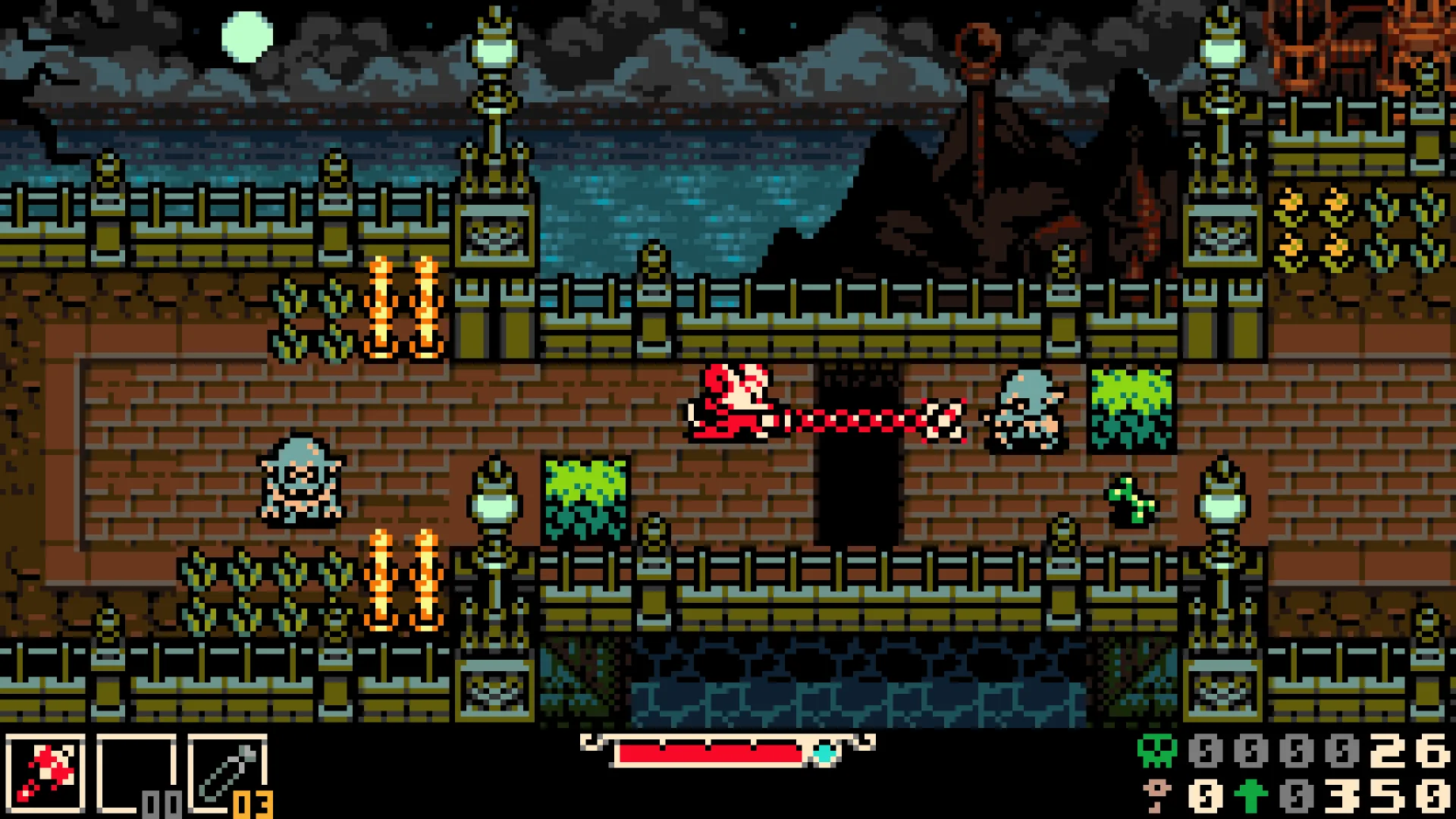
Say "it's like Zelda" about Mina the Hollower and you are not wrong, you are just not saying anything. Half the top-down action games made since 1991 are like Zelda. The interesting question is what else is in there, and Mina is one of the rare cases where you don't have to guess, because Yacht Club has been unusually specific in public about what it took and where it took it from.
The confirmed list is stranger than you'd expect. Castlevania. The Legend of Zelda: Link's Awakening. Bloodborne. And, no joke, two Disneyland rides.
The Influence List, Straight From the Studio
Here is the set of touchstones the team has actually named, rather than the ones fans reverse-engineered from screenshots:
- The Legend of Zelda: Link's Awakening — the structural template.
- Castlevania — the weapon, and a big chunk of the audio.
- Bloodborne — the creature design and the register of the horror.
- Disneyland's Haunted Mansion and Pirates of the Caribbean — the tone.
- Victorian Gothic horror — the official store copy's own words for the story's inspiration.
Composer Jake Kaufman has put it plainly about the score: "There's clearly some Castlevania and Final Fantasy in there." He also names influences that never come up in game-music conversations at all — film noir and golden-age jazz soundtracks, Louisiana zydeco, and Appalachian folk. That is a weirder pile than a Game Boy Color homage has any right to be pulling from, and it is a decent early signal that Mina isn't running a single-reference nostalgia play.
Studio co-founder Sean Velasco framed the ambition in an RPG Site interview with a line that has followed the game around ever since: if Shovel Knight is Yacht Club's Mario, Mina was meant to become its Zelda. Note the tense there. It's a statement about building a second pillar for the studio, not about copying a map screen.
Link's Awakening Is the Skeleton
The Zelda part is real, and it's specifically the handheld branch of the family, not the SNES one. Kaufman has said his own Game Boy Color favorites were Link's Awakening DX and the Oracle games — which is the exact lineage Mina is descended from, right down to the pitch: you are stranded on a cursed island and you are not leaving until you fix it.
Yacht Club has also mentioned Final Fantasy Adventure as part of the same imaginative soup, and that the team are big fans of Zelda II, which is the least-copied Zelda in existence and tells you something about the taste in the room.
What It Takes and What It Leaves Behind
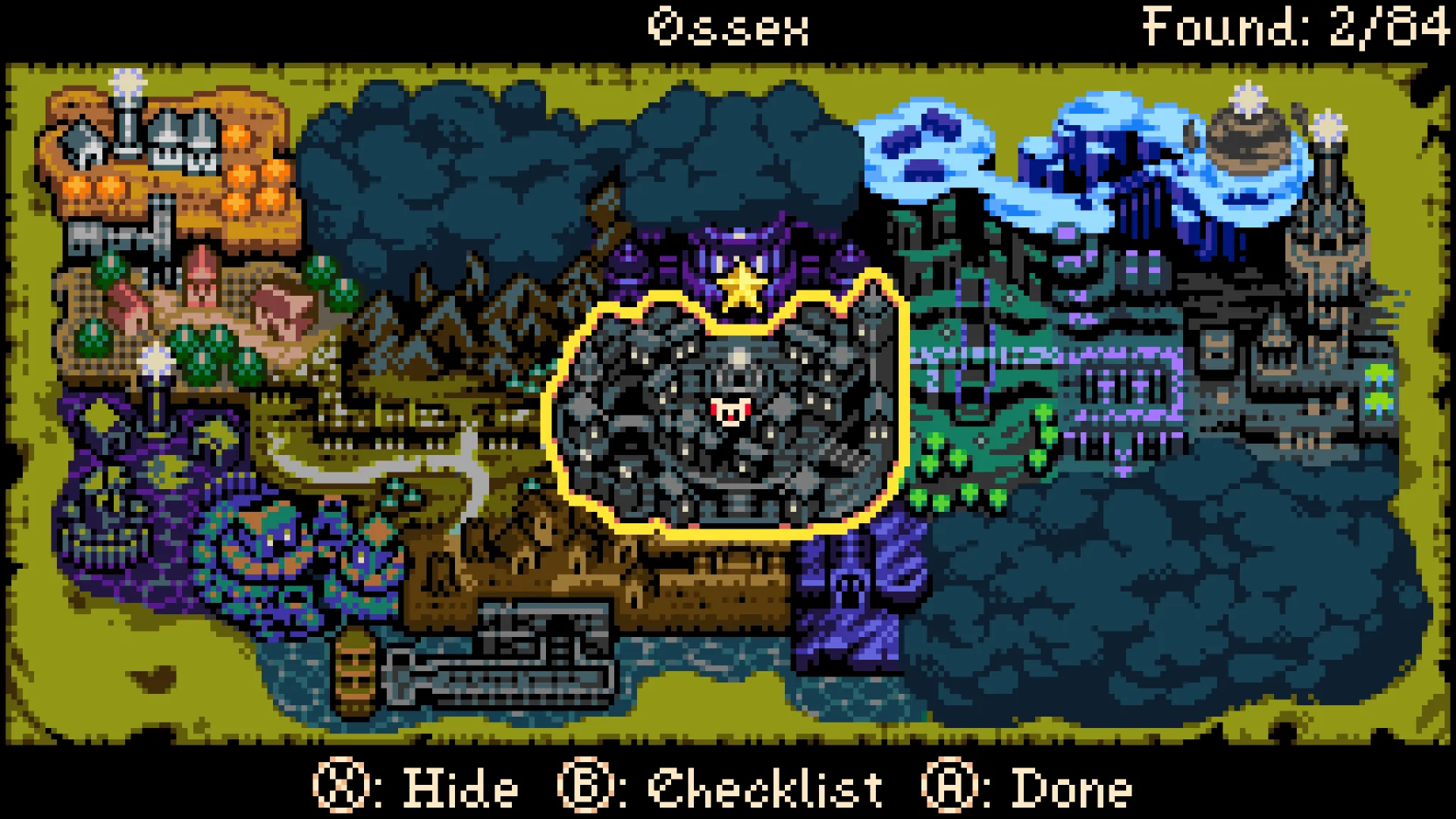
What it takes: the screen-by-screen overworld, the hard-gated progression where a new tool unlocks old ground, the map screen that quietly turns into a checklist of things you haven't found yet, and the dungeon-as-a-lock-and-key-box structure.
What it leaves behind is more telling. Link's Awakening is a puzzle game wearing an action game's clothes — combat is mostly a tax you pay between block-pushing rooms. Mina inverts that ratio hard. The moment-to-moment is a real action game with dodge timing and commitment windows, and the puzzles are the connective tissue. If you came in expecting to spend an evening on a torch-lighting riddle, that's not this.
Castlevania Is the Weapon
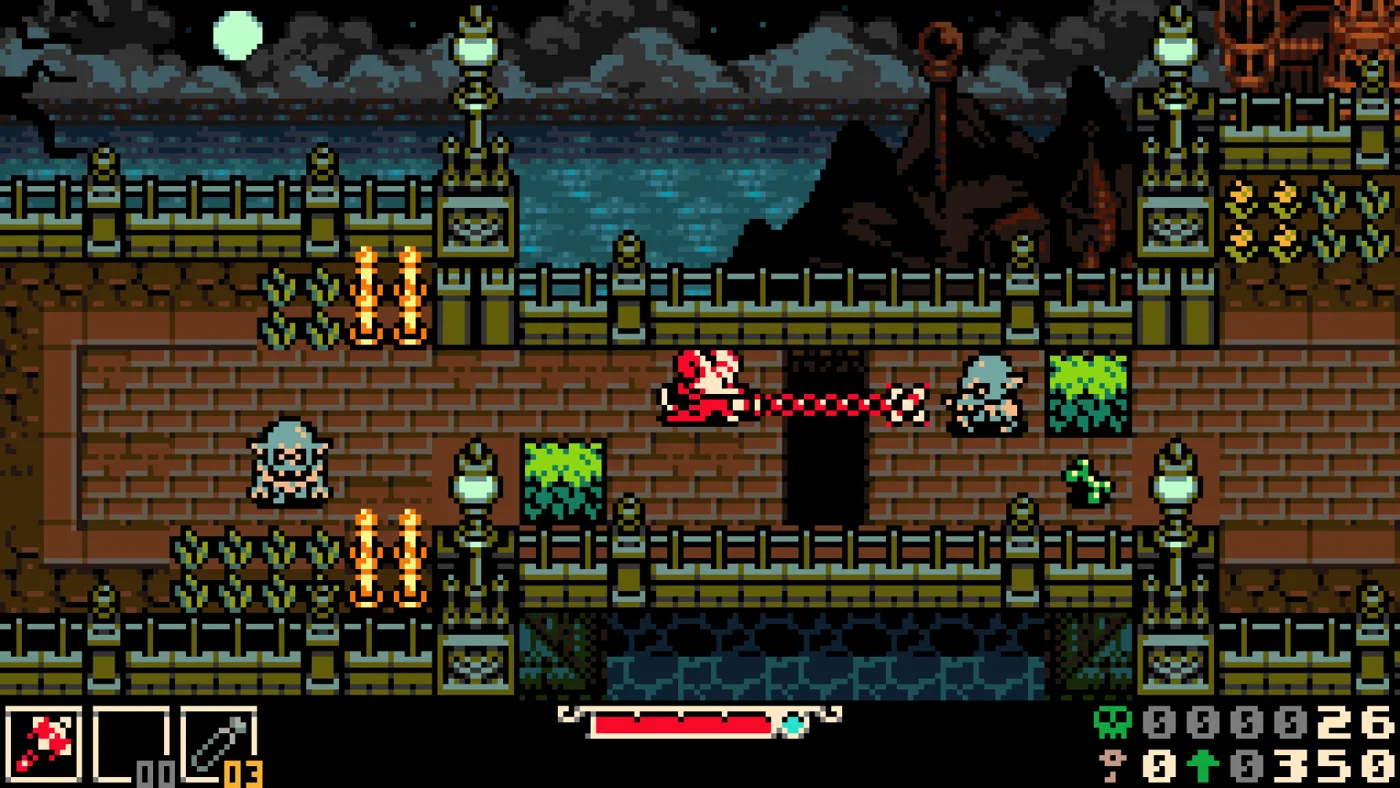
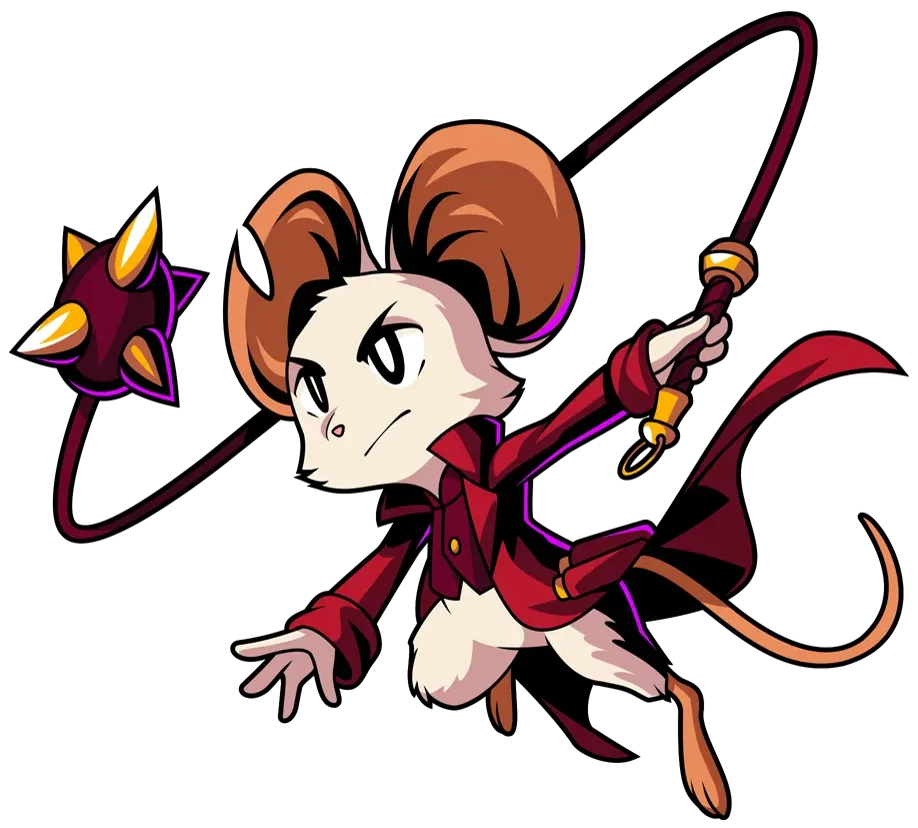
Your default weapon is a whip called the Nightstar. Not a sword. That is a deliberate, load-bearing choice, and it drags a whole design philosophy in with it.
A whip is a commitment weapon. It has more reach than a sword and much less forgiveness — you're pointing it at where an enemy is going to be, then eating whatever happens during the recovery frames. That's Belmont grammar, transplanted into a top-down game where you can be attacked from any of eight directions instead of two. It is the single sharpest reason Mina doesn't feel like a Zelda reskin the second you press the button.
The store copy is upfront that the Nightstar is a starting point rather than a lock-in — there's an arsenal of other weapons, plus Sidearms and Trinkets layered on top. But the whip is the default for a reason, and the game's timing is tuned around it.
Kaufman's score reinforces the same reference. The Castlevania DNA in the music isn't subtle, and it's doing the work of telling you what kind of game this is before you've fought anything.
Bloodborne Is the Mood
This is the influence that surprises people, and then stops surprising them about four hours in.
Yacht Club named Bloodborne as an influence, and where it shows is the creature design and the escalation curve of the horror. Mina does not stay in cute-spooky territory. It starts at Halloween-decoration gothic — moonlight, wrought iron, hunched little goblins on a rampart — and steadily slides toward something with too many tentacles and a single enormous eye.
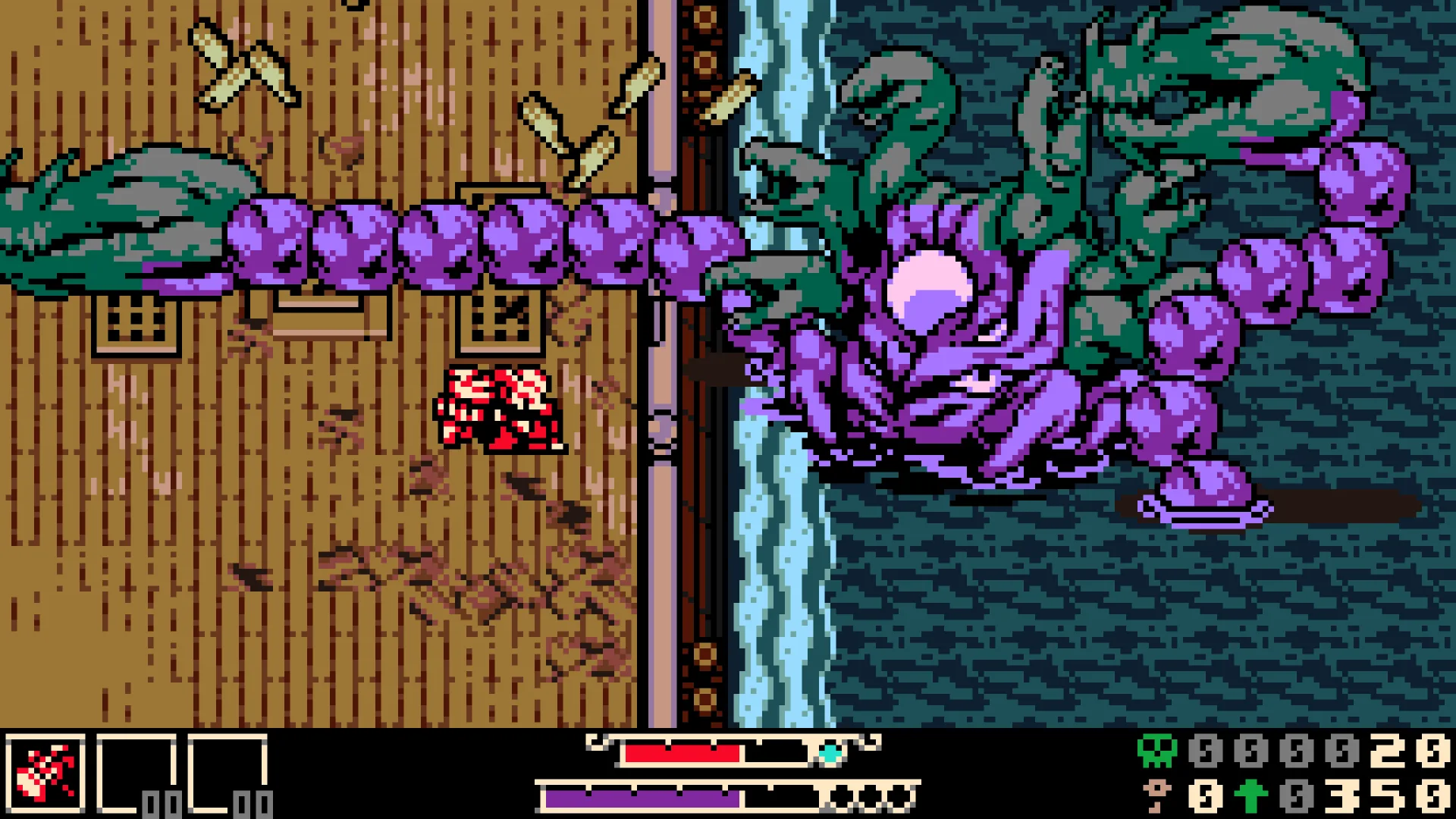
My read, and this is a read rather than a studio statement: the Bloodborne borrow is tonal and structural, not mechanical. There's no stamina bar, no rally system, no bonfire economy. What carries over is the specific trick of dressing a game in familiar period-gothic costume, getting you comfortable with vampires and werewolves and haunted manors, and then revealing that the actual problem is cosmic and much worse. Bloodborne pulled that switch on a generation of players. Mina runs the same play at Game Boy Color resolution, and it works for the same reason.
The Disneyland Influence Nobody Sees Coming
The Haunted Mansion and Pirates of the Caribbean are on the record as inspirations, and once you know that, a bunch of Mina's odd choices click into place.
Both rides run the same trick: genuinely macabre subject matter — ghosts, corpses, gallows humor — delivered with such craftsmanship and warmth that it lands as charming instead of upsetting. Skeletons mug for the camera. The scary thing waves at you. Nobody is actually in danger.
That is exactly the register Mina holds. The store page describes the tale as "bone-chilling, yet heartwarming," which reads like marketing boilerplate until you realize it's a ride-design brief. A room full of NPCs standing around a manor hall in their finery, each one a small animated gag, is a Haunted Mansion tableau translated into 16-by-16 sprites.
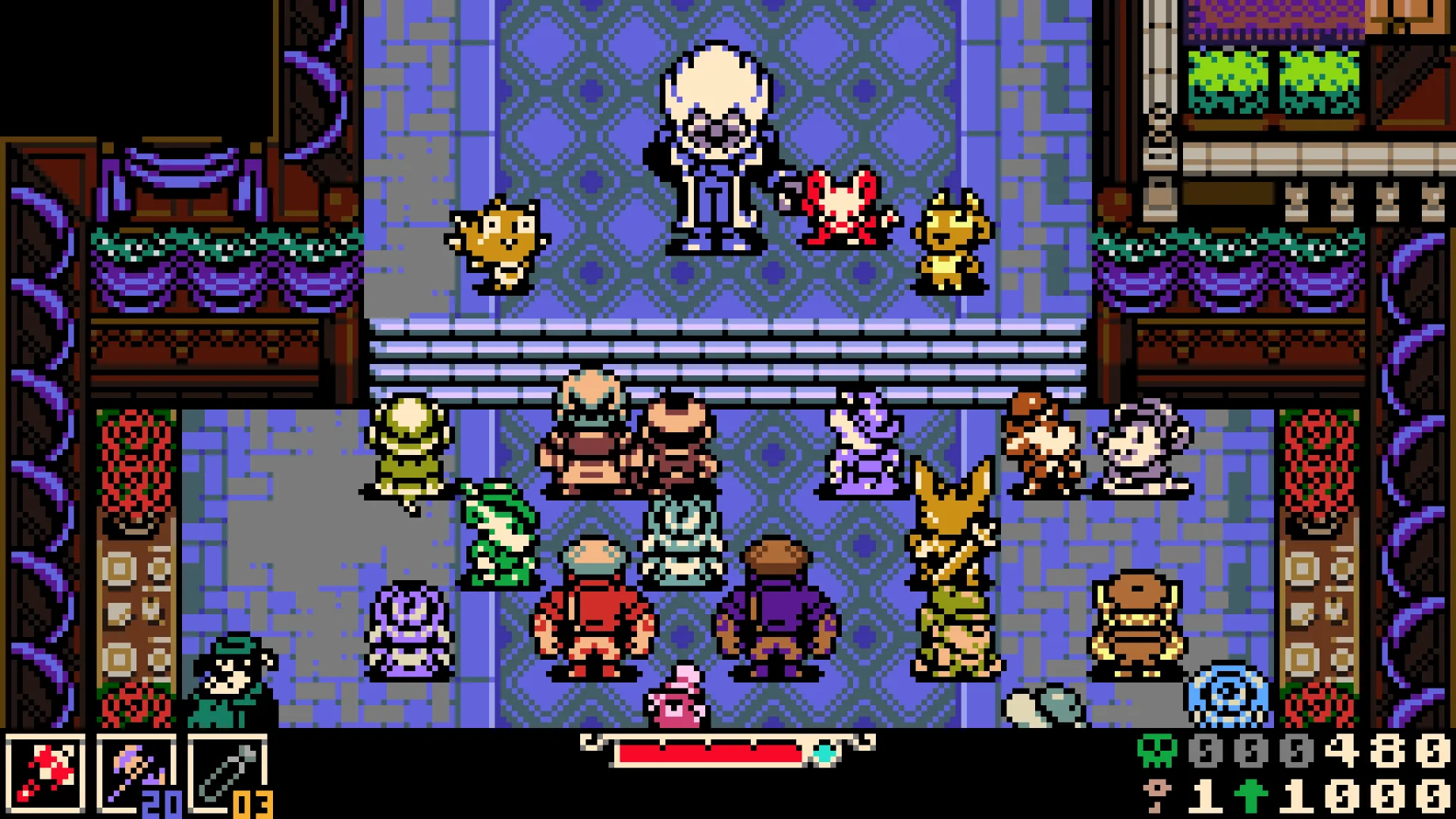
It also explains the pacing. Ride design is a sequence of tableaux with beats between them, not a difficulty curve. Mina's world is built the same way — you move from set piece to set piece, and the game is more interested in what the next room looks like than in grinding you down.
The Burrow Is the Part Nobody Lent Them
Every one of those influences is somebody else's idea. The burrow isn't.
Mina can Hollow — drop underground for a short window, cross gaps and hazards, and come up somewhere else, invincible while she's under. It's her name, her identity, and the thing that makes the whole influence stack resolve into an actual original game rather than a very handsome tribute band.
It's also the mechanic that had to be fought with the hardest, which is the most interesting design story in the game.
Why They Made the Game Harder Instead of Nerfing It
The obvious problem with "press a button to become invincible and skip terrain" is that it eats your game. Velasco has described the fix, and it's the good kind of stubborn.
First, they added a jump before the burrow, so hollowing costs you a beat and can't be mashed. That single input turns a get-out-of-jail button into a committed action with a windup you have to plan.
Second — and this is the part worth stealing if you make games — they didn't nerf the burrow. They made enemies faster, added more hazards, and placed more obstacles. Rather than sanding down the fun verb until it was safe, they raised the rest of the game to meet it. Velasco's framing on the studio's approach to teaching any of this is equally blunt: players learn through action, not tutorials.
Four Colors Per Tile Is a Real Rule
Yacht Club did the Shovel Knight thing again, one console generation forward, and they did not cheat much.
The rule the team held to: no 3D assets, and pixel design limited to four colors per tile, in line with what Game Boy hardware could actually push. The one deliberate exception is the widescreen resolution — you're getting a 16:9 window onto a game that would have been a tiny square in 1998.
That is a much stricter constraint than most "retro-inspired" games bother with, and Velasco has been direct about why: constraints push creativity, every frame becomes a small puzzle, and being honest to the limitation makes the result feel more refined than fudging it would.
Worth noting the audio goes even further than the art does. Kaufman built the score on Game Boy hardware augmented with the Konami SCC expansion chip — a chip that was never officially used on a Game Boy in the first place. If you want the full version of that story, we broke it down in the Mina the Hollower soundtrack piece.
The Side Project That Became a Studio Bet
The origin explains the taste. Mina started as a personal side project by Yacht Club employee Alec Faulkner — then titled Gothic — built to sharpen his own coding and art skills, with no commercial release in mind. Faulkner had joined the studio in 2016 as an intern after his fan art got their attention, and had been working on Shovel Knight expansions. Management looked at his side project and saw a companion pillar to the studio's flagship.
That's why the influence list reads like one person's shelf rather than a focus group's whiteboard. Nobody assembles Link's Awakening, Castlevania, Bloodborne, the Haunted Mansion, and Appalachian folk music by committee.
The numbers from there, all confirmed:
- Kickstarter launched February 2, 2022, raising $1,239,584 from 21,439 backers, with total crowdfunding pushing past $1.4 million.
- The game was originally targeting October 31, 2025 — a Halloween date that would have been perfect — and slipped to May 29, 2026. Programmer David D'Angelo has said failed play testing is what caused the delay.
- Velasco told Bloomberg the game was "make-or-break for sure" for the studio's independence.
It broke the right way. Mina landed around 90 on Metacritic, with 98% of OpenCritic-tracked critics recommending it, 10/10s from IGN, Eurogamer, and Shacknews, and a 9/10 from GameSpot. Commercially it moved roughly 300,000 copies in three days and passed 500,000 inside two weeks.
The Bottom Line
- Structure is Link's Awakening: screen-by-screen island, tool-gated progression, a map that becomes a checklist.
- Combat is Castlevania: the Nightstar whip is a commitment weapon with reach and recovery, not a panic button.
- Horror is Bloodborne: period-gothic costume up front, cosmic grotesquerie underneath.
- Tone is Disneyland: macabre subject matter delivered warm enough to be charming, built as a chain of tableaux.
- The burrow is theirs. They protected it by making the rest of the game harder instead of nerfing it.
- The art rule is real: no 3D assets, four colors per tile, widescreen as the only concession.
If you're deciding whether the mix is for you, the release date and platforms guide has the confirmed spec sheet, and the beginner guide covers how the burrow and the core loop actually feel in the hand. If you're already in and want to build around the whip rather than past it, start with the weapons guide.
Frequently Asked Questions
What is Mina the Hollower based on?
Is Mina the Hollower like Zelda?
What is Mina the Hollower's whip called?
What is the burrow ability in Mina the Hollower?
How does Mina the Hollower stick to Game Boy Color limitations?
How did Mina the Hollower start development?
Keep Reading
- Mina the Hollower official game page (Yacht Club Games)
- Mina the Hollower on Steam (official feature list and description)
- Mina the Hollower development history, influences, and reception (Wikipedia)
- Jake Kaufman interview on Mina the Hollower's musical influences (Nintendo Life)
- Sean Velasco on the burrow mechanic and Game Boy Color constraints (Inven Global)
- Alec Faulkner, from Yacht Club intern to leading Mina the Hollower (Destructoid)
Related Guides
Mina the Hollower Release Date, Platforms & What's Confirmed
The Shovel Knight studio's Game Boy Color love letter is finally here. Here is the confirmed release date, every platform, and what Yacht Club has actually said about Mina the Hollower.
The Mina the Hollower Soundtrack: 96 Tracks, Free, and Koshiro Shows Up
Yacht Club let its composer release the entire Mina the Hollower soundtrack name-your-price on day one. It is 96 tracks, it runs on a Game Boy sound chip plus a Konami MSX cartridge, and Yuzo Koshiro wrote two of them.
Mina the Hollower Patch Notes Explained: What 1.0.1 to 1.0.6 Changed
Yacht Club has shipped six patches for Mina the Hollower. One of them quietly nerfed your healing, several retuned boss damage, and consoles are still a version behind PC. Here is the readable version.
Mina the Hollower Exploration Tips: Secrets, Gaps, and Backtracking
Half the walls in Mina the Hollower are not walls. Here is how to read Tenebrous Isle, cross gaps you thought were gated, and backtrack for the secrets that actually matter.
Mina the Hollower Beginner Guide: Burrow, Bones, and Sparks
Mina the Hollower is not the Souls game people keep calling it. Here is what burrowing, Bones, Sparks, and sidearms really do before you lose a dungeon run to a knockback into a pit.
Mina the Hollower Weapons Guide: All 5 Weapons Ranked
Mina the Hollower opens by asking you to pick a weapon like it is a permanent build decision. It is not. Here are all five weapons, what each actually does, and which ones carry.