The Mina the Hollower Soundtrack: 96 Tracks, Free, and Koshiro Shows Up
Yacht Club let its composer release the entire Mina the Hollower soundtrack name-your-price on day one. It is 96 tracks, it runs on a Game Boy sound chip plus a Konami MSX cartridge, and Yuzo Koshiro wrote two of them.
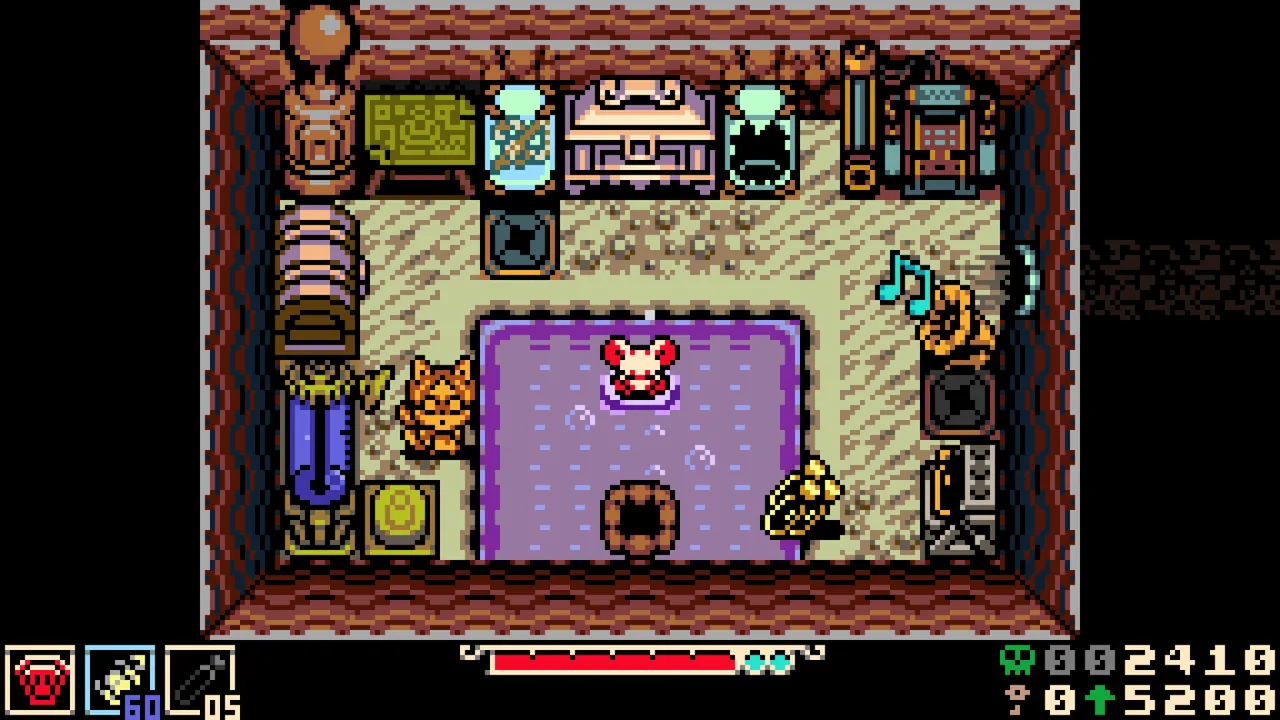
Most studios treat a soundtrack release as a merch afterthought. Yacht Club let Jake Kaufman drop the entire Mina the Hollower score on Bandcamp, name-your-price, the same week the game shipped. Ninety-six tracks. Nearly six hours. You can pay zero dollars and download all of it legally, right now.
That is either a wild giveaway or the most confident marketing decision in the game's whole launch, and having sat with the thing for a while, I think it is the second one. This score is the best argument for Mina that exists outside of actually holding the controller.
The Whole Thing Is Free
The headline fact: the Mina the Hollower Original Soundtrack is 96 tracks and it is posted on Kaufman's Bandcamp as a name-your-price release. Set the slider to zero and it is yours. That went live alongside the game's May 29, 2026 launch, not months later once the marketing cycle cooled off.
Ninety-six tracks is not a padded number either. It runs somewhere in the neighborhood of five and a half to six hours depending on how you count the stingers and jingles, which for a top-down action-adventure is an absurd amount of original music. For comparison, plenty of full-price open-world games ship with less.
Where to Actually Get It
Four options, all official:
- Bandcamp — the complete 96-track album, name-your-price, lossless formats included. This is the version you want.
- Steam — sold as a soundtrack DLC attached to the game's store page.
- Spotify, Apple Music, YouTube Music — released in two volumes about a week after launch, with Volume 1 running 49 tracks and roughly two hours.
- Vinyl — more on that below, and it is a selection rather than the whole thing.
The two-volume split on streaming is a platform quirk, not a director's cut. If you want the score in one place with the track order Kaufman intended, use Bandcamp.
What the Music Is Running On
Here is the part that separates this from every other "retro-inspired" score that just means "we used a square wave plugin."
Kaufman wrote Mina's soundtrack on the actual Game Boy sound chip, with the Konami Sound Cartridge (the 052539 / SCC+, an expansion built for the MSX computer) layered on top. Everything was authored in Furnace Tracker, a free open-source chiptune tracker that emulates a long list of vintage consoles, handhelds, and computers at the register level.
That is a real, self-imposed hardware budget. The Game Boy sound chip gives you four channels: two pulse waves, one programmable wave channel, one noise channel. That is what Pokémon Red ran on. The SCC expansion adds more wave channels, which is why Mina's score has harmonic thickness that a stock Game Boy track physically cannot produce. It is still a chip, though. There is no orchestra hiding under it, no "live strings for the emotional bits" cheat.
Why That Constraint Is the Point
The visuals in Mina are a stylistic homage, not a hardware simulation. Yacht Club has been upfront that the game uses modern lighting and effects that a 1998 Game Boy Color could never have driven. The look is your memory of the era, cleaned up.
The music is the opposite. It is genuinely constrained by chips from that era, and it goes further than the graphics do in committing to the bit. So you get a slightly strange, very charming inversion: the prettiest-looking part of Mina is the faked one, and the audio, which everyone treats as set dressing, is the part actually doing the historical work.
Once you know that, the boss themes hit differently. Those layered arpeggios are not decoration, they are how you fake a chord when you only have a handful of monophonic voices to spend.
Yuzo Koshiro Wrote Two of These
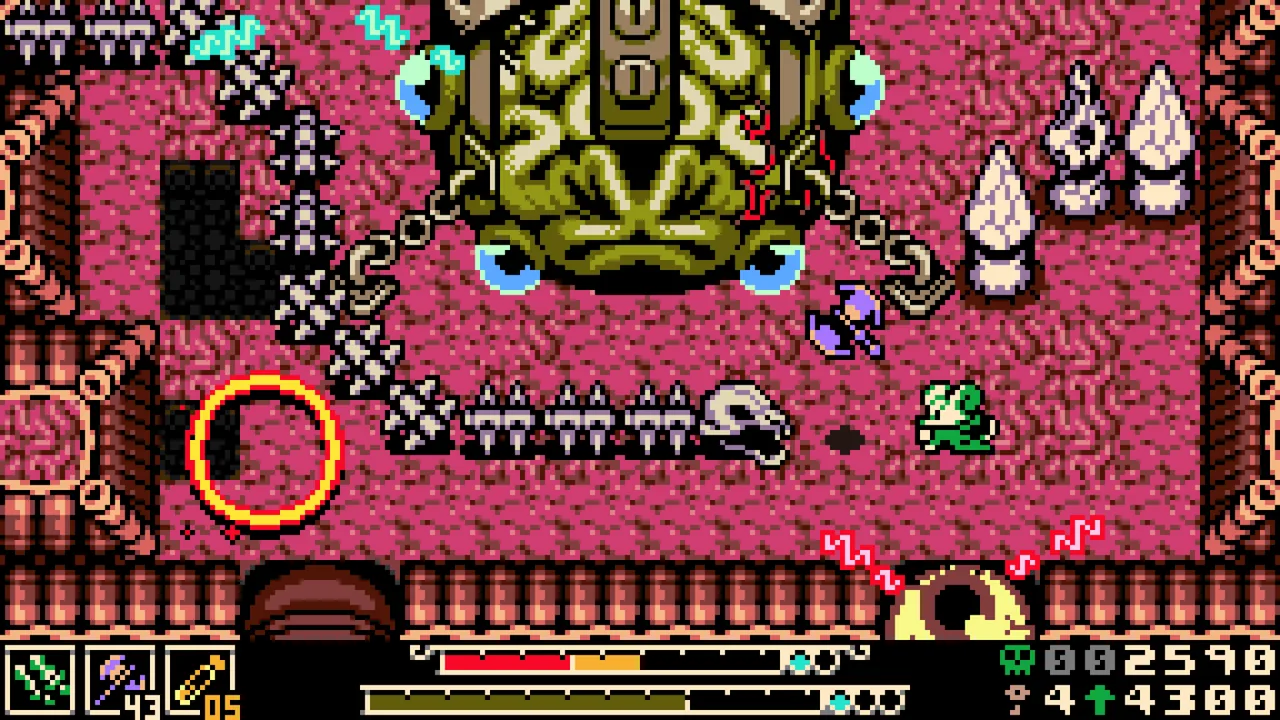
Two tracks on the album are credited with Yuzo Koshiro: "Rolling Steam (Spiral Summit)" and "Theory of Everything (Mirror's End)."
If that name does not land for you, Koshiro is the composer behind the Streets of Rage soundtracks, ActRaiser, early Ys, and the Etrian Odyssey series. He is one of the handful of people whose work basically defined what Japanese game music sounded like in the late 80s and 90s. Kaufman has described him as his personal game music hero since childhood, which is the kind of line that reads as marketing copy until you remember Kaufman has spent his entire career writing chiptune, and Koshiro is the summit of that particular mountain.
Worth flagging a small accuracy thing, because a lot of the coverage got sloppy with it: some listings and store blurbs credit the soundtrack to "Jake Kaufman and Yuzo Koshiro" like it was a 50/50 collaboration. It is not. Kaufman wrote the score. Koshiro contributed two tracks. Both facts are cool. Only one of them is what happened.
The Music Hall Is Not a Joke Level
The detail that reframed the whole album for me is buried in the album notes rather than the press release.
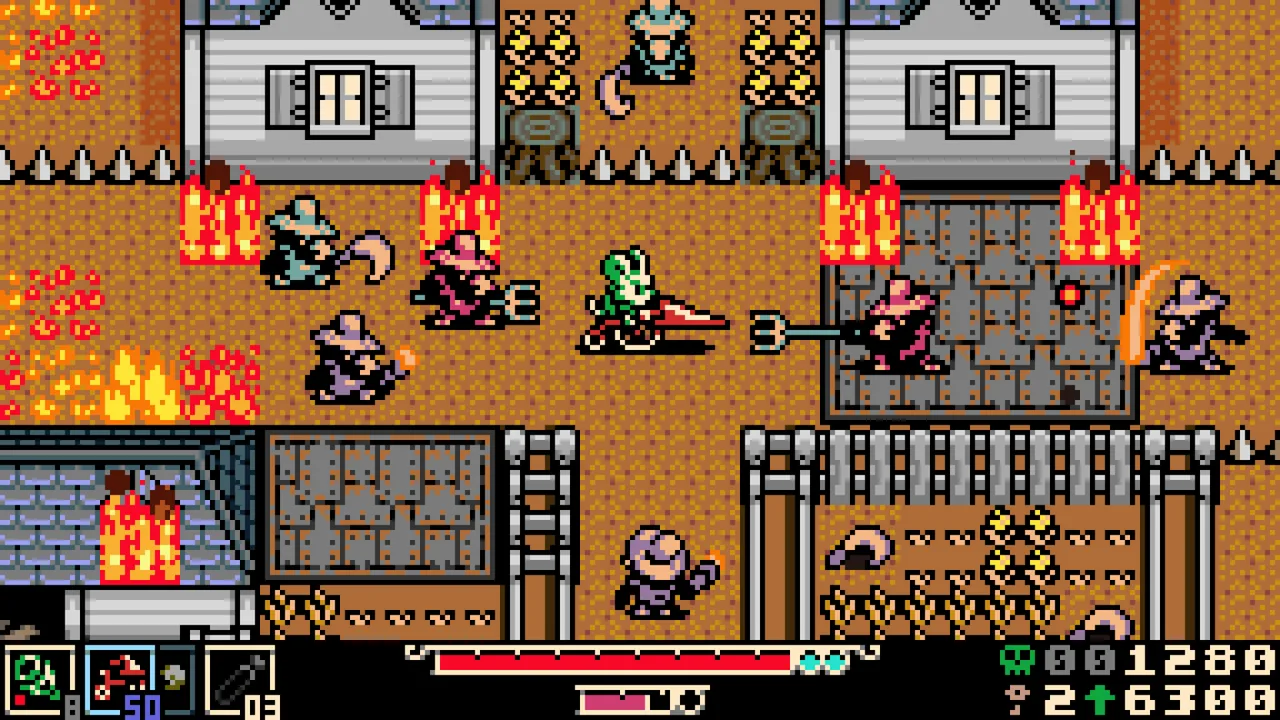
Tracks 84 through 92 are the bands you find in the game's Music Hall, and Kaufman dedicated each of them to a close family member he lost during Mina's production, including his mother, his partner, and his grandfather.
That is four years of development, from the February 2022 Kickstarter through a 2026 release, with that running underneath it. The Music Hall in-game reads as a fun optional side space, a nice place to poke around and hear something you have not heard yet. Knowing what those nine tracks are actually for turns it into the most personal thing in the game, and it is completely optional content that plenty of players will roll credits without ever finding.
Go find it. Then go read the album notes. In that order.
The Vinyl Is Real and the Window Closes in August
If free lossless files are not enough of a physical object for you, iam8bit opened pre-orders on a Mina the Hollower 3xLP in late July 2026. The specifics:
- Price: $64.99
- Format: three records, velvet purple splatter, six sides
- Contents: a 50-plus track selection, not the full 96
- Art: jacket art by Nimit Malavia, with a 3D-enhanced treatment and a pair of 3D glasses in the package
- Center labels: zoetrope-style, so Mina animates on the spinning record
- Pre-order window: iam8bit's page lists orders closing August 24, 2026
- Ship estimate: Q4 2026
The wider iam8bit collection around it adds a notebook and a blind-box keychain line, if you are the kind of person who wants Tenebrous Isle on your desk.
Two honest caveats. Pre-order windows on limited vinyl mean you are paying now for something that arrives around the holidays, and "estimated Q4" on a boutique pressing has historically meant "sometimes later than that." And the zoetrope label gimmick only actually animates under specific lighting or a strobe app, so temper expectations there.
Is a 65 Dollar Record Worth It When the Files Are Free
Honestly? Only if you already own a turntable and buy game vinyl on purpose. The music itself is free and lossless on Bandcamp, so you are paying entirely for the object: the splatter pressing, the Malavia art, the zoetrope trick, the 3D glasses.
That is a fine thing to pay for. It is just not an audio upgrade, and anyone selling it to you as one is fibbing. A chiptune score authored on a Game Boy sound chip is not going to reveal hidden warmth on wax.
The better move for most people: download the Bandcamp version and pay what you think the six hours of music was worth. Kaufman set the price to zero as a gesture. Nothing stops you from ignoring it.
The Bottom Line
- The full 96-track soundtrack is name-your-price on Bandcamp and has been since launch week.
- It was written on the Game Boy sound chip plus the Konami SCC+ MSX expansion, authored in Furnace Tracker — real hardware constraints, not a plugin.
- Yuzo Koshiro contributed two tracks: "Rolling Steam (Spiral Summit)" and "Theory of Everything (Mirror's End)."
- The Music Hall tracks (84 through 92) are dedicated to family Kaufman lost during development.
- The iam8bit 3xLP is $64.99, 50-plus tracks, pre-orders listed as closing August 24, 2026, shipping estimated Q4 2026.
If you have not played the game yet, the beginner guide covers the burrow and the core loop, and the release date and platforms guide has the full confirmed spec sheet. If you have already rolled credits and want a reason to go back in, the Music Hall is sitting there.
Frequently Asked Questions
Who composed the Mina the Hollower soundtrack?
Is the Mina the Hollower soundtrack free?
How many tracks are in the Mina the Hollower soundtrack?
What hardware was the Mina the Hollower soundtrack made on?
Which Mina the Hollower tracks did Yuzo Koshiro write?
Is there a Mina the Hollower vinyl release?
Keep Reading
Related Guides
What Mina the Hollower Is Actually Made Of: Zelda, Castlevania, Bloodborne
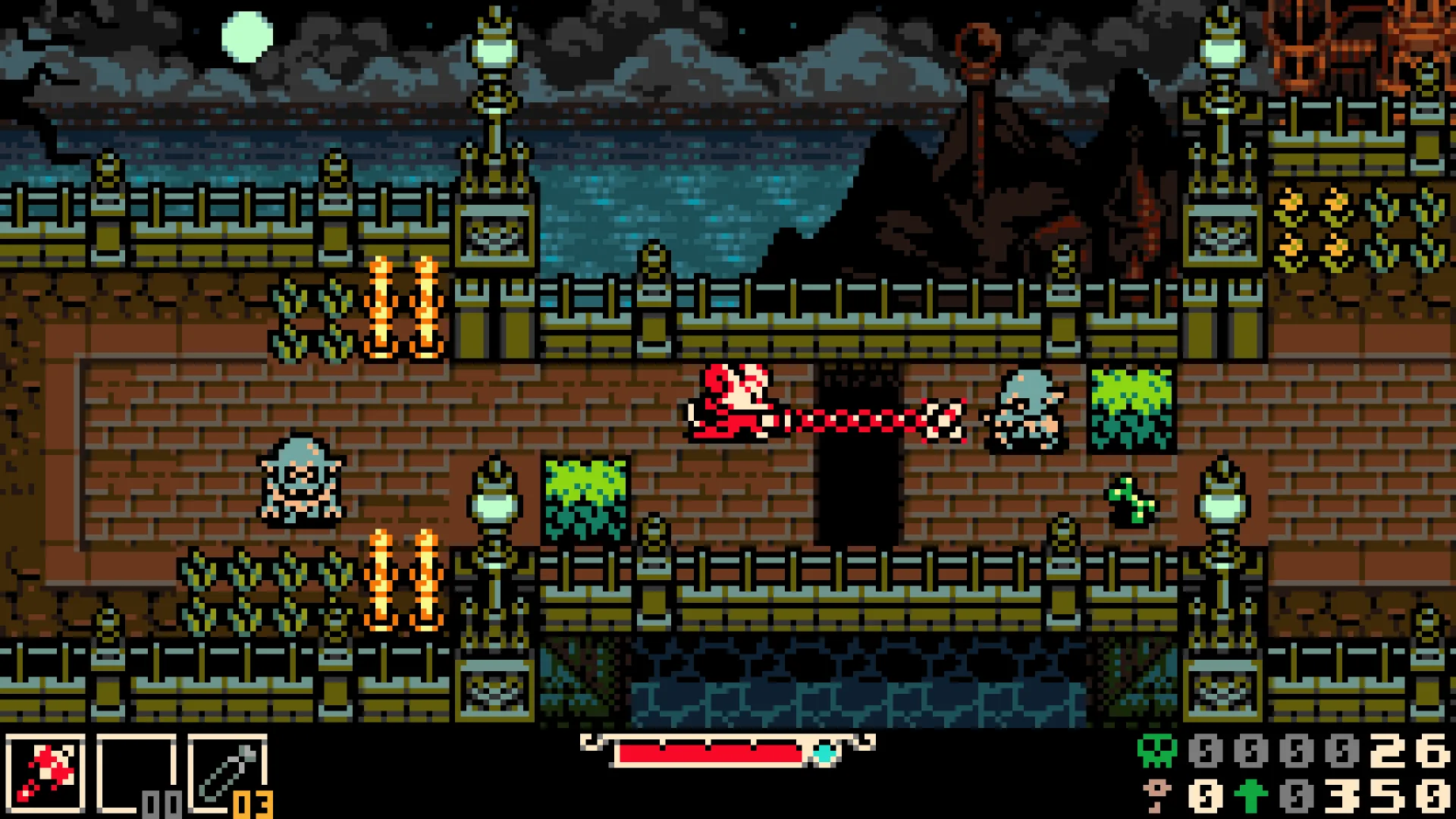
"It's like Zelda" is the laziest thing you can say about Mina the Hollower, and it is only about a third true. Yacht Club has been unusually specific about what it stole and from where, so here is the actual recipe.
Mina the Hollower Release Date, Platforms & What's Confirmed
The Shovel Knight studio's Game Boy Color love letter is finally here. Here is the confirmed release date, every platform, and what Yacht Club has actually said about Mina the Hollower.
Mina the Hollower Patch Notes Explained: What 1.0.1 to 1.0.6 Changed
Yacht Club has shipped six patches for Mina the Hollower. One of them quietly nerfed your healing, several retuned boss damage, and consoles are still a version behind PC. Here is the readable version.
Mina the Hollower Exploration Tips: Secrets, Gaps, and Backtracking
Half the walls in Mina the Hollower are not walls. Here is how to read Tenebrous Isle, cross gaps you thought were gated, and backtrack for the secrets that actually matter.
Mina the Hollower Beginner Guide: Burrow, Bones, and Sparks
Mina the Hollower is not the Souls game people keep calling it. Here is what burrowing, Bones, Sparks, and sidearms really do before you lose a dungeon run to a knockback into a pit.

Mina the Hollower Weapons Guide: All 5 Weapons Ranked
Mina the Hollower opens by asking you to pick a weapon like it is a permanent build decision. It is not. Here are all five weapons, what each actually does, and which ones carry.