Resident Evil 4 Remake Beginner Guide: Survive the Village
The 2023 remake gives Leon a parry and takes away his indestructible knife. That single trade is the whole learning curve. Here is how to stop dying in the village and start playing the game the way it wants to be played.

The first chainsaw guy will kill you. Not because you played badly, but because the 2023 remake spends its opening twenty minutes teaching you a control scheme and then immediately asks you to use a mechanic it never explicitly demanded: the parry. Leon can block a chainsaw with a combat knife. The game shows you a button prompt exactly once, in a moment where you are already panicking, and then never brings it up again.
This guide covers the Resident Evil 4 remake (2023). Where the 2005 original works differently, I flag it — but every number, cost, and mechanic below is from the remake unless I say otherwise. The two games share a plot and a village and almost nothing else in the moment-to-moment.
Which version you are playing changes everything
If you bought Resident Evil 4 in the last few years on PS5, Xbox Series, PC, or Mac, you have the remake. It runs on 16 flat chapters, numbered Chapter 1 through Chapter 16. If your chapter select says things like "Chapter 2-1" and "Chapter 3-3," you are in the 2005 original, and about half the advice below does not apply to you — the original has no parry, no knife durability, no crafting, and no Merchant request system.
The remake is the one worth starting with. It is also, mechanically, the harder of the two, because the original let you stand still and shoot while enemies politely waited their turn. The remake does not.
Pick your difficulty honestly
There are four difficulty settings: Assisted, Standard, Hardcore, and Professional. Professional is locked until you finish the main story on any difficulty, and completing Chapter 16 is what unlocks it.
Standard is the intended experience and where most first-timers should land. Assisted is not a shameful choice — it exists so people who want the story and the atmosphere can have them. Hardcore is a genuine step up and expects you to already understand resource economy; do not pick it because you have played other Resident Evil games.
Professional deserves a specific warning: autosave is disabled. Every other difficulty quietly keeps a separate autosave file you can fall back on. On Professional, the only progress that exists is the progress you wrote to a typewriter yourself. That change alone makes it a fundamentally different game, and it is not a first-playthrough difficulty.
One mercy, with a catch: on Standard, the game-over screen lets you switch down to Assisted — Capcom's manual lists that option for Standard only — and once you take it, you cannot switch back to Standard on that save. It also changes what the run can earn: the challenges worded "Standard or higher" and "Standard with an S+ rank" in the challenges guide pay out on the difficulty you finish on, so an Assisted finish does not collect them. If you only want the story, take it; if you want the completion rewards, restart on Standard instead.
The knife is a resource with a repair bill
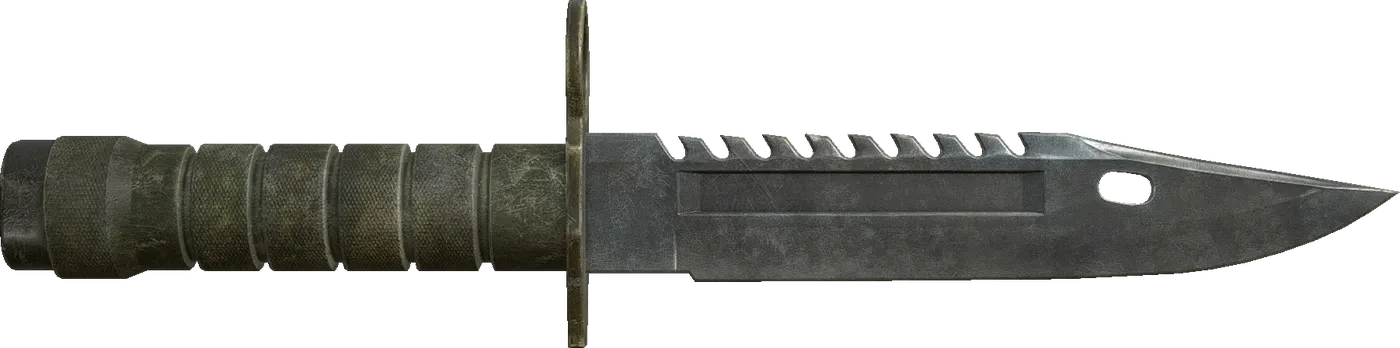
This is the mechanic that breaks the most returning players. In the remake, your Combat Knife has durability, and every action you take with it costs some of that durability. The good news is that unlike the Kitchen Knives and Boot Knives you find lying around, the Combat Knife never permanently breaks — you can take it to the Merchant and have it repaired, a recurring bill the Merchant and spinel guide breaks down in full.
The bad news is the price list, which is brutally uneven. Here are the repair costs by action:
| Action | Repair cost |
|---|---|
| Normal hit (swipes and stabs) | 14 pesetas |
| Parry | 74 pesetas |
| Stealth kill | 124 pesetas |
| Finisher on a downed or staggered enemy | 374 pesetas |
| Escaping a grab | 450 pesetas |
Read that table again, because it is the single most useful thing in this guide. Escaping a grab costs thirty-two times more knife durability than a normal slash. Getting grabbed is not just a health loss, it is a cash loss. Every Ganado that gets its hands on you is charging you roughly 450 pesetas for the privilege.
The practical takeaway: slash freely, parry when you must, and treat grab escapes as the emergency they are. If your knife is red and you are about to enter a big fight, repair it first. A broken Combat Knife means no parries and no grab escapes, which means the chainsaw guy wins.
Parrying is the skill that unlocks the game
The parry is the remake's answer to the original's dodge-QTEs, and it is the difference between the game feeling unfair and feeling great. You hold the guard button as an attack lands. A well-timed parry staggers most standard enemies and sets up a free melee follow-up. It also blocks things it has no business blocking, including a running chainsaw.
Three things nobody tells you:
- You can parry thrown weapons. Axes, sickles, and dynamite thrown at you can all be knocked out of the air. This turns the remake's most annoying enemy behavior into a free stagger.
- A late parry still reduces damage — except on Professional. On Assisted, Standard and Hardcore you do not need frame-perfect timing to benefit, and a sloppy guard is still much better than eating the hit clean. Professional limits parrying to Perfect Parries, so a mistimed guard there just gets you hit.
- Parrying costs 74 durability, roughly five normal slashes. Do not spam it as a movement option.
Spend the first village fight deliberately parrying instead of running. It is worth the deaths. Once the timing lands, the entire back half of the game gets easier.
Shoot legs, then follow up on the ground

Headshots are satisfying and often wrong. A headshot on a Ganado has a real chance of triggering a Plaga — the parasite bursts out of the neck, and now you are fighting something faster and more dangerous than what you shot.
The reliable loop is:
- Shoot a leg to drop them to a knee.
- Close the distance and use the melee prompt (roundhouse or suplex) — this costs zero ammo and zero knife durability.
- If the enemy is on the ground and still alive, either stomp it or move on.
Two important details. First, the melee prompt is free; the knife finisher on a downed enemy is not, and costs 374 durability. Use your boot, not your blade, unless you specifically need the enemy dead right now. Second, finishing downed enemies prevents Plaga transformation. If you are seeing a lot of parasites, it is because you are leaving bodies alive behind you.
Inventory management is a real mechanic
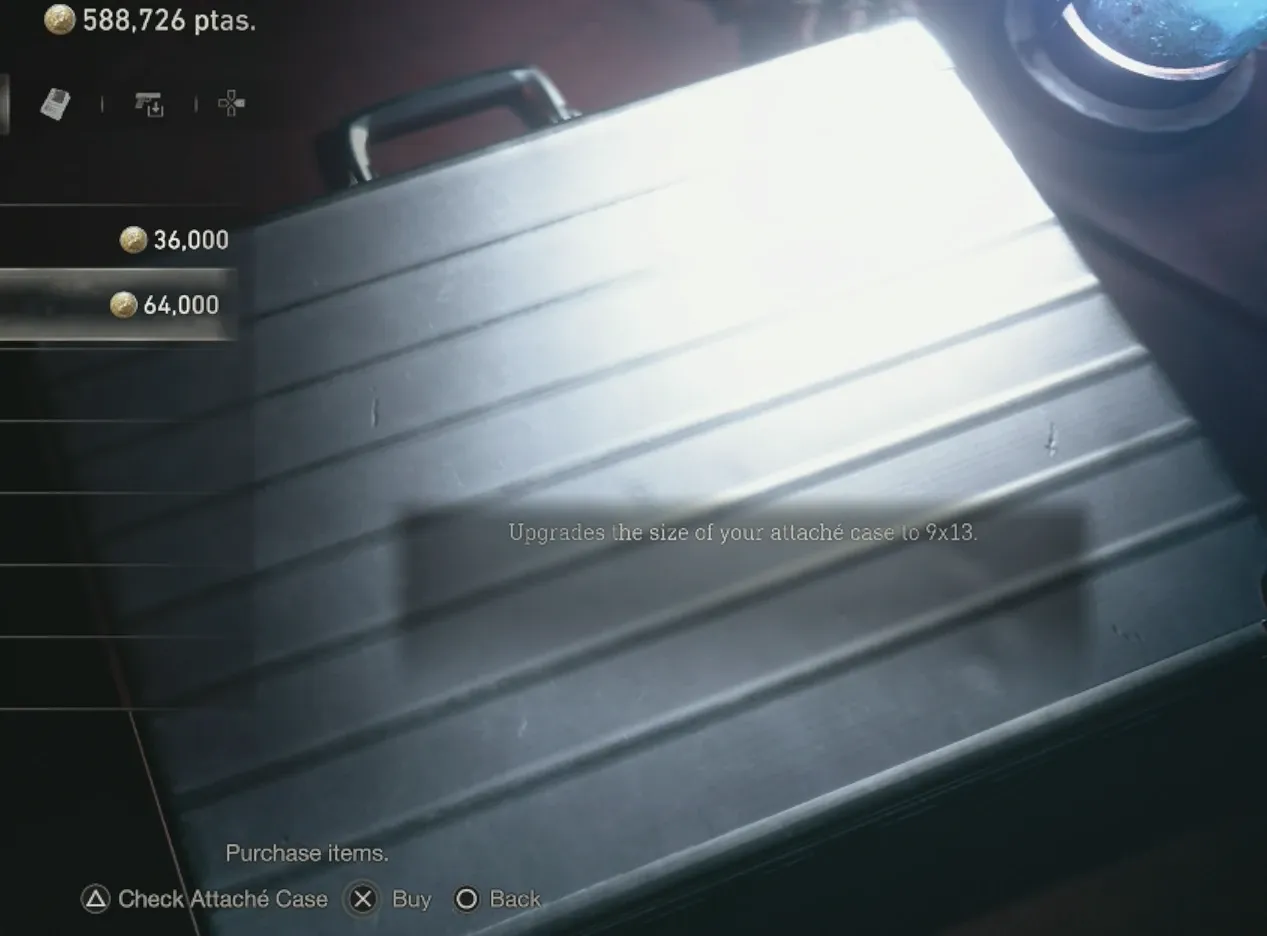
Reading the case grid
Every weapon has a footprint measured in grid squares, and those footprints vary wildly. The Blacktail handgun occupies 4 slots in a tidy 2x2 block. The Red9 takes 6 slots as a 2x3, and its optional stock attachment eats another 4 on top. Shotguns like the W-870 and Riot Gun take a punishing 16 slots each as a 2x8 bar.
The largest case in the main game is the 9x13 upgrade, which is 117 slots. It costs 64,000 pesetas and does not become available from the Merchant until Chapter 13 — most of the game happens before you can buy it.
What to carry through the village
Because space is the real constraint, the shape of a gun matters as much as its damage. The Blacktail's 2x2 footprint is genuinely a stat.
A workable early loadout:
- One handgun (your starting SG-09 R, or the Red9 once you find it)
- One shotgun — you only need one, and the free W-870 is fine for a long time
- Combat Knife (3 slots, 1x3, tucks into edges nicely)
- Two or three healing items
- Grenades in leftover corners
Do not carry two shotguns. That is 32 slots of a 100-ish slot case for redundant capability. Sell the second one.
Ashley is not the escort mission you remember
The remake rebuilt Ashley from the ground up. She no longer has her own health bar that you must manage with sprays — she goes down and can be revived. She takes cover automatically. She follows without constant micromanagement, and you can order her to stay close or hang back.
The two commands you actually need are the "wait here" order, before you clear a room, and the follow order, after. Clear first, call her in second. Nearly every Ashley death is a player who dragged her into a fight instead of parking her around a corner.
What to spend your first 50,000 pesetas on
Money is tight early, and the temptation is to buy a shiny new gun. Resist it. Here is the order that pays off:
- A case upgrade, as soon as one is affordable. Space compounds. Everything else you buy is worth less if you cannot carry it.
- Ammo capacity and reload speed on the handgun you plan to keep. Handgun ammo is the most common drop in the game; a good handgun is your default answer to almost everything.
- The Bolt Thrower, at 10,000 pesetas from Chapter 2. It is the cheapest weapon in the game and its bolts are recoverable off corpses, which makes it the best ammo economy available to a broke player.
- Knife repairs, every single time you pass the Merchant. They are cheap relative to the alternative.
What not to buy early: the Broken Butterfly magnum at 42,000 pesetas, or any second shotgun. The magnum is a Chapter 7 purchase that costs more than a case upgrade and solves problems you do not have yet. Once money loosens up, the weapon upgrade guide lays out exactly which guns are worth maxing.

Also: combine your herbs. Green plus red heals fully. Green plus yellow permanently raises your maximum health. A yellow herb sitting uncombined in your case is wasted permanent health.
Original 2005 vs remake: what actually changed
If you are bouncing between versions, these are the differences that matter mechanically:
| 2005 original | 2023 remake | |
|---|---|---|
| Chapter structure | Sub-chapters (1-1, 1-2, 1-3...) | 16 flat chapters |
| Knife | No durability, always available | Durability, repaired at the Merchant |
| Parry | Not present | Core defensive mechanic |
| Spinel | Sells for 2,000 pesetas, nothing else | Second currency for Merchant requests |
| Merchant requests | Not present | Blue medallion and hunt requests pay spinel |
| Movement while aiming | Not possible | Possible |
| Ashley | Separate health bar, escort management | Down-and-revive, cover behavior |
The spinel change is the big one for how you play. In 2005, a spinel was a small pile of money you sold and forgot. In the remake it is a currency you spend on things pesetas cannot buy, which is why the Merchant's request board matters far more than it looks like it should. That is covered in depth in the Resident Evil 4 remake Merchant and spinel guide.
Once you are past the village and have real money, the next question is which guns deserve it — see the Resident Evil 4 remake weapon upgrade guide for the exclusive upgrade breakdown.
Quick Action Checklist
- Start on Standard unless you have a reason not to. Professional disables autosave and is a second-playthrough mode.
- Learn the parry in the first village fight. Practice it on thrown axes.
- Repair your Combat Knife at every Merchant visit. Grab escapes cost 450 durability; slashes cost 14.
- Shoot legs, then use the free melee prompt. Save the 374-cost knife finisher for when you need a body gone.
- Finish downed enemies to stop Plaga transformations.
- Buy a case upgrade before you buy a new gun. The 9x13 case is 64,000 pesetas and unlocks in Chapter 13.
- Grab the Bolt Thrower for 10,000 pesetas in Chapter 2 — recoverable ammo is free damage.
- Combine yellow herbs with green for permanent maximum health. Never leave one uncombined.
- Park Ashley with the wait command, clear the room, then call her forward.
- Do not carry two shotguns. 16 slots each is too much for redundancy.
Frequently Asked Questions
What difficulty should I play Resident Evil 4 remake on first?
Does the knife break permanently in Resident Evil 4 remake?
How many chapters are in the Resident Evil 4 remake?
Should I aim for the head in Resident Evil 4 remake?
When can I buy the biggest attaché case in Resident Evil 4 remake?
Keep Reading
- Resident Evil Wiki — Main game (RE4 remake) structure and difficulty
- Resident Evil Wiki — Combat Knife durability and repair costs
- Resident Evil Wiki — Case Upgrade (9x13) cost and availability
- Capcom — Resident Evil 4 official web manual: game modes, including the Standard-to-Assisted switch from the game over screen
- Game8 — RE4 remake difficulty differences: no switching back from Assisted, Professional parries limited to Perfect Parries
Related Guides

RE4 Remake Sentinel Nine and Skull Shaker: Worth Using?
The Resident Evil 4 remake's Extra DLC Pack, bundled in Gold Edition, puts two extra guns in typewriter Storage from the start of a new game. One of them buys back 11 case slots. The other is a starting pistol with a bigger magazine. Here are both, stat for stat against the guns they replace.

RE4 Remake Best SMG: TMP vs LE 5 vs Chicago Sweeper
Leon's campaign in the Resident Evil 4 remake has three submachine guns, and whether the TMP or the LE 5 hits harder depends on whether you count the exclusive upgrade. Here are the TMP, the LE 5 and the Chicago Sweeper side by side: stats at every level, full upgrade bills, where to find the LE 5, and what a magazine costs to craft.

RE4 Remake Best Rifle: SR M1903 vs Stingray vs CQBR
Leon can carry three rifles in the Resident Evil 4 remake, and they all drink from the same ammo pool. Here are their stats, upgrade prices and exclusives side by side, plus the arithmetic on what a full magazine of each one costs to craft.

RE4 Gold Edition on Switch 2: What Hands-On Previews Show
Capcom's September 9 announcement gave Resident Evil 4 Gold Edition a release date and a price on Switch 2, but said nothing about how it would actually run. Tokyo Game Show 2026 is where that got answered — by the press who played it, not by Capcom.
RE4 Remake Best Knife: Combat vs Fighting vs Primal
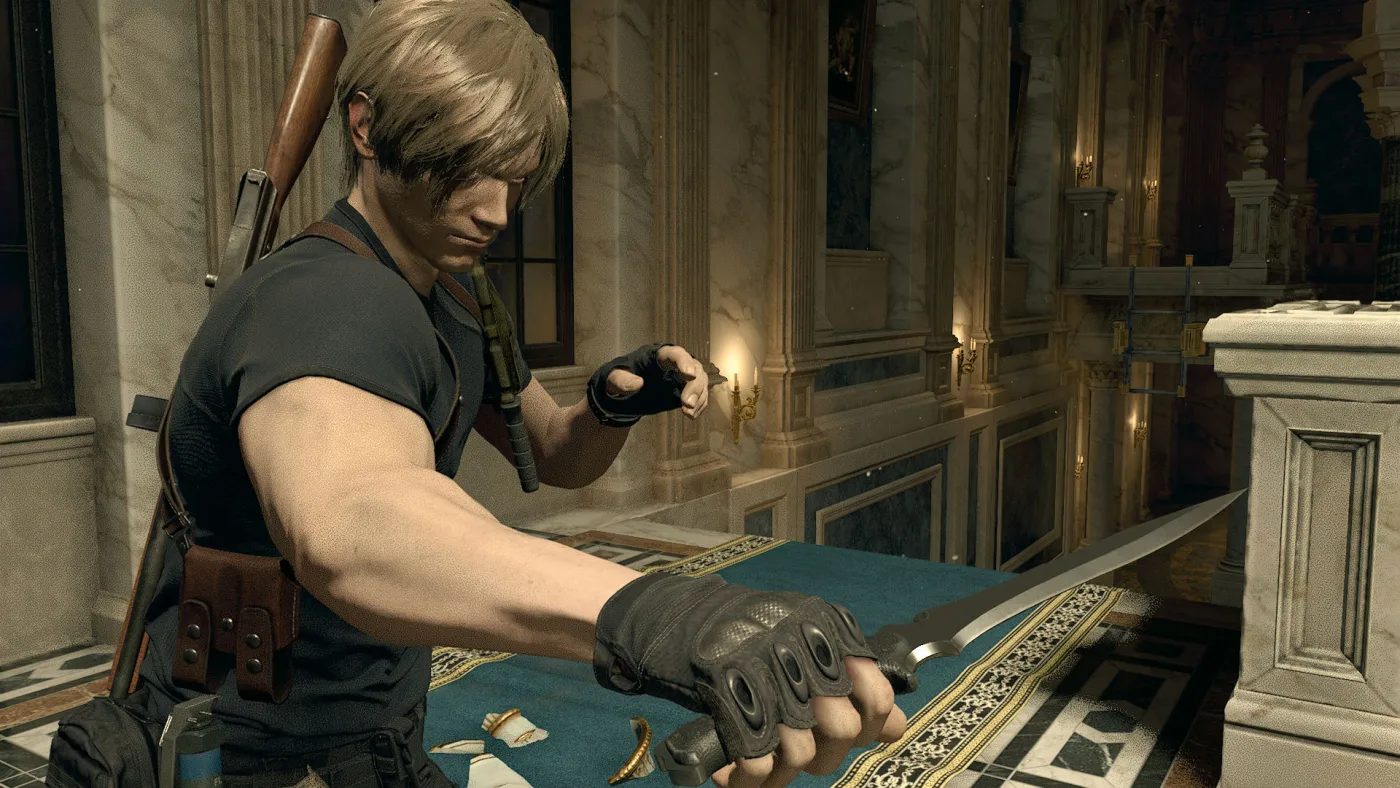
The Resident Evil 4 remake gives Leon three knives worth upgrading and two worth throwing away, and their stat lines differ more than you would guess. Here is the whole ladder in two tables — every power and durability value, every exclusive upgrade, and what each blade costs to take to the top.
RE4 Remake Switch 2 Release Date and Gold Edition Price
Capcom confirmed Resident Evil 4 Gold Edition for Switch 2 at the September 9 Nintendo Direct — the remake's first native, installed release on Nintendo hardware after three years as a cloud-only stream. Here is the launch date, the price, exactly what the bundle includes, and what it quietly leaves out.