Resident Evil 4 Remake Merchant Guide: Spinel and Treasure
The remake gave the Merchant a second currency, and most players sell their way past it without noticing. Spinel buys things pesetas cannot, and the request board is the only reliable way to get it. Here is the whole economy.

In the 2005 original, a spinel was loose change. You picked one up, you sold it for 2,000 pesetas, and it had — per the game's own item data — no other function. The 2023 remake took that same purple rock and turned it into a second currency that buys things money cannot, and then hid the main way to earn it behind blue notes pinned to walls that a lot of players walk straight past.
This guide covers the Resident Evil 4 remake (2023). The Merchant in the 2005 original works differently enough that I have given it its own section at the end.
The Merchant runs two currencies
Everything the Merchant sells falls into one of two buckets.
Pesetas buy weapons, upgrades, ammo recipes, case upgrades, and repairs. You get them from selling treasure, breaking crates, and looting enemies. Pesetas are plentiful in the sense that you will always have some and never enough.
Spinel buys a much shorter list, and there is no way to convert pesetas into spinel. It comes primarily from completing Merchant requests, with occasional drops from crates and enemies. That scarcity is the point — the spinel list contains the highest-value purchases in the game precisely because you cannot grind money for them.
The Merchant appears at fixed points marked by a violet flame, and he is available across the main game, Separate Ways, and The Mercenaries. He is a Ganado, for what it is worth, and he does not care.
Requests are the only reliable spinel faucet
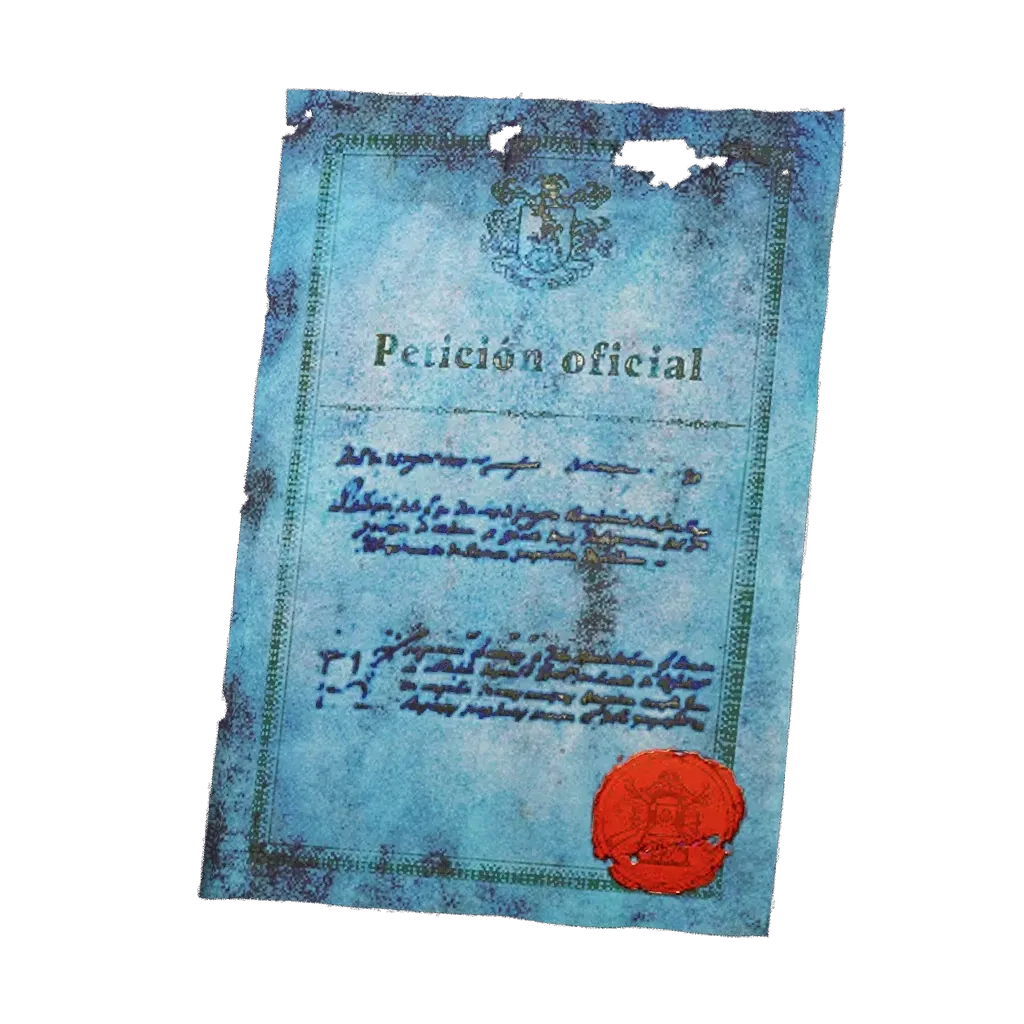
Requests are blue notes pinned near the Merchant's stalls and around the world. Read one and it enters your log with an objective, an area, and a spinel reward. Complete it, then return to the Merchant to claim — the reward is not automatic.
They come in a few recognizable shapes:
- Medallion hunts. The classic is "Destroy the Blue Medallions," which asks you to shoot all 5 blue medallions hanging around the Farm for a reward of 3 spinel. Several variants of this appear across the Village, Castle, and Island.
- Named threats. "The Wandering Dead" asks you to kill a single strong enemy in the Incubation Lab and pays 8 spinel — one of the fattest single payouts in the game.
- Collection and hunt tasks. Things like "Egg Hunt" ask you to find or shoot specific items scattered through an area.
Three rules that will save you a lot of spinel:
- Read every blue note the moment you see one. Many requests are area-locked, and once a chapter seals behind you, that request is gone for the run.
- Medallions do not respawn. Shoot them as you find them even before you have picked up the request — progress is tracked.
- Check the Merchant's board every visit. New requests appear as chapters advance.
Requests are also the reason not to sprint through areas. The remake rewards sweeping a zone before triggering the next story beat.
What to actually buy with spinel
The spinel list is longer than it looks — Game8's full trade list runs past fifteen distinct entries across the campaign, unlocking chapter by chapter:
| Purchase | Spinel cost | First available |
|---|---|---|
| Exclusive Upgrade Ticket | 30 first, 40 after | Chapter 7 |
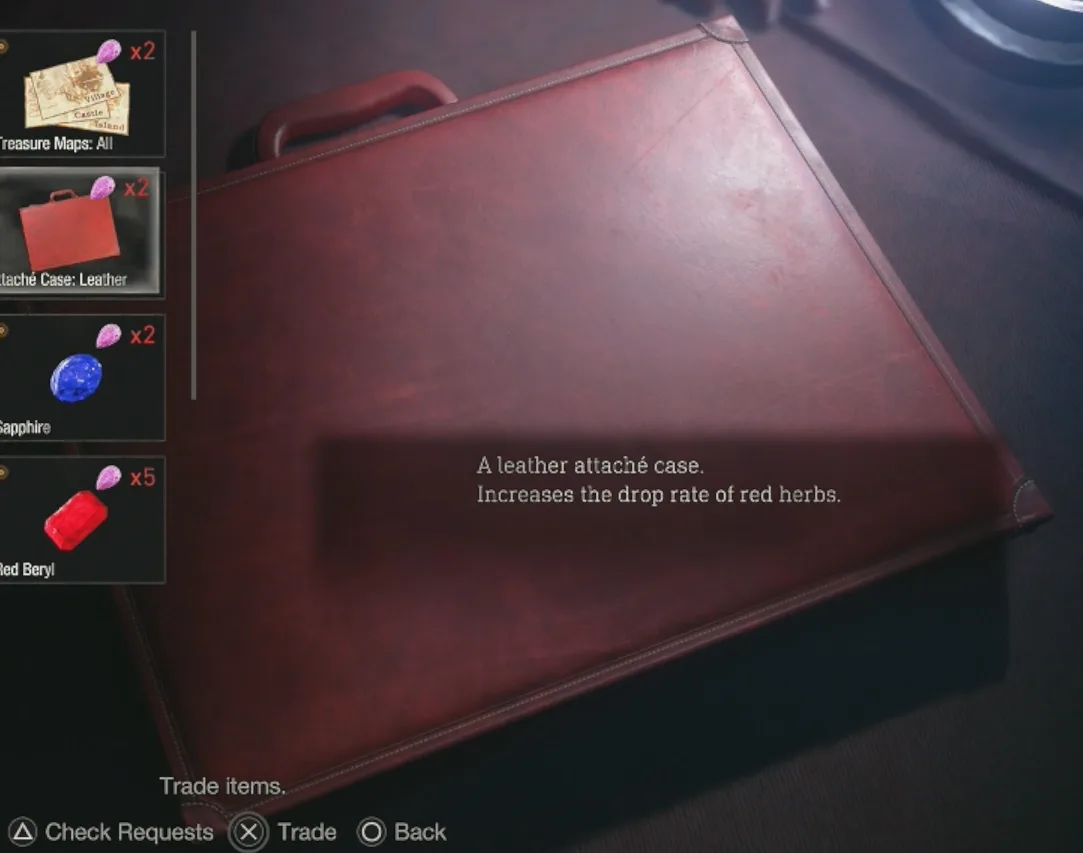
| Attaché Case: Leather | 12 | Chapter 7 |
| Laser Sight | 10 | Chapter 2 |
| Red9 Stock | 9 | Chapter 6 |
| Attaché Case: Black | 8 | Chapter 4 |
| TMP Stock | 8 | Chapter 4 |
| High-power Scope | 7 | Chapter 4 |
| Punisher handgun | 5 | Chapter 2 |
| Red Beryl | 4 | Chapter 4 |
| Yellow Herb | 3 | Chapter 2 |
| Yellow Diamond | 3 | Chapter 2 |
| Treasure maps (Village, Castle, Island) | 1 / 3 / 5 | Chapters 2, 7, 13 |
| Elegant Mask | 2 | Chapter 4 |
| Gunpowder x10 | 2-3 | Chapters 6, 10 |
| Velvet Blue | 1 | Chapter 13 |
The Exclusive Upgrade Ticket is the correct answer nearly every time. It unlocks a weapon's exclusive upgrade regardless of that weapon's current level — meaning you can slap a 1.5x power multiplier onto a lightly-upgraded Blacktail or Red9 without first sinking 300,000-plus pesetas into maxing it. You still pay the exclusive's pesetas cost, but you skip the grind that normally gates it. That is the single biggest power spike available to you — but hoarding every spinel toward 30 is not free, because the list above holds real spend along the way: the two attaché cases alone are 20 spinel of inventory space, and the Laser Sight, stocks and scope upgrade weapons you are already using. Buy the cases and attachments that fit your build, then save the rest for the ticket.
The Punisher at 5 spinel is cheap and its exclusive upgrade lets shots penetrate 5 targets, but its maxed power of 1.90 is the lowest of any handgun. Buy it if you want a crowd-control tool, not as a main sidearm.
Treasure maps are worth grabbing if you enjoy sweeping areas — they mark treasure locations on your map, which directly feeds your pesetas income. For the full weapon breakdown, see the Resident Evil 4 remake weapon upgrade guide.
Treasures: sell the plain ones, combine the rest

This is where most pesetas get left on the floor. Treasures come in two kinds, and the distinction is written into the item description.
Sell-only treasures say "(For selling only.)" in their description. There is nothing to do with these but sell them. Examples: the Velvet Blue at 2,500 pesetas, the Pearl Bangle at 12,000. If the description says sell-only, take it straight to the Merchant.
Combinable treasures have recesses that accept gemstones. The description tells you the shape and count — the Elegant Mask, for instance, reads "There are three round recesses on the brow" and can be inlaid with up to three round gemstones.
The value swing here is enormous. An Elegant Mask sells for 5,000 pesetas bare and up to 36,400 fully inlaid — more than seven times the base price for gems you already found lying around. That single item is worth more than half a case upgrade if you fill it correctly.
The practical system:
- Never sell a treasure that mentions recesses until it is full.
- Match gem shape to recess shape — round gems into round slots, square into square.
- Matching gem colours to each other pays a bonus on top of the individual gem values. A mask with three gems of the same colour beats a mask with three mismatched ones.
- Loose gems with no home yet are worth holding, but they take inventory space. If your case is full and you have not found a matching treasure, sell the duplicates.
The Merchant's own tip files nudge you toward this, but they are easy to skip.
Case upgrades pay for themselves
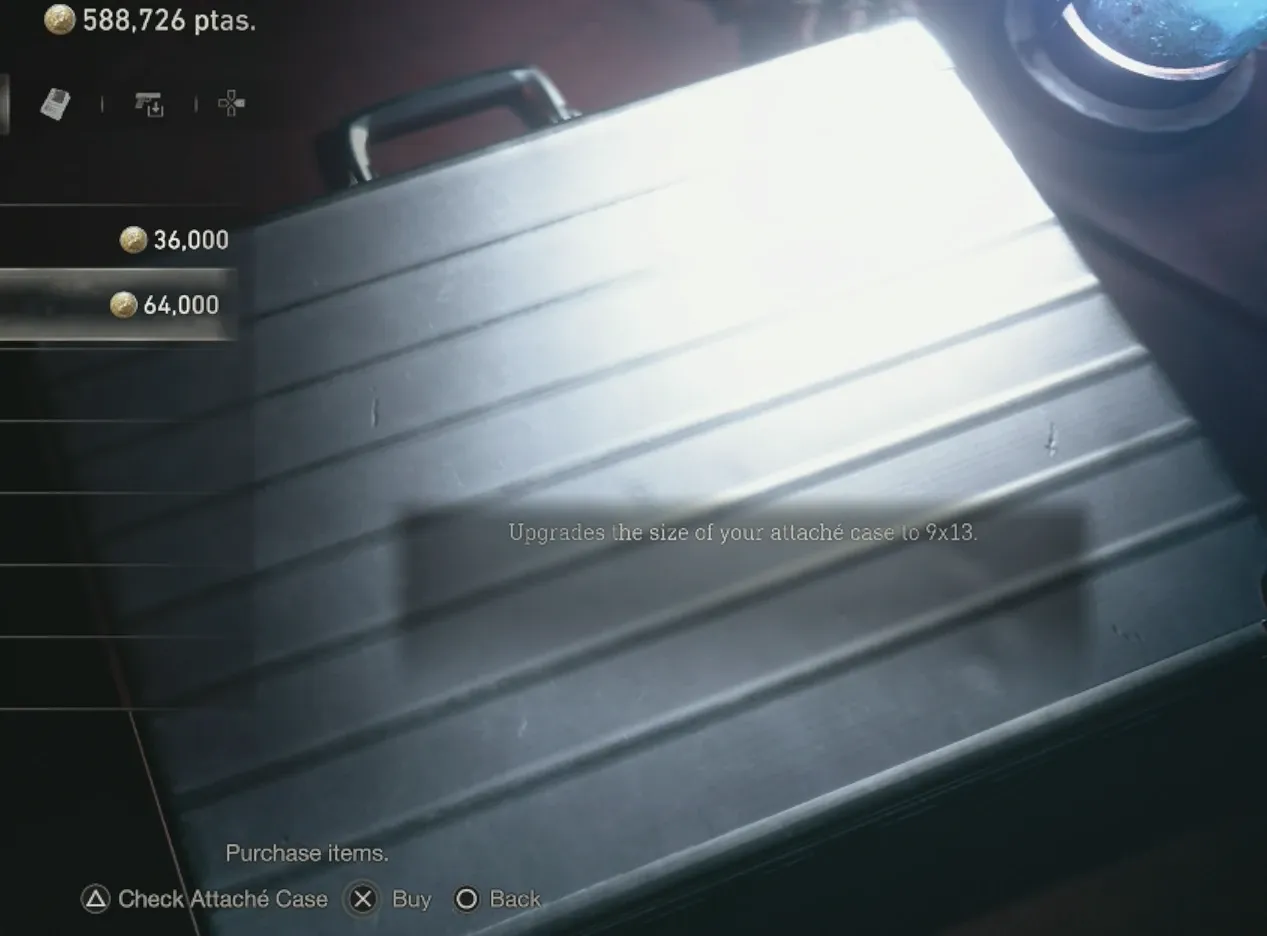
Buy them early and buy them first. Every treasure you cannot carry is money you did not earn, and every gem you leave behind is a combination you cannot complete.
The largest case in the main game is the 9x13 upgrade at 117 slots, which costs 64,000 pesetas and appears in the Merchant's stock in Chapter 13. Because that is late in a 16-chapter game, the smaller intermediate upgrades are the ones doing real work for most of your run.
Compare that 64,000 against a weapon exclusive at 80,000 to 100,000. The case is cheaper and improves every other system you interact with. There is no run where a new gun beats more space.
Charms: the token machine is worth every pull
Charms hang off your attaché case and grant passive bonuses — better ammo crafting yields, cheaper items, faster movement. You get them from the Shooting Range, where completing courses earns Silver and Gold Tokens that you feed into a gachapon machine.
The Shooting Range is not a side distraction, it is a systems purchase. Three tokens buys one pull, not a chosen charm — which charm comes out is set by the mix of Silver and Gold tokens you insert, and Game8's testing found the result is fixed per combination, so the same three tokens give the same charm even after a save reload. Gold tokens raise the odds of rarer prizes, per the token's own item text. The chase prize is the Striker charm, a Legendary that grants +8% running speed — a permanent, always-on movement buff. Other charms cut item costs or improve herb and ammo crafting, which compounds across an entire run.
Two notes: charm rarities run up to Legendary, and in Separate Ways some charms can simply be bought outright from the Merchant instead — the Striker charm, for example, sells for 100,000 pesetas there.
Play the Shooting Range whenever you pass one. The tokens cost you nothing but time.
Selling rules: what to hold and what to dump
Sell without hesitation:
- Any treasure whose description says "for selling only"
- Duplicate weapons, especially a second shotgun at 16 slots
- Gems you have no matching treasure for and no case space to hold
- Weapons you have decided not to invest in — the base sell price is half the purchase price, so a Red9 you abandon returns 7,000
Never sell:
- Treasures with unfilled recesses
- Your Combat Knife (repair it instead — it cannot permanently break)
- Key items, obviously
- A weapon you have already sunk upgrades into, since you will not recover that investment
One thing worth knowing: an upgraded weapon's sell value does rise with its upgrades. A base Red9 sells for 7,000, but a fully-upgraded one is worth 276,800. That is still a loss against what you paid, so treat it as damage control rather than a strategy.
Repairs are a recurring cost, budget for them
The Merchant repairs your Combat Knife, and this is a line item most players never plan for. Unlike the Kitchen Knives and Boot Knives you scavenge — which are destroyed permanently when their durability runs out — the Combat Knife can always be brought back. What varies is the bill, and it varies a lot depending on how you have been using it.
| Action | Repair cost |
|---|---|
| Normal hit (swipes and stabs) | 14 pesetas |
| Parry | 74 pesetas |
| Stealth kill | 124 pesetas |
| Finisher on a downed or staggered enemy | 374 pesetas |
| Escaping a grab | 450 pesetas |
The gap between the top and bottom of that table is the whole lesson. Escaping a grab costs thirty-two times more knife durability than a normal slash. A messy chapter where you get grabbed repeatedly can quietly cost you several thousand pesetas in repairs — real money that was going to go toward a case upgrade.
Two ways to shrink the bill. First, use the free melee prompt on staggered enemies instead of the knife finisher; your boot costs nothing, the blade costs 374. Second, put pesetas into the knife's durability track, which scales it from 1.00 up to 2.20 — a maxed knife lasts more than twice as long between visits. That upgrade permanently reduces a recurring expense, which makes it better value than its price tag suggests.
Repair at every Merchant visit rather than waiting for the blade to go red. A knife with no durability left means no parries and no grab escapes, which is exactly the situation you least want to discover mid-fight — the beginner guide covers why the parry is worth protecting.
How the 2005 Merchant differs
The original Merchant is a simpler machine, and if you are playing the 2005 version most of this guide does not apply.
There are no requests, no request board, and no spinel currency. Spinels in the original are a straightforward treasure that sells for 2,000 pesetas and does nothing else. There are no Exclusive Upgrade Tickets — exclusive upgrades only appear after a weapon is fully maxed, with no shortcut. There are no charms and no attaché case decoration, and case upgrades are bought as flat size increases.
What does carry over is the treasure-combination idea. The original also had treasures that accepted gems for a higher sale value, and it also rewarded sweeping areas thoroughly. If you learned the 2005 economy, the instinct to combine before selling is the one habit that transfers cleanly.
New to the remake entirely? Start with the Resident Evil 4 remake beginner guide for difficulty, parrying, and knife management.
Quick Action Checklist
- Read every blue request note you pass. Many are area-locked and vanish when a chapter closes.
- Return to the Merchant to claim completed requests — rewards are not automatic.
- Hoard spinel toward an Exclusive Upgrade Ticket at 30 spinel rather than spending it piecemeal.
- Shoot blue medallions on sight. "Destroy the Blue Medallions" pays 3 spinel for all 5 at the Farm.
- Never sell a treasure that mentions recesses until every slot is filled. An Elegant Mask goes from 5,000 to 36,400 pesetas.
- Match gem shapes to recess shapes, and match gem colours to each other for the bonus.
- Buy case upgrades before weapons. The 9x13 case is 64,000 pesetas in Chapter 13.
- Play the Shooting Range every time. Three tokens buys a charm pull — the result is set by your Silver/Gold mix, so save first and re-try combinations until you land the Striker's +8% run speed.
- Sell duplicate weapons and any treasure marked "for selling only" immediately.
- Repair the Combat Knife every visit — never sell it, because it cannot permanently break.
Frequently Asked Questions
How do you get spinel in Resident Evil 4 remake?
What should I spend spinel on in Resident Evil 4 remake?
Should I combine treasures before selling them in Resident Evil 4 remake?
How much does the biggest attaché case cost in Resident Evil 4 remake?
Are charms worth getting in Resident Evil 4 remake?
Keep Reading
Related Guides

RE4 Gold Edition on Switch 2: What Hands-On Previews Show
Capcom's September 9 announcement gave Resident Evil 4 Gold Edition a release date and a price on Switch 2, but said nothing about how it would actually run. Tokyo Game Show 2026 is where that got answered — by the press who played it, not by Capcom.
RE4 Remake Switch 2 Release Date and Gold Edition Price
Capcom confirmed Resident Evil 4 Gold Edition for Switch 2 at the September 9 Nintendo Direct — the remake's first native, installed release on Nintendo hardware after three years as a cloud-only stream. Here is the launch date, the price, exactly what the bundle includes, and what it quietly leaves out.
RE4 Remake Costumes and Accessories: Every Perk
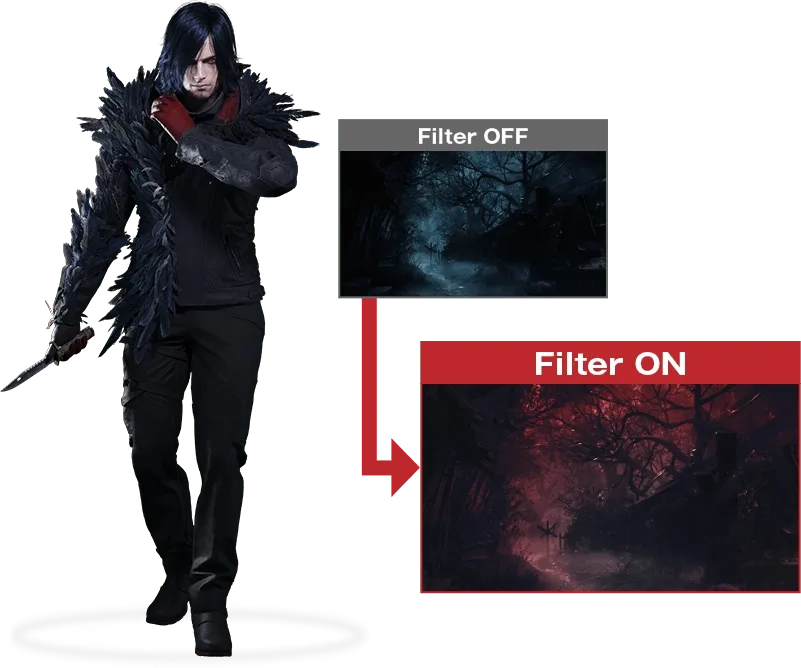
Capcom's own manual calls costumes and accessories a Perk system, not a wardrobe. Most of the 39 options in the Resident Evil 4 remake do nothing mechanically — but six of them, one costume and five accessories, genuinely change how the game plays, and four of those five accessory perks are locked behind an S+ run on a specific difficulty.
RE4 Remake Difficulty Guide: What Each Mode Changes
The Resident Evil 4 remake asks you to pick a game mode before it has taught you anything, then refuses to let you change your mind. Here is what each of the four actually modifies, straight off Capcom's own manual, and the two narrow exceptions to the lock-in.

Resident Evil 4 Remake Beginner Guide: Survive the Village
The 2023 remake gives Leon a parry and takes away his indestructible knife. That single trade is the whole learning curve. Here is how to stop dying in the village and start playing the game the way it wants to be played.
RE4 Remake Attaché Case Guide: All 7 Cases and Effects
The case you equip in the Resident Evil 4 remake is a drop-rate modifier wearing a skin. Here are all seven, what each one boosts, the 20 spinel Leon pays for the two buyable ones, and why the Gold and Classic cases you thought you missed are still on sale.