CS2 Economy Guide: Buy Rounds, Loss Bonus, and MR12
Half the rounds you lose in CS2 are lost in the buy menu, before anyone fires a shot. Here are the exact payout numbers, the loss bonus ladder, and the force-buy math that decides whether your next three rounds are winnable.
You lost that round in the buy menu. Not in mid, not on the ramp, not when your entry fragger swung wide into a held angle — in the buy menu, twenty seconds earlier, when three of you bought rifles on $3,100 and the fourth bought an AWP he could not afford armor with. Counter-Strike 2 hands you a spreadsheet disguised as a shooter, and the players who climb are the ones who treat every buy as a two-round decision instead of a one-round impulse.
The good news: the whole system is about a dozen numbers. Learn them once and you never guess again.
Why MR12 broke your old buy habits
CS2 Premier runs MR12 — a maximum of 12 rounds per half, 24 in regulation, first to 13. If both teams reach 12-12 the match goes to a single overtime period of three rounds per half, where both teams are handed a flat $10,000 and nothing carries over from regulation. Still tied after that? The match ends 15-15 as a draw.
That shorter half is the whole story. In CS:GO's MR15 you had 15 rounds to absorb a bad economic stretch. Two dead rounds at the start of a half cost you 13% of your side. In MR12 the same two rounds cost you 17%, and there is genuinely no time to rebuild through a long, disciplined double-save. Every eco you take has to buy you something — either a full buy next round or a stolen round now.
The practical translation: CS2 rewards decisive economies. Full buy or genuine save. The half-hearted $2,700 rifle-and-nothing-else purchase that leaves five players with no armor and no utility is the single most common way mid-tier teams throw a half away.
The exact numbers you have to memorize
Everything below is for Premier and Competitive. You start each half with $800, and your wallet caps at $16,000 (Casual caps at $10,000, Wingman at $8,000).
Round-end payouts
| Outcome | Payout |
|---|---|
| Win by eliminating the enemy team | $3,250 |
| CT win by running out the clock | $3,250 |
| CT win by defusing the bomb | $3,500 |
| T win by bomb detonation | $3,500 |
| Planting or defusing the bomb (that player only) | $300 bonus |
Two things fall out of this immediately. First, planting the bomb is worth $250 to the team even in rounds you win by elimination, because a detonation pays $3,500 instead of $3,250. Second — and this one costs people games — surviving Terrorists receive no round-end money at all if the round is lost to the clock. Hiding in a corner with an AK for the last 40 seconds and never planting is not a save. It is a donation.
Loss bonus and how the counter moves
The loss bonus is not a streak counter in the way most players describe it. It is a running tally that moves in both directions:
| Loss count | Payout for losing the round |
|---|---|
| 0 | $1,400 |
| 1 | $1,900 |
| 2 | $2,400 |
| 3 | $2,900 |
| 4 | $3,400 |
The counter goes up by one after every loss and down by one after every win, floored at 0 and capped at 4. Both teams begin each half with the counter already sitting at 1, which is why losing the pistol round pays $1,900 rather than $1,400.
On top of that, Terrorists who plant the bomb and still lose the round collect an extra $600 each. That number used to be $800 in CS:GO. Valve cut it, and it matters more than the 200 dollars suggests — planting on a lost round is now worth meaningfully less, so trading four players for a plant you cannot hold is a worse deal in CS2 than it was in CS:GO.
There are two rarely-quoted lines in the same system: teamkilling costs the offender $300, and if a player suicides or disconnects to deny a kill, an enemy is compensated the kill award anyway. Denying does not work.
Kill rewards by weapon class
| Weapon | Kill reward |
|---|---|
| Knife | $1,500 |
| Shotguns | $900 |
| XM1014 | $600 |
| SMGs | $600 |
| P90 | $300 |
| Pistols | $300 |
| Rifles and machine guns | $300 |
| Grenades | $300 |
| Zeus x27 | $100 |
| AWP | $100 |
The $600 SMG reward is the entire reason force buys work. Five MP9s at $1,250 apiece is a cheap round, and three kills with them pays back $1,800 — enough that a lost force can still leave you fully buying the next round.
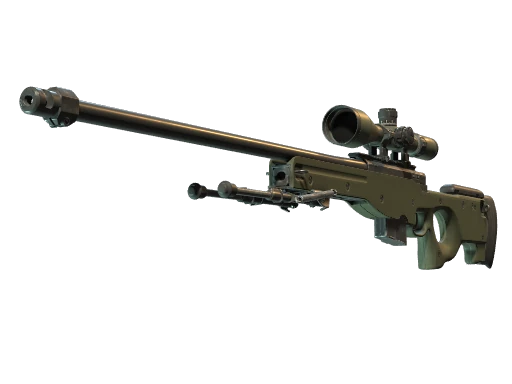
The AWP's $100 reward is the flip side. An AWPer who trades three kills for their life has generated $300 for the team and burned $4,750. AWP rounds are not economic engines; they are round-winning tools that you pay for out of a healthy bank.
The pistol round is a coin flip with a safety net
With $800 you cannot buy armor and a good pistol. The choice is basically:
- Armor-first ($650 Kevlar + $150 of nothing useful): you survive one extra body shot from an opposing Glock or USP. Strong on CT where you hold angles.
- Gun-first ($700 Desert Eagle, no armor): 53 damage a shot and a one-tap headshot on anyone, armored or not. High variance, high reward.
- Utility-first (a $300 P250, a $300 smoke, and a $200 flash): the buy that actually wins organized pistol rounds. The P250 does 38 damage with 64% armor penetration on a 13-round magazine, which is enough gun, and the utility gets five people onto a site alive.
Losing the pistol round is not a disaster. You bank $1,900, plus $600 if you planted as T. What kills halves is losing the pistol round and then panic-buying rifles on round two with $2,300, going 0-5, and arriving at round three with $2,400 and no guns. That is a three-round hole from one bad decision.
Force buy math and when to pull the trigger
A force buy is a bet that the round is winnable with sub-optimal gear and that losing it will not break your next round. Run the arithmetic before you commit:
Say you have $2,600 after losing two in a row (loss count now at 2). A full force — MP9 at $1,250, Kevlar and helmet at $1,000, a flash at $200 — spends $2,450. If you lose, you collect $2,400 at loss count 3, and you are at roughly $550 going into the next round with no guns. That is a broken economy, and it means you have effectively decided to save on two consecutive rounds.
Now say you have $3,900. The FAMAS at $1,950 in CS2 (down from $2,050 in CS:GO), full armor at $1,000, a smoke and a flash at $500 — that is $3,450 spent on a rifle round with real utility. Lose it and you bank $2,400 at loss count 3, and next round you are buying properly again.
The rule that holds up: force when losing still leaves you above roughly $3,500 for the following round, or when the enemy's economy is so broken that a stolen round ends their half. Everything in between is a coin flip you are paying for twice.
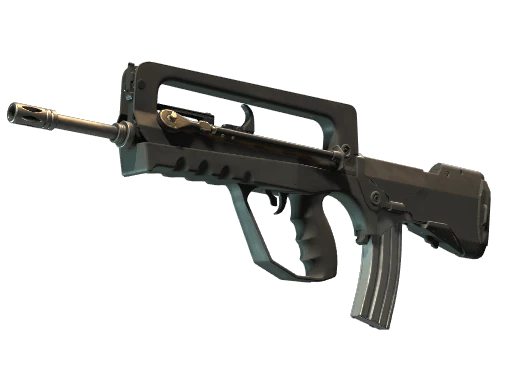
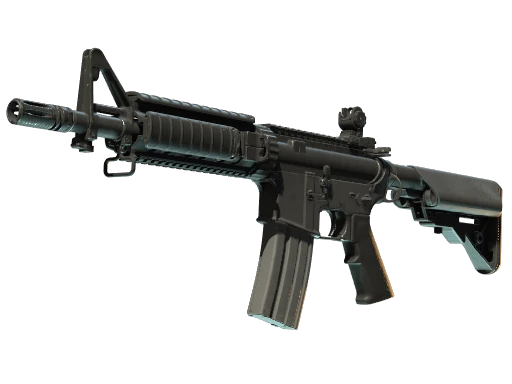
One CS2-specific wrinkle worth pricing in: the FAMAS got $100 cheaper and the M4A4 dropped from $3,100 to $2,900. CT force buys are genuinely stronger in CS2 than they were in CS:GO, because a $2,900 M4A4 plus $1,000 of armor fits inside a $3,900 wallet with change for a flash. The $3,300 AUG does not fit that wallet, which is one reason it lives on the loadout bubble — the AUG vs SG 553 guide has the damage case for buying it anyway.
The save round nobody executes properly
A save is not "everyone hide." It is a set of jobs:
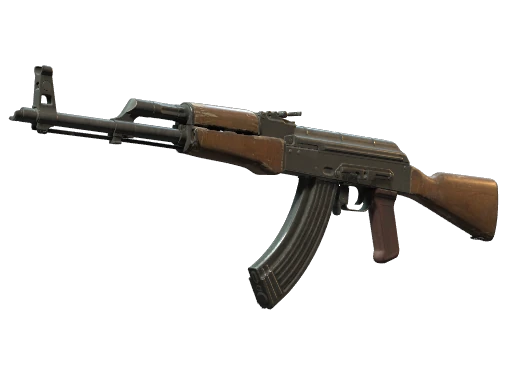
- Keep the guns. Anyone holding a rifle needs to disengage early and reach a corner of the map the enemy will not sweep. Dying with an AK hands the enemy a free $2,700 rifle and costs you your next round.
- Buy nothing except a defuse kit if you are CT and already rich. The $400 kit shortens a defuse from ten seconds to five, and it survives the round with you.
- Plant the bomb anyway if you are T. $600 for a plant on a lost round is real money, and a planted bomb forces the CTs to commit and burn utility.
- Take free damage and free info. Chip an enemy for 40 from a safe angle, note their buy, and leave. That damage decides the next round's opening duel.
The number that makes this concrete: five players saving rifles is $13,500 of equipment retained. That is nearly a full team buy preserved for free.
Reading the enemy economy without a spreadsheet
You do not need to count their money to the dollar. You need three data points:
- Their loss count. Track it the same way you track yours. Four losses in a row means they are on $3,400 and will full-buy regardless of what happened last round.
- What died last round. If you killed three riflers and they did not save, they are rebuying from scratch. If their AWPer disappeared alive at 30 seconds, he still has the AWP.
- What they picked up. Every dropped rifle you leave on the ground is a gun you have to face next round. Sweeping the site for dropped weapons after a won round is free economic damage.
The most actionable version of this: after you win a round against a team that saved, expect a full buy. After you win a round in which you killed all five and they had bought, expect an eco or a force — and that is the round to buy armor, utility, and a close-range answer rather than an AWP.
Four CS2 changes that quietly rewrote the economy
If you learned the money system in CS:GO, four numbers changed under you:
- The plant-and-lose bonus dropped from $800 to $600. Plants on lost rounds pay less.
- The M4A4 fell from $3,100 to $2,900, matching the M4A1-S and making CT rifle rounds $200 cheaper across the board.
- The FAMAS fell from $2,050 to $1,950, and the incendiary grenade from $600 to $500 — CT force buys got cheaper on two fronts at once.
- The Zeus x27 now pays a kill reward. It awarded $0 in CS:GO; in CS2 a Zeus kill is worth $100 competitive. The gun still costs $200, so a successful zap is a net $100 loss on the round but a completely free enemy rifle if you pick it up.
Add it up and CS2's economy is slightly more forgiving to buy, slightly less forgiving to plant-and-die. That pushes toward more full buys and fewer half-committed plants — which is exactly what you see in high-rated Premier lobbies.
If you want the rest of the foundation, our Counter-Strike 2 coverage hub has the companion pieces: the CS2 utility guide covers what all that grenade money actually buys you, and the CS2 spray control guide covers whether you can hit anything with the rifle you just bought.
Quick Action Checklist
- Memorize five numbers: $1,400 / $1,900 / $2,400 / $2,900 / $3,400. Everything else follows from the ladder.
- Remember the counter moves both ways — it drops by one on every win, and both teams start each half at 1.
- Never end a round as a surviving T with an unplanted bomb and no round-end money.
- Force only when a loss still leaves you above roughly $3,500 next round.
- Buy full armor before a second grenade. $1,000 of Kevlar and helmet beats a $400 molotov you throw at nobody.
- As T, plant even on lost rounds — $600 each is a third of a rifle.
- Save properly: disengage early, keep the rifle, buy the $400 defuse kit if you are a rich CT.
- Sweep dropped enemy rifles after won rounds. Free guns are free economic damage.
- Count their losses, not their dollars. Loss count 4 means a full buy is coming no matter what.
- Do not deny with a suicide. CS2 pays the enemy the kill award anyway.
Frequently Asked Questions
What is the CS2 loss bonus ladder?
How much money do you start with in CS2?
How much do you get for planting the bomb in CS2?
Which CS2 weapons pay the biggest kill rewards?
When should you force buy in CS2?
Keep Reading
Related Guides
CS2 SCAR-20 vs G3SG1: The $5,000 Two-Shot Autosnipers
The SCAR-20 and G3SG1 are the same rifle in Counter-Strike 2's weapon file except for three values: reload time, recoil, and the flinch numbers behind tagging. Both cost $5,000, pay $300 a kill, kill with any two hits and one-tap a helmet at any range. Here is the pair from the game files, what March 2026 did to their ammo, and how the money compares with the AWP.
CS2 Zeus x27: Range, Recharge and the $100 Kill
The Zeus x27 does 500 damage, ignores armor completely and reaches about 120 units, roughly 2.3 metres. Since February 2024 it recharges instead of disappearing, and since April 2024 a kill pays $100. Here is the whole weapon, from Valve's release notes and the game's own files: reach, recharge, money, purchase limits by mode, and every Zeus line in CS2's release notes.
CS2 Rush Mode Explained: Towers, Arenas and Money
Wiping the enemy team does not, by itself, win a round of Rush. Controlling the tower does. Counter-Strike 2's new 3v3 mode, read straight from its config, its map script and its arena list: how rounds end, how the front line moves, all 19 arenas, and an economy where a first loss pays only $400 less than a win.
CS2 AK-47 vs Galil AR: The $900 One-Tap Tax
The Galil AR now carries 175 rounds to the AK-47's 120 — a gap a March 2026 patch opened and nobody in this vertical has written down. It still cannot kill a helmeted head in one shot at any range, while the AK-47 can from point-blank out to roughly 49 meters. Here is the full stat sheet, the range math, and the ammo change that quietly rewrote the cheap rifle's job.
CS2 Trade-Up Contracts: The 5-Skin Knife Route
Ten skins in, one skin out — that ratio has governed the Trade-Up Contract since 2013, and for twelve years it could never produce a knife no matter how many you burned. Valve changed that on October 22, 2025, and changed the contract again seven months later. Here is the actual ladder, the float math that decides your outcome's wear, and both updates most guides still have not caught up to.
CS2 Knife Damage: Why the Backstab Isn't Automatic
Every knife tip you have ever heard treats the backstab like a cheat code: get behind someone, hit them, they die. The Counter-Strike 2 damage table tells a more specific story — a light hit to the back will not drop a full-health target, aiming for the head buys you nothing at all, and the fastest confirmed kill with a knife never requires you to get behind anyone. Here is the actual table, hitbox by hitbox.