CS2 Nuke Callouts: Four Names That Exist on Two Different Floors
On Dust 2, "I am at Ramp" means one place. On Nuke it means two, and one of them is a full floor below the other. Here is every named position on de_nuke across both levels, and the four names that exist twice.
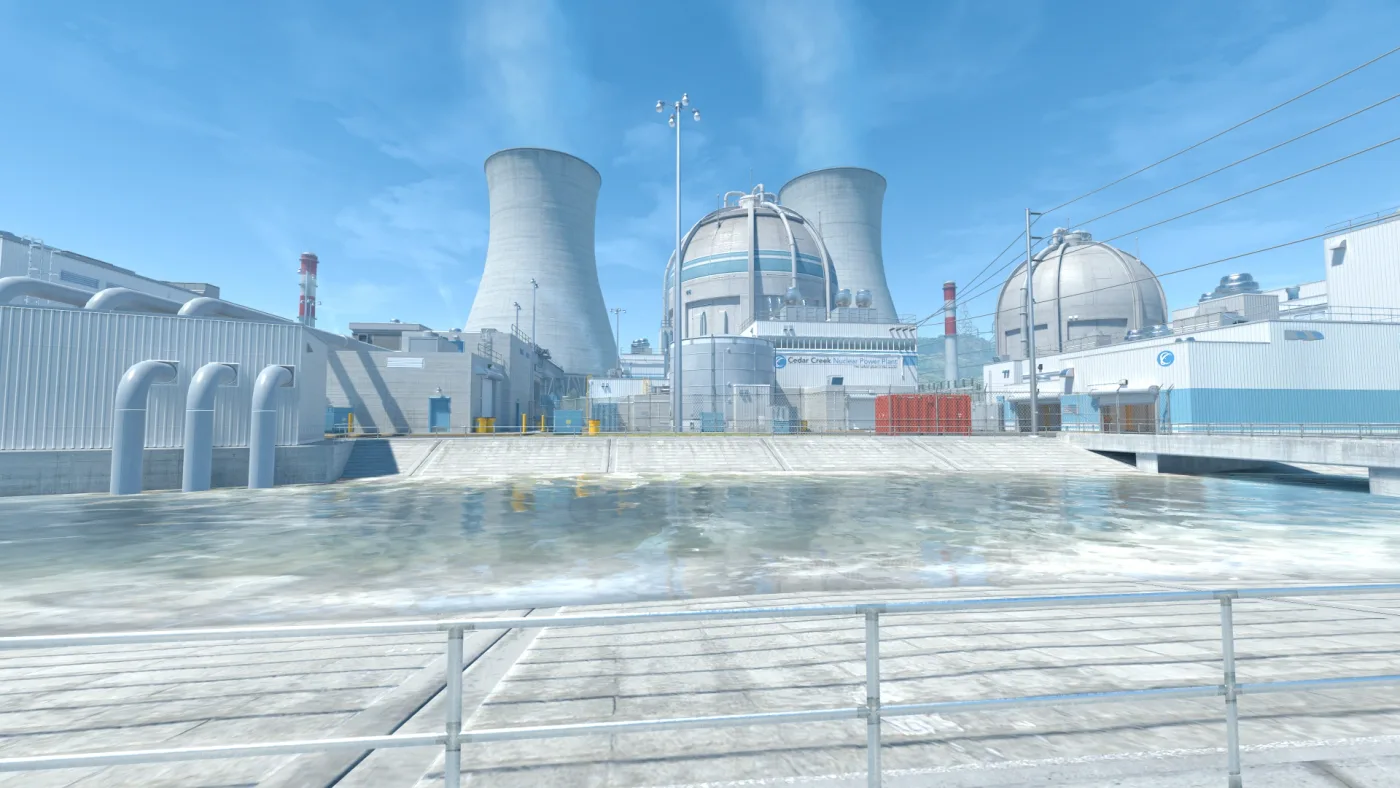
On Dust 2, "I'm at Ramp" means one place.
On Nuke it means two, and one of them is a full floor below the other.
That is not a figure of speech. Pull the Counter-Strike Wiki's callout map data for Nuke and you get two separate radars, an upper and a lower, because the map has two of them. Of the seven maps in the current Active Duty pool, Nuke is the only one the wiki has to split this way. Cross-reference the two marker lists and four names appear on both: Ramp, Secret, Vent and Headshot.
So the vocabulary every other map guide teaches you — say the name, teammate knows the place — quietly stops working here. Not because the map is harder to shoot on, but because four of its words point at two places each.
Nuke in 30 seconds
Nuke (de_nuke) was built by Jo Bieg and introduced in Counter-Strike Beta 4.0 as one of the first Bomb Defusal maps in the game, alongside Prodigy and Dust. The wiki lists it as shipping in Counter-Strike, Condition Zero, Source, Global Offensive and CS2 — a map with a quarter-century of continuous service.
The structural thing that makes it Nuke: per the Counter-Strike Wiki, the map "revolves around a central structure rather than multiple lanes, with the two bombsites being overlapped on top of each other." Of the seven maps in the current Active Duty pool — Ancient, Anubis, Cache, Dust II, Inferno, Mirage and Nuke — it is the one where the sites are stacked instead of spread. A site is the hangar floor. B site is directly beneath it.
The dates worth carrying:
- December 12, 2012 — Valve merged elements of de_nuke_ve, the competitive revision built by pro player and mapper Salvatore "Volcano" Garozzo, into the official map.
- March 31, 2015 — Nuke was removed from Active Duty and replaced by the reworked Train.
- February 17, 2016 — the revamped Nuke shipped with Operation Wildfire, and returned to the active pool shortly after, this time replacing Inferno. The revamp removed one of the two vents between the bombsites, re-opened access from tunnels to Lower B, blocked access to part of Upper A, and made Silo easier to reach.
- October 3, 2018 — the corridor from the T side into the ramp room was widened, the doors by the trophy room were moved, and the CT faction became the FBI.
- December 6, 2023 — the last CS2 change the Counter-Strike Wiki records for the map: a sun material fix, a visibility bug at Garage looking toward Hell, and railing collision corrected so it emits the right footstep sounds. Valve's own release notes carry plenty more after it, which matters later in this guide.
The setting changed with the revamp too. The original was Harz Kernkraftwerk in Germany; the current one is the Cedar Creek Nuclear Power Plant in the American Rust Belt, with FBI defending and the Phoenix Connexion attacking.
The wiki's interactive map data places 28 markers on the upper radar and 11 on the lower, 39 in total. Four of those are the two bombsites and the two spawns, leaving 35 callout markers — and because four names are duplicated across the two floors, 31 distinct callout names.
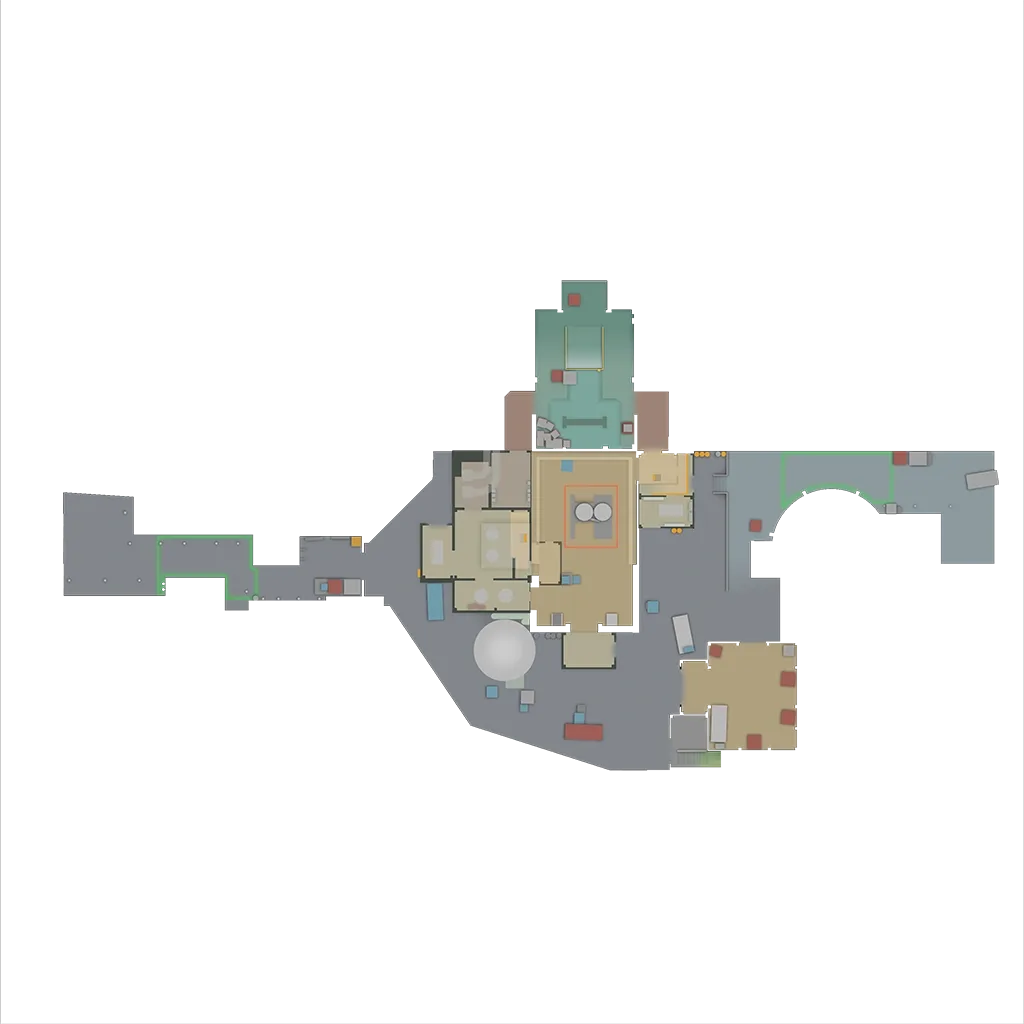
The four names that exist on both floors
Learn this before you learn a single position. A callout that is unambiguous on any one-floor map stops being unambiguous here.
| Name | Upper | Lower |
|---|---|---|
| Ramp | The upper end of the ramp room | The bottom of the ramp, opening onto B |
| Secret | The top of the Secret stairs, off Outside | Lower Secret, arriving underground near B |
| Vent | The A-site mouth of the ventilation shaft | The lower mouth, with the ladder up to A |
| Headshot | Upper Headshot | Lower Headshot |
Three of the four are vertical connectors — Ramp, Secret and Vent — and that is not a coincidence, it is the whole design. Each is a single named object that occupies two levels at once, which is why the wiki has to plot it twice. Headshot is the odd one out: not a connector, just a name the wiki pins at almost identical coordinates on both radars, out past Ramp on each. The wiki's own gallery caption for the vent screenshot reads "Vent Looking to Ladder up to A Site," which tells you exactly what the shaft is for.
So the fix is mechanical and it costs one word. Never say one of those four names without saying upper or lower first. "Lower Ramp" and "Upper Ramp" are two different fights with two different answers, and the gap between them is the difference between a rotation that arrives and one that arrives at the ceiling.
Two names get you around the worst of it, and they are the ones to lean on. The wiki's gallery labels Trophy as the T entrance to Ramp and Hell as the CT entrance to Ramp, and both markers appear only on the upper radar. Say "Trophy" and the floor is unambiguous. Say "Ramp" and it is not.
Upper level: getting to A
The T half of the upper level, ordered from T spawn inward per the wiki's marker coordinates.
| Callout | Where it is |
|---|---|
| Van | The truck just past T spawn — the nearest marker to it on either radar |
| Roof | T Roof, the platform on the T side; the wiki's gallery captions a shot "T Roof Looking to Silo" |
| Radio | The radio room on the T half, level with Trophy |
| Main / Lobby | The main T entrance hall; the gallery shows Lobby viewed both from the T entrance and from Trophy |
| Silo | The silo structure on the T side, the thing T Roof looks down at |
| Trophy | The trophy room — the T-side entrance into Ramp |
| Squeaky | The squeaky door off Lobby |
| Boost | The boost spot between the Radio and Trophy pair and Ramp |
| Gap | The gap on the upper approach, sitting at the same depth on the radar as Silo and Mini |
| Hut | The hut overlooking Lobby |
Trophy is the one to say deliberately. It is a floor-change announcement: a T at Trophy is telling you they are about to be at Lower B, not at A. The rest of this group is approach vocabulary, useful mainly for describing where a rotation is rather than where a fight is.
Upper level: A site and its ring
A is the hangar. The wiki's CS:GO-era guide notes it is the site bots default to and the one Terrorists usually take, because it is closer to T spawn and cheaper to reach.
| Callout | Where it is |
|---|---|
| Vent | The A-side mouth of the shaft down to B |
| Mini | The position looking down onto the site; the gallery captions a shot "Mini Looking to A Site" |
| Closed Vent | The second vent cover, sitting between the open one and the CT side |
| Bridge | An inner-site position on A itself |
| Heaven | The overlook above the site |
| Lockers | The locker room on the CT-facing side of A |
| Hell / Ladder Room | The ladder room — the CT-side entrance into Ramp |
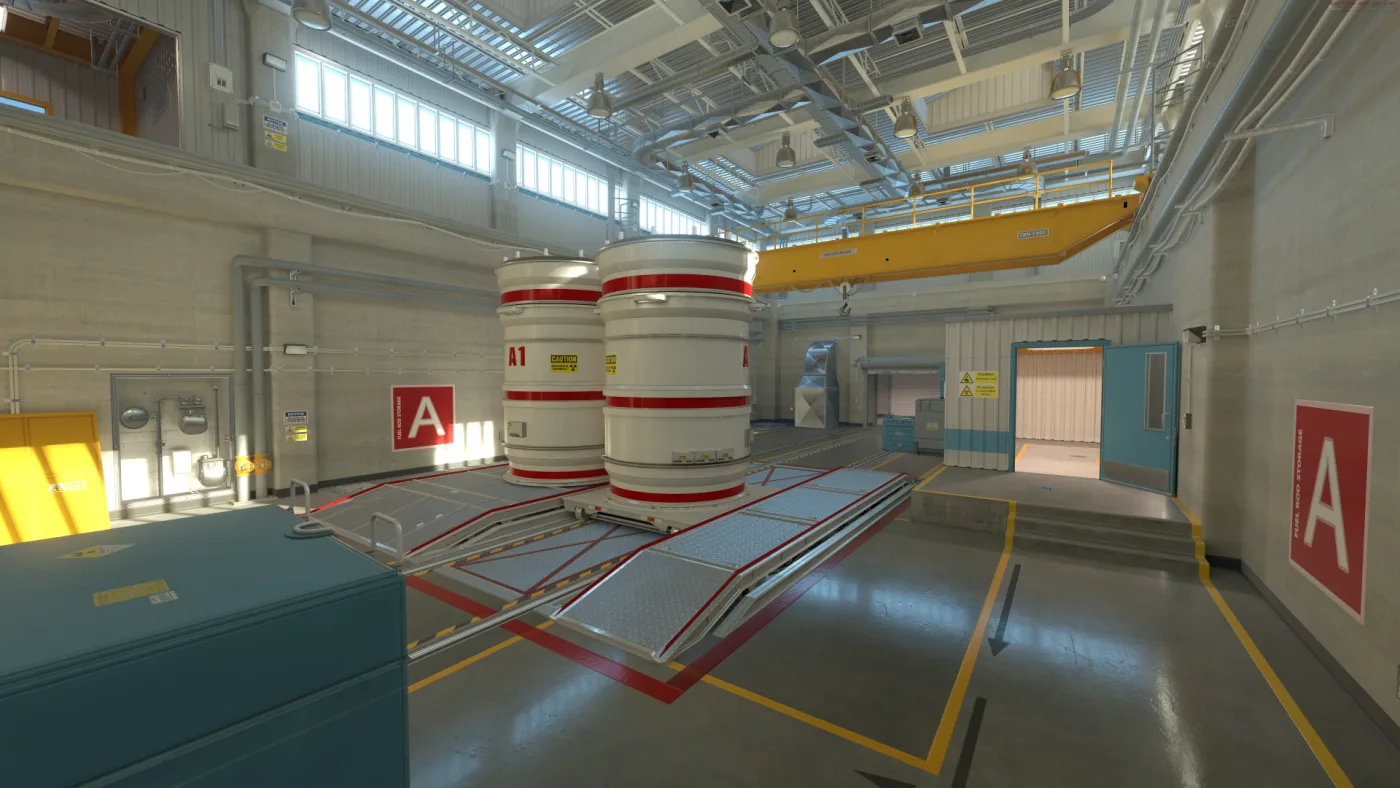
Two of these change how an A round is played.
Vent and Closed Vent are a pair. The February 2016 revamp removed one of the two shafts that used to connect the sites, and per the wiki the remaining ventilation covers can be interacted with to open and close them, shutting off the sightline — and can still be destroyed by shooting them, which makes noise. So "Vent" on Nuke is a door that broadcasts, not a silent corridor. If you hear it go, someone just changed floors and told you about it.
Hell is the CT-side floor change, the path a CT takes to get from A down toward B. The December 6, 2023 CS2 update fixed a visibility bug at Garage looking toward Hell, which is a fair hint about how much that line of sight gets used.
Upper level: Outside and the CT side
Outside is the open yard along one flank of the building, and it is the map's long-range space. The wiki's CS:GO-era guide flags the outdoor side yard as ground where snipers often dominate and where submachine guns and shotguns are "nearly obsolete" — worth pricing into a buy, and the CS2 AWP guide covers when a $4,750 rifle actually pays for itself.
| Callout | Where it is |
|---|---|
| Outside | The open yard itself |
| Red / Container | The shipping container in the yard — the wiki notes it renders red in-game despite being blue in Valve's own promo image |
| Secret | The stairs down from Outside toward the lower level |
| Garage | The garage on the CT side of the yard, overlooking the door into A |
| CT Box | The box on the approach to CT spawn |
| Forklift | The furthest marker from T spawn on either radar, out past CT spawn |
Secret has my favourite etymology on the map, and the wiki records it: there is a sign in-game reading "SEC-RT" pointing at the stairs, a nod to the community callout, because in older versions of Nuke those stairs were largely hidden behind the warehouse. Valve labelled the player-invented name into the level geometry.
Garage is the position the wiki's guide singles out — CTs holding it can watch the door into bombsite A with a scoped rifle, which is the guide's stated reason Ts entering A tend to avoid that door rather than open something noisy.
Lower level: everything around B
Eleven markers, one of them the bombsite. B is enclosed, which the wiki's CS:GO-era guide describes as both its strength and its trap: better cover for defenders, significantly harder to breach, and harder to escape from.
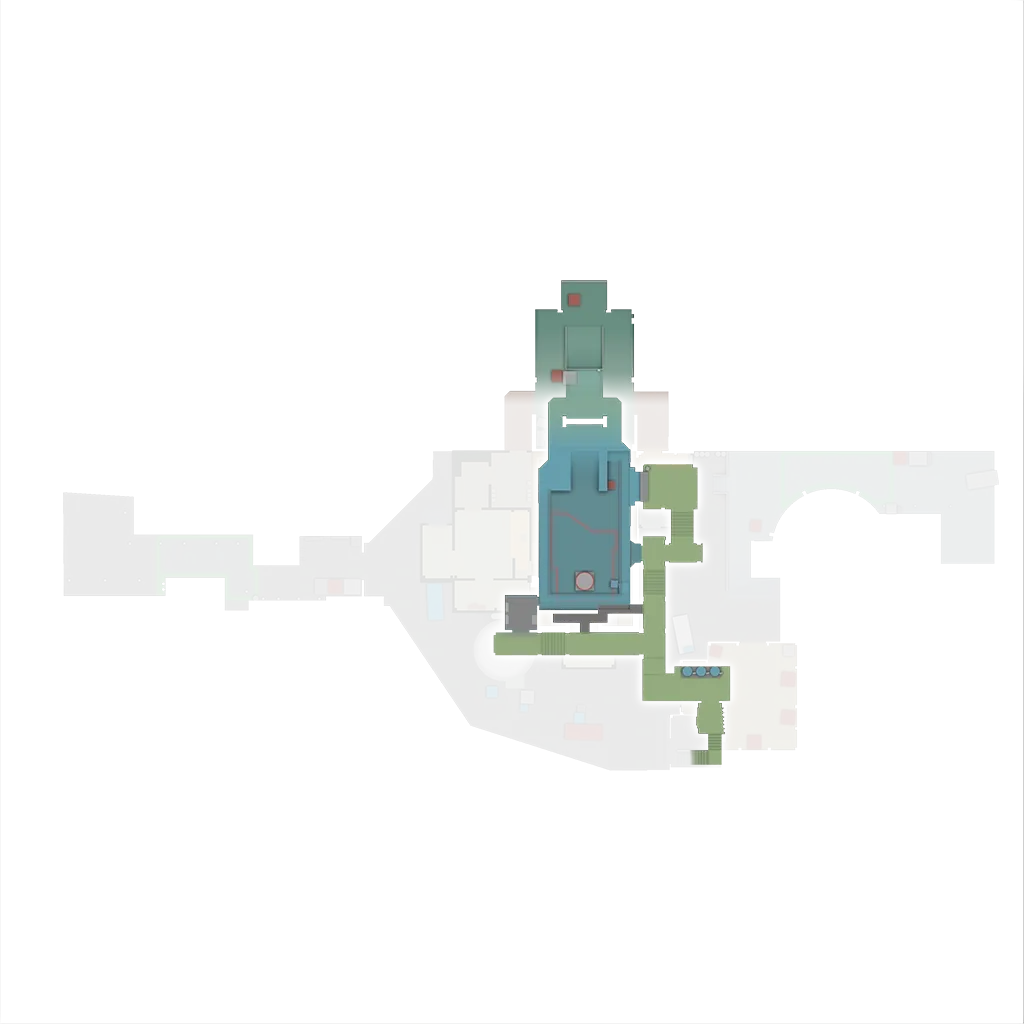
| Callout | Where it is |
|---|---|
| Ramp | The bottom of the ramp, the main T-side arrival into B |
| Headshot | The lower position beyond Ramp |
| Vent | The lower mouth of the shaft, with the ladder up to A |
| Secret | Lower Secret, the underground arrival from the Outside stairs |
| Dark | The unlit area off the site, on the Ramp side |
| Window | The observation window into B; the wiki's guide notes it is breakable and that breaking it makes noise |
| Single Door | Inner-site. The gallery captions it Decontamination (Decon) / Single Door |
| Double Door | Inner-site, on the opposite side of the site from Single Door |
| Scaffolding / Catwalk | Inner-site, the raised structure on the site |
| Backsite | Inner-site, the back of the plant zone |
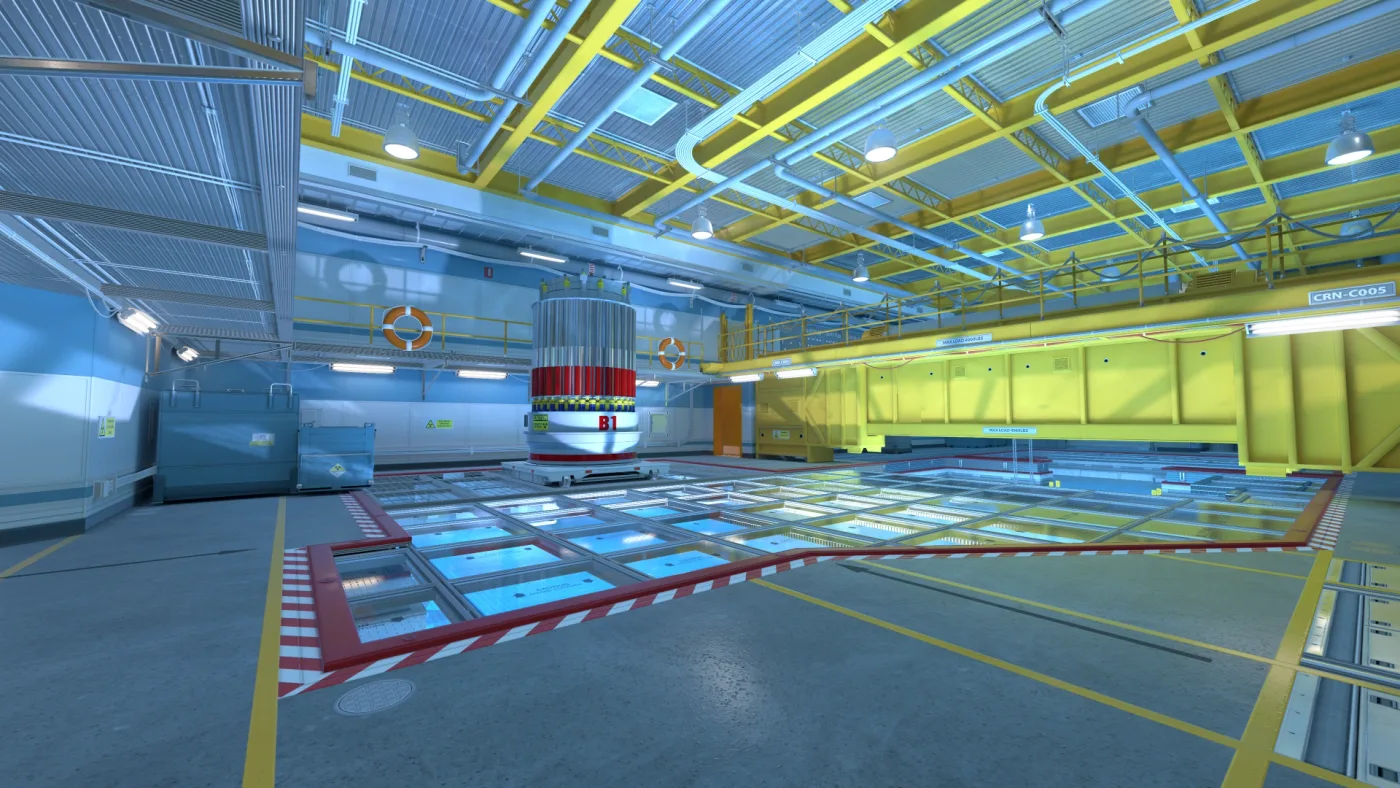
The four inner-site names — Single Door, Double Door, Scaffolding and Backsite — earn their keep on a site this size. B is small and enclosed, so a retake that knows the bomb is on Backsite rather than tucked by Single Door knows its defuse angle before it walks through the door. On an open site you can look around; here you mostly cannot.
Note also that Single Door is Decon. Two names, one place, and the wiki lists both. Pick one and say it consistently, because the failure mode here is not being wrong, it is being slow while everyone translates.
What actually changed in 2026: the bomb, not the layout
Here is the live-service check, and it needs one correction to the wiki. The Counter-Strike Wiki's update list for Nuke stops at December 6, 2023. It is not current. Valve's own release notes carry a long 2024 run the wiki never picked up: clipping and collision passes in February, "collision and line of sight adjustments" on April 25, a gap on Bombsite B fixed on June 14, then C4 stuck spots, pixel walks and geometry gaps through October, and a stuck spot fixed on November 20. If you read "unchanged since 2023" anywhere, that is a wiki artefact, not a fact.
What is true is that no 2026 patch has moved a wall on Nuke. Valve's 2026 notes touch the map twice. On January 27, 2026 a hanging hard hat model had its render bounds adjusted to stop shadow popping. On April 1, 2026 the map got audio work — including the one line that matters most on a stacked map: "Vertical occlusion is now more gradual at the edges of transition points in Nuke and Vertigo." Sound between the floors, in other words, changed before the bomb did.
Because the bomb changed too. The July 8, 2026 update rebuilt C4 explosion damage across every official defusal map, and per Valve's own announcement the blast now flows outward as a shockwave that "dissipates around corners and doesn't go through walls." Our Dust 2 callouts guide has the full rundown of that change and the July 9 and July 20 follow-ups.
On Nuke it lands differently than on the rest of the pool, for one reason: the wall between your two bombsites is a floor.
The other six Active Duty maps ask you to get around a corner. Nuke asks you to get under or over one. If B is lost and you are on A, the concrete between the hangar floor and the site below is now doing work that, before July, it did not do. The same holds in reverse — and my read is that the three connectors are the awkward case, because a player standing in Vent or partway up Ramp when the bomb goes is in the part of the map that is on neither side of that floor.
One number to throw away while you are here. The Counter-Strike Wiki still records a Global Offensive-era model where the C4 dealt 500 damage over a 1,750-unit radius on most maps, with Nuke and Vertigo hardcoded down to 400 and Inferno up to 620. Those were per-map constants. Valve replaced that whole system on July 8, 2026 with precomputed simulation values baked into each compiled map, and has not published the new per-map numbers. Anyone quoting you a flat damage figure for Nuke is quoting a system that no longer exists.
The July 9 patch also removed the map-wide minimum of one point of damage from the new explosions — meaning it is now possible to be far enough away, behind enough geometry, to take literally nothing. And since July 20 your health bar flashes a damage preview the moment the bomb becomes audible, so on Nuke you can check the floor you are standing on before deciding whether to keep fighting or leave.
The five callouts that decide the round
Thirty-one names is a lot to hold cold. These five carry most of the information.
- Ramp, with a floor attached. It is the main T route to B and it spans both levels. "Lower Ramp" and "Upper Ramp" are separate problems.
- Vent. It is the only open shaft between the sites, it can be opened, closed and shot out, and all three make noise. Hearing it is a free floor-change report.
- Secret. The other floor change, and the quiet one — stairs from Outside straight down toward B. A T disappearing from Outside is usually a T arriving at Lower Secret.
- Heaven. The elevated hold over A. Who owns it decides whether an A execute is a fight or a shooting gallery.
- Outside. The long-range lane. Control of Outside is control of both Secret and Garage, which is control of the two flanks at once.
How to call it on Nuke
The general format still applies — count, position, action, in that order, and "two Lower Ramp, pushing site" beats a sentence. What Nuke adds is one extra rule that overrides everything.
- Say the floor first, always. Upper or lower, before Ramp, Secret, Vent or Headshot. This is the whole game on this map.
- Never say just "site." A and B are stacked, so "they're on site" is the least useful sentence available to you.
- Trophy and Hell are floor announcements. Trophy means a T is heading down. Hell means a CT is. Say them instead of "he's going ramp."
- Call the vent, out loud, every time you hear it. It is one of the few pieces of free information the map hands out.
- Use the inner-site names on B. Single Door, Double Door, Scaffolding, Backsite. A retake that knows the plant spot on a site that small is already ahead.
- Pick one of Single Door and Decon and stick with it. Both are in circulation. Consistency beats correctness here.
- Do not talk while you are still shooting. Win the duel, then report. Half a callout from a player mid-spray gets teammates rotated to the wrong floor, and on Nuke wrong floor means an entirely wasted rotation.
The reason to be strict about this is structural rather than a matter of skill: on a single-level map a bad callout sends a teammate to the wrong place, and on Nuke it can send them to the right place on the wrong floor — which sounds correct to everyone involved right up until nobody arrives.
For the same treatment on the maps with only one floor, we have the CS2 Dust 2 callouts guide, the CS2 Mirage callouts guide and the CS2 Inferno callouts guide. The rest of the coverage lives on the Counter-Strike 2 coverage hub, and the wider archive is on the Mythras blog.
Quick Action Checklist
- Say upper or lower before Ramp, Secret, Vent and Headshot. Those four names sit on both of Nuke's radars.
- Never say the bare word "site." A and B are stacked on top of each other.
- Use Trophy for the T entrance to Ramp and Hell for the CT entrance. Both are unambiguous about which floor you mean.
- Call the vent out loud when you hear it open, close or break. It is a free floor-change report.
- Learn the four inner-site B names — Single Door, Double Door, Scaffolding, Backsite — before you learn anything else on the lower level.
- Treat Single Door and Decon as the same position, and pick one word for it.
- Do not buy an SMG for the Outside yard. The wiki's CS:GO-era guide calls SMGs and shotguns nearly obsolete there and points at rifles and snipers instead.
- No 2026 CS2 patch has moved Nuke's layout — the only two entries are a January 27 model fix and April 1 audio work. Do not trust the wiki's update list here; it stops at December 2023 and misses Valve's whole 2024 run of clipping and collision passes.
- Forget any flat C4 damage number for Nuke. The old 400-damage constant was replaced on July 8, 2026 by per-map baked simulation values Valve has not published.
- After the July 2026 bomb rework, the floor between A and B counts as a wall. Check the health-bar damage preview before you commit to a last-second fight.
Frequently Asked Questions
How many callouts does Nuke have in CS2?
Why do Ramp, Secret and Vent appear twice on Nuke?
What is the difference between Trophy and Hell on Nuke?
Why is the callout on Nuke called Secret?
How much damage does the bomb do on Nuke in CS2?
Has Nuke changed in CS2 in 2026?
Is Nuke still in the CS2 Active Duty map pool?
Keep Reading
- Nuke — Counter-Strike Wiki (history, 2016 revamp, CS2 patch list, trivia)
- Map:Nuke Upper — Counter-Strike Wiki interactive callout map data (28 markers)
- Map:Nuke Lower — Counter-Strike Wiki interactive callout map data (11 markers)
- Nuke/Gallery — Counter-Strike Wiki (captioned position screenshots, Trophy and Hell labels)
- C4 Explosive — Counter-Strike Wiki (legacy per-map blast damage, 2026 update log)
- Counter-Strike 2 Update, January 27, 2026 (Nuke hard hat model render bounds)
- Counter-Strike 2 Update, April 1, 2026 (vertical occlusion at transition points in Nuke and Vertigo)
- Counter-Strike 2 Update, July 8, 2026 (C4 explosion redesign, Cache added to Active Duty)
- Season 5, Armory, and More — Valve announcement (shockwave dissipates around corners)
- Counter-Strike 2 Update, July 9, 2026 (removed map-wide minimum C4 damage)
- Counter-Strike 2 Update, July 20, 2026 (bomb damage health preview, smoke and fire interaction)
- Counter-Strike 2 — official Valve site
Related Guides
CS2 Anubis Callouts: Every Name on de_anubis
Anubis came back to Active Duty on January 21, 2026, and Valve rewired part of the map on the same day it did — a bridge drop moved, the mid doors flipped, and a hole opened between something called E-box and the back of bombsite B. E-box is not on the community callout map at all. Here is the wiki's full 47-marker set for Anubis, checked line by line against what Valve has actually written down.
CS2 Ancient Callouts: Every Name on de_ancient
Ancient signposts its own bombsites: the site walls read PLAZA A in amber and PLAZA B in pale blue. Everything else you have to learn from other players. The Counter-Strike Wiki callout map places 30 markers on de_ancient, two of them carrying an A-site label at B-site coordinates, and its update list is at least 13 Valve patches behind. Here is the whole vocabulary, area by area, with the patch-note paper trail.
CS2 Map Pool: Every Active Duty Swap Since Launch
Counter-Strike 2 has run on seven Active Duty maps every day of its life, and Valve has changed that seven exactly five times. Every change was a straight one-in, one-out, four of the five landed on the first day of a Premier season, and you can rebuild the launch pool from the release notes alone. Here is the whole timeline, dated.
CS2 Cache Callouts: Every Name on the Map That Came Back
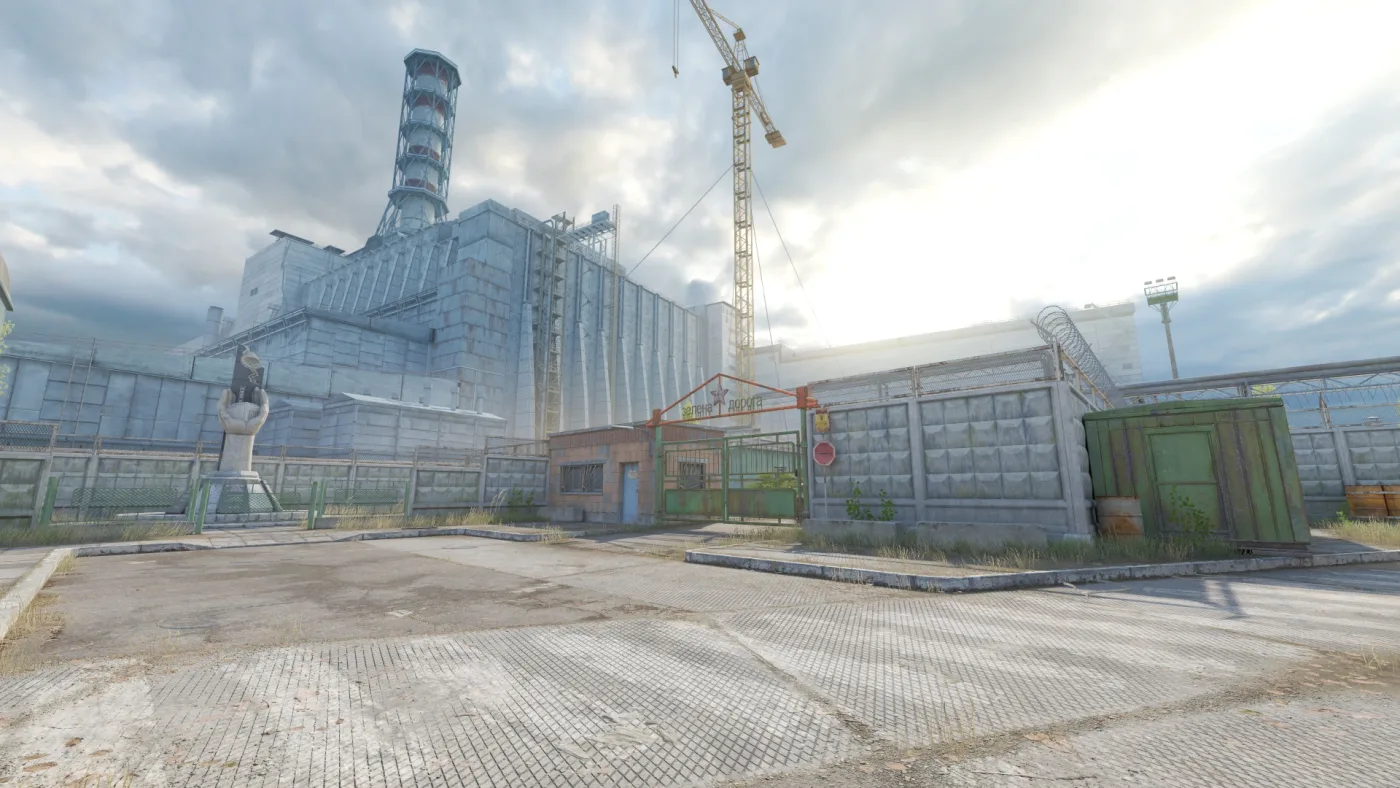
Valve ended its announcement of Cache's return with a callout: "Don't forget to clear Forklift." Here is every named position on de_cache, which names Valve itself has used in 2026 patch notes, and the one marker the wiki flags as gone.
CS2 Economy Guide: Buy Rounds, Loss Bonus, and MR12
Half the rounds you lose in CS2 are lost in the buy menu, before anyone fires a shot. Here are the exact payout numbers, the loss bonus ladder, and the force-buy math that decides whether your next three rounds are winnable.
CS2 Dust 2 Callouts: Every Name on de_dust2 and the Ones That Win Rounds
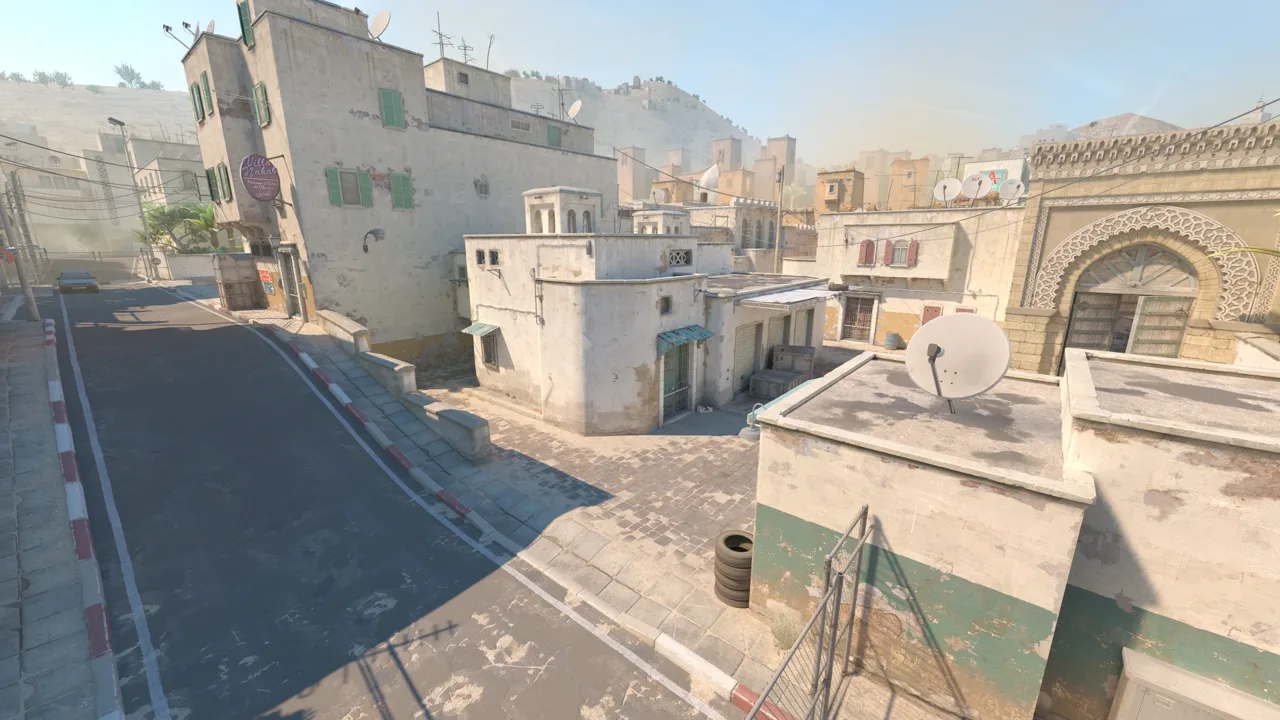
Dust 2 holds a Guinness World Record for cumulative gameplay hours and half your lobby still calls Xbox "the box in mid." That box has a name, and it got patched twice in two days this April. Here is every named position on de_dust2 and which five actually decide rounds.