Fortnite V-Bucks & Item Shop Guide: How the Currency Works
V-Bucks are Fortnite's currency, the Item Shop is the store, and there's a quiet loop where the Battle Pass can pay for itself forever. Here's how all of it actually works — rarities, the daily rotation, gifting, OG returns, and whether you should ever buy V-Bucks at all.
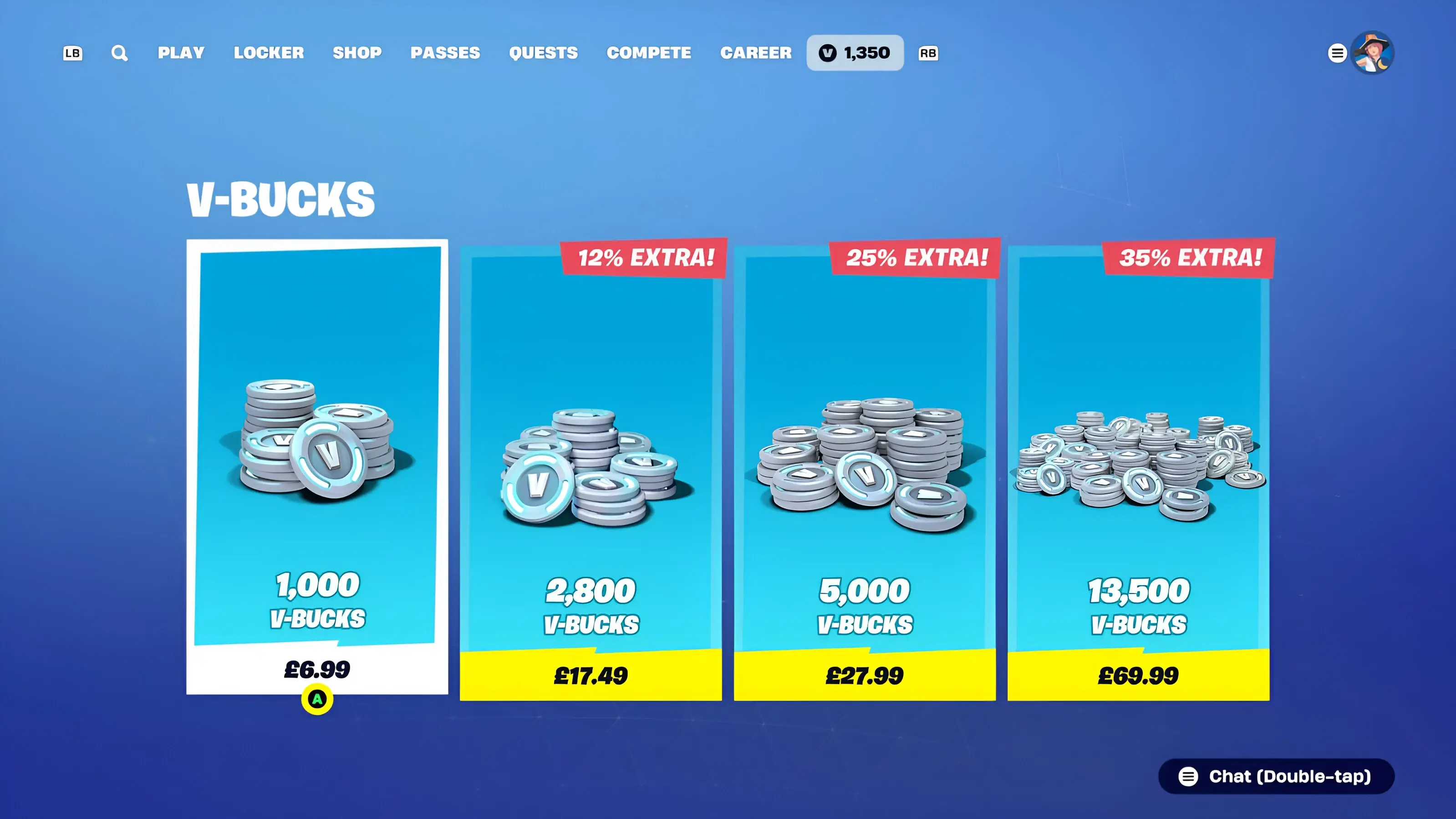
Fortnite is free, but the second you see a skin you want, you run into V-Bucks — the blue coin that gates every cosmetic in the game. The store rotates daily, the prices look arbitrary, and there's a Battle Pass loop that, played right, can fund your cosmetics basically forever. Most players never figure out how the whole system fits together; they just buy V-Bucks when something's pretty and feel vaguely ripped off later.
This is the plain-English map of the entire economy: what V-Bucks are, how the Item Shop's daily rotation works, what cosmetic rarities actually mean, how OG items return from the vault, how gifting works (and its real rules), and the Battle Pass refund loop that's the single most important thing a new player can understand. We're sticking to the durable mechanics here — not this week's shop, not a current-season skin, because those are gone by the time you read this. The system doesn't change; the contents do.
What V-Bucks actually are
V-Bucks (short for VinderBucks) are Fortnite's single in-game currency. There's only one thing to understand and it's important: V-Bucks buy cosmetics and the Battle Pass — nothing that affects gameplay. No weapons, no advantages, no pay-to-win. Every skin, pickaxe, glider, emote, wrap, and back bling is purely visual. A free-to-play player and someone who's spent a fortune have the exact same guns and the exact same odds of winning a fight. You're only ever paying to look cool — and some of the flashiest flexes, like the Victory Crown, you earn by playing rather than buy.
You get V-Bucks two ways: buy them in bundles with real money, or earn them in-game through the Battle Pass and certain quests (covered below). They sit in your account balance and work across the whole Fortnite ecosystem — the skin you buy shows up in Battle Royale, LEGO Fortnite, and the other modes, because cosmetics are account-wide. Buy them once, spend them anywhere in the app.
The bundles scale so that bigger packs give you slightly more V-Bucks per dollar — the standard free-to-play nudge to buy more at once. Actual prices and bundle sizes vary by platform and region and get adjusted over time, so I'm not quoting numbers that'll rot; check the in-game V-Bucks tab for what's current. The mechanic that matters is just this: real money in, V-Bucks out, cosmetics only.
How the Item Shop works
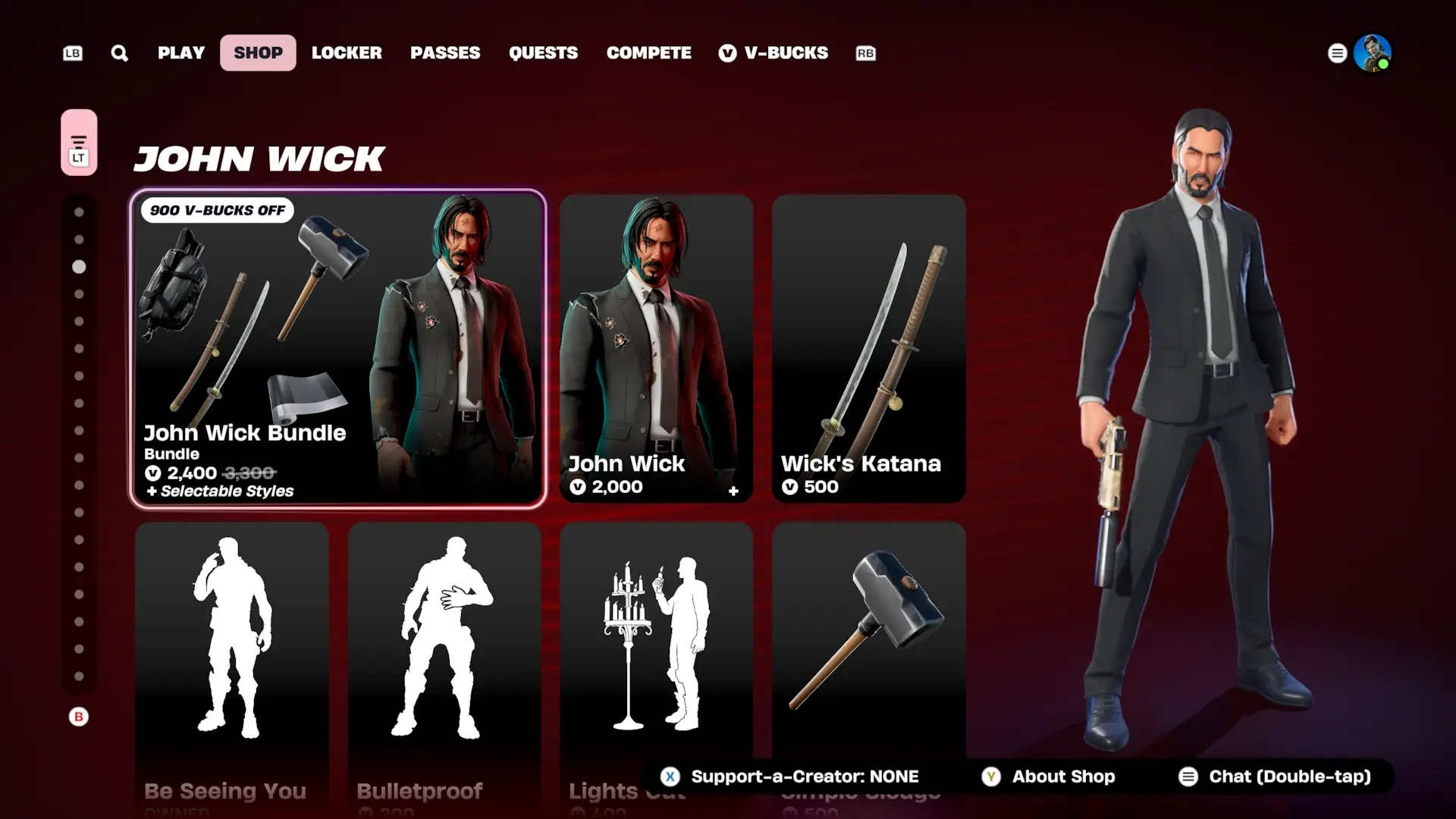
The Item Shop is the store, and its defining feature is that it rotates. The shop refreshes on a daily cycle, swapping which skins, pickaxes, emotes, and bundles are available to buy with V-Bucks. An item you see today might be gone tomorrow and not come back for weeks, months, or — for some older items — a very long time. That rotation is the whole psychology of the shop: scarcity is the selling point.
A few things worth knowing about how it behaves:
- Items are priced by rarity, roughly. Higher-rarity skins generally cost more V-Bucks than lower ones, with bundles offering a small discount over buying the pieces separately. Exact prices vary item to item, so treat rarity as a rough price tier, not a fixed rate.
- Featured vs daily slots. The shop highlights bigger, often newer or themed sets up top and rotates smaller daily items below. The layout gets reorganized over time, but the core idea — a curated front, a rotating back — stays.
- The shop is the same for everyone. Whatever's in the shop on a given day is the same for all players in your region; it's not personalized to push you specific items. What rotates in is on Epic's schedule, not tied to your wallet.
- Don't panic-buy the FOMO. "Available for a limited time" is doing a lot of work. Most items return eventually. If you're not sure you want it, the rotation almost always gives you another shot.
The one honest tip about the shop: it's designed around fear of missing out. Knowing that most things come back takes the pressure off, and that alone will save you V-Bucks.
Cosmetic rarities and what you're paying for
Fortnite cosmetics carry rarity tiers — the familiar color-coded ladder running from Common up through Uncommon, Rare, Epic, and Legendary, plus special branded tiers like Icon Series (real-world celebrity and creator collabs), Gaming Legends, and Marvel/DC and other licensed sets. Here's the part people get wrong: rarity is almost entirely cosmetic flavor and a rough price tier — it does not make a skin "better."
What rarity actually signals:
- A rough price band. Higher-rarity skins tend to cost more V-Bucks. That's the main practical effect — it's a pricing tier dressed up as prestige.
- Bundle completeness. Higher-tier sets more often come with matching pieces (back bling, pickaxe, glider) bundled in, which is part of why they cost more.
- Nothing about performance. A Legendary skin has zero gameplay advantage over a Common one. Hitboxes are standardized; a flashy skin isn't a bigger or smaller target in any meaningful way. You're paying for looks and, with licensed tiers, the brand.
So when you're deciding what to buy, ignore the rarity color as a quality signal. The only questions that matter are "do I like how it looks" and "is it worth the V-Bucks to me." Rarity is marketing, not stats.
OG returns and the vault
The flip side of a rotating shop is the vault — the pool of items that have left the shop and aren't currently buyable. When an item "returns," it rotates back out of the vault into the shop for a window before disappearing again. This is why "OG" items — older, long-absent cosmetics from early Fortnite — generate so much hype when they come back: they've been unavailable so long that returning players treat the return as a real event.
The practical takeaways:
- Most items aren't gone forever. The shop's "limited time" framing makes everything feel like a last chance, but the vast majority of cosmetics cycle back eventually. Genuinely permanently-retired items are the exception, not the rule.
- Some returns are rarer than others. A skin that rotates every few weeks is low-pressure; a true OG item that's been vaulted for years is a different story, and those returns get announced and hyped. If you missed something from the early days, watch for return events rather than assuming it's lost.
- There's no guaranteed schedule you can game. Epic controls what returns and when, and it's not a fixed calendar you can predict. Don't buy something you don't want just because "it might be vaulted forever" — but if a long-vaulted item you do want returns, that's a legitimately better moment to grab it.
The vault is what makes the shop feel alive, and understanding it is the antidote to FOMO spending: limited-time usually means limited-this-rotation, not gone-forever.
Gifting: how, and the rules
Gifting lets you buy an Item Shop cosmetic for a friend with your own V-Bucks, and it's a great way to split the cost of fandom — but it has real requirements that trip people up. You cannot gift V-Bucks themselves; you gift specific items from the shop. And there are guardrails:
- You need 2FA enabled. Two-factor authentication on your Epic account is required to send gifts. This is a hard requirement — no 2FA, no gifting. (It's worth enabling anyway; it also unlocks other account perks and protects your account.)
- You can only gift to actual friends. The recipient has to be on your Epic friends list, and typically friends for a short minimum period — Epic uses a waiting window to cut down on fraud and account abuse. You can't gift to a random stranger.
- You gift shop items, not the Battle Pass to yourself. Gifting is for cosmetics in the current shop. There are limits on how many gifts you can send in a period, again as an anti-abuse measure.
- Gifts can't be refunded by the recipient. Once it's gifted and accepted, it's theirs. Buy the right thing.
Gifting is genuinely one of the nicer parts of the system — it's how you grab a buddy the skin they've been eyeing, or how a group chips in. Just enable 2FA first, because that's the wall most people hit when they try to gift for the first time.
The Battle Pass V-Buck loop

This is the single most important thing a new player can learn about the economy, so read this part twice. The Battle Pass is a seasonal track of cosmetic rewards you unlock by earning XP and leveling up. You buy it once with V-Bucks, and as you progress through its tiers, it hands you V-Bucks back as rewards along the way.
Here's the loop that makes it special: a Battle Pass, fully completed, typically returns more V-Bucks than it cost to buy. That means if you buy one pass, play enough to finish it, and then use the V-Bucks you earned to buy the next season's pass, you can keep the cycle going — the Battle Pass effectively pays for itself, season after season, as long as you keep completing it. Your initial purchase is the only one you ever truly pay for out of pocket.
The catch is the word "completed." The V-Buck rewards are spread across the pass's tiers, so you only come out ahead if you actually level it up far enough to collect them — which means playing through the season, doing quests for XP, and not letting the pass expire half-finished. Skip a season or only get halfway, and you don't recoup the cost. But a player who reliably finishes the pass essentially gets a steady cosmetic track and a self-funding V-Buck supply for one upfront buy.
If you take one action from this entire guide: buy the Battle Pass, finish it, and roll the earned V-Bucks into the next one. It's the closest thing Fortnite has to a free lunch.
Earning vs buying V-Bucks
So how do you actually get V-Bucks without opening your wallet every time? The earn-vs-buy breakdown:
- The Battle Pass is the main earn. As covered above, completing the pass returns a chunk of V-Bucks — the backbone of free-to-play earning. Quests and challenges tied to the pass and to certain modes also award XP (to level the pass) and, in some cases, V-Bucks directly.
- Buying is instant but it's real money. Purchasing V-Bucks bundles is the fast path — you want a skin now, you buy the coins. There's nothing wrong with it; just know you're paying full retail with no loop behind it.
- The smart hybrid. Most savvy players buy V-Bucks rarely (or once) to seed the Battle Pass, then let the completed-pass loop fund future passes and trickle toward shop cosmetics, topping up with real money only for must-have items the loop can't cover.
- Beware "free V-Bucks" scams. There is no legitimate website, generator, or code that gives free V-Bucks outside of Epic's official channels. Every "free V-Bucks" site is a scam aiming at your account or your data. The only real ways to get V-Bucks are buying them from Epic or earning them through the Battle Pass and official quests. Full stop.
The honest math: you can play Fortnite for years and stay cosmetically stocked off mostly the Battle Pass loop, paying real money only occasionally. Or you can buy everything outright. Both are valid — just don't confuse the rotating shop's urgency with a reason to spend faster than you meant to.
Spending smart: the honest advice
Pulling it together, here's how to not feel ripped off by the Fortnite economy:
- Prioritize the Battle Pass over shop skins. It's the best V-Bucks value in the game by a wide margin because of the refund loop. Fund it first; treat the shop as extra.
- Wait out shop FOMO. Most items return. "Limited time" almost always means "this rotation," not "forever." If you're unsure, don't buy — the vault usually gives you another shot.
- Ignore rarity as a quality signal. Buy what you like the look of. A Legendary skin isn't "better" than a Common one in any way that matters in a match.
- Enable 2FA. It's required for gifting and protects your account — there's no downside.
- Never chase free-V-Bucks sites. Every single one is a scam. Earn through the pass, buy through Epic, nothing else.
The economy isn't predatory if you understand it — it's actually pretty player-friendly once you see the Battle Pass loop. The people who feel burned are the ones panic-buying the shop. Don't be that player.
Quick Action Checklist
How to run the Fortnite economy without overspending:
- Know V-Bucks buy cosmetics and the Battle Pass only — never pay-to-win
- Buy the Battle Pass, finish it, roll earned V-Bucks into the next — the self-funding loop
- Treat the Item Shop's "limited time" as "this rotation" — most items return from the vault
- Ignore rarity as a quality signal — it's a price tier and flavor, not performance
- Enable 2FA to unlock gifting and protect your account
- Gift shop items to real friends — you can't gift V-Bucks, and the recipient must be a friend
- Watch for OG / vaulted returns if you missed an older item you actually want
- Never use "free V-Bucks" sites — all scams; only Epic and the Battle Pass are legit
- Buy real-money V-Bucks rarely — to seed the loop, not to chase the daily shop
Frequently Asked Questions
What are V-Bucks used for in Fortnite?
Does the Fortnite Battle Pass pay for itself?
How does the Fortnite Item Shop rotation work?
How does gifting work in Fortnite?
Can you get free V-Bucks in Fortnite?
Keep Reading
Related Guides
Can You Play Fortnite on Steam Deck?
Our mobile guide covers where Fortnite installs on a phone. It says nothing about the handheld a lot of those same readers also own, because a Steam Deck isn't a phone and Epic doesn't treat it like one. The short version: it's Epic's call, not a hardware limit, and the fix depends on which handheld is actually in your hands.
Fortnite Mobile: How to Install on iPhone and Android
Fortnite is back on both phone stores — the App Store worldwide since 19 May 2026, Google Play since 19 March 2026 — and Australia is the one country still locked out. Here is the install route for your device, the exact hardware floor, and the two things the mobile build does not have.
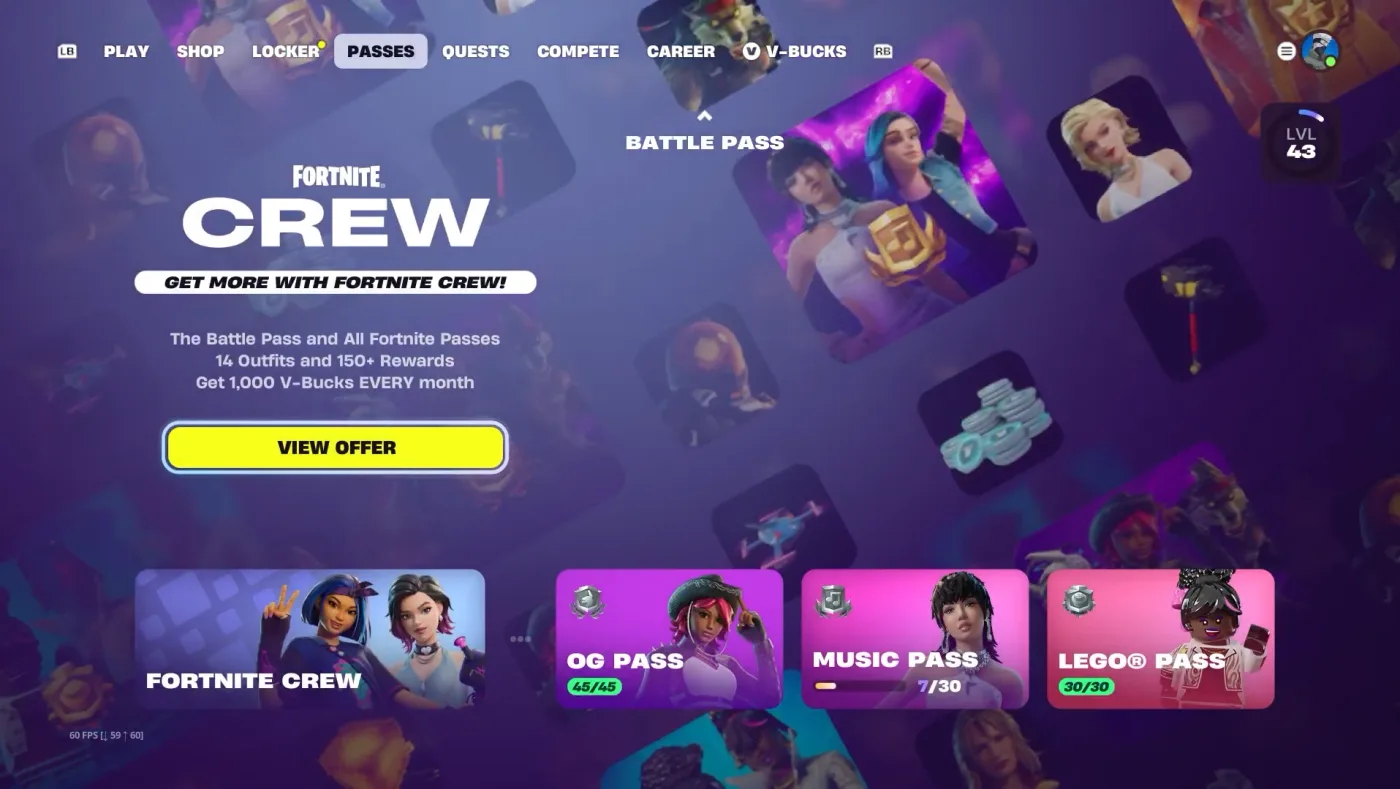
Fortnite Crew Guide: What You Get and Is It Worth It
Fortnite Crew got quietly worse in June 2026 — the monthly V-Bucks dropped from 1,000 to 800 at the same $11.99 — and the math still leans in its favor, because it bundles five passes and a skin you cannot buy any other way. Here's the full contents list and the honest math.
LEGO Fortnite Odyssey Guide: The Survival Game, Explained
Odyssey is a 95-square-kilometre survival-crafting game sitting three tiles over from Battle Royale, and it has changed more since launch than any other part of Fortnite. Hunger is gone. Bench upgrades are gone. Here's the version that's actually live.
Fortnite Weapon Tier List: How to Rank Any Loot Pool
Any Fortnite tier list is stale the second a patch drops. So instead of memorizing this season's gun names, learn how to rank weapons by class and role — the framework that's S-tier in every season.
Best Fortnite Settings for PC & Console
Half your settings menu is noise; a handful of options decide whether you can see, aim, and build. Here's what to change on PC and console, why, and the one number nobody else can pick for you.