How to Upgrade a Commander Precon (Without Rebuilding It)
Precons are mediocre in predictable ways, and predictable is cheap to fix. Here are the four flaws every Commander precon ships with, the cuts to make first, and a fully priced under-$16 swap menu that takes a stock deck from Bracket 2 to Bracket 3.
Wizards ships a dozen-plus Commander precons in a typical year now, and every single one of them arrives with the same four problems. That's not a knock on the design team — it's the brief. A precon has to work out of the box, teach its theme in one game, hit a price point built around a reprint budget, and land at Bracket 2 power so it doesn't flatten the other decks at a kitchen table. "Perfectly functional and slightly underpowered" is the product spec, not an accident.
Which is great news, because a deck that's mediocre in predictable ways is cheap to fix. You don't rebuild a precon — you make about fifteen surgical swaps, and most of them cost less than a pack of sleeves. This is the full version of the upgrade path we sketched at the end of the 10/10/10 deckbuilding template: what precons systematically get wrong, what to cut, what to add in what order, and a priced upgrade menu whose entire eighteen-card spread — covering all five colors — totals a hair under $16.
One note on the numbers before we start: every price in this guide is Scryfall's listed USD for the card's most recent printing, checked August 1, 2026. Prices drift and reprints happen, so treat them as accurate to the week, not the minute.
Why precons are mediocre on purpose
WotC's official bracket system — the five-tier power scale we broke down in the Commander brackets guide — defines Bracket 2, "Core," as precon-level power. That's the design target: a stock precon is supposed to win in the mid-to-late game, run few or no premium staples beyond Sol Ring, and lose gracefully to anything tuned. And the tier directly above it is literally named "Upgraded," because taking a precon and tightening it is the single most common deckbuilding act in the format. This guide is the how.
Three constraints shape every precon, and knowing them tells you exactly where the weak cards hide:
- The reprint budget. A precon's value proposition is reprints, but the expensive ones are rationed. The remaining slots get filled with cheap, forgettable cards that exist to be cut — padding with a mana cost.
- New-player readability. Tapped lands, big obvious creatures, and clunky five-mana removal are all fine if you've never played before. They're also exactly what a returning player should strip out first.
- Theme hedging. Most precons split their attention across two overlapping sub-themes so every card "does something." The result is a deck that does two things at 70% instead of one thing at 100%.
The four problems every precon ships with
Every stock precon fails the same four audits. Run them against yours and you'll have your cut list in twenty minutes.
- A mana base full of tapped lands. Precons typically run 38 to 40 lands, and a big slice of them enter tapped. Each one is a quarter-turn tax, and they compound: three tapped lands in your first five turns is a full turn handed to the table.
- A top-heavy curve. Splashy five- and six-mana cards demo a theme beautifully and play terribly in multiples. Stock lists are routinely two or three haymakers over the line.
- Card draw that doesn't engine. Precons include draw, but it skews toward one-shot effects. What wins Commander games is repeatable draw — engines, not events.
- Overcosted, conditional removal. The removal suite is usually four-plus-mana sorceries with strings attached, when the format's best answers cost one or two mana at instant speed.
Fix those four and you've done 90% of the upgrade without touching the theme. That's the whole philosophy: the precon already knows what it wants to do — your job is to remove the friction, not to change the plan.
Step 1 — cut the filler
Before you buy anything, find the ten to fifteen cards you're removing. Put every nonland card through a three-question test:
- Does it advance the deck's main plan? Not "is it a good card" — does it push this strategy forward?
- Would this card be in any deck? If it's generic filler that happens to be on-color, it's a cut candidate.
- Would you ever be happy topdecking it on turn ten? Cards that are only good in one narrow moment are costing you every other draw.
The usual suspects, in the order you should look for them: vanilla creatures with big bodies and no text that matters, removal that costs five or more mana to answer one thing, one-shot effects that don't scale in a multiplayer game, and the third or fourth card supporting the precon's secondary theme. That last one matters most — cutting the hedge theme entirely and doubling down on the primary one is the highest-value structural move an upgrade can make, and it costs zero dollars.
Aim for twelve to fifteen cuts. That gives you room for the swaps below plus a couple of theme cards you actually want to play.
Step 2 — fix the mana base
Start with the two most common trap lands. Temple of the False God ($0.31) looks like ramp, but read it: it only activates if you control five or more lands. Drawn early it's a land that produces nothing — a mulligan-quality draw disguised as acceleration. Evolving Wilds ($0.27) is a fine card in five-color soup, but in a two-color precon it's strictly worse than most things you could play instead: it spends a turn of tempo to fetch a basic that enters tapped, fixing colors you weren't short on.
Cheap replacements that enter untapped or actually earn their tap:
- Command Tower ($0.34) — any color in your commander identity, no downside. Nearly every recent precon already includes it; if yours somehow doesn't, this is swap number one.
- Exotic Orchard ($0.27) — taps for any color a land an opponent could produce. In a four-player pod, that's a rainbow land far more often than not.
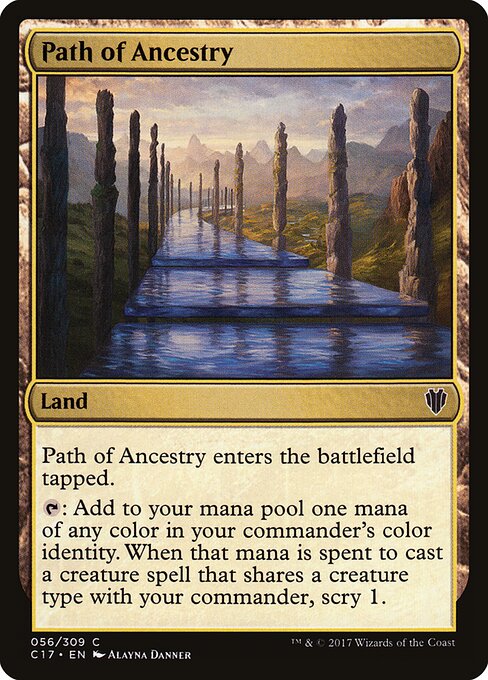
- Path of Ancestry ($0.29) — yes, it enters tapped, but it's the one tapped land that pays rent: in a typal precon where most creatures share a type with your commander, it scrys nearly every turn for the rest of the game.
While you're in the lands, count your always-tapped lands. Get the count down to a small handful, and if you're adding the ramp and draw below, you can safely trim from 40 lands to 37 or 38 — the Commander mana base guide has the full budget-lands hierarchy if you want to go deeper.
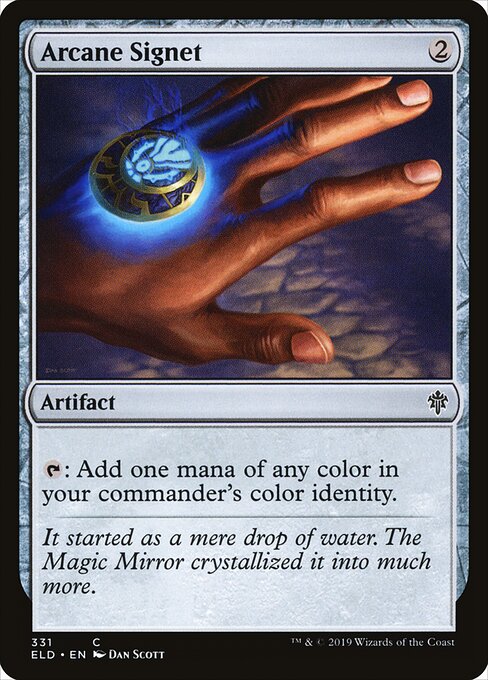
On the rocks side: Sol Ring ($1.43) and Arcane Signet ($0.43) are already in nearly every precon and they stay, obviously. The cheap additions worth a slot are Fellwar Stone ($0.86, untapped, any color an opponent can make) and Mind Stone ($0.35), which ramps early and cashes itself in for a card late — exactly the flexibility a precon's clunky rocks are missing. In green, swap tapped-land ramp for Nature's Lore ($2.12) or Farseek ($0.31): Lore puts any Forest-typed card onto the battlefield untapped, and Farseek grabs the Plains, Island, Swamp, or Mountain half of a dual in three-color decks. Cultivate ($0.33) stays the honest workhorse it's always been.
Step 3 — add real card draw
The audit here is simple: count the cards in the stock list that draw you cards more than once. The number is usually two or three. You want six-plus sources of real card advantage, weighted toward engines — this is the single biggest gameplay difference between a stock precon and an upgraded one, because the precon that runs out of gas on turn eight loses to the one that doesn't.
The budget all-stars, by color:
- Night's Whisper (black) — two mana, draw two, lose 2 life. Still one of the cleanest rates ever printed.
- Deadly Dispute ($0.26, black) — sacrifice an artifact or creature, draw two and make a Treasure. In any deck with expendable bodies it's effectively one mana for two cards.
- Big Score ($0.42, red) — discard a card, draw two, make two Treasures, at instant speed. Red precons are chronically short on draw and this fixes it for pocket change.
- Phyrexian Arena ($4.39, black) — a card every upkeep for 1 life. Years of reprints have dropped it to a fraction of what it once cost, and it's exactly the engine effect precons skip.
- Guardian Project ($14.86, green) — in a creature-dense precon it converts nearly every spell into a cantrip. This is the expensive end of the menu; see the budget note in the last section before buying.
- Solemn Simulacrum ($0.29, colorless) — ramps a land when it enters, draws a card when it dies, blocks in between. Endless reprints have turned a former staple-priced card into literal pocket change, and it slots into any precon ever printed.
More options at every price point live in the Commander card draw rankings.
Step 4 — upgrade the removal
Precon removal is where the mediocrity is most visible. Stock lists lean on four- and five-mana sorceries that destroy one creature — cards that cost you a full turn to answer half a threat. The format's actual removal suite costs one to three mana, hits more permanent types, and works at instant speed. The swaps:
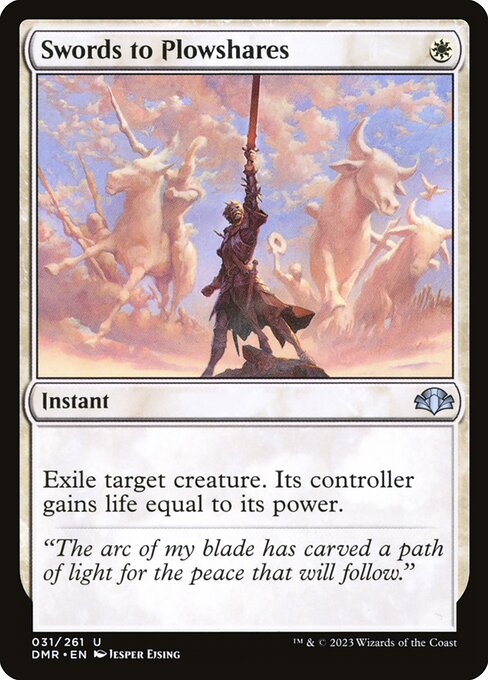
- Swords to Plowshares ($1.27, white) — one mana, exile, and the life the opponent gains has never mattered. The best single-target removal in the format, full stop.
- Generous Gift ($0.71, white) and Beast Within ($0.47, green) — three mana, destroy any permanent. The 3/3 token you hand back is a real cost, so point these at the scariest thing on the table, not the first thing.
- Chaos Warp ($0.36, red) — shuffles any permanent away, with a top-of-library gamble attached. It's red's only clean answer to enchantments, which makes it near-mandatory in red precons.
- Arcane Denial ($1.29, blue) and Counterspell ($3.70, blue) — precons are allergic to counterspells, and even two of them changes how the table plays against you. Denial replaces itself; Counterspell is Counterspell.
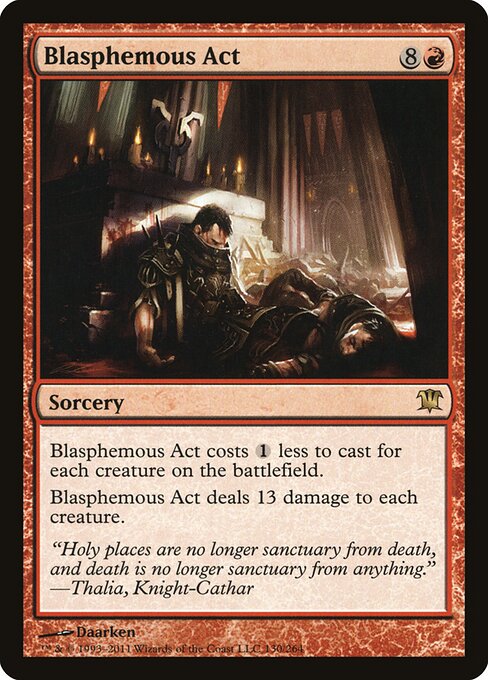
And one board wipe upgrade that outperforms its price tag by an absurd margin: Blasphemous Act ($0.74, red). The printed cost is nine mana, but it costs one less for each creature on the battlefield — at a full four-player table it routinely costs one or two mana for "deal 13 damage to each creature." Most precon sweepers cost six mana and read worse. The full sweeper hierarchy is in the board wipes ranking if your colors point elsewhere.
The under-$16 upgrade menu
Here's the whole menu in one table. Buying every card on it — all five colors plus colorless — comes to $15.97 at the Scryfall prices pulled for this guide. No single deck runs all eighteen; a typical two-color precon takes ten to twelve of these, which lands around $9. That is the actual cost of moving a stock precon from Bracket 2 to a respectable Bracket 3.
| Card | Colors | Job | Price |
|---|---|---|---|
| Fellwar Stone | Colorless | Untapped two-mana rock | $0.86 |
| Mind Stone | Colorless | Rock that cashes into a card | $0.35 |
| Solemn Simulacrum | Colorless | Ramp + draw + blocker | $0.29 |
| Swiftfoot Boots | Colorless | Commander protection | $1.93 |
| Path of Ancestry | Land | Fixing that scrys | $0.29 |
| Exotic Orchard | Land | Untapped near-rainbow land | $0.27 |
| Swords to Plowshares | White | Premium single-target removal | $1.27 |
| Generous Gift | White | Answer to any permanent | $0.71 |
| Arcane Denial | Blue | Cantripping counterspell | $1.29 |
| Counterspell | Blue | The classic | $3.70 |
| Deadly Dispute | Black | Two cards + Treasure for two mana | $0.26 |
| Nature's Lore | Green | Untapped Forest ramp | $2.12 |
| Farseek | Green | Dual-fetching ramp | $0.31 |
| Cultivate | Green | Honest two-for-one ramp | $0.33 |
| Beast Within | Green | Answer to any permanent | $0.47 |
| Chaos Warp | Red | Red's catch-all removal | $0.36 |
| Big Score | Red | Instant-speed red draw | $0.42 |
| Blasphemous Act | Red | 13 damage to everything, cheap | $0.74 |
The one card on that table we haven't covered: Swiftfoot Boots ($1.93). Your commander is the card the deck is built around and the one the table kills first. Boots grants hexproof and haste for a one-mana equip. Its famous sibling Lightning Greaves ($3.99) equips for free but grants shroud — which stops you from targeting your own commander too. Run Boots first; run both in decks that lean hard on the commander.
What not to change
Upgrading has failure modes, and they're all versions of overcorrecting:
- Don't touch the theme. The precon's spine is the reason you bought it. Strip friction, not identity — an upgrade that replaces twenty theme cards with generic staples produces a worse deck and a boring one. The budget Commander decks guide is the better path if you want a different deck entirely.
- Don't buy the expensive staples first. Heroic Intervention ($15.75) and Guardian Project ($14.86) are genuinely excellent — and either one costs as much as the entire menu above. Sixteen dollars spread across twelve slots upgrades more draws than sixteen dollars parked in one. Buy the menu first; add the premium cards over time.
- Don't accidentally jump brackets. Efficient staples keep you comfortably in Bracket 3. Start adding fast mana, tutors, and Game Changers and you're having a different conversation with your pod — check the brackets guide before you tune past the table you actually play at.
- Don't cut below 37 lands. Precon curves are high even after your cuts. Trim tapped lands, not land count.
Quick Action Checklist
- Audit the stock list against the four problems: tapped lands, top-heavy curve, one-shot draw, overcosted removal.
- Cut twelve to fifteen cards using the three-question filler test — including most of the secondary theme.
- Swap trap lands (Temple of the False God, Evolving Wilds in two colors) for Command Tower, Exotic Orchard, and Path of Ancestry.
- Get to six-plus real card-advantage sources; engines over one-shots.
- Replace every four-plus-mana spot removal spell with one- to three-mana instants.
- Add Blasphemous Act if you're in red — it's a one-mana board wipe at a full table.
- Protect your commander with Swiftfoot Boots before the table learns to kill it on sight.
- Spend the first $16 on the menu, not on one premium staple — breadth beats depth in a precon.
Frequently Asked Questions
How many cards should I swap when upgrading a Commander precon?
Does upgrading a precon change its Commander bracket?
What should I upgrade first in a Commander precon?
Is it cheaper to upgrade a precon or build a Commander deck from scratch?
Keep Reading
Related Guides
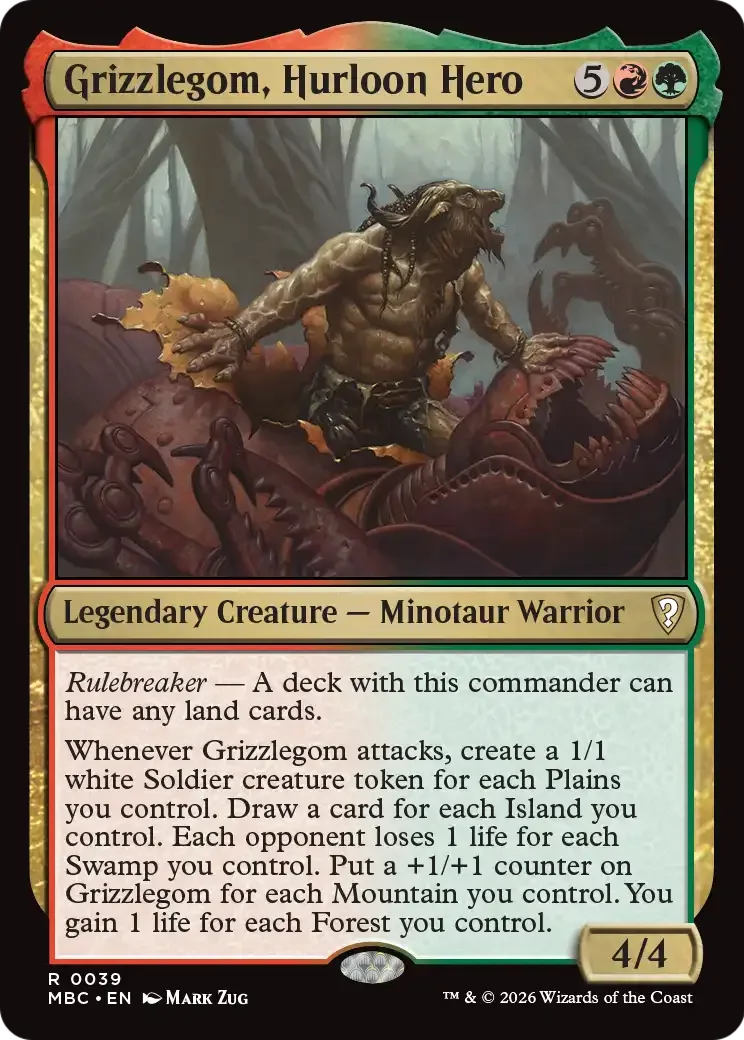
Mystery Booster Commander Edition: Packs, Draft, Legality
Festival in a Box: Atlanta 2026 goes on sale October 19 for $249.99 with a full box of Mystery Booster Commander Edition inside, and one box is exactly one eight-player Commander Draft. Here is the booster slot by slot, the draft rules, all 60 new commanders by color, the eight rulebreakers, and when the cards become legal.

MTG Commander Banned List: Every Card and Why
Wizards' banned list page gives Commander 42 card names and four lines of small print. Scryfall says the real number is 83. The gap is 41 cards banned by category rather than by name — Conspiracies, ante cards, and the seven banned everywhere for offensive content. Here is the entire list, grouped by what each card actually does, plus the one change the Commander Format Panel made this year.

MTG Commander Brackets Explained (The Power-Level System)
"What's your power level?" used to be the most useless question in Commander. WotC's official Bracket system finally gives it real numbers. Here's what Brackets 1 through 5 actually mean and how to use them so nobody gets stomped.
Best Commanders for Beginners, Ranked
The fastest way to bounce off Commander is to pick a five-color combo deck as your first build and lose fourteen games in a row. Here are the legends that teach the format, ranked, with the mana base you'll actually be able to cast.

MTG Commander Format Guide — How to Start Playing EDH (2026)
Commander is the most-played MTG format on the planet and the easiest one for new players to start in. The rules look intimidating on paper. They are not. Here is the full beginner guide.

Best Commander Staples Every Deck Wants, Ranked
There's a short list of cards that show up in basically every Commander deck regardless of theme — the silent 25 that make the splashy 75 work. Here are the staples worth a slot in almost any list, sorted by the job they do, with the legality double-checked.