The Best Pillowfort Cards in MTG Commander, Ranked
Pillowfort is the art of making yourself the worst attack target at the table without casting a single removal spell. Here are the best attack taxes, walls, and punishment enchantments ranked — and how to actually win from behind them.
There's a moment in every Commander game where the player with the scariest board scans the table deciding who eats the alpha strike. Pillowfort is the strategy of never being that person's answer. Not because you have blockers — because attacking you costs extra, and the player two seats over is free. You don't need to be invincible. You just need to be the worst deal at the table, every turn, for forty turns.
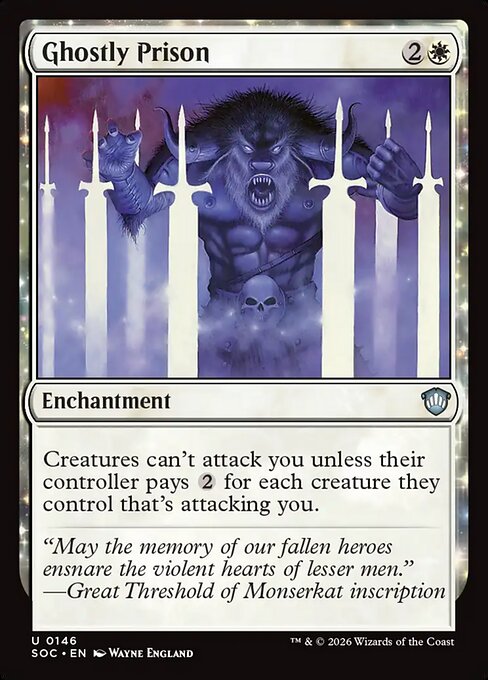
The math is what makes it work, and the math is blunt: Ghostly Prison costs you three mana once, and then taxes every opponent two mana per attacking creature, every combat, forever. An opponent swinging four creatures at you owes eight mana just for the privilege. Nobody pays that when there are two other players standing around untaxed. Every card in this ranking has been verified on Scryfall for exact cost, current wording, and Commander legality — the ranking covers taxes, hard attack caps, and the punishment enchantments that make combat a trap.
Why pillowfort works in multiplayer
Pillowfort is bad in one-on-one Magic and quietly excellent in Commander, and the reason is the same: attackers have options. In a duel, your Propaganda just means your opponent pays the tax and hits you anyway — there's nobody else to hit. In a four-player pod, the tax doesn't have to stop the attack. It only has to make attacking someone else look better. That's a much lower bar, and it's why a single three-mana enchantment can buy you ten turns of peace.
The deeper engine is action economy. Every combat that happens elsewhere is damage, removal, and risk your opponents spend on each other while you spend your turns building. Pillowfort decks don't avoid the game — they redirect it, then win the long game they made everyone else too poor to contest. It's the enchantment-based cousin of stax, with one huge social difference: taxes on attacking you don't stop anyone from playing Magic, so pods tolerate a fort far longer than they tolerate a Winter Orb.
Two rules points that come up constantly at the table:
- Attack taxes are paid as attackers are declared, and "can't attack unless" means exactly that — an opponent who can't or won't pay simply can't declare the attack against you.
- The taxes stack. Ghostly Prison plus Propaganda plus Windborn Muse is six mana per creature pointed at you. Stacked taxes are how the fort scales from "mild deterrent" into "mathematically impossible."
Taxes, walls, and punishments
Pillowfort cards come in three flavors, and the best forts layer all three.
Taxes charge mana per attacker: Ghostly Prison, Propaganda, Sphere of Safety, Norn's Annex. These are the backbone — cheap, stackable, and they scale with how wide the attacker wants to go. Wide token decks fold to them completely; a Voltron deck swinging one big commander shrugs them off. Know which opponents your taxes actually stop.
Walls cap the number of attackers outright: Crawlspace, Silent Arbiter. No mana can buy past them. These are your answer to the token board that would happily pay two mana per creature with mana to spare — when only two creatures can attack you at all, a two-hundred-token board is a two-creature problem.
Punishments let the attack happen and make the attacker regret it: No Mercy destroys anything that damages you, Revenge of Ravens drains each attacker's controller, Dissipation Field bounces the offender. These catch what slips through the taxes and — more importantly — they change behavior before they ever trigger. Nobody swings their commander into a face-up No Mercy.
The fort fails when it's all one flavor. Five taxes lose to one big trampler; five punishments lose to a board wipe on your blockers plus a wide swing. Layer a tax, a wall, and a punishment and there's no clean line through.
The best pillowfort cards, ranked
Ranked on rate, resilience, and how much behavior each card changes per mana spent.
- Ghostly Prison — {2}{W} enchantment. Creatures can't attack you unless their controller pays {2} per attacking creature. The card the archetype is named after. Three mana, immediate effect, scales against exactly the decks that kill you fastest, and white is the fort's home color anyway. Every list starts here.
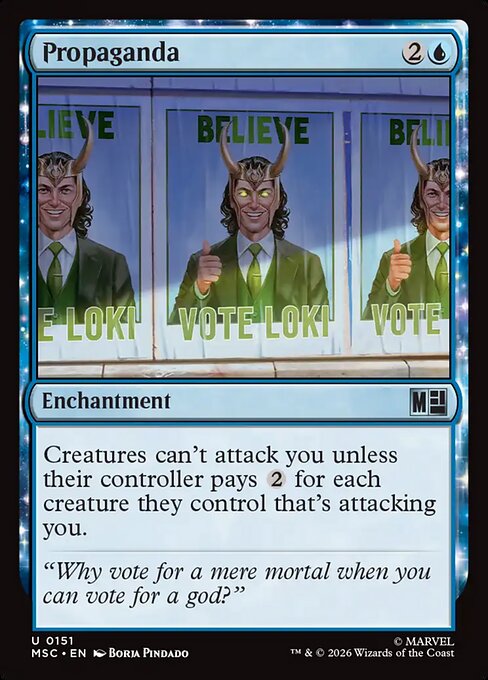
- Propaganda — {2}{U} enchantment. The same text in blue. Ranked second only because blue decks have more competing three-drops than white ones do. Together with Ghostly Prison it forms a four-mana-per-attacker wall by turn four, which reads to the rest of the table as "attack literally anyone else."
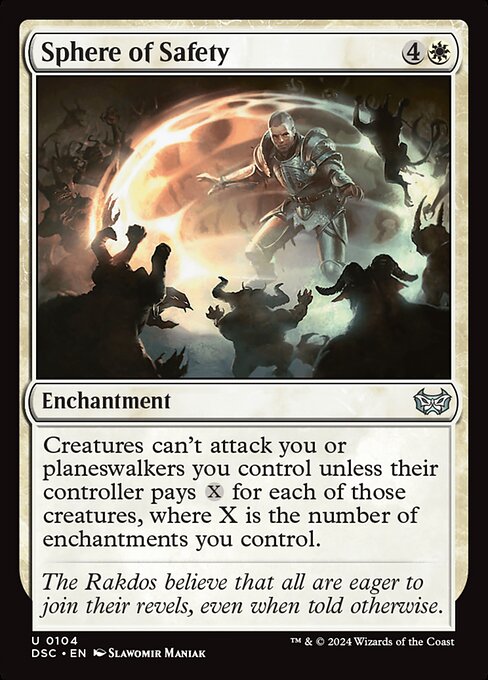
- Sphere of Safety — {4}{W} enchantment. Attackers pay {X} per creature, where X is the number of enchantments you control — and it counts itself, so it's never worse than a one-mana tax on arrival. In any enchantment-heavy shell it hits four, five, six mana per attacker, which is not a tax, it's a wall with extra steps. The finisher-tier fort piece for enchantress decks.
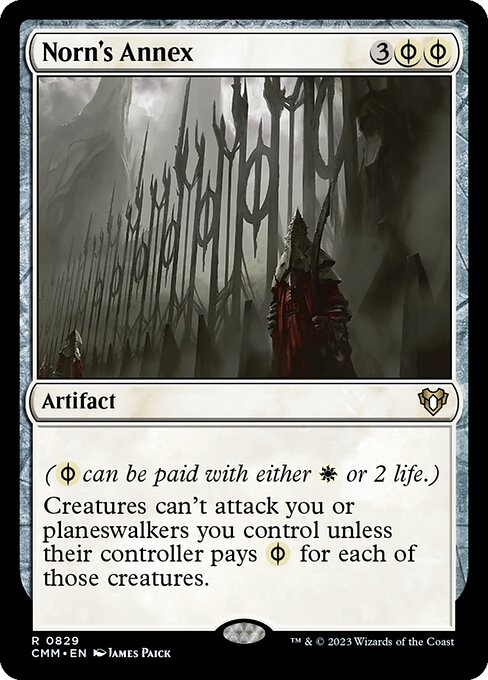
- Norn's Annex — {3}{W/P}{W/P} artifact. Attackers pay {W} or 2 life per creature to attack you or your planeswalkers. Two things make it special: Phyrexian mana means any deck can cast it for three mana and four life, and a life cost stings decks that were planning to race. The colorless fort piece for pods where you're not in white.
- Windborn Muse — {3}{W} creature. Ghostly Prison on a 2/3 flying body. It blocks, it swings for chip damage, and creature-form taxes dodge enchantment removal in a meta full of it. The redundancy that makes the tax package reliable — and it's absurd with blink and reanimation loops.
- Collective Restraint — {3}{U} enchantment. Domain: attackers pay {X} per creature, where X is the number of basic land types you control. In a five-color deck this is a five-mana-per-attacker tax on a three-mana card — the best rate in the archetype when you're built for it, and mediocre when you're not. Know your mana base before you slot it.
- Archangel of Tithes — {1}{W}{W}{W} creature. While untapped, attackers pay {1} per creature to attack you or your planeswalkers; while attacking, blockers pay {1} each. A 3/5 flyer that taxes on defense, taxes on offense, and pressures life totals — the card that lets a pillowfort deck stop sitting still. The triple-white cost is real, but so is the body.
- Crawlspace — {3} artifact. No more than two creatures can attack you each combat. The token-deck delete button. Taxes can be paid; Crawlspace can't be bribed. Colorless, three mana, and it single-handedly invalidates the go-wide strategies that laugh at Ghostly Prison. Pair it with two good blockers and you're functionally unattackable from the ground.
- Silent Arbiter — {4} artifact creature. No more than one creature can attack each combat — any combat, for everyone. It's Crawlspace for the whole table, which makes it a political statement as much as a defense: every go-wide deck at the pod is now furious, and every Voltron deck is your friend. Warps the entire game around itself.
- No Mercy — {2}{B}{B} enchantment. Whenever a creature deals damage to you, destroy it. The punishment that reads like a dare. It doesn't stop the first hit, but nobody sends their commander or anything they love into it, which means in practice it stops almost everything. Black's single best fort piece.
Honorable mentions: Baird, Steward of Argive (a {1}-per-attacker tax on a vigilant commander-eligible body), Blazing Archon (nine mana for "creatures can't attack you," the reanimator-fort endgame), Koskun Falls (black's Propaganda, with a tap-a-creature upkeep), Revenge of Ravens (drain per attacker — brutal against tokens), Dissipation Field (bounces anything that damages you), and the lands: Maze of Ith and Kor Haven neutralize one attacker per turn from a slot that costs you almost nothing.
The rattlesnake tier
The cards above stop attacks with rules text. There's a second tier that stops attacks with information — what old-school Commander theory calls rattlesnake cards. A face-up No Mercy is doing its job while it does nothing; so is a Maze of Ith with open mana, or Kor Haven untapped. Opponents route around visible punishment the way hikers route around a rattle.
This matters for how you sequence. Punishments and open-information deterrents want to be deployed early and visibly — their whole value is in the attacks that never happen. Taxes want to come down before the board develops, since they get worse the more mana your opponents have. And your one hard wall (Crawlspace, Silent Arbiter) is the piece you hold until you see which opponent actually threatens you, because it's the piece removal aims at first.
The other rattlesnake lesson: the fort's worst enemy isn't combat, it's a board wipe — yours. Pillowfort decks should run sweepers precisely because they're the one player who loses nothing to them. A fort plus a well-timed wipe resets everyone else's twenty turns of development while your enchantments sit there untouched. That's the play pattern that wins these games, and it's also why forts pair so well with goad: taxes push attacks away from you, goad forces those attacks into someone, and the table grinds itself down while your board never changes.
Turning the fort into a win
The classic pillowfort failure mode: turn fifteen, you're untouched, and you have no way to kill anyone. The fort is a clock with no hands. Every fort deck needs a win condition that doesn't depend on combat parity, and the archetype has three proven routes.
Enchantress value. Fort pieces are enchantments, so the constellation and enchantress payoffs turn every wall into a cantrip and every dead turn into card advantage. Sphere of Safety gets better with every payoff you add, and Zur the Enchanter — who fetches any enchantment with mana value three or less directly onto the battlefield, including Ghostly Prison and Propaganda — assembles the whole fort one attack at a time. This is the most streamlined build of the archetype.
Group slug. Hide behind the walls while global damage does the work — punishing enchantments, drain effects, and lifegain payoffs that convert your safety into a widening life-total gap. Revenge of Ravens is both fort and clock in this build.
The protected combo. The fort is just a time-buying shell around a two-card win. This is the sharpest version: opponents spend removal on your taxes, not your combo pieces, and the fort guarantees you reach the turn where you win. Pair it with protection spells for the turn you go off.
Whichever route, respect the archetype's real weakness: pillowfort taxes attacks, and half the table isn't attacking. Combo decks, burn decks, and drain decks walk straight through Ghostly Prison. The fort buys time against creatures — your deck still has to answer everything else, so keep real interaction in the list and don't let the enchantment count crowd out counterspells and removal.
Quick Action Checklist
- Start the tax base with Ghostly Prison and Propaganda, then add Sphere of Safety once your enchantment count supports it
- Layer all three flavors — taxes for wide boards, a hard cap (Crawlspace) for token decks, a punishment (No Mercy) for whatever pays through
- Deploy punishments early and visibly; their value is the attacks that never happen
- Run board wipes aggressively — you're the only player at the table who loses nothing to them
- Build toward a real win condition: enchantress draw, group slug, or a protected combo
- Remember the fort does nothing against combo and burn — keep counterspells and removal in the list
- Check current prices and printings on Scryfall; most of the core fort is under a few dollars a card
Frequently Asked Questions
What is a pillowfort deck in MTG Commander?
What is the best pillowfort card in Commander?
Do Ghostly Prison and Propaganda stack?
What beats a pillowfort deck?
How does a pillowfort deck actually win?
Keep Reading
Related Guides
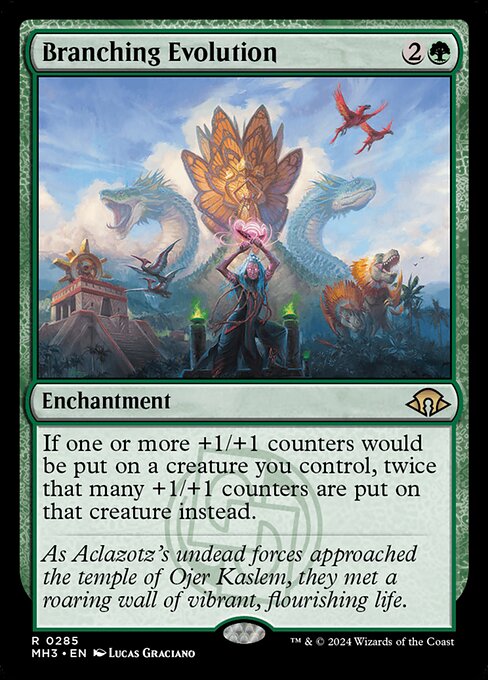
Best +1/+1 Counter Cards in MTG Commander, Ranked
Kill the anthem and the board shrinks. Kill the creature that placed a +1/+1 counter and nothing changes — the counter is already part of the creature. Here are the best +1/+1 counter payoffs and multipliers in Commander, ranked, plus the stacking order that turns one counter into eight.
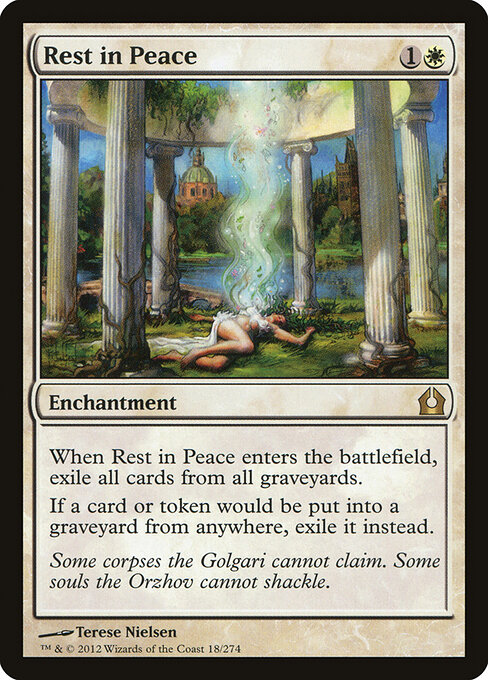
Best Graveyard Hate Cards in MTG Commander, Ranked
Every Commander pod has a reanimator deck, an aristocrats deck, and a guy whose commander says "return target creature card from your graveyard." Here is the best graveyard hate in the format, ranked — and the timing rules that separate a blowout from a wasted card.
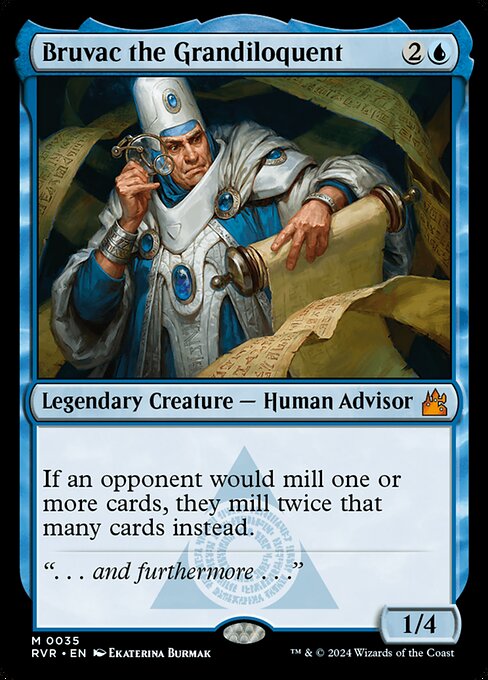
Best Mill Cards in MTG Commander, Ranked
Milling one player out is a chore. Milling three at once, before they punch your face in, is a real deck. Here are the best mill cards in Commander, ranked — plus the doublers and win conditions that make 300 total cards of library actually beatable.
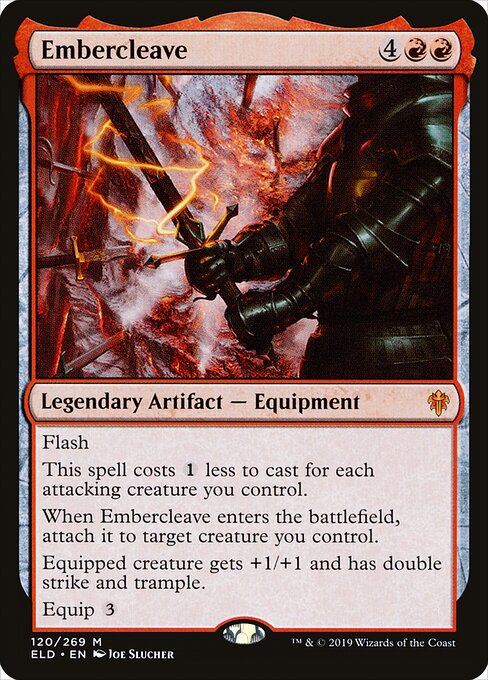
Best Double Strike Cards in MTG Commander, Ranked
Double strike is the only keyword that literally doubles your damage, and it multiplies with every buff you have already committed. Here are the best double strike cards in Commander, ranked — the equipment, enchantments, instants and creatures that turn a fair attack into a dead opponent.
MTG Commander Format Guide — How to Start Playing EDH (2026)
Commander is the most-played MTG format on the planet and the easiest one for new players to start in. The rules look intimidating on paper. They are not. Here is the full beginner guide.

Best Commander Staples Every Deck Wants, Ranked
There's a short list of cards that show up in basically every Commander deck regardless of theme — the silent 25 that make the splashy 75 work. Here are the staples worth a slot in almost any list, sorted by the job they do, with the legality double-checked.