Best Wheel Effects in MTG Commander, Ranked
A wheel is the only card in Magic that hands three opponents seven fresh cards and still counts as a great play. Here are the best wheel effects, ranked — plus the payoffs that turn a symmetrical refill into a completely one-sided beating.
There is exactly one category of card in Magic where the correct play is to hand each of your three opponents a fresh grip of seven cards, and somehow still be the person who profits. That's a wheel. On paper it's the most generous thing you can do at a Commander table. In practice, a well-built wheel deck casts Wheel of Fortune on turn four, throws away two lands, draws seven, and the three people who just got "gifted" a new hand spend the rest of the game wondering why they're at 22 life and you're holding a full grip.
The trick is that a wheel is only symmetrical if you let it be. Every card on this list is symmetrical text — and every serious wheel deck is built to break that symmetry in half. All costs, oracle text, and Commander legality checked against Scryfall.
What counts as a wheel
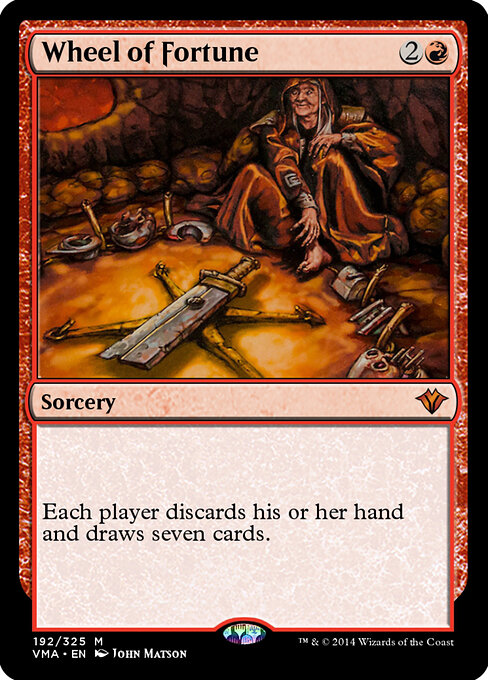
The name comes from Wheel of Fortune, a {2}{R} sorcery from 1993 that reads, in its entirety: "Each player discards their hand, then draws seven cards." That's the template. A wheel is any effect that makes every player dump their current hand and refill.
The important thing to understand is that a wheel is doing three separate jobs at once, and different decks care about different ones:
- It refills you. You empty your hand playing threats, then wheel and draw seven more. This is the obvious use, and it's why red — a color with famously bad long-term card draw — gets the best wheel in the game. Wheel of Fortune is red's answer to being colorless from the neck up.
- It's mass discard. Every opponent loses their current hand. That control player sandbagging two counterspells and a board wipe? Gone. This is the part people underrate. A wheel is a Mind Rot pointed at the entire table that also happens to draw you seven.
- It's a fuel line to your graveyard. You're discarding a hand, not exiling it. If your deck wants cards in the yard, a wheel is the cheapest bulk-discard outlet in the format.
The catch, and the reason wheels aren't just auto-includes in every deck: job one and job two are in tension with job three's beneficiaries. You just gave three people seven cards. If you have no plan for what happens next, you didn't play a wheel, you played a group hug spell with extra steps.
Discard wheels vs shuffle wheels
There's a real distinction here that changes which card you want, and most people gloss over it.
Discard wheels — Wheel of Fortune, Windfall, Magus of the Wheel, Reforge the Soul — put the discarded hands into graveyards. That fuels your own reanimation and recursion and turns on discard payoffs like Waste Not — but it fills opponents' graveyards too, which is a genuine downside if the table has a Meren or a Muldrotha who'd love you to keep doing that.
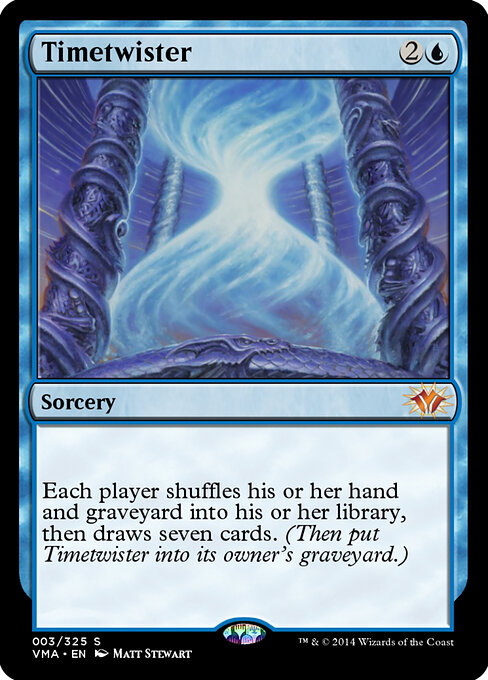
Shuffle wheels — Timetwister, Echo of Eons, Time Reversal, Winds of Change, Molten Psyche — shuffle hands (and sometimes graveyards) back into libraries instead. Timetwister and Echo of Eons shuffle hand and graveyard back in, making them a legitimate anti-graveyard tool at a table full of recursion decks, plus a soft reset on your own library.
The practical rule: discard wheels if you have a graveyard plan, shuffle wheels if you're fighting one. Most decks want a mix weighted toward the gameplan.
The best wheel effects, ranked
Ranked on cost, impact in a four-player pod, and how reliably the card advances a real gameplan rather than just churning cards.
- Wheel of Fortune — {2}{R}. Three mana: everyone dumps their hand, everyone draws seven. It's the best because it's the cheapest full-size wheel with no conditions, no drawback, and no "up to." You can cast it at three mana with an empty hand and net seven cards while stripping the table. The only reason not to run it is price — it's on the Reserved List and it costs real money. Every other red wheel in this list exists because Wheel of Fortune is too expensive for most people to own.
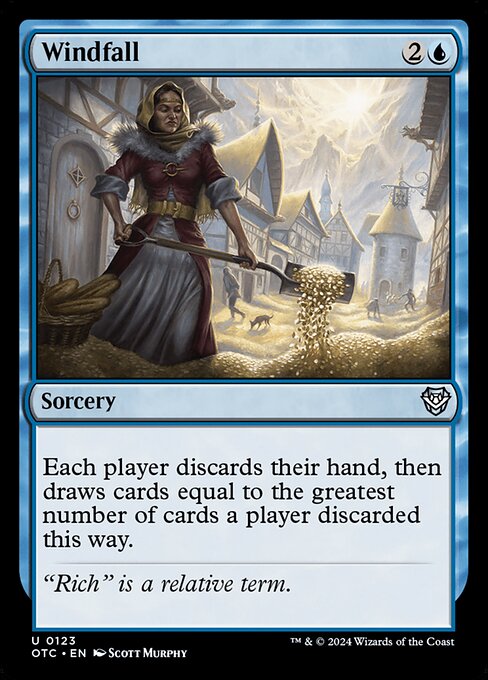
- Windfall — {2}{U}. The best-value wheel in the format and the one you should actually buy. Each player discards their hand, then everyone draws cards equal to the greatest number of cards a player discarded. Read that carefully: if an opponent is hoarding an eight-card hand and you're empty, you draw eight. It scales off the table's greediest player, which is a beautiful thing. It's also three mana, blue, and costs a couple of dollars.
- Timetwister — {2}{U}. Each player shuffles hand and graveyard into their library and draws seven. It's a wheel, a graveyard hate spell, and a library reset in one three-mana card. It's also a Power Nine card that costs about as much as a used car, so this ranking is theoretical for 99% of players. Echo of Eons is the version you can afford.
- Echo of Eons — {4}{U}{U}, flashback {2}{U}. A functional Timetwister with a worse front cost and a much better back one. Six mana is a lot, but the flashback is where the card actually lives: discard it to a rummage or a wheel, then flash it back for {2}{U}. Casting it from the graveyard for three mana is the real card. This is the budget Timetwister and it's genuinely excellent.
- Magus of the Wheel — {2}{R}. Wheel of Fortune on a 3/3 body with a one-turn delay: {1}{R}, tap, sacrifice, each player discards and draws seven. The delay is real — everyone sees it coming and it dies to any removal — but a creature is a card you can blink, reanimate, or tutor with a creature tutor. In decks that recur creatures, it's a repeatable Wheel of Fortune.
- Reforge the Soul — {3}{R}{R}, miracle {1}{R}. Five mana is a bad rate for a wheel and you should not be paying it. The miracle cost of {1}{R} is one of the best rates in the game — but it only works if it's the first card you draw that turn, which is a coin flip you don't control. Play it if you have top-of-library manipulation; it's a fine seventh wheel otherwise.
- Jace's Archivist — {1}{U}{U}. A 2/2 with "{U}, tap: each player discards their hand, then draws cards equal to the greatest number discarded." A repeatable Windfall for one blue mana every single turn. That's absurd if it survives, and it's a 2/2 in a format full of board wipes, so it usually doesn't. Untap effects turn it into a genuine engine.
- Whispering Madness — {2}{U}{B}. Windfall's text with cipher, which lets you encode it on a creature and wheel the table every time that creature connects with a player. Four mana up front, then free repeatable wheels off an unblockable body. It's slow and fragile and it's also the most degenerate thing on this list if it gets going.
- Wheel of Misfortune — {2}{R}. Each player secretly picks a number, the card deals damage equal to the highest number to whoever chose it, and the players who chose the lowest number wheel. It's a genuine mind game and it can be built to be one-sided, but "my wheel works if I win a guessing game" is a lot of variance for a card that's otherwise a worse Wheel of Fortune.
- Molten Psyche — {1}{R}{R}. Everyone shuffles their hand into their library and draws that many. The metalcraft clause — three or more artifacts and it deals damage to each opponent equal to the number of cards you drew — turns it into a legitimate finisher in an artifact deck. Outside of one, it's a symmetrical shuffle with no payoff.
Two more worth naming: Winds of Change at {R} is the cheapest wheel in the game (shuffle hands into libraries, redraw that many) and a fine turn-one storm enabler, though it draws you nothing extra. Dark Deal at {2}{B} makes everyone discard and redraw that many minus one, which is a slow table-wide grind that's great in a Nekusar shell and bad everywhere else. And Memory Jar at {5} is a five-mana artifact that gives everyone seven cards for a turn — it's Commander-legal despite its reputation, but it's clunky and mostly a storm card.
The payoffs that make a wheel one-sided
This is the whole ballgame. A wheel without payoffs is a group hug spell. A wheel with payoffs is a Time Walk plus a Mind Rot.
Draw-denial: the good stuff. These break the symmetry completely.
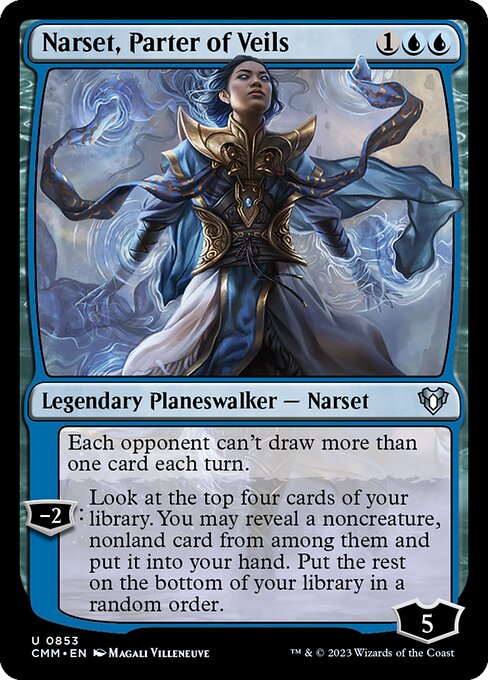
- Narset, Parter of Veils — {1}{U}{U}. "Each opponent can't draw more than one card each turn." Cast Narset, then wheel. Every opponent discards their hand and draws one card. You draw seven. This is not a synergy, it's a two-card combo that puts the table in the dirt, and it's the single best wheel payoff in Commander.
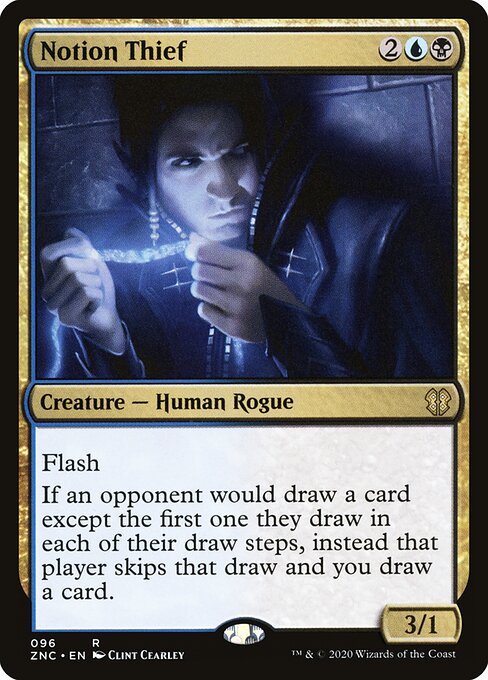
- Notion Thief — {2}{U}{B}. Flash. Every extra card an opponent would draw, you draw instead. Flash it in response to somebody's Windfall and draw twenty-one cards. It's the same effect as Narset but pointed at your own hand, and the flash makes it a trap you can spring on other people's draw spells.
- Alms Collector — {3}{W}. Flash. If an opponent would draw two or more cards, you and that player each draw one instead. The white version, weaker than the other two but a fine include if you're in white.
Damage payoffs: the fun stuff.
- Nekusar, the Mindrazer — {2}{U}{B}{R}. Every player draws an extra card each draw step, and whenever an opponent draws, Nekusar deals 1 damage to them. Wheel with Nekusar out and each opponent takes seven. Two wheels is 14 damage to a whole table, and that is a real clock. He's the archetype's poster child for a reason.
- Niv-Mizzet, Parun — {U}{U}{U}{R}{R}{R}. Whenever you draw a card, ping any target for 1. Wheel yourself into seven cards and you get seven pings to distribute. Six pips of colored mana is a serious cost, but he can't be countered and he ends games.
Discard payoffs: the sneaky stuff.
- Waste Not — {1}{B}. Whenever an opponent discards a creature you make a 2/2 Zombie, a land gives you {B}{B}, and a noncreature nonland card draws you a card. Wheel with this out and you get roughly seven of those triggers per opponent — that's a board, a pile of mana, and a fistful of cards off one enchantment.
- Bone Miser — {4}{B}. The same template but for your own discards. Wheel away a fat hand and turn it into Zombies, mana, and cards.
The combination you actually want in a dedicated deck is a draw-denier (Narset/Notion Thief) plus a damage payoff (Nekusar) plus a couple of discard payoffs (Waste Not). Land two of those three before you wheel and the game usually ends inside two turns.
Building around wheels
Colors. Izzet (blue-red) is the natural home — red owns the best wheels, blue owns the best payoffs and the shuffle wheels. Grixis (blue-black-red) is the full version: black adds Waste Not, Bone Miser, and Nekusar himself. Nekusar, the Mindrazer is the default commander and the reason the archetype has a name.
The empty-hand rule. Wheels are best when your hand is empty and everyone else's is full. That means you want a low curve and you want to dump your hand before you wheel — the opposite of how most Commander players sequence. Playing a wheel with five cards in hand is throwing five cards away. Play out your hand first, then wheel. This is also why wheel decks lean on cheap mana rocks: the faster you empty your hand, the sooner the wheel is a pure profit.
The timing rule. Cast wheels on your own turn, precombat, or in response to an opponent's end step. Casting a wheel on an opponent's upkeep gives them a full turn to use the seven cards you just handed them. Casting it on your turn means you untap with seven and they have to survive your turn before they get to use theirs.
The defensive reality. You are giving three people cards. Some will be removal pointed at you, and some will be counterspells they didn't have thirty seconds ago. A wheel deck without interaction arms its own executioners — budget a real slice of the list for it, alongside the usual Commander staples.
One legality note. The banned list moves. The fast-mana bans (Mana Crypt, Jeweled Lotus, and Dockside Extortionist are all banned) took the explosive turn-two wheel starts off the table. A card sitting in an old decklist online means nothing about whether it's legal today — check Scryfall.
Quick Action Checklist
- Start with Windfall — it's three mana, scales off the table's greediest hand, and costs a couple of dollars. Wheel of Fortune is better but Reserved List expensive.
- Empty your hand BEFORE you wheel. Wheeling with five cards in hand throws five cards away.
- Cast wheels on your own turn precombat, never on an opponent's upkeep — don't give them a full turn with the seven cards you just handed them.
- Never run wheels without payoffs. Narset, Parter of Veils or Notion Thief turn a symmetrical refill into a one-sided beating.
- Match the wheel type to your plan: discard wheels (Wheel of Fortune, Windfall) for graveyard and Waste Not synergy, shuffle wheels (Echo of Eons, Timetwister) to fight graveyard decks.
- Echo of Eons is the budget Timetwister — the {2}{U} flashback is the real card, not the six-mana front side.
- Run real interaction. You are handing three opponents fresh removal every time you wheel.
- Verify Commander legality and current bans on Scryfall and the official banned list before buying anything.
Frequently Asked Questions
What is the best wheel effect in MTG Commander?
Why would I give my opponents seven new cards?
What is the difference between a discard wheel and a shuffle wheel?
What is the best commander for a wheel deck?
Is Timetwister legal in Commander?
Keep Reading
Related Guides
Best +1/+1 Counter Cards in MTG Commander, Ranked
Kill the anthem and the board shrinks. Kill the creature that placed a +1/+1 counter and nothing changes — the counter is already part of the creature. Here are the best +1/+1 counter payoffs and multipliers in Commander, ranked, plus the stacking order that turns one counter into eight.
Best Graveyard Hate Cards in MTG Commander, Ranked
Every Commander pod has a reanimator deck, an aristocrats deck, and a guy whose commander says "return target creature card from your graveyard." Here is the best graveyard hate in the format, ranked — and the timing rules that separate a blowout from a wasted card.
Best Mill Cards in MTG Commander, Ranked
Milling one player out is a chore. Milling three at once, before they punch your face in, is a real deck. Here are the best mill cards in Commander, ranked — plus the doublers and win conditions that make 300 total cards of library actually beatable.
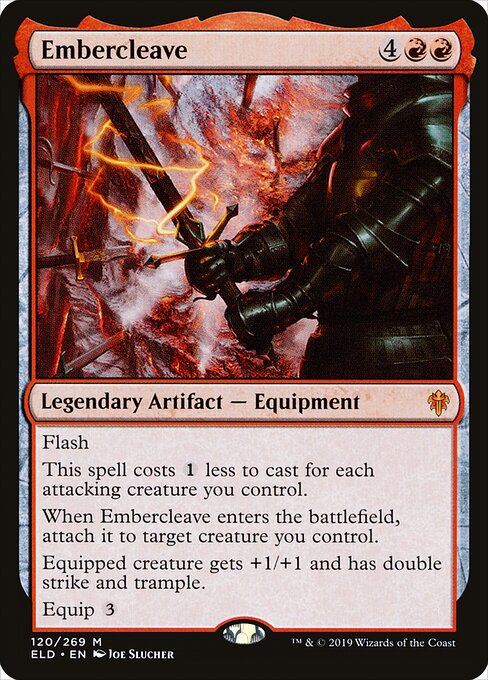
Best Double Strike Cards in MTG Commander, Ranked
Double strike is the only keyword that literally doubles your damage, and it multiplies with every buff you have already committed. Here are the best double strike cards in Commander, ranked — the equipment, enchantments, instants and creatures that turn a fair attack into a dead opponent.
MTG Commander Format Guide — How to Start Playing EDH (2026)
Commander is the most-played MTG format on the planet and the easiest one for new players to start in. The rules look intimidating on paper. They are not. Here is the full beginner guide.

Best Commander Staples Every Deck Wants, Ranked
There's a short list of cards that show up in basically every Commander deck regardless of theme — the silent 25 that make the splashy 75 work. Here are the staples worth a slot in almost any list, sorted by the job they do, with the legality double-checked.