MTG Arena Wildcards: What a Rare Actually Costs
Arena will not tell you what a Mythic Wildcard costs. Wizards does publish every input, though — the Wildcard Track cadence, the pack drop rates, the Vault threshold and the daily win ladder. Multiply them out and a mythic playset is 60 packs, which is 80 days of maxed-out daily wins. Here is the whole conversion table.
Arena's crafting screen will happily tell you that a card costs one Mythic Wildcard. It will not tell you what a Mythic Wildcard costs, because that number is spread across four different reward systems and Wizards never multiplies them out for you.
They do publish every input, though. This is the collection side of Arena rather than the format side, and the MTG Arena Reward Distribution page is a genuine, maintained disclosure: Wildcard Track cadence, per-slot wildcard rates, Vault thresholds, duplicate-protection conversions, the daily win ladder, and per-set mythic upgrade rates. Every figure below is read off Wizards' own pages on 23 August 2026, with the arithmetic done. Where a figure is mine rather than Wizards', it says so.
The conversion table
Two prices anchor everything. Wizards' own Alchemy page states boosters sell "individually for 1,000 gold or fifteen for 3,000 gems—the same price as Standard set boosters," which puts a pack at 1,000 gold or 200 gems. An Arena booster is eight cards, not the fourteen a paper Play Booster holds, so do not port any tabletop intuition across.
Wizards does not publish the table below. It is arithmetic on their published rates, and the working is in the next two sections.
| Wildcard | Packs opened (average) | Gold | Gems |
|---|---|---|---|
| Common | 3.0 | 3,000 | 600 |
| Uncommon | ~2.7 | ~2,700 | ~545 |
| Rare | 6.0 | 6,000 | 1,200 |
| Mythic | 15.0 | 15,000 | 3,000 |
Playsets are where that starts to bite, because Constructed decks want four copies:
| What you want | Wildcards | Packs | Gold |
|---|---|---|---|
| A playset of one uncommon | 4 | ~11 | ~10,900 |
| A playset of one rare | 4 | 24 | 24,000 |
| A playset of one mythic | 4 | 60 | 60,000 |
Sixty thousand gold for four copies of one mythic rare. Hold onto that figure; the daily win section turns it into days.
The two taps that produce wildcards
Packs hand out wildcards through two independent systems. Count only one of them and the answer to "how many packs for a rare" comes out badly wrong, so here are both.
The Wildcard Track. Per Wizards: "For each Pack you open, you earn 1 progress in both the Uncommon and the Rare/Mythic Wildcard Tracks. A WCR is triggered when you earn 6 progress on a track." The Rare/Mythic track is not a coin flip — the page spells out the cadence: "You'll earn Rare WCRs at a greater frequency (4X) than Mythic WCRs... we've created a system that redeems 4 Rare WCRs in a row before you will redeem your Mythic WCR." So the track fires a wildcard every 6 packs, and every fifth one is the mythic. That is 4 Rares and 1 Mythic per 30 packs, deterministically.
The Uncommon track runs in parallel on the same 6-pack clock, and new accounts start it at 3 progress — Wizards notes you get your first Uncommon Wildcard after your third pack.
The card-slot roll. Separately, one card in each rarity slot can be replaced by a wildcard of that rarity:
| Slot rarity | Published rate |
|---|---|
| Common | 1:3 |
| Uncommon | 1:5 |
| Rare | 1:30 |
| Mythic | 1:30 |
Those rare and mythic rates carry a pity timer, which the page describes plainly: "Each Pack you open that does not redeem for a Wildcard of a particular rarity will increase the drop rate for Wildcards of that rarity for the next Pack," resetting once one drops. Crucially, it then defines what the printed number means — "the average number of packs needed to open to acquire 1 Wildcard of the respective rarity" — so 1:30 is an expectation, not a flat 3.3% roll.
Add the taps together over a 30-pack window: 5 Rare Wildcards (4 from the track, 1 from the slot) and 2 Mythic Wildcards (1 each). Divide back out and you get 6 packs per rare, 15 per mythic. That is the whole trick.
Why uncommon wildcards arrive faster than commons
Look at the first table again: an uncommon wildcard is cheaper than a common one. That is not a typo, and it falls out of the structure rather than any generosity.
Commons have exactly one source — the 1:3 slot roll, giving 10 per 30 packs. Uncommons have two: the same slot roll at 1:5 (6 per 30 packs) plus their own 6-pack track (5 per 30 packs), for 11. Eleven beats ten, so the rarer wildcard accrues faster. There is no Common Wildcard Track at all.
There is nothing to act on here — you cannot steer which wildcards a pack gives you. It is worth knowing where Common Wildcards come from, though: the 1:3 slot roll, with no track filling in behind it and no help from the Vault, which pays out uncommon, rare and mythic wildcards only.
Where the gold comes from: the daily win ladder
Gold cannot be bought. Wizards' Getting Started page is explicit that gold "can only be earned (not purchased) by playing games, completing in-game quests, winning matches, and participating in events." The published ladder covers the wins half — up to 15 reward instances per day, counted from the 3 a.m. Pacific server reset, and not counting Direct Challenge, Bot Matches, or Play queued with a deck that is not Standard-legal:
| Win # | Gold | ICR |
|---|---|---|
| 1 | 250 | — |
| 2 | 100 | — |
| 3 | 100 | — |
| 4 | 100 | — |
| 5 | — | 1 |
| 6 | 50 | — |
| 7 | — | 1 |
| 8 | 50 | — |
| 9 | — | 1 |
| 10 | 50 | — |
| 11 | — | 1 |
| 12 | 25 | — |
| 13 | — | 1 |
| 14 | 25 | — |
| 15 | — | 1 |
Sum the gold column and the daily win ceiling is 750 gold and 6 uncommon Individual Card Rewards. The first four wins carry 550 of that 750, which is the shape worth internalising: the ladder front-loads hard, and win 12 pays a tenth of win 1.
Those ICRs are uncommon Standard-legal cards that may upgrade to rare at 1:10, and a rare ICR may upgrade to mythic at roughly 1:8.
Now run the earlier figures through it. Sixty thousand gold for a mythic playset is 80 days of maxed-out daily wins; 24,000 gold for a rare playset is 32 days. Daily quests also pay gold, which is what makes those numbers a ceiling rather than a forecast — Wizards lists quests as a gold source but does not publish the amounts on the drop-rate page, so I am not going to invent them.
Against that, Quick Draft costs 5,000 gold or 750 gems — five packs' worth of gold — and Wizards' own description is that "you get to keep all the cards you choose," win or lose, plus rewards scaling with wins up to seven. If you have never drafted, our Limited guide for beginners covers the picking side; the economics are the part Arena hides.
The Vault is slower than it sounds
The Vault is Arena's overflow bin for commons and uncommons you already have four of. It converts at a published rate and pays out a fixed prize:
| Input or output | Value |
|---|---|
| Surplus common | 1 Vault Progress Point |
| Surplus uncommon | 3 Vault Progress Points |
| Vault opens at | 1,000 points |
| Vault payout | 1 Mythic + 2 Rare + 3 Uncommon Wildcards |
Here is the part worth doing on paper. A pack holds 5 commons and 2 uncommons. Even in the worst case for your collection — every single one of those seven cards a duplicate you already own four copies of — a pack contributes at most 5 + 6 = 11 Vault points. So the Vault cannot fill in fewer than about 91 packs, and in practice it takes far more, because early packs are full of cards you do not own yet. Treat 91 as a floor, not an estimate.
Priced by the conversion table, that payout is worth about 35 packs of wildcards (15 for the mythic, 12 for the two rares, 8 for the three uncommons). It is pure upside on cards you had already opened, but it is a trickle bolted onto pack opening rather than a lever you can pull. The page also notes the Vault stays hidden on the Packs screen until it has filled, so there is no progress bar to watch in the meantime.
Duplicate protection turns dead copies into gems
Rares and mythics never touch the Vault. They run through duplicate protection instead, and the rules differ by where the card came from.
- Store and reward packs: a rare or mythic you already have four of is swapped for one of the same rarity from that set you have fewer than four of. Once you have completed that set's rares or mythics, it converts to gems instead — 20 gems for a rare, 40 for a mythic.
- Draft and Sealed packs: duplicate protection is switched off during the event. Wizards is direct about it: "you will still see and be able to pick any rare or mythic rare card, even if you already have four copies of it." The extras convert after the event ends — rares and mythics to gems, commons and uncommons to the Vault — and they still count for the event's own deckbuilding.
- Individual Card Rewards: same conversion, 20 and 40 gems, including when an uncommon ICR upgrades into a rare or mythic you are already maxed on.
At 200 gems a pack, that means ten surplus rares buy one pack, or five surplus mythics. Completing a set's rares therefore stops being a dead end and turns the rare slot into a 20-gem coupon.
Golden Packs count purchases, not packs

Golden Packs are six rares or mythics with no commons or uncommons at all, with rares upgrading to mythic at approximately 1:7.2. At least one card is guaranteed mythic, and two of the six come from the newest eligible set.
Two conditions are doing real work in Wizards' own sentence: they are "acquired for every 10 packs purchased from among packs that are of Standard-legal and/or Alchemy-legal sets." Packs you earn from Set Mastery or event rewards are not purchases, and packs from a set that is neither Standard- nor Alchemy-legal do not count either.
The compensation is a nice quirk: a Golden Pack "will not grant wildcards, but will advance the wildcard track." Ten purchased packs therefore push 11 progress onto the wildcard track, not 10.
The mythic rate is not the same in every set
Mythic upgrade rates are set-specific, and the published spread across recent releases is not small. These are Wizards' rates for the eleven 2025-2026 paper premier sets that are currently Standard-legal:
| Set | Rare upgrades to mythic |
|---|---|
| Marvel Super Heroes | ~1:5.8 |
| Avatar: The Last Airbender | ~1:7 |
| Tarkir: Dragonstorm | ~1:7 |
| Aetherdrift | ~1:7 |
| Edge of Eternities | ~1:7 |
| Lorwyn Eclipsed | ~1:7 |
| Secrets of Strixhaven | ~1:7 |
| Marvel's Spider-Man | ~1:8.1 |
| Teenage Mutant Ninja Turtles | ~1:8.1 |
| The Hobbit | ~1:8.1 |
| Final Fantasy | ~1:8.4 |
Of those eleven, Marvel Super Heroes has the friendliest rate on the list at roughly one mythic every 5.8 rare slots, and Final Fantasy the least friendly at 1:8.4. Bonus sheets stack on top and are also set-specific — Secrets of Strixhaven replaces a card with a rare Mystical Archive at about 1:8 (upgrading to mythic at 1:5), while Marvel Super Heroes and Marvel's Spider-Man upgrade a common into a bonus-sheet mythic at about 1:24.
If you are buying packs for a Standard deck, the set you buy from is a real variable, not just a flavour preference. What is legal where is a separate question, and the Universes Beyond legality map covers it.
Set Mastery, the other free tap

Set Mastery runs from a set's Arena release until the next set replaces it, and levels come from quests plus weekly wins — up to fifteen, resetting at 2 a.m. Pacific, separate from the daily count. The free track pays that set's boosters and cosmetic Orbs; the optional paid Set Mastery Pass adds gold, gems, more boosters, mythic ICRs, rare cards, sleeves, companions and a Player Draft Token.
One detail worth knowing before a set ends: Wizards states that for The Hobbit's Set Mastery, "players will be able to level past 45," and every level beyond 45 grants one uncommon ICR with a 5% upgrade rate. The track itself does not carry over — once the next Mastery launches, the previous one stops being available to earn from. Wizards is explicit that you keep the content you already earned, and Orbs banked but not spent can still be redeemed in the Mastery Emporium.
The other reward pack you cannot buy is the Cube Prize Pack, handed out by Arena's cube events. Its contents are published in full: one Timeless rare or mythic, one cube bonus-sheet rare or mythic, a flex slot (20% Timeless rare / 30% Timeless uncommon / 50% bonus sheet), two uncommons and four commons — with Universes Beyond cards and Timeless-banned cards excluded from the "any Timeless card" slots. Per Wizards' Hobbit event schedule, the Arena Powered Cube is scheduled to run September 8–28, 2026.
Quick Action Checklist
- A Rare Wildcard averages 6 packs; a Mythic averages 15. At 1,000 gold per pack that is 6,000 and 15,000 gold, and a mythic playset is 60 packs.
- The Wildcard Track is deterministic: one wildcard every 6 packs, four Rares then one Mythic, forever. The 1:30 slot rolls are a bonus on top, not the main source.
- Daily wins cap at 750 gold and 6 uncommon ICRs, and 550 of that 750 lands in the first four wins. If you only have time for a few games, play them; win 12 pays 25 gold against win 1's 250.
- The Vault needs 1,000 points and a pack yields at most 11, so it cannot fill faster than roughly 91 packs. It pays 1 Mythic, 2 Rare and 3 Uncommon Wildcards.
- Finish a set's rares and duplicates start paying gems — 20 per rare, 40 per mythic, so ten dead rares equal one pack.
- Golden Packs count packs you buy, not packs you earn, and only from Standard- or Alchemy-legal sets. They skip wildcards but still advance the track.
- Check the set's mythic rate before you buy. Across the eleven 2025-2026 Standard-legal premier sets, published rates run from about 1:5.8 to about 1:8.4.
Frequently Asked Questions
How many packs does a Rare Wildcard take in MTG Arena?
How many packs is a Mythic Wildcard in MTG Arena?
How does the Vault work in MTG Arena?
What happens to duplicate rares in MTG Arena?
How much gold can you earn per day in MTG Arena?
What is a Golden Pack in MTG Arena?
Keep Reading
- Wizards of the Coast — MTG Arena Reward Distribution & Drop Rate Information (wildcard rates, Wildcard Track, Vault, duplicate protection, Golden Packs, daily win table, per-set mythic rates)
- Wizards of the Coast — How to Get Started with MTG Arena (gold and gems, wildcards FAQ, Mastery system)
- Wizards of the Coast — MTG Arena Draft Guide (Quick Draft entry fee and structure)
- Wizards of the Coast — MTG Alchemy Format (booster pricing in gold and gems)
- Wizards of the Coast — The Hobbit MTG Arena Event Schedule (Arena Powered Cube dates, 3 August 2026)
Related Guides
How to Qualify for the MTG Pro Tour: RCQs, RCs, Spotlights
Win a Store Championship this month and you get a foil Jace Reawakened and no invitation to anything. Here is the actual path to the Pro Tour for the 2026-27 season: RCQs, the Modern Regional Championships running through November 1, Spotlight: Fracture, the Arena route and the one-off Magic Limited Championship.
MTG Commander Format Guide — How to Start Playing EDH (2026)
Commander is the most-played MTG format on the planet and the easiest one for new players to start in. The rules look intimidating on paper. They are not. Here is the full beginner guide.

Best Commander Staples Every Deck Wants, Ranked
There's a short list of cards that show up in basically every Commander deck regardless of theme — the silent 25 that make the splashy 75 work. Here are the staples worth a slot in almost any list, sorted by the job they do, with the legality double-checked.

How to Build a Commander Deck — The 10/10/10 Template
Most bad Commander decks fail on category balance, not card choice. Here is the 10/10/10 skeleton that fixes ramp, draw, removal, and lands in one move.
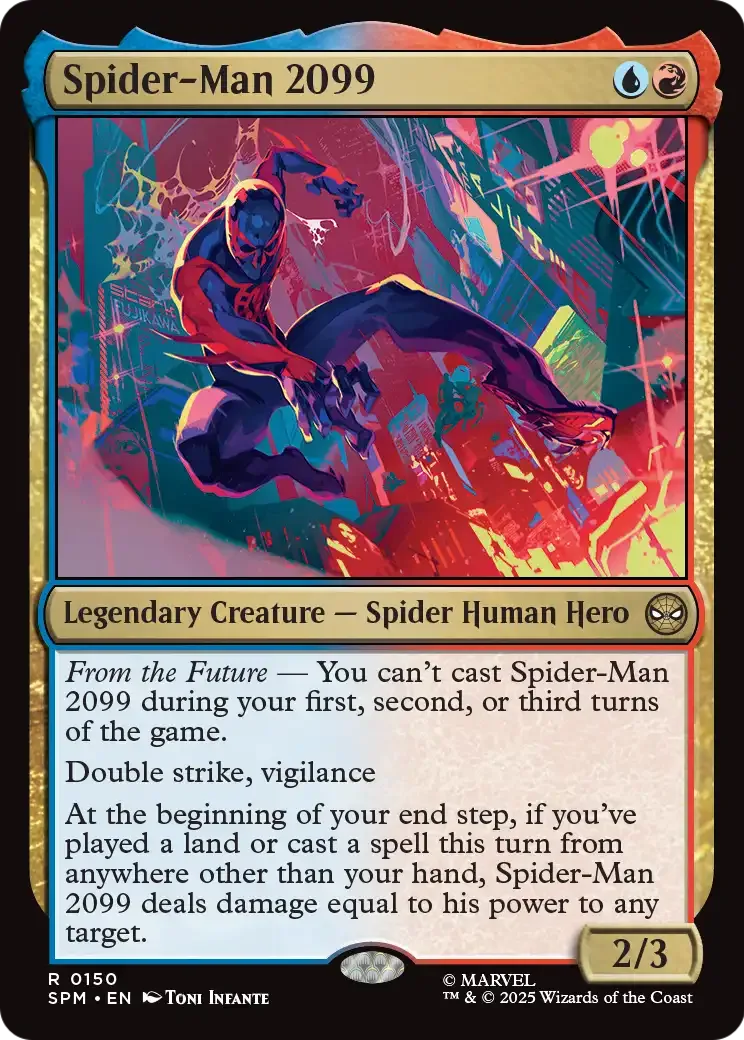
MTG Arena Competitive Brawl: Rules and Banned Commanders
On October 12, 2026, Wizards banned three more commanders in Competitive Brawl and moved nine cards, Oko and Ragavan among them, from fully banned to banned only as your commander. Here is what Competitive Brawl is, how it differs from the Brawl queue next to it, the full list, and the one card the official page has gone quiet on.
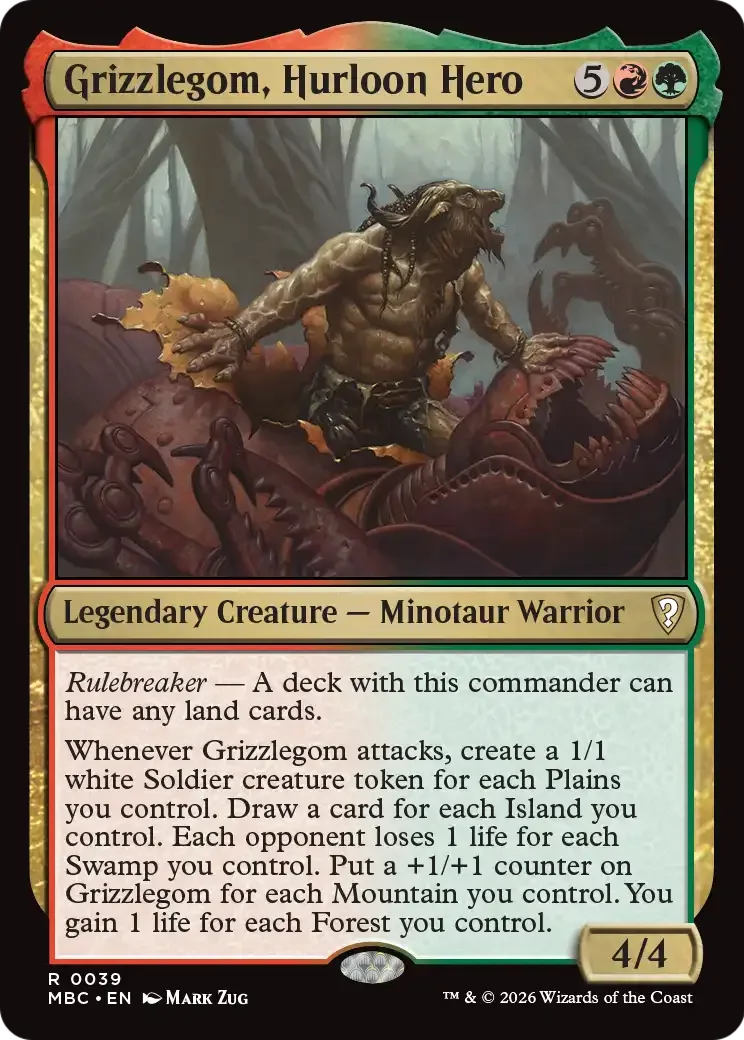
Mystery Booster Commander Edition: Packs, Draft, Legality
Festival in a Box: Atlanta 2026 goes on sale October 19 for $249.99 with a full box of Mystery Booster Commander Edition inside, and one box is exactly one eight-player Commander Draft. Here is the booster slot by slot, the draft rules, all 60 new commanders by color, the eight rulebreakers, and when the cards become legal.