PUBG Paramo Map Guide: Volcano, Lava & Heli Drops
Paramo is the PUBG map where the landmarks move between matches, the lava actually kills you, and you ride a helicopter in instead of jumping from a plane. Here's how to read a map that refuses to stay still.
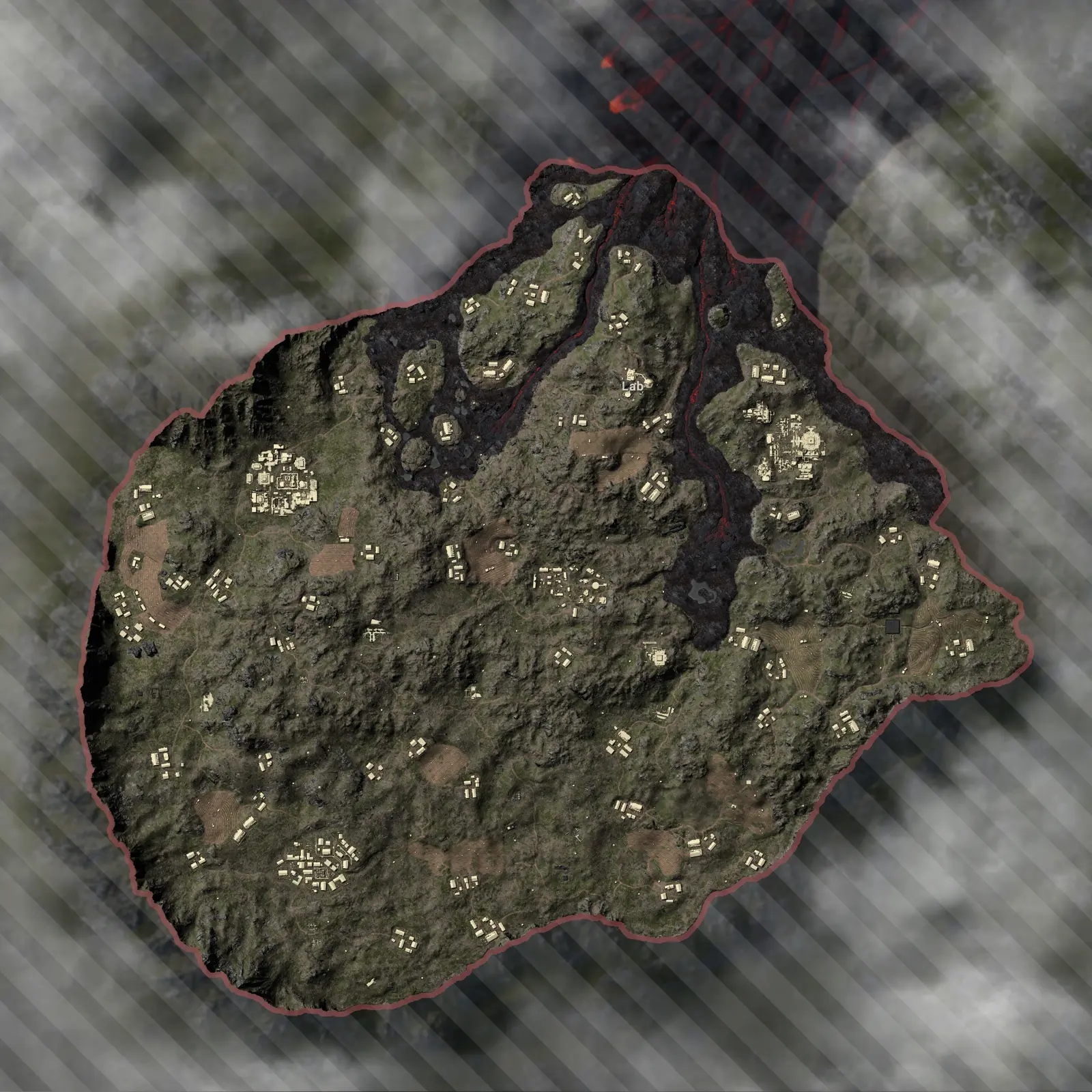
Here's a PUBG map where you can't memorize the drops, because the drops literally move. Paramo is the 3x3 volcano map set in the highlands of South America, and its defining trick is a dynamic terrain system that relocates major landmarks and reshapes the ground every single match. Add streams of molten lava that will cook you on contact, a helicopter insertion instead of the usual plane, and you've got the weirdest, most experimental map PUBG ever shipped.
This is the 6th playable map, and it was built as a deliberate change of pace — smaller, stranger, and full of mechanics you won't find anywhere else. It doesn't reward map memorization the way Erangel does; it rewards adaptability. The players who do well on Paramo are the ones who can read an unfamiliar layout on the fly, respect a hazard that isn't another player, and exploit the map-specific systems — helicopter care packages, destroyable item boxes, the Critical Response Kit — that most people never bother to learn. Here's the real guide to a map that refuses to stay still.
The map that won't hold still
Paramo is a 3x3 km map themed as an active volcanic island in the South American highlands — misty, mountainous, terraced farmland and small villages cradled among the clouds. It sits between the 2x2 maps and the 4x4 Sanhok in size, which already makes it a fast, intimate experience. But size is the least interesting thing about it.
The pitch from PUBG is right on the box: "this dynamic world system alters locations between matches, making every trip to Paramo a unique experience." That's the whole identity of the map. You can't pull up a memorized loot route, because the loot route was somewhere else last game. Instead of mastering a fixed layout, you master the skills — reading terrain fast, controlling helicopter packages, surviving the lava — that carry across whatever configuration the map hands you. If you want to see how that contrasts with a map you can fully memorize, our PUBG Erangel map guide is the polar opposite philosophy.
How Paramo is laid out
Because the terrain shifts between matches, Paramo's layout is more about types of space than fixed coordinates. The constant elements: an active volcano at the heart of the map with lava streams radiating out from it, terraced highland fields, and a scatter of small villages and compounds connected by mountain paths. Major landmarks and chunks of terrain get relocated each session, and patch 11.1 even added an extra randomized location possibility on top of the existing shuffle.
The mental model for Paramo isn't a list of named towns to memorize — it's a checklist of what to find when you land:
| Feature | What it is | Why it matters |
|---|---|---|
| The volcano | Central active volcano | Anchor landmark; source of the lava streams |
| Lava streams | Molten flows across the map | Lethal environmental hazard; reshapes safe routes |
| Villages / compounds | Small loot settlements | Your main gearing spots, repositioned each match |
| Terraced fields | Open highland farmland | Exposed crossing ground; added cover in patch 11.1 |
| Care package helicopters | Flying loot carriers | Mobile, shootable supply drops (more below) |
| The Secret Room | Hidden high-loot room | A reward for players who hunt it out |
So instead of "drop Pochinki," your Paramo plan is "drop on the nearest cluster of buildings away from a lava stream, gear from the item boxes, and orient on the volcano." The skill is reading that fresh each match.
The dynamic terrain system
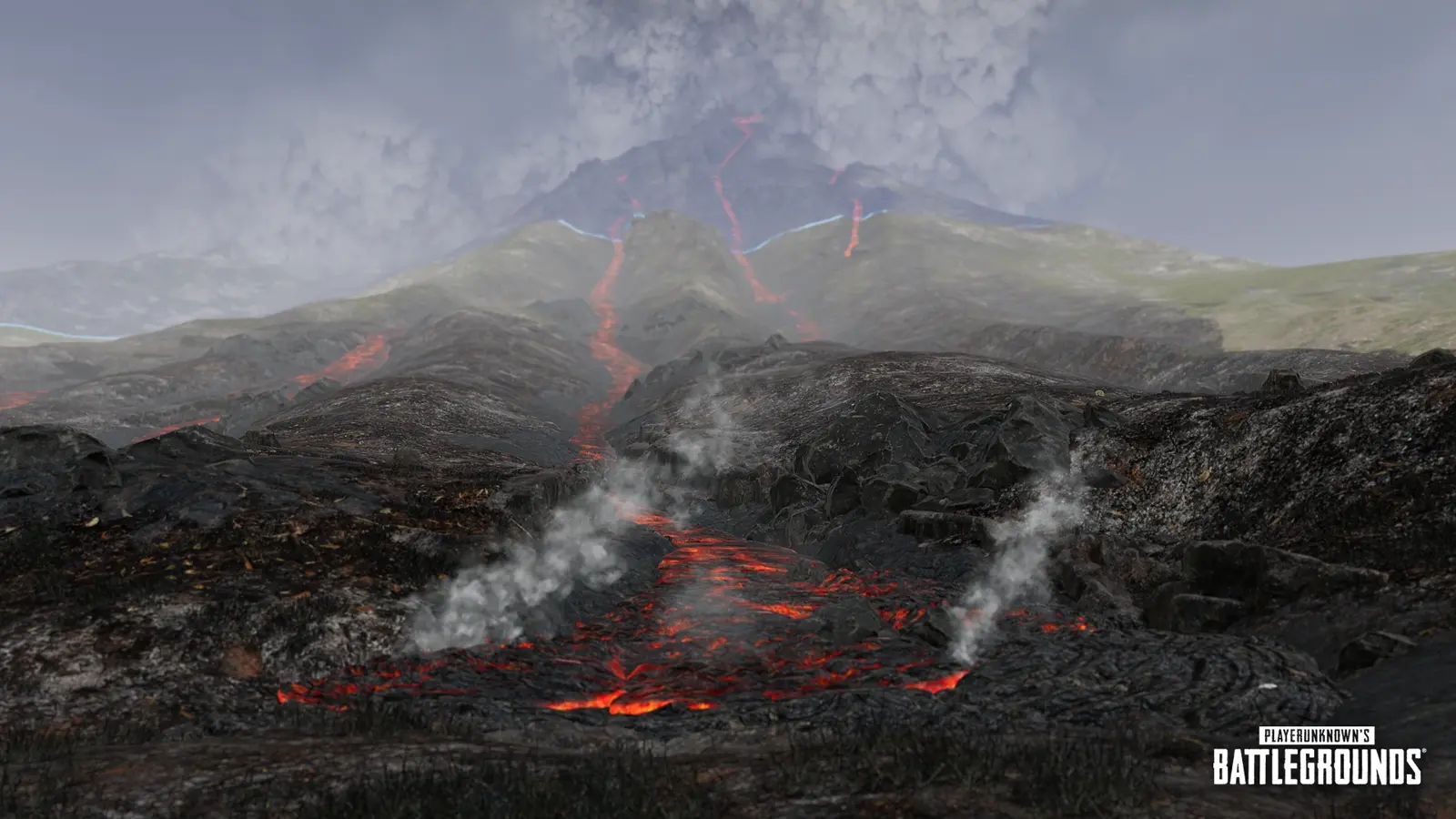
The dynamic terrain is the headline mechanic, and it's genuinely unlike anything else in PUBG. Each new session, the major landmarks and parts of the terrain are relocated. The village you geared in last match might not be there this match — and a landmark that was in the north could be in the southeast next time.
How to actually play around it:
- Scout on the way down, not from memory. Your descent is your recon. Pick your landing by what you can see this match — building density, distance from lava, proximity to where the plane line crosses — because last match's knowledge is worthless.
- Orient on the constants. The volcano and the lava streams are the fixed reference points. Use them to build a quick mental map the moment you land, the same way you'd use a coastline.
- Don't pre-commit your rotation. On a memorizable map you can plan three circles ahead. On Paramo, plan loosely and adapt, because the cover and the routes are different every game.
This is also why Paramo splits the playerbase. If your strength is encyclopedic map knowledge, the dynamic system erases your edge. If your strength is reading a fight and a layout on the fly, Paramo plays to it. It's the closest PUBG gets to making you improvise from scratch every match.
Lava: the hazard that actually kills
Plenty of PUBG maps have environmental flavor. Paramo has environmental lethality. Several streams of molten lava flow from the active volcano across the map, and contact does real, escalating damage — this is one of the only times the map itself, not a player, is a serious threat to your life.
What you need to know about the lava:
- It damages you precisely on contact. PUBG refined the lava damage calculation so it triggers accurately when you touch the surface. Don't test it; it's not a gimmick.
- Gas cans and spilled fuel ignite near it. A later patch made Gas Cans explode on contact with lava, and spilled gas catches fire near it. Vehicles and fuel near a lava stream are a second-order hazard — don't park your escape next to a flow.
- It reshapes safe routes. A lava stream cutting across the terrain is a wall you can't walk through. Factor it into every rotation: the shortest line to the circle might run straight into a flow, and you'll need to go around.
There's also a softer boundary mechanic: unlike other maps, you can wander outside the normal playable area on Paramo, but a warning displays and you'll be killed if you don't return quickly. Between the lava and the soft border, Paramo asks you to respect the terrain in a way no other PUBG map does.
Helicopters, care packages, and loot
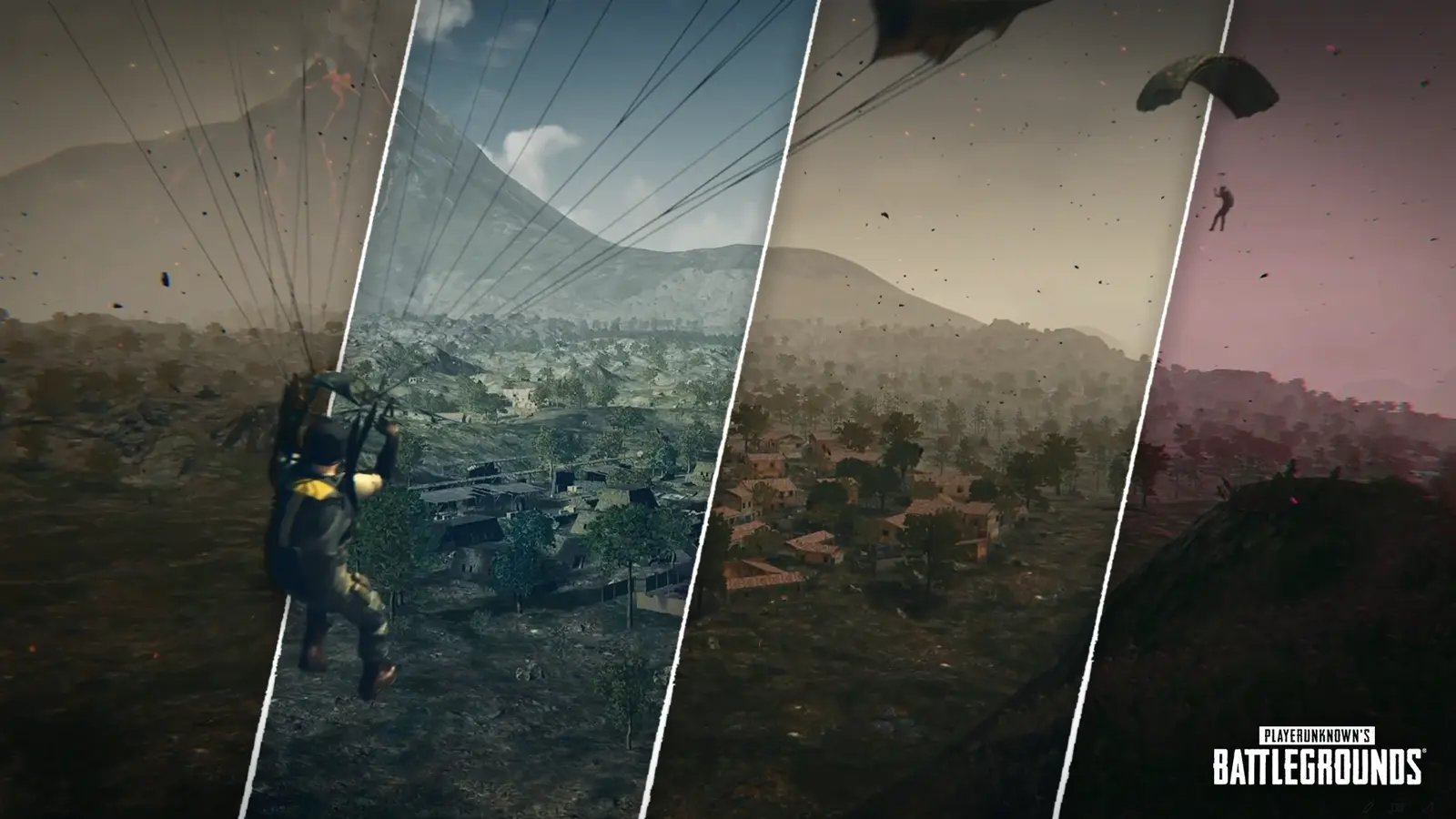
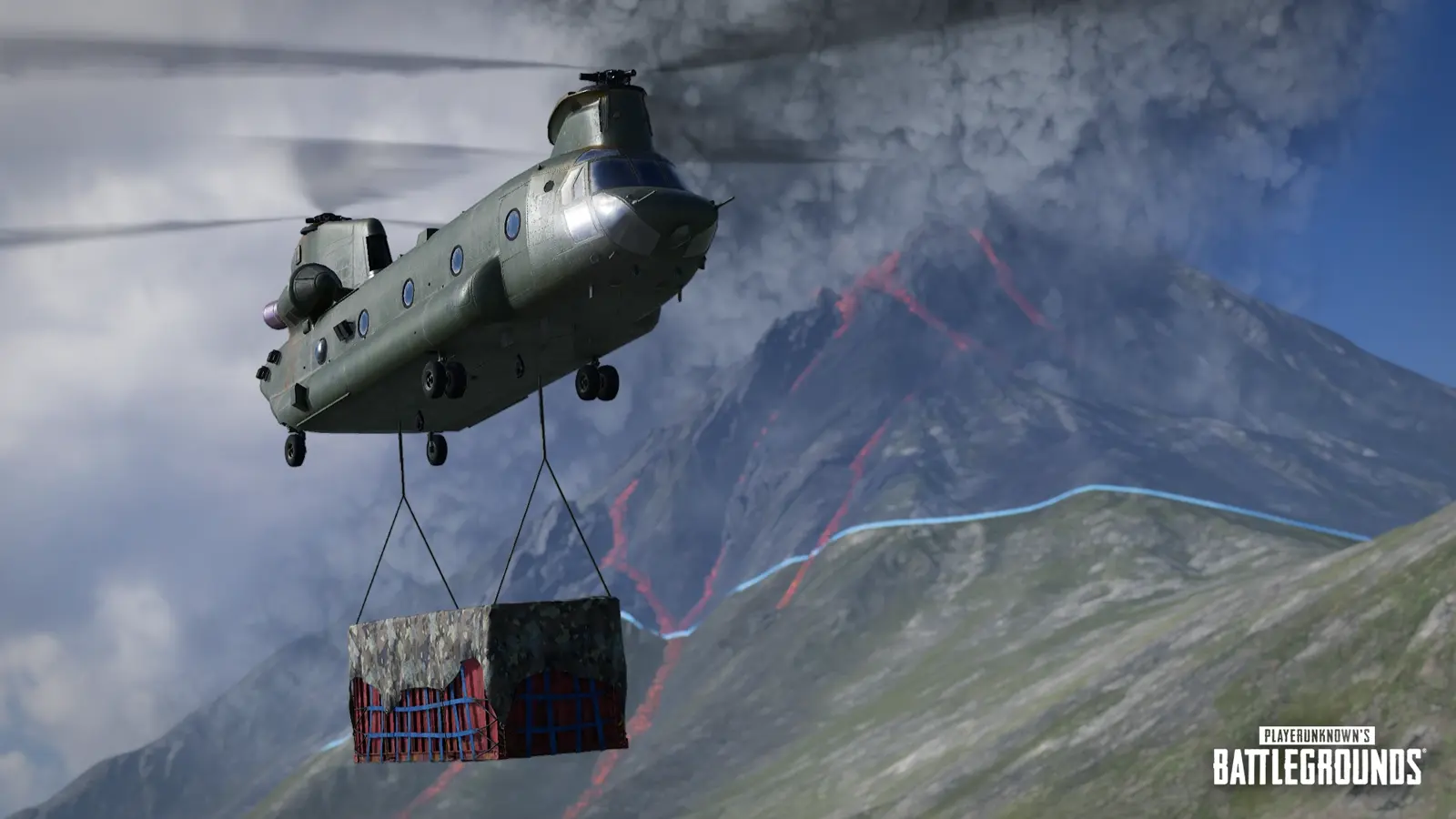
Paramo throws out the plane. You drop in from helicopters, and those same helicopters keep working all match — they carry care packages across the map and drop them, with the plan of dropping cargo just outside the play area. The twist: if you shoot enough rounds into a care package helicopter, you'll force it to release its cargo early. That turns supply drops into a contested, skill-based objective instead of a passive timer.
This is the single most under-used edge on the map. Practical implications:
- Shoot down packages for early gear. A team that's willing to dump rounds into a passing care-package helicopter can grab a loadout-defining drop before anyone else even knows it landed. Watch the helicopter routes and use a DMR or LMG to bring the cargo down early.
- The exclusive gear is worth it. Paramo's care packages contain highland-themed items not found on other maps — full-body camo suits, a ghillie suit, and a backpack among them. These are genuine upgrades, and forcing a package down early is how you get first dibs.
- Destroyable item boxes are free loot. Certain houses contain destroyable item boxes — break them and you get multiple pieces of loot like ammo, throwables, and healing. Patch 11.1 bumped the spawn rates in the Secret Room and the care package helicopter too. On a map where layouts move, knowing to smash the boxes is reliable value every match.
The Critical Response Kit and Secret Room
Two Paramo-specific systems are worth building your squad play around.
The Critical Response Kit is the big one. With a Critical Response Kit in your inventory, you can revive a downed squadmate in just one second instead of the normal lengthy revive. On a fast 3x3 map full of close fights, a one-second revive is enormous — it lets you pick up a teammate mid-firefight without the long, vulnerable revive animation that gets squads wiped. Prioritize grabbing one, and assign who carries it before the fight starts. If you want the full revive game, our PUBG reviving and DBNO guide covers the normal mechanics this kit shortcuts.
The Secret Room is the map's treasure-hunt reward — a hidden room stuffed with high-tier loot, with spawn rates that got buffed in patch 11.1. Finding it is a per-match scavenger hunt thanks to the dynamic terrain, but the payoff is a gear jump that can carry a squad. It's a luxury objective, not a priority, but if the circle and the fight allow, the Secret Room is one of the best loot scores on the map.
How to actually play Paramo
Pulling the systems together, here's the Paramo playbook:
- Land near buildings, away from lava. Pick your drop off the descent based on building density and distance from the nearest lava stream. You want loot fast and you don't want to spawn next to a hazard.
- Smash item boxes and gear quickly. Hit the destroyable item boxes in houses for fast ammo, meds, and throwables. The loot is dense enough that you'll be kitted quickly, like on the other small maps.
- Build for mid-range with a CQC backup. Paramo fights happen across terraced fields and inside villages — an AR with a 2x to 4x plus an SMG or shotgun covers it. Keep a DMR or LMG handy if you plan to shoot down helicopter packages.
- Contest the helicopters. This is your gear edge. Track the care-package helicopters and force a drop early when it's safe to. Most lobbies ignore this; don't be most lobbies.
- Carry a Critical Response Kit in squads. One-second revives win close fights. Assign it and use it aggressively.
Rotations and the fast endgame
Paramo rotations are short — it's a 3x3 — but the terrain and the lava make them trickier than the distance suggests. The volcano's lava streams break up the obvious routes, the terraced fields are exposed crossing ground, and the dynamic layout means you're reading cover fresh every match.
What to keep in mind as the circle closes:
- Route around the lava, not through it. The straightest line to the circle may run into a flow. Plan the detour early so you're not improvising at the edge of the zone.
- Use the terraces and slopes for cover. The highland terrain is full of elevation. Hold high ground where you can, and use the terrace walls and slopes to break line of sight crossing the open fields — patch 11.1 added cover to those fields specifically because they were too exposed.
- Be set early — it's a small, fast map. Like the other compact maps, Paramo doesn't give you the leisurely late rotations of an 8x8. Claim your final-circle cover before the scramble.
- Keep your utility and Critical Response Kit ready. Endgames here are close and contested. Throwables to flush positions and a one-second revive to recover a downed teammate are what win the cramped final fights.
For the universal zone-reading framework, our PUBG endgame circle strategy goes deeper, and the broader best PUBG maps ranked piece puts Paramo's experiment in context with the rest of the rotation.
Quick Action Checklist
- Treat Paramo as a 3x3 volcano map you can't memorize — the layout moves every match, so scout on the way down
- Orient on the constants: the volcano and the lava streams are your fixed reference points
- Respect the lava — it does real damage on contact, ignites gas cans, and walls off rotation routes
- Smash destroyable item boxes in houses for fast ammo, meds, and throwables
- Track care-package helicopters and shoot them down to force an early drop of the map's exclusive highland gear
- Carry a Critical Response Kit in squads for one-second revives in close fights
- Hunt the Secret Room when the fight allows — it's a high-tier loot jackpot
- Route around lava, use the terraces for cover, and be set in cover early for the fast endgame
Frequently Asked Questions
How big is Paramo and where is it set?
What is the dynamic terrain on Paramo?
Does the lava on Paramo actually hurt you?
How do helicopter care packages work on Paramo?
What is the Critical Response Kit on Paramo?
Keep Reading
Related Guides

PUBG Secret Rooms: Every Map, Key and What's Inside
Secret Rooms are on seven PUBG maps now, they've been in Ranked since June 2026, and the Self-AED hasn't spawned in one since April 2025. Here's every map's key and door rules, the loot lists KRAFTON has actually published, and the two unlocked cousins: Vikendi's alarmed Lab Camps and Sanhok's Loot Truck.

PUBG Haven Map Guide: The Pillar, Caches & CQC Chaos
Haven is the one PUBG map where the AI shoots back. A 1x1 industrial island, 32 players, an armed faction called the Pillar guarding the loot, and a helicopter with a spotlight hunting you. Here's how to survive it.
PUBG Karakin Map Guide: Black Zone, Breaches & Drops
Karakin is PUBG's 2x2 desert pressure cooker — 64 players, no vehicles, and a Black Zone that deletes whole compounds mid-match. Here's where to drop, how to breach, and how to not get blown up by your own map.
PUBG Deston Map Guide: Drops, Recall & Endgame
Deston is the 8x8 that broke PUBG's rulebook — Ascenders up skyscrapers, gliders off rooftops, a Blue Chip recall system that brings dead teammates back, and swamps that aren't quite land or water. Here's where to drop, how to use the gadgets, and how to read the endgame.
Best Weapons in PUBG: Tier List
Every PUBG tier list is out of date the moment a balance patch drops. So here's the list, ranked by role, plus the durable logic to re-tier any gun yourself when the next patch shakes things up.
Best PUBG Loadouts & Attachments
A naked M416 and a fully kitted M416 are basically two different guns. Here's how to build the strongest two-gun loadouts in PUBG and the attachment priority that turns loot into recoil control.