Super Mario 64 Plaque Decoded? What the Claim Shows
On October 15, 2026 a programmer called Mochi64 claimed the blurry plaque in Peach's courtyard says "Eternal Star / We hope so". This is what the tool actually measured, which parts are strongly supported, which are not, and why Nintendo's 1998 "it means nothing" letter does not settle it.
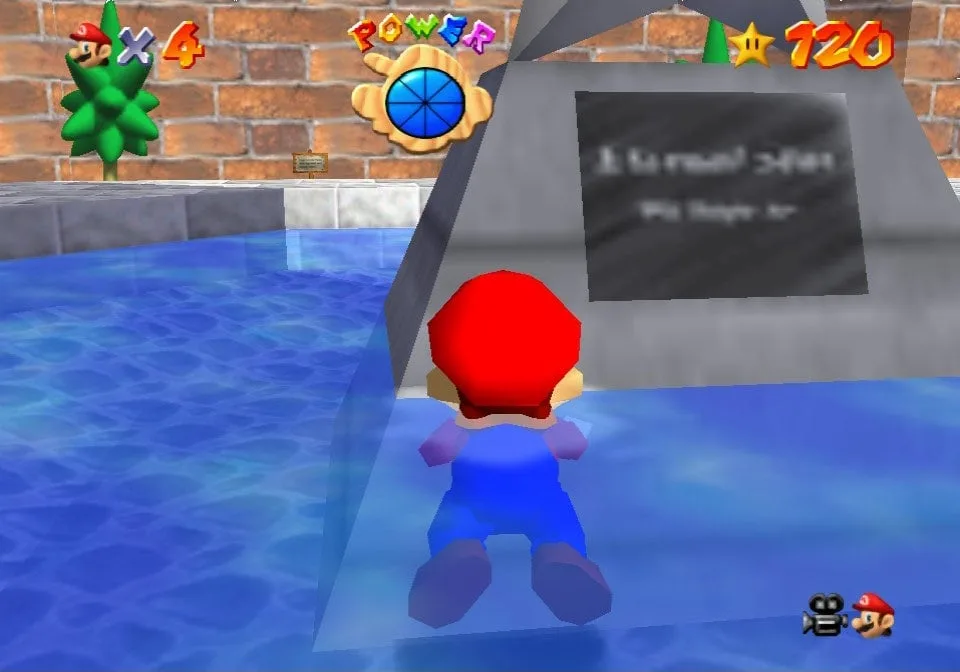
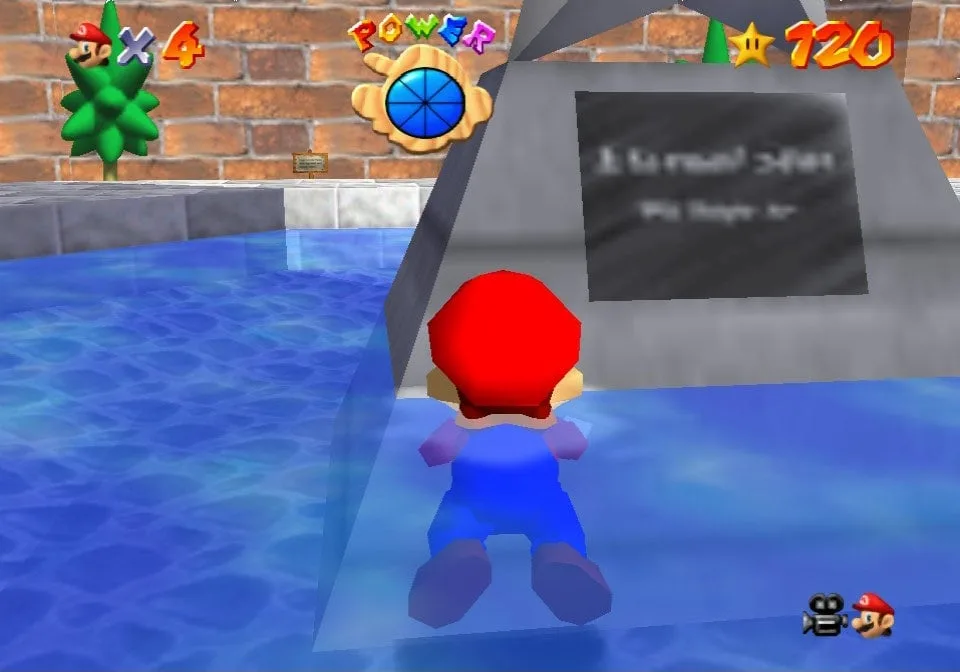
The long-running reading of the Super Mario 64 plaque has been "L is real 2401". In October 2026 a programmer posted a different answer and a reproducible tool to back it. It is a claim, not a confirmation, so the useful question is how strong the evidence is and where it stops.
What the plaque actually is
The plaque sits on the base of the star statue in the castle courtyard. According to the decoder's README, it is a single 32x32 grey texture, and its two lines of text are only 3 to 5 pixels tall. At that size it cannot be read directly, which leaves room for readings like "L is real 2401". For the history of that rumor, see our myths and rumors guide.
The claim
Mochi64 (supermochi64 on X) posted on October 15, 2026 that the plaque reads "Eternal Star / We hope so", set in Adobe's 1990 Palatino Bold Italic. Time Extension covered it on October 19 and GamingBible on October 24. The source code is on GitHub as sm64-plaque-decode under an MIT license.
It is not the first "Eternal Star" reading. Time Extension notes that community members proposed "We Hope For" for the second line in 2023, and Mochi64 tested that and argued the tall "f" would need ink the plaque does not have.
How the tool works
The README describes a forward model rather than a letter-by-letter read. It types candidate text in a period font, resizes it to 32x32, applies blur and gamma, and compares the result with the real pixels. Scores are fit errors, so lower is better. Per the README, about 530 era fonts were searched, and the pipeline was calibrated on synthetic plaques with known text.
The evidence at a glance
| Test (from the README) | Result |
|---|---|
| Best font | Palatino Bold Italic, ahead of Times, Helvetica, Courier and the game's own dialog font |
| First line | "Eternal" ranks 1st of 1,237,405 candidate first words; "Star" ranks 1st among 12,547 words on the stone |
| Second line | "hope" ranks 1st of 12,556 middle words; "We" and "so" rank 8th and 4th among short strings |
| Blind test | 50 planted words: best real word in 50 of 50, best string overall in 38 of 50 |
| "L is real 2401" | Scored as a whole phrase on row 1, it fits about twice as badly as "Eternal Star" |
GamingBible adds that the tool tested over 27,000 words for the first line and over 17,000 for the second, and that the fan reading produced a significantly weaker match.
What it cannot tell you
The author's own confidence levels are the best guide here. "Eternal", "Star" and "hope" are called strongly supported, "We" well supported, and "so" best-fitting with a smaller margin than the rest. Whether "Star" is capitalised is listed as unresolved. Seven pixels stay wrong in every model, which the author attributes to hand-cleaning for legibility.
Three outside limits matter more:
- No confirmation. Time Extension says Nintendo has remained silent on it and GamingBible says Nintendo has yet to confirm it. Without the original artwork or testimony from the artist, this is a strongly fitted hypothesis.
- Language. The README offers a Japanese rendering of the text as an interpretation. Some Time Extension commenters raise Japanese glyphs, but those are reader comments, not reporting, and the article itself does not mention it.
- Tool credit. Time Extension reports that Mochi64's post credits Grok and an Opus model and calls the tool "seemingly AI-coded". The README does not mention AI tools, so check both if that matters to you.
How this fits the 1998 letter
Our myths guide cites a 1998 letter from Nintendo Game Counselor Michael D. Chandler, shared on Reddit and reported by Nintendo Everything in 2016, saying the programmers "put it in there as a joke" and that it "doesn't have any meaning at all." GamingBible itself calls it only a "reported" letter. Both can be true at once: a joke from the programmers can still be a readable phrase. What the decode challenges is "L is real 2401", not the idea that the plaque is a gag. Treat that guide's "meaningless" framing as a position the new reading complicates.
Nothing here changes how the game plays. The plaque still gives no star, no Luigi and no code.
Frequently Asked Questions
What does the Super Mario 64 plaque say?
Has Nintendo confirmed the Super Mario 64 plaque decode?
How big is the plaque texture in Super Mario 64?
Does the plaque unlock Luigi in Super Mario 64?
Keep Reading
- sm64-plaque-decode (README, method and results) — GitHub, supermochi64
- Coder convinced they have deciphered the Super Mario 64 plaque — Time Extension
- Super Mario 64 plaque mystery may be solved — GamingBible
- Mochi64 announcement post, October 15, 2026 — X
- Nintendo Game Counselor talks about the meaning of Super Mario 64's statue text — Nintendo Everything
Related Guides
Super Mario 64 Camera Guide: C-Buttons, R and the Fixed Cam
Super Mario 64's camera is a dozen-plus cameras in a trench coat. Here is what every C-button and R press actually does, the LAKITU ↔ STOP setting hiding on the pause screen, why the camera buzzes at you, which camera each course loads with, and how it all changes on Switch and DS.
Super Mario 64 Myths and Rumors, Debunked
A blurry plaque in Peach's Castle produced a $100 bounty from IGN, an April Fools joke from Nintendo, and a 2020 source-code leak that made the rumor half-true in the strangest way possible. Here is what "L is real 2401" actually says, why Ninja Mario and DS-era Waluigi were never real, and what got cut from Super Mario 64 for genuine, documented reasons.

How to Fly in Super Mario 64: Dive for Speed, Then Climb
Wing Mario can't flap for height. Every bit of height costs speed and every dive buys it back. Here is how takeoff works, the one glide the code holds steady, why the nose lifts on its own, how each flight ends, and the A-button trick that cancels fall damage.
Super Mario 64 Swimming Guide: Tap A, Don't Hold It
Holding A is the slow way to swim in Super Mario 64. Here is the stroke rhythm the code rewards, how the stick steers, how to jump out of the water, what each current does, and the eight seconds of free speed hiding in two clams.
Super Mario 64 Beginner Guide: Your First 30 Power Stars
Super Mario 64 does not gate you on difficulty, it gates you on Power Stars. Here is exactly which doors need what, which stars are fastest to grab, and the route that gets a first-timer from one star to thirty without wandering the castle in circles.
Super Mario 64 Lives and Game Over: What You Actually Lose
A Game Over in Super Mario 64 is a file reload: you keep everything you saved and lose everything you did not. Here is when the game actually writes your file, exactly what a Game Over rolls back, the five courses where a fall is free, and every way to earn a life, from the coin tally to the Monty Mole streak that never runs dry.