Baldur's Gate 3 Best Armour: The AC Math Nobody Explains
Armour Class is the only defensive stat in this game whose value accelerates the higher it climbs. Going from 19 to 20 buys you almost twice as much as going from 15 to 16. Here is what to wear, act by act, and the feat that silently deletes 3 AC off your best medium armour.
Two characters walk into the House of Hope. One is sitting on 16 Armour Class, the other on 20. That looks like a 25% difference on the character sheet. It is not. Against the same attacker, the second one survives roughly twice as long, and the reason is a piece of arithmetic the game never shows you.
Armour Class is the only defensive number in Baldur's Gate 3 whose value accelerates as it climbs. Once you understand that, "this armour is fine" stops being an acceptable answer.
Armour Class is not a linear stat
The base formula is straightforward: 10 + your Dexterity modifier + armour bonus + shield bonus + other bonuses and penalties. Nothing exotic. The interesting part is what each additional point buys.
The wiki works the example out cleanly. Take a defender with 15 AC and 10 HP, facing an attacker with +4 to hit (a 50% hit chance) who deals 2 damage a swing. That defender survives an average of 10 rounds.
- Raise them to 16 AC (45% to be hit) and they survive 11.1 rounds — an 11% improvement.
- Raise them to 19 AC (30%) and it is 16.66 rounds.
- Raise them to 20 AC (25%) and it is 20 rounds — a 20% improvement from a single point.
- The step from 24 to 25 AC is a 100% improvement: 50 rounds becomes 100.
Same +1. Wildly different value. That is why a Paladin who stops at 18 AC and a Paladin who chases 21 are not playing the same game, and why AC matters disproportionately in Honour Mode, where one bad round is the whole run. The practical rule: the last three points of AC are worth more than the first ten.
The three categories and the trait that breaks them
Every piece of body armour is light, medium, or heavy, and the category decides how your Dexterity interacts with it.
- Light armour adds your full Dexterity modifier to AC.
- Medium armour adds your Dexterity modifier up to a maximum of +2. Several medium armours also give disadvantage on Stealth.
- Heavy armour ignores Dexterity entirely and always gives disadvantage on Stealth.
Then there is the penalty nobody reads until it ruins a fight. Wearing armour you lack proficiency with means you cannot cast spells at all, and you take disadvantage on every ability check, saving throw, and attack roll. Shields work the same way. This is not a soft nudge toward the right gear, it is a character-disabling debuff.
Two multiclass gotchas follow from that, and they bite people who read a build guide without reading the fine print: multiclassing into Barbarian grants only shield proficiency, not medium armour, and multiclassing never grants heavy armour proficiency. If you want plate on a caster, it has to come from your starting class, your race, or the Heavily Armoured feat. Our multiclassing guide covers which dips are worth that cost.
Exotic Material: full Dexterity in medium armour
Here is where BG3 quietly departs from the tabletop rules. Four armours carry a passive called Exotic Material, which adds your full Dexterity modifier to AC and removes the Stealth disadvantage, while still counting as medium armour for proficiency purposes. The four are Yuan-Ti Scale Mail, Unwanted Masterwork Scalemail, Sharpened Snare Cuirass, and Armour of Agility.
That is the best of both categories: a medium armour base number with a light armour Dexterity scaling. It is the single most efficient AC package in the game for anyone with a Dexterity above 14.
And now the trap. Exotic Material stops working if that character takes Medium Armour Master or Magic Initiate: Cleric. Both of those raise the medium-armour Dexterity cap from +2 to +3, and applying that cap overwrites the Exotic Material override. So a feat whose entire selling point is "more Dexterity in medium armour" will, on these four armours, take a character from full Dexterity down to +3. If you are running Armour of Agility with 18 Dexterity, Medium Armour Master costs you a point of AC and a feat slot you only get three of.
The best heavy armour
Adamantine Splint Armour: the anti-crit brick
Very rare heavy armour, 18 AC, and two passives that matter more than the number: it reduces all incoming damage by 2, and attackers cannot land critical hits on the wearer. It also sends attackers Reeling. You forge it at the Adamantine Forge in Grymforge from a Splint Mould plus Mithral Ore, which means you can be wearing it in Act 1.
Crit immunity is the headline. Boss burst damage in this game comes from doubled dice, and turning off critical hits against your frontliner smooths out exactly the spikes that end runs.
Reeling reads better than it plays, though: it applies -1 to attack rolls for every turn remaining, up to 10 turns, but all remaining stacks are removed by the Reeling creature's next attack, hit or miss. A one-swing tax, not a stacking debuff.
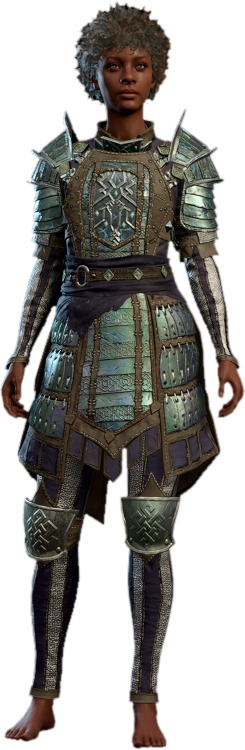
The real decision at the Forge is a resource one. Only two Mithral Ore exist in an entire playthrough, from two veins in the Abandoned Refuge, and each craft consumes one. There are six recipes — Adamantine Longsword, Mace, Scimitar, Shield, Scale Mail, and Splint Armour — and you get exactly two of them, forever.
The default answer for most parties: Splint Armour plus the Shield. That is 18 AC, +2 shield AC, damage reduction, and crit immunity from two sources on your tank before you leave Act 1. If your frontliner is a Dexterity build, swap the Splint for Adamantine Scale Mail (16 AC medium, damage reduction 1, same crit immunity).
Armour of Persistence: permanent Blade Ward
Very rare heavy armour, 20 AC, damage reduction 2, and it applies Blade Ward and Resistance permanently — not for a few turns, not on a save, just permanently while worn. Blade Ward halves incoming bludgeoning, piercing and slashing damage, which is most of what tries to hit a frontliner.
Sold by Dammon at the Forge of the Nine in Act 3 for 6,400 gold. It has Stealth disadvantage, so it is a pure "I stand at the front and eat hits" item.
Helldusk Armour: the one that ignores proficiency
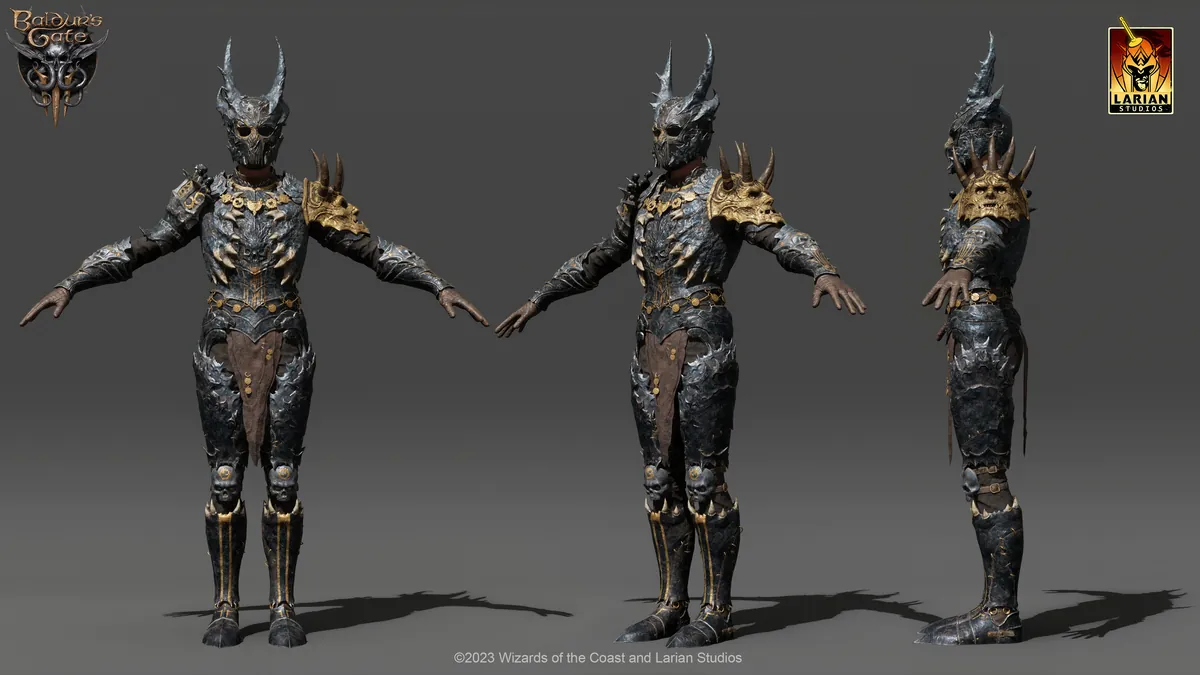
Legendary, 21 AC, fire resistance, reduces damage from all sources by 3, and grants Fly as a bonus action that does not require concentration. Raphael wears it in the House of Hope, and taking it off him is the only way to get it.
The clause that makes it special is administrative rather than heroic: the Helldusk Armour has no armour proficiency group at all, so any class can wear it with none of the usual penalties. A Wizard in 21 AC, casting normally. That is not a build, that is a cheat code you loot.
Same quirk, two side effects: items that are supposed to switch off in armour — Bracers of Defence, Bonespike Boots, Corellon's Grace — still work with it, and a Monk keeps Unarmoured Movement speed. It also sells for more than any other item in the game, so check what you are dragging onto a merchant's panel.
The best medium armour
Yuan-Ti Scale Mail is the Act 2 value pick
Rare medium armour, 15 AC plus your full Dexterity modifier via Exotic Material, +1 to Initiative, and it is sold by Quartermaster Talli near the Last Light Inn waypoint for 640 gold.
Run the numbers. A character with 16 Dexterity is at 18 AC in the middle of Act 2 for the price of a couple of scrolls, with no Stealth penalty. For most parties this is the armour your Cleric, Druid, or Ranger wears until the credits.
Armour of Agility: 17 AC plus your full Dexterity
Very rare medium armour, 17 AC plus full Dexterity, and +2 to all saving throws. Sold by Gloomy Fentonson at the Stormshore Armoury in Act 3 for 2,900 gold.
At 18 Dexterity that is 21 AC with no Stealth disadvantage — the same number as Helldusk Armour, available from a shop, on a character who can still sneak. The +2 to every saving throw is the part people undersell: it is a flat improvement on the Constitution saves that hold your concentration spells and the Wisdom saves that stop you being mind-controlled in Act 3.
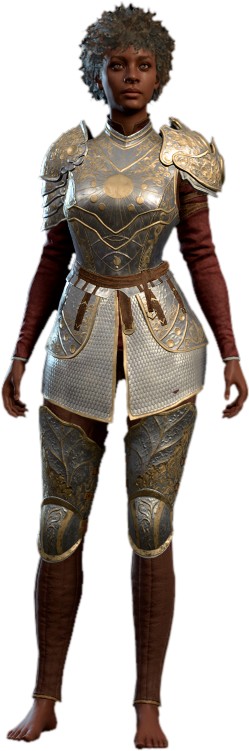
If your party face or your Ranger is going to hold one item from the Lower City shops, make it this.
The best light armour
Bhaalist Armour: piercing vulnerability on tap
Very rare light armour, 14 AC, +2 Initiative, and a toggleable aura called Aura of Murder: enemies within 3 metres become Vulnerable to piercing damage unless they are immune to it. Patch 8 raised that radius from 2 metres.
Vulnerable means double damage. So this is not really a defensive item at all — it is a party-wide damage multiplier worn by whoever stands closest to the boss. Every rapier, shortsword, dagger, spear and arrow your party throws into that bubble hits twice as hard. Pair it with a Rogue stacking Sneak Attack dice or the piercing legendaries from our legendary weapons guide and the numbers get silly fast.
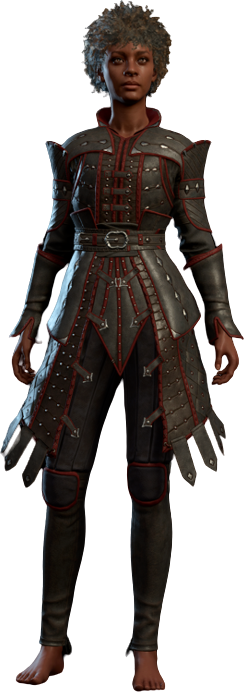
Two honest caveats. Enemies immune to piercing get nothing from the aura, and enemies merely resistant to it only have that resistance stripped rather than being flipped to vulnerable. And buying it is a story commitment: the Echo of Abazigal at the Murder Tribunal only sells it to a character who has accepted becoming an Unholy Assassin of Bhaal by completing Impress the Murder Tribunal. Read our Dark Urge guide before committing a good-aligned protagonist to that.
Elegant Studded Leather: a free Shield spell
Very rare light armour, 14 AC, advantage on Stealth checks, +2 Initiative, and it grants the Shield spell as a reaction. Shield is a reaction you fire when you are about to be hit: +5 AC until the start of your next turn, and no damage from Magic Missile. In a game with accelerating AC returns, a reactive +5 on a squishy character is enormous. It sits in High Security Vault 9 in the Counting House.
Known bug, and it is a useful one to know: the Shield charge is coded as once per Long Rest rather than once per Short Rest, unless you unequip and re-equip the armour. Doing that between fights is tedious but free.
Casters wear clothing, not armour
Most full casters have no armour proficiency worth using, so their chest slot is a clothing slot, and the two items that matter both sit in the 10 AC bracket with riders that are worth far more than the AC.
Robe of the Weave is very rare clothing: base 10 AC with a flat +2 AC on top, +1 to Spell Save DC and Spell Attack Rolls, and Weave Eater, which heals you 1d6 whenever you succeed on a saving throw against a spell. It sits in Ramazith's Tower inside a Globe of Invulnerability. Someone needs See Invisibility to reveal the lever, and each character gets exactly one DC 20 Arcana attempt before a trap fires on them — so send your worst Arcana characters first and keep your Wizard in reserve.
Potent Robe is very rare clothing with 10 AC, +1 AC, and Gregarious Caster: your cantrips deal additional damage equal to your Charisma modifier. It stacks with a Warlock's Agonising Blast and with Draconic Bloodline Elemental Affinity, which is how Eldritch Blast builds end up adding Charisma to damage two or three times per beam. Alfira hands it over for rescuing the tieflings, so it costs nothing.
The trap in this section is the alternative AC formulas. Mage Armour and Draconic Resilience use 13 + Dexterity. Barbarian Unarmoured Defence is 10 + Constitution + Dexterity. Monk Unarmoured Defence is 10 + Wisdom + Dexterity. All of them only apply if no item labelled as armour is worn in the chest, hands, helm, or boots slots — and the Monk version also switches off if you carry a shield. Plenty of Monks are running around 3 AC lighter than they think because someone equipped a nice pair of gauntlets.
Shields are the cheapest AC in the game
A plain shield is +2 AC for an off-hand slot most characters were not using. Per the math at the top, on a character sitting at 18 AC that is a bigger survivability gain than any single potion in the game.
Proficiency comes from Barbarian, Cleric, Druid, Fighter, Paladin and Ranger, from College of Valour Bards and Hexblade Warlocks, from being a Human or Half-Elf, or from the Moderately Armoured feat.
The three worth going out of your way for:
- Adamantine Shield (rare, +2 AC) — attackers cannot land critical hits on you, and enemies who miss you with a melee attack are sent Reeling. One of your two Mithral Ore.
- Sentinel Shield (rare, +2 AC) — +3 to Initiative and advantage on Perception checks. Sold by Lann Tarv at Moonrise Towers for 580 gold. Initiative is the most undervalued stat in the game; going first is often the whole fight.
- Viconia's Walking Fortress (legendary, +3 AC) — Spellguard gives advantage on saving throws against spells and disadvantage on spell attacks made against you, plus a once-per-Long-Rest Warding Bond. Carried by Viconia DeVir in the Cloister of Sombre Embrace.
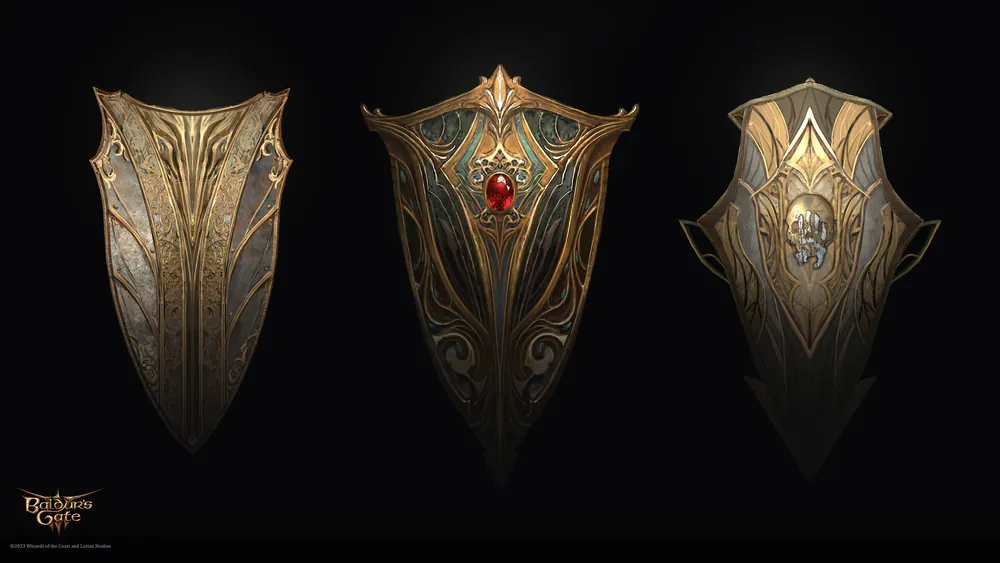
Which is the real argument against two-handed weapons. Skipping a shield costs 2 to 3 AC, and at the top of the curve that is a double-digit chunk of your survivability. Great Weapon Master builds pay real rent for that damage.
Four ways players lose AC without noticing
- Medium Armour Master or Magic Initiate: Cleric on an Exotic Material armour. Both break the passive and drop you to a +3 Dexterity cap.
- Armour-tagged gloves, boots or a helm on an unarmoured build. That switches off Mage Armour, Draconic Resilience, and both Unarmoured Defence formulas. A shield also disables the Monk version.
- Non-proficient armour after a multiclass dip. No spellcasting, disadvantage on every check, save and attack roll — and a dip never grants heavy armour proficiency.
- Stopping at "good enough." 18 AC feels fine. 21 AC is a different character. The last upgrade is always the biggest one.
Quick Action Checklist
- AC returns accelerate. 15 to 16 is an 11% survivability gain; 19 to 20 is 20%; 24 to 25 doubles it. Never stop at "fine."
- Light armour gives full Dexterity, medium caps it at +2, heavy ignores it and always tanks your Stealth.
- Hunt Exotic Material armours — Yuan-Ti Scale Mail, Unwanted Masterwork Scalemail, Sharpened Snare Cuirass, Armour of Agility — for medium-armour AC with full Dexterity scaling.
- Do not pair Exotic Material with Medium Armour Master or Magic Initiate: Cleric. Those feats break the passive.
- You only get two Mithral Ore per playthrough. Splint Armour plus the Adamantine Shield is the safe pair; Scale Mail plus Shield for a Dexterity tank.
- Buy Yuan-Ti Scale Mail from Talli in Act 2 for 640 gold. It is the best AC-per-gold item in the campaign.
- Armour of Agility hits 21 AC at 18 Dexterity with no Stealth penalty, plus +2 to every saving throw.
- Helldusk Armour needs no proficiency at all, so it is the only 21 AC option a Wizard can wear and still cast.
- Bhaalist Armour is a damage item, not a defence item — 3 metres of piercing vulnerability for the whole party.
- A shield is 2 to 3 free AC. If your build is not committed to a two-hander, wear one.
Frequently Asked Questions
What is the best armour in Baldur's Gate 3?
Why does one point of Armour Class matter so much in BG3?
What is Exotic Material in Baldur's Gate 3?
Does Medium Armour Master break Armour of Agility?
How many adamantine items can you make in one playthrough?
Is Bhaalist Armour worth it in BG3?
What should a Wizard or Sorcerer wear in Baldur's Gate 3?
What happens if you wear armour you are not proficient with?
Keep Reading
- BG3 Wiki — Armour Class formulas and the non-linear AC math
- BG3 Wiki — armour categories, Dexterity caps and proficiency penalties
- BG3 Wiki — Exotic Material passive and the Medium Armour Master conflict
- BG3 Wiki — Mithral Ore locations and the two-item adamantine limit
- BG3 Wiki — Helldusk Armour stats and the missing proficiency group
Related Guides
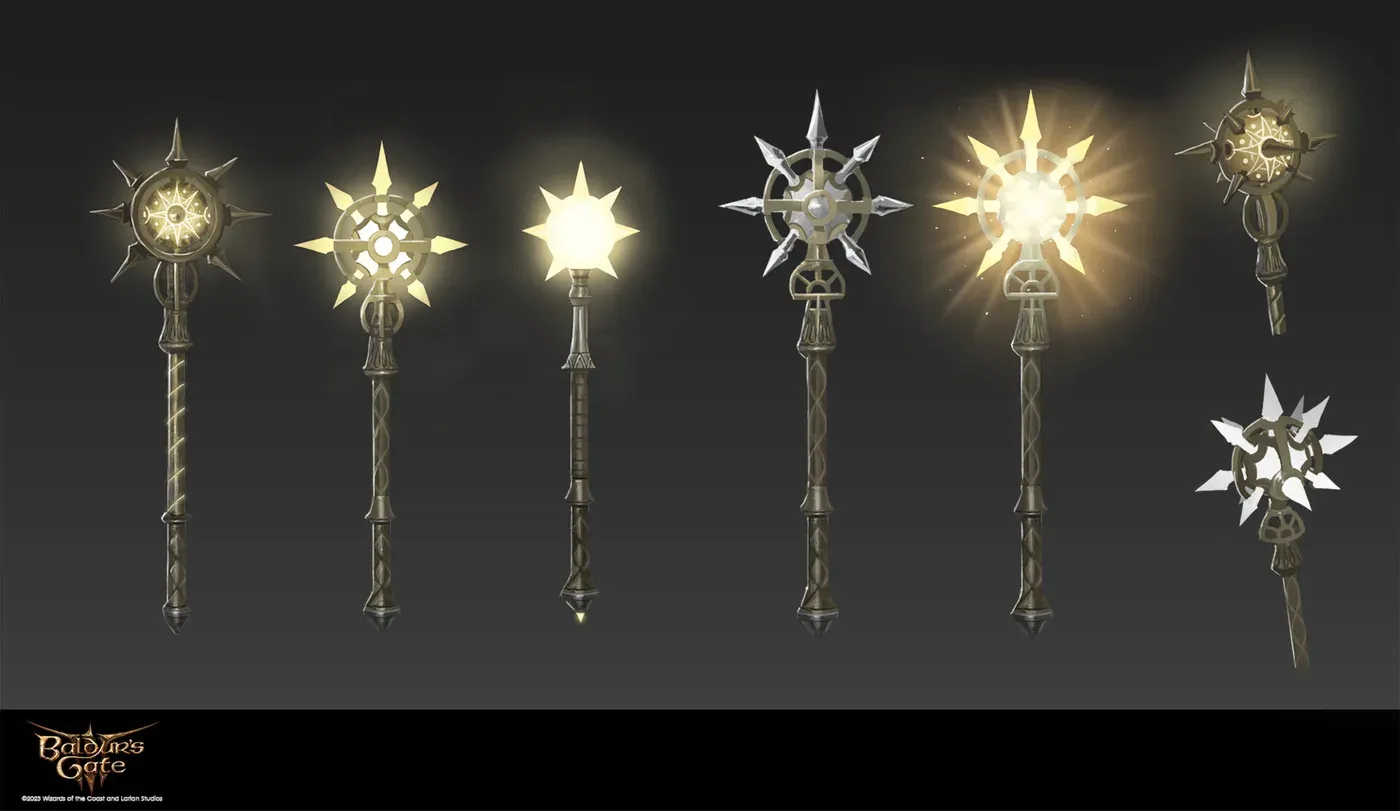
Baldur's Gate 3 Weapon Actions: One Use Per Short Rest
The little icons under your attack button are not free. Unless the action says otherwise, a weapon action in Baldur's Gate 3 is capped at one use per short rest, the charge belongs to the character rather than the weapon, and it is spent even when the attack misses. Here is what each weapon type actually hands you, and which of them are worth the charge.
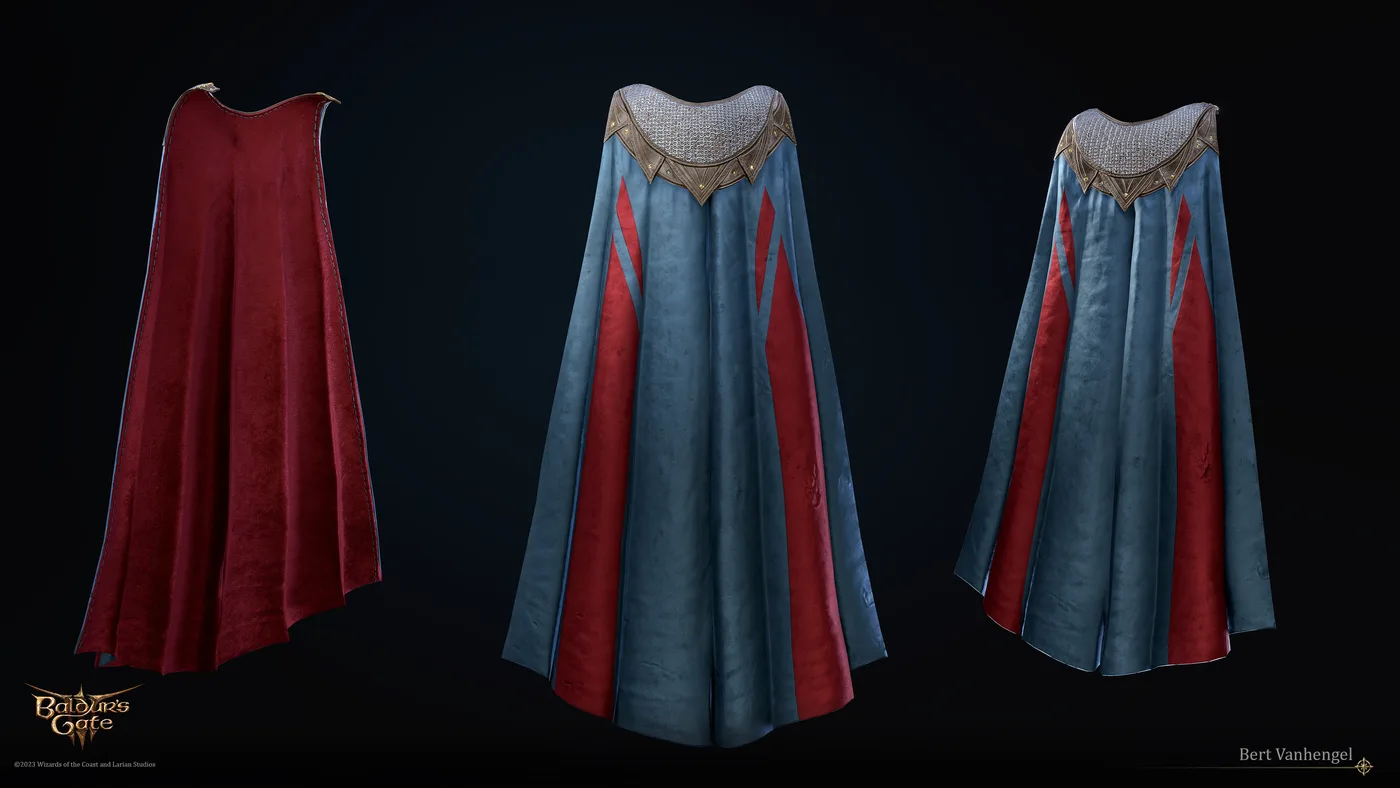
Baldur's Gate 3 Accessories: The Slots That Set Your Ability Scores
Your chest slot is a solved problem. The six other things you wear are where builds are actually decided — and four of the items that go in them can overwrite an ability score outright, refunding points you spent in character creation.
Baldur's Gate 3 Status Effects: The Combos That Win Fights
A first-level spell slot can double every point of lightning damage your party deals for the rest of the fight. Larian bolted an entire condition and surface layer onto D&D 5e, and most of it is undocumented in-game. Here is the whole system, with the numbers.
Baldur's Gate 3 Best Legendary Weapons: What to Actually Chase
There are 28 legendary items in the game and most of them are weapons you will pick up two hours before the credits roll. Here is which ones are worth building a character around, and which are just shiny.

Baldur's Gate 3 Beginner Guide: What Nobody Tells You
The tutorial teaches you to move and attack. It does not teach you that advantage is worth more than any weapon you will find in Act 1, or that Withers will rebuild your entire character for 100 gold. Here is the actual onboarding.

Baldur's Gate 3 Best Feats: You Only Get Three of These
Three feats. Four if you are a Fighter or a Rogue. That is the entire budget for a hundred-hour campaign, and most players spend at least one of them on something that does nothing. Here is what each pick is actually worth.