Baldur's Gate 3 Status Effects: The Combos That Win Fights
A first-level spell slot can double every point of lightning damage your party deals for the rest of the fight. Larian bolted an entire condition and surface layer onto D&D 5e, and most of it is undocumented in-game. Here is the whole system, with the numbers.
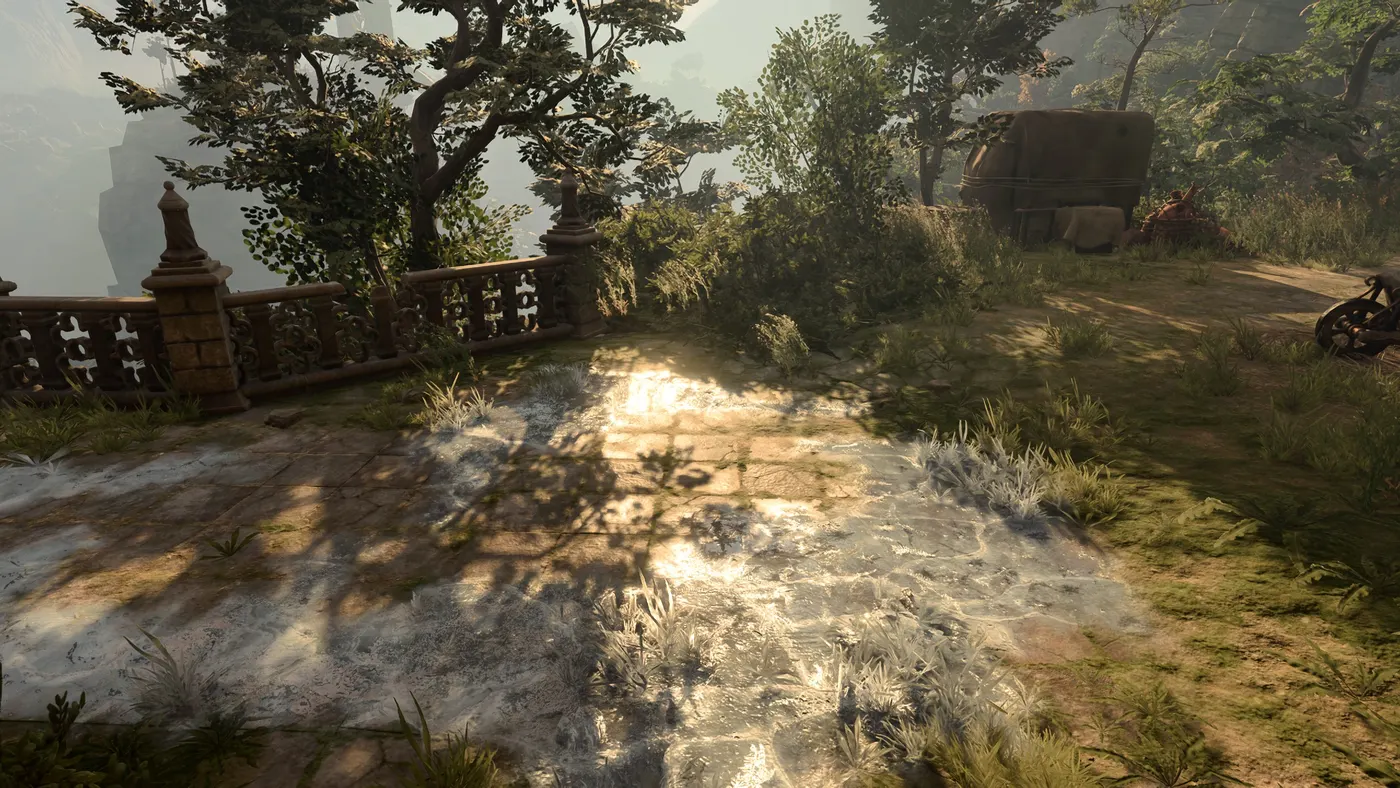
One first-level spell slot doubles every point of lightning and cold damage your party deals for the rest of the fight. It is called Create Water, you can have it at character level 1, and most people never put it on a bar.
That is the shape of the whole problem. Larian bolted an entire layer of conditions and reactive surfaces on top of D&D 5th Edition, then documented roughly a third of it in tooltips. Wet, Chilled, Frozen, Reverberation and Radiating Orb do not exist in the Player's Handbook at all — they are Larian inventions — and several conditions that do exist in tabletop behave nothing like their printed versions here. Patch 8, released 15 April 2025, was the last major balance pass, and nothing since (Hotfix #36 landed 26 March 2026) has changed the numbers below.
Wet is the strongest first-level spell in the game
The Wet condition does three things. A Wet creature is Vulnerable to Lightning and Cold damage, Resistant to Fire damage, and immune to Burning. Vulnerability doubles damage. So a Lightning Bolt that rolls 30 deals 60, and it costs you a third-level slot plus one first-level slot to set up.
The cheapest applicator is Create Water: a 1st-level Transmutation spell, one action, 9 metre range, a 4 metre radius, and it applies Wet for 3 turns to everything caught in the area. Upcasting adds 2 metres of radius per slot level above 1st, which turns it into a way to soak an entire enemy formation before your Sorcerer opens up.
Three details the tooltip never mentions:
- Resistant creatures do not become vulnerable. If the target already resists Lightning or Cold, Wet simply negates that resistance instead. That is still a doubling of your effective damage against it, but it is not a quadrupling, and it means Wet is at its best against ordinary enemies rather than elemental ones.
- Becoming Wet breaks normal Invisibility immediately, with no saving throw — but Greater Invisibility is unaffected. So Create Water hard-counters a Potion of Invisibility or the 2nd-level Invisibility spell, and does nothing to a caster running the 4th-level version. It is also why you keep it off your own scout.
- Wet grants Fire resistance and Burning immunity. Soaking your own party before you walk into a room full of fire elementals or a lava pit is a legitimate defensive play, and it is how you put out a burning companion without spending the Help action.
There is one quirk worth knowing that the wiki documents explicitly: a hidden, out-of-combat character can cast Create Water on creatures who are already in combat without spending an action. Casting reveals you and pulls you in, but you still enter your first turn with a full action available.
Wet is the reason a Tempest Cleric or a Lightning Sorcerer scales so hard in the back half of the campaign. You are not looking for a bigger die. You are looking for a target that takes your existing dice twice.
Chilled then Wet equals Frozen, and the order matters
Chilled makes a creature Vulnerable to Cold and Resistant to Fire on its own. But if you then apply Wet to a Chilled creature, both conditions are replaced with Frozen.
Frozen is spectacular on paper: the creature is Incapacitated, gains Vulnerability to Bludgeoning, Thunder, and Force damage, and keeps Fire resistance. Those vulnerabilities are not listed on the in-game tooltip at all.
The catch is a timing one, and it is worth understanding before you build a party around it:
- The order is strict. Chilled first, then Wet. Chilling an already-Wet target does nothing. (Applying Wet to a target that is both Wet and Chilled does work.)
- Base Frozen lasts 1 turn, and duration ticks down at the start of the frozen creature's turn — so it expires before the creature loses a single action.
- Dealing Bludgeoning, Thunder, or Force damage shatters the ice and ends the condition. The vulnerability is a one-shot damage window, not a standing debuff.
- Applied alongside Encrusted with Frost, Frozen lasts 2 turns instead, which is the version that actually denies a full round.
Treat Frozen as a burst multiplier for a warhammer or a Thunderwave, not as crowd control.
The surface reaction chart
Surfaces are the part of the system players stop reading after Act 1, which is a mistake, because most of them chain into each other.
| Surface | What it does to a creature | What it reacts into |
|---|---|---|
| Water | Douses flames; deep water is difficult terrain | Electrified Water (lightning), Ice (cold), Steam Cloud (fire) |
| Electrified Water | Electrocuted: 1d4 Lightning per turn | Reverts to Water after 2 turns |
| Ice | Dexterity save or Prone; difficult terrain | Melts to Water on Fire damage |
| Grease | DC 12 Dexterity save or Prone; difficult terrain | Ignites into a Fire surface |
| Fire | Burning: 1d4 Fire per turn | Ice and Water surfaces melt or steam it away |
| Oil | Flammable pool | Explodes into a Fire surface when ignited |
| Web | Enwebbed; difficult terrain | Burns away in fire |
| Twisting Vines | Entangled; difficult terrain | — |
| Caustic Brine | 1d4 Acid per turn | — |
| Acid | Reduces Armour Class by 2 | Freezes into Ice on Cold damage |
| Blood | No direct effect | Freezes into Ice on Cold damage |
| Alcohol | No direct effect | Fire surface (fire) or Ice (cold) |
| Mud | Difficult terrain only | — |
| Steam Cloud | Applies Wet | Electrified Steam on lightning damage |
A few load-bearing numbers. Water becomes Electrified Water for 2 turns when hit by lightning damage, then reverts. Ice formed on top of an existing wet surface lasts 2 turns and melts back into water. Difficult terrain costs 2 metres of movement for every 1 metre travelled — and Plant Growth uniquely quarters movement speed rather than halving it.
The rider people miss: difficult terrain also disables weapon actions that expend movement, specifically Brace (Melee), Brace (Ranged), and Prepare. Parking your archer in a web is not just slow, it switches off Brace.
If you want the surface engine on permanent tap, The Watersparkers (rare boots, found in a gilded chest in Minthara's area of the Shattered Sanctum) electrify water surfaces automatically and grant Lightning Charges. They pair with The Sparkswall, which makes you immune to being electrocuted by your own puddles.
Prone deletes a whole turn here, unlike in tabletop
This is the single largest divergence from the tabletop rules in the entire combat system, and it is why Grease is a better spell in this game than it is in 5e.
In the Player's Handbook, a prone creature can still take its action; it just attacks at disadvantage and gets attacked with advantage at close range. In Baldur's Gate 3, a Prone creature:
- Cannot move or take Actions, Bonus Actions, or Reactions.
- Has disadvantage on Strength and Dexterity saving throws.
- Is attacked with advantage by anything within 3 metres.
- Must spend half its movement to stand up.
- Immediately loses Concentration.
- If it falls Prone on its own turn, that turn ends instantly.
That is a stun with extra steps. Grease is a 1st-level spell that forces a DC 12 Dexterity save across an area, and every failure is a deleted turn plus a broken concentration spell. Ice surfaces do the same thing at the caster's own spell save DC.
Three follow-on rules that decide fights:
- The Athlete feat drops the stand-up cost to 1.5 metres, which is the closest thing to Prone immunity a build can buy with a feat slot.
- Creatures spend 50% of their available movement to stand. Slowing an enemy below half speed does not trap it on the floor — the percentage scales down with it.
- If an ally falls Prone and ends their own turn, another character acting later in the same round can use the Help action to stand them up, effectively un-skipping that turn. Their concentration is still gone.
Prone is also the reason your own Grease and Ice fields are dangerous. Your Wizard is holding Hold Monster with Concentration; your Wizard slips on your own ice; the boss wakes up. Place surfaces where the enemy is, not where your casters will retreat through.
The two "anti-Prone" boots are not interchangeable, and swapping one for the other quietly costs you the protection. Helldusk Boots carry the Steadfast passive, which blocks the entire Prone status group outright and ignores difficult terrain — that is genuine Prone immunity, and it is what belongs on a frontliner in an optimised Honour Mode party. Boots of Striding carry Focused Stride instead, which stops Prone and forced movement only while you are concentrating on a spell. On a Fighter, Barbarian or Rogue who never concentrates on anything, they do nothing at all. Treat Striding as a caster item.
The lockdown tier, ranked
| Condition | Effect | Typical source |
|---|---|---|
| Paralysed | Cannot move or act; attacks from within 3 metres are always critical hits; attack rolls against it have advantage; auto-fails Strength and Dexterity saves | Hold Person, Hold Monster |
| Prone | Cannot move or act; disadvantage on Strength and Dexterity saves; breaks Concentration | Grease, Ice, Shove, Reverberation |
| Frozen | Incapacitated; Vulnerable to Bludgeoning, Thunder, Force — but those damage types shatter it | Chilled then Wet |
| Restrained / Enwebbed / Entangled | Cannot move; attacks against it have advantage; its attack rolls and Dexterity saves have disadvantage | Web, Ensnaring Strike, Twisting Vines |
| Frightened | Cannot move at all; disadvantage on ability checks and attack rolls | Fear, Dreadful Aspect, Mortal Reminder |
| Blinded | Disadvantage on attack rolls; attack and spell range cut to 3 metres; attacked with advantage; no opportunity attacks | Blindness, Darkness, Faerie Fire counterplay |
Paralysed sits at the top for one reason: auto-crit on any attack from within 3 metres. Not advantage. Not a bonus. Every hit doubles its dice. Land Hold Person on a boss, walk two martials into melee, and the fight ends in a round. Pair that with the crit-fishing weapons in our legendary weapons guide and the numbers stop being reasonable.
Two more divergences from tabletop worth internalising. Frightened here stops you moving entirely — in 5e you simply cannot move closer to the source. And Blinded here truncates your attack range to 3 metres, which is a Larian addition that turns Blindness into a hard counter to an enemy archer rather than a minor accuracy tax.
Finally, the ceiling on all of this: advantage does not stack. Multiple sources of advantage still roll exactly two dice, and if a creature has both advantage and disadvantage from any number of sources, it rolls a single d20. Stacking a fourth advantage source is wasted; removing the enemy's one disadvantage source is not.
Reverberation and Radiating Orb are debuffs for martials
Neither of these exists in tabletop. Both are item-driven condition engines, and they are how a Fighter contributes crowd control without ever casting a spell.
Radiating Orb applies -1 to Attack Rolls per remaining turn and makes the target shed bright light. Duration is capped at 10 turns, so the ceiling is a genuine -10 to attack rolls. The self-limiting clause: the duration drops by 2 every time the affected creature makes an attack, so it decays under pressure rather than snowballing forever.
You stack it with the Luminous set. The cheapest entry is the Coruscation Ring (uncommon, in a trapped chest in the Last Light Inn cellar), which applies Radiating Orb whenever the wearer deals spell damage — provided the wearer is illuminated. Luminous Armour, Luminous Gloves, and The Sacred Star extend it to melee and shockwave triggers.
Reverberation applies -1 to Strength, Dexterity, and Constitution saving throws per remaining turn. When it reaches 5 or more turns, it detonates: 1d4 Thunder damage and a DC 10 Constitution saving throw or the target falls Prone, after which the condition is removed.
Here is the elegant bit. That DC 10 save is a Constitution save, and Reverberation is currently applying at least -5 to Constitution saves. So the effective difficulty at the detonation threshold is DC 15, not DC 10. The debuff sabotages its own escape check.
Two uncommon items build the whole engine:
- Boots of Stormy Clamour — 70 gold from Omeluum at the Ebonlake Grotto after you finish Help Omeluum Investigate the Parasite. They apply Reverberation whenever the wearer inflicts any other condition on a creature. Any condition. A Cleric spamming Command, a Bard landing Vicious Mockery, a Ranger applying Ensnaring Strike — all of them become Reverberation stackers.
- Spineshudder Amulet — inside the Mimic in Isobel's bedroom on the upper floor of Moonrise Towers. Applies Reverberation on ranged spell attack damage, which is Eldritch Blast's favourite accessory.
Because Prone breaks Concentration, a Reverberation detonation on an enemy caster does double duty: it knocks them down and strips whatever they were holding. Combine that with the buff discipline in our elixirs and potions guide and a martial character starts contributing more control per turn than most casters do.
Vulnerability and resistance do not stack
The rules here are short, absolute, and constantly misread:
- Vulnerability doubles incoming damage of that type. Resistance halves it.
- Neither stacks with itself. Two sources of vulnerability to Piercing produce exactly the same result as one.
- Vulnerability and resistance cancel each other out exactly. A creature with both takes normal damage.
- Neither one touches immunity. An immune creature stays immune.
The practical consequence for gear: layering the Bhaalist Armour aura on top of another piercing-vulnerability source is a wasted item slot, and there is a full breakdown of that aura's edge cases in our best armour guide. The consequence for Wet is the one from the top of this guide — against a Lightning-resistant enemy you are cancelling resistance, not adding vulnerability.
The conditions that beat you
Half of this system is aimed at your own party, and most of it is quiet.
- Encumbered hits at 80% of carrying capacity. It does not actually reduce your movement speed — it multiplies the cost of every metre by 1.5, which is the equivalent of losing 3 metres on a 9 metre character, and it halves your Jump distance. Loot discipline is a combat stat.
- Burning is 1d4 Fire per turn and it is removed three ways: the Help action, drinking a healing potion, or becoming Wet. It also ignores resting, so it follows you out of the fight.
- Prone breaking Concentration is the most common self-inflicted disaster in the game. Your own Grease, your own Ice, your own Sleet Storm.
- Wet stripping Invisibility with no save applies to your rogue too. Do not Create Water over your own ambusher.
- Enwebbed sets movement speed to zero, and the wiki is explicit that teleporting out of the web or destroying it does not restore your movement. Misty Step will not save you from a web the way players assume it will. Enwebbed creatures also cannot make opportunity attacks, despite the game drawing the red arrow that says they can.
- Difficult terrain switches off Brace and Prepare, which silently removes a chunk of a ranged martial's damage.
None of this is visible in a tooltip mid-fight. It is all decided by where you chose to stand three turns ago, which is exactly why the beginner-friendly classes that bring their own control effects feel so much stronger than raw damage classes on a first run.
Quick Action Checklist
- Put Create Water on a bar. 1st level, 9 metre range, 4 metre radius, Wet for 3 turns — it doubles Lightning and Cold damage for the whole party.
- Wet only negates resistance on creatures that already resist Lightning or Cold; it does not flip them to vulnerable.
- Chilled first, then Wet, for Frozen. The reverse order does nothing, and base Frozen expires before the target loses a turn unless Encrusted with Frost is involved.
- Prone in BG3 denies actions, bonus actions and reactions, and breaks Concentration. Grease at DC 12 is a 1st-level stun.
- Paralysed auto-crits every attack from within 3 metres. Hold Person before you commit your martials.
- Advantage never stacks, and a single source of disadvantage cancels all of it down to one plain d20.
- Radiating Orb caps at -10 to attack rolls but decays by 2 each time the target attacks; Reverberation detonates at 5 turns for 1d4 Thunder and an effective DC 15 Constitution save or Prone.
- Boots of Stormy Clamour (70 gold, Omeluum) apply Reverberation from any condition you inflict — the cheapest control upgrade in Act 1.
- Vulnerability and resistance cancel out exactly and neither stacks with itself, so never buy the same vulnerability twice.
- Stay under 80% carry weight. Encumbered multiplies movement cost by 1.5 and halves your Jump.
Frequently Asked Questions
What does the Wet condition do in Baldur's Gate 3?
How do you freeze an enemy in BG3?
Is Prone different in Baldur's Gate 3 than in D&D 5e?
What is Reverberation in BG3 and how does it work?
How much does Radiating Orb reduce enemy accuracy?
Do vulnerability and resistance stack in Baldur's Gate 3?
What surfaces knock enemies Prone in BG3?
Keep Reading
- BG3 Wiki — Wet condition, vulnerabilities and the resistance-negation rule
- BG3 Wiki — Prone condition effects and the stand-up movement cost
- BG3 Wiki — surface types, reactions and difficult terrain
- BG3 Wiki — Reverberation stacking, the 5-turn threshold and its sources
- BG3 Wiki — Radiating Orb attack-roll penalty and the 10-turn cap
- BG3 Wiki — Steadfast (Helldusk Boots) blocks the whole Prone status group
- BG3 Wiki — Focused Stride (Boots of Striding) applies only while concentrating
Related Guides
Baldur's Gate 3 Initiative and Surprise: How to Go First
Tabletop D&D rolls initiative on a d20. Baldur's Gate 3 rolls it on a d4, which turns a +5 from Alert from a nudge into something close to a guarantee. Here is how turn order is built, what Surprised takes away, and the line-of-sight rule that decides whether your ambush gets a surprise round at all.
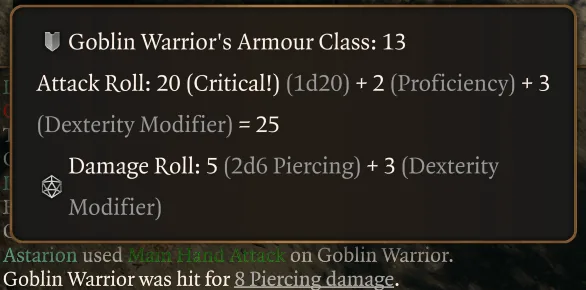
Baldur's Gate 3 Critical Hits: What Actually Doubles
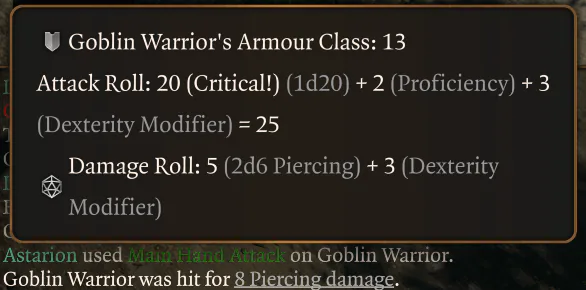
A natural 20 doubles your damage in Baldur's Gate 3 — but "doubled" hides real nuance: which half of that number actually doubles, which of the game's dozen crit-threshold sources stack together, and how "immune to critical hits" still lets a natural 20 miss outright. bg3.wiki's own combat-log breakdown settles all three.
Baldur's Gate 3 High Ground: It's Not Advantage
The standard beginner tip in this game is "take the high ground" — and it leaves it there, as if it works the same way a Prone target or an unseen attacker does. It does not. High ground is a flat, separately tracked +2 or -2 bolted onto the attack roll, and bg3.wiki's own numbers show it does things the "it's advantage" version of the rule never predicted.
Baldur's Gate 3 Karmic Dice: What It's Secretly Fixing
There is a setting on by default in every new Baldur's Gate 3 save that changes the odds of your next roll based on how badly the last one went, and the game never tells you it exists. Here is the formula bg3.wiki has worked out, the three roll types it can and cannot touch, and the two documented bugs sitting on top of it.

Baldur's Gate 3 Beginner Guide: What Nobody Tells You
The tutorial teaches you to move and attack. It does not teach you that advantage is worth more than any weapon you will find in Act 1, or that Withers will rebuild your entire character for 100 gold. Here is the actual onboarding.
Baldur's Gate 3 Reactions: Why Yours Did Not Trigger
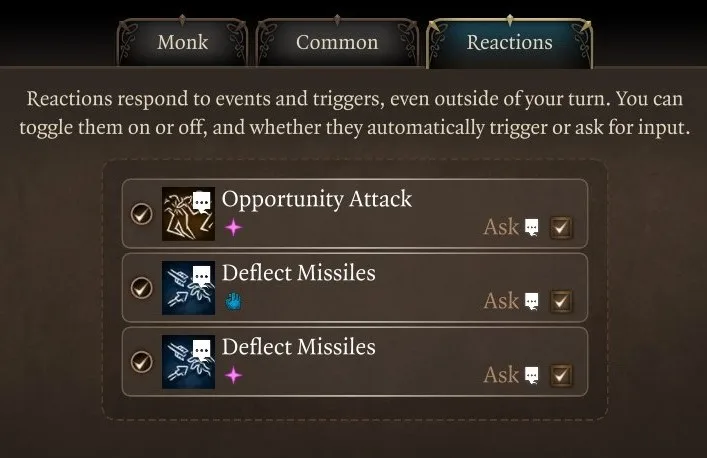
Every creature in Baldur's Gate 3 carries exactly one Reaction charge and gets it back at the start of its turn. What that charge can answer is narrower than the tooltips suggest: the game decides which reactions are eligible for an event before any of them resolve, and whole categories of damage and saving throws are invisible to the system entirely. Here is the reaction list by source and cost, the rules that gate it, and the bugs the wiki has documented on top.