Baldur's Gate 3 Weapon Actions: One Use Per Short Rest
The little icons under your attack button are not free. Unless the action says otherwise, a weapon action in Baldur's Gate 3 is capped at one use per short rest, the charge belongs to the character rather than the weapon, and it is spent even when the attack misses. Here is what each weapon type actually hands you, and which of them are worth the charge.
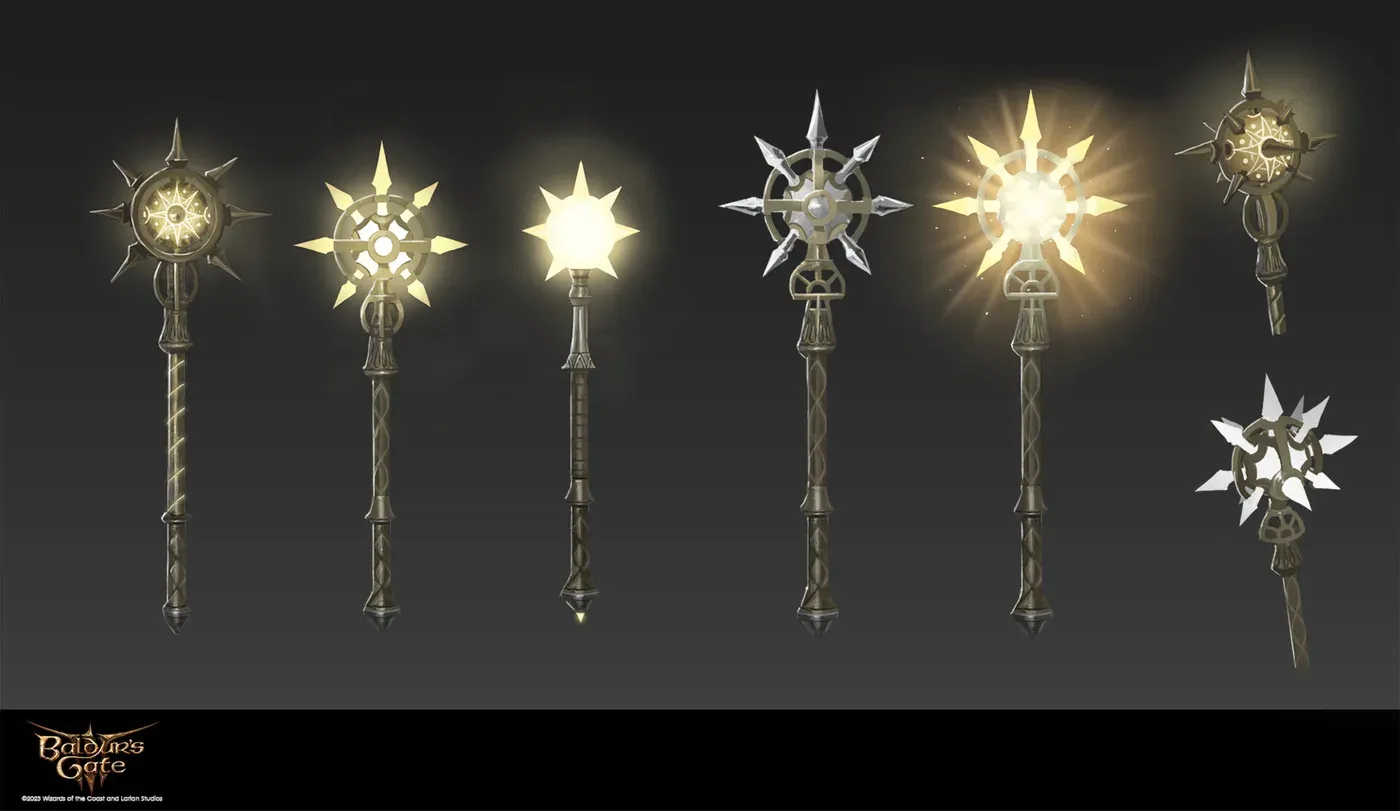
Morningstars are a 1d8 martial weapon with an unremarkable stat line. They also carry Heartstopper, a weapon action that forces a Constitution save and, on a failure, inflicts Chest Trauma for 2 turns. Chest Trauma does exactly one thing that matters: per the wiki, it subtracts one Action from the affected creature. Not a damage tick, not a to-hit penalty. An action, gone, twice.
That is a basic weapon action on a common martial weapon, sitting in the same row of small icons under the attack button as everything else, with no explanation attached. Those icons are a resource. Here is the whole system.
The charge you did not know you were spending
Four rules from the wiki's Weapon actions page govern everything below:
- Weapon actions come from the weapon type, not the item. Every longsword grants Lacerate, Pommel Strike and Rush Attack. Special weapons stack their own unique actions on top of the type's list.
- You must be proficient with the weapon type, and it must be in your main hand or both hands. Off-hand weapons grant nothing. A Rogue dual-wielding a shortsword and a dagger gets the shortsword's actions and none of the dagger's.
- Unless a specific action says otherwise, you get one use per short rest — and the limit is character-specific, not weapon-specific. Swapping to a fresh greatsword does not refund the Cleave you already spent. The flip side is that the same weapon action can be used once by each party member without anyone resting.
- The charge is consumed even if the attack misses. This is the single most expensive line in the whole system, and it is why weapon actions want to be fired when you already have advantage rather than as an opening gamble.
Because Short Rests cost nothing and you get two per Long Rest, the real budget is three uses of each weapon action per Long Rest, per character. That is not nothing. It is also not an unlimited pool.
One exception is worth naming: Tenacity, granted by greatclubs, flails, morningstars and mauls, is a reaction with unlimited uses. When you miss a melee attack it deals your Strength modifier in Bludgeoning damage anyway, minimum 1. The wiki notes it counts as weapon damage for equipment purposes, so it triggers on-hit riders — weapon coatings, the Callous Glow Ring, the Ring of Elemental Infusion. It also notes the limit: if a weapon action misses, Tenacity fires the damage but does not trigger the weapon action's effect.
How the save DC is calculated
Most weapon actions inflict a condition on a failed saving throw, and the DC is not your spell save DC. Per the wiki:
Weapon action DC = 8 + proficiency bonus + Strength or Dexterity modifier (whichever is higher) + the action's own inherent bonus, most often +2.
Run that on real characters. A level 5 Fighter with 18 Strength has a +3 proficiency bonus and a +4 modifier, so a Lacerate or Piercing Strike lands at DC 17. Push to level 12 with 20 Strength and a +4 proficiency bonus and the same action is DC 19. That is competitive with a dedicated caster's save DC, on a character who spent nothing to get it.
Two wrinkles:
- Concussive Smash uses a Hybrid DC. The game takes either your spell save DC or your weapon action DC with a +2 bonus, whichever is higher. On a Paladin or a War Cleric with a real casting stat, that is free DC the pure-martial formula would not give you.
- Some unique weapon actions always use your spell save DC instead — Faithbreaker's Absolute Power, Hellflame Cleave, Nyrulna's Zephyr Break and Argument Solver's Poison Mist all key off the caster number rather than the weapon one.
The formula has not always been this. Before Patch 5, weapon actions ran on a base DC of 10 and did not add your proficiency bonus at all, which meant the DC flatlined as you levelled.
There is one more interaction worth knowing: because most weapon actions resolve as weapon attack rolls, they work with Extra Attack — the wiki's Extra Attack page states that any attack using a weapon, unarmed or throwing attack roll can trigger and be affected by it. The exceptions are flagged on the unique-action tables: Grand Slam, Hellflame Cleave, Phalar Aluve's Shriek and Sing, both of Nyrulna's Zephyr actions and the Hellfire Engine Crossbow's Reposition Malefactor do not count as attacks for Extra Attack and eat your whole action.
Every weapon type and what it grants
This is the lookup the game never gives you. Base damage die is the one-handed figure; versatile weapons hit for more in two hands.
| Weapon type | Base damage | Weapon actions |
|---|---|---|
| Battleaxes | 1d8 Slashing | Cleave, Lacerate, Maiming Strike |
| Clubs | 1d4 Bludgeoning | Concussive Smash |
| Daggers | 1d4 Piercing | Piercing Strike |
| Flails | 1d8 Bludgeoning | Concussive Smash, Weakening Strike (plus Tenacity) |
| Glaives | 1d10 Slashing | Brace, Lacerate, Rush Attack |
| Greataxes | 1d12 Slashing | Cleave, Lacerate, Prepare |
| Greatclubs | 1d8 Bludgeoning | Concussive Smash (plus Tenacity) |
| Greatswords | 2d6 Slashing | Cleave, Lacerate, Pommel Strike |
| Halberds | 1d10 Slashing | Cleave, Lacerate, Rush Attack |
| Handaxes | 1d6 Slashing | Lacerate |
| Javelins | 1d6 Piercing | Piercing Strike |
| Light Hammers | 1d4 Bludgeoning | Concussive Smash |
| Longswords | 1d8 Slashing | Lacerate, Pommel Strike, Rush Attack |
| Maces | 1d6 Bludgeoning | Concussive Smash |
| Mauls | 2d6 Bludgeoning | Backbreaker, Concussive Smash (plus Tenacity) |
| Morningstars | 1d8 Piercing | Concussive Smash, Heartstopper (plus Tenacity) |
| Pikes | 1d10 Piercing | Brace, Piercing Strike, Rush Attack |
| Quarterstaves | 1d6 Bludgeoning | Topple |
| Rapiers | 1d8 Piercing | Flourish, Piercing Strike, Weakening Strike |
| Scimitars | 1d6 Slashing | Flourish, Lacerate |
| Shortswords | 1d6 Piercing | Flourish, Piercing Strike |
| Sickles | 1d4 Slashing | Lacerate |
| Spears | 1d6 Piercing | Rush Attack |
| Tridents | 1d6 Piercing | Disarming Strike, Piercing Strike, Rush Attack |
| War Picks | 1d8 Piercing | Maiming Strike, Piercing Strike, Weakening Strike |
| Warhammers | 1d8 Bludgeoning | Backbreaker, Concussive Smash, Weakening Strike |
Read that table as a build input rather than trivia. Three things fall out of it:
- Greatswords and greataxes are not interchangeable. The greatsword's 2d6 rolls tighter than the greataxe's 1d12 and it brings Pommel Strike as a bonus action. The greataxe swaps that for Prepare, which converts six metres of movement into extra damage on every hit that turn. Cleave and Lacerate are on both.
- Rapiers, war picks and warhammers each carry three actions — rapiers (Flourish, Piercing Strike, Weakening Strike), war picks (Maiming Strike, Piercing Strike, Weakening Strike) and warhammers (Backbreaker, Concussive Smash, Weakening Strike). The rapier is the only one of the three with the finesse property, so it is the one a Dexterity build can hold.
- Quarterstaves, spears, sickles, handaxes, clubs, maces, light hammers, daggers and javelins get exactly one action each. If your character's weapon choice is otherwise a coin flip, this is the tiebreaker.
The ranged list is four actions long
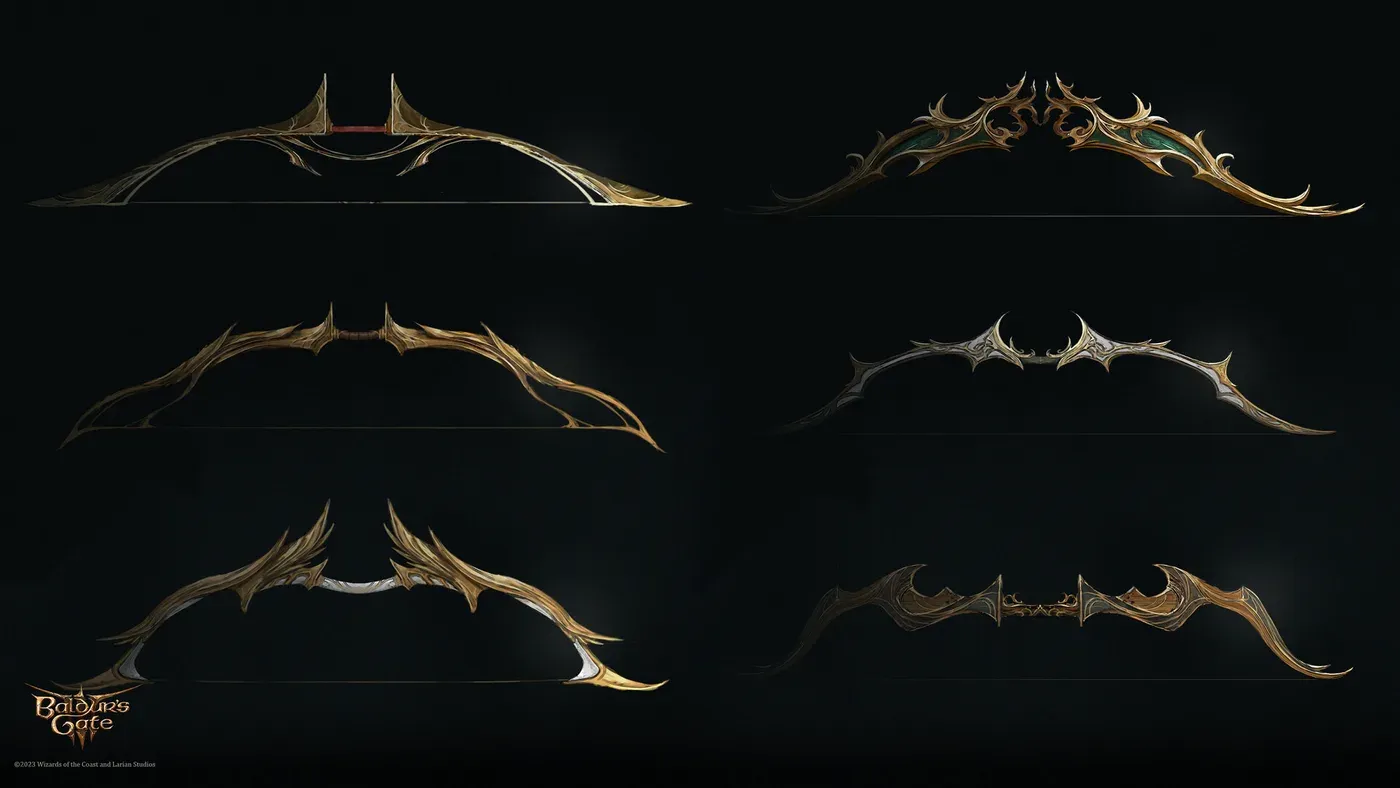
Ranged weapons are far poorer here, and the split matters if you are choosing between a longbow and a heavy crossbow for an archer.
| Weapon type | Base damage | Weapon actions |
|---|---|---|
| Shortbows | 1d6 Piercing | Hamstring Shot |
| Longbows | 1d8 Piercing | Hamstring Shot, Brace (Ranged) |
| Light Crossbows | 1d8 Piercing | Piercing Shot |
| Heavy Crossbows | 1d10 Piercing | Piercing Shot, Brace (Ranged) |
| Hand Crossbows | 1d6 Piercing | Piercing Shot, Mobile Shot |
Hand crossbows are the interesting entry. Mobile Shot is a bonus action ranged attack you can take after using Dash or Disengage in the same turn, at a 15-metre range, dealing 1d6 + your Dexterity modifier. That is a hit-and-run archer's whole gameplan in one button, and the wiki logs one bug against it: it is not usable after dashing more than once in a round.
What each weapon action costs and does
Every basic weapon action, with its resource cost, the save it forces, and what it inflicts. "Weapon DC" is the formula above; "+2" means the action carries the common inherent bonus on top.
| Weapon action | Cost | Save | Damage | Inflicts |
|---|---|---|---|---|
| Backbreaker | Action | STR, weapon DC | 1d4 + finesse modifier | Prone, 2 turns |
| Brace (Melee) | 6 m movement | — | — | Reroll melee damage, take the higher, for the turn |
| Brace (Ranged) | 6 m movement | — | — | Reroll ranged damage, take the higher, for the turn |
| Cleave | Action | — | Half weapon damage | Hits up to 3 targets in a 2 m cone |
| Concussive Smash | Action | CON, Hybrid DC | Weapon damage | Dazed, 2 turns |
| Disarming Strike | Action | STR, weapon DC + 2 | 1d4 + finesse modifier | Target drops its weapon |
| Flourish | Bonus action | DEX, weapon DC + 2 | 1d4 Bludgeoning, non-lethal | Off Balance, 2 turns |
| Hamstring Shot | Action | CON, weapon DC + 2 | Weapon damage | Hamstrung, 2 turns |
| Heartstopper | Action | CON, weapon DC + 2 | 1d4 + finesse modifier | Chest Trauma, 2 turns |
| Lacerate | Action | CON, weapon DC + 2 | Weapon damage | Bleeding, 2 turns |
| Maiming Strike | Action | CON, weapon DC + 2 | 1d4 + finesse modifier | Maimed, 2 turns |
| Mobile Shot | Bonus action | — | Weapon damage | A ranged attack after Dash or Disengage |
| Piercing Shot | Action | CON, weapon DC + 2 | Weapon damage | Gaping Wounds, 2 turns |
| Piercing Strike | Action | CON, weapon DC + 2 | Weapon damage | Gaping Wounds, 2 turns |
| Pommel Strike | Bonus action | CON, weapon DC + 2 | 1d4 Bludgeoning, non-lethal | Dazed, 2 turns |
| Prepare | 6 m movement | — | Strength modifier, physical | Extra damage on every melee hit that turn |
| Rush Attack | Action + movement | STR, weapon DC | 1d4 + finesse modifier | Charge up to 9 m, Off Balance, 2 turns |
| Tenacity | Reaction, unlimited | — | Strength modifier Bludgeoning, minimum 1 | Damage on a miss |
| Topple | Action | DEX, weapon DC + 2 | 1d4 Bludgeoning, non-lethal | Prone, 1 turn |
| Weakening Strike | Action | STR, weapon DC + 2 | 1d4 + finesse modifier | Weak Grip, 2 turns |
The three that cost movement instead of an action — Brace (Melee), Brace (Ranged) and Prepare — are the ones to notice first. They stack with a full Attack action in the same turn, which means their real cost is six metres of positioning, not a turn of damage.
The conditions, and what removes them
Half of these actions are worth using and half are not, and the split is decided here rather than by the damage column. A condition that an enemy's ally can scrub off with the Help action is a different purchase from one that has to be healed away.
| Condition | What it does | Removed by |
|---|---|---|
| Bleeding | 2 Slashing at the start of each turn, Disadvantage on Constitution saves | Healing |
| Chest Trauma | One fewer Action, Disadvantage on Constitution saves | Healing |
| Dazed | Cannot take Reactions, loses the Dexterity bonus to Armour Class, Disadvantage on Wisdom saves | An ally using Help |
| Gaping Wounds | Successful attacks against the creature deal an extra 2 Piercing | Healing |
| Hamstrung | Movement speed reduced by 50% | Healing |
| Maimed | Movement speed reduced to 0, Disadvantage on Dexterity saves | Healing |
| Off Balance | Attacks against the creature have Advantage, Disadvantage on Strength and Dexterity checks | Taking damage, or an ally using Help |
| Prone | Cannot move or take actions, bonus actions or reactions; attacks from within 3 m have Advantage | Standing up, which costs half the creature's movement |
| Weak Grip | Disadvantage on attack rolls and Strength saving throws | An ally using Help |
Three readings that change how you spend charges:
- Off Balance is removed by taking damage. Rush Attack and Flourish hand your party advantage against the target and then your own next hit deletes it. Apply it with the character who is about to stop attacking, and let the rest of the party cash it in.
- Dazed, Off Balance and Weak Grip are all scrubbed by the Help action. Against a lone boss they stick. Against a room of six goblins, one of them wastes an action undoing your action, which is a fine trade for you and a bad one if you spent your once-per-rest charge on it.
- Prone is the heavy one. Per the wiki, falling Prone immediately ends Concentration, a creature that falls Prone on its own turn has that turn end instantly, and standing costs half its available movement. Topple and Backbreaker are concentration-breakers dressed up as knockdowns.
Bleeding has a coverage gap worth pricing in: the wiki lists Constructs, Elementals, Plants, Oozes and most Undead as immune to it, which means Lacerate's condition does nothing against constructs and most undead, however well the attack lands. Chest Trauma has the same problem in a narrower band — Heartstopper's tooltip warns that Undead and constructs cannot get Chest Trauma at all.
Gaping Wounds has an Honour Mode quirk documented on its page. Normally its extra 2 Piercing is a passive on the enemy, which is why it does not set off effects that need you to deal piercing damage. In Honour Mode the effect is rewritten as a flat +2 to damage rolls that adopts the attack's own damage type, and the wiki notes the rewrite lacks a check for attack rolls, so it adds damage to any source of damage.
The five worth planning a build around
Heartstopper takes an action off the target
Morningstars are the only weapon type that grants it. The attack deals 1d4 plus your finesse modifier in Piercing and forces a Constitution save at weapon DC + 2; on a failure the target has Chest Trauma for 2 turns. The wiki is explicit about the scope: Chest Trauma subtracts one Action and does not touch bonus actions or reactions. Against a boss that gets one action a turn, that is a turn removed for the price of a weapon action charge and a 1d4 hit.
The catch is the weapon. A morningstar is 1d8 Piercing with no finesse property, so it wants a Strength character with martial weapon proficiency, and its second action is Concussive Smash rather than Cleave or Lacerate. Against a mace — 1d6, simple, Concussive Smash only — it is the same hand for a bigger die and a save-or-lose attached.
Cleave does not halve your flat damage
Cleave hits up to three targets in a 2-metre cone for half weapon damage — and the note on its page is the whole reason to build around it: flat damage bonuses are not reduced. Great Weapon Master's +10 and a Barbarian's Rage bonus are applied in full to each target, and the wiki lists Divine Smite in the same breath.
Do the arithmetic on a level 12 greatsword Great Weapon Master build. Half of 2d6 + 3 is a modest number; the +10 is not halved and it lands three times. Cleave is the closest thing a martial has to a Fireball, and it is on battleaxes, greataxes, greatswords and halberds.
Brace is Savage Attacker for six metres of movement
Brace (Melee) costs 6 metres of movement, not an action, and for the rest of the turn you roll melee damage twice and take the higher result. The wiki states plainly that this is equivalent to the Savage Attacker feat and stacks with it — take both and every damage die is rolled three times, highest kept.
The wiki's own tables put numbers on it: Brace alone adds an average of 1.94 damage per 2d6 greatsword swing and 1.99 per 1d12. That is on every attack that turn, for six metres of walking. Glaives and pikes get the melee version; longbows and heavy crossbows get the ranged one. It also breaks Hiding and Invisible, so it is not a free opener for a Gloomstalker.
Topple breaks concentration and costs nothing to carry
Quarterstaves grant exactly one weapon action, Topple, and it is a Dexterity save at weapon DC + 2 against 1 turn of Prone. One turn sounds weak until you read the Prone rules: Concentration ends immediately, and a creature knocked Prone during its own turn has that turn end on the spot.
Quarterstaves are a simple weapon, which is the point — Wizards, Sorcerers, Warlocks, Druids and Monks are all proficient, and Markoheshkir, the game's marquee caster weapon, is a quarterstaff. Be honest about the DC, though. The formula keys off Strength or Dexterity, not your spellcasting ability, so a Wizard with 14 Dexterity at level 5 is forcing DC 15 while a Wizard with 10 Dexterity is forcing DC 13. It is a Monk and Bladesinger tool much more than it is an artillery Wizard's.
Backbreaker is worse than Trip Attack on a miss
Warhammers and mauls grant Backbreaker: 1d4 plus your finesse modifier, a Strength save at the base weapon DC with no +2 bonus, and 2 turns of Prone on a failure. The wiki flags that it can only target creatures of Large size or smaller, and calls the missing tooltip warning a bug.
If you are a Battle Master, compare it to Trip Attack before you spend anything. Trip Attack costs a superiority die instead of a weapon action charge, uses the same base weapon DC, and — critically — does not spend the die on a miss, where the general weapon action rule burns your charge whether you connect or not. Backbreaker's compensation is duration: 2 turns of Prone against Trip Attack's 1. Fire the maneuver first and keep Backbreaker as the follow-up.
Unique weapon actions worth the weapon slot
Special weapons stack their own actions on top of the type list, and a handful are strong enough to decide which weapon a character carries.
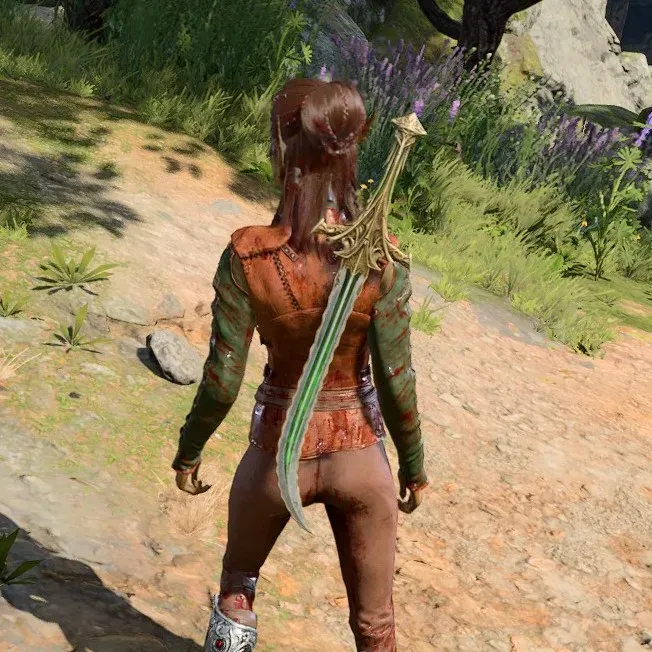
- Belm — a very rare +2 scimitar in an opulent chest in the basement of Elerrathin's Home, behind a bookcase locked at Sleight of Hand DC 18. Its Perfectly Balanced Strike is a bonus action attack with your main-hand weapon that recharges every turn, not once per short rest, and it also carries Whirlwind Attack.
- Phalar Aluve — a rare +1 longsword embedded in a rock in the Underdark, freed by a DC 15 Strength or DC 15 Religion check, among other routes. Shriek creates a 6-metre aura for 5 turns in which enemies take an extra 1d4 Thunder when attacked and suffer a −1d4 penalty to all saving throws; Sing gives allies +1d4 to attack rolls and saving throws instead. Both cost your full action and neither benefits from Extra Attack. It is also, with Larethian's Wrath, one of only two longswords in the game with the Finesse property.
- Orphic Hammer — its Unshackling Strike frees a creature from Restrained, Paralysed and Stunned, with unlimited uses. It is a repeatable answer to the crowd control that ends Honour Mode runs, and it costs no spell slot.
- Soulbreaker Greatsword and the Silver Sword of the Astral Plane — both grant Soulbreaker, weapon damage plus your proficiency bonus in Psychic, and 2 turns of Stunned on a failed Constitution save at weapon DC + 2 — hard control on a martial's turn with no spell slot spent.
- Nyrulna — the trident's Zephyr Break is 6d6 Thunder in a 12-metre line with Off Balance and a 5-metre push, resolved against your spell save DC, half damage on a save. It costs your whole action and does not stack with Extra Attack, which is exactly the trade you want on a Barbarian with nothing better to do with turn one.
Quick Action Checklist
- One use per short rest, per character — swapping weapons does not refund it, and the charge is spent even when the attack misses.
- You need proficiency, and the weapon must be in your main hand or both hands. Off-hand weapons grant nothing.
- DC = 8 + proficiency bonus + the higher of your Strength or Dexterity modifier + the action's own bonus (usually +2) — DC 17 on a level 5 Fighter with 18 Strength.
- Concussive Smash uses a Hybrid DC and can ride your spell save DC instead, which is free value on a Paladin or Cleric.
- Heartstopper has the biggest effect of anything in the table above — Chest Trauma removes one Action for 2 turns, and only morningstars grant it.
- Cleave's flat bonuses are not halved. Great Weapon Master's +10 lands in full on all three targets.
- Brace and Prepare cost six metres of movement, not an action, so they stack with a full Attack action in the same turn.
- Brace is Savage Attacker and stacks with it — roughly +1.94 average damage per 2d6 damage roll, per attack, for the turn.
- Topple, Backbreaker and anything that inflicts Prone end Concentration instantly.
- Dazed, Off Balance and Weak Grip are cleared by an enemy's Help action; Bleeding, Maimed, Hamstrung, Chest Trauma and Gaping Wounds need healing.
- Off Balance also breaks on damage — apply it with the character who attacks last.
- Constructs, Elementals, Plants, Oozes and most Undead are immune to Bleeding, and Undead and constructs cannot get Chest Trauma at all.
- Tenacity is the one unlimited entry — a reaction on greatclubs, flails, morningstars and mauls that deals your Strength modifier on a miss and still triggers coatings and on-hit rings.
Frequently Asked Questions
How many times can you use a weapon action in Baldur's Gate 3?
How is the weapon action save DC calculated in BG3?
Do you need proficiency to use weapon actions in Baldur's Gate 3?
What is the best weapon action in Baldur's Gate 3?
Does Cleave halve Great Weapon Master damage in BG3?
Which weapon actions do not use an action in Baldur's Gate 3?
Do weapon actions work with Extra Attack in BG3?
Which BG3 weapon type has the most weapon actions?
Keep Reading
- BG3 Wiki — weapon action rules, the DC formula, and the full basic and unique tables
- BG3 Wiki — Cleave cone, half damage, and the unreduced flat bonuses
- BG3 Wiki — Heartstopper, Chest Trauma, and the Undead/construct immunity
- BG3 Wiki — Chest Trauma removes one Action
- BG3 Wiki — Brace, its Savage Attacker equivalence, and the average-damage tables
- BG3 Wiki — Backbreaker save DC, Prone duration, and the size restriction
- BG3 Wiki — Trip Attack does not spend a superiority die on a miss
- BG3 Wiki — Prone ends Concentration and can end a creature's turn
- BG3 Wiki — Gaping Wounds and its Honour Mode rewrite
- BG3 Wiki — which attacks trigger and benefit from Extra Attack
- BG3 Wiki — Tenacity as an unlimited reaction and its on-hit rider interactions
- BG3 Wiki — Belm, Perfectly Balanced Strike, and its location
- BG3 Wiki — Phalar Aluve, Shriek and Sing, and how to free the sword
Related Guides
Baldur's Gate 3 Initiative and Surprise: How to Go First
Tabletop D&D rolls initiative on a d20. Baldur's Gate 3 rolls it on a d4, which turns a +5 from Alert from a nudge into something close to a guarantee. Here is how turn order is built, what Surprised takes away, and the line-of-sight rule that decides whether your ambush gets a surprise round at all.
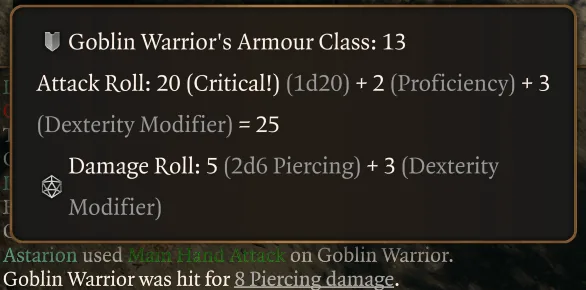
Baldur's Gate 3 Critical Hits: What Actually Doubles
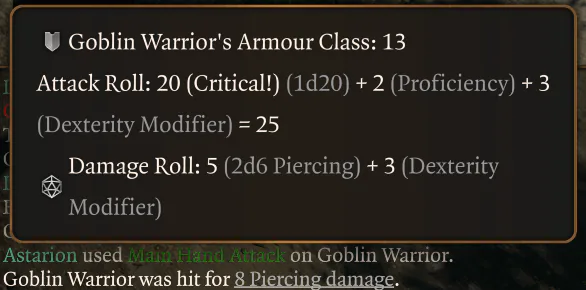
A natural 20 doubles your damage in Baldur's Gate 3 — but "doubled" hides real nuance: which half of that number actually doubles, which of the game's dozen crit-threshold sources stack together, and how "immune to critical hits" still lets a natural 20 miss outright. bg3.wiki's own combat-log breakdown settles all three.
Baldur's Gate 3 High Ground: It's Not Advantage
The standard beginner tip in this game is "take the high ground" — and it leaves it there, as if it works the same way a Prone target or an unseen attacker does. It does not. High ground is a flat, separately tracked +2 or -2 bolted onto the attack roll, and bg3.wiki's own numbers show it does things the "it's advantage" version of the rule never predicted.
Baldur's Gate 3 Karmic Dice: What It's Secretly Fixing
There is a setting on by default in every new Baldur's Gate 3 save that changes the odds of your next roll based on how badly the last one went, and the game never tells you it exists. Here is the formula bg3.wiki has worked out, the three roll types it can and cannot touch, and the two documented bugs sitting on top of it.
Baldur's Gate 3 Beginner Guide: What Nobody Tells You
The tutorial teaches you to move and attack. It does not teach you that advantage is worth more than any weapon you will find in Act 1, or that Withers will rebuild your entire character for 100 gold. Here is the actual onboarding.
Baldur's Gate 3 Reactions: Why Yours Did Not Trigger
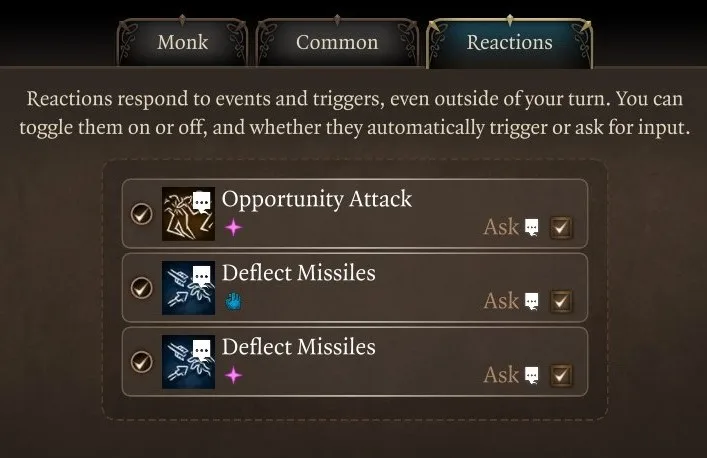
Every creature in Baldur's Gate 3 carries exactly one Reaction charge and gets it back at the start of its turn. What that charge can answer is narrower than the tooltips suggest: the game decides which reactions are eligible for an event before any of them resolve, and whole categories of damage and saving throws are invisible to the system entirely. Here is the reaction list by source and cost, the rules that gate it, and the bugs the wiki has documented on top.