Cookie Run: Braverse Tournament & Competitive Guide
Tournament Braverse isn't about owning the rarest cards - it's about deck choice, knowing the matchup triangle cold, and not throwing games to nerves. Here's how to actually prep for a competitive event.

The gap between a casual Braverse player and a competitive one is almost never the card pool. It's preparation. The player who shows up having chosen a deck on purpose, knowing exactly how it beats and loses to the field, and having practiced the lines until the mulligan decisions are automatic, will beat a flashier collection nine times out of ten. Tournament Braverse is a discipline, not a wallet contest.
This guide is about that discipline: how to pick a deck for an event, how to think about the archetypes you'll face, how to find and read the meta, how to approach tech and sideboarding, how to practice, and the in-match habits that separate a top-table finish from a 2-3 drop. It builds directly on our deck archetypes guide and assumes you already know the rules from how to play Braverse - this is the layer on top. One honest caveat threaded throughout: Braverse's competitive scene is young, the English-language event circuit is still forming, and the best public results data is community-tracked and largely regional, so I'll flag where something is a durable principle versus a moving target you should verify against current standings.
What competitive Braverse actually rewards
Strip away the noise and tournament Braverse rewards three things, in this order:
- Consistency over ceiling. A deck that executes its plan 80% of games beats one with a higher top end that fumbles a third of the time. Across a long event, variance is the enemy, and consistency is how you fight it - which is why the slow one-Support-per-turn curve favors tight, focused lists.
- Matchup knowledge. Braverse archetypes form a rough rock-paper-scissors. Knowing which side of that triangle you're on, and adjusting accordingly, is often worth more than any single card.
- Clean execution under pressure. Sequencing, mulligan decisions, and not throwing a winning board to nerves. The most common way good players lose is to themselves.
The competitive truth: you don't win a tournament by having the best deck. You win by making the fewest mistakes with a deck you understand completely.
None of those require chase rares - they require reps and a plan.
How to select a tournament deck
Picking your deck is the single most important pre-event decision. Work through it in this order:
- Pick the archetype that fits how you think, not the one that's "best." You'll play your best deck better than you'll play the metagame's best deck. If you grind out long games well, lean Control (Yellow). If you read opponents and dismantle their plans, Disruption (Purple). The archetypes guide breaks down each one's skill demands.
- Check it against the expected field. Once you have a candidate, ask what it beats and what it loses to. If the room is full of the thing your deck folds to, that's a problem you fix now, not at the table.
- Default to consistency when unsure. A clean Aggro (Red) or grindy Control (Yellow) list with a coherent plan is almost always a safer event choice than a fragile combo deck that needs a perfect hand.
- Lock the list early and stop tinkering. Reps on a fixed 60 beat a "better" list you've never piloted. Late changes are how you forget your own card counts mid-match.
A note on top-end: aggressive decks still want a lean finisher to close stalled games, and Pitaya Dragon Cookie (BS5-013, a Level 3 Red Dragon Cookie with 5 HP from Operation Timeguard) is the confirmed example - its attack deals 3 and can ping extra damage when it's low. The discipline is running few of these; a Red deck that crowds its curve with five-cost bombs has stopped being Aggro and started losing to faster clocks.
The archetypes you'll face
You should be able to identify your opponent's deck within the first two turns, because identification is what lets you adjust. The five-color archetype map is the fastest read:
| Archetype | Home color | Win route | Beats | Loses to |
|---|---|---|---|---|
| Aggro | Red | Fast damage before you stabilize | Ramp, Combo | Control |
| Control | Yellow | Grind and out-value the long game | Aggro, Ramp | Combo |
| Ramp | Green | Out-resource the midgame | Control's midrange | Aggro |
| Combo | Blue | One explosive set-up turn | Control | Aggro, Disruption |
| Disruption | Purple | Dismantle the opponent's plan | Combo, Ramp | Fast, resilient Aggro |
That beats/loses column is general TCG theory applied to Braverse's archetypes, not a claim about specific tournament win rates - but it's a reliable mental model. The practical move: the instant you read your opponent's archetype, decide which side of the triangle you're on. If you're Aggro into Control, you race harder and refuse to trade into their value. If you're Control into Aggro, you prioritize survival and clean trades and stop caring about "value." Reading the matchup correctly is frequently the whole game.

Archetypes also blend. Arena Cookies, for instance, reward building around the Arena of Glory keyword - Jalapeño Cookie (BS7-018, Level 3 Red Arena, 5 HP) swings hard and adds damage to an opposing Cookie when another Arena Cookie is in your Battle Area. Don't assume a Red deck is "just Aggro"; read the actual cards.
Reading the meta (and where to find it)
Here's the part that needs the loudest caveat. The best public competitive data for Braverse is community-tracked and largely from Southeast Asian events, not official global standings, and the English-language scene is young. So treat any meta read as a trend, not a verdict.
With that flagged: community reporting from 2025 SEA tournaments has frequently shown Control (Yellow) as one of the strongest and most-played archetypes, with some regional finals skewing heavily Yellow, while other regions (such as Indonesia) showed a more diverse field with Purple well-represented. The meta shifts with each new set, so before you commit a list, check current competitive standings and any North American results rather than trusting last season's snapshot.
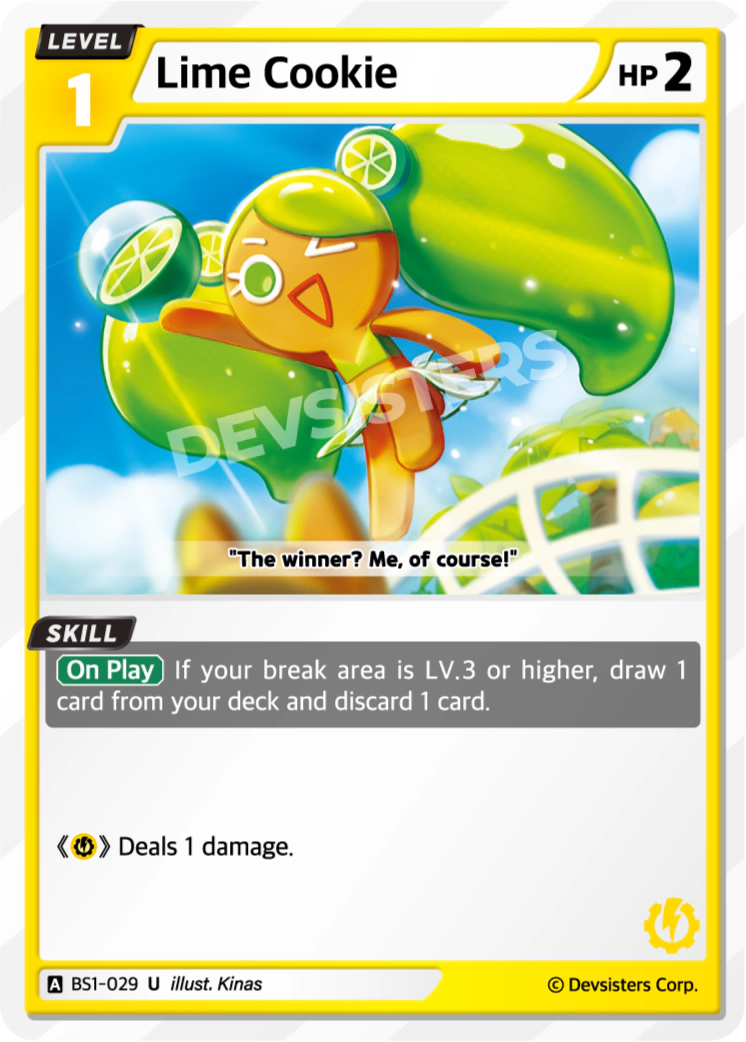
What a grindy, value-oriented metagame means for your prep: it rewards clean play and punishes greed. Cards that pay you off for the long game - like Lime Cookie (BS1-029, Level 1 Yellow), which filters your draws once your Break Area is Level 3 or higher - get better when games go long. To actually read the meta:
- Check the official play hub for rankings and event structure first.
- Follow community tournament reports for your region, and weight recent results over old ones - one new set can reshape the field.
- Talk to your local scene. What wins your local store is the metagame you're actually preparing for, which may not match a global snapshot at all.
Tech and sideboard thinking
Whether Braverse tournaments use a formal sideboard between games varies by event and is worth confirming with your organizer - the rules are still settling. But the thinking applies either way, whether you're swapping cards between games or just deciding what flex slots to maindeck:
- Tech against the field, not against a card. If your region is heavy Control, the question is "how do I not lose to the grind?" - reach, evasive threats, resilient pressure - not "what answers this one Cookie?"
- Don't dilute your plan. Every tech slot is a slot not doing your main thing. Two or three pointed flex cards is plenty; ten makes you a worse version of every deck.
- Respect FLIP both ways. Up to 16 FLIP cards can hide in any 60-card deck, so a healthy-looking Cookie might blow up your attacker. Tech that plays around getting blown out earns its keep.
- Know what your bad matchup needs. If Aggro is your nightmare, the fix is usually cheaper interaction and early stabilization, not a bigger top end. Identify the reason you lose, then tech the reason.
Sideboard rule of thumb: change the smallest number of cards that meaningfully shifts a matchup. Over-sideboarding turns a focused deck into mush.
A practice plan that works
Reps are the whole game, but unstructured reps waste time. A plan that actually builds skill:
- Goldfish your deck. Play solo games with no opponent, just executing your plan, until your mulligans and turn-one sequencing are automatic. You should know your ideal curve cold.
- Practice your worst matchup on purpose. Everyone drills the matchups they enjoy. Top players grind the ones they hate, because that's where events are decided.
- Play tight, timed games. Tournaments run on a clock, and slow play can cost you. Practice closing within the round time you'll actually face.
- Keep a notes file. After each practice set, write down what beat you and why. Patterns emerge fast - "I keep mulliganing too aggressively into Control" is a fixable leak you'd never notice otherwise.
- Test against the expected field, not random decks. If the room will be Yellow-heavy, most of your reps should be against Yellow.
Two focused hours against your bad matchup beat ten hours of casual games against whatever's around. Practice the thing you'll actually be tested on.
In-match discipline
Once you sit down, the deck is set - now it's about not beating yourself:
- Identify the matchup first, then pick a plan. Don't autopilot. The same hand is played differently into Aggro than into Control.
- Sequence before you tap. Braverse's rest-to-pay economy is unforgiving of misplays - rest your Support in the wrong order and you can lock yourself out of a Trap or skill you needed. Plan the whole turn before you commit the first card.
- Hold reactive resources. Don't reflexively dump your whole Support every turn; leaving one or two cards active lets you answer with a Trap or instant-speed Item.
- Track the Break Area like a scoreboard. Both win conditions live there - the combined Level-10 threshold and your opponent's ability to keep fielding Cookies. Always know how close each player is.
- Read before you swing into a healthy Cookie. That HP stack might hide a FLIP that blows up your attacker. Sometimes the disciplined attack is the one you don't make.
Common competitive mistakes
The losses that sting most are the avoidable ones. The recurring offenders:
- Audibling your decklist the night before. Reps on a known 60 beat a "better" deck you've never piloted. Lock it early.
- Playing the deck instead of the matchup. Forcing your aggro plan into a Control matchup you should race differently, or trading into value you should duck.
- Over-trading as Control against Aggro. The classic Control loss is panicking into bad early trades; the classic win is calmly reaching a board they can't beat. Patience is the skill.
- Greedy ramp into a fast clock. As Ramp, your setup turns are your vulnerable turns - greed against Aggro gets you killed before the engine matters.
- Misfiring the combo. As Combo, a mistimed "go off" leaves you with nothing. Know your deck cold and pick the moment.
- Slow play and clock loss. A drawn game is often as bad as a loss in standings. Practice closing inside the round timer.
For a broader list aimed at newer players, our beginner mistakes guide covers the fundamentals these build on.
The day of the event
A short pre-flight so the logistics don't cost you a game:
- Bring a legal, sleeved 60. Confirm the list one last time - exactly 60 cards, up to four copies of any card number, up to 16 FLIP cards, at least one Cookie. The construction caps can move via errata, so check the current rulebook before a sanctioned event.
- Pack HP and Break Area trackers. Dice or counters as a backup, plus anything your event allows for notes.
- Eat and hydrate. Mistakes spike when you're tired and hungry between rounds - this is genuinely an edge.
- Confirm the event's rules and any sideboard structure with the organizer up front, since Braverse's competitive rules are still settling region to region.
- Stay even-keeled. You'll lose a game you should have won and win one you should have lost; the players who finish well treat each round as its own match.
When you're ready to fine-tune the list, deck-building basics covers ratios and curve, and the archetypes guide is the strategic map underneath it all.
Quick Action Checklist
- Pick the archetype you pilot best, then check it against the expected field - not the "best deck" in a vacuum.
- Lock your 60 early and stop tinkering; reps on a fixed list beat a better list you've never played.
- Learn the matchup triangle cold so you can identify and adjust within two turns.
- Read the current meta from recent, regional sources - treat the community-tracked, SEA-skewed data as a trend, not a verdict.
- Tech the smallest number of cards that meaningfully shifts your worst matchup; don't dilute your plan.
- Practice your worst matchup on purpose, timed, against the field you'll actually face.
- In-match: identify the matchup, sequence before you tap, hold reactive resources, watch the Break Area, respect FLIP.
- On the day: legal sleeved 60, HP/Break trackers, confirm event rules with the organizer, stay even-keeled.
Frequently Asked Questions
How do I prepare for a Cookie Run: Braverse tournament?
What is the best deck for competitive Braverse?
How does the Braverse matchup triangle work?
Does Cookie Run: Braverse use a sideboard?
What are the most common competitive Braverse mistakes?
How important are rare cards for competitive Braverse?
Keep Reading
Related Guides

The Cookie Run: Braverse Banned & Restricted List, Explained
Sixteen cards in Cookie Run: Braverse are not legal as a playset in sanctioned English-language events: five are banned outright and eleven are capped at a single copy. The official card database does not flag a single one of them. Here is the whole list, straight from the policy notice.

Cookie Run: Braverse Worlds 26-27: New Date and Venue
On September 1, Devsisters told players the second CookieRun: Braverse World Championship would run June 19-20, 2027, in Bangkok. Two weeks later a second notice went up - still live, with no reference to the first, and now carrying a September 21 timestamp on the official feed - putting the same event on June 5-6, 2027, at a named venue for the first time. Both notices are still up as this is published.
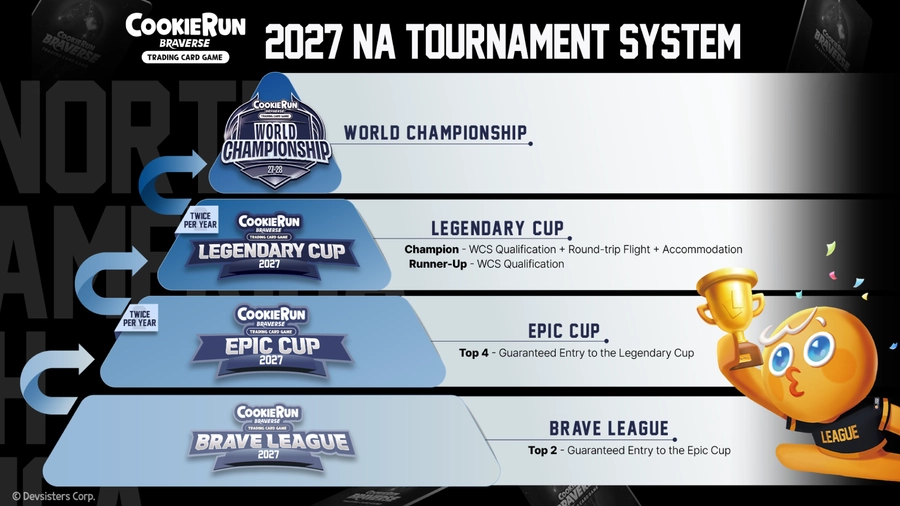
Cookie Run: Braverse 2027 Tournament System Explained
Three days apart, Devsisters published two notices that redraw CookieRun: Braverse's entire North America tournament ladder for 2027 - Brave League, Regionals and the NA Champion Cup are being replaced by Brave League, Epic Cup and Legendary Cup - and placed the World Championship 26-27 in Bangkok, Thailand, in June 2027, a date Devsisters has since restated as June 5-6 at QSNCC. Here is the new ladder, the full 2027 calendar Devsisters published alongside it, and the one thing the graphics make clear that the text alone does not: Bangkok is not being qualified through this new system at all.

Cookie Run: Braverse Organized Play, From Store to Worlds
Devsisters announced a third North America Regional season on August 27, and it sits on a four-rung competitive ladder that almost nothing in the card database will tell you about. Here is the whole structure - who qualifies for what, how Brave Points and Cookie Coins are actually scored, the dates still ahead this year, and the Worlds date the published Road Map gets wrong.

How to Play Cookie Run: Braverse - A Complete Beginner Guide
Cookie Run: Braverse is the rare TCG you can teach in a single match. This guide covers everything a first-time player needs: card types, setup, turn structure, how you pay for cards, the FLIP mechanic, and how to win.

Cookie Run: Braverse Meta Tier List — Best Decks & Archetypes Ranked
Which Cookie Run: Braverse decks are actually carrying right now? Here's a meta tier list of the strongest archetypes - the real cards that anchor each one, why they rank where they do, and what's overrated.