Cookie Run: Braverse Deck-Building Basics: How to Build Your First 60
Braverse deck-building has only four hard rules - the rest is feel. Here's how to turn the 60-card law into an actual deck, set your Cookie and Level counts, and upgrade a Starter Deck without wrecking it.

Here's the good news about building a Cookie Run: Braverse deck: there are only four hard rules, and you already own a legal, tuned deck if you've bought a Starter. Everything else - your ratios, your curve, your tech choices - is judgment you build up by playing. This guide gives you the rules first, then the judgment, then a concrete way to upgrade a Starter Deck without turning it into a 60-card pile of your favorite cards that loses every game.
If you're brand new, read how to play Braverse and the five colors explained first. Deck-building decisions only make sense once you know what the cards are trying to do.
The only four rules you must follow
A legal Braverse deck obeys exactly these constraints:
| Rule | The number |
|---|---|
| Deck size | Exactly 60 cards - not 59, not 61. |
| Minimum Cookies | At least 1 Cookie card (you'll want far more). |
| Copy limit | Up to 4 copies of any single card number. |
| FLIP cap | Up to 16 FLIP cards in the 60. |
That's it. Braverse is a young game and competitive caps can be adjusted by errata, so confirm the FLIP cap and copy limit against the current official rulebook before a sanctioned event. Everything below this line is strategy, not law - so when you see a ratio recommendation, read it as a starting point, not a rule you'll be penalized for breaking.
Start from a Starter Deck, not a blank page
The single best deck-building advice for a new player is counterintuitive: don't build from scratch yet. A Starter Deck is a complete, internally consistent 60-card list that someone tuned to teach the game and actually win games. Brewing a deck from a fresh box of singles before you understand the format is how you end up with a beautiful, unplayable mess.
Instead:
- Play your Starter Deck 5-10 games, as-is.
- Note which cards consistently feel dead in your hand.
- Note which moments you keep losing (too slow? no answers? run out of Cookies?).
- Then make small, targeted swaps to fix those specific problems.
This turns deck-building from guesswork into debugging. You're not designing in a vacuum - you're patching a known-good list.
How many Cookies should you run?
Cookies are your win condition and your defense. Run too few and you'll lose to the "no Cookie in hand to deploy" loss; run too many and you'll flood on bodies with no support to push damage or protect them.
As a starting heuristic for a beginner deck, aim for somewhere around half your deck in Cookies - roughly the high-20s to low-30s out of 60 - then adjust. Aggressive Red decks lean toward more, cheaper Cookies; controlling Yellow or comboing Blue decks can run slightly fewer because their non-Cookie cards do more heavy lifting. These are feel numbers, not rules: let your games tell you whether you're flooding or starving.
Rule of thumb: If you regularly have no Cookie to play, add Cookies. If your hand is all Cookies and no answers, cut a few for support cards.
Building a healthy Level curve
Every Cookie has a Level (1, 2, or 3), and Level does double duty: it roughly tracks how strong and expensive a Cookie is, and it's the currency of the main win condition (your opponent loses when their Break Area hits a combined Level of 10).

A good deck has a curve, just like a mana curve in other games:
- Level 1 Cookies are your early plays and cheap trades. You need enough to do something on your first few turns.
- Level 2 Cookies are your midgame backbone.
- Level 3 Cookies are your finishers and biggest threats - powerful, but you can't fill a deck with them or you'll do nothing for the first half of the game.
Skew the curve toward your color's plan: Red wants a low curve to attack early; Yellow and Green can afford more top-end because they intend to reach the late game. There's a strategic wrinkle worth knowing: a high-Level Cookie that falls hands your opponent a big chunk toward their 10-Level win, so trading your Level 1 into their Level 3 is often great math. Don't overload on expensive Cookies just because they're strong.
How many FLIP cards?
You can run up to 16 FLIP cards, and FLIP is one of the most distinctive levers in Braverse deck-building. Remember how FLIP works: these cards live shuffled in your deck, end up in your Cookies' HP stacks, and trigger when damage flips them. (Full explanation in how to play.)
More FLIP cards means more frequent surprise effects and scarier combat for your opponent - but FLIP cards still have to pull their weight as cards, and stacking the maximum 16 isn't automatically correct. A focused aggro deck might run fewer, leaning on raw tempo; a defensive deck might push the count up to punish attackers. Start near what your Starter Deck runs and adjust from there.
Items, Traps, and Stages: the support package
The cards that aren't Cookies are your toolbox:
- Items - your proactive effects: buffs, healing, removal, and tempo plays you fire on your own turn.
- Traps - your reactive defense: set them ahead of time to punish an attack. A couple of Traps make opponents play around damage they can't see.
- Stages - your board-wide tilt: one active Stage can quietly swing every turn it's out. You can only have one active at a time, so don't overload on them.
A common beginner mistake is running zero interaction - all Cookies, no answers - and then having no way to deal with a problem permanent or a key attacker. Make sure your 60 includes enough Items and Traps to actually do something on a turn where you're not just attacking.
One color or two?

Single-color decks are more consistent because every card fits your resource base cleanly. Multicolor decks (which are legal) open up stronger combinations at the cost of consistency, since your Support cards have to fuel more demands. The exact multicolor cost rules are worth confirming against the official rulebook before you commit to a splash in a tournament.
For your first built deck: stay one color. You'll learn the clean version of your strategy, and you'll discover exactly what your color lacks. That gap is the reason to splash a second color later - not "these cards look cool together." We cover how colors combine into full strategies in deck archetypes explained.
A simple upgrade path for a starter deck
Here's a low-risk loop to evolve a Starter Deck into something stronger without breaking it:
- Add a second copy of your best cards. If your Starter runs one copy of a Cookie or Item you always want, going up to the full 4 (or at least 2-3) makes your deck more consistent.
- Cut your most situational cards first. Every Starter has one or two cards that are only good in narrow spots. Those are your first cuts.
- Keep the count at exactly 60. For every card you add, cut one. Don't let the deck creep to 62.
- Change one thing at a time. Swap 2-4 cards, play five games, evaluate. Wholesale rebuilds make it impossible to tell what helped.
- Mind your curve and Cookie count as you go - it's easy to accidentally cut all your cheap plays or all your interaction.
When you're chasing specific upgrade cards, our rarities and collecting guide explains what the rarity tiers mean for availability and cost.
Common deck-building mistakes
- Running 61+ cards "to fit everything in." A tighter 60 draws your best cards more often. Cut, don't pad.
- All top-end, no early game. A deck full of Level 3 Cookies does nothing for the first several turns and dies to aggro.
- No interaction. Zero Items and Traps means zero answers. Keep a support package.
- Too few Cookies. Flirting with the minimum invites the "no Cookie to deploy" loss. Keep a healthy body count.
- Greedy multicolor too early. Three colors of your favorite cards is a consistency nightmare. Earn the splash.
- Maxing FLIP without a reason. 16 FLIP cards isn't automatically right; match the count to your game plan.
Frequently Asked Questions
How many cards are in a Cookie Run: Braverse deck?
How many FLIP cards can you run in a Braverse deck?
How many Cookies should a Braverse deck have?
Can you run more than one color in a Braverse deck?
What's the best way to upgrade a Braverse Starter Deck?
Keep Reading
Related Guides
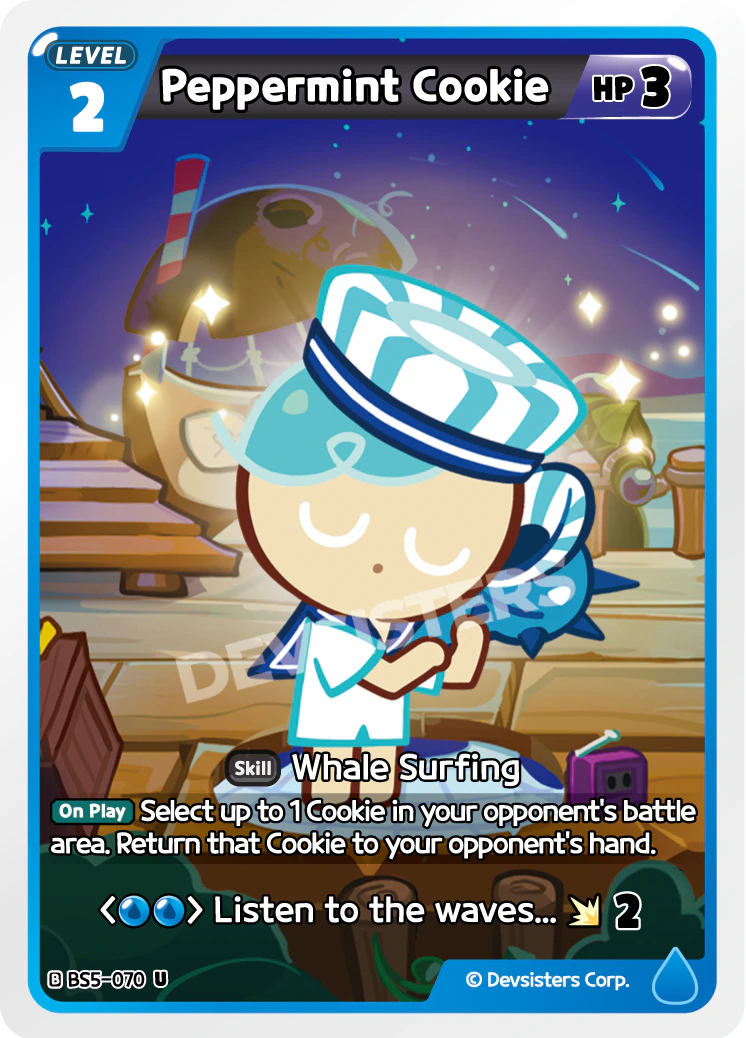
Cookie Run: Braverse Tempo Deck Guide (Build & Pilot Blue Tempo)
Tempo is aggro that learned to play defense. Here's how to build a Blue-Red tempo shell in Cookie Run: Braverse, a real decklist of cards you can buy, and how to keep the clock running while the other deck flails a turn behind.

Cookie Run: Braverse Combo Deck Guide (Build & Pilot Purple Recursion)
Combo in Braverse isn't a one-card instant-kill - it's a Purple value engine that replays Cookies out of your trash until the opponent runs out of answers. Here's the real decklist, the loop, and how to pilot it without bricking.
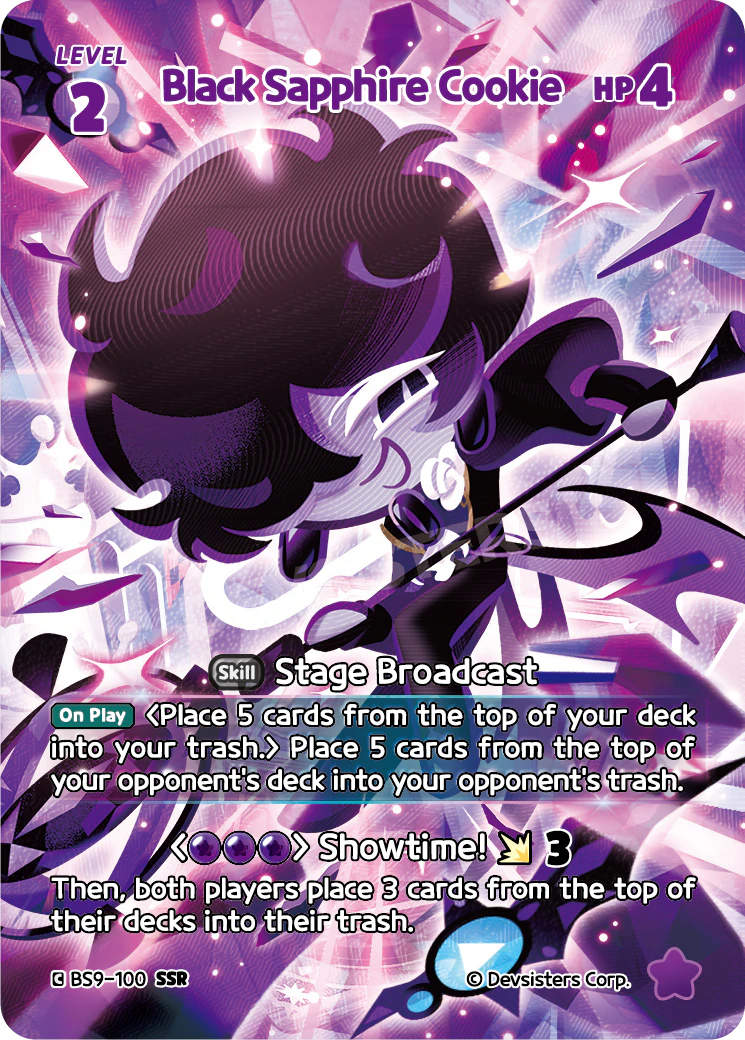
Cookie Run: Braverse Mill Deck Guide (Build & Pilot Purple Deck-Out)
Mill in Braverse won't deck someone to zero for an instant win - the game doesn't work that way. But a Purple deck-out shell weaponizes the opponent's trash, fuels its own payoffs, and starves their Cookie supply. Here's the real list.

Cookie Run: Braverse Control Deck Guide (Build & Pilot Blue/Purple Control)
Control is the deck that says "go ahead, swing" and then makes you regret it. Here's how to build a reactive Blue/Purple control shell in Cookie Run: Braverse, a real 60-card list of cards you can actually buy, and how to pilot it without drowning in your own clever answers.

How to Play Cookie Run: Braverse - A Complete Beginner Guide
Cookie Run: Braverse is the rare TCG you can teach in a single match. This guide covers everything a first-time player needs: card types, setup, turn structure, how you pay for cards, the FLIP mechanic, and how to win.

Cookie Run: Braverse Meta Tier List — Best Decks & Archetypes Ranked
Which Cookie Run: Braverse decks are actually carrying right now? Here's a meta tier list of the strongest archetypes - the real cards that anchor each one, why they rank where they do, and what's overrated.