Fortnite 90s Guide: How to Turbo-Build to High Ground
The 90 is the fastest legal cheat code in Build mode — a wall, a ramp, and a 90-degree turn that spirals you skyward faster than anyone can shoot you down. If you're still ramp-rushing in a straight line, you're getting third-partied off the top for free. Here's the piece-by-piece breakdown.

You already know the feeling: you ramp straight up to grab high ground, someone below cracks your ramp, and you eat a full mag on the way down because you built a staircase with no walls in a straight line for everyone to shoot. Ramp-rushing is fine for covering flat distance, but as a way to gain height under pressure it's a coin flip you keep losing. The 90 fixes that. It's a tight, walled, spiraling column that gains you a full floor of height every rotation while keeping a wall between you and every angle below. Done right, you go from ground level to controlling the sky faster than a controller player can flick to you.
This is the mechanic that separates players who survive build fights from players who start on top of them. The 90 isn't flashy piece-control wizardry — it's four inputs on a loop, and once your hands know the loop, you never think about it again. This guide breaks the 90 all the way down: what the pieces are, why the spiral beats the straight ramp, the exact input order, how turbo building drives it, the double-90 for when you need height now, and how to cap the top so you don't crest into a free headshot. None of it rotates with the season — walls, ramps, and cones have snapped the same way for years.
What a 90 actually is
A "90" is named for the 90-degree turn you make in the middle of it. The move is simple to describe and awkward to do until it clicks: you place a wall, place a ramp into the corner of that wall, jump onto the ramp, turn 90 degrees, and place the next wall — then repeat. Each full loop stacks one ramp's worth of height while wrapping walls around you in a tightening spiral. Instead of a long, exposed staircase leaning out across the map, you get a compact box-shaped tower that climbs straight up with cover on the sides you're turning away from.
The whole point is protected vertical height. A straight ramp gains height but shows the enemy your whole underside and lets them shoot the ramp out from under you. The 90 gains the same height while spinning walls into place, so at any given instant there's a fresh piece between you and the shot. You're not building toward the enemy — you're building upward and around yourself, and that self-contained spiral is what makes it so hard to punish.
The other thing to understand up front: a 90 is a rotation tool and a high-ground tool at the same time. You can 90 in place to win height in a fight, or 90 while drifting across the ground to gain height and cover distance at once. Same four pieces, same loop, different destination.
Why 90s beat ramp-rushing
Ramp-rushing — spamming ramps in a straight line to climb — is the first thing most players learn, and it's a trap the moment there's someone shooting at you. Here's why the 90 wins:
- It keeps a wall on the danger side. Every turn of the spiral drops a wall between you and a new angle. A straight ramp protects nothing; a 90 is always covered on the sides you've already turned past.
- It's a smaller target. A 90 climbs in a tight footprint roughly the size of one floor tile. A ramp rush stretches out across the ground, giving enemies a long, obvious line to shoot and easy pieces to break.
- It's harder to knock down. Break one ramp in a straight rush and the whole climb collapses. In a 90, the walls brace the structure and the spiral keeps re-covering itself, so a single broken piece doesn't dump you back to the ground.
- It ends with you boxed, not exposed. Finish a straight ramp and you're standing on an open incline. Finish a 90 and you're already most of the way to a box on high ground — cap it with a cone and a wall and you own the top.
The comparison is the whole argument for learning this. If the ground is flat and safe, sure, ramp across it. The instant you're contested and need height, the 90 is the answer, and the straight ramp is how you feed kills.
The piece-by-piece breakdown

Here's the loop, one input at a time. Do it slowly in Creative first; speed comes later and on its own.
- Place a wall directly in front of you. This is your protection for the current side.
- Switch to the ramp and place it so it climbs up into the corner where your wall meets the next wall's position. The ramp should hug the wall, not lean away from it.
- Jump and run up the ramp. As you reach the top of it, you're now a floor higher and facing the same direction.
- Turn 90 degrees (left or right — pick one direction and stay consistent while learning) and place the next wall in front of your new facing.
- Repeat. Wall, ramp, jump, turn 90, wall. Each loop = one floor of height with a fresh wall covering the turn.

The two details that make or break it: the ramp has to snap into the corner so you rise inside the spiral instead of drifting out of it, and you have to jump onto the ramp rather than walking, or you lose the split-second that keeps the climb continuous. If you find yourself sliding off the outside edge, you're placing the ramp facing the wrong way or turning before you've fully mounted it. Slow down, watch the corner, and let the piece snap.
Pick a rotation direction and drill only that one until it's automatic, then learn the mirror. Most players have a "good side" and a "bad side" for months — that's normal. The goal is to make the loop so ingrained you can run it while your eyes are on the enemy, not on your own build.
Turbo building: the engine behind it
None of this works at real speed without turbo building — the setting that lets you hold the build button and auto-place pieces as your crosshair sweeps across valid spots, instead of clicking once per piece. Turbo building is on by default and it is the single most important thing enabling fast 90s. Holding place-wall while you spin drops walls as fast as the game allows; the same is true for ramps and cones.
A couple of things worth knowing about turbo:
- There's a built-in placement delay. The game caps how fast turbo can auto-place the same piece type in a row — it's a small cooldown, not instant machine-gun building. Your 90 speed is really about clean inputs, not mashing.
- Switching pieces mid-spin is the real skill. The fast part of a 90 isn't holding one button; it's the wall-to-ramp-to-wall swaps. Bind your wall, ramp, floor, and cone to keys or buttons you can hit without moving your aim thumb, and the whole loop gets twice as fast. If your binds fight you, no amount of practice fixes it — sort your keybinds first.
- Confirm turbo is on. Settings, Game, Turbo Building = On. If someone's messed with your config, a straight-up-broken 90 might just be turbo being off.
If your 90 feels sluggish no matter how much you drill, the culprit is almost always binds or turbo, not your hands. Fix the config, then grind the reps.
Single 90s vs double 90s
A single 90 turns 90 degrees each loop and spirals up in a square — four turns brings you back to your starting facing, one floor higher each side. It's the clean, protected default: maximum cover, controlled climb, good for winning height in a straight fight.
A double 90 stacks two 90-degree turns per rotation cycle to climb faster — you're building two walls and two ramps per loop and gaining height at close to double the rate. The trade is that double 90s are less protected and much harder to execute cleanly under pressure. Pros use them to win a height race when someone else is also climbing; if you fumble one, you can strand yourself on a half-built tower with an open side.
The practical read:
- Single 90 when you just need protected height and you're not in a raw speed race — most of the time.
- Double 90 when you're racing another builder for the sky and losing the height battle means losing the fight — and only once your single 90 is flawless.
Don't touch double 90s until your single 90 is muscle memory. A perfect single 90 beats a fumbled double 90 in every real fight. Height you actually reach with cover beats height you almost reached before you fell off the side.
Coning the top so you don't die up there
The most common way a good 90 still gets you killed is cresting the top with an open roof. You spiral all the way up, pop out on high ground, and someone above or to the side drops a shot straight onto your head because you never capped the climb. The fix is one piece: the cone.
When you reach the height you want, transition out of the wall-ramp loop and throw a cone (roof piece) over your head, then finish the box with walls on any open sides. That converts your spiral into a proper box on high ground — protected top, protected sides, and now you're the one with the geometry advantage. This is the same coning discipline that carries every part of building; a 90 that ends in an open top is a 90 that ends in a knock.

From that boxed high ground you flow straight into whatever comes next — editing a window to peek, taking a piece control fight, or holding the top while you reset. The 90 got you the height; the cone keeps you alive to use it. If losing the top is what you're worried about, pair this with the high ground retake toolkit so you can take it back when someone contests you.
Common 90 mistakes
The gap between a 90 that works and a 90 that gets you cracked is a short list of fixable errors:
- Placing the ramp facing outward. The ramp has to snap into the corner so you climb inside the spiral. Facing it out drifts you off the tower and breaks the loop.
- Walking up the ramp instead of jumping. Jumping onto the ramp keeps the climb continuous. Walking loses the tempo and lets the enemy catch a wall between placements.
- Turning before you've mounted the ramp. Turn too early and you place the next wall in the wrong spot with a gap. Fully get onto the ramp, then turn and wall.
- Running out of mats mid-spiral. A tall 90 eats materials fast. Climbing to the sky with 40 mats leaves you boxless at the top. Watch your material count and don't over-climb into empty.
- Forgetting the cone at the top. The single biggest killer of good 90s. Cap it or die to a drop-shot.
- Drilling only your good side. You will get forced to 90 the other direction in a real fight. If you've only ever practiced one rotation, your bad side falls apart under pressure.
Every one of these is a reps problem, not a talent problem. Name the one that keeps killing you and drill that until it stops.
Creative drills to lock it in
You don't learn 90s in ranked — you learn them in Creative, cold, with no one shooting, until the loop is automatic. Then you take the automatic version into fights. A simple progression:
- Slow single 90s. Free-build island, no timer, no opponent. Wall, ramp, jump, turn, wall — twenty clean loops in a row, both directions. Ugly and slow is fine; clean is the goal.
- Speed single 90s. Same loop, now push the tempo until you're building as fast as your inputs allow without breaking form. Sloppy-fast doesn't count; if you're drifting off the tower, slow back down.
- 90 + cone cap. Add the roof and box-finish to every climb so capping the top becomes part of the muscle memory, not an afterthought.
- Free-build and edit-course maps. Fortnite Creative is full of dedicated build-technique and 90-training islands — use one that drills the spiral and the cap together. Pair it with your regular warmup routine so 90s are the first thing your hands remember each session.
- 90s against a moving target. Once the solo loop is automatic, run a box-fighting or 1v1 island where someone's actually shooting, and 90 to height while under fire. This is where it becomes a fight skill instead of a party trick.
There's no shortcut and there's no secret bind that does it for you. Players who 90 clean have thousands of loops in their hands. Twenty focused minutes a day beats two unfocused hours, and within a couple of weeks the 90 stops being something you think about and becomes the thing you do the instant a fight goes vertical.
Quick Action Checklist
The habits that turn a fumbled ramp-rush into a clean climb:
- Learn the loop: wall, ramp, jump, turn 90, wall — repeat for one floor of protected height per rotation
- Snap the ramp into the corner so you climb inside the spiral, not off the edge
- Jump onto the ramp instead of walking to keep the climb continuous
- Confirm turbo building is on and fix your build binds before blaming your hands
- Drill your good side to automatic, then grind the bad side just as hard
- Cap every climb with a cone and finish the box so you don't die to a drop-shot
- Keep single 90s for protected height; only reach for double 90s once the single is flawless
- Watch your mats so you're not boxless at the top
- Practice cold in Creative first, then take the automatic 90 into real fights
Frequently Asked Questions
What is a 90 in Fortnite?
Why are 90s better than ramp-rushing for high ground?
What is turbo building and do I need it for 90s?
What is a double 90 in Fortnite?
Why do I keep dying at the top of my 90?
Keep Reading
Related Guides
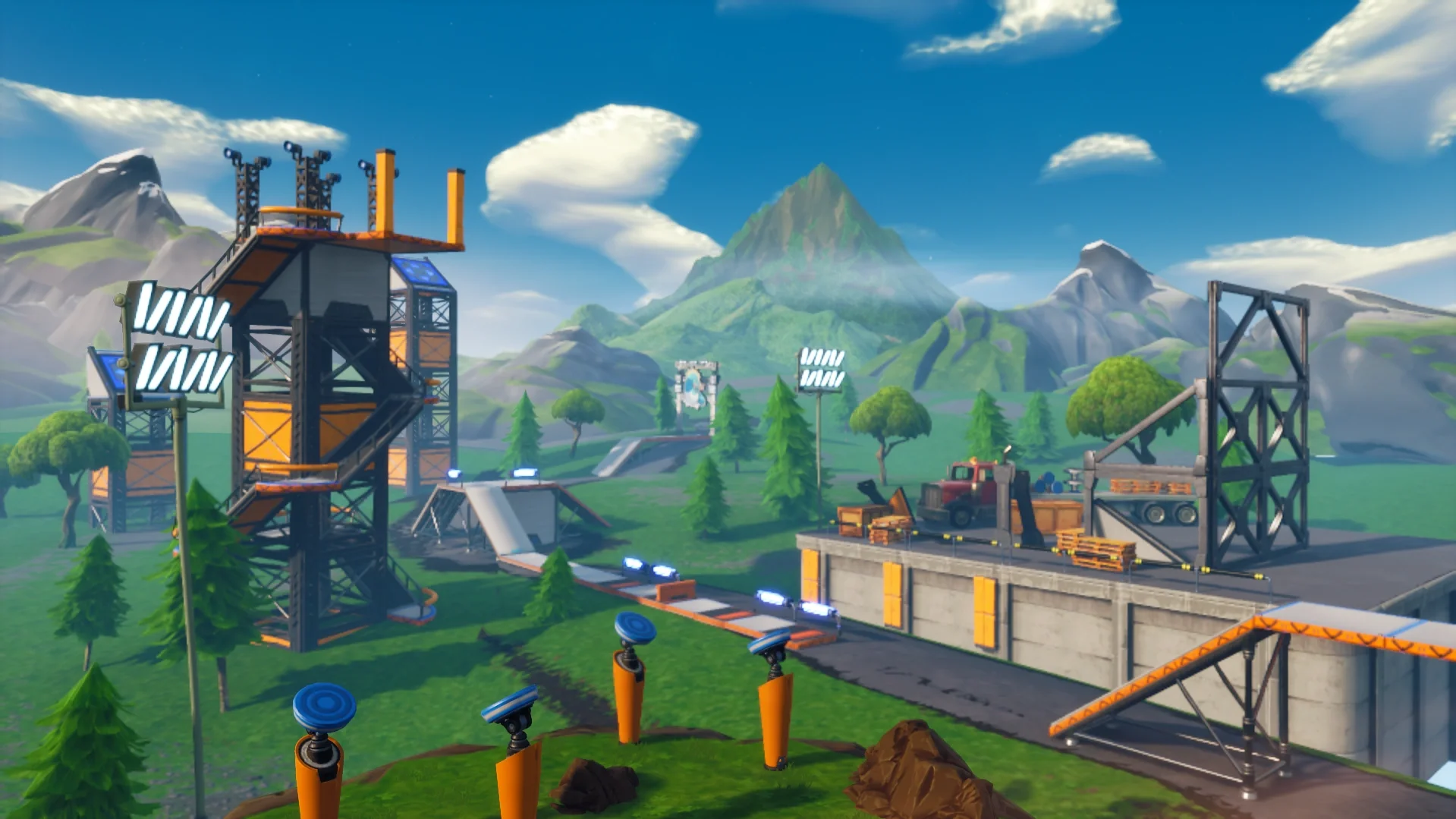
Fortnite Edit Course Guide: Train Edits Like a Pro
Ten minutes in a good edit course does more for your editing than ten hours of pubs, because a course makes you repeat the exact patterns fights are made of. Here's how to actually train in one — which skills to target, how to structure a daily routine, and how to tell whether you're getting faster or just warmer.

Fortnite Siphon Explained: Why Every Kill Heals You
You win a box fight and your health snaps back to full before you've even reloaded — no Shield Potion required. That's siphon, the mechanic that turns every kill into a heal and makes competitive Fortnite play nothing like your casual pubs. Here's what it does, where it's on, and how to build your whole gameplan around it.

Fortnite Third-Partying Guide: When to Push, When to Hold
Third-partying is the most reliable way to win a fight without earning it — you let two players gut each other, then collect. But the same logic points back at you the second you start shooting. Here's how to be the third party instead of the corpse two of them split.

Fortnite Duos & Trios Strategy: How to Win in Small Teams
Duos and Trios aren't just Squads with empty slots. With fewer guns, every knock swings the math harder, every res is riskier, and one bad split loses the game. Here's how to play 2s and 3s — roles, comms, trading, reboots, shared loot, and third-partying as a small unit.
Fortnite Weapon Tier List: How to Rank Any Loot Pool
Any Fortnite tier list is stale the second a patch drops. So instead of memorizing this season's gun names, learn how to rank weapons by class and role — the framework that's S-tier in every season.

Best Fortnite Settings for PC & Console
Half your settings menu is noise; a handful of options decide whether you can see, aim, and build. Here's what to change on PC and console, why, and the one number nobody else can pick for you.