Fortnite Third-Partying Guide: When to Push, When to Hold
Third-partying is the most reliable way to win a fight without earning it — you let two players gut each other, then collect. But the same logic points back at you the second you start shooting. Here's how to be the third party instead of the corpse two of them split.

Watch any high-kill replay and count how many of those kills were actually fights. A lot of them weren't. Someone heard two players trading shots, waited for one to win at half-health, and walked up on the leftovers. That's third-partying, and it is the single most efficient way to get kills in this game — you skip the hard part and arrive after both players have already spent their health, shields, and ammo on each other.
The catch is that everyone knows this. The moment you start shooting, you become the fight someone else is licking their lips over. So the real skill isn't just "shoot people who are busy" — it's reading whether a fight is worth pushing, timing it so you clean up instead of getting cleaned up, and not turning your own fights into a buffet for the rest of the lobby. This guide is the whole loop: spotting fights, pushing or holding, the clean-up versus the bait, and keeping yourself off the menu.
The third party is the best fight in the game
A clean third party flips the math of a gunfight entirely. Two players who just fought are some combination of low on health, out of shields, low on ammo, exposed in whatever position the fight left them in, and — crucially — distracted by each other. You walk in fresh, full HP, full mats or full mag, with the element of surprise. That's not a fair fight; that's an execution, and that's the point.
But "best fight in the game" comes with a giant asterisk: a third party is only good if you're the last party. The exact thing that makes the original two players easy for you makes you easy for a fourth player who heard the same gunfire. Gunshots are a beacon. The longer a fight lasts and the more shots get fired, the more of the lobby is now looking in your direction. So the prize is real, but it's contested, and the players who consistently win the clean-up are the ones who treat every third party as a timed problem: get in, finish it, get out before the next guy does the same thing to you.
That framing — fast, decisive, and gone — is the thread running through everything below. Hesitate in the middle of a third party and you've just become the fight.
Spot the fight before you pick a side
You can't third-party what you don't notice. The whole thing starts with information, and Fortnite hands you plenty if you're paying attention. (If reading the lobby is a weak spot, our game sense guide drills the habit harder.)
- Sound is your radar. Gunfire, builds going up, and footsteps all tell you a fight is happening and roughly where. Distant sustained shooting means a real fight; a single shot might be someone breaking a chest or potshotting. Learn the difference so you push real fights and ignore noise.
- Builds tell the story in Build mode. A tower going up, a 1v1 box battle, edits flying — that's two players committed to each other and not watching their flanks. The build cluster is a giant "fight here" sign visible from across the map.
- Read the map and the storm. Players get funneled together by the closing circle, so fights cluster near the zone edge and around contested high ground. If you know where the lobby is being squeezed, you know where the fights will be before they start.
- Watch what you can see, not just what you hear. Tracer fire, muzzle flash, builds, and players sprinting toward a sound all point you to the action. Sometimes the best read is spotting a third party already forming — someone else rotating onto a fight — and deciding whether to let them all sort it out.
Spotting the fight is step one. Picking whether to involve yourself is step two, and that's where most kills are won or thrown.
The clean-up vs the bait

Here's the trap that turns a third party into a death: not every fight is a clean-up, and some are flat-out bait.
A clean-up is a fight you can finish for almost nothing: the two players are genuinely committed to each other, you have an unseen angle or a clear approach, and at least one of them is already hurt. You push, you delete the survivor, you leave with two kills and their loot. This is the dream scenario and the only one worth pushing aggressively.
A bait is everything that looks like a clean-up but isn't:
- The fight's already over. You hear the gunfire, sprint over, and the winner has already healed up, repositioned, and is now sitting full-health waiting for exactly the dummy who comes running at the sound. You're not third-partying — you're the second fight they get to win fresh.
- It's a trap by design. Experienced players bait third parties on purpose: fire a few shots, build a little, then sit and watch the approach lanes. The "fight" was the lure.
- You'd arrive across open ground. Even a genuine clean-up isn't worth it if getting there means sprinting through a field while both players (and the rest of the lobby) can see you. The angle matters as much as the fight.
- There are clearly more than two players involved. A four-person scrap isn't a clean-up; it's a meat grinder you're volunteering to be ground in.
The tell is timing and position. A fight you can reach quickly, from an angle they aren't watching, while it's still ongoing, is a clean-up. A fight that's gone quiet, that you'd have to cross open ground to reach, or that's already drawn a crowd is bait. When you can't tell which it is, treat it as bait and hold — the cost of skipping a real clean-up is one missed kill; the cost of pushing a bait is your whole game.
Timing the push (or the hold)
Once you've decided a fight is a real clean-up, when you push decides whether you collect or get collected. The window is narrow and it's all about the original two players being maximally distracted and maximally hurt.
- Push the back half of the fight, not the start. Early in a fight both players are full HP and alert. Wait until they've traded real damage — health bars down, shields cracked, mats burned, ammo spent. That's when one good engagement ends both of them.
- Push when they're committed and looking away. The ideal moment is when both are focused on each other — mid-build-battle, mid-reload, mid-heal. If they can't see you coming, you get free damage before either reacts.
- Get the angle first, then commit. Don't run straight at the sound. Take the few seconds to reach high ground, a flank, or hard cover that lets you open up on the survivor before they clock you. A patient flank beats a fast frontal push almost every time.
- Know when to hold instead. If you can't get a clean angle, if the storm or another player is about to pressure you, or if pushing means exposing yourself to the rest of the lobby, don't push. Sit, let the fight resolve, and either clean up the weakened winner on your terms later or just take the free zone they vacated. A held third party that never happens is a game you didn't lose.
The discipline is the whole game here: push hard when the read is clean, and hold without flinching when it isn't. The players who throw matches are the ones who push every fight they hear because the kill feels close.
Don't get third-partied yourself
Everything that makes third-partying strong is a weapon pointed at you the instant you take a fight. The best third-party players are also the hardest to third-party, because they fight with one eye on the rest of the lobby the whole time.
- End fights fast. A drawn-out 1v1 is an invitation. The longer you trade shots and the more noise you make, the more time the lobby has to rotate onto you. Win quickly and decisively, or disengage — don't grind a coin-flip fight in the open while everyone hears it.
- Fight with cover and an exit. Take fights from a position that already has cover and a clear escape, not in the dead center of an open field. When the third party shows up — and they will — you want a wall to break the sightline and a route out, not a long sprint with your back exposed.
- Watch your flanks during the fight. Don't tunnel so hard on your opponent that you forget the rest of the map exists. Check your back, listen for footsteps, and clock anyone rotating toward your gunfire. The kill is worth nothing if it costs you the game.
- Heal in cover, not in the open. The window right after you win is when you're most vulnerable — low HP, maybe out of position. Reset behind hard cover, not standing on the body in the open where the next player is already lining you up.
- Pick your fights near the lobby's attention. A fight in a hot, contested area will draw a third party fast; a fight in a quiet pocket of the map gives you room to win and reset. Where you fight is half of whether you get third-partied.
The mindset shift: when you start shooting, assume someone heard it and is already moving on you. Fight like that's true, because it usually is.
Repositioning after the fight
The fight isn't over when the last opponent goes down. The 10–15 seconds after a kill are the single most dangerous stretch in the game, because you're the loud, low-health, distracted player now — exactly the target you were hunting a minute ago.
- Relocate before you loot. The instinct to immediately box up the loot and sit on the bodies is how third parties get fed. If the fight was loud or in the open, move to cover first, confirm you're not about to be pushed, then grab what you need.
- Heal on the move or in cover. Pop a quick heal while repositioning if you can, and save the slow channel heals for a spot where you're not silhouetted. Standing still in the open to heal after a fight is the most-punished mistake in the game.
- Grab only what matters. Snag the shields, ammo, and any obvious upgrade, then go. Sorting through every floor item in a contested spot is just extra seconds for someone to arrive.
- Reset your position relative to the zone. Use the breather to rotate toward the safe side and good terrain for the next circle. A clean third party that also lands you in a strong spot for the next zone is a double win — see our rotation guide for how to read where to go. In the endgame, this is the entire game.
Treat the aftermath like a second fight you have to win — because someone is very likely setting up to make it one.
The etiquette and the risk math
People love to whine about third-partying like it's dirty pool. It isn't. There's exactly one objective in this mode: be the last one standing. A "fair 1v1 to the death" while a third player waits is just two people handing the win to the third. Third-partying isn't unsportsmanlike — it's reading the situation correctly. The only "etiquette" that matters is the unspoken one in squads, where mid-fight teammates expect you to actually help instead of farming their kill (more on coordinated pushes in our team play guide).
What actually matters is the risk math, and it comes down to one question every time: does the value of these kills outweigh the chance I become the next third party's target? Run the quick checklist before you commit:
- Reward: How hurt are the two players? Two cracked, distracted players is high reward. Two full-health players who barely traded is low reward and high risk.
- Approach: Can I reach them from an angle they can't see, through cover? Or am I crossing open ground in front of the whole lobby?
- Lobby heat: How many other players are nearby who'd hear this and push me after? A quiet corner is a green light; a stacked contested zone is a red one.
- Escape: If a fourth party shows, do I have cover and a way out? No exit means no push.
- Game state: Late game with few players left and a tight zone changes everything — sometimes the right play is to let two squads delete each other and never fire a shot.
When most of those point the right way, push hard and don't second-guess it. When they don't, the disciplined hold is the winning play, even though the kill felt free. Third-partying rewards patience far more than aggression — the kills come to the player who picks the right fight, not the one who pushes every gunshot.
Build vs Zero Build third parties
The read — spot the fight, judge clean-up vs bait, time the push — is identical in both modes. The execution differs in two big ways:
| Situation | Build mode | Zero Build |
|---|---|---|
| Spotting the fight | Builds going up are a giant visible "fight here" flag from across the map | Rely more on sound, tracers, and player movement; no build towers to read |
| Getting the angle | Build a path or ramp to high ground over the fight before committing | Use existing terrain and natural cover to flank; the high ground is whatever the map gives you |
| Surviving the third party on you | Throw up walls to wall off the sightline and reset, or tunnel out | Break the sightline with hard cover and reposition; no instant wall to save you |
| Healing after the kill | Box up in cover and heal safely behind your own builds | Heal behind natural hard cover, and keep moving — you can't box up |
The honest summary: in Build mode the fights are louder and easier to spot, but you can also wall off and reset when a third party hits you; in Zero Build you read more from sound and movement, and surviving a third party is purely about cover and repositioning since the wall isn't coming. Either way the winning skill is the same — pick the right fight, finish it fast, and get out before the next guy.
Quick Action Checklist
The third-party habits that win clean-up kills without making you the next target:
- Use sound and sightlines to spot real, ongoing fights — ignore single shots and chest noise
- Judge clean-up vs bait: ongoing fight + unseen angle + at least one player hurt = push; gone quiet, open approach, or a crowd = hold
- Push the back half of a fight, when both players are hurt and looking at each other
- Get the angle first — flank or high ground through cover, never a straight sprint at the sound
- Hold without flinching when the read isn't clean; a skipped fight beats a thrown game
- End your own fights fast, with cover and an exit, watching your flanks the whole time
- Relocate before you loot — move to cover, heal, grab essentials, then go
- Run the risk math: reward vs approach vs lobby heat vs escape vs game state
Frequently Asked Questions
What is third-partying in Fortnite?
How do you spot a fight to third-party in Fortnite?
When should you push a fight versus hold in Fortnite?
How do you avoid getting third-partied in Fortnite?
Is third-partying bad etiquette in Fortnite?
Keep Reading
Related Guides

Fortnite Duos & Trios Strategy: How to Win in Small Teams
Duos and Trios aren't just Squads with empty slots. With fewer guns, every knock swings the math harder, every res is riskier, and one bad split loses the game. Here's how to play 2s and 3s — roles, comms, trading, reboots, shared loot, and third-partying as a small unit.
Fortnite Weak Spots & Aiming Guide: Where to Aim
Two players land the same shots and one does way more damage. The difference isn't aim — it's where they're aiming. Here's the where: headshots and weak spots, crosshair centering, pre-aiming, tracking vs flicking, and aiming the gaps in someone's build.
Fortnite Tunneling Guide: Cross Open Ground Without Dying
Tunneling is how good players cross open ground while being shot at and live to fight in the next zone. It's the move-and-rebuild rhythm that turns a death-march across a field into a moving box nobody can crack. Here's how to actually do it.
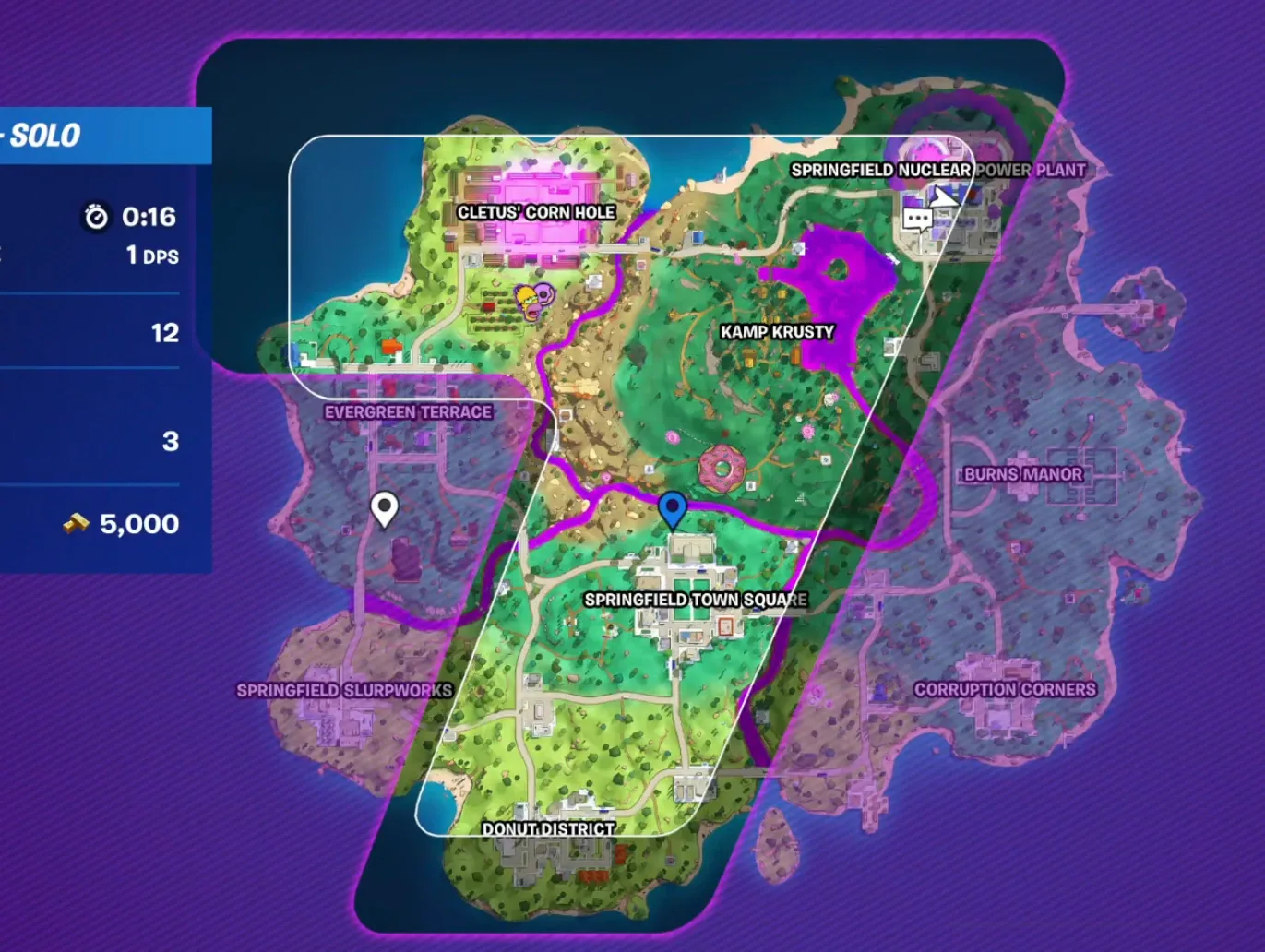
Fortnite High Ground Retake Guide: Take Back the Top
High ground wins fights, and losing it doesn't have to lose them. The high ground retake is the set of moves that take the top back when someone builds over you — the cone-rush, the wall-and-ramp, the 50/50 — plus how to survive on low ground long enough to do it. Here's how.
Fortnite Weapon Tier List: How to Rank Any Loot Pool
Any Fortnite tier list is stale the second a patch drops. So instead of memorizing this season's gun names, learn how to rank weapons by class and role — the framework that's S-tier in every season.
Best Fortnite Settings for PC & Console
Half your settings menu is noise; a handful of options decide whether you can see, aim, and build. Here's what to change on PC and console, why, and the one number nobody else can pick for you.