MTG Brawl Format Guide: Standard Brawl vs Historic Brawl
Brawl is singleton Commander squeezed into a one-on-one Arena format that doesn't take forty minutes a game. Here's what Brawl is, how Standard Brawl and Historic Brawl differ, how to pick a commander, and how to build your first deck.
Brawl is what you get when you take everything people love about Commander — building a deck around one legendary card, singleton variety, the political "what's my commander going to do this time" energy — and then strip out the two things that keep a lot of players away: the four-player pod that takes forty minutes to resolve, and the 100-card paper collection you have to physically assemble. Brawl lives on MTG Arena, runs one-on-one, and a game is over in the time it takes to finish a coffee.
If you have ever wanted to play Commander but couldn't get three friends in the same room, or you bounced off Standard because it felt like the same five decks every season, Brawl is the format you should be trying. Here's exactly what it is, how its versions differ, how to pick a commander, and how to build a first deck without wasting wildcards. Every card, legality, and banlist call below was checked against Scryfall's current data.
What is Brawl in MTG
Brawl is a singleton, commander-led format that plays primarily on MTG Arena. The core rules are borrowed straight from Commander:
- You pick one legendary creature or planeswalker as your commander. It starts in the command zone, and you can cast it from there throughout the game.
- Your deck is singleton — exactly one copy of every card except basic lands.
- Your commander's color identity restricts the whole deck. If your commander is mono-white, every card in the deck has to be white or colorless.
The part that makes Brawl feel like its own thing rather than "Commander lite" is the speed. Where Commander starts you at 40 life and expects a long, multiplayer grind, Brawl is built for snappy one-on-one games. You start at 25 life in a one-on-one match, there is no sideboard, and queue play is best-of-one with a free first mulligan. That combination — low-ish life total, single game, one opponent — means Brawl games are decisive. Aggression actually closes games, and the "durdle for twenty turns building an engine" plan that works in a four-player pod gets punished fast.
The other genuine selling point: because it lives on Arena, you are not buying singles. You craft cards with wildcards from a collection you build by playing. That removes the single biggest barrier to Commander for new and returning players — no $400 manabase, no tracking down an out-of-print legendary.
Standard Brawl vs Historic Brawl
This is the one thing people get confused about, so let's be precise. Standard Brawl and Historic Brawl share the commander-singleton skeleton but use completely different card pools. They also aren't the whole list — Wizards maintains a third, Competitive Brawl, which the banlist section below gets into — but these two are what this comparison is about.
Standard Brawl uses the Standard card pool — the same rotating set of recent expansions that powers the Standard constructed format — and decks are 60 cards (your commander plus 59). Because it shares Standard's pool, Standard Brawl rotates: when a set leaves Standard, it leaves Standard Brawl with it. The power ceiling is lower, the metagame is fresher and churns with each set, and it is the friendlier of the two for a brand-new player because there are fewer busted old cards to run into.
Historic Brawl — which on Arena is now often labeled simply "Brawl" — uses the much larger Historic card pool (the full pool of cards available on Arena, including supplemental and Alchemy-era cards), and decks are 100 cards (commander plus 99). It does not rotate. This is the deep, high-power version: every strong legendary and every powerful card Arena has ever printed is on the table, so the format is closer in feel to a competitive Commander pod compressed into one-on-one.
Here's the quick way to remember which is which:
- Standard Brawl = Standard pool, 60 cards, rotates, lower power, easier on-ramp.
- Historic Brawl ("Brawl") = Historic pool, 100 cards, no rotation, higher power, deeper builds.
- Competitive Brawl = a third, separately maintained format with its own banned list. Details below.
Standard Brawl and Historic Brawl are both singleton, both commander-led, both start you at 25 life in one-on-one, and neither uses the commander-damage rule that Commander does. If a guide ever tells you Brawl is 40 life or uses commander damage, it is describing paper Commander, not Brawl — that is the most common piece of bad info out there, so trust the in-client rules.
The rules that actually change how you play
A handful of Brawl-specific rules quietly reshape your deckbuilding and your in-game decisions. These are the ones that matter:
25 life, not 40. This is the big one. A third less life than Commander means aggressive starts are genuinely lethal and you cannot afford to durdle. Pay-life effects, shocklands, and fetch-style life loss all hurt more proportionally. Build with a real game plan to close, not just an engine that wins "eventually."
Singleton kills consistency crutches. You get one Counterspell, one of your best removal spell, one of everything. That means redundancy in effect matters more than the single best card — you want eight removal spells that do similar jobs, not four copies of the perfect one. It also means your commander, which you can always cast from the command zone, is your most reliable card, so it should be doing real work.
No sideboard. Best-of-one queue play means you build one deck that has to handle everything. You can't board in graveyard hate against the reanimator deck — your maindeck has to carry a little interaction for the things that beat you cold.
The free mulligan. Brawl queues give you a free first mulligan (you draw a fresh seven and only bottom a card if you mulligan again). That makes keeping greedy, two-lander hands a worse idea than it looks, because you can afford to ship a bad opener once at no cost.
Picking your commander
In Brawl your commander is the one card you are guaranteed to have every game, so it defines your deck more than any single card defines a Standard or Modern list. Two ways to think about the pick:
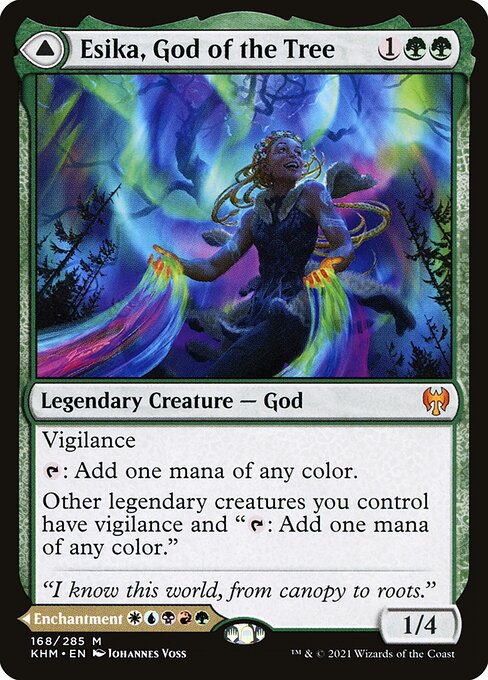
Pick for color identity, then for effect. Your commander sets your colors. A mono-color commander gives you a tight, consistent manabase and a deck that is cheap to build — great for a first deck. A two- or three-color commander opens up more powerful cards at the cost of a clunkier manabase. Five-color enablers like Esika, God of the Tree let you run literally any card in the game, which is a blast, but the mana is a real cost and not where a beginner should start.
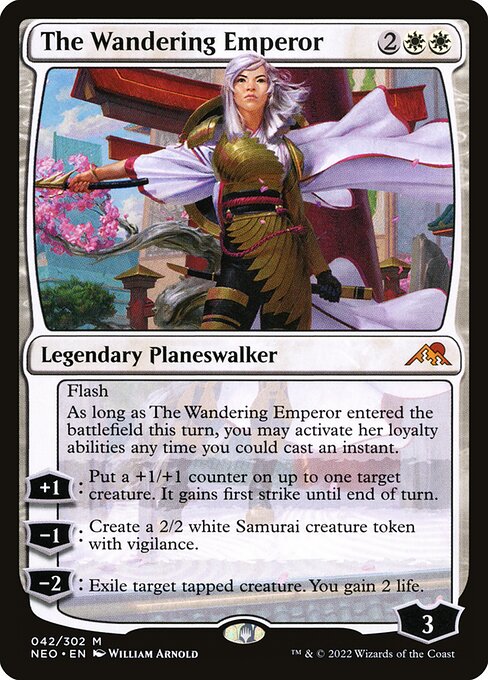
Pick a commander that wins games, not just one that's "good value." Because you cast it every game, your commander should either threaten to win on its own, generate an advantage opponents have to answer, or protect your plan. A strong Brawl commander is one that, left unanswered for two turns, just wins. Planeswalkers like The Wandering Emperor are popular precisely because they generate value and pressure the moment they hit, and they sit in the command zone so you always have access to that effect.
For a first deck, mono-white, mono-black, or mono-red aggro/midrange commanders are the easiest to pilot and the cheapest to assemble. Save the five-color goodstuff piles for after you understand the format's clock.
The banlist and why it exists
Brawl has a banlist, and the bans are about keeping one-on-one games from being decided on turn one by a single card. Cards that are fine spread across a four-player table become oppressive heads-up.
The classic examples are cards like Oko, Thief of Crowns and Lutri, the Spellchaser, both of which are banned in Brawl. Oko was banned almost everywhere for being a three-mana planeswalker that took over any game; Lutri was banned because, as the only legal "companion" that fits a singleton deck, it gave certain decks a free eighth card in hand every game with no real cost. The throughline is the same: a card that is too consistent or too swingy in a one-on-one singleton format gets the axe.
And this is where the third format shows up. Wizards' banned and restricted list carries a Competitive Brawl section of its own, separate from the Brawl one, and Scryfall tracks a competitivebrawl legality key alongside its brawl and standardbrawl ones. It is a genuinely separate, separately maintained format — not a nickname for one of the other two — and if you've only ever read a two-format Brawl explainer, this is the part you're missing.
Its banned list runs ten cards: Ajani, Nacatl Pariah; Nadu, Winged Wisdom; Lutri, the Spellchaser; Oko, Thief of Crowns; Old Stickfingers; Ragavan, Nimble Pilferer; Rusko, Clockmaker; Tajic, Legion's Valor; Tamiyo, Inquisitive Student; and Wrenn and Six. Lutri and Oko turn up on the Brawl list too, but the two lists are not the same list, and that has a practical edge to it: Ajani, Nacatl Pariah is legal in Brawl and banned in Competitive Brawl. Checking one format's legality doesn't settle the other's, so check the one you're actually building for.
Wildcard-crafting tip: check a card's current Brawl legality before you spend wildcards on it. Arena will usually flag illegal cards when you try to add them to a deck, but the official banned and restricted list and a quick Scryfall search are the authoritative sources, and the list shifts as new sets drop and new problem cards emerge. Don't craft four mythics' worth of a strategy around a card that's about to rotate or get banned.
How to build your first Brawl deck
A clean, repeatable build order that won't waste wildcards:
- Pick the commander first. Choose one that wins games on its own and whose colors you actually want to play. Mono-color for your first deck.
- Build the manabase to the color count. A mono-color deck wants roughly 24-25 lands in a 60-card Standard Brawl deck (scale up for 100-card Historic Brawl). Add dual lands and fixing as you add colors — bad mana loses more Brawl games than bad spells do.
- Run real removal. With no sideboard, your maindeck has to answer threats. Pack a healthy spread of removal — single-target and a sweeper or two — because singleton means variety beats raw power.
- Add a curve, not a pile of bombs. You need cheap plays for the early turns, not just expensive haymakers. A deck of seven-drops dies to anything aggressive at 25 life.
- Lean on your commander. Build the 59 (or 99) to support what your commander does. The deck's job is to keep your commander relevant and protected.
- Fill out with flexible, evergreen cards. Card draw, a couple of counters or protection spells, and ramp if you're in green. These are the cards that keep working across every matchup.
If you have built a Commander deck before, the muscle memory mostly transfers — just remember the lower life total rewards a faster, leaner build than your paper EDH deck. If you haven't, our how to build a Commander deck walkthrough covers the singleton-deckbuilding fundamentals that carry straight over to Brawl.
Common new-player mistakes
- Treating it like four-player Commander. Brawl is one-on-one at 25 life. The slow value engine that wins a pod loses to the aggressive deck across the table. Build to actually close the game.
- Confusing the formats. Standard Brawl (60 cards, Standard pool, rotates) and Historic Brawl (100 cards, Historic pool, no rotation) are different beasts, and Competitive Brawl is a third with its own banned list. Pick which one you're building for before you craft anything.
- Over-investing in a rotating card for Standard Brawl. Standard Brawl rotates with Standard. Crafting four mythics around a card that leaves the pool in a few months is how you burn wildcards.
- Skimping on the manabase. Singleton plus multicolor is a recipe for color screw if you cheap out on lands and fixing. Get the mana right first; it's the part that loses the most games.
- Ignoring removal because "my deck does its own thing." With no sideboard, the maindeck is your only line of defense. Every deck needs a way to interact with the opponent's threats.
If you're coming from a constructed background, our Standard format guide covers the rotating pool Standard Brawl draws from, and the Commander format guide covers the singleton-and-commander framework Brawl borrows from.
Quick Action Checklist
- Decide which format you're building for: Standard Brawl (60 cards, rotates, lower power), Historic Brawl (100 cards, no rotation, higher power), or Competitive Brawl, which carries its own separate banned list.
- Pick a commander that wins games on its own — mono-color for your first deck.
- Build the manabase to your color count before you touch the spells.
- Run a real removal package; there's no sideboard to bail you out.
- Build a curve with cheap early plays, not a pile of seven-drops — 25 life punishes slow starts.
- Check current legality for your specific format on Scryfall and the official banlist before crafting expensive cards.
- Take the free first mulligan when your opener is greedy — it costs you nothing.
Frequently Asked Questions
What is the Brawl format in MTG?
What is the difference between Standard Brawl and Historic Brawl?
How many cards are in a Brawl deck?
What can be a commander in Brawl?
Does Brawl have a banlist?
Is Brawl a good format for beginners?
Keep Reading
Related Guides
MTG Arena Competitive Brawl: Rules and Banned Commanders
On October 12, 2026, Wizards banned three more commanders in Competitive Brawl and moved nine cards, Oko and Ragavan among them, from fully banned to banned only as your commander. Here is what Competitive Brawl is, how it differs from the Brawl queue next to it, the full list, and the one card the official page has gone quiet on.
MTG Planechase Rules: Planar Die, Planes and Phenomena
Your first roll of the planar die each turn is free. The sixth costs five mana on its own, and the six together cost fifteen. Here is how Planechase actually works, from the planar deck and the starting plane to the die, chaos, phenomena and Commander pods, checked against the Comprehensive Rules effective September 25, 2026.
MTG Arena Is Retiring Alchemy: Dates and What You Keep
Wizards announced on September 11, 2026 that the Alchemy format is being retired from MTG Arena on February 2, 2027, alongside the 2027 Standard rotation. The shutdown runs in three dated stages, and the first one lands on September 22 — every rebalanced version of a tabletop card reverts to its paper printing across every format, and five cards get banned in Historic as a direct consequence. Here is the timeline, what happens to the cards you already own, and what none of it changes.
MTG Commander Banned List: Every Card and Why
Wizards' banned list page gives Commander 42 card names and four lines of small print. Scryfall says the real number is 83. The gap is 41 cards banned by category rather than by name — Conspiracies, ante cards, and the seven banned everywhere for offensive content. Here is the entire list, grouped by what each card actually does, plus the one change the Commander Format Panel made this year.
MTG Commander Format Guide — How to Start Playing EDH (2026)
Commander is the most-played MTG format on the planet and the easiest one for new players to start in. The rules look intimidating on paper. They are not. Here is the full beginner guide.

Best Commander Staples Every Deck Wants, Ranked
There's a short list of cards that show up in basically every Commander deck regardless of theme — the silent 25 that make the splashy 75 work. Here are the staples worth a slot in almost any list, sorted by the job they do, with the legality double-checked.