Pokémon TCG Championship Points: How to Qualify for Worlds
The Pokémon TCG stopped publishing a Championship Point number you have to hit. The 2027 season hands each rating zone a fixed count of World Championships invitations and lets the leaderboard sort it out — 140 Masters seats for USA and Canada, 20 for Oceania. Here is what every event tier pays, the Best Finish Limits that cap how much of it counts, and the direct invites that ignore the leaderboard completely.
There is no number any more. That is the part people still get wrong about qualifying for the Pokémon TCG World Championships, because for years there genuinely was one — Bulbapedia's archive of the official qualifying requirements has a US and Canada Masters player needing 550 Championship Points in the 2019 season, 400 in 2018, 500 back in 2014. Hit the number, get the invite.
That system is gone. The 2027 Championship Series hands each rating zone a fixed count of invitations per age division and lets the leaderboard decide who fills them. You are no longer racing a target. You are racing everyone else in your zone. Here is what each event actually pays, the caps that decide how much of your season survives, and the two ways to get to Worlds without ever looking at a leaderboard.
The leaderboard replaced the threshold
Play! Pokémon's own overview states the mechanism plainly: competitors qualify by earning Championship Points at events through the season, and "a set number of players from each rating zone, age division, and game will earn an invitation to the World Championships based on their Championship Points leaderboard standings."
Three structural facts come with that:
- There are five CP-eligible rating zones — North America, Europe, Latin America, the Middle East and South Africa, and Oceania. Your zone is where you play and earn.
- Japan, South Korea, mainland China and the Asia-Pacific region do not use this system at all. Their invitations come through their own organized play and esports programs, and players from those zones "are not eligible to earn World Championships invitations through Championship Points."
- TCG points and video game points are separate currencies. The Play! Pokémon glossary is explicit that Pokémon TCG Championship Points and VG Championship Points "cannot be used across event types," even though one player can earn both in the same season.
That last point matters more than it sounds, and the next table is why.
How many invites your rating zone gets
These are the 2027 Pokémon TCG allocations, published on the Championship Series site's invitations table:
| Rating zone | Junior | Senior | Masters |
|---|---|---|---|
| USA & Canada | 100 | 100 | 140 |
| Europe | 100 | 100 | 140 |
| Latin America | 75 | 75 | 125 |
| Oceania | 15 | 15 | 20 |
| Middle East & South Africa | 5 | 5 | 10 |
Add it up and the five zones send 1,025 players to Worlds off the leaderboard — 435 Masters, 295 Seniors, 295 Juniors — before a single direct invite is counted.
Now the trap. The same page publishes a different table for the video game side: 40 Juniors, 40 Seniors and 90 Masters for USA and Canada, against the TCG's 100/100/140. Same convention centre, same weekend, same rating zone, completely different allocation. The Championship Point payout tables further down this article are shared across TCG, video game and Pokémon GO — the official event pages say so in as many words — but the invite counts are not shared, and quoting one game's numbers in the other game's context is the single easiest way to be confidently wrong about this system.
Your age division is set at the start of the season by birth year and does not move: for 2027, Junior is players born 2015 or later, Senior 2011 through 2014, and Masters 2010 or earlier. Which division you sit in decides which leaderboard you are on, and the Masters column is the deepest one in every zone.
The four events that pay Championship Points
Four tiers of Play! Pokémon event award TCG Championship Points. Two of them run at your local store.
League Challenges are the entry tier — the glossary describes them as designed to introduce newer players to the Championship Series, with no invitation or qualification required. League Cups are the step up from there, same open access, bigger payout. Both use the Standard format for Pokémon TCG, and both hand every participant 1 Play! Point for showing up. A Play! Pokémon store is expected to run a League Challenge monthly and a League Cup quarterly.
| Placement | League Challenge (kicker / CP) | League Cup (kicker / CP) |
|---|---|---|
| 1 | 0 / 15 | 0 / 50 |
| 2 | 4 / 12 | 4 / 40 |
| 3–4 | 8 / 10 | 8 / 32 |
| 5–8 | 14 / 8 | 17 / 25 |
| 9–16 | 25 / 6 | 48 / 20 |
| 17–32 | 48 / 4 | 80 / 16 |
| 33–64 | — | 128 / 13 |
One wrinkle worth knowing before you travel: at some larger events Play! Pokémon sanctions Pokémon Challenges and Pokémon Cups, which pay exactly the same Championship Points as a League Challenge or League Cup and eat the same Best Finish Limit, but skip the promo cards and other prizes that come with running at an actual League location. They can only be organised at Play! Pokémon's invitation.
Regionals and Internationals are the real currency
Regional Championships and Special Championships share one payout table; the three International Championships get their own, larger one. Both use the same kicker thresholds, so they line up cleanly:
| Placement | Kicker (competitors) | Regional / Special | International |
|---|---|---|---|
| 1 | 0 | 350 | 500 |
| 2 | 4 | 325 | 480 |
| 3–4 | 8 | 300 | 420 |
| 5–8 | 17 | 280 | 380 |
| 9–16 | 33 | 200 | 300 |
| 17–32 | 65 | 160 | 240 |
| 33–64 | 129 | 120 | 180 |
| 65–128 | 257 | 80 | 140 |
| 129–256 | 513 | 60 | 100 |
| 257–512 | 1,025 | 45 | 85 |
| 513–1,024 | 2,049 | 22 | 42 |
Look at the top rows against the local table. Winning one Regional is worth 350 CP; a perfect season of local play is worth 260. That is four League Challenge wins at 15 apiece plus four League Cup wins at 50 apiece, which is the absolute ceiling those two tiers allow, and one Regional trophy still beats it by 90 points. Finishing 129th–256th at a Regional pays 60 CP, which is more than winning a League Cup.
The prize money moves the same way, and of the three games sharing these events the TCG pays the most. A Masters Regional win pays $10,000 in the 2027 tables, against $6,000 for the video game and $2,500 for Pokémon GO; an International win pays $25,000 against $15,000 and $5,000; and the 2026 World Championships table has TCG first place at $50,000 against $30,000 and $20,000. The TCG payout also runs deeper — Regionals pay Masters down to 17th–32nd, where the video game table stops at 9th–16th.
The Kicker decides whether your finish pays at all
The Kicker is the attendance threshold that unlocks a placement bracket. The glossary's own framing: the number of points an individual player receives does not change, but if the Kicker is reached, points are awarded to more players. It is measured on age division attendance, not the whole room.
In practice that means placement alone tells you nothing. Finish 6th in a League Challenge with 12 players in your division and you earn zero Championship Points, because the 5th–8th bracket needs 14. Finish 6th in the same event with 20 players and the bracket unlocks for 8 CP. At the far end, the 513th–1,024th bracket at a Regional needs 2,049 competitors in your division before it pays anything at all.
That is why the long tail of the Regional table only exists at scale. A division of 500 competitors pays down to 65th–128th at 80 CP and no further, because the next bracket needs 513 players to unlock.
Best Finish Limits cap the grind
You cannot brute-force this by entering everything. The Play! Pokémon glossary sets the rule: each event series carries a Best Finish Limit, and a player who enters more events than the cap has their top performances registered and the rest discarded.
For 2027 the caps are:
| Bucket | Best Finish Limit | Best single result | Season ceiling |
|---|---|---|---|
| League Challenge | 4 | 15 CP (1st) | 60 CP |
| League Cup | 4 | 50 CP (1st) | 200 CP |
| Regional + Special + International (shared) | 5 | 500 CP (International 1st) | 2,500 CP |
League Challenges and League Cups have four each and do not share an allotment — the official League page spells that out. The five-event limit on the top tier is shared, which means your sixth Regional of the season only counts if it outscores one of the first five.
There is a subtlety inside that shared bucket. When events with different point scales sit under one Best Finish Limit, the overview says the highest point totals are counted, not the highest placements. A 9th–16th at a Regional is 200 CP; a 33rd–64th at an International is 180. The better-sounding finish is the smaller number, and the system takes the 200.
That arithmetic also fixes a number worth aiming at if Worlds is not realistic. Ace Trainer status needs 200 Championship Points in 2027, unchanged from the previous season, and four League Cup wins is exactly 200 — reachable without ever entering a Regional. The reward is a Celebratory Fanfare card plus digital goods and an Ace Trainer badge in the Play! Pokémon Access app.
Direct invites skip the leaderboard entirely
Independent of Championship Points, Play! Pokémon hands out direct invitations to the World Championships for four results:
- 1st place at a Special Championships
- 1st place at a Regional Championships
- 1st through 4th at an International Championships
- 1st through 4th at the previous season's World Championships
The rule that catches people is that direct invites do not pass down. If a player who already holds one wins another Regional, the runner-up does not inherit it. The seat simply does not exist.
This is also the reason a convention badge is not a shortcut. When Gen Con 2026 ran 168 Pokémon TCG events, our crawl of that catalog found no sanctioned Play! Pokémon tournament and no Championship Points on offer anywhere at the show. Championship Points come only from the four tiers above, all of them run through Play! Pokémon Stores and the Championship Series calendar.
Travel Awards and what they are worth
Championship Points buy travel money as well as invitations, and the International Championships have their own qualification windows for it.
Finish top 4 in your age division on your rating zone's leaderboard during a window and you receive a flat Travel Award before the event; you book your own flights and hotel. Competitors in the Middle East and South Africa rating zone are not eligible through this process.
| Leaderboard placement | Out of region | In region |
|---|---|---|
| 1–4 (18+) | $3,500 | $2,000 |
| 1–4 (under 18) | $5,000 | $2,500 |
| 5–8 | $1,000 stipend | $1,000 stipend |
| 9–16 | $1,000 stipend | $1,000 stipend |
| 17–32 | Priority registration | Priority registration |
The stipend is paid after the event and only if you attend and complete at least one round of the main event. Note how much deeper the TCG band runs: video game and Pokémon GO competitors get the $1,000 stipend at 5th–8th and priority registration at 9th–16th, while TCG players draw the stipend all the way to 16th.
The windows roll forward one International at a time, and they straddle seasons rather than sitting inside one:
| Travel Award event | First day of qualification | Last day of qualification |
|---|---|---|
| LAIC | Day after 2026 season EUIC | Last day of 2026 season NAIC |
| EUIC | Day after 2026 season NAIC | Last day of 2027 season LAIC |
| NAIC | Day after 2027 season LAIC | Last day of 2027 season EUIC |
Read that table before you plan a run at one. The Travel Award for the November 2026 LAIC stopped accruing at the end of the 2026 season's North America International Championships — months before the tournament it pays for.
Separate Travel Awards exist for Worlds itself, allocated by final leaderboard rank rather than a top-4 window. For the 2026 World Championships the TCG bands were 1st–16th for a Travel Award and 17th–22nd for a stipend in North America, 1st–22nd and 23rd–28th in Europe, 1st–12th and 13th–16th in Latin America, 1st–4th and 5th–8th in Oceania, and 1st–2nd in the Middle East and South Africa.
What changed for the 2027 season
Five changes are worth knowing before you plan a season:
- The bottom brackets pay more. Play! Pokémon updated the Championship Point awards and Best Finish Limits "to reward more Championship Points for lower-finishing competitors at Regional and International Championships." The current values are in the tables above — 45 and 22 CP at the two deepest Regional brackets, 85 and 42 at the International equivalents.
- Travel Award ties are broken by results, not Play! Points. Starting with the 2027 Europe International Championships, ties on the CP leaderboard resolve by best finish at an International inside the top 16, then best Regional finish inside the top 16, then the same two inside the top 64, then regardless of rank. Semifinalists, quarterfinalists and 9th–16th finishers count as tied with others of the same rank in that event.
- Worlds qualification is now an explicit per-zone count for TCG, video game and Pokémon GO alike, rather than a published point target.
- Pokémon UNITE has left the Championship Series for 2027, replaced by a standalone in-person event in Japan with paid travel for qualified teams.
- Ace Trainer stayed at 200 CP. Not everything moved.
Where the 2027 season is actually played
The 2026 season closes first: the 2026 World Championships run August 28–30, 2026 at the Moscone Center in San Francisco, the twenty-first invitation-only TCG Worlds.
The 2027 calendar is already live, and as of 20 August 2026 it lists 32 announced Championship Series events — 24 Regional Championships, 5 Special Championships and 3 Internationals. Setting the Internationals aside, the 29 Regional and Special Championships split nine to Europe, nine to Latin America, seven to North America and four to Oceania. The season opens at the Baltimore Regional Championships on September 18–20, 2026, 19 days after Worlds ends.
| International Championships | Dates | Venue |
|---|---|---|
| Latin America (LAIC) | November 20–22, 2026 | Centro de Convenções - Distrito Anhembi, São Paulo |
| Europe (EUIC) | February 19–21, 2027 | Excel London |
| North America (NAIC) | June 18–20, 2027 | McCormick Place, Chicago |
Standard is what the TCG side of this runs on — Play! Pokémon's League page states that the Pokémon TCG tournaments at League Challenges and League Cups use it — which makes the format guide and the tournament rules guide the other two thirds of this. Points get you the invite; deck legality and the round clock decide whether you keep it.
Quick Action Checklist
- There is no CP threshold. For 2027 the USA and Canada zone sends its top 100 Juniors, top 100 Seniors and top 140 Masters; Oceania sends 15/15/20.
- Read the TCG invite table, not the video game one. The CP payouts are shared across games; the invite counts are not.
- A Regional win is 350 CP. A flawless season of local play caps at 260.
- Best Finish Limits: 4 League Challenges, 4 League Cups, 5 shared across Regionals, Specials and Internationals. Only your best results inside each cap count.
- Check the Kicker before you count points. Sixth place in a 12-player division at a League Challenge is worth nothing; the bracket needs 14.
- Win a Regional or a Special and you are in, leaderboard irrelevant — as are the top four at any International or at last season's Worlds.
- 200 CP is Ace Trainer. Four League Cup wins gets there exactly.
- The 2027 season starts September 18, 2026 in Baltimore, 19 days after Worlds 2026 closes in San Francisco.
Frequently Asked Questions
How do you qualify for the Pokémon TCG World Championships?
How many Championship Points do you need for a Pokémon TCG Worlds invite?
How many Championship Points is a Pokémon TCG League Cup win worth?
What is a Best Finish Limit in the Pokémon TCG?
What is a Kicker in Pokémon TCG Championship Points?
Do you get a Worlds invite for winning a Pokémon TCG Regional Championship?
How many Championship Points do you need for Ace Trainer status?
When does the 2027 Pokémon Championship Series season start?
Keep Reading
- Play! Pokémon — About the Pokémon Championship Series: Championship Points overview, rating zones, World Championships qualification, and the 2027 Pokémon TCG invitation table
- Play! Pokémon — What's New in the 2027 Championship Series Season: Championship Point and Best Finish Limit updates, Travel Award tiebreaks, age divisions, Ace Trainer at 200 CP
- Play! Pokémon — League Challenge & League Cup: 2027 Championship Point tables, the Best Finish Limit of 4 each, Pokémon Challenges and Cups
- Play! Pokémon — Regional & Special Championships: 2027 Championship Point table, Pokémon TCG prize money, direct invitations for division champions
- Play! Pokémon — International Championships: 2027 Championship Point table, Travel Awards and qualification windows, tiebreak order, 2027 dates and venues
- Play! Pokémon — World Championships: 2026 date and venue, Pokémon TCG Travel Award and Travel Stipend bands, Pokémon TCG prize table
- The Pokémon Company — Play! Pokémon Events and Requirements for Store Owners: League Challenges are a monthly tournament, League Cups a quarterly one
- The Pokémon Company — Play! Pokémon Glossary: definitions of Championship Points, Best Finish Limit, Kicker, League Challenge, League Cup and Premier Event
- Play! Pokémon — Championship Series event calendar: the 2027 Regional, Special and International Championships schedule
- Bulbapedia — Championship Point: archived per-season Pokémon TCG qualifying thresholds from 2014 through the 2019-20 seasons
- Bulbapedia — 2026 Pokémon World Championships: San Francisco dates and venue, and the twenty-first invitation-only Pokémon TCG Worlds
Related Guides
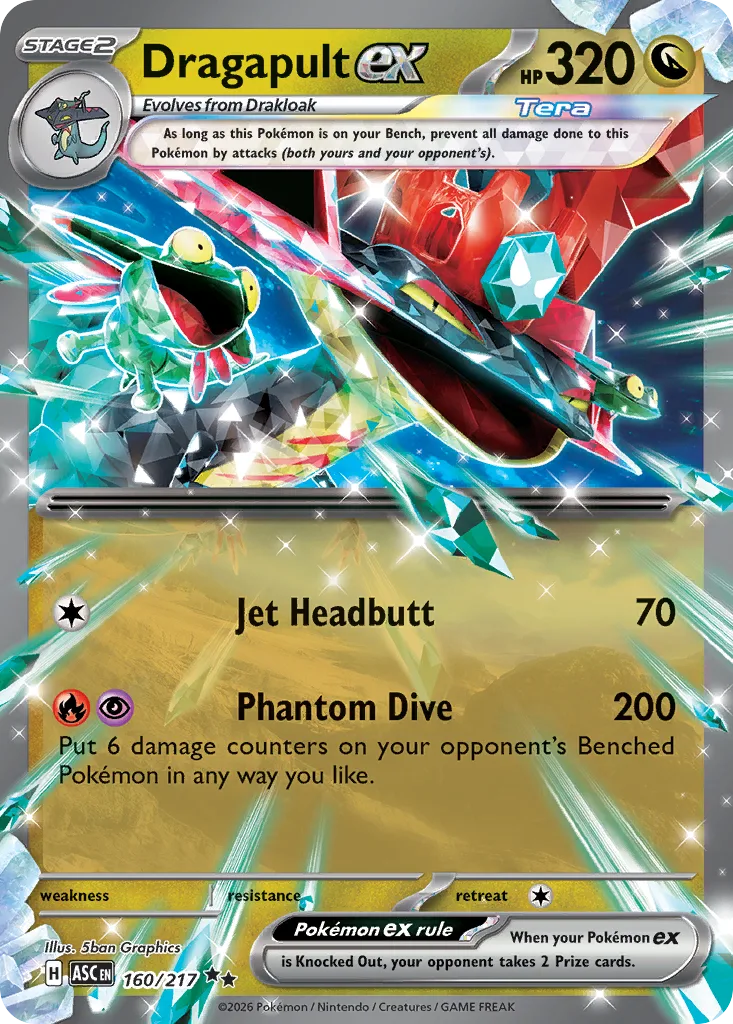
Pokémon TCG Louisville Regional 2026: Results and Top 9
Riley McKay won the Louisville Regional Championships without losing a match, on a Dragapult ex list two cards away from the one that won Worlds. Behind him, three decks that had not reached a Regional top cut all season got there at once: Sharpedo/Toxtricity, Dhelmise and Mew Box.
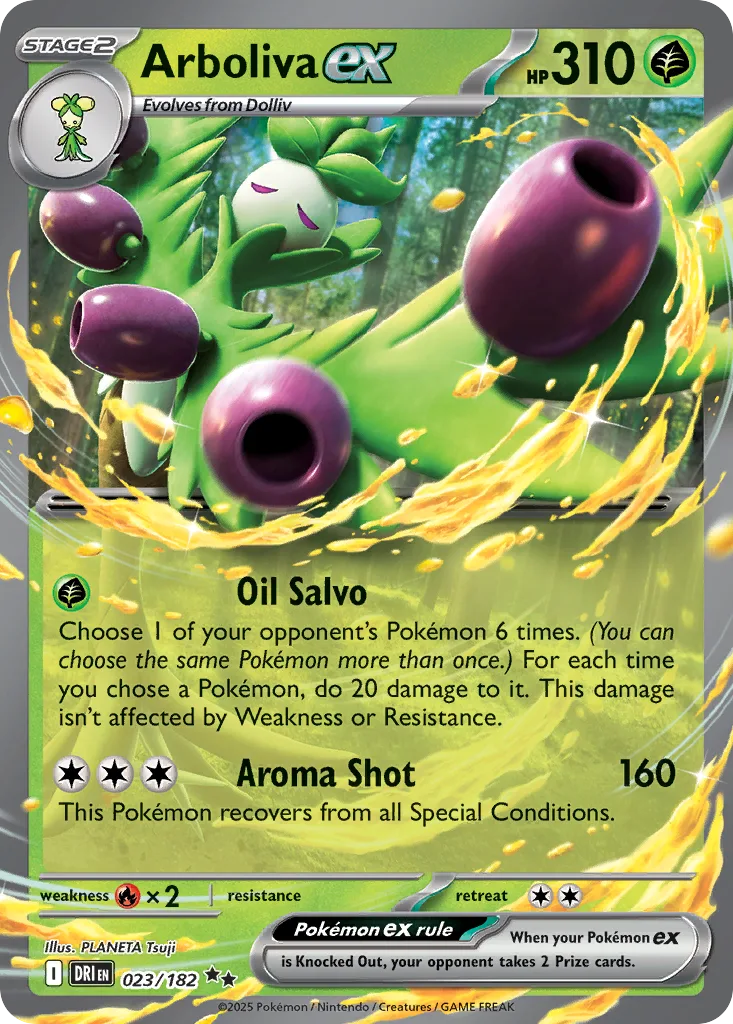
Pokémon TCG Recife Regional 2026: Results and Winning Deck
The fourth Regional of the 2027 season, and the first in Latin America, went to a deck only two of 1,074 Masters registered. Victor Carreira's Ogerpon/Meganium/Arboliva list beat three Dragapult ex players in the top cut, in a field where Dragapult builds were a bigger share than at any Regional so far this season.
Pokémon TCG Frankfurt & Brisbane Regionals 2026 Results
Two Regionals ran on September 26-27, 2026, and they told opposite stories. In Frankfurt, a deck only 26 of 2,793 Masters registered played itself in the final. In Brisbane, Dragapult ex took the top three places. Both were the first Regionals with 30th Celebration legal, so this is also the first real data on where Mew ex actually landed.
Pokémon TCG Baltimore Regional 2026: Basic Box Wins
The 2027 Championship Series opened in Baltimore with the biggest Masters field a single Regional has drawn in months, and Dragapult ex — Standard's most-played deck — made up nearly a third of it. It did not win. Here is who did, the exact 60 cards that beat the format, and the Stadium card hiding in that list that quietly breaks a rule this site said had no exceptions.
How to Play the Pokémon TCG — Full Rules and Turn Structure (2026)
Two players, 60 cards each, six face-down Prize cards, and a coin flip. That is the whole skeleton of the Pokémon TCG. Here is every rule that actually matters on turn one, from setup through the three ways to win.
Pokemon TCG at Gen Con 2026: All 168 Events, Decoded
Gen Con's catalog says Pokemon TCG has 168 events this weekend, which sounds like The Pokemon Company brought a Regional to Indianapolis. It didn't. Here's what all 168 listings actually are, who runs them, and why the biggest tabletop show in North America contains exactly one real Pokemon tournament.