How to Play the Pokémon TCG — Full Rules and Turn Structure (2026)
Two players, 60 cards each, six face-down Prize cards, and a coin flip. That is the whole skeleton of the Pokémon TCG. Here is every rule that actually matters on turn one, from setup through the three ways to win.
Two players, sixty cards each, six face-down Prize cards, and a coin flip. That is the whole skeleton of the Pokémon TCG, and the core of it has not meaningfully changed since 1996.
If you have played any other trading card game, most of your instincts port over. You draw, you deploy, you attack, you manage a resource. What trips up experienced TCG players is the one structural thing Pokémon does differently: there is no life total. You do not grind an opponent from 20 to zero. You take Prize cards, one at a time, and the sixth one ends the game. The whole rules set is built around that scoreboard, and once it clicks, everything else falls into place.
Here is every rule that matters on turn one.
What the game actually is
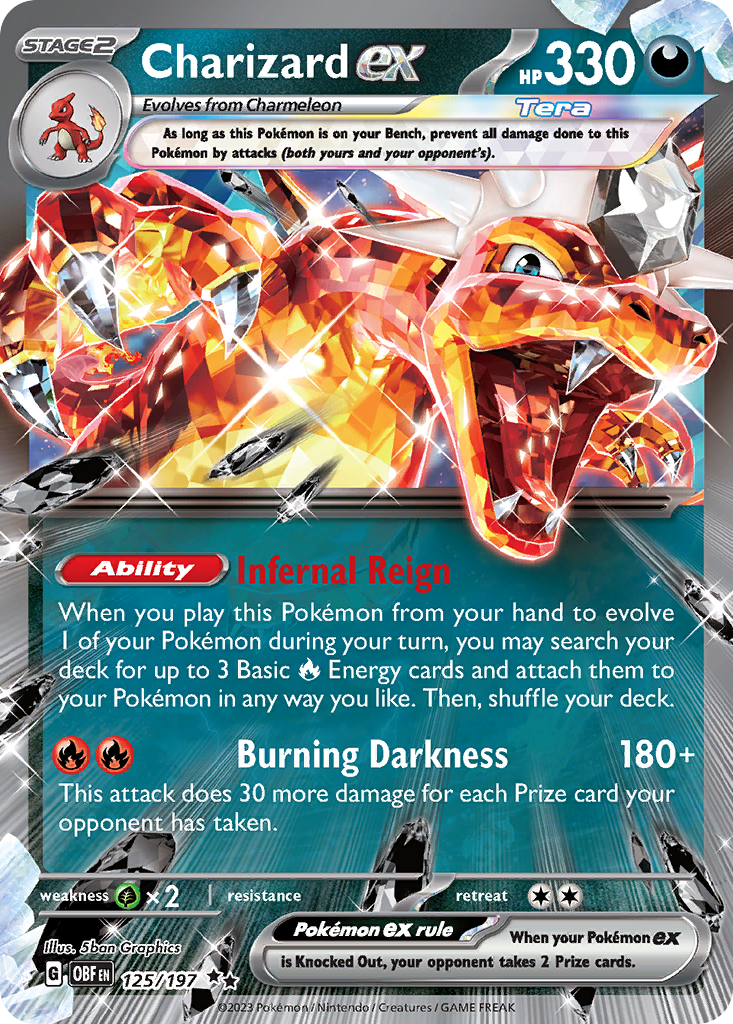
The Pokémon TCG is a two-player game where each side fields a team of Pokémon that attack each other until one falls over. Every Pokémon has printed HP. Damage sticks to it permanently in the form of damage counters, each worth 10 damage. When total damage meets or exceeds a Pokémon's HP, it is Knocked Out — it goes to the discard pile along with everything attached to it, and its owner's opponent takes a Prize card.
That is the loop. Knock something out, take a Prize. Six Prizes and you win.
The reason this design holds up 30 years later is that every Knock Out is a scoring event with a visible clock. Compare that to Commander in Magic, where a 40-life total swings wildly in a turn — in Pokémon the score moves one increment at a time, in one direction, and you can count the remaining turns on your fingers.
The three card types
Every card in a Pokémon deck is one of exactly three things. The official rulebook is blunt about this, and it is genuinely all you need.
Pokémon cards. The creatures. They have HP, a type, one or two attacks with Energy costs, a retreat cost, and usually a weakness. Only Pokémon can attack, and only Pokémon can be Knocked Out.
Energy cards. The resource. Most attacks require Energy attached to the attacking Pokémon. Basic Energy cards come in the game's Energy types — there are 11 in total, though the Scarlet & Violet series stopped printing Fairy. Special Energy cards do something extra on top of providing Energy.
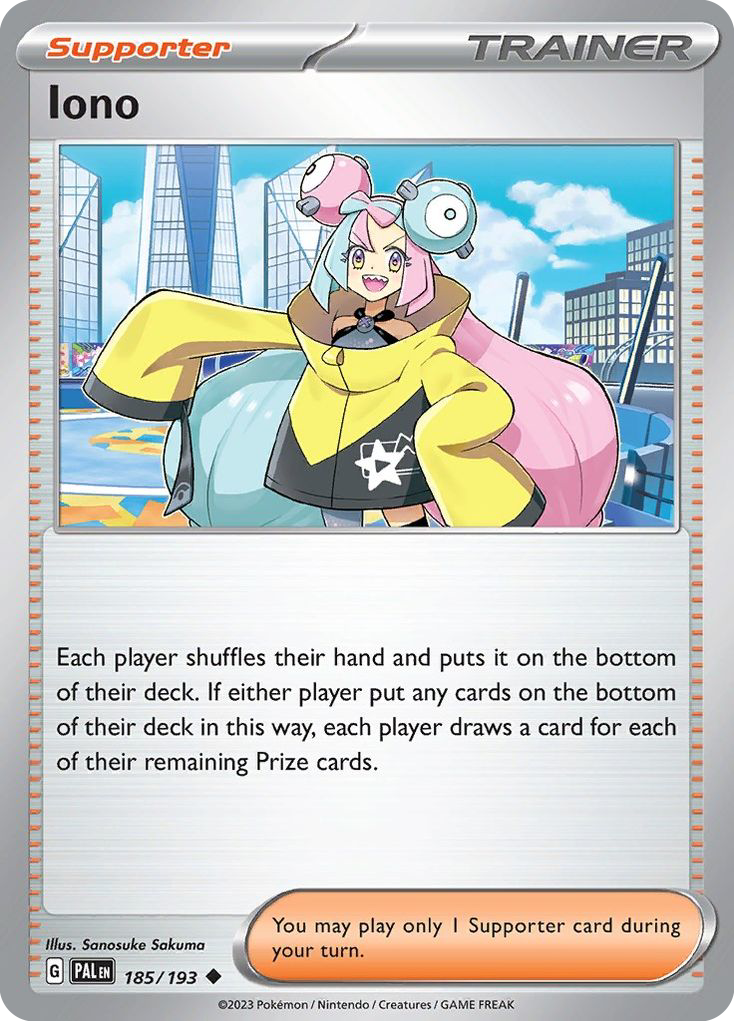
Trainer cards. Everything else, split into four subtypes: Items, Supporters, Stadiums, and Pokémon Tools. The subtype is printed in the upper-left corner and the play restriction is printed at the bottom of the card. This is where most of the real decision-making in a game lives.
Basic, Stage 1, and Stage 2 explained
Pokémon cards come in stages, and the stage is printed on the card next to the name.
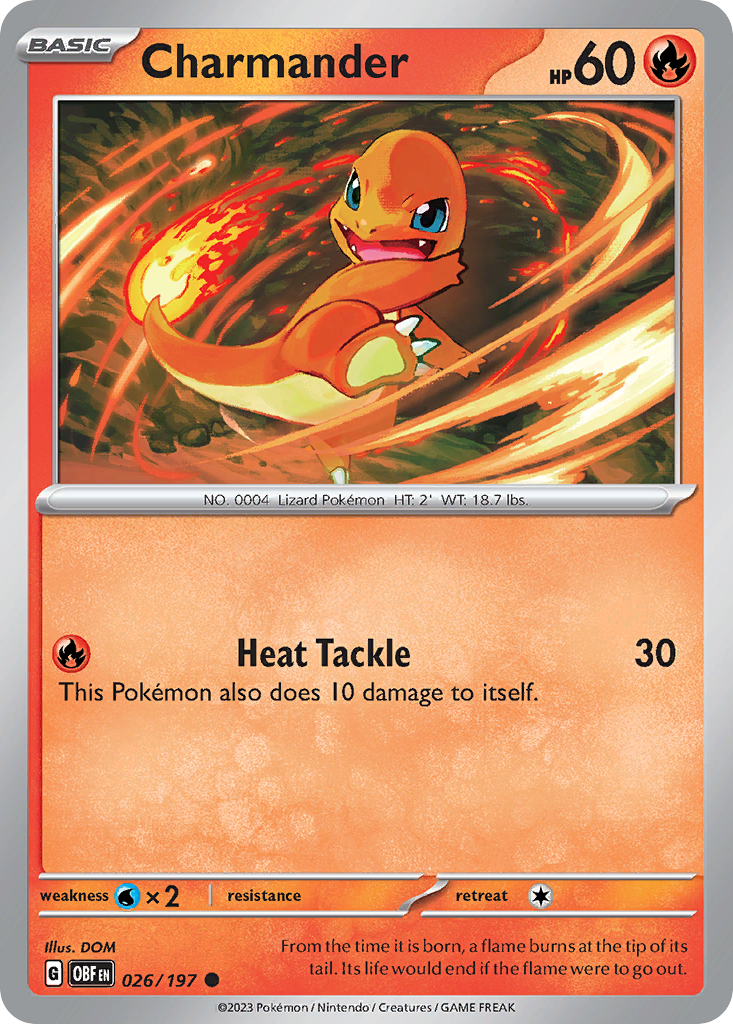
Basic Pokémon can be played straight from your hand onto the field. They are the only cards you can put into play directly, which makes them the most important cards in your deck by a wide margin.
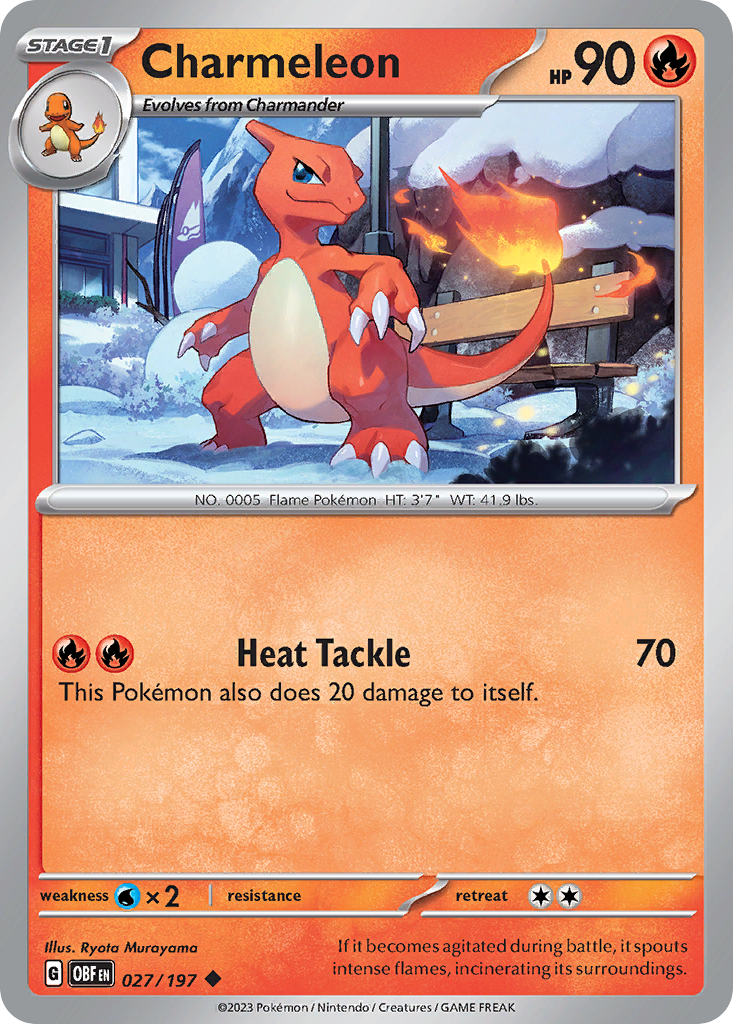
Stage 1 and Stage 2 Pokémon are Evolution cards. They cannot be played on their own. To play a Stage 1, you put it on top of a Basic already in play whose name matches the "Evolves from" line. Stage 2 goes on top of the matching Stage 1. Charmander to Charmeleon to Charizard.
When a Pokémon evolves, it keeps all attached Energy, Tools, and damage counters, and it loses all Special Conditions and any lingering attack effects. It also loses access to the previous stage's attacks and Abilities — the new card is the card now.
Three evolution timing rules that catch everyone:
- You cannot evolve a Pokémon on the turn it first came into play.
- You cannot evolve a Pokémon on your very first turn of the game, full stop.
- Evolving counts as coming into play, so you cannot evolve the same Pokémon twice in one turn.
You can evolve as many different Pokémon as you like in a turn, and you can evolve Benched Pokémon, not just your Active one.
Setting up the board
Setup is fast once you have done it twice.
- Flip a coin. The winner decides who goes first.
- Shuffle your 60-card deck and draw seven cards.
- Check your hand for a Basic Pokémon. If you have none, you take a mulligan — reveal your hand, shuffle it back, draw seven again, and repeat until you get one. Your opponent may then draw up to one card for each extra mulligan you took beyond their own — the draw is netted against their mulligans, not counted off your total.
- Put one Basic Pokémon face down in the Active Spot.
- Put up to five more Basic Pokémon face down on the Bench.
- Set the top six cards of your deck aside face down as your Prize cards.
- Both players flip everything face up and start.
Two zone rules to burn into your brain. You must always have exactly one Active Pokémon — it is the only one that can attack or be attacked by a normal attack. And the Bench holds a maximum of five Pokémon. Any Pokémon in play that is not Active sits on the Bench.
The Bench is not a waiting room. It is where you build your next attacker, where your Ability-holders sit safely, and where a bad Bench state loses you the game three turns before you notice. Half of good play is Bench management.
What you can do on a turn
A turn has three parts, and the third one ends it.
1. Draw a card. Not optional. If your deck is empty when you go to draw, you lose immediately.
2. Take any of these actions, in any order:
- Put as many Basic Pokémon from your hand onto your Bench as you want, up to the five-Bench cap.
- Evolve as many Pokémon as you want, subject to the timing rules above.
- Attach one Energy card from your hand to one of your Pokémon. Once per turn. That is the resource clock of the entire game.
- Play Trainer cards: as many Item and Pokémon Tool cards as you like, but only one Supporter per turn and only one Stadium per turn.
- Retreat your Active Pokémon, once per turn.
- Use as many Abilities as you want. Abilities are not attacks — using one does not end your turn.
3. Attack, then end your turn. Attacking is always the last thing you do. Once you declare an attack, the turn is over even if you forgot to attach Energy.
The one-Energy-per-turn rule is the single most important number in the game. A Charizard ex that needs three Energy is a three-turn investment unless you find a card that accelerates it. Every deck in the format is, at some level, a plan for getting around that limit.
The player who goes first gets two extra restrictions: they cannot attack on their first turn, and they cannot play a Supporter on their first turn. That is why "do you want to go first or second?" is a real decision and not a formality.
Attacking, weakness, and resistance
Attacking is three checks.
Check the Energy. Look at the attack's cost. Colored symbols require that specific Energy type. The colorless symbol accepts any Energy at all. You need at least that much Energy attached to the Active Pokémon.
Check weakness and resistance. These are printed in the lower-left corner of the defending card. Weakness in the current era is almost always ×2, meaning a 60-damage attack lands for 120. Resistance in the Scarlet & Violet series reduces incoming damage by 30. If a Pokémon somehow has both against the same type, apply weakness first and resistance second.
The critical caveat: weakness and resistance only apply to the Active Pokémon. Damage that hits the Bench ignores both, unless a card explicitly says otherwise.
Place damage counters. One counter per 10 damage. If a Pokémon's total damage reaches its HP, it is Knocked Out. The owner discards it and everything attached, then promotes a Pokémon from their Bench. Their opponent takes one Prize card — two if the Knocked Out Pokémon was a Pokémon ex, and three if it was a Mega Evolution Pokémon ex. The award follows whose Pokémon was Knocked Out, not who dealt the damage, which matters when an attack hurts its own user.
That multi-Prize liability is the central risk-reward tension in modern deckbuilding. Big ex Pokémon hit harder and soak more, but every one you lose hands your opponent a third of the game — half of it, for a Mega Evolution ex. Understanding that trade is where deck building basics starts.
Between turns there is a step called Pokémon Checkup, where Special Conditions resolve in a fixed order: Poisoned, Burned, Asleep, Paralyzed. Poison adds a damage counter. Burn adds two counters and then flips to see if it clears. Asleep flips to wake up. Paralysis clears after its owner's next turn. Moving a Pokémon to the Bench or evolving it clears every Special Condition instantly.
Retreating without wasting your turn
Your Active Pokémon is stuck in front unless you move it. Retreating swaps it with a Benched Pokémon, and the cost is printed in the bottom-right corner as colorless symbols — from zero (a "free retreat") up to five.
To retreat, discard that many Energy cards from your Active Pokémon, then swap. Damage counters and attached cards travel with each Pokémon. You may retreat once per turn, and you can still attack afterward with the new Active Pokémon.
Two conditions block it entirely: a Pokémon that is Asleep or Paralyzed cannot retreat. Confused can — you no longer flip a coin for that.
Free-retreat Pokémon are quietly some of the most valuable cards in any deck, because retreating for zero lets you reposition without paying the Energy tax. If you are comparing this to a game like Cookie Run: Braverse, retreat cost is the closest thing Pokémon has to a positioning tax, and it is why some 200 HP walls never see play.
The three ways to win
The rulebook lists exactly three, and every game ends in one of them:
- Take all six of your Prize cards. The intended way. Knock Out enough Pokémon and the game is yours.
- Your opponent has no Pokémon left in play. If they have to promote a new Active and their Bench is empty, they lose on the spot. This is why a lone Active with an empty Bench is a genuine losing position regardless of the Prize count.
- Your opponent cannot draw at the start of their turn. Empty deck, no draw, game over. Decking out is a real win condition and a real risk, because Pokémon decks burn through cards fast.
Route 2 is the one newcomers never see coming. Route 3 is the one that punishes greedy draw-engine decks.
Deck rules you need before game one
Construction rules are short:
- Exactly 60 cards. Not 59, not 61.
- Maximum four copies of any card with the same name. Basic Energy cards are exempt — run as many as you want.
- At least one Basic Pokémon. Zero Basics means you physically cannot start.
- One ACE SPEC card total, not one of each. If your deck runs an ACE SPEC, that is your only one.
The official rulebook's own starting ratio for a first deck is 12–15 Energy, 20–25 Trainer cards, and the rest Pokémon. That is a genuinely reasonable skeleton, though competitive lists usually run leaner on Energy and heavier on Trainers. If you have built a curve for a game like Limited Magic, the instinct transfers — you are just budgeting attachments instead of lands.
Play! Pokémon sanctions three Constructed formats for organized play. Standard rotates roughly once a year and only allows recent sets. Expanded reaches much further back. Unlimited allows cards from any expansion or promo released in the US, and has no banned cards at all as of the May 2026 handbook. All three use the construction rules above — 60 cards, four copies, six Prizes. Buy into Standard if you plan to play at events. The set symbol and regulation mark on each card tell you what is legal — and if you are trying to work out what the little symbols in the bottom corner actually mean, our card rarities guide breaks the whole system down.
There are three sanctioned Limited formats as well — Sealed, Booster Draft, and Build & Battle Draft — where you build out of product opened at the event. Those decks are 40 cards, there is no copy limit, and matches are played for four Prize cards instead of six.
Mistakes that cost new players games
- Benching nothing on turn one. If your only Pokémon gets Knocked Out and your Bench is empty, you lose immediately. Fill the Bench early.
- Attacking before you finish your turn. Attacking ends the turn. Attach Energy, play your Supporter, and use Abilities first. Every single new player eats this one.
- Burning your Supporter on autopilot. One per turn is a hard cap and Supporters are the strongest cards in most decks. Think about which one, and when.
- Overcommitting to a single ex. Losing a Pokémon ex hands over two Prizes, and a Mega Evolution ex three. Building a deck that only wins if one card survives is a coin flip, not a strategy.
- Ignoring retreat cost when building. A four-retreat attacker with no switching cards gets trapped in the Active Spot and beaten to death.
- Forgetting weakness exists. A 60-damage attack into weakness is 120. Check the lower-left corner before you decide the board is safe.
Quick Action Checklist
- Grab a ready-made 60-card deck from a store — it is legal out of the box and saves you the deckbuilding step.
- Learn the turn order cold: draw, do everything else, attack last.
- Track your one Energy attachment and your one Supporter every single turn. Those are your two hard limits.
- Always keep at least two Pokémon in play so a single Knock Out cannot end the game.
- Check weakness before every attack and resistance before every board read.
- Count Prize cards out loud. Knowing you are on a two-Prize clock changes what you should be doing.
- Try Pokémon TCG Live, the free official digital client, to grind reps without buying cards.
- When the rules feel automatic, move on to building your own list and picking a real archetype.
Frequently Asked Questions
How many cards are in a Pokémon TCG deck?
How do you win a game of the Pokémon TCG?
How many Pokémon can you have on the Bench?
How much Energy can you attach per turn?
Can you play more than one Supporter card in a turn?
How does weakness work in the Pokémon TCG?
When can you evolve a Pokémon?
What happens when you retreat a Pokémon?
Keep Reading
- Pokémon.com: Official Pokémon Trading Card Game Rulebook
- Pokémon.com: Learn to Play the Pokémon TCG
- Pokémon.com: Mega Evolution expansion overview — Mega Evolution Pokémon ex give up 3 Prize cards when Knocked Out
- Bulbapedia: Pokémon Trading Card Game
- Bulbapedia: Retreat Cost (TCG)
- Bulbapedia: Standard Format (TCG)
- Play! Pokémon: TCG Tournament Handbook (rev. May 21, 2026)
Related Guides
Pokémon TCG Prize Cards Explained: 1, 2, and 3-Prizers
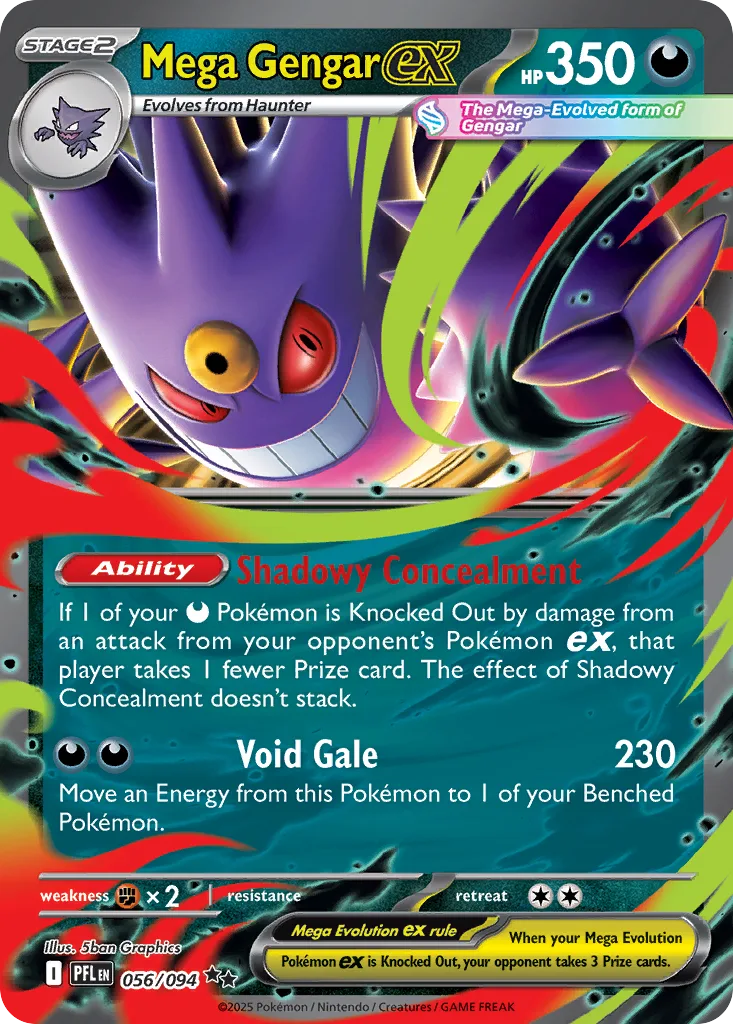
The Prize count is the only score the Pokémon TCG keeps. Here is what each Pokémon actually costs you when it goes down — one, two or three — measured across all 2,947 Standard-legal printings, plus the 44 Standard-legal card names whose text reads the Prize count or changes what a Knock Out pays.
Pokémon TCG Prerelease: Build & Battle Box, 40-Card Decks
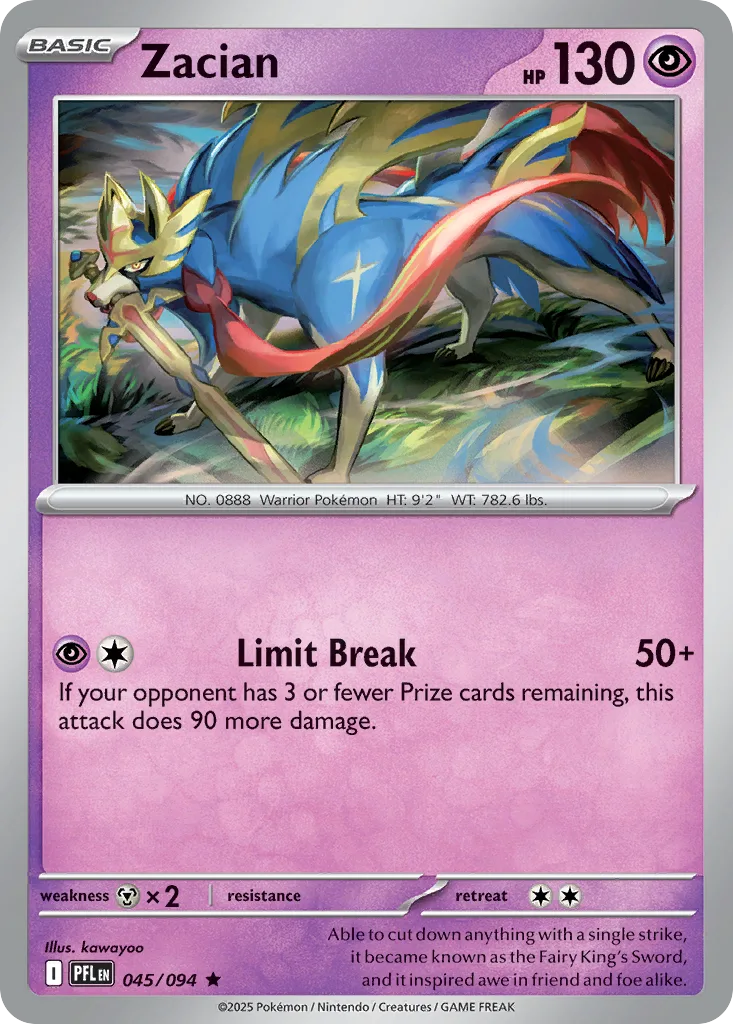
A Prerelease is the one Pokémon TCG event where the entry fee is the deck. It is also a different game to the one on the Championship Series circuit: 40 cards, no copy limit, four Prize cards. Here is what the Tournament Handbook and the Play! Pokémon organizer guide actually say about Limited play, and what the maths does when you cut two Prizes out of the game.
Pokémon TCG Tournament Rules: Deck Lists, the Clock, and Penalties
The rules that decide your first League Cup are not in the rulebook. They are in three separate Play! Pokémon documents, revised on a quarterly cycle, and they cover sleeve colour, how a die has to be numbered, what happens to your match when the clock hits zero, and the two penalties that exist in the Pokémon TCG and nowhere else in the program.
Pokémon TCG Abilities Explained: Triggers, Ability Lock, and Damage Math
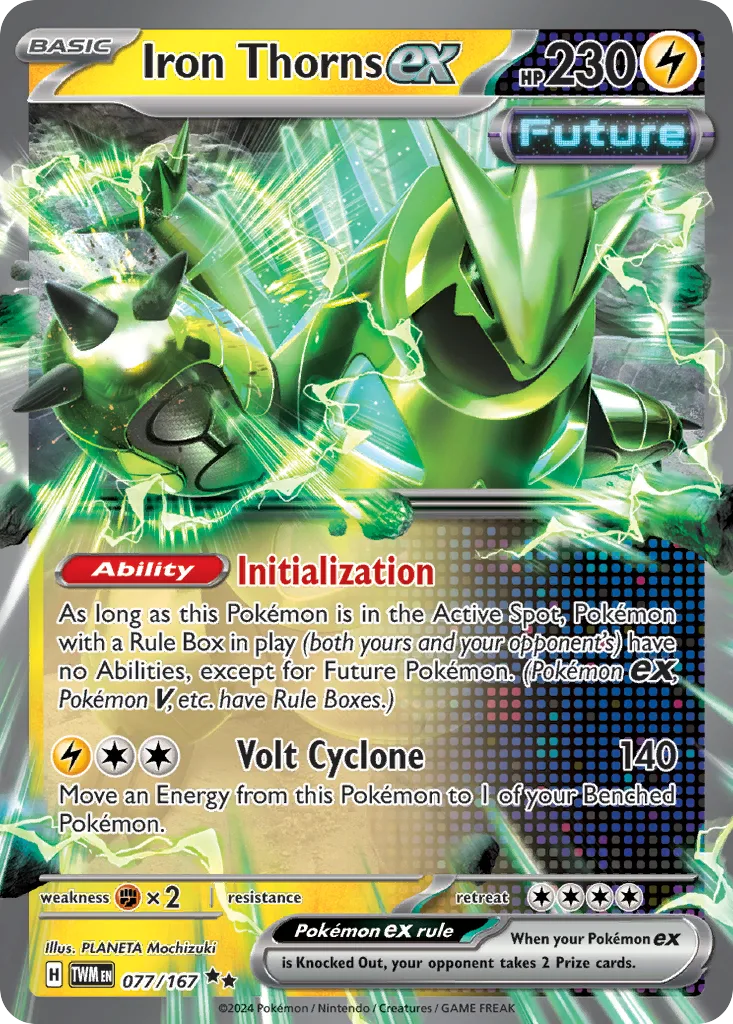
An Ability is not an attack, and almost every rules argument about Abilities comes from someone forgetting that one line. Here is what the 2026 Web Rulebook says about when Abilities fire, where they work from, why a Paralyzed Pokémon still uses them, and what the parenthetical at the end of a damage-reduction Ability is really telling you.
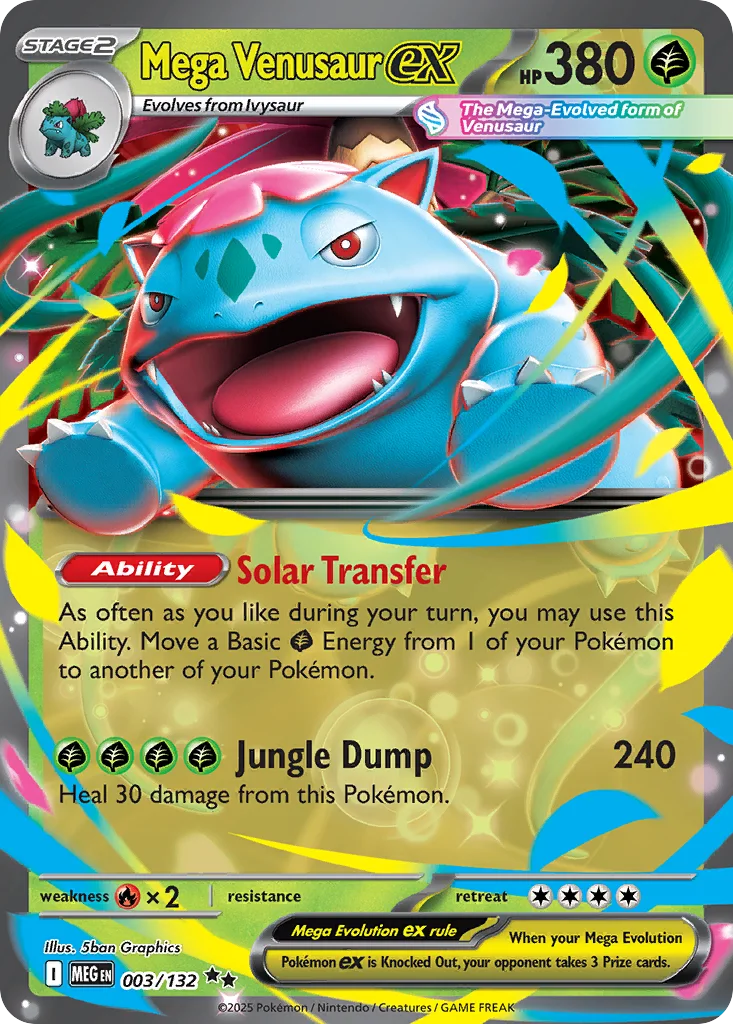
Pokémon TCG Evolution Explained: Stages, Rare Candy, Mega
Evolving looks like the simplest action in the Pokémon TCG until you count the restrictions — there are three, plus two more that get treated as restrictions and are not. Here is what the rulebook actually says about stages, timing, and what survives an evolution, plus how the 2025-26 Mega Evolution era quietly rewrote the whole mechanic for the second time.
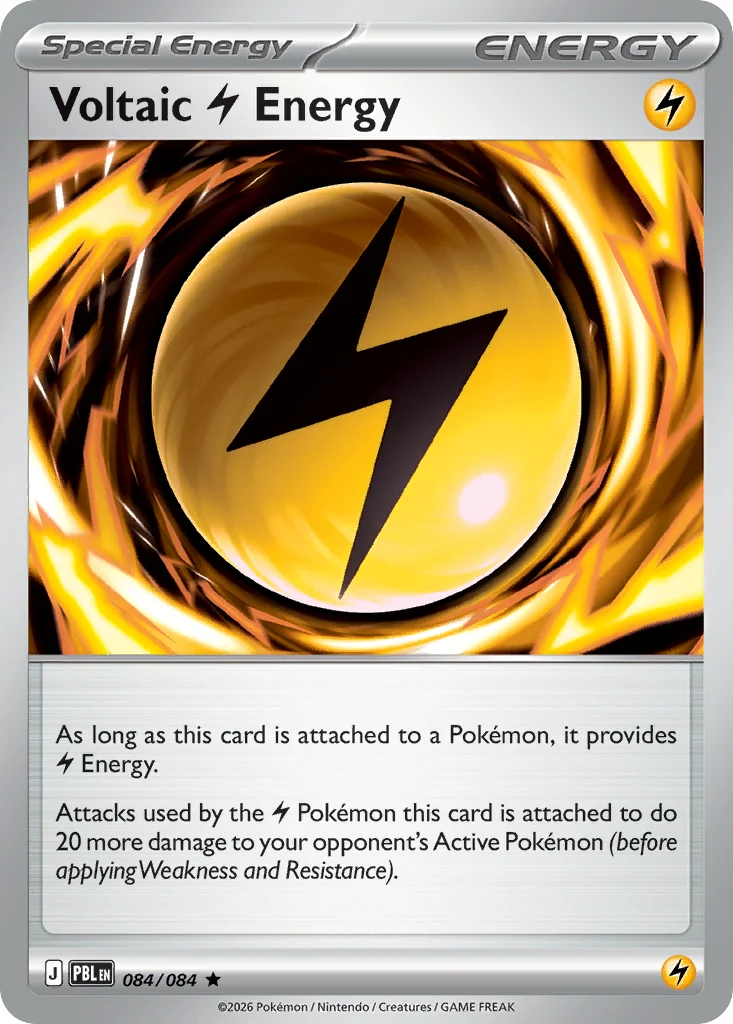
Pokémon TCG Energy Explained: Basic vs Special, Attack Costs, and the One-Per-Turn Rule
Attacking never spends your Energy. Retreating does. There are exactly nine basic Energy cards in the game's history and two Pokemon types that never got one. Here is how Energy actually works, straight from the rulebook and the card database — attack costs, the one-per-turn attachment rule, every legal way around it, and why Special Energy is a target painted on your attacker.