Pokémon TCG Formats Explained: Standard, Expanded, Unlimited
Play! Pokémon sanctions three Constructed formats, and Standard is the one the circuit runs on. Here is what the other two actually are: the Expanded card pool the Tournament Handbook enumerates set by set, the 27-card ban list that trims it, the Unlimited format with no bans at all, and the awkward truth about where you can still sit down and play any of it.
Ask what format the Pokémon TCG is played in and you will get one answer: Standard. It is the format of every Regional and every League Cup. But the TCG Tournament Handbook — 27 pages, last revised 21 May 2026 — sanctions three Constructed formats, and the other two are where a decade of your collection is still legal. This is what Standard, Expanded, and Unlimited each actually contain, card pool by card pool, and where each of them is genuinely playable in 2026.
One rulebook, three card pools
Every Constructed format uses the same deck construction rules, straight from section 4 of the handbook: exactly 60 cards, no more than 4 copies of a single card as defined by its English-language name, Basic Energy excepted, and matches played for 6 Prize cards. Nothing about the construction changes between formats. The only thing that changes is which cards you are allowed to reach for.
| Standard | Expanded | Unlimited | |
|---|---|---|---|
| Card pool | Regulation marks H, I, J | Every expansion from Black & White (2011) forward | Everything ever released in the US |
| Banned cards | 0 | 27 | 0 |
| Rotates? | Roughly yearly | Never has | Never |
| Deck rules | 60 cards, 4 copies, 6 Prizes | Same | Same |
That middle column is the interesting one. Expanded is a bigger game than Standard by more than a decade of printings, it has the only ban list in the game, and it has not had an official tournament in Play! Pokémon regions in years. All three of those facts are worth unpacking.
Standard: the format with a circuit
Standard is the rotating format, and since 2023 its card pool has been defined by the regulation mark in the bottom corner of the card, not by set names. The handbook's legality table gives each mark a start date:
| Regulation mark | Became legal | Standard status today |
|---|---|---|
| G | April 14, 2023 | Rotated out April 10, 2026 |
| H | April 5, 2024 | Legal |
| I | April 11, 2025 | Legal |
| J | March 6, 2026 | Legal |
The 2026 rotation removed G-mark cards on April 10, 2026 for in-person play and March 26, 2026 on Pokémon TCG Live, and the announcement is explicit that "A card's legality status is not based on which expansion it's from." New cards join the pool on the second Friday following their US release, against a schedule the handbook describes as averaging six expansions per year. The per-printing reprint rule — why an old card with a dead regulation mark can still be legal — is covered in detail in our tournament rules guide, and which sets those marks map onto is in the post-rotation set breakdown.
The other thing Standard has: zero banned cards. The official banned card list states it in one line — "No cards are currently banned in the Standard format." Rotation is the balance mechanism, and the March 2026 announcement says outright that it "will be an extremely rare occurrence for cards to be banned from the Standard format." Which makes the next section the exception that proves the design.
What the Expanded card pool actually contains
Expanded is usually summarised as "Black & White forward," and that is accurate, but the handbook does not leave it at a slogan — section 4.1.1 enumerates the pool. It has four parts:
- Every card with a regulation mark. D, E, and F (the Sword & Shield era) are listed as Expanded-only marks, and G, H, I, and J are all Expanded-legal — including G, which is out of Standard but never left Expanded.
- 42 pre-regulation-mark expansions, named individually. Twelve from the Black & White Series (Black & White through Legendary Treasures, including Dragon Vault), fifteen from the XY Series (Kalos Starter Set through Evolutions), and fifteen from the Sun & Moon Series (Sun & Moon through Cosmic Eclipse).
- Nine additional releases, including the McDonald's Collections from 2011 to 2021, the Black & White and XY-era Trainer Kits, the two Sun & Moon Trainer Kits, and the Detective Pikachu set.
- Black Star promo cards — BW promos numbered 01 and higher, XY promos numbered 01 and higher, and SM promos numbered 158 and higher.
That pool has been stable for a long time. Bulbapedia's format history records Expanded joining the program in the 2014-15 season, and while the rulebook allows for Expanded rotations, none has ever occurred. Every season since its debut has been "Black & White onward."
The trade-off for a pool that deep is printed right in the handbook: "the Expanded format will be aggressively monitored because there are so many cards and potential combinations available to use." Monitoring, in practice, means the ban list.
The Expanded ban list, in full
The official Pokémon TCG Banned Card List currently names 27 cards banned in Expanded — 13 Pokémon, 7 Supporters, 6 Items, and 1 Stadium. Standard and Unlimited have none. This list is the entire set of cards banned anywhere in sanctioned Play! Pokémon TCG play:
| Card | Type | Banned printings |
|---|---|---|
| Archeops | Pokémon | Noble Victories 67/101; Dark Explorers 110/108 |
| Sableye | Pokémon | Dark Explorers 62/108 |
| Ghetsis | Supporter | Plasma Freeze 101/116, 115/116 |
| Red Card | Item | XY 124/146; Generations 71/83 |
| Milotic | Pokémon | Flashfire 23/106 |
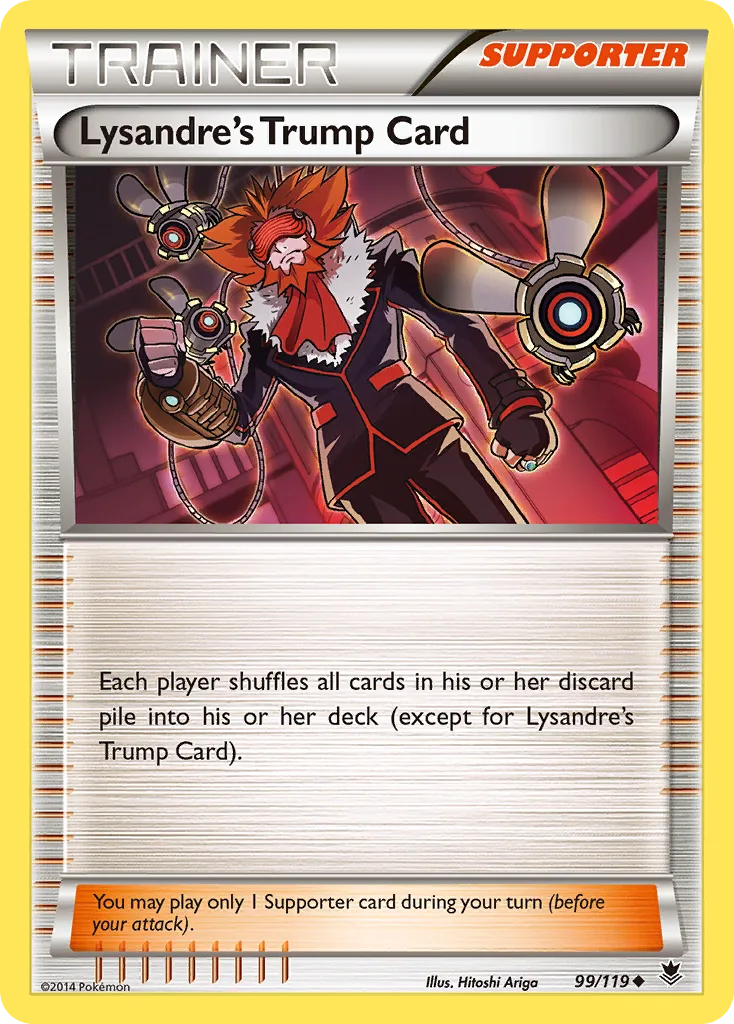
| Lysandre's Trump Card | Supporter | Phantom Forces 99/119, 118/119 |
| Maxie's Hidden Ball Trick | Supporter | Primal Clash 133/160, 158/160 |
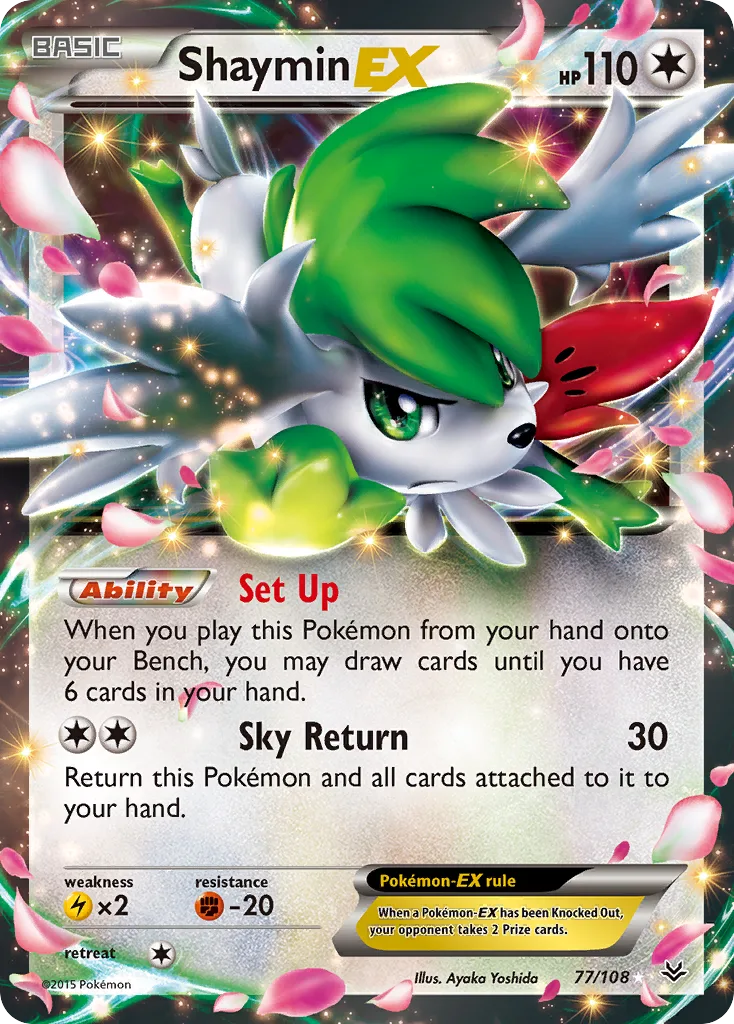
| Shaymin-EX | Pokémon | Roaring Skies 77/108, 77a/108, 106/108 |
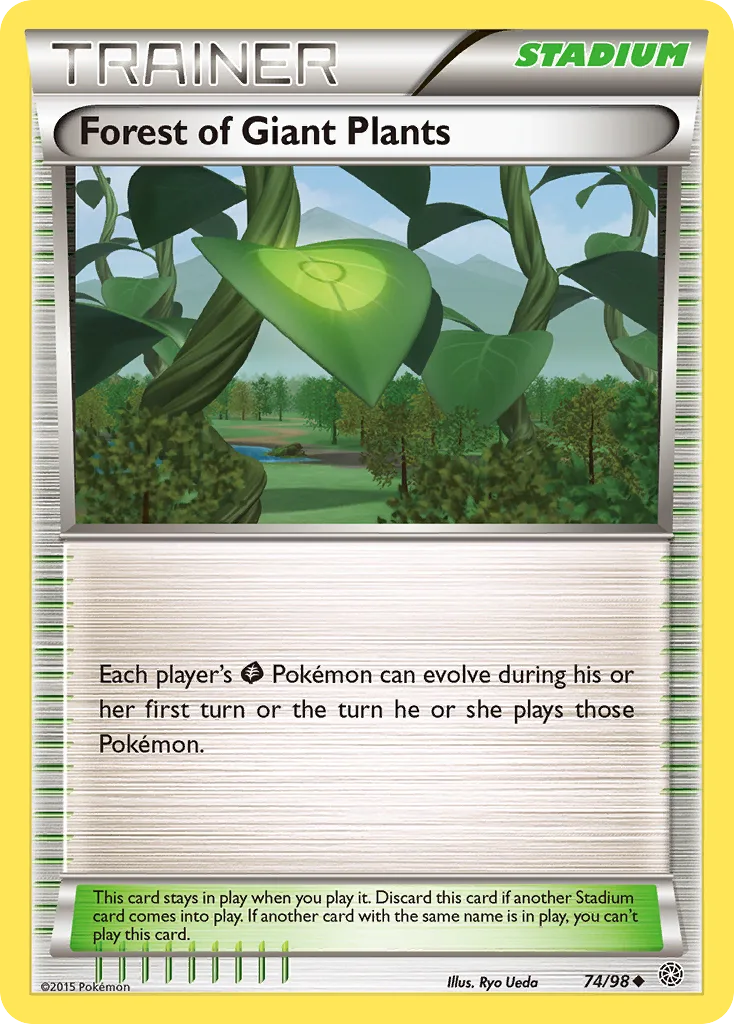
| Forest of Giant Plants | Stadium | Ancient Origins 74/98 |
| Hex Maniac | Supporter | Ancient Origins 75/98, 75a/98 |
| Delinquent | Supporter | BREAKpoint 98/122, 98a/122, 98b/122 |
| Puzzle of Time | Item | BREAKpoint 109/122 |
| Marshadow | Pokémon | Shining Legends 45/73; Black Star Promo SM85 |
| Oranguru | Pokémon | Ultra Prism 114/156 |
| Flabébé | Pokémon | Forbidden Light 83/131 |
| Unown | Pokémon | Lost Thunder 90/214 |
| Unown | Pokémon | Lost Thunder 91/214 |
| Mismagius | Pokémon | Unbroken Bonds 78/214 |
| Chip-Chip Ice Axe | Item | Unbroken Bonds 165/214 |
| Lt. Surge's Strategy | Supporter | Unbroken Bonds 178/214; Hidden Fates 60/68 |
| Jessie & James | Supporter | Hidden Fates 58/68, 68/68 |
| Reset Stamp | Item | Unified Minds 206/236, 206a/236, 253/236 |
| Duskull | Pokémon | Cosmic Eclipse 83/236 |
| Island Challenge Amulet | Item | Cosmic Eclipse 194/236, 265/236 |
| Flapple | Pokémon | Rebel Clash 022/192; Shining Fates SV013/SV122; Astral Radiance TG02/TG30; SWSH Promo SWSH022 |
| Scoop Up Net | Item | Rebel Clash 165/192, 207/192 |
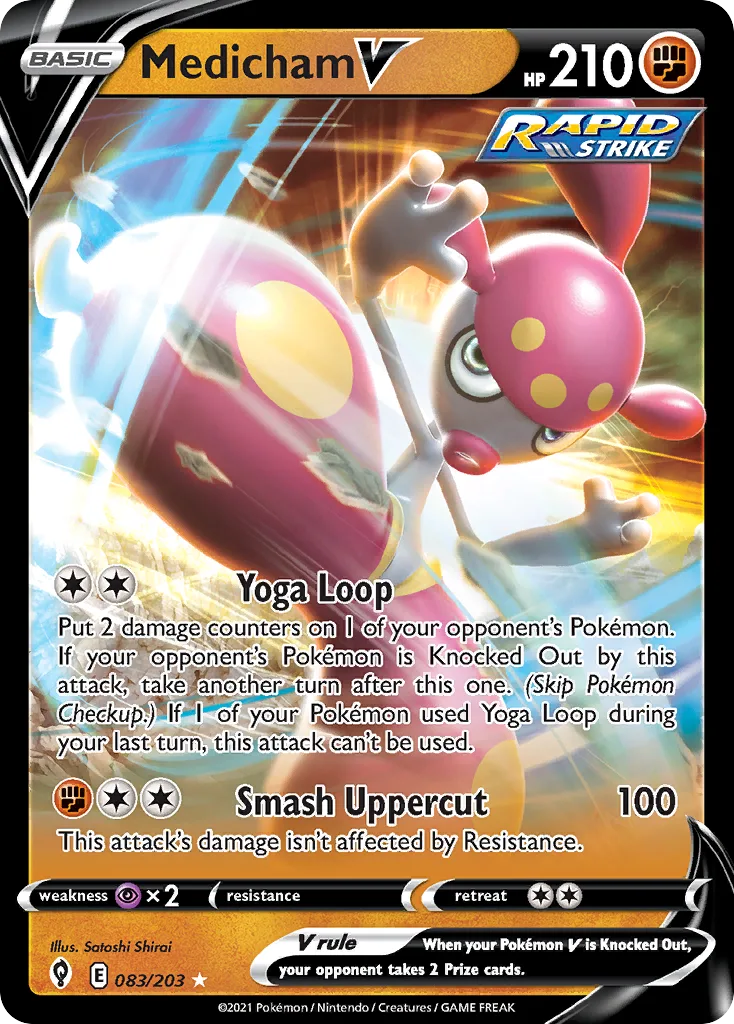
| Medicham V | Pokémon | Evolving Skies 083/203, 185/203, 186/203 |
The list has patterns. Bulbapedia's summary of the official quarterly announcements notes that several bans answered strategies that let the player going first win before their opponent took an action, and others targeted hand disruption. The two Unown entries are different cards, not two printings — Lost Thunder printed two separate Unown, 90/214 and 91/214, and both are banned individually.
The newest entry shows the process still runs even with the format dormant. Medicham V was added by the banned list announcement of March 12, 2026, effective April 10, 2026 — the same day as the Standard rotation. The stated reason: its Yoga Loop attack "can be used to take an additional turn and win the game quickly" when combined with Abilities that place damage counters, and the ban was aimed at weakening that archetype. The same announcement made no changes to Standard, and the July 2, 2026 quarterly announcement changed nothing in either format.
Where you can actually play Expanded in 2026
Here is the part a formats guide owes you honestly. Expanded is fully sanctioned — the handbook lists it beside Standard with no asterisk — but per Bulbapedia, there has not been an official Expanded tournament in Play! Pokémon regions since before the COVID-19 pandemic. The ban list keeps getting maintained alongside new releases, as the March 2026 Medicham V ban shows, but the format's competitive circuit has been dormant for years. When Gen Con 2026 ran 168 Pokémon TCG events, Expanded constructed got exactly one of them.
The digital story is catching up slowly. Pokémon TCG Live offers an "Expanded (Beta)" format that only allows cards from Sun & Moon onward — Black & White and XY Series cards can be collected in the app but are only usable if a later series reprinted them. The 2026 rotation announcement says phased support for additional Expanded cards is expected to begin later this year. One digital-only quirk: Bulbapedia records Blaine's Quiz Show from Unified Minds as banned exclusively in TCG Live, on top of the paper ban list.
Japan is the exception. Its equivalent, the Extra Regulation, still sees occasional tournament support — Bulbapedia notes the Champions League Aichi May event annually runs an Extra Regulation side bracket next to its main Standard event. Japan's pool is drawn differently too: cards released before the ADV Expansion Pack are explicitly disallowed.
So the practical answer: Expanded in 2026 is a locals-and-kitchen-table format with an actively maintained rule set. If your store's League wants to run it, the rules are current and the ban list is one page. What it does not have is a road to a Regional.
Unlimited: no rotation, no bans, one wording rule
Unlimited is the third sanctioned Constructed format, and its card pool is one sentence in section 4.2: decks may contain cards from any Pokémon TCG expansions and promotional cards released in the United States. Base Set onward, everything. There are currently no banned cards in the Unlimited format — the ban list page and the handbook both say so.
The one rule worth knowing is about old Trainer cards. Because every expansion is legal, you will run into Trainer cards from early sets that share a name with a modern card but do completely different things. The handbook's answer: you may play the old copy, but the wording of the most recent version is used wherever that card is concerned. The old cardboard is a stand-in for the new text.
Unlimited is where the format conversation gets philosophical, because with no bans, the first-turn combo decks that got cards banned out of Expanded are simply legal. Nothing in the current handbook restricts them. Treat it as the format for playing the collection, not for competitive balance.
Which format to build for
The handbook will not tell you this part, so the numbers have to.
- If you want to play in events, build Standard. It is the format of the Championship Series. Start with the deck building guide and check marks H, I, and J on everything.
- If your collection runs deep and your locals will host it, Expanded is a real format with current rules. Audit your deck against the 27-card table above — the ban list is the whole delta between "Black & White forward" and legal.
- If you want to play your childhood binder, that is Unlimited, and the only preparation is reading the modern wording of your old Trainers.
One warning for the Expanded-curious buying singles: banned is per card, not per printing. All three printings of Medicham V from Evolving Skies are on the list, and Flapple is banned across four separate products. Check the card name against the list before checking the price.
Quick Action Checklist
- Standard = regulation marks H, I, J. G rotated out April 10, 2026. Zero banned cards.
- Expanded = every expansion from Black & White forward, all regulation marks D through J, minus 27 banned cards.
- Unlimited = everything US-released, nothing banned, old Trainers play with their newest wording.
- All three build the same deck: 60 cards, 4 copies per name, Basic Energy uncapped, 6 Prizes.
- Before an Expanded night, check the ban list, not just the era. 13 Pokémon, 7 Supporters, 6 Items, 1 Stadium.
- Do not expect Expanded on the circuit. No official Expanded tournament has run in Play! Pokémon regions since before the pandemic; TCG Live's version is a Sun & Moon-forward beta.
- New sets enter Standard and Expanded together, on the second Friday after US release.
Frequently Asked Questions
What are the formats in the Pokémon TCG?
What is the Expanded format in the Pokémon TCG?
How many cards are banned in the Pokémon TCG Expanded format?
Is the Expanded format still played in 2026?
Can you play Expanded on Pokémon TCG Live?
What is the Unlimited format in the Pokémon TCG?
Are any cards banned in the Pokémon TCG Standard format?
Keep Reading
- The Pokémon Company — TCG Tournament Handbook (PDF, revised 21 May 2026): Constructed formats and legal expansions §4.1, release schedule §4.1.2, banned cards §4.1.4, Unlimited format §4.2
- The Pokémon Company — Pokémon TCG Banned Card List: 27 cards banned in Expanded, none in Standard or Unlimited
- The Pokémon Company — Banned List and Rule Changes Announcement (12 March 2026): Medicham V banned in Expanded effective 10 April 2026
- The Pokémon Company — 2026 Pokémon TCG Standard Format Rotation Announcement: G rotated, H/I/J legal, TCG Live phased Expanded support
- Bulbapedia — Expanded format (TCG): 2014-15 debut, format history, tournament dormancy since the pandemic, TCG Live Expanded (Beta), Japan Extra Regulation
Related Guides
Pokémon TCG Tournament Rules: Deck Lists, the Clock, and Penalties
The rules that decide your first League Cup are not in the rulebook. They are in three separate Play! Pokémon documents, revised on a quarterly cycle, and they cover sleeve colour, how a die has to be numbered, what happens to your match when the clock hits zero, and the two penalties that exist in the Pokémon TCG and nowhere else in the program.
Pokémon TCG Abilities Explained: Triggers, Ability Lock, and Damage Math
An Ability is not an attack, and almost every rules argument about Abilities comes from someone forgetting that one line. Here is what the 2026 Web Rulebook says about when Abilities fire, where they work from, why a Paralyzed Pokémon still uses them, and what the parenthetical at the end of a damage-reduction Ability is really telling you.
Pokémon TCG Evolution Explained: Stages, Rare Candy, Mega
Evolving looks like the simplest action in the Pokémon TCG until you count the restrictions — there are three, plus two more that get treated as restrictions and are not. Here is what the rulebook actually says about stages, timing, and what survives an evolution, plus how the 2025-26 Mega Evolution era quietly rewrote the whole mechanic for the second time.
Pokémon TCG Special Conditions Explained: Poison, Burn, Sleep, Paralysis, and Confusion
Poison never stops ticking. Sleep does nothing half the time. Paralysis steals exactly one turn, no more. Here is what the official rulebook actually says about all five Special Conditions, the Checkup order they resolve in, which ones overwrite each other, and every legal way to clear them.
How to Play the Pokémon TCG — Full Rules and Turn Structure (2026)
Two players, 60 cards each, six face-down Prize cards, and a coin flip. That is the whole skeleton of the Pokémon TCG. Here is every rule that actually matters on turn one, from setup through the three ways to win.
Pokémon TCG Prize Cards Explained: 1, 2, and 3-Prizers
The Prize count is the only score the Pokémon TCG keeps. Here is what each Pokémon actually costs you when it goes down — one, two or three — measured across all 2,947 Standard-legal printings, plus the 44 Standard-legal card names whose text reads the Prize count or changes what a Knock Out pays.