RE4 Remake Difficulty Guide: What Each Mode Changes
The Resident Evil 4 remake asks you to pick a game mode before it has taught you anything, then refuses to let you change your mind. Here is what each of the four actually modifies, straight off Capcom's own manual, and the two narrow exceptions to the lock-in.
The Resident Evil 4 remake makes you pick a game mode before it has taught you a single mechanic, and then — with two narrow exceptions — refuses to let you change your mind for the next sixteen chapters. That is a strange ask for a game built around a defensive mechanic you cannot practise before you commit.
Most of what the modes do is documented, and it is documented by Capcom rather than by a wiki. The beginner guide covers which one a first-timer should pick. This post is the other half: what each mode actually modifies, and when the game will and will not let you switch.
Capcom only documents three of the four
Open Capcom's Official Web Manual for Resident Evil 4 and go to the Game Modes page. It lists Assisted, Standard and Hardcore. Assisted and Hardcore each get a bullet list of what changes; Standard gets a single line — "a game mode for players who want to experience the game at normal difficulty" — plus the note about the game over screen. Professional is not on that page at all.
That is not an oversight. Professional does not exist on the mode select until you have finished the main story on any difficulty, so the manual — written for someone who has just bought the game — has nothing to describe. Capcom publishes no description of the hardest mode in the game outside the blurb you read in-game after unlocking it. Everything below about Professional comes from the Resident Evil Wiki's main-game page, Game8 and The Escapist, not from Capcom.
What each mode actually changes
Two sources are mixed here, so it is worth knowing which is which. The Assisted row and Hardcore's aim assist and Merchant cells are Capcom's own manual bullets, condensed. Capcom's manual says nothing more specific about Hardcore's enemies than "stronger," and describes Standard only as "normal difficulty" — so the Standard row, the Hardcore enemy cell and the whole Professional row are Game8's, which lists Standard as "unmodified" and Professional as "Same as Hardcore" with additions.
| Mode | Enemies | Aim assist | Merchant prices | Crafting and healing |
|---|---|---|---|---|
| Assisted | Take more damage, deal less damage, attack more slowly | Active by default (toggle in Options → Controls) | Lower on certain items | More ammo per craft; some health recovers automatically at low HP |
| Standard | Unmodified | Unmodified | Unmodified | Unmodified |
| Hardcore | Faster, higher health, higher damage output | Unavailable | Higher on certain items | Unmodified |
| Professional | Same as Hardcore | Same as Hardcore | Same as Hardcore | Same as Hardcore |
Professional then adds two things Hardcore does not have: autosave is switched off, and only perfect parries connect. Both are covered below, and both matter more than the stat changes do.
Hardcore carries one more line in Capcom's manual worth flagging, because it is easy to skim past: "Stronger enemies and harder challenges." Capcom does not say whether "challenges" there means the in-game 101-entry Completion Points list or difficulty in general, and Game8's version ("certain challenges in the game are made more difficult") is no clearer. What is documented is that the completion rank thresholds do differ by mode — the challenges guide has the full CP breakdown and the rank thresholds for all four.
Assisted changes the economy, not just the fights
The interesting thing about Assisted is how little of it is about enemies. Exactly one of Capcom's five bullets is — "enemies pose less of a threat." Three of the other four are not about your aim either:
- More ammo made when crafting. The same gunpowder and Resources go further. That interacts directly with the recipe efficiencies in the crafting guide — a magnum round costs 5.67 gunpowder on Standard, the worst rate in that guide's per-round table, and Assisted is the only mode Capcom documents as changing craft yields at all.
- Lower prices on certain items at the Merchant. Capcom says "certain items," not all of them, and does not name which.
- Health recovers automatically at low HP. Capcom's manual describes this using the series' old status names, DANGER and CAUTION. The remake does not actually print those words anywhere — the Resident Evil Wiki's page on health in the remake notes that unlike the earlier remakes it never displays a textual condition, so the gauge, the blood vignette and Leon's breathing are your only readout.
Aim assist is the fourth bullet, and it is worth knowing that it is a toggle rather than a mode flag: Capcom's manual says it is on by default on Assisted and can be turned off in Options → Controls. On Hardcore it is not available at all.
None of that makes Assisted a lesser version of the story. Four of Capcom's five Assisted bullets are about something other than enemies, and it is the only mode the game will voluntarily drop you into mid-run.
Hardcore taxes you at the Merchant
The Merchant price line runs in both directions — lower on Assisted, higher on Hardcore — and it is the one mode difference that is economic rather than combat on the hard end as well as the easy one.
That matters because the remake's spending problem is already tight on Standard. The weapon upgrade guide prices it out: fully upgrading a single weapon runs from about 309,000 pesetas to 583,400 depending on the gun, and the run does not hand you enough for a broad arsenal. The Merchant and spinel guide covers where the money comes from. Raising "certain items" on top of that narrows the plan further. Capcom does not publish which items or by how much, so treat it as a reason to commit to fewer weapons on Hardcore rather than as a number you can budget against.
Professional's real difference is the parry
Capcom's manual does not cover Professional, so this change is not in any publisher-authored text — and it reshapes how the game plays more than any health multiplier does.
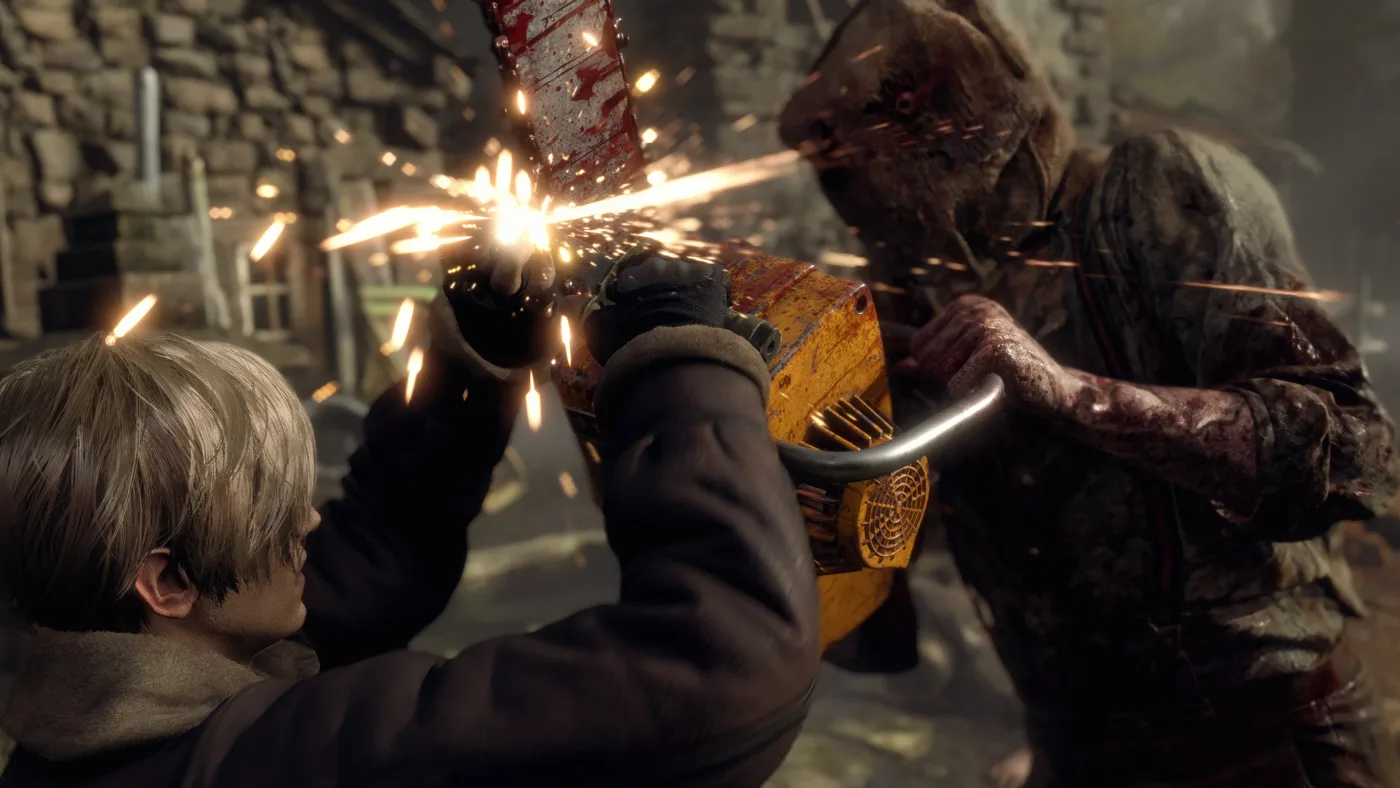
The remake's parry has two outcomes. A normal parry negates the damage. A perfect parry negates the damage and staggers the attacker, opening a melee follow-up. On Assisted, Standard and Hardcore you get credit for both. On Professional you do not: Game8's difficulty table lists "Parrying is limited to Perfect Parries," and The Escapist's parry guide puts it plainly — "on Professional, you can only perfect parry. Wrong timing will only serve to get you hit."
That is a genuine break rather than a tuning nudge. Be precise about what changes, though: on every mode, a guard thrown too early or too late fails outright — The Escapist says a mistimed attempt "will leave you wide open, almost assuring you take damage." What Professional deletes is the forgiving success window. A guard that lands in the ordinary parry window but misses the tighter perfect one still negates the hit on the other three modes; on Professional only the perfect window counts, and against enemies that already hit harder. The defensive skill floor does not rise gradually across the four — it steps.
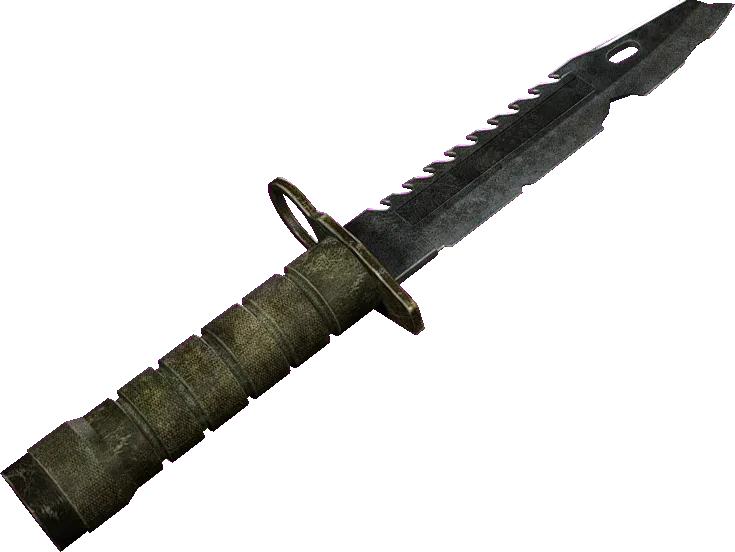
The knife bill is worth planning around either way. Parrying consumes Combat Knife durability — The Escapist notes it plainly — and the repair scale the Merchant charges by action is in the beginner guide. Whether a mistimed input on Professional still costs durability is not something I found stated anywhere, so budget for the successful ones and treat the rest as unknown.
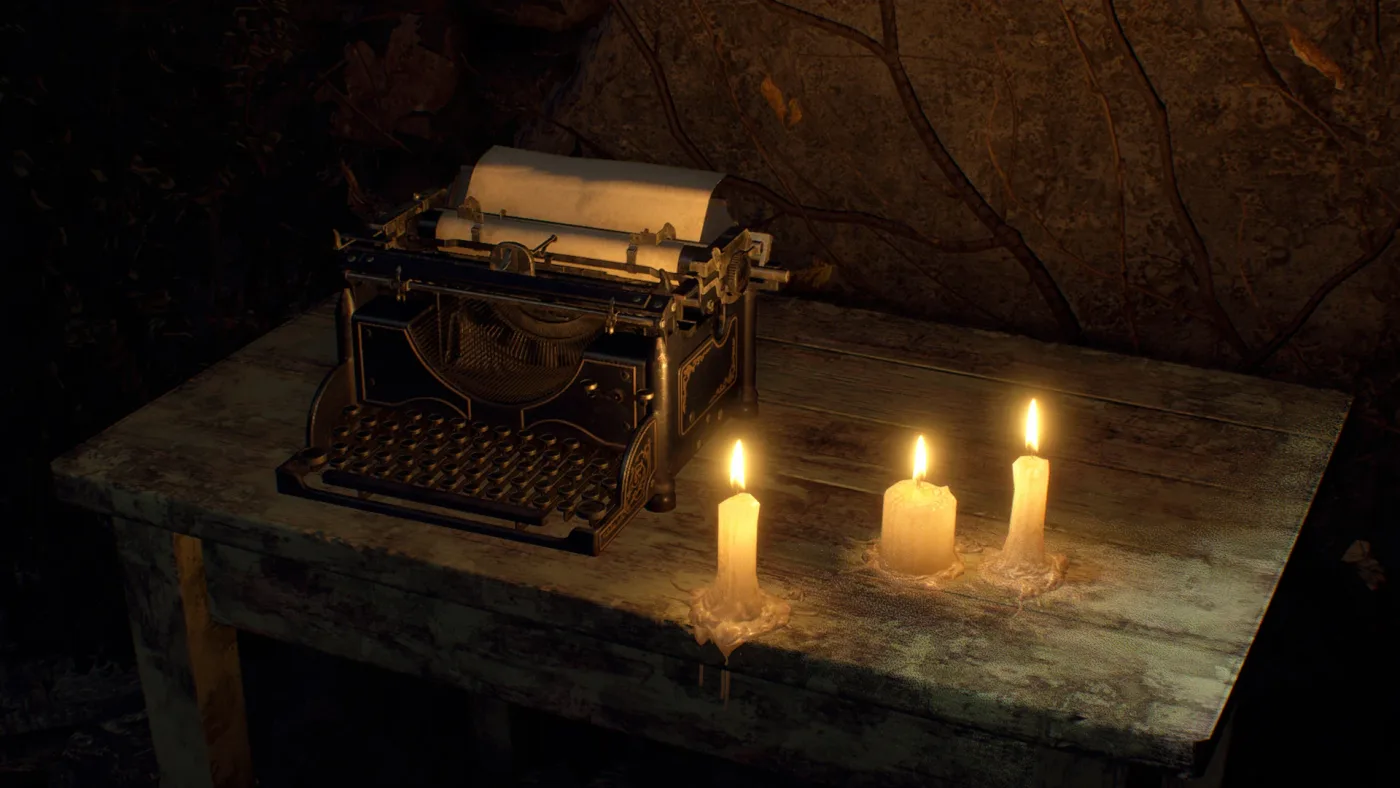
Then there is the save situation: Professional disables autosave. The Resident Evil Wiki's main-game page and Game8 both state it. Every other mode quietly keeps a checkpoint file you can fall back on; on Professional the only progress that exists is what you wrote to a typewriter. And if you are chasing S+ on that mode, the challenges guide's rank table caps you at 15 manual saves for the whole run — no automatic net, and a hard ceiling on the manual one.
One last Professional note to file under unconfirmed: Game8's table adds a line reading "All weapon modifications will be available from the start." Nothing else I could open corroborates it, Capcom does not document Professional at all, and the wording is ambiguous enough that I am not going to tell you what it means. Check it yourself before planning a loadout around it.
You are locked in the moment you start
Difficulty in this game is not a slider you nudge when a chapter goes badly. There are exactly two ways to end up in a different mode:
| Situation | Can you switch? |
|---|---|
| Mid-run, from the pause or options menu | No |
| At a game over on Standard | Yes — down to Assisted only, and it does not go back |
| At a game over on Assisted, Hardcore or Professional | No |
| Starting a New Game Plus run | Yes — pick any mode, including Professional once unlocked |
Capcom's manual states the first exception directly on the Game Modes page: "When playing in Standard mode, you can change the game mode to Assisted from the game over screen." Game8 adds the part the manual leaves out — the switch is one-way, and you cannot return to Standard afterwards. The wiki's main-game page describes the prompt appearing after repeated game overs.
Before you take that offer, look at what the run is worth. As the challenges guide works through, some of the game's challenges name a specific mode rather than saying "or higher" — so dropping out of Standard mid-run gives up the Standard-named ones on that playthrough. If you are early enough that nothing is banked, take the switch and enjoy the game. If you are twelve chapters in on a run you intend to cash, the honest move is to restart later rather than convert.
The other exception is the useful one. Difficulty is chosen fresh when you begin a New Game Plus run, which is how a fully upgraded Standard clear becomes a survivable Professional attempt — the New Game Plus guide covers what carries over and which unlocks are mode-gated. The one thing carryover costs you is S+, which the challenges guide explains requires a fresh save.
What Capcom does not publish
Worth being straight about the gaps, because these are the numbers a difficulty comparison most wants and cannot have:
- No enemy health or damage multipliers. Capcom says enemies "take more damage when hit, deal less damage when attacking, and their attacks are slower" on Assisted, and offers a single word for Hardcore: "stronger." The "faster, more health, more damage" breakdown is Game8's, not Capcom's, and there are no published percentages behind either.
- No item list for the price changes. "Certain items," in both directions, with no names.
- No manual page for Professional. Nothing publisher-authored beyond the in-game description.
One mode-dependent system is fully mapped, and it is not in this post because it has a post of its own: five puzzles have different solutions on Hardcore and Professional, listed in the puzzle solutions guide.
Which mode to actually start on
If you have never played the remake, Standard. It is the mode Capcom points at players who want the game at normal difficulty and the one Game8 lists as unmodified on every axis, it keeps the autosave net while you learn the parry, and it is the one mode the game will drop you out of if it goes badly — which is a safety valve Hardcore does not give you.
If you played the 2005 original to death, Hardcore is the mode Game8 points you at, but understand what you are choosing: no aim assist, a tighter Merchant, and no fallback at a game over. The parry is new to you, and it is the mechanic the whole remake is built on.
Professional is not a first playthrough. It cannot be — it is not on the menu until you have finished one.
Quick Action Checklist
- Start on Standard unless you have already played the remake. Game8 lists it as unmodified on every axis, and it is the only one of the four with a downgrade path.
- You cannot change mode mid-run. The only exceptions are Standard → Assisted at a game over (permanent) and picking fresh at New Game Plus.
- Assisted is an economy change too — more ammo per craft and lower prices on some Merchant stock, not just softer enemies.
- Aim assist is off on Hardcore and on by default on Assisted, toggleable in Options → Controls.
- On Professional, only perfect parries work. A guard that lands in the ordinary parry window but not the perfect one does not block the hit.
- Professional has no autosave. Type at every typewriter, and expect a 15-save cap if you are chasing S+.
- Take a Professional run through New Game Plus, not from scratch — unless you want S+, which requires a fresh save.
Frequently Asked Questions
How many difficulty modes does the Resident Evil 4 remake have?
What does Assisted mode change in the Resident Evil 4 remake?
Can you change difficulty mid-game in the Resident Evil 4 remake?
How is Professional different from Hardcore in the Resident Evil 4 remake?
Does aim assist work on Hardcore in the Resident Evil 4 remake?
Does difficulty change puzzle solutions in the Resident Evil 4 remake?
Keep Reading
- Capcom Official Web Manual (RE4) — Game Modes: the Assisted, Standard and Hardcore bullet lists, the Standard-to-Assisted game over switch, and no Professional entry
- Capcom Official Web Manual (RE4) — Saving/Loading: autosave checkpoints, typewriter saves and the 20 manual slots shared across modes
- Game8 — difficulty differences table, Professional as "same as Hardcore" plus no autosaves and perfect-parry-only, and the rules on when difficulty can be changed
- Resident Evil Wiki — four difficulties, Professional unlocked after finishing the main story on any difficulty, autosave disabled on Professional, and the repeated-game-over prompt
- The Escapist — parry versus perfect parry, knife durability spent on parries, and "on Professional, you can only perfect parry"
- Resident Evil Wiki — the remake never displays a textual health condition, and enemy attack damage varies with the current difficulty
Related Guides

RE4 Remake Platforms: Every Version and What It Needs
The Resident Evil 4 remake is sold on PlayStation, Xbox, Steam, Apple's App Store and, from October 16, the Switch 2 eShop, and the versions are not the same deal. Here is what each one needs to run, what it costs at list, and what it adds or leaves out.
RE4 Remake Small Key Locations: All 8 Locked Drawers
The Resident Evil 4 remake has eight Small Keys for eight locked drawers, with no spare. Here is where every key is, what every drawer holds, the order that never strands a key, and the five drawers Ada opens in Separate Ways with keys she has to buy.

RE4 Gold Edition on Switch 2: What Hands-On Previews Show
Capcom's September 9 announcement gave Resident Evil 4 Gold Edition a release date and a price on Switch 2, but said nothing about how it would actually run. Tokyo Game Show 2026 is where that got answered — by the press who played it, not by Capcom.
RE4 Remake Switch 2 Release Date and Gold Edition Price
Capcom confirmed Resident Evil 4 Gold Edition for Switch 2 at the September 9 Nintendo Direct — the remake's first native, installed release on Nintendo hardware after three years as a cloud-only stream. Here is the launch date, the price, exactly what the bundle includes, and what it quietly leaves out.

Resident Evil 4 Remake Beginner Guide: Survive the Village
The 2023 remake gives Leon a parry and takes away his indestructible knife. That single trade is the whole learning curve. Here is how to stop dying in the village and start playing the game the way it wants to be played.
RE4 Remake Costumes and Accessories: Every Perk
Capcom's own manual calls costumes and accessories a Perk system, not a wardrobe. Most of the 39 options in the Resident Evil 4 remake do nothing mechanically — but six of them, one costume and five accessories, genuinely change how the game plays, and four of those five accessory perks are locked behind an S+ run on a specific difficulty.