Super Mario 64 Version Differences: N64 vs DS vs 3D All-Stars
If you played Super Mario 64 in Super Mario 3D All-Stars, Mario never said "So long-a Bowser!" — he said "Buh-bye!" That is not a Mandela effect, it is Nintendo shipping the 1997 Japanese revision instead of the cartridge you grew up with. Here is what actually changes between every version of Super Mario 64.
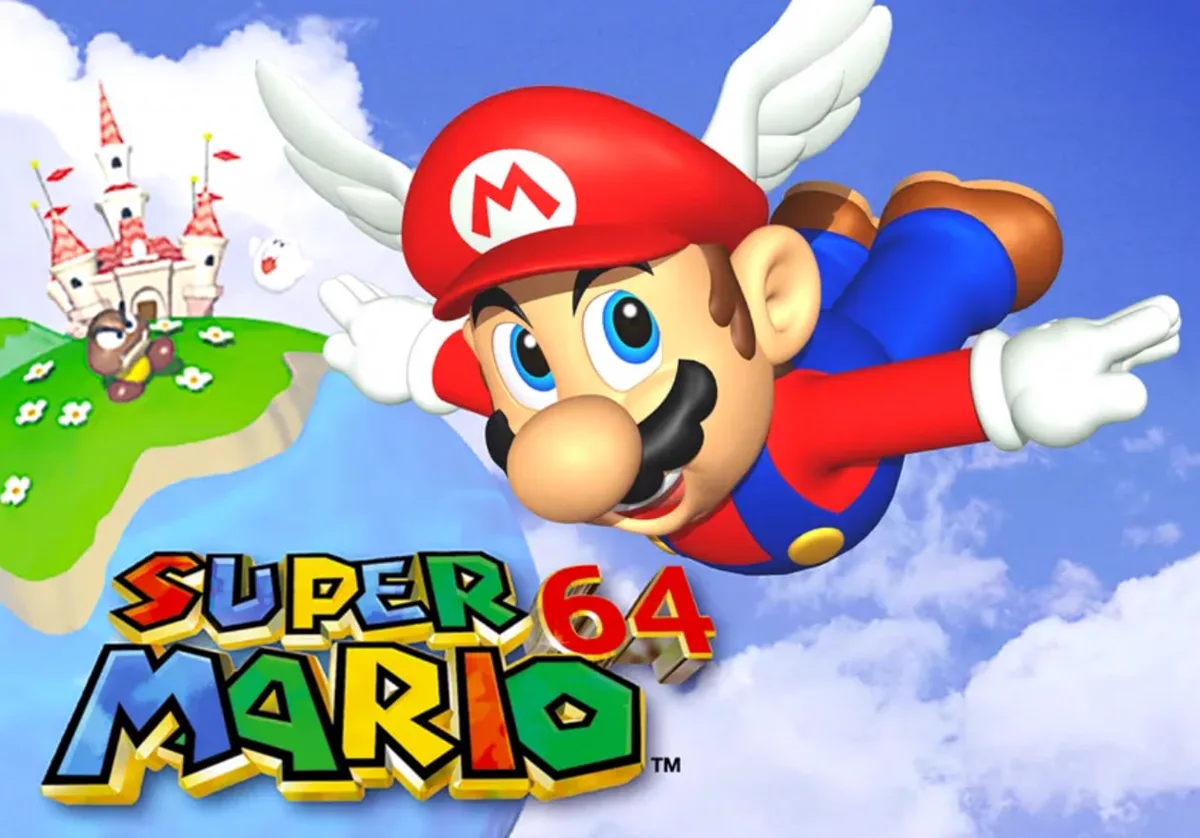
If you fought Bowser in Super Mario 3D All-Stars and something felt off about the tail throw, you were not imagining it. Mario does not say "So long-a Bowser!" in that version. He says "Buh-bye!"
That is not a memory glitch. Nintendo did not put the 1996 cartridge on Switch — it put a 1997 Japanese revision on Switch, and that revision quietly rewrote a voice line, patched the single most important glitch in the game's history, and became the base for the version most people under 25 have actually played.
Super Mario 64 has been rereleased often enough that "Super Mario 64" is no longer one game. It is at least six builds with meaningfully different physics, star counts, and glitch tables. Here is what actually separates them.
There is no single Super Mario 64
The lineage, in order:
| Version | Year | Stars | BLJ works? |
|---|---|---|---|
| N64 original (JP / NA / EU) | 1996–97 | 120 | Yes |
| Shindou Pak Taiou (JP only) | 1997 | 120 | No |
| iQue Player (China) | 2003 | 120 | No |
| Super Mario 64 DS | 2004 | 150 | No |
| Super Mario 3D All-Stars | 2020 | 120 | No |
| Nintendo Switch Online (N64 app) | 2021 | 120 | Yes |
That "BLJ works?" column is doing more work than it looks. The backwards long jump is the speed exploit that lets you build negative momentum on a staircase and clip through the castle's star doors — it is the reason a 0-star run of Super Mario 64 exists at all. Whether a given build has it is the cleanest single test of which lineage you are holding.
The 1996 cartridges: Japan, North America, Europe
Japan got Super Mario 64 on June 23, 1996 as an N64 launch title. North America followed on September 29, 1996, Europe and Australia on March 1, 1997.
Mechanically these three are the same game. The differences are localization and hardware timing: the Japanese launch cartridge shipped without some of the English voice clips that the North American release added, and the text was adapted per region.
All three keep every physics quirk intact. Backwards long jumps, the parallel universe geometry that lets a well-aimed Mario walk off the map, the pause-buffered speed retention — it is all live. This is the build the entire speedrunning and glitch-hunting culture was built on top of.
Why PAL is the one nobody speedruns
The European release runs at 50Hz instead of the 60Hz NTSC standard, and Super Mario 64 was not re-timed to compensate. The result is a game that runs roughly 17% slower, with music pitched down to match. It is not a different game so much as the same game in slow motion.
That is why every serious Super Mario 64 leaderboard is NTSC. If you learned the game on a PAL console in the 90s and later felt like the American version was "twitchy," that was not nostalgia — the movement genuinely arrives faster.
Shindou Pak Taiou: the 1997 revision that changed everything
On July 18, 1997, Nintendo released Super Mario 64 Shindou Pak Taiou Version in Japan. On the box it was a Rumble Pak compatibility update. Under the hood it was a patch.
This version never left Japan on cartridge. It sat as a curiosity for two decades — and then in 2020 Nintendo used it as the base for the Switch release, which is how a Japan-only 1997 revision became the default Super Mario 64 for a whole generation of players.
What the Shindou build actually changes
- Rumble Pak support. The reason it exists. Bowser slams and ground pounds get force feedback.
- The backwards long jump is gone. Mario's backward speed is capped, so the staircase speed build never happens. Endless Stairs skips, door clips, and the 0-star route all die here.
- English voice clips added to the Japanese release, including the ones the original JP cartridge shipped without.
- "So long-a Bowser!" becomes "Buh-bye!" Bowser is King Koopa in Japan, so a line naming him "Bowser" made no sense for the target audience. The re-recorded line stuck — and shipped worldwide in 3D All-Stars 23 years later.
If you only take one fact out of this post: the Shindou build is the no-BLJ build, and everything Nintendo has released on Switch disc or cartridge descends from it.
iQue Player and the Virtual Console years
The iQue Player, the licensed Chinese N64-derived console, got a Super Mario 64 conversion in 2003 with Simplified Chinese text. It inherits the Shindou fixes, so no BLJ there either.
The Wii Virtual Console release in 2006 and the Wii U Virtual Console release in 2015 were emulated versions of the regional originals rather than new builds. They are the closest thing to a straight cartridge experience Nintendo offered between 1997 and 2021, input lag aside.
Super Mario 64 DS is a remake, not a port
Super Mario 64 DS launched alongside the Nintendo DS in North America on November 21, 2004, and it is the one version that genuinely deserves to be treated as a separate game. Calling it a port is how you end up confused about star counts for a decade.
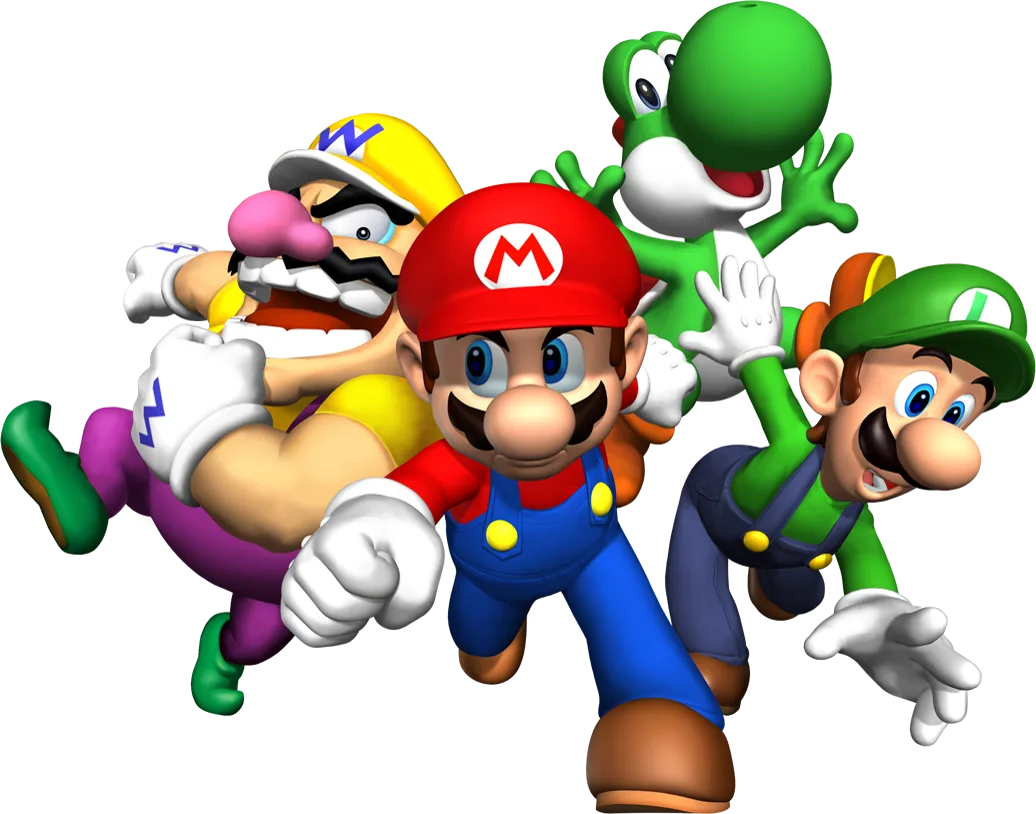
The 150 stars, broken down
The DS remake has 150 Power Stars, not 120, and the extra 30 are not sprinkled evenly. The math:
- 15 courses × 8 stars each = 120. Each course keeps seven mission stars and adds a separate 100 Coin Star as an eighth. On N64 the 100-coin star occupies one of the seven mission slots — on DS it is bonus.
- 30 castle secret stars. Double the N64's 15, spread across new secret areas, character-specific challenges, and the expanded castle.
That first bullet is the one that trips people up: the DS courses alone hold 120 stars — the same number as the entire N64 game.
The gate moved too. On N64 you need more than 70 stars to climb the Endless Stairs. On DS you need more than 80, and you have to be playing as Mario. Show up at the top floor as Wario with 100 stars and you will climb forever.
New content includes Sunshine Isles, a DS-exclusive course entered through a painting in the Rec Room that costs a single Power Star to unlock, and where the star comes from collecting five Silver Stars — a mechanic that does not exist on N64 at all.
Four characters, four movesets
You start as Yoshi, not Mario. Mario, Luigi and Wario are locked behind boss fights against Goomboss, King Boo and Chief Chilly respectively, in new boss-only stages.
Each has a distinct kit, and Power Flowers give each a different temporary ability:
- Yoshi — flutter jump, tongue grab and egg spitting. Power Flower gives fire breath.
- Mario — the balanced one, fastest runner, keeps the triple jump and wall kick. Power Flower inflates him into a floating balloon.
- Luigi — best air control and swimming, backflips higher. Power Flower turns him invisible so he can pass through certain walls.
- Wario — slowest, strongest, moves heavy objects nobody else can. Power Flower gives him Metal form.
You can also swap mid-level by finding another character's cap in a block, which is how several stars are gated behind a character you did not bring.
What the DS version gives up
MIPS the rabbit is not a star source anymore. The DS replaces him with 36 collectible rabbits whose keys unlock the Rec Room's 36 minigames — nine per character, two open from the start and seven per character earned from rabbits.
The bigger loss is the stick. The DS had no analog stick in 2004, so movement runs on the D-pad or the touchscreen, and neither reproduces the analog nuance that Super Mario 64's speed thresholds were designed around. If you care about the movement tech — precise tiptoeing, held-angle slope control, dive-slide chains — the DS version is the wrong place to practice it. The 3DS-era Circle Pad Pro does not help; this is a DS cart.
It also loses the glitch table wholesale. No BLJ, no meaningful sequence breaking, and the speedrun routes that make the N64 version famous simply do not transfer.
Super Mario 3D All-Stars: Shindou in 720p
Released September 18, 2020, delisted March 31, 2021. That six-month window was the whole point of the controversy, and it means the collection is now a secondhand-only proposition at inflated prices.
What you get for the money:
- 960 × 720 output, docked and handheld both. That is 720p vertical resolution in the original 4:3 frame, not a widescreen conversion. Pillarboxed on any modern TV, and the game is still capped at 30 fps — Nintendo raised the resolution, not the frame rate.
- Rumble, inherited from the Shindou base and mapped to the Switch's HD Rumble.
- A cleaned-up HUD rendered at the higher resolution instead of upscaled.
- D-pad presses read as full analog stick input, the same concession Super Mario 64 DS made.
- No BLJ, because Shindou.
Nobody widescreened it, nobody re-textured it, nobody rebuilt the camera. It is a competent emulation of a version most Western players had never touched, sold in a limited window, and the "Buh-bye!" line is the tell.
Nintendo Switch Online: the one with the glitches intact
The N64 app arrived on Nintendo Switch Online + Expansion Pack on October 25, 2021 in the Americas, and Super Mario 64 was in the launch lineup.
Here is the part that matters: the Switch Online version is not the Shindou build, and BLJs work on it. The community confirmed this within days of launch. Speed builds on stairs, door clips, and the sequence breaks that 3D All-Stars removed are all back, on any controller — the official N64 pad is nice for it, but Joy-Cons work, they are just harder.
That makes NSO the only officially sold way to play the glitch-intact Super Mario 64 in 2026, since 3D All-Stars is delisted and cartridges are cartridges. It is also, unlike the collection, not a purchase — it evaporates the day your subscription lapses.
Which version should you actually play?

- You want the real thing, or you might ever try a trick run: N64 cartridge (NTSC) or Nintendo Switch Online. These are the only two with the full glitch table.
- You want the most convenient clean playthrough: Switch Online. Save states, no cartridge hunting, correct 60Hz timing.
- You already own 3D All-Stars: play it, it is fine. Just know the physics are the patched ones and stop trying to BLJ the Endless Stairs.
- You want more Super Mario 64 after 120 stars: the DS remake, treated as a sequel. 150 stars, four movesets, and enough new content to justify the awkward controls.
- You want to learn movement tech: N64 or NSO, with an analog stick, full stop.
New to the game entirely? Start with the beginner guide and the secret stars breakdown — but check which version you are holding first, because the DS star counts in those guides will not line up.
Quick Action Checklist
- Test which lineage you have: try a backwards long jump on a staircase. If Mario builds speed, you are on a 1996 cartridge or Switch Online. If he caps out, you are on Shindou, iQue, DS or 3D All-Stars.
- Listen to the Bowser tail throw. "So long-a Bowser!" means original build; "Buh-bye!" means Shindou lineage, which includes every 3D All-Stars copy.
- Avoid PAL cartridges for anything timed — 50Hz runs the game roughly 17% slower than NTSC.
- On Super Mario 64 DS, budget for 150 stars: 8 per course across 15 courses plus 30 castle secret stars.
- On DS, do not bother approaching the Endless Stairs under 80 stars, and switch to Mario before you try — no other character can climb them normally.
- Unlock DS characters in order: Goomboss for Mario, King Boo for Luigi, Chief Chilly for Wario. Yoshi is your starter.
- If you only want one modern option in 2026, Switch Online is the glitch-intact version; 3D All-Stars was delisted on March 31, 2021.
- Practising movement tech? Use an analog stick. The DS D-pad and the 3D All-Stars D-pad-as-analog mapping both flatten the speed thresholds the game is built on.
Frequently Asked Questions
What is the difference between Super Mario 64 on N64 and Super Mario 3D All-Stars?
Does the backwards long jump work on Super Mario 64 on Nintendo Switch?
How many stars does Super Mario 64 DS have compared to the N64 version?
How many stars do you need for the Endless Stairs in Super Mario 64 DS?
Which version of Super Mario 64 is best?
Keep Reading
Related Guides
Super Mario 64 Lives and Game Over: What You Actually Lose
A Game Over in Super Mario 64 is a file reload: you keep everything you saved and lose everything you did not. Here is when the game actually writes your file, exactly what a Game Over rolls back, the five courses where a fall is free, and every way to earn a life, from the coin tally to the Monty Mole streak that never runs dry.
Super Mario 64 Music: Every Track and Where It Plays
Super Mario 64 scores 15 courses with seven songs, and only one of them belongs to a single course. Here is which track plays in every course and secret level, the five levels whose music rearranges itself as Mario moves, what triggers the boss music and the jingles, all 36 soundtrack tracks under their 1996 and current names, and where to listen today.
Super Mario 64 Bowser Levels Guide: All 24 Red Coins
Bowser in the Dark World, the Fire Sea and the Sky each hide one Power Star behind eight red coins on the obstacle course in front of the fight. Here is the route through all three, where every red coin sits, and what else the level data holds.
Super Mario 64 120-Star Reward: Yoshi and the Castle Roof
Super Mario 64 does not announce your 120th Power Star. The reward is outside: a cannon grate that stops loading, Yoshi on the castle roof, and a gift that quietly resets the next time you load your file. Here is what 120 stars changes, checked against the wikis and the decompiled code.
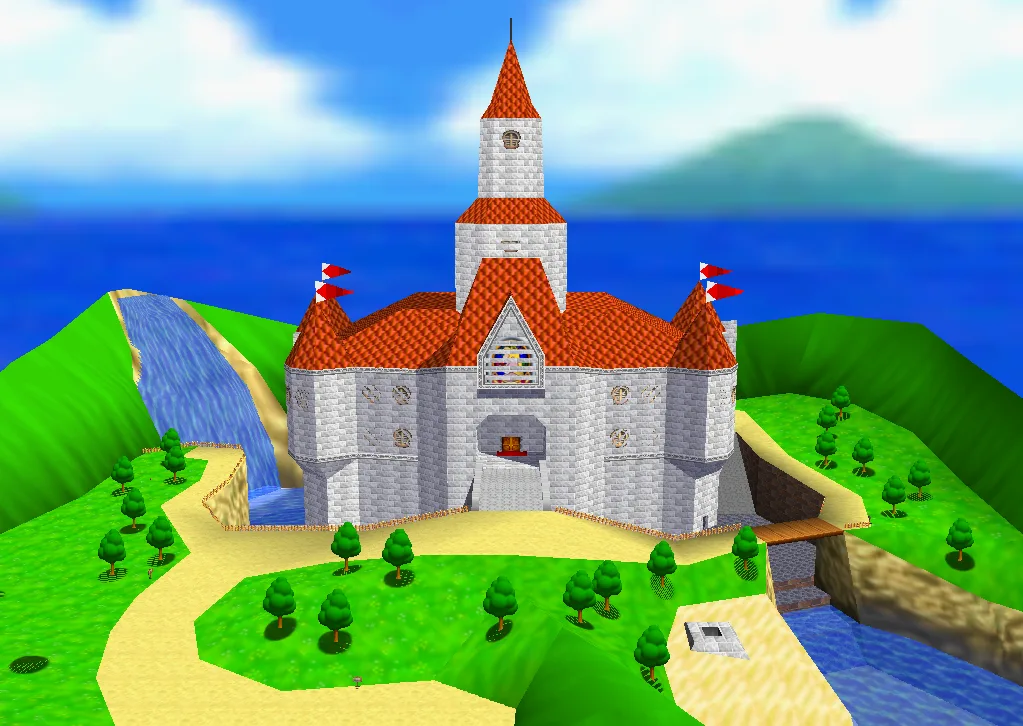
Super Mario 64 Beginner Guide: Your First 30 Power Stars
Super Mario 64 does not gate you on difficulty, it gates you on Power Stars. Here is exactly which doors need what, which stars are fastest to grab, and the route that gets a first-timer from one star to thirty without wandering the castle in circles.
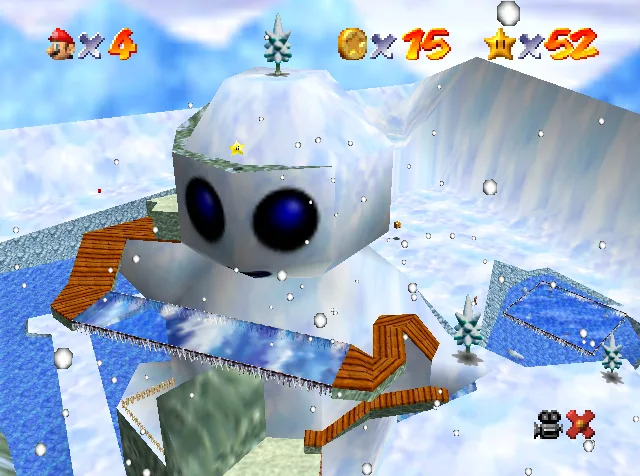
Super Mario 64 Snowman's Land Guide: All 7 Stars
Snowman's Land looks like the throwaway snow level, and the wiki record on it backs that read up in one specific way: it is the only one of the game's 15 main courses with no Blue Coins at all. What it does have is two freezing ponds that hurt you in two different ways, an enemy species that appears nowhere else in the game, and a cap-stealing snowman nobody warns you about. Here is every star, the full 127-coin breakdown, and the course's last remaining gap in this vertical.