Baldur's Gate 3 Approval: Thresholds and Romance Numbers
The approval bar on a companion's character sheet shows you a category. The scripts behind it check integers, and the two do not line up — Gale's Mystra scene wants 36, Minthara's romance wants 31, and neither number has a band boundary anywhere near it. Here is the threshold table, the per-companion romance numbers the wiki documents, and the things that quietly cost you ten points.
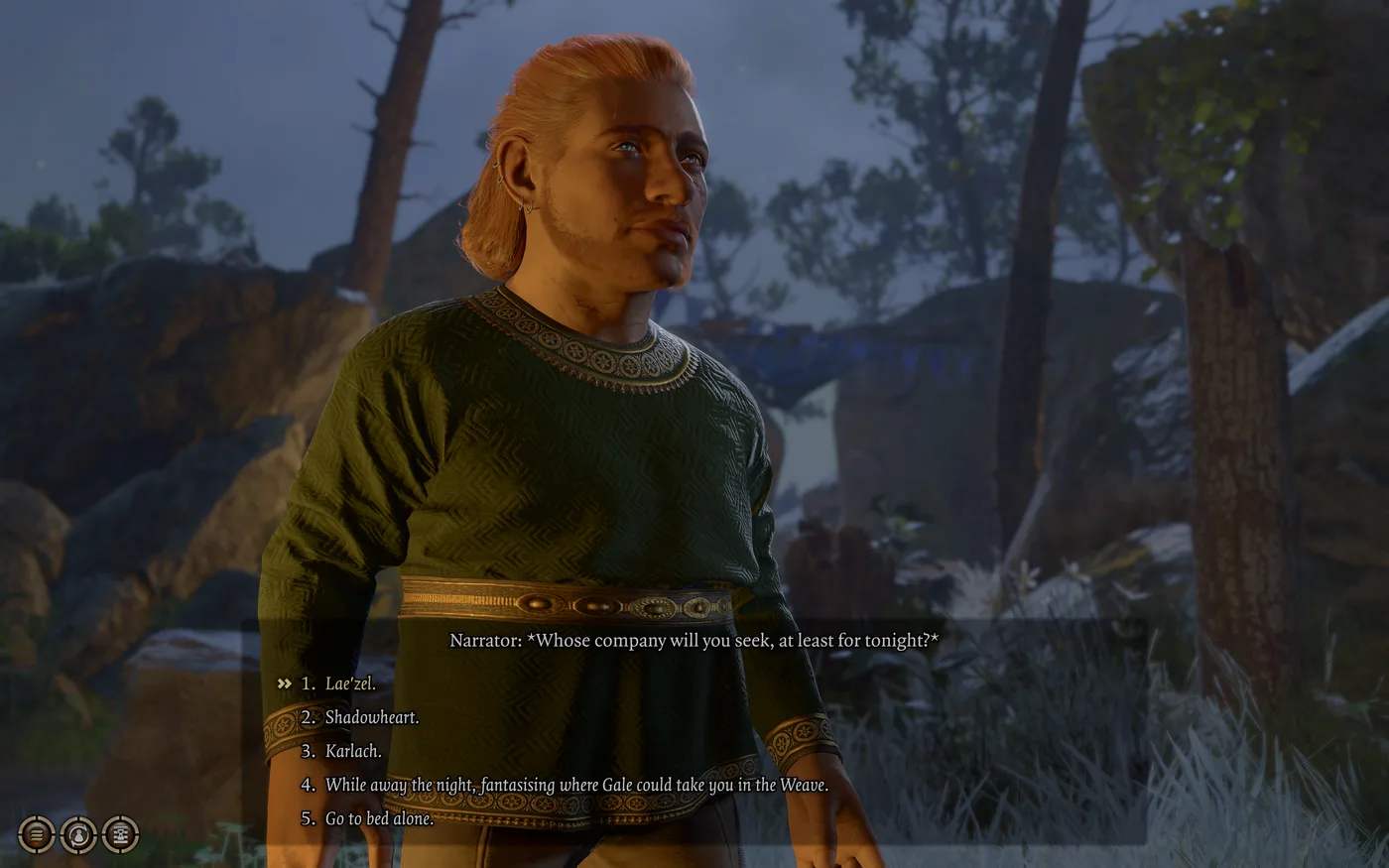
Gale's night-time scene about Mystra checks for 36 approval. Minthara's romance opens at 31. Astarion's Act Two partnering scene, the one unlocked after Raphael explains his scars, wants 70. None of those numbers sits on a band boundary, and the game will never show you any of them — the character sheet gives you a coloured bar and a word like "Medium", while the scripts underneath are comparing integers.
That gap is the whole problem with approval. It is a precise system displayed imprecisely, and the wiki says so outright: there are checks in the game for exact approval values that do not align with the displayed categories at all. Here is the number behind the bar, what moves it, and what each companion's romance is actually testing for.
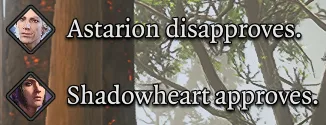
The bar is a category, the script reads an integer
Every companion carries a single approval value toward your player character, changed by dialogue choices, quest outcomes and things you do in the world. The ceiling is 100. Once a companion is pinned at 100, further approval cannot be earned and the game stops showing you gain notifications for them entirely — which is worth knowing before you conclude that a choice "did nothing".
In multiplayer, each companion tracks a separate approval value toward each avatar. Your co-op partner's Astarion problem is not your Astarion problem.
The seven bands and what they mean
This is the table the hover tooltip is reading from.
| Value | Band | What the hover description covers |
|---|---|---|
| -49 to -40 | Very Low | Relationship is in danger; likely to leave on the next disagreement |
| -39 to -20 | Low | Relationship is bad; may leave if approval gets worse |
| -19 to 20 | Neutral | No strong feelings toward the avatar |
| 21 to 40 | Medium | Relationship is fair; trust is variable |
| 41 to 60 | High | Relationship is good; the character approves of you |
| 61 to 80 | Very High | Happy with you and easily convinced |
| 81 to 100 | Exceptional | Thrilled with you and very easily convinced |
Look at how wide Neutral is. It runs from -19 all the way to 20, which is 40 points of range wearing one label — and several romance checks live inside it. Wyll's celebration flirt fails under 10. Lae'zel's romance opens at 20. Both of those are "Neutral" on the bar, and the bar will not move for either.
The wiki names two of the off-grid checks explicitly: some events fire only under -40 (inside Very Low) and others only at 10 or more (inside Neutral). Treat the bands as a rough gauge and the number as the truth.
Where the actual number is hiding
Three places, and only two of them give you a figure:
- Character sheet, Summary page — a coloured bar with your portrait on it, at the bottom. No number.
- Character sheet, Detailed View page — the actual numerical value, sitting between the Saving Throw Bonuses block and Tags. This is the one you want.
- Console character sheet (R2), bottom-right corner — only for characters currently in the party, and the numeric value is not shown on console at all.
That last point is a genuine platform difference rather than a UI preference: if you are playing on Xbox or PlayStation, or in controller mode, the exact number is not available to you and you are stuck reading the categories.
What moves it, and by how much
Approval changes come in three sizes. Per the wiki, typical values are ±1 for small events, ±5 for medium, and ±10 for large. A single dialogue choice is rarely worth more than 10.
There are outliers on the high side. Being kind or magnanimous with Thaniel after lifting the Shadow Curse in Act 2 is worth +20 with Halsin from that one conversation — a fifth of the entire positive scale from a single exchange, which is why late-joining companions can climb the ladder much faster than the Act 1 six.
One honest caveat the wiki flags itself: there are numerous documented cases where an approval change should fire and does not. It is a known gap in the game rather than something you are doing wrong, and it is common enough that a mod exists specifically to patch the missing triggers. If you make an obviously Astarion-flavoured choice and nothing pops, that is a plausible explanation.
Companions who are not near you register nothing
This one costs you approval without any bad choice being involved.
Approval typically changes based on the proximity of eligible companions to your player character when the qualifying event happens. If a companion is far enough away when you make the choice, their approval does not change. Splitting the party to loot the other half of the map, then having your solo main character resolve a major dialogue, means the rest of the party learns nothing and rewards you nothing.
Two useful wrinkles on top of that:
- A companion's condition does not matter. Being asleep — or dead — has no bearing on whether their approval changes.
- But death still costs you, indirectly, because it prevents conversations that would otherwise have produced approval changes.
So the reliable pattern is boring and effective: keep the companion whose approval you are farming in the active party, and standing near you, when the story beat lands.
Three spells that cost you ten points

Casting Charm Person, Friends or Hypnotic Pattern on a companion drops their approval by 10 when the effect ends — and the wiki is specific that this applies regardless of difficulty setting.
Ten points is a large-event penalty, which puts it in the same bracket as a major dialogue betrayal. It matters most for Friends, because Friends is a cantrip — it costs no spell slot, so nothing about casting it signals that it has a price at all. Point it at a party member to win a Charisma check and you have paid a full romance threshold step for the advantage.
Two of the three, Friends and Hypnotic Pattern, are concentration spells; Charm Person is not. That matters because the penalty lands when the effect ends, however it ends. Damage to your caster forces a Constitution saving throw against DC 10 or half the damage taken, whichever is higher, and a failed save drops concentration — which drops the spell, which bills you the 10.
Minus fifty is the door
At -50 or lower, a companion leaves the party permanently. You get two warnings on the way down: one at -20 and one at -40.
What they take with them is the part worth planning around. A departing companion keeps anything they had equipped. The contents of their inventory, including story items, are returned to you in a backpack — but equipped gear walks out of the game with them. If a run is heading toward a permanent split, strip the character first.
Our companion recruitment guide covers the other, more common way to lose people — the quest deadlines and points of no return that delete companions regardless of how much they like you. Approval is the slow version of the same outcome.
The romance numbers, companion by companion
Eight companions can be romanced: the six origin companions plus Halsin and Minthara. Jaheira and Minsc cannot be romanced at all. A handful of non-companions — Mizora, Haarlep, the Emperor and the Sharess' Caress courtesans — offer one-off encounters instead, with no romance progression, though the wiki notes they can still affect an ongoing companion romance.
The numbers below are the approval values the wiki names for specific scenes. They are not one single "romance unlocked" figure per character — the game gates individual scenes at individual values, which is exactly why the bar is such a poor guide.
| Companion | Approval checked | What that number gates |
|---|---|---|
| Wyll | 10, then 20 | Under 10 he rejects the celebration flirt; 20+ unlocks his Act 2 romance scene, alongside dating him and having visited Last Light Inn or Moonrise Towers |
| Lae'zel | 20 | Romance can begin at "at least medium (20)"; she rejects you at the celebration at 19 or lower, or if you are already dating two others |
| Shadowheart | 20, then 40 | 20+ for the "share a bottle" invitation at the tiefling party; 40+ unlocks the "truly connect" dialogue option and the swimming invitation |
| Karlach | 20, then 30 | 20+ for the celebration branch if no other romance scene was initiated there; 30 triggers her night-time confession when you are not double-dating |
| Minthara | 31, 40, 50 | 31 begins the romance at the next long rest; at 40+ she calls the bond "alurlssrin" rather than "ssinssrigg"; 50+ moves it to partnered and unlocks the kiss option from Act 2 on |
| Gale | 36 | 36+ triggers the night-time scene where he is gazing at a conjured image of Mystra |
| Astarion | 40, then 70 | 40+ before Save the Refugees resolves makes him propose the night together; 70+ ("Very High") is one condition on the Act Two partnering scene, which unlocks after Raphael explains his scars — the others being having entered Moonrise Towers and having killed Yurgir |
| Halsin | Not published | Act 3 only, and only if Lift the Shadow Curse was completed before embarking on the Road to Baldur's Gate. The wiki says "high enough approval" without naming a value |
A drow player character gets something extra out of the Minthara row: at 40+ she uses the word alurlssrin, and a Drow of either subrace understands it natively while everyone else does not. Our races guide has the rest of what the subrace buys you.
Two romances is the ceiling, and it collapses to one
You can start the early stages of a romance with up to two origin companions. Only one survives: at a later stage, one of the two forces you to choose between them. Companions do not propose polyamory on their own.
The Tiefling Refugee Celebration is the documented exception, because it runs on its own script triggers and bypasses the standard relationship checks. Two consequences the wiki records: a romance you previously declined with Astarion can be offered again there, and if you queue two romances on the same day before the long rest that starts the celebration, you can begin a third at the party itself.
That is a script quirk, not a supported feature, and it comes with a warning attached — pushing past three queued romances can cause the chosen companion's scene to be skipped entirely and never acknowledged.
The Halsin permission window closes in one rest
Halsin will ask you to talk to your existing partner before anything happens. Shadowheart, Astarion and Karlach can consent to adding him. Lae'zel, Wyll and Gale always decline, so romancing one of them means either leaving them or turning Halsin down.
The trap is the timer. Despite Halsin saying "take your time, I'll be waiting", if you fail to obtain permission before the next long rest, he never raises it again and the romance path with him is permanently closed.
If you are running Dark Urge, there is one more romance consequence to plan for, and it lands in Act Two. In the Shadow-Cursed Lands, Sceleritas Fel demands the Dark Urge kill Isobel Thorm. Refuse — or arrive to find Marcus has already carried her off — and he comes back demanding the closest companion instead, which is usually the love interest. If that companion is not woken up, they are dead in the morning.
Approval is not Attitude
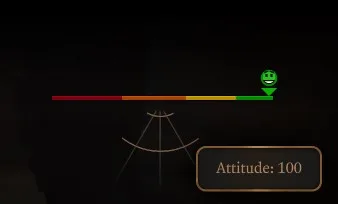
Two meters, two systems, and the wiki keeps a "not to be confused with" banner on both pages. Attitude governs non-hostile NPCs and, mainly, the prices merchants give you.
Three things about Attitude that do not apply to approval:
- Gifting is the only route up, per the wiki's Attitude page — gold or items of value, with no dialogue path.
- Gifting coins appears to beat gifting items, in the wiki's own hedged wording, because a gifted item counts for its current sell price. Reaching 100 Attitude with coins and then selling the items separately nets more gold than gifting the items to get there.
- A crime committed by your Mage Hand or your familiar lands the Attitude loss on the Mage Hand or familiar, not on you. And Attitude changes taken while under Disguise Self attach to that specific disguise rather than the character.
Attitude does not reflect what an NPC thinks of you in the approval sense, with one exception: sufficiently negative Attitude makes an NPC refuse to talk to that character until a gift of enough value brings it back up.
Quick Action Checklist
- Read the number, not the bar. Character sheet, Detailed View page, between Saving Throw Bonuses and Tags. Console players cannot see it and must use the categories.
- Neutral spans -19 to 20 — a 40-point band containing several real romance checks. The bar not moving means nothing.
- The scale is ±1 / ±5 / ±10 for small, medium and large events. The Thaniel conversation is worth +20 with Halsin.
- Keep the companion near you when the beat lands. Distance at the moment of a qualifying event cancels the approval change; being asleep or dead does not.
- Charm Person, Friends and Hypnotic Pattern cost 10 approval when the effect ends, on any difficulty.
- -20 and -40 are warnings. -50 is permanent — and they leave wearing whatever you gave them.
- Romance checks are per-scene integers: Wyll 10/20, Lae'zel 20, Shadowheart 20/40, Karlach 20/30, Minthara 31/40/50, Gale 36, Astarion 40/70. Halsin has no published number and is gated on the Shadow Curse instead.
- Two romances maximum, one survivor. The tiefling celebration is the documented script exception.
- Attitude is the merchant meter, raised only by gifts, and your Mage Hand can take the blame for you.
Frequently Asked Questions
How do you see the exact approval number in Baldur's Gate 3?
What approval do you need to romance each companion in Baldur's Gate 3?
At what approval does a companion leave the party in Baldur's Gate 3?
Why is my companion's approval not changing in Baldur's Gate 3?
Do Charm Person and Friends lower companion approval in BG3?
Can you romance two companions at once in Baldur's Gate 3?
What is the difference between Approval and Attitude in Baldur's Gate 3?
Keep Reading
- BG3 Wiki — the threshold table, the 100 cap, the -50 departure, the -20/-40 warnings, the proximity rule and the Charm/Friends/Hypnotic Pattern penalty
- BG3 Wiki — who can be romanced, the two-romance ceiling, and the Tiefling Refugee Celebration script exception
- BG3 Wiki — Attitude as the trade meter, gifting as the only way to raise it, and the Mage Hand/familiar transfer
- BG3 Wiki — Wyll rejects under 10 approval; his Act 2 scene requires 20
- BG3 Wiki — Lae'zel's romance begins at 20 approval and she rejects at 19 or lower
- BG3 Wiki — Shadowheart at 20 for the tiefling party invitation and 40 for the "truly connect" option
- BG3 Wiki — Karlach's confession at 30 approval and the 20-approval celebration branches
- BG3 Wiki — Minthara's romance begins at 31, the 40 alurlssrin split, and partnered at 50
- BG3 Wiki — Gale's Mystra scene triggers at 36 or higher approval
- BG3 Wiki — Astarion proposes at 40+ before Save the Refugees resolves, and the scars scene requires 70+
- BG3 Wiki — concentration breaks on a failed Constitution save against DC 10 or half the damage taken, whichever is higher
- BG3 Wiki — Sceleritas Fel's Act Two demand in the Shadow-Cursed Lands, and the fallback to the closest companion or lover
- BG3 Wiki — Halsin is Act 3 only, gated on Lift the Shadow Curse, with consent rules and a one-rest permission window
Related Guides
Baldur's Gate 3 Camp Supplies: What to Carry and Sell
A Grilled Steak weighs 3 kilograms and pays 8 Camp Supplies. A Poutine weighs a quarter of a kilogram and pays 20. Both are just "food" in your inventory, and the game never shows you the ratio. Here are the supply-per-kilogram and supply-per-gold numbers from bg3.wiki item data, and the camp chest trick that makes most of the carrying argument moot.
Baldur's Gate 3 Inspiration: What You Can Actually Reroll
Inspiration can stop paying out without telling you. The pool is shared across the party, it caps at four, and a trigger you hit while full gives you the experience and nothing else. Here is the cap, the exact list of rolls the "Roll Again" button will and will not touch, and the enumerated count of how many inspiration goals bg3.wiki lists for each of the twelve backgrounds.

Baldur's Gate 3 Companion Recruitment Guide: Where Everyone Is and Who You Can Lose Forever
Half the companion roster can be permanently missed by doing things in the wrong order, and the game never warns you. Here is where all ten companions are, the two non-lethal knock-outs that matter, and the deadlines that quietly delete people from your run.
Baldur's Gate 3 Stealth: Where You Stand Beats the Roll
Baldur's Gate 3 only rolls a hiding character's Stealth in one of its three obscurity states; the other two decide whether you are found before Dexterity gets a vote. Here is how obscurity and darkvision work, why Fog and Darkness are different tools, what breaks Hiding, and the gear that switches on in the dark.
Baldur's Gate 3 Beginner Guide: What Nobody Tells You
The tutorial teaches you to move and attack. It does not teach you that advantage is worth more than any weapon you will find in Act 1, or that Withers will rebuild your entire character for 100 gold. Here is the actual onboarding.
Baldur's Gate 3 Death Saves: What Actually Kills You
Baldur's Gate 3 keeps the tabletop shape of death saving throws and rewrites the details: no massive-damage deaths, no natural-20 comebacks, and failures that survive stabilising. Here is what kills a Downed character, what stops it, and what each way back from the dead costs.