Baldur's Gate 3 Best Races Guide: A Tier List That Respects Your Time
Since BG3 detached ability scores from race, the only thing a race gives you is a bundle of traits — free armour proficiency, a Misty Step, an extra weapon die on crits. Some of those bundles quietly reshape a build. Most do nothing. Here is which is which.

Here is the uncomfortable truth about picking a race in Baldur's Gate 3: for most builds, it does not matter. Larian cut ability score increases from race entirely, so a Gnome Barbarian can start with exactly the same Strength as a Half-Orc Barbarian. What is left is a grab-bag of small traits, and the gap between the best and worst of those bags is real but narrow — we are talking a handful of percentage points, one free spell, or a proficiency you could have gotten another way.
So this is not a list where the top pick "wins" and the bottom pick "loses." It is a list of which trait bundles quietly do work in an actual playthrough, and which ones are flavour with a resistance stapled on. If you want the mechanical fundamentals underneath all of this, our beginner guide covers the point-buy math and why the level cap of 12 makes every choice count.
How race actually works in Baldur's Gate 3
Three things changed from tabletop 5e, and all three flatten the race decision.
First, race grants no ability scores. You get 27 points in point-buy, then assign your own +2 and +1 wherever you want. That means no race is "the Wizard race" because of an Intelligence bonus. The stat spread is yours.
Second, most racial traits are utility, not damage. Darkvision, poison resistance, a once-per-rest survival trigger, a stealth advantage. Useful, occasionally clutch, rarely build-defining.
Third, and most important: a few races hand you something you would otherwise spend a class feature, a feat, or a level to get. Free medium armour proficiency. A once-per-long-rest teleport. An extra damage die on critical hits. Those are the traits worth building around, because they let you skip a tax the rest of the roster has to pay.

Keep that third category in mind and the whole tier list writes itself. A wizard cantrip on a High Elf is nice. Free medium armour on a Githyanki changes which stats you invest in. One of those is a rounding error; the other reshapes the build.
What makes a race good
The traits that actually move the needle, ranked by how often they matter:
- Free armour or weapon proficiency you would otherwise have to multiclass or spend a feat to get.
- Movement speed, because reaching high ground first is the difference between a +2 bonus and a -2 penalty on your attack rolls.
- A granted spell with no Concentration cost — Misty Step, Enlarge — that adds a whole action option your class does not have.
- Save advantages against the conditions that actually threaten you: Charmed, Frightened, Paralysed, Poisoned.
- Superior Darkvision (24m instead of 12m), which removes the disadvantage penalty for attacking in the dark far more reliably.
Everything else — a skill proficiency, +1 HP per level, a breath weapon — is a tiebreaker, not a reason. With that filter in hand, here is the roster.
S-tier races
Githyanki
Githyanki are the closest thing BG3 has to a "just pick this" race, and it comes down to one line on the sheet: Light and Medium armour proficiency, plus Shortswords, Longswords, and Greatswords. Medium armour proficiency is something Bards, Rogues, and Warlocks (light armour only) and Wizards and Sorcerers (no armour at all) normally have to multiclass or burn feats to reach. Clerics and Druids already start with it, so for them this line is redundant. On a Githyanki, a Wizard or Sorcerer can wear medium armour from level 1 without spending a level or a feat on it.
Then it keeps giving. Astral Knowledge lets you pick an ability after each long rest and gain proficiency in every skill tied to it — pick Charisma before a dialogue-heavy stretch and you are suddenly proficient in Deception, Intimidation, Performance, and Persuasion. And the racials cap off with Enhance Leap at level 3 and Misty Step at level 5, a free short-hop teleport that is one of the best positioning tools in the game, no spell slot required.
The one knock: no darkvision. Githyanki see in the dark like a human, so you will want a Light cantrip or a torch. That is a genuine cost, but for any armour-hungry caster or a Fighter who wants a free Misty Step, it is worth eating.
Half-Orc
If Githyanki is the caster's race, Half-Orc is the crit-fisher's. Savage Attacks rolls one of your weapon's damage dice an extra time on every melee critical hit. On a greatsword that is one more d6 on the pile (a 4d6 crit becomes 5d6); on a build stacking crit sources it is absurd. Pair it with the kind of reliable-damage feats we break down in the best feats guide and a Half-Orc melee build turns every 20 into a genuine event.
Relentless Endurance is the underrated half. Once per long rest, a hit that would drop you to 0 leaves you at 1 instead — a free "don't die" button that has saved more Honour Mode runs than any potion. And you get Intimidation proficiency and darkvision on top. There is no wasted trait in the bundle, which is rare.
Half-Orc wants to be in melee swinging a big weapon. Give it exactly that and it is one of the two best martial races in the game.
Wood Elf and Wood Half-Elf
Speed is a stat, and Wood Elves have the most of it. Fleet of Foot pushes movement to 10.5m where nearly everyone else sits at 9m (and small races at 7.5m). That extra 1.5m every turn is how you reach the ledge, the rooftop, or the flanking angle first — and since attacks from high ground (2.5m or more above the target) get a flat +2 to the attack roll, movement quietly buys you accuracy on every shot you take from up there.
Add Fey Ancestry (advantage against being Charmed, immunity to magical Sleep), darkvision, Stealth and Perception proficiency, and Elven Weapon Training (longswords, shortswords, longbows, shortbows), and the Wood Elf is a clean chassis for any ranged or skirmisher build. The Wood Half-Elf keeps the speed, the Stealth proficiency, darkvision, and Fey Ancestry, but swaps the elven weapons and Perception for Civil Militia: light armour, shields, spears, pikes, halberds, and glaives. Take the Wood Elf if you want bows and Perception; take the Wood Half-Elf if your class is missing light armour or shields.
A-tier races
Drow (Lolth-Sworn and Seldarine)
Both Drow variants are identical on the sheet, so the choice is pure roleplay — each subrace unlocks its own dialogue options, and the Lolth-Sworn ones lean considerably evil. Mechanically you are getting Superior Darkvision at 24m, Fey Ancestry, hand crossbow and rapier proficiency, and a trio of spells: the Dancing Lights cantrip at level 1, then Faerie Fire at level 3 and Darkness at level 5, each of those two castable once per long rest.

Faerie Fire is the reason to care. It is an AoE that makes every creature that fails its Dexterity save grant advantage to all attackers — your whole party, every turn, for up to 10 turns. It does take Concentration, so it can break when you take damage, and you can only hold one Concentration spell at a time — your own racial Dancing Lights and Darkness need Concentration too. Barbarians are the awkward fit: entering Rage ends Concentration, and you cannot cast or concentrate on spells while raging. On any other martial class with no spellcasting, having Faerie Fire in your back pocket is a genuine action-economy cheat. The hand crossbow proficiency also feeds neatly into a dual-hand-crossbow ranged build without a class dip.
Half-Elf
The Half-Elf is the "no wrong answers" race. You keep Fey Ancestry and darkvision across all three subraces, and then you pick your flavour: the High variant adds a Wizard cantrip; the Wood variant adds Stealth and Fleet of Foot; the Drow variant swaps in Faerie Fire and the Drow spell package. Every version comes with Light Armour and Shield proficiency and martial-ish weapon options baked in.
There is no build a Half-Elf actively wants to avoid, which is exactly why it lands in A rather than S — it is never the sharpest pick, just a consistently good one. If you are still deciding on a class to pair it with, our beginner class rankings sort out which chassis reward that flexibility most.
Duergar
Duergar are the sleeper pick, and they punch above their tier for two spells. Enlarge at level 3 (usable once per long rest, no Concentration) makes your body one size larger, adding 1d4 to your weapon damage and giving advantage on Strength checks and saves — pop it before a boss and your Barbarian hits harder. Invisibility at level 5 is setup, escape, or a stealthy opener, again free of a spell slot: once per battle in combat, and recastable as often as you like outside it.
Round that out with Superior Darkvision at 24m and Duergar Resilience — advantage on saves against Illusions, being Charmed, and being Paralysed. Charm is the part that earns its keep; bg3.wiki notes the Paralysed advantage only applies against two spells in practice. The catch is aesthetic and lore: you are a grey dwarf, and a couple of NPCs react to it. Mechanically, this is one of the strongest martial bundles on the list.
B-tier races
These are fine. They will not sink a build, and if the fantasy grabs you, play them — the mechanical gap is small enough that flavour is a legitimate tiebreaker.
Gold Dwarf
Dwarven Toughness gives +1 HP per level — twelve extra hit points at the level cap, which is a full extra chunk of survivability for a frontline body. Add poison resistance and advantage on saves against Poison, plus darkvision and a spread of axe and hammer proficiencies. It is unglamorous and genuinely durable. The downside is the 7.5m base speed every dwarf carries; you will feel slower to the high ground than an elf, which matters more than the HP in a positioning-heavy fight.
Tiefling
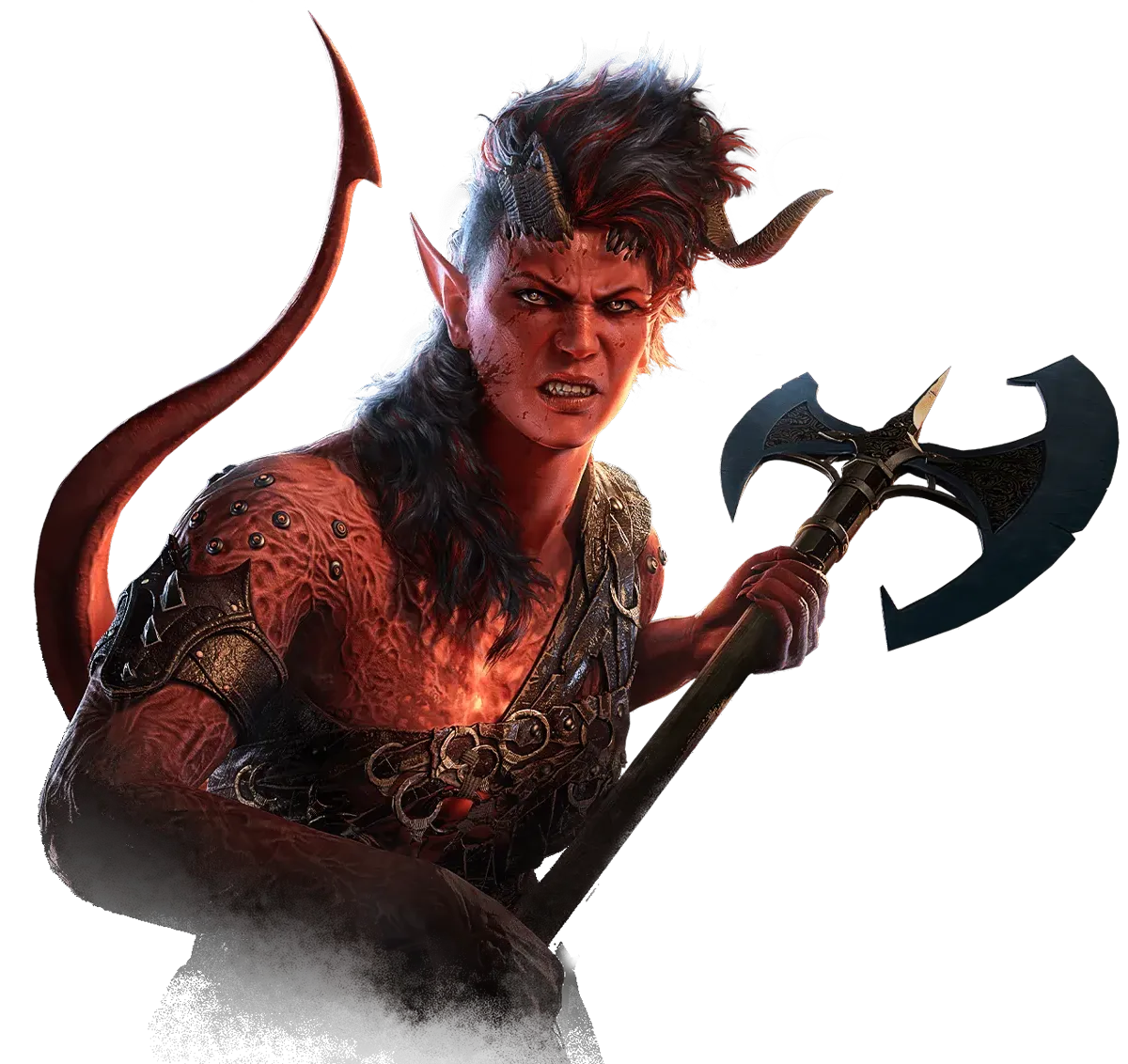
All three Tiefling lines share Fire resistance — legitimately great in a game where fire surfaces, Fireballs, and fire-breathing enemies are everywhere — plus darkvision and a small spell package that grows at levels 3 and 5. The lines differ in flavour: Asmodeus leans utility (Hellish Rebuke, Darkness), Mephistopheles leans arcane (Burning Hands, Flame Blade), and Zariel adds Searing Smite and Branding Smite, which slot nicely onto a Paladin or any weapon-user who wants a little extra burst.

None of the spells are build-defining, but Fire resistance alone earns Tiefling its spot, and it is one of the most-played races for good reason.
Gnome and Halfling
The small races share a niche and a drawback. Gnome Cunning gives advantage on Intelligence, Wisdom, and Charisma saving throws — a fantastic defensive trait against the game's control spells, and the reason a Gnome Sorcerer or Wizard is more than a meme. The Deep Gnome even adds Superior Darkvision and a stealth bonus. Halflings bring Halfling Luck (reroll natural 1s on attacks, checks, and saves) and Brave (advantage against Frightened), with the Lightfoot's Naturally Stealthy stacking advantage on Stealth.
The tax is 7.5m speed. You move slower, and in a game built around reaching high ground first, that is a real cost. What you do not pay is the tabletop heavy-weapon penalty: BG3 never implemented the Heavy property, so a Gnome or Halfling can swing a greatsword at full effect.
Human, Dragonborn, and the rest
Humans get a skill of choice, spear and polearm proficiencies, light armour with shields, and 25% more carry weight. Perfectly serviceable, thoroughly unexciting. Dragonborn get a damage-typed breath weapon and matching resistance — the breath is a fun once-per-rest AoE but scales poorly, so it is a flavour pick more than an optimization one. High Elves land here too: a Wizard cantrip and darkvision are nice, but nothing in the bundle reshapes a build. If a race is not on this list higher up, it belongs to this comfortable middle where the fantasy should decide for you.
The best race for your class
If you want the fast answer, here is where each race earns its keep:
- Barbarian / Fighter (melee, big weapon): Half-Orc for crit dice, or Duergar for Enlarge.
- Paladin: Zariel Tiefling for the Smites, or Half-Orc for crits on a Great Weapon build.
- Cleric / Druid: both classes already start with medium armour and shields, so Githyanki's headline trait is wasted here. Pick on the secondary traits instead: Misty Step, darkvision, or save advantages.
- Rogue / Ranger (ranged, stealth): Wood Elf or Wood Half-Elf for 10.5m speed and Stealth proficiency, or Drow for Faerie Fire and 24m darkvision. Both classes already have hand crossbow proficiency.
- Wizard / Sorcerer: Gnome for the save advantage, or Githyanki for Misty Step and armour.
- Warlock / Bard: Githyanki again for medium armour, or Half-Elf for the all-round package.
Race is also only half of a build's identity — the other half is how you spend those twelve levels. Once you have your race locked, our multiclassing guide covers the dips that actually pay off before the cap.
Race cheat sheet
- Race gives you no ability scores in BG3 — assign your own +2 and +1. Any race works with any class.
- Githyanki is the top all-round pick: free medium armour, Astral Knowledge skills, and a level-5 Misty Step. Its only weakness is no darkvision.
- Half-Orc is the melee king: an extra weapon die on every crit, plus a free survive-at-1-HP trigger once per long rest.
- Wood Elf / Wood Half-Elf run at 10.5m, reaching high ground and its +2 attack bonus first — speed is accuracy.
- Drow carry Faerie Fire from level 3, a Concentration AoE that hands your whole party advantage, plus hand crossbows and 24m darkvision.
- Duergar get free Enlarge and Invisibility and advantage against Charm, Paralysis, and Illusions — the best sleeper martial race.
- Small races (Gnome, Halfling) trade speed for strong save advantages. BG3 has no heavy-weapon penalty for Small characters, so the only real cost is the 7.5m speed.
- Tiefling's Fire resistance is quietly one of the best defensive traits in the game.
- When in doubt, pick the fantasy you want to play. Outside the S-tier, the mechanical gap is small enough that it is a rounding error.
Frequently Asked Questions
What is the best race in Baldur's Gate 3?
Does your race affect ability scores in Baldur's Gate 3?
Why is Githyanki considered so strong if it has no darkvision?
Which race is best for a Baldur's Gate 3 melee build?
What does the Drow race give you in BG3?
Are Small races like Gnome and Halfling bad in Baldur's Gate 3?
Does race choice really matter in Baldur's Gate 3?
Keep Reading
- BG3 Wiki — full race and subrace trait tables
- BG3 Wiki — Githyanki racial features
- BG3 Wiki — character creation and point-buy
- BG3 Wiki — high ground rules (+2 / -2 attack roll modifier)
- BG3 Wiki — Drow Magic (Dancing Lights at 1, Faerie Fire at 3, Darkness at 5)
- BG3 Wiki — Drow Magic: Faerie Fire (requires Concentration)
- BG3 Wiki — Concentration (one spell at a time, can break on damage)
- BG3 Wiki — Enlarge (Duergar), no Concentration required
- BG3 Wiki — Drow racial features (Faerie Fire and Darkness recharge on a long rest)
- BG3 Wiki — Darkness (requires Concentration; racial version once per long rest)
- BG3 Wiki — Dancing Lights (cantrip, requires Concentration)
- BG3 Wiki — Rage (cannot cast or concentrate on spells while raging; entering Rage ends Concentration)
- BG3 Wiki — Savage Attacks (one extra weapon die on a melee crit: a greatsword crit goes from 4d6 to 5d6)
- BG3 Wiki — Elf (Wood Elf: Stealth proficiency and Fleet of Foot; the Wizard cantrip is High Elf only)
- BG3 Wiki — Half-Elf (Civil Militia on every subrace; Drow half-elves get Drow Magic)
- BG3 Wiki — Cleric (starts with light armour, medium armour, and shields)
- BG3 Wiki — Druid (starts with light armour, medium armour, and shields)
- BG3 Wiki — Weapons (the Heavy property was never implemented in the final game)
- BG3 Wiki — Invisibility (Duergar): once per battle in combat, recastable outside it
- BG3 Wiki — Duergar Resilience (advantage vs illusions, Charmed, and Paralysed)
Related Guides
Baldur's Gate 3 Status Effects: The Combos That Win Fights
A first-level spell slot can double every point of lightning damage your party deals for the rest of the fight. Larian bolted an entire condition and surface layer onto D&D 5e, and most of it is undocumented in-game. Here is the whole system, with the numbers.
Baldur's Gate 3 Best Armour: The AC Math Nobody Explains
Armour Class is the only defensive stat in this game whose value accelerates the higher it climbs. Going from 19 to 20 buys you almost twice as much as going from 15 to 16. Here is what to wear, act by act, and the feat that silently deletes 3 AC off your best medium armour.
Baldur's Gate 3 Best Feats: You Only Get Three of These
Three feats. Four if you are a Fighter or a Rogue. That is the entire budget for a hundred-hour campaign, and most players spend at least one of them on something that does nothing. Here is what each pick is actually worth.
Baldur's Gate 3 Beginner Guide: What Nobody Tells You
The tutorial teaches you to move and attack. It does not teach you that advantage is worth more than any weapon you will find in Act 1, or that Withers will rebuild your entire character for 100 gold. Here is the actual onboarding.
Baldur's Gate 3 Mods: How the Official Mod Manager Works
Baldur's Gate 3 has had an official in-game Mod Manager since Patch 7. Here is how it installs mods, which ones reach PS5, Xbox and Mac, where the 100-mod console cap came from, what mods do to achievements and saves, and how to clear third-party mods out of a PC install.
Baldur's Gate 3 Multiplayer: How Co-op Actually Works
A Baldur's Gate 3 co-op campaign can run with any of its players missing except one. The host saves it, loads it and has to be there. Here is how to get up to three friends in, what cross-play and split-screen actually cover, the first-come rules on origin characters, and which systems run separately for each player.