Best Cookie Run: Braverse Cards for Beginners
You don't need chase rares to play real Braverse. These are the cheap, easy-to-use cards across all five colors that punch above their cost - the staples a new player should actually prioritize.
The fastest way to bounce off a new TCG is to copy a tournament-winning list, draw a hand you don't understand, and lose without learning anything. Cookie Run: Braverse rewards the opposite approach. Because the resource curve is slow - you only add one Support card per turn - the cards that teach you the game best are the cheap ones you cast early and often, not the expensive bombs you draw once a match. The good news is those cheap cards are also some of the most efficient in the format.
This guide picks the most accessible, high-impact cards a new player should prioritize across all five colors: one-cost staples, easy-to-read payoffs, and a starter FLIP card, each one a real entry in the official card database with verified stats. I'll quote cost as the number of energy symbols in a card's cost bracket, and note the set it comes from. Braverse is a young game and printings shift, so confirm a card's exact current text against the official card database before you build around it - but the cards below are well-established and the reasoning holds. If you haven't played a game yet, read how to play Braverse first; this assumes you know what the Break Area and Support Area are.
What makes a card beginner-friendly
A beginner card is not the same thing as a weak card. The cards you want early do three things:
- They cost little. With one Support added per turn, a one-cost Cookie hits the board on turn one or two. Cheap cards mean you're always doing something, and "always doing something" is how you learn what your deck wants.
- Their text is short and self-contained. A card that reads "deal 1 damage" teaches you faster than one with a three-clause conditional. You want effects you can resolve without a rules debate.
- They generate value without a setup. The best beginner payoffs trigger off things that happen anyway - a Cookie surviving, a Cookie fainting, your Break Area ticking up - not off a combo you have to assemble.
The beginner test: can you explain what this card does in one sentence, and will it do something useful the turn you play it? If yes, it belongs in your early collection.
Notice what's not on that list: rarity. A Secret Rare isn't automatically better than a Common, and several picks below are Commons you'll open constantly. Build instincts on cheap cards before you spend on chase ones.
GingerBrave: the card you build instincts on
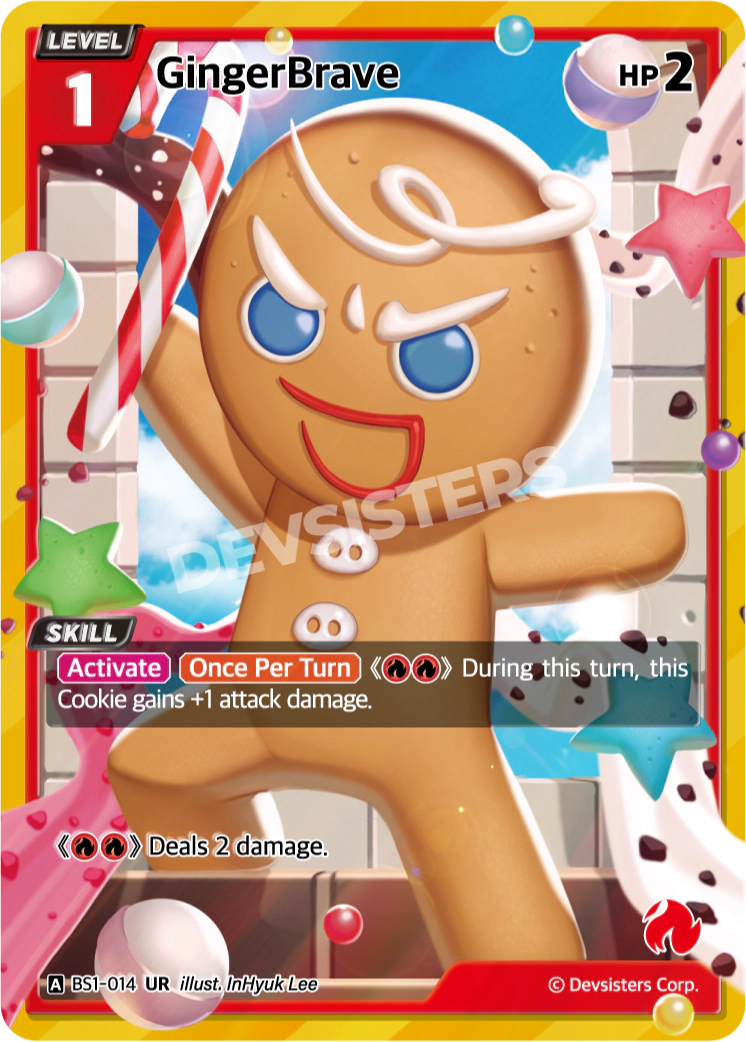
GingerBrave (BS1-014, from Brave Beginning) is the mascot of Cookie Run and the cleanest teaching card in the game. It's a Level 1 Red Cookie with 2 HP, it costs two Red to play, and its attack simply deals 2 damage. No conditions, no combo, no fine print. It also has a skill that pumps it +1 attack for a turn if you pay into it, which gives you a taste of the rest-to-pay system without punishing a misclick.
Why it's the best first card: it makes Red's whole identity legible. You drop a cheap body, you attack, your opponent has to react to you. Play 20 games with GingerBrave on the table and you'll internalize tempo - that being a turn ahead on the board is worth more than holding a stronger card you can't cast yet. It's actually printed at a high rarity, so you don't need the literal BS1-014 to learn the lesson; any cheap Level 1 attacker in the two-damage range teaches the same thing.
One-cost staples worth it in every color
Before the color-by-color picks, the structural point: every color has cheap Level 1 Cookies, and you want a pile of them. A legal deck is exactly 60 cards with up to four copies of any card number, and your one- and two-cost slots should be the fattest part of your curve no matter what color you main. Here's a beginner-friendly anchor in each color, all verified entries:
| Color | Card (set) | Stats | What it does |
|---|---|---|---|
| Red | GingerBrave (BS1-014) | LV.1, 2 HP, cost 2 | Attacks for 2; can pump itself +1 |
| Blue | GingerBright (BS5-068) | LV.1, 2 HP, cost 1 | Draws a card when it survives damage |
| Green | Clover Cookie (BS3-064) | LV.1, 2 HP, cost 1 | Refunds Support and draws when it faints |
| Yellow | Lime Cookie (BS1-029) | LV.1, 2 HP, cost 1 | Loots and filters once your Break Area climbs |
| Purple | Red Velvet Cookie (BS3-103) | LV.1, 2 HP, cost 1 | Pings a Cookie for 1 when it dies with a full trash |
Four of those cost a single energy, which means you can lead with them on turn one. That's the through-line of beginner Braverse: cheap bodies that do a little extra, played early and often. The next sections break down why each non-Red pick earns its slot.
GingerBright (Blue): free cards for surviving
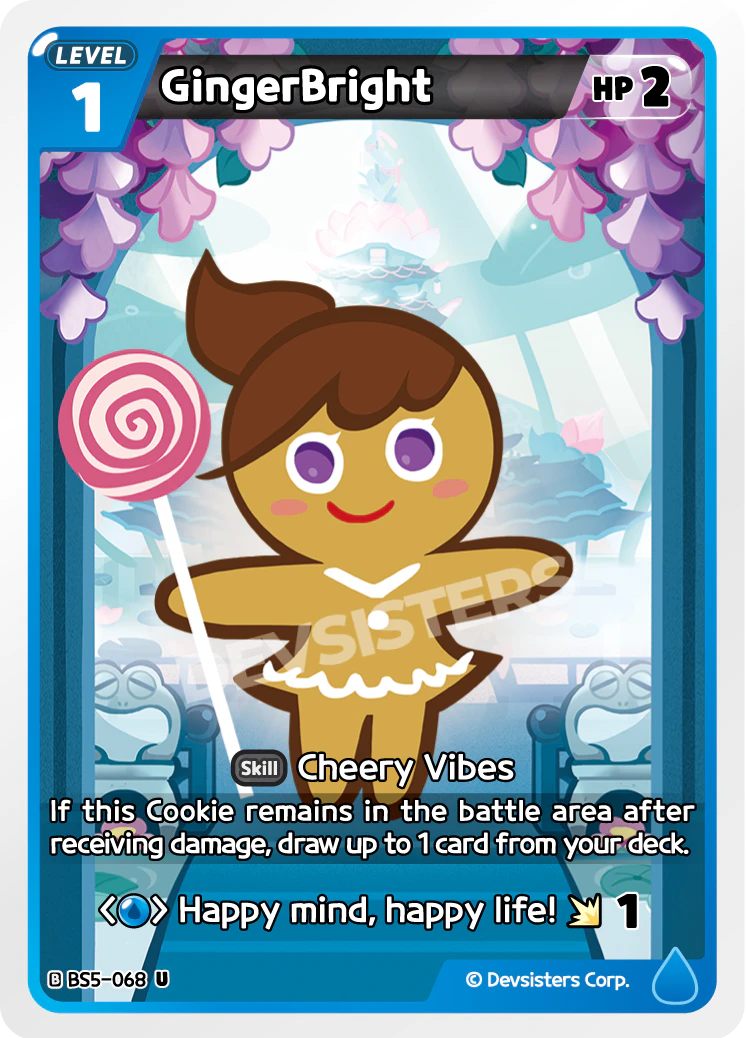
GingerBright (BS5-068, from Operation Timeguard) is a Level 1 Blue Cookie, 2 HP, one cost, with the skill Cheery Vibes: if it's still in the Battle Area after taking damage, you draw up to one card. That is a perfect beginner Blue card because it teaches the color's whole pitch - card advantage - without asking you to build a combo.
The lesson is subtle and worth slowing down on. A 2-HP Cookie often survives a single point of damage, and when it does, you get a free card. Blue rewards you for having bodies that trade favorably and stick around - that's why Blue decks want to draw deep, and why "did my Cookie live?" becomes a question with a payoff attached. Run a few copies and your hand stays full while your opponent's empties.
Clover Cookie (Green): value when it dies
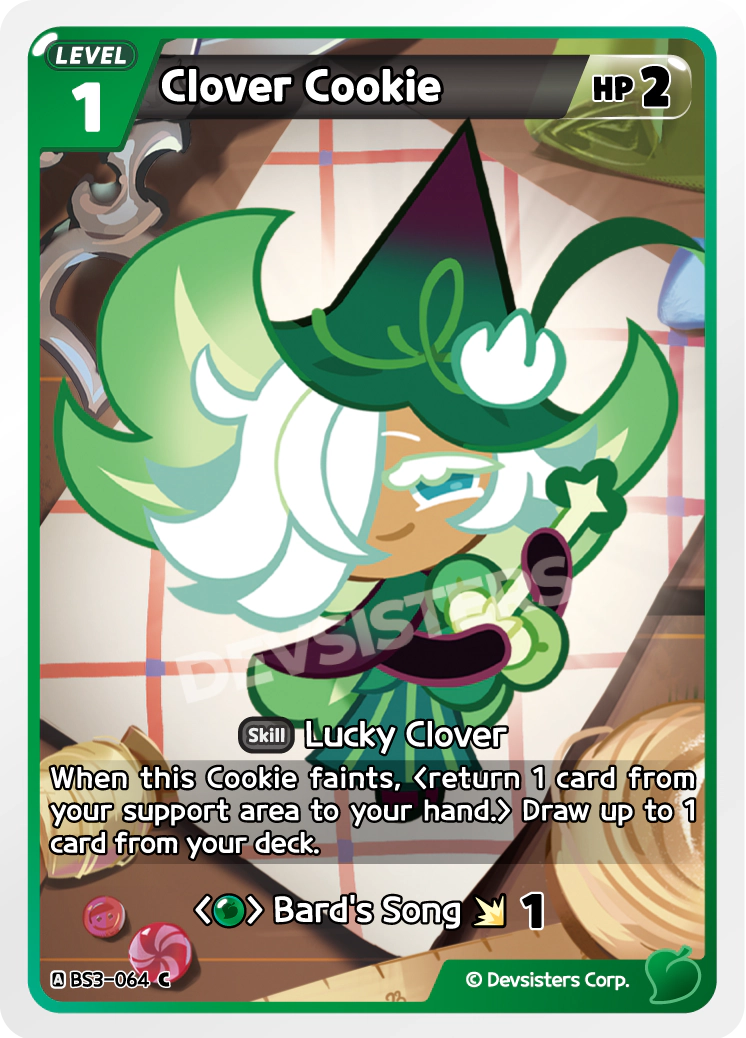
Clover Cookie (BS3-064, from Age of Heroes and Kingdoms) is a Level 1 Green Common, 2 HP, one cost, with Lucky Clover: when it faints, you return a card from your Support Area to your hand and draw up to one card. It flips a beginner's instinct on its head. New players hate losing Cookies; Clover Cookie teaches you that a Cookie dying can be a resource, not just a loss.
That's the Green mindset in a single card - your engine keeps paying out, even through trades. Because it refunds Support, it also softly teaches the rest-to-pay economy: you're being handed a card back to spend again. It's an ideal first taste of why Green grinds out the midgame instead of racing.
Lime Cookie (Yellow): loots as you grind
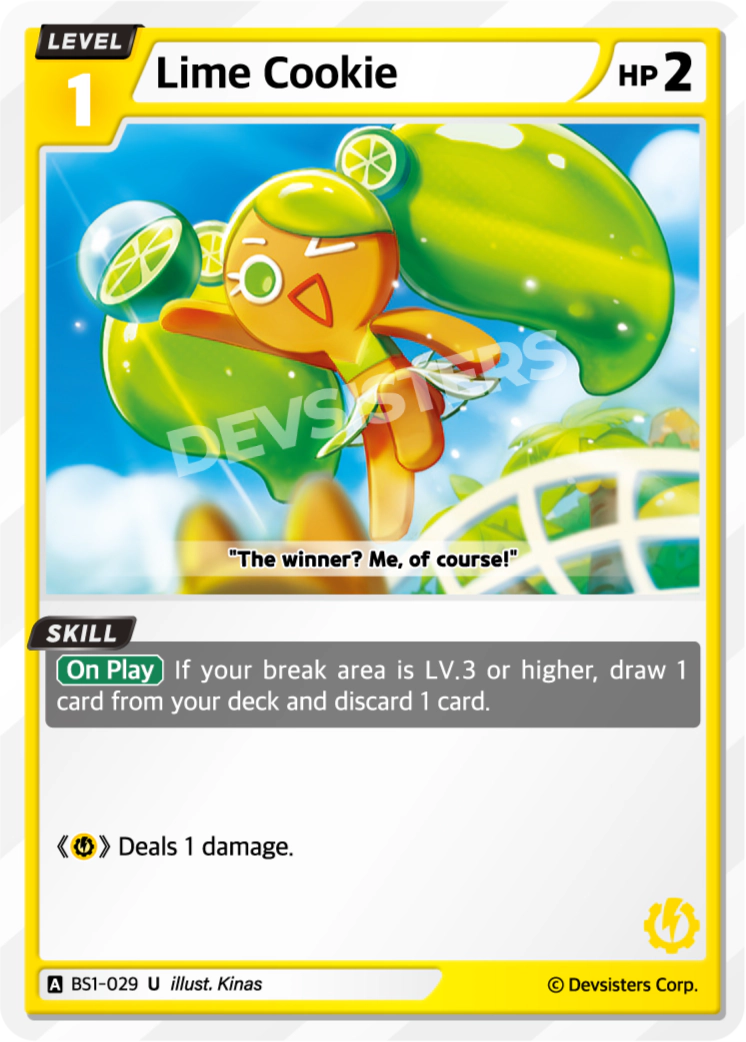
Lime Cookie (BS1-029, from Brave Beginning) is a Level 1 Yellow, 2 HP, one cost. Its attack deals 1, and it carries a skill that triggers once your Break Area is Level 3 or higher: draw a card, then discard one. That conditional is the most "advanced" text on this list, but it's a great teacher because it forces you to look at the Break Area - the zone that actually wins games.
Yellow is the control color, and control wins by grinding the long game. Lime Cookie hands you a small reward for getting there: as the game goes long and the Break Area fills, your filtering kicks in and you smooth your draws. Playing it makes you watch the scoreboard, which is exactly the habit a Yellow player needs.
Red Velvet Cookie (Purple): pays you for the trash
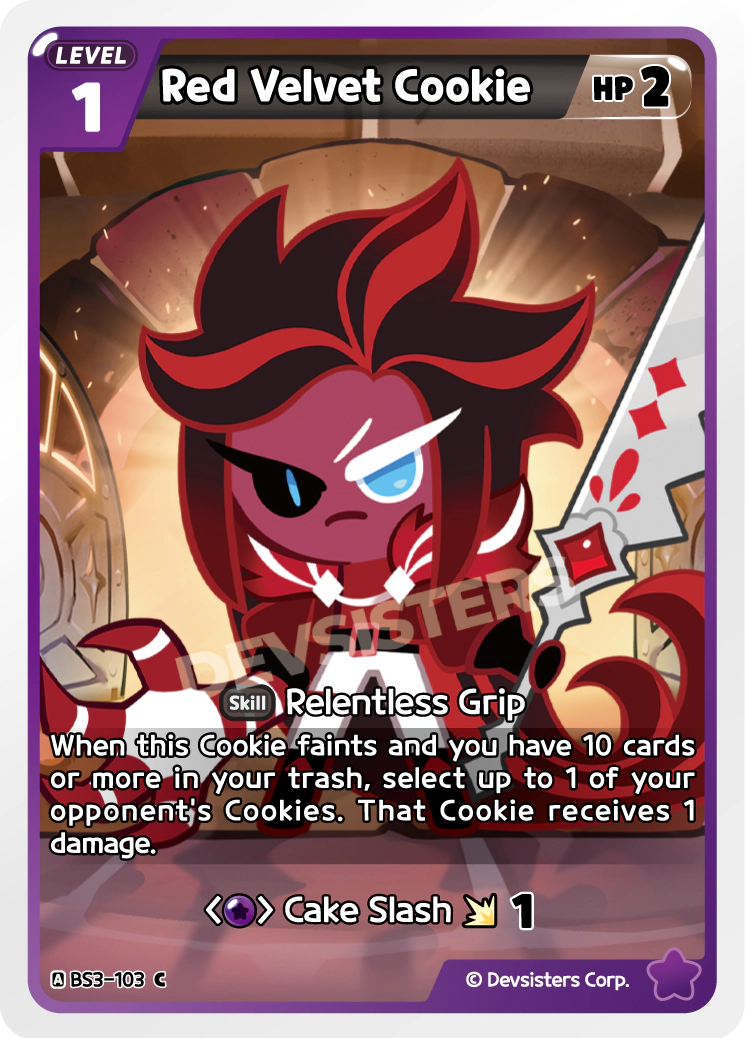
Red Velvet Cookie (BS3-103, from Age of Heroes and Kingdoms) is a Level 1 Purple Common, 2 HP, one cost with Relentless Grip: when it faints and you have 10 or more cards in your trash, you deal 1 damage to one of your opponent's Cookies. It's the friendliest on-ramp to Purple, the disruption-and-recursion color, because the payoff is dead simple - the Cookie keeps fighting after it dies.
The condition (a full trash) teaches you that Purple decks want their trash to fill up, which is a strange and useful idea the first time it clicks. You'll start saving combo math for later, but the seed is here: in Purple, the discard pile is a resource. That said, the 10-card threshold means it does nothing early, so don't lead your deck on it - pair it with cheaper unconditional bodies.
Your first FLIP card: Cherry Blossom Cookie
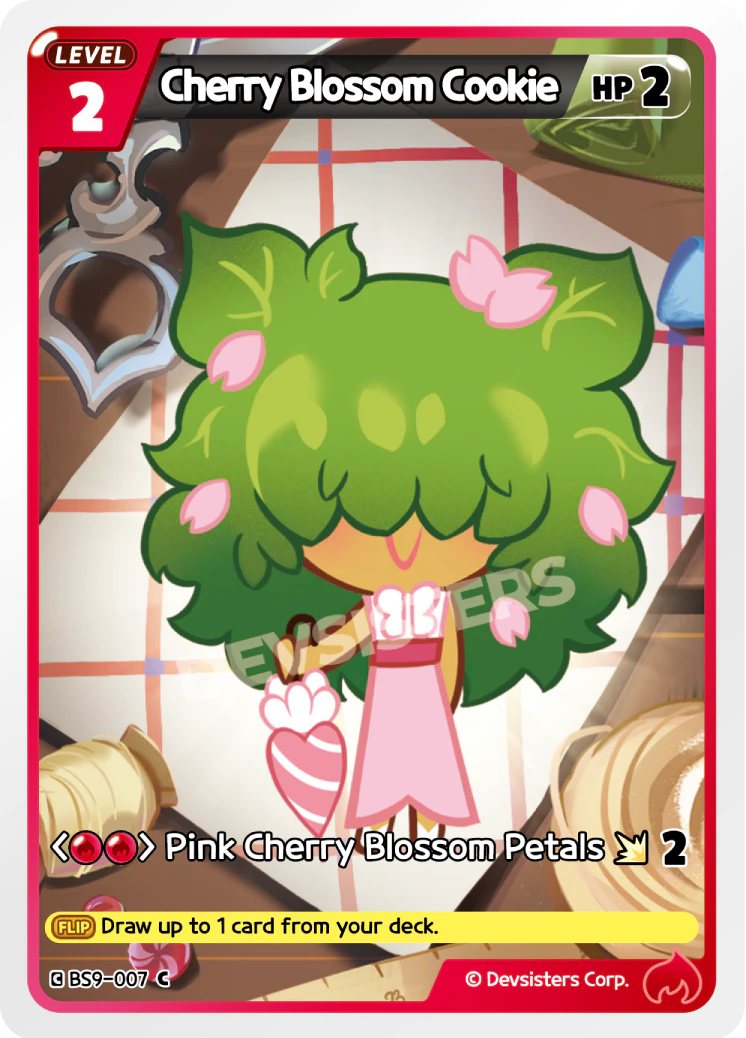
FLIP is the mechanic that makes Braverse feel different, and it intimidates new players because the effect fires from inside a Cookie's HP stack when damage flips it face-up. The way to demystify it is to start with a FLIP card whose effect is harmless to misjudge. Cherry Blossom Cookie (BS9-007, from A Game of Truth and Deceit) is a Level 2 Red FLIP card, 2 HP, and its flip effect just draws up to one card.
That's the ideal training-wheels FLIP: there's no timing puzzle, no "wait, when does this resolve?" - getting hit simply nets you a card. Slot a couple into your 60 (the cap is 16 FLIP cards in a deck) and you'll get reps on how flips enter the HP stack and trigger off damage, without a misfire costing you a game. Once the muscle memory is there, you can graduate to FLIP cards that disrupt the attacker or swing combat - the FLIP mechanic guide covers those.
Cards beginners overrate
A few things consistently lure new players into bad early buys:
- Level 3 finishers. Big, expensive Cookies look like the win button, but they cost a stack of Support you won't have for many turns and teach you nothing about the early game. You'll cast one every few matches. Buy the cheap cards first.
- Anything shiny. A Secret Rare or alternate-art version of a card you already own plays identically. Rarity is a collecting decision, not a power one - don't confuse the two while learning.
- Narrow combo pieces. Cards that only work alongside one specific other card are fun once you know the format, but as a beginner they sit dead in hand. Self-contained value beats conditional payoff until you can reliably assemble the condition.
- Off-plan splashes. A great Blue card does nothing in a deck with no other Blue support. Keep early decks tight on one or two colors so your cards cooperate - our deck-building basics covers color ratios.
If you only remember one thing: a cheap card you cast every game teaches you more, and wins you more, than an expensive card you draw once a match.
How to prioritize your first cards
A simple order of operations for a new player's collection and play:
- Start with a Starter Deck. It's a legal, tuned 60-card deck out of the box, and the best starter deck guide tells you which to grab. Play it as-is for a handful of games.
- Pick one color to deepen. Whichever Starter clicked, lean into it. Multicolor is legal, but a focused deck is easier to learn from.
- Stock cheap Level 1 Cookies. Get your one- and two-cost slots deep first. These are your engine.
- Add one easy payoff per color you play. The cards above (GingerBright, Clover, Lime, Red Velvet) are perfect here - one clear bonus, no combo required.
- Slot two or three forgiving FLIP cards. Start with draw-on-flip cards like Cherry Blossom Cookie before the spicy ones.
- Only then chase a finisher. Once your early game is consistent, a Level 3 payoff finally has a board to land on.
That sequence builds a deck that does something every turn while you learn, which is the whole point. Power comes later; consistency comes first.
Quick Action Checklist
- Build from the bottom of the curve up - cheap Level 1 Cookies are the priority, not an afterthought.
- Grab a one-cost value Cookie per color you play: GingerBright (Blue), Clover Cookie (Green), Lime Cookie (Yellow), Red Velvet Cookie (Purple).
- Use GingerBrave (or any clean cheap attacker) to learn tempo - drop a body, attack, force reactions.
- Start your FLIP reps with a draw-on-flip card like Cherry Blossom Cookie before the disruptive ones.
- Ignore rarity while learning - a Common that fits your plan beats a Secret Rare that doesn't.
- Skip Level 3 finishers and narrow combos until your early game is consistent.
- Confirm current card text against the official card database before locking a list - Braverse printings shift.
- Keep early decks to one or two colors so your cards actually cooperate.
Frequently Asked Questions
What are the best beginner cards in Cookie Run: Braverse?
Do I need rare cards to start playing Braverse?
How many cheap cards should a beginner deck run?
What is the easiest FLIP card for a new player?
Should beginners build a multicolor deck in Braverse?
Is GingerBrave a good card to learn on?
Keep Reading
Related Guides
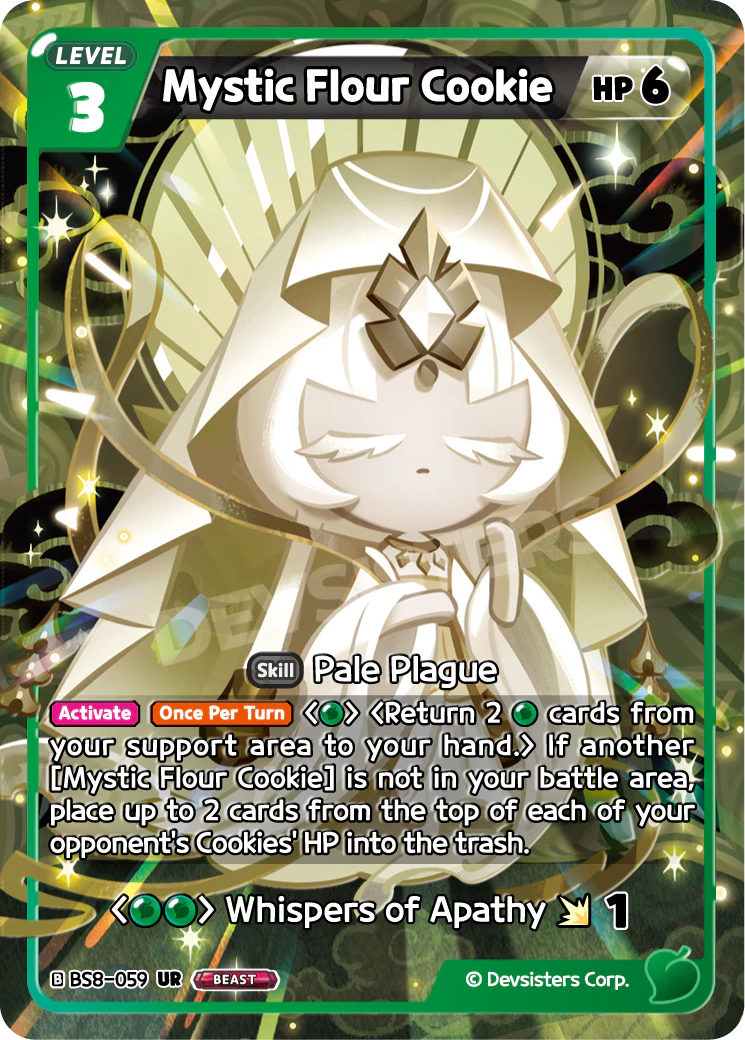
Best Green Cards in Cookie Run: Braverse, Ranked
Green is the resource color: build a fat support area, out-ramp the table, then bury people in value. Here are the real Green cards worth building a ramp deck around, ranked top to bottom.
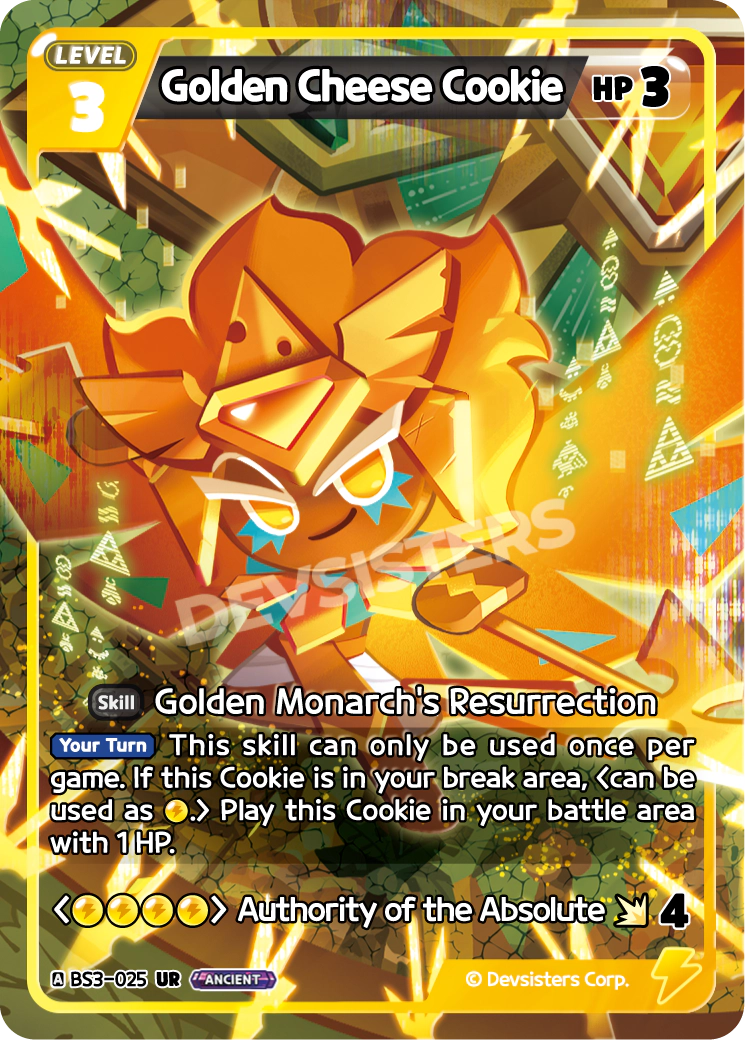
Best Yellow Cards in Cookie Run: Braverse, Ranked
Yellow is the control color: trade efficiently, recur your threats out of the break area, and grind the game into the dirt until you're the only one with a board. Here are the real Yellow cards worth building around, ranked top to bottom.
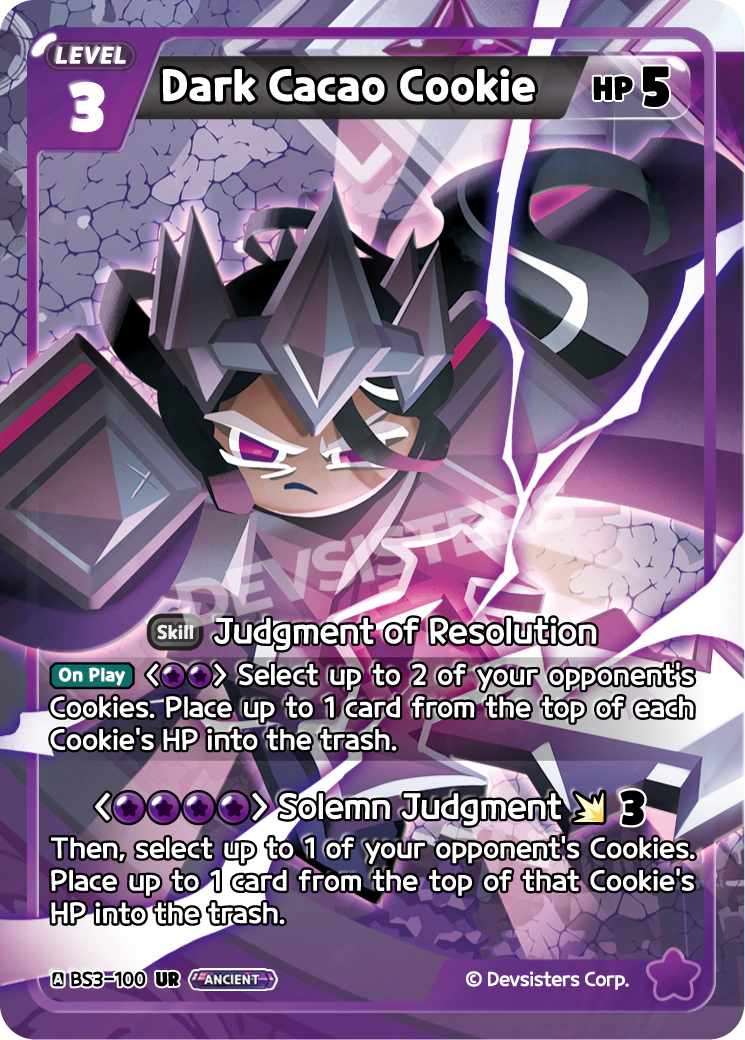
Best Purple Cards in Cookie Run: Braverse, Ranked
Purple is the graveyard color: fill your trash, mill theirs, then replay your dead and punish them for every card you've buried. Here are the real Purple cards worth building around, ranked top to bottom.
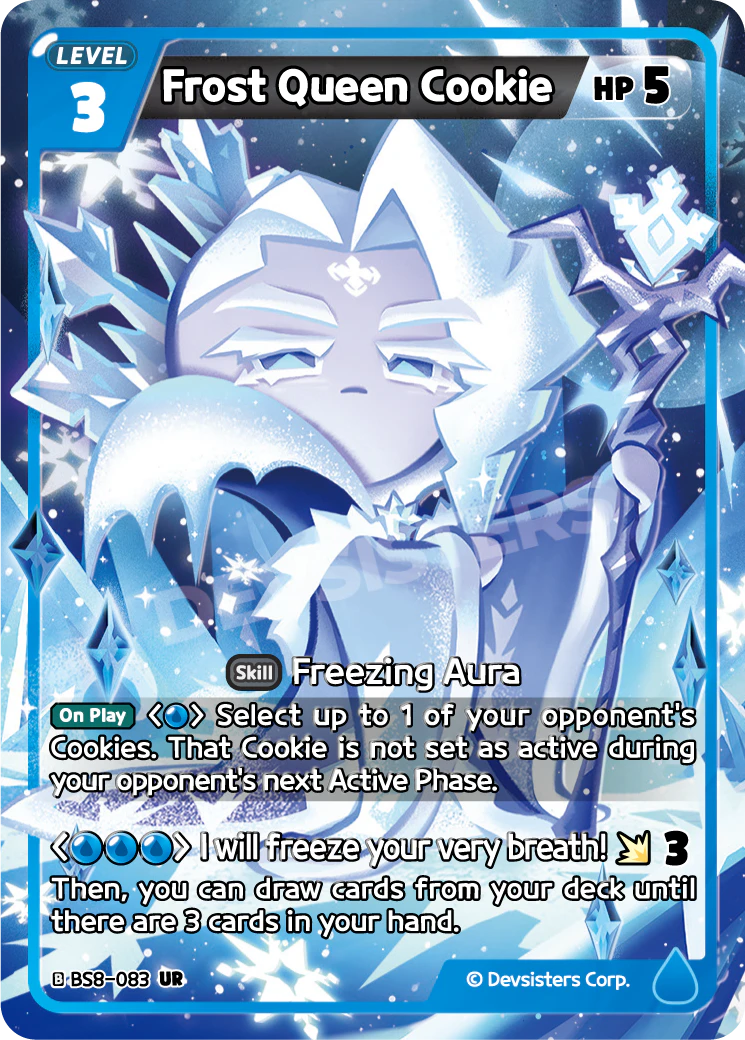
Best Blue Cards in Cookie Run: Braverse, Ranked
Blue is the brain color: draw deep, set up, then win the game in a single explosive sequence. Here are the real Blue cards worth building a combo deck around, ranked top to bottom.

How to Play Cookie Run: Braverse - A Complete Beginner Guide
Cookie Run: Braverse is the rare TCG you can teach in a single match. This guide covers everything a first-time player needs: card types, setup, turn structure, how you pay for cards, the FLIP mechanic, and how to win.
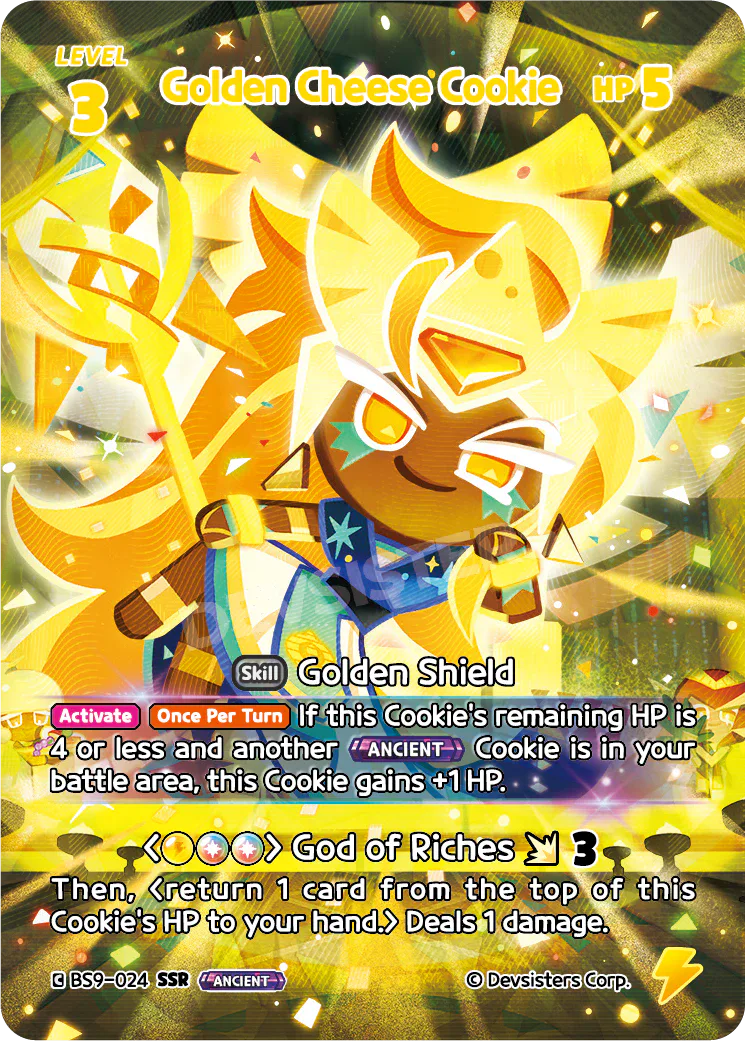
Cookie Run: Braverse Meta Tier List — Best Decks & Archetypes Ranked
Which Cookie Run: Braverse decks are actually carrying right now? Here's a meta tier list of the strongest archetypes - the real cards that anchor each one, why they rank where they do, and what's overrated.