Cookie Run: Braverse Mill Deck Guide (Build & Pilot Purple Deck-Out)
Mill in Braverse won't deck someone to zero for an instant win - the game doesn't work that way. But a Purple deck-out shell weaponizes the opponent's trash, fuels its own payoffs, and starves their Cookie supply. Here's the real list.
Every card game has the player who saw "place cards from the top of your opponent's deck into the trash" and immediately tried to build a deck that wins by emptying the other library. In a lot of games that works. In Cookie Run: Braverse, it mostly doesn't - and pretending otherwise would set you up to lose a lot of games. So let's do this honestly: here's what a Purple mill deck actually does, why it's a control shell and not an instant-kill, and the real 60-card list that weaponizes the trash anyway.
If you want the broad map first, our deck archetypes guide frames where control and mill sit next to aggro and combo. And the usual disclaimer: this is an informed build, not a tournament-proven netdeck. The English meta is young, so treat the list as a strong, fact-checked starting point and verify the current card pool against the official database before an event.
What mill actually does in Braverse
"Mill" means placing cards from a deck into the trash without playing them. Braverse has a real, dedicated mill package - almost all of it Purple - that does this to the opponent. So the question isn't "do the cards exist." They do. The question is "what does milling win you," and the answer is more interesting than a deck-out counter:
- It fuels your own payoffs. A huge chunk of Purple's best cards check your opponent's trash size and get stronger as it grows - removal that only fires once they hit 10, 15, or 20 cards in the trash, and card draw that rewards a fat opposing trash.
- It shrinks their Cookie supply. Every Cookie you mill is a Cookie they can't deploy. That feeds Braverse's real second win condition: the no-Cookie-to-deploy loss (more on that below).
- It buys time as a control deck. Mill decks are control decks with a clock attached. You stall, you remove, and the opponent's trash quietly climbing past your thresholds turns your whole deck on.
The mill truth: you're not racing to empty their deck. You're turning their trash into a resource you spend - and starving their board while you do it.
The honest truth about deck-out
Let's be blunt, because the win conditions of this game matter here. Braverse does not have a clean "you drew from an empty deck, you lose" rule the way some TCGs do. Its second win condition is the no-Cookie-to-deploy loss: if a player's Battle Area is empty and they have no Cookie in hand to field, they lose on the spot.
Mill supports that, but indirectly. Burning the opponent's deck thins the pool of Cookies they can draw and forces some of their bodies into the trash before they're ever cast. Pair that with removal that clears their board, and you can engineer the spot where their Battle Area is empty and their hand has no Cookie left. That's a real win - it's just a finisher you set up, not a counter you tick to zero.
And there's a catch that keeps mill honest: Purple itself has cards like Old Milk Villager Cookie (BS8-114) that "return all cards from your trash to your deck and shuffle it" - the game has a refresh mechanic, so a stuffed trash isn't always permanent. That's exactly why pure deck-them-out is fragile and why this build is a control-mill, not a one-trick deck-out. You win on attrition, with mill as the engine and the no-Cookie starve as the cleanest closer. Take it as informed opinion: I'd build this to grind, not to gamble the whole game on running them to zero.
Why Purple is the mill color
Braverse's five colors each have a lane (the full rundown is in colors explained), and Purple's is disruption, trash synergy, and the dark-magic toolbox. Mill is one of its signature plans, and the card pool backs it:
- Purple owns essentially all of the "mill the opponent's deck" effects - the cards that place cards off the top of the opponent's deck into their trash live in Purple and nowhere else.
- Purple has the trash-threshold payoffs that make milling matter - removal and draw that scale off the opponent's (or your own) trash count.
- Purple has the removal and stall a control-mill needs to survive to the late game, where its engine takes over.
That self-contained package - mill, payoff, control - is why mill is a mono-Purple deck. For the wider Purple toolbox beyond the mill core, our best Purple cards guide goes broader; this guide stays locked on the deck-out build.
The trash-threshold engine
The reason mill is more than "annoy the opponent" is a set of cards that explicitly check trash size and pay off. A few real examples from the official database:
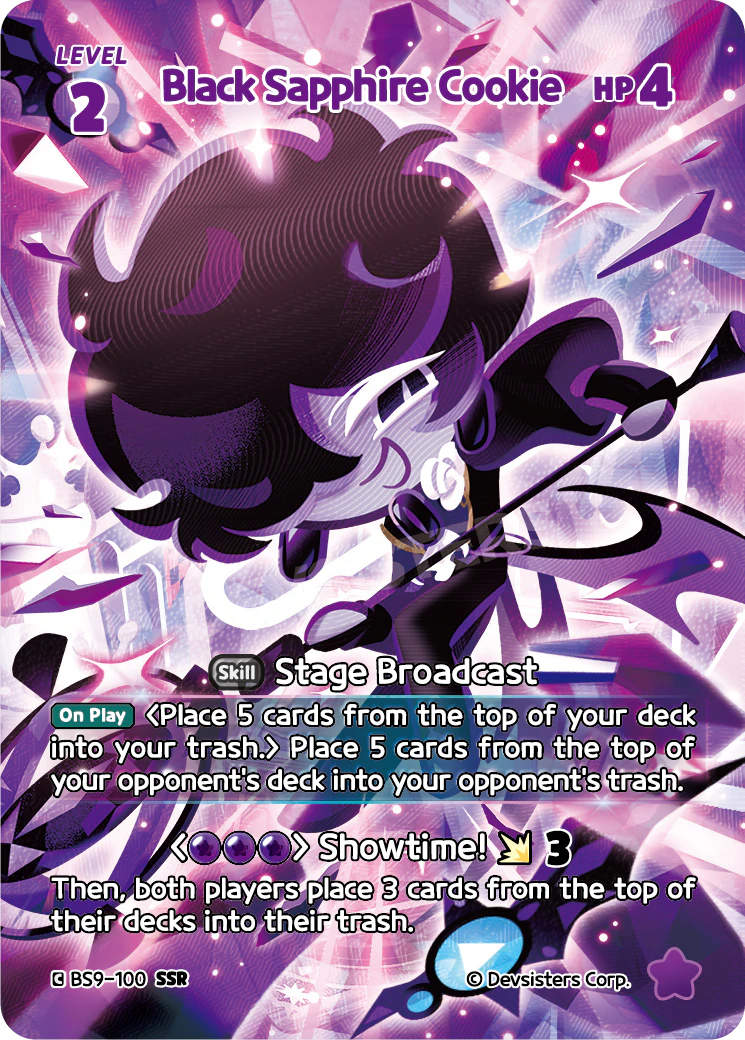
- Black Sapphire Cookie (BS9-100, LV.2) has an On Play that mills the opponent 5, and its attack mills both players 3 more. It's your headline mill body.
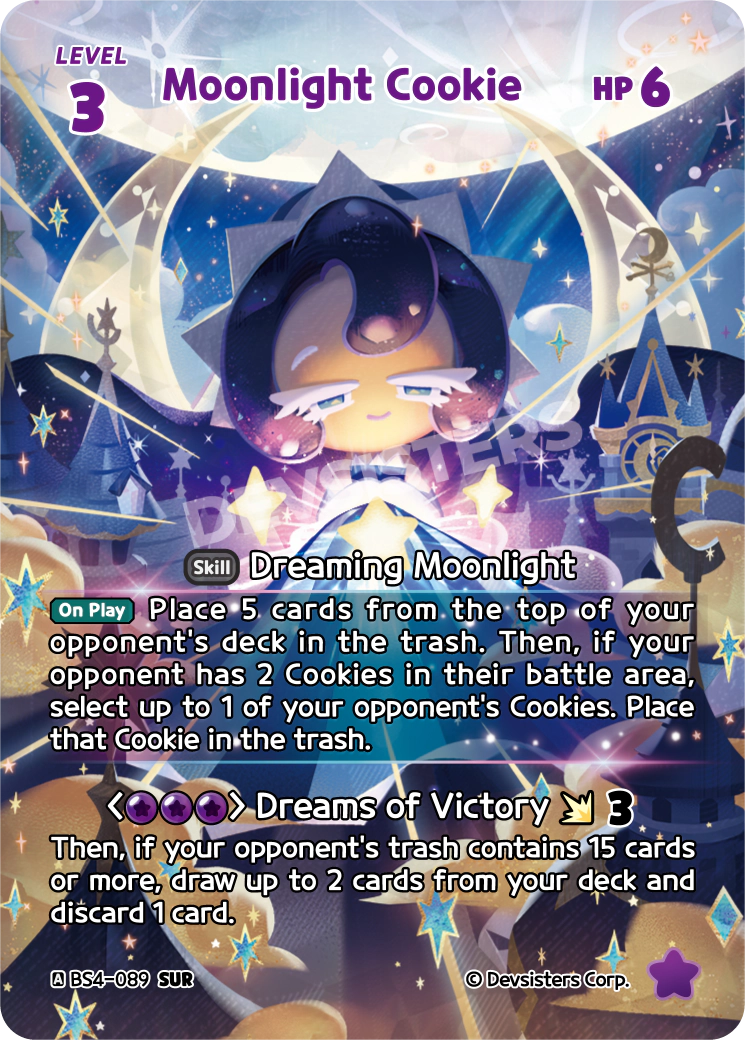
- Moonlight Cookie (BS4-089, LV.3) mills the opponent 5 and, if they have two Cookies out, trashes one of them outright. Mill and removal on a durable LV.3.
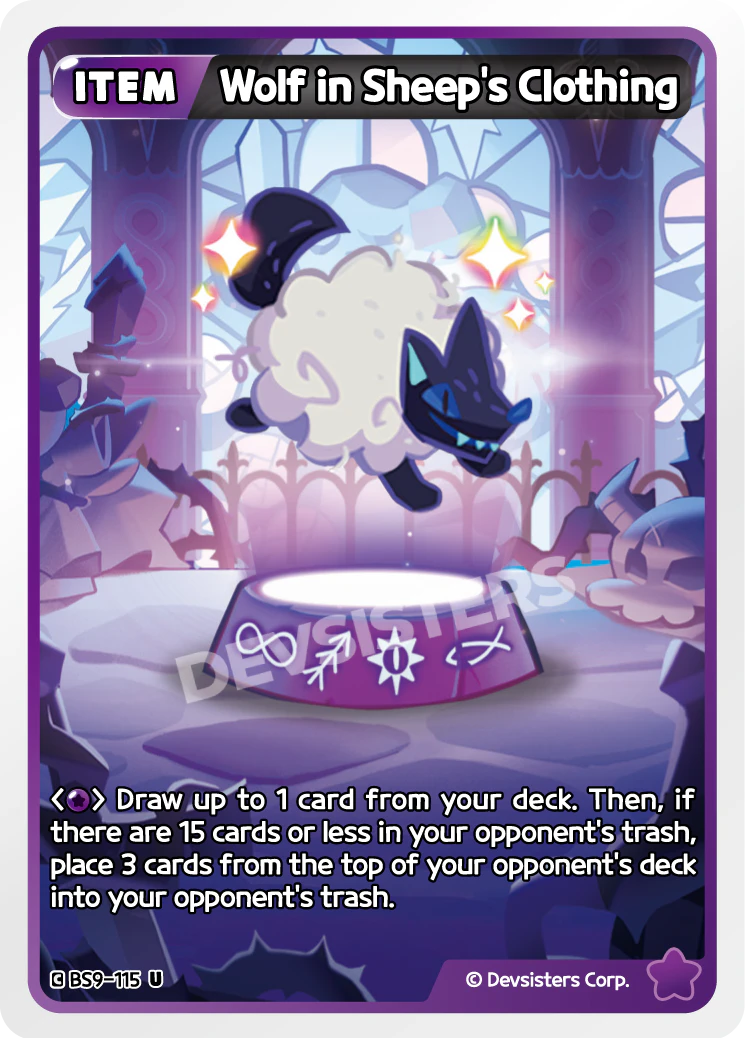
- Wolf in Sheep's Clothing (BS9-115, Item) draws you a card, then mills the opponent 3 - a cantrip that advances the plan.
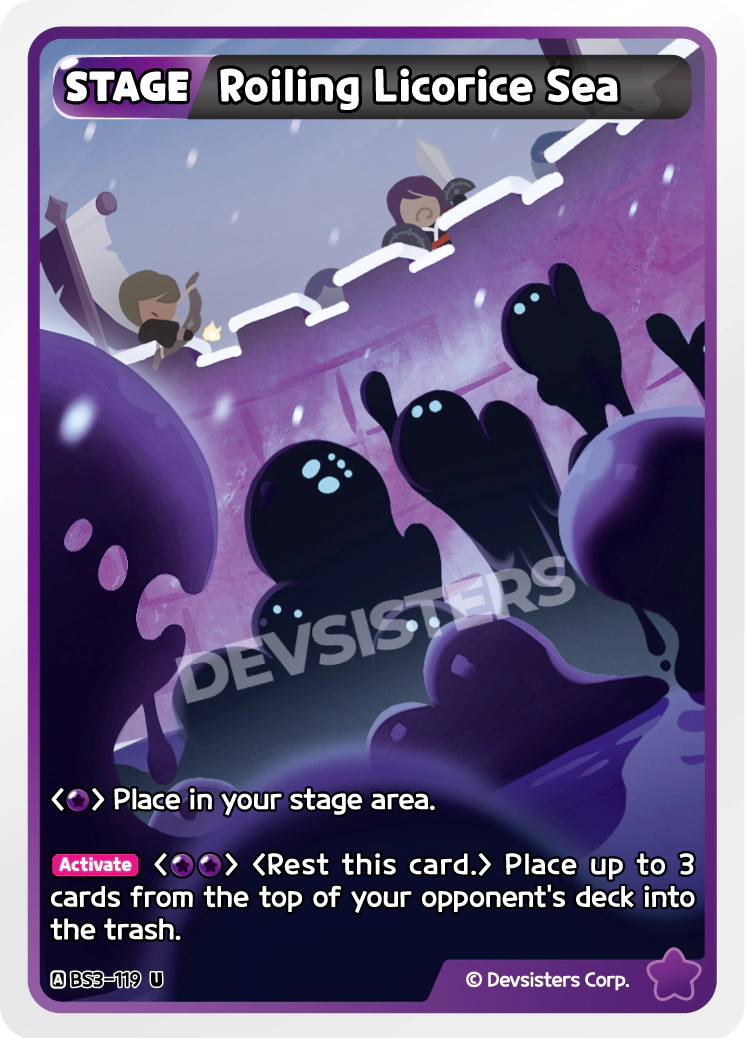
- Roiling Licorice Sea (BS3-119, Stage) is a repeatable engine: rest it to mill 3 off the opponent's deck, every turn.
- Moonlight Shards (BS4-107, Item) reads: "If your opponent's trash contains 15 cards or more," deal 2 damage to a Cookie - removal that only turns on once you've milled enough.
- Beet Cookie (BS2-060) and BONUS Coin (ST5-016) reward a fat opposing trash with extra cards, so milling literally draws you closer to your answers.
The throughline: the mill cards build a number (the opponent's trash count), and the payoff cards spend that number. That's the engine - your "ramp" is their graveyard.
A sample Purple mill decklist
Here's a complete 60-card mono-Purple control-mill shell built entirely from real, verified cards. It respects the construction rules: exactly 60 cards, at least one Cookie, and up to 4 copies of any card number. Card numbers are cited so you can find each one in the official database.
Cookies - LV.1 (the early bodies + small mill):
- 4x Latte Cookie (BS9-098) - with 3 {P} in your support area, sacs itself to mill the opponent 3. Repeatable chip-mill.
- 4x Affogato Cookie (BS3-105) - sacs to mill both players 2; its attack mills the opponent 1 more.
- 4x Beet Cookie (BS2-060) - cheap body that draws you a card when it faints into a fat opposing trash.
- 4x Sugar Glass Cookie (BS4-096) - cheap LV.1 that turns its own HP into card draw to dig for engine pieces.
Cookies - LV.2 (the mill engines):
- 4x Black Sapphire Cookie (BS9-100) - the headline mill body; mills 5 on play, more on attack.
- 4x Candlelight Cookie (BS6-090) - self-mills 2 each turn end, feeding your own trash-count payoffs.
Cookies - LV.3 (the mill + removal top end):
- 3x Moonlight Cookie (BS4-089) - mills 5 and can trash a Cookie; your durable threat.
- 2x Old Milk Villager Cookie (BS8-114) - a sturdy LV.3 wall that recycles your trash if you over-mill yourself.
Items (mill + draw + threshold removal):
- 4x Wolf in Sheep's Clothing (BS9-115) - draw 1, mill the opponent 3. Smooth, repeatable.
- 4x Flipped Coin (BS9-114) - self-mills you early, mills the opponent once your own trash is fat; flexible fuel.
- 4x First Watcher's Bow (BS3-116) - trash a card off a Cookie's HP, or mill a card from their hand. Flexible disruption.
- 2x Moonlight Shards (BS4-107) - 2 damage to a Cookie once their trash hits 15; threshold removal.
- 2x BONUS Coin (ST5-016) - draw 2 once the opponent's trash hits 30; a late-game refuel the mill plan enables.
Stages (the repeatable mill):
- 4x Roiling Licorice Sea (BS3-119) - rest to mill 3 off the opponent every turn. Your steady drip.
- 4x Endless Game of Chess (BS9-118) - discard 1 to strip a card off an opposing Cookie's HP each turn; grinds their board.
Traps (the control + threshold payoff):
- 3x Light of False Truths (BS9-116) - once their trash hits 15, forces them to trash a card off one of their own Cookies.
- 2x Truth Stained With Lies (BS9-117) - shrinks an attacker, harder once their trash hits 20; defensive tempo.
- 2x Abandoned Cloud Nest (BS2-080) - big attack-debuff once your trash hits 15; a cheap blowout speed bump.
That's 4+4+4+4 + 4+4 + 3+2 + 4+4+4+2+2 + 4+4 + 3+2+2 = 60 cards. It's a coherent mono-Purple control-mill with a steady mill drip, trash-threshold payoffs, removal, and enough draw to never flood out. Swap counts are taste; which Purple pieces sit at common versus chase rarity shifts with the pool, so confirm current printings against the official database. For the build philosophy behind these ratios, pair this with deck-building basics.
How to pilot the deck
Building the deck is the easy half. Piloting a control-mill well is what separates a grind-out win from a deck that gets run over before its engine comes online. The principles:
- Survive first, mill second. You're a control deck. The opening turns are about not dying - trade, debuff, and stall with your Traps and Stages while you set up. A mill engine that's dead on board mills nothing.
- Get a repeatable mill source down early. Roiling Licorice Sea milling 3 a turn, or Candlelight self-feeding your thresholds, is what builds the number your payoffs need. Land one and protect it.
- Track the threshold numbers. Your removal and draw turn on at specific opposing-trash counts - 15 for Moonlight Shards and Light of False Truths, 20 for the big debuffs, 30 for BONUS Coin. Mill toward those breakpoints, then cash them in. (The phase-by-phase rules are in the turn structure guide.)
- Hunt the no-Cookie finish, don't count to zero. When you've milled their Cookies, cleared their board, and stripped their hand, watch for the spot where they have an empty Battle Area and nothing to deploy. That's your win - it's a finisher you engineer, not a deck-out counter. (Win conditions covers exactly when it triggers.)
- Mind the Break Area both ways. You can still win the normal way - pushing their Break Area to a combined Cookie Level of 10 - and Moonlight's "trash a Cookie" line helps. But don't feed your own Break Area with reckless trades; a control deck that hands the opponent the Level-10 win was never in control.
The pilot's mantra: their trash is my ramp, their empty board is my win. I survive, I drip mill every turn, and I let the thresholds do the killing.
Mulligan and opening hands
This deck wants a stable opener that can survive and start the engine, not a fast one. You're keeping hands that can defend and get a mill source online. Specifically, you want:
- A mill source or a way to start one - Roiling Licorice Sea, Black Sapphire, Wolf in Sheep's Clothing, or Candlelight. Something that starts the trash climbing.
- A defensive piece - a Trap or a cheap blocker-body so you're not dead before the engine turns on.
- Not all top-end. A hand of three LV.3 Moonlights and no early plays gets run over; the control-mill needs to reach the late game it's built for.
Throw back all-payoff hands (threshold cards with nothing to feed them) and hands with no early defense. Our full mulligan and opening hand guide covers the framework; for this deck, the short version is "keep the hand that survives and starts milling, ship the one that does neither."
Mill mistakes to avoid
The classic ways mill pilots throw away winnable games:
- Treating it like a deck-out race. You will almost never mill an opponent to zero before they refresh or kill you. Mill to hit your thresholds and to starve their Cookies, not to empty their library.
- Forgetting the refresh. Cards like Old Milk Villager Cookie exist on both sides; an opponent can recycle a big trash back into a deck. Don't assume your mill is permanent - convert the lead into a board-clear and a no-Cookie finish.
- Milling them a gift. Some decks want cards in the trash (the Purple combo deck rebuys from it). Read your opponent - milling a recursion deck can hand them fuel. Against those, lean on removal and the no-Cookie line instead of raw mill.
- Ignoring the board. A control-mill that doesn't defend just dies to aggro on turn six. Your Stages, Traps, and removal are not optional flavor - they're how you live to spend your engine.
- Splashing a second color. The thresholds and mill all key on {P}, and your resource base wants to be clean. Mono-Purple is the deck; a splash just makes your early survival worse.
The cheapest mistake to avoid is greed for the deck-out itself. The win is attrition - thresholds, removal, and an empty enemy board - not a number ticking to zero.
How to tune it as you learn
Once the core is humming, upgrade surgically rather than chasing every shiny new Purple card:
- Tune your threshold density to the meta. More aggro around you means more Traps and cheap removal to survive; a slower field means you can run more pure mill and lean on the grind.
- Trim mill you can't pay off. If you're milling fast but never reaching the spot where it matters, swap a mill source for a finisher - more removal or a way to close the no-Cookie line.
- Watch new sets, but wait. New Purple mill and threshold pieces can quietly upgrade the deck, but the card pool's verdict takes a week or two to settle after a set drops. Track releases via the set release timeline and upgrade one slot at a time so you can actually feel the change.
Mill is the deck that teaches you patience and resource math - it's the most "control" thing Braverse offers right now. Build it, play it slow, and let each loss show you whether you needed more defense, more payoff, or a faster path to the no-Cookie finish.
Quick Action Checklist
- Build mono-Purple as a control-mill - mill sources, trash-threshold payoffs, removal, and draw, all on {P}.
- Survive first, mill second - your Traps and Stages keep you alive until the engine turns on.
- Land a repeatable mill source early - Roiling Licorice Sea or Candlelight builds the number your payoffs need.
- Track the thresholds - 15, 20, 30 cards in the opponent's trash unlock removal and draw; mill toward them, then cash in.
- Hunt the no-Cookie finish - clear their board and strip their hand so an empty Battle Area becomes a win.
- Don't race to zero - the refresh mechanic and full Cookie counts make pure deck-out fragile; win on attrition.
- Mulligan for survival plus a mill start - ship all-payoff and no-defense hands.
- Verify current printings against the official database - the English card pool is young and shifts set to set.
Frequently Asked Questions
Is there a mill deck in Cookie Run: Braverse?
Can you win by milling your opponent's deck to zero in Braverse?
How do you build a Purple mill deck in Braverse?
Why is Purple the mill color in Cookie Run: Braverse?
How do you pilot a mill deck in Cookie Run: Braverse?
Keep Reading
Related Guides
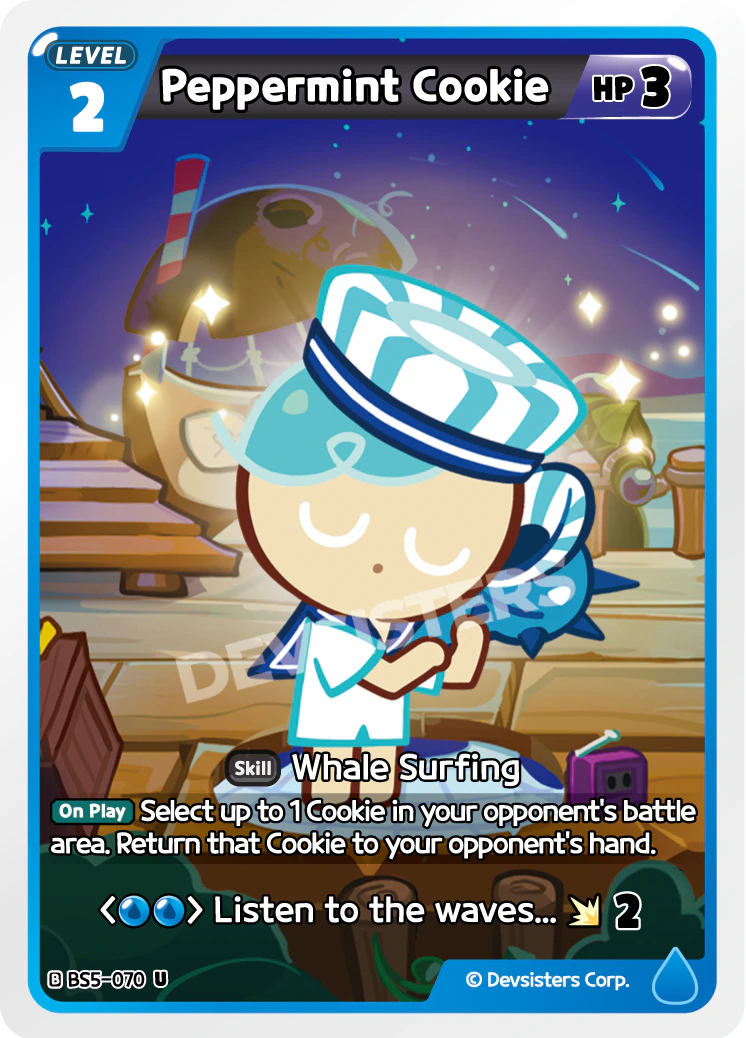
Cookie Run: Braverse Tempo Deck Guide (Build & Pilot Blue Tempo)
Tempo is aggro that learned to play defense. Here's how to build a Blue-Red tempo shell in Cookie Run: Braverse, a real decklist of cards you can buy, and how to keep the clock running while the other deck flails a turn behind.

Cookie Run: Braverse Combo Deck Guide (Build & Pilot Purple Recursion)
Combo in Braverse isn't a one-card instant-kill - it's a Purple value engine that replays Cookies out of your trash until the opponent runs out of answers. Here's the real decklist, the loop, and how to pilot it without bricking.

Cookie Run: Braverse Control Deck Guide (Build & Pilot Blue/Purple Control)
Control is the deck that says "go ahead, swing" and then makes you regret it. Here's how to build a reactive Blue/Purple control shell in Cookie Run: Braverse, a real 60-card list of cards you can actually buy, and how to pilot it without drowning in your own clever answers.
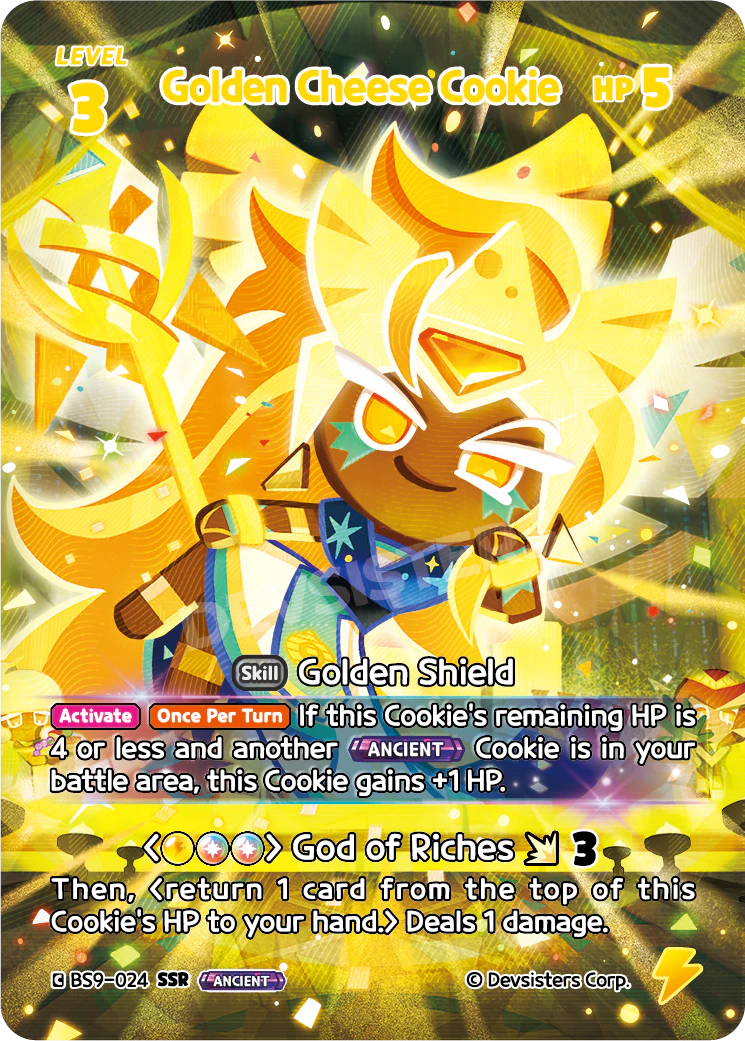
Cookie Run: Braverse Midrange Deck Guide (Build & Pilot Green/Yellow Midrange)
Midrange is the deck that beats aggro because it's bigger and beats control because it's faster - and asks you to actually read the game to know which one you're being. Here's how to build a value-driven Green/Yellow midrange deck in Cookie Run: Braverse, a real 60-card list you can buy, and how to pilot it.

How to Play Cookie Run: Braverse - A Complete Beginner Guide
Cookie Run: Braverse is the rare TCG you can teach in a single match. This guide covers everything a first-time player needs: card types, setup, turn structure, how you pay for cards, the FLIP mechanic, and how to win.
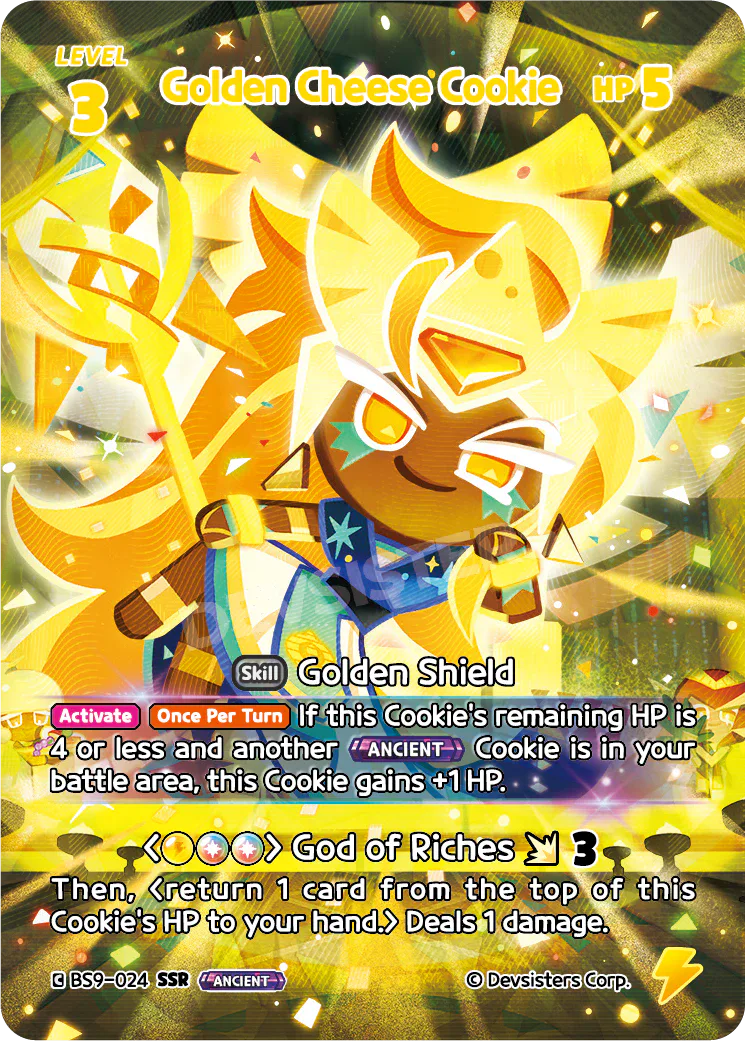
Cookie Run: Braverse Meta Tier List — Best Decks & Archetypes Ranked
Which Cookie Run: Braverse decks are actually carrying right now? Here's a meta tier list of the strongest archetypes - the real cards that anchor each one, why they rank where they do, and what's overrated.