Cookie Run: Braverse Rarities & Collecting Guide: Every Card Tier Explained
Confused by SR, UR, EXR, and those shiny Secret cards? Here's the full Cookie Run: Braverse rarity ladder, what 'hidden' cards are, how boxes are packed, and how to collect without overspending.

Pop open a Cookie Run: Braverse booster pack and you'll see a little symbol on each card telling you how rare it is. Those symbols drive everything in the collecting side of the hobby - what's hard to find, what's flashy, and what people chase. This guide lays out the full rarity ladder, explains the confusing-sounding "hidden" cards, walks through how boxes are packed, and gives you a collecting plan that doesn't require a second mortgage.
One promise up front: we don't invent prices or pull rates. Card values move constantly and official odds aren't something we'll fake. Where a number needs live verification, we say so.
The Braverse rarity ladder
Braverse uses a tiered rarity system that should feel familiar if you've collected any modern TCG: a run of standard rarities for the base set, then a smaller pool of premium "Secret" alt-art versions for collectors to chase.
Here's the ladder, roughly from most common to rarest:
| Tier | Abbreviation | Roughly how special |
|---|---|---|
| Common | C | The backbone of every pack |
| Uncommon | U | Slightly less frequent |
| Rare | R | Your standard "rare slot" cards |
| Super Rare | SR | Premium pulls, often foiled |
| Ultra Rare | UR | High-end chase cards |
| Secret Rare | SEC | Full-art / alt-art chase |
| Secret Super Rare | SSR | Rarer alt-art chase |
| Secret Ultra Rare | SUR | The rarest alt-art chase |
| Extra Rare | EXR | Special chase rarity (very limited) |
| Genesis Extra Rare | GXR | The rarest of all - a single card carries it |
| Promotion | P | Event, tournament, and product-promo cards |
A couple of notes on the odd ones out: EXR and GXR aren't really part of the "regular" base ladder - they're special chase rarities, and GXR is so exclusive that exactly one card in the whole game has it (we name it below). Promotion (P) cards come from events, tournaments, and product bundles rather than booster packs, so you won't pull them from a box. Treatments can be added or renamed set to set, so confirm the exact rarity ladder against the official site and the latest set before you rely on it.
What the full card pool looks like
Zoom out from a single pack and the shape of the whole game gets clearer. The official database currently lists just over 2,000 card entries (counting alternate-art printings and promos as separate rows), and they break down roughly like this by rarity:
| Rarity | Approx. count |
|---|---|
| Common (C) | ~615 |
| Uncommon (U) | ~470 |
| Super Rare (SR) | ~145 |
| Secret Super Rare (SSR) | ~123 |
| Rare (R) | ~120 |
| Secret Rare (SEC) | ~110 |
| Ultra Rare (UR) | ~83 |
| Secret Ultra Rare (SUR) | ~81 |
| Extra Rare (EXR) | ~11 |
| Genesis Extra Rare (GXR) | 1 |
| Promotion (P) | ~290 |
Two things jump out. First, Commons and Uncommons are the overwhelming majority - well over half the entire pool - which is exactly why building a playable deck is affordable even when the chase cards aren't. Second, the Secret tiers (SEC/SSR/SUR) roughly mirror their base counterparts in number, because they're alternate printings of those same cards. That's the single most important fact about Braverse collecting, and it deserves its own section below.
By card type, the pool is heavily Cookie-focused - Cookies are by far the largest group, followed by FLIP, Item, Trap, Stage, and the newer EXTRA cards. And by color, the five core colors (Red, Yellow, Green, Blue, Purple) are near-evenly represented at roughly 380-390 cards each, with two small extras: a tiny PURE group of special cards and the newer BLACK faction (around 35 cards) introduced with The Dark Enchantress War.
Standard rarities, from Common to Extra Rare
The everyday tiers - Common (C) through Ultra Rare (UR), plus the special Extra Rare (EXR) - make up the cards you actually build decks with. A few things worth knowing:
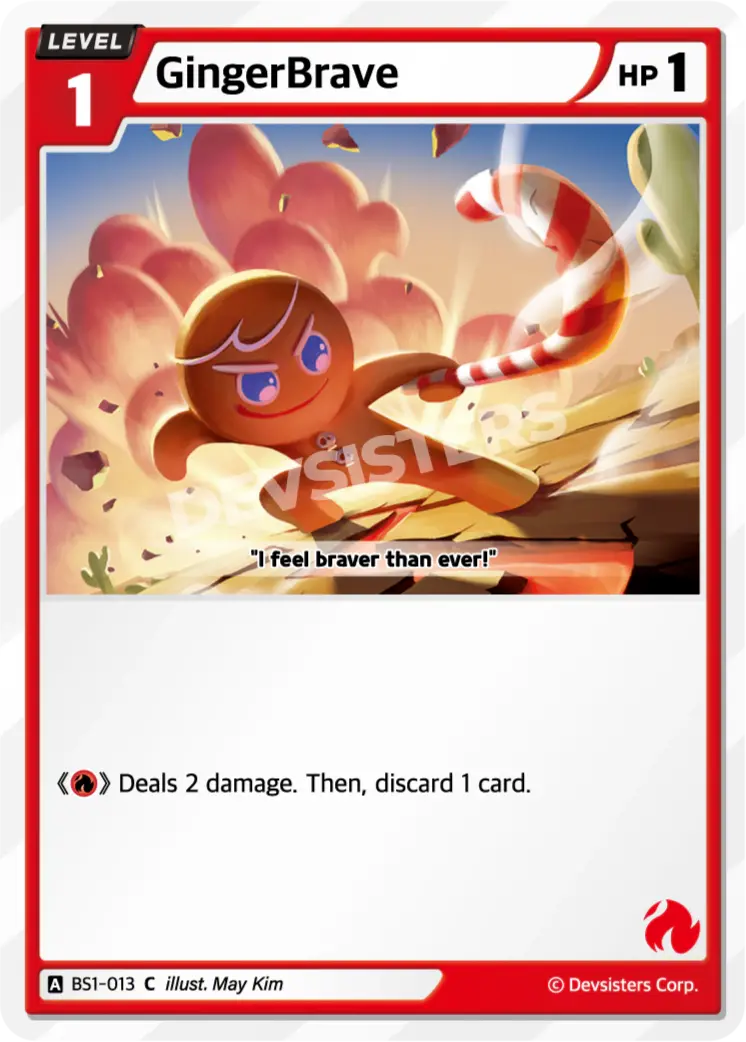
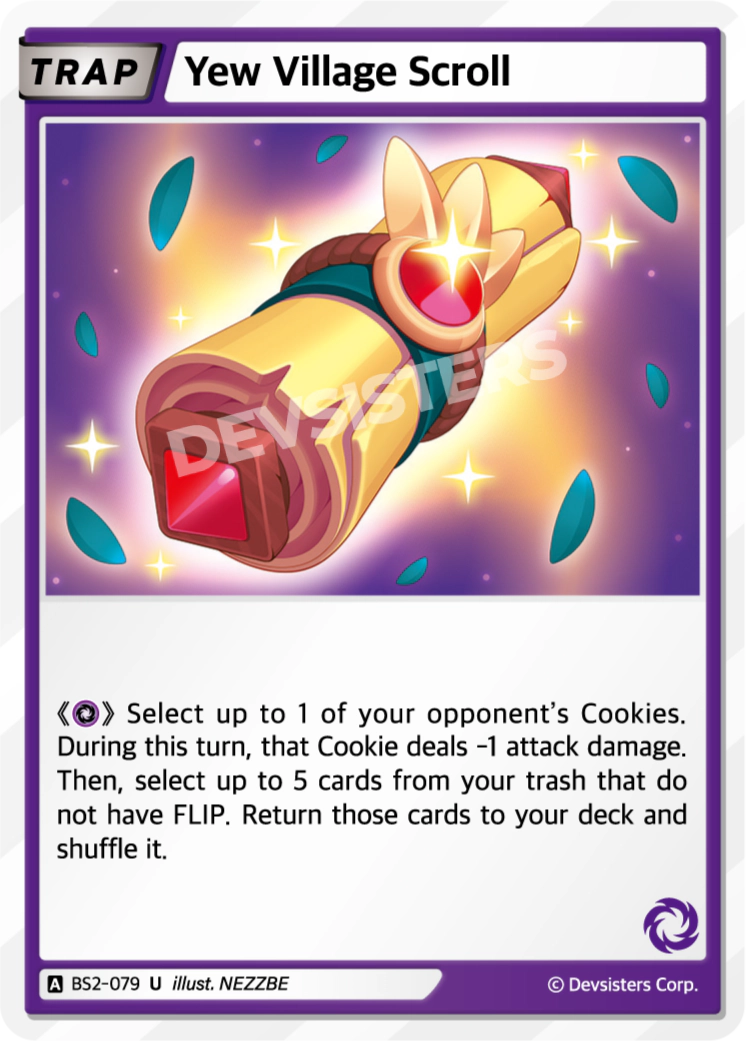
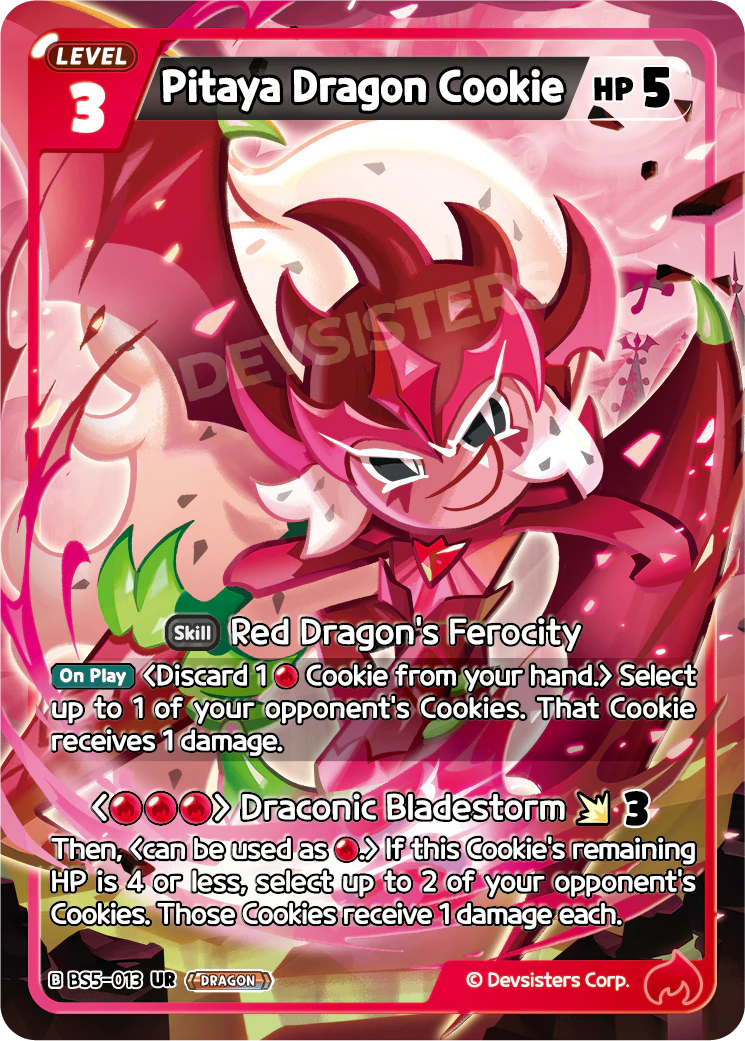
- Rarity is not the same as power. Plenty of Commons and Uncommons are deck staples, and a card being SR or UR doesn't automatically make it better in a 60-card list. Build around what a card does, not its symbol.
- Higher rarities are usually foiled or specially treated, which is part of why they're prized even when a cheaper copy plays identically.
- For actually playing, you can often get every card you need at the lower rarities or as singles, which keeps the game affordable.
Secret rarities and alt-art chase cards

The Secret tiers - SEC, SSR, and SUR - are the collector layer. These are typically full-art or alternate-art versions of cards that also exist at normal rarity, dressed up with premium treatments. They're the "wow" pulls, the cards people frame, and the ones that command the most attention on the secondary market.
Two practical notes for collectors:
- A Secret version usually plays the same as its standard counterpart, so chasing them is a collecting decision, not a competitive necessity.
- Which specific cards get Secret treatments varies by set, and the marquee Cookies tend to get the flashiest versions. We won't name "the chase card" of a given set without confirming it, and you shouldn't trust unverified pull-rate claims either - check per-set chase cards and pull rates against official sources.
How Secret cards map to base cards

Here's the structural insight that makes Braverse collecting make sense, and it's visible right in the official card numbers. Every chase card is tied to a base card by its number. The base printing gets a plain number - say BS7-013, Chili Pepper Cookie at Super Rare - and the alt-art Secret version gets the same number with an @ suffix: BS7-013@1, the Secret Super Rare. They're the same card, same stats, same text; the @1 is just the dressed-up printing.
Once you know that, the rarity pairs line up perfectly. Across a set you'll typically find:
- Each Rare (R) has a matching Secret Rare (SEC) at @1
- Each Super Rare (SR) has a matching Secret Super Rare (SSR) at @1
- Each Ultra Rare (UR) has a matching Secret Ultra Rare (SUR) at @1
Arena of Glory is a clean example: its ten Rares each have a SEC alt, its Super Rares each have an SSR alt, and its Ultra Rares each have a SUR alt. This is why the Secret-tier counts almost mirror the base-tier counts in the pool breakdown above. For a collector it's genuinely useful: if you want a card at its highest treatment, you're looking for that exact card number with the highest @ suffix - you're not hunting some separate, unrelated card.
The two rarities that break the pattern: EXR and GXR

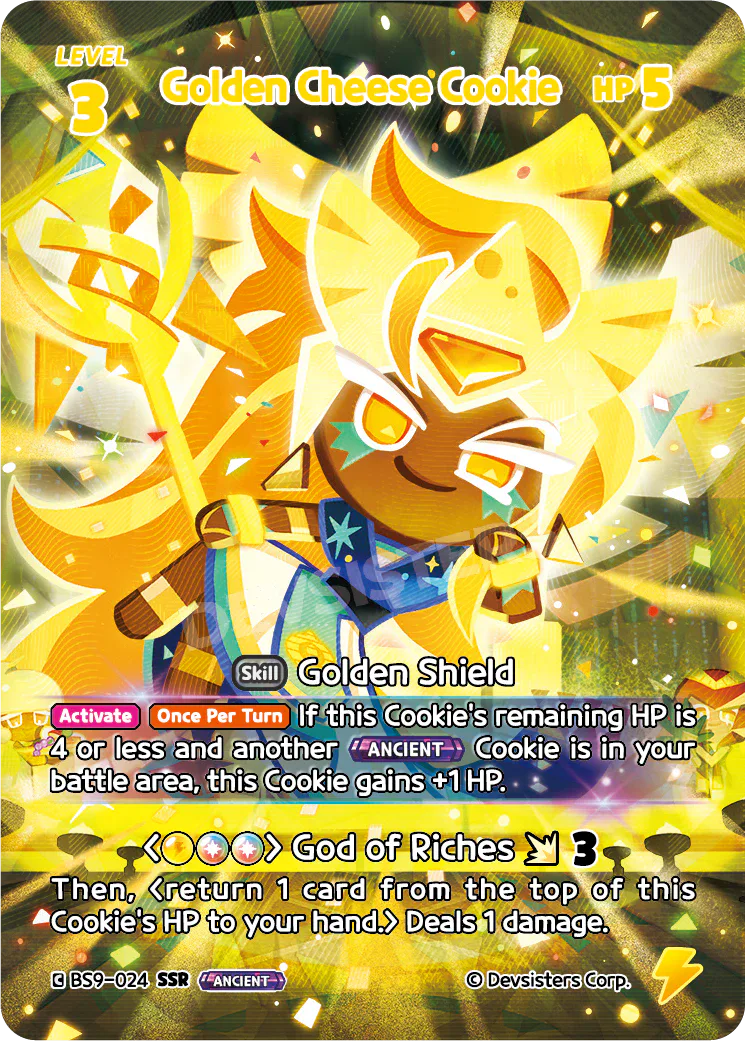
EXR (Extra Rare) and GXR (Genesis Extra Rare) sit outside the tidy R-SR-UR ladder. There are only about eleven EXR cards in the entire game, and they're an eclectic bunch rather than a clean per-set set. Most are attached to the premium EXTRA-type Cookies - the alt-art EXR printings of Golden Cheese Cookie (BS8-027), Dark Cacao Cookie (BS8-104), Hollyberry Cookie (BS10-024), White Lily Cookie (BS10-073), and Pure Vanilla Cookie (BS9-088) - with a few landing on special "title" cards named after their own set (like the Arena of Glory and Cookies of Legend cards). If you pull an EXR, you've pulled one of the scarcest things in the box.
GXR is the top of the mountain, and it's not a category so much as a single card: Dark Enchantress Cookie (BS11-115@3) from The Dark Enchantress War is the only GXR in the game. That one Cookie actually exists at four escalating treatments off the same base number - UR (BS11-115), SUR (@1), EXR (@2), and finally GXR (@3) - so it's a neat illustration of the whole system in one card, capped by a rarity that exists exactly once. If longevity-minded collectors want a single "grail," that's the one.
What "hidden" cards mean
If you read set listings, you'll see card counts split into "regular" and "hidden" numbers (for example, a set might be described as having a few hundred regular cards plus several dozen hidden ones). Hidden cards appear to be the premium and alt-art pool - the higher-rarity and Secret treatments that sit on top of the base set rather than the cards you'd see in a standard checklist.
Be careful here: the exact regular-versus-hidden counts we found conflict across sources, and they likely differ by region and printing. Reported numbers conflict, so treat any specific count you see as something to confirm on the official card database before repeating it.
How booster boxes and packs are configured
For the current English-language products, a booster box is built like this:
- 28 packs per box
- 9 cards per pack
That's the configuration to expect on shelves now. You may run into older or overseas listings citing a different layout (for instance, more packs with fewer cards each) - those reflect a different region or era, so don't use them to plan an English-product purchase. Configurations differ across regions and eras, so confirm the pack and box layout for the specific product you're buying.
We are deliberately not quoting box or pack prices, because they vary by retailer and over time. Check a current listing before you buy, and see our buying guide for what to pick up first.
A collecting strategy that won't break the bank

Whether you're collecting to play or collecting to collect, a little discipline goes a long way:
- Decide your goal first. "I want a competitive deck" and "I want the shiny Cookies I love" are different budgets and different buys. Players are often better off buying singles of the exact cards they need; collectors chase boxes and packs for the thrill and the chase cards.
- Singles beat packs for completing a deck. If you need three copies of one specific card, buying that card is cheaper and faster than ripping packs hoping it shows up.
- Buy sealed boxes for the experience, not as a guaranteed payday. Opening packs is fun; it is not a reliable way to "profit." Treat any value you pull as a bonus.
- Focus your collection. Collecting everything across every set gets expensive fast. Pick a lane - your favorite color, full-art Cookies you love, one set you want complete - and you'll enjoy it more.
- Buy from reputable sellers and beware sealed product that looks tampered with.
Protecting and storing your cards
If you're keeping cards long-term or playing with them regularly:
- Sleeve your playable cards. Even basic penny sleeves prevent the wear that shuffling causes; opaque-backed sleeves are required for tournament play anyway.
- Toploaders or a binder for your chase cards. Keep SR/UR/Secret pulls out of loose piles.
- Store away from heat, sunlight, and humidity - the three things that warp and fade cardboard.
- Use a deck box for your built decks so they survive your backpack.
None of this is expensive, and it's the difference between a collection that holds up and one that gets dinged into oblivion.
Is Braverse worth collecting? (opinion)
This section is clearly labeled opinion, because anything about future value is speculation - and we won't pretend otherwise.
Cookie Run: Braverse has a few things working in its favor as a collectible: a beloved, well-established Cookie Run IP, a game that's still young (the first set, Brave Beginning, launched October 30, 2024), a steady release schedule that's already produced eight booster sets, and an active organized-play scene. Those are healthy signs for a TCG's longevity.
That said: collect because you enjoy it, not as an investment. TCG "investing" is a great way to lose money and the fun at the same time. If you love the Cookies and the game, the chase cards are a delightful bonus. If you're buying purely hoping prices rise, you're gambling - so size your spending accordingly. For what's actually out there to collect, see our set release timeline, and if you're collecting to play, deck-building basics helps you turn pulls into a real deck.
Frequently Asked Questions
What are the rarities in Cookie Run: Braverse?
What are 'hidden' cards in a Braverse set?
How many packs are in a Cookie Run: Braverse booster box?
Should I buy singles or booster packs to build a deck?
Is Cookie Run: Braverse worth collecting as an investment?
Keep Reading
Related Guides
Cookie Run: Braverse Buying Guide: What to Actually Buy First
Walk into Braverse cold and the product wall is a trap: ten starter decks, five booster sets, loose packs, and boxes. Here's what to actually buy first, in what order, and when to switch to singles.

Braverse Festival Arena Reprints: What Devsisters Promised
Five days after Festival Arena went on sale, Devsisters apologized for the older cards it had reprinted into the set and promised standard boosters will not be built that way again. It never said how many reprints there were. Its own product listing and card database imply 48.
Cookie Run: Braverse Old Sets Won't Be Reprinted - For Now
A collector asked Devsisters whether it would ever issue second printings of BS1 boxes. The answer, published August 18, is no - not in their existing form. The replacement plan is already sitting in the official card database under a name nobody announced.
Braverse Landed on TCGplayer and Three Set Names Vanished
Search TCGplayer for Operation Timeguard and you get nothing, even though 274 of its cards are listed on the site right now under a different set name. The marketplace files Braverse under five booster sets; the official card database uses eight. Here is the map between them.

How to Play Cookie Run: Braverse - A Complete Beginner Guide
Cookie Run: Braverse is the rare TCG you can teach in a single match. This guide covers everything a first-time player needs: card types, setup, turn structure, how you pay for cards, the FLIP mechanic, and how to win.
Cookie Run: Braverse Meta Tier List — Best Decks & Archetypes Ranked
Which Cookie Run: Braverse decks are actually carrying right now? Here's a meta tier list of the strongest archetypes - the real cards that anchor each one, why they rank where they do, and what's overrated.