Cookie Run: Braverse Tempo Deck Guide (Build & Pilot Blue Tempo)
Tempo is aggro that learned to play defense. Here's how to build a Blue-Red tempo shell in Cookie Run: Braverse, a real decklist of cards you can buy, and how to keep the clock running while the other deck flails a turn behind.
Tempo is the archetype people misname the most. Half the players who say they're "playing tempo" are actually playing aggro with extra steps, and the other half are playing a slow value deck and calling the occasional bounce spell "tempo." In Cookie Run: Braverse the distinction matters, because the cards reward it: the deck that wins the tempo war isn't the one with the biggest board or the most cards - it's the one that keeps making efficient plays while the opponent spends turns recovering from yours.
Here's the one-line version: tempo decks trade time, not cards. Every turn you bounce an opponent's Cookie back to their hand, ping it off the board, or untap with a threat already swinging, you've effectively stolen a turn from them - and Braverse's win condition (driving your opponent's Break Area to a combined Cookie Level of 10) means stolen turns convert directly into a faster clock. If you've already read our aggro deck guide, think of tempo as its smarter cousin: still proactive, still on the clock, but able to win the long game that pure aggro can't. One honesty note up front, same as always: the English meta is young, so treat this as a fact-checked starting point and verify the current pool against the official database before an event.
What tempo actually is (and isn't)
Tempo isn't a card type or a keyword - it's a way of converting board advantage into a clock. A tempo deck wants to:
- Land a threat early and keep it attacking. The first Cookie you stick should be advancing damage by turn three, not sitting back.
- Disrupt the opponent's development cheaply. A one-cost bounce that resets their best Cookie buys you a full turn for one card. That's the whole engine.
- Refuel before it runs out of gas. This is the line that separates tempo from aggro. Aggro accepts that it empties its hand and dies if the game goes long; tempo packs cheap card draw so it can keep the pressure on into the midgame.
What tempo is not: a control deck that happens to play creatures. Control answers everything and wins late; tempo wants to win now, using disruption only to protect its clock. If you find yourself bouncing a Cookie with no threat of your own in play, you're not playing tempo, you're durdling. For the full map of where this sits next to control and combo, our deck archetypes guide lays out the spectrum.
Why Blue is the natural tempo color
Every color in Braverse can theoretically play a proactive game, but Blue is where the tempo tools actually live. If you've read our colors explained guide, this tracks with Blue's identity: it's the trickster color, built around hand manipulation, card draw, and pushing the opponent's pieces around rather than just hitting harder.
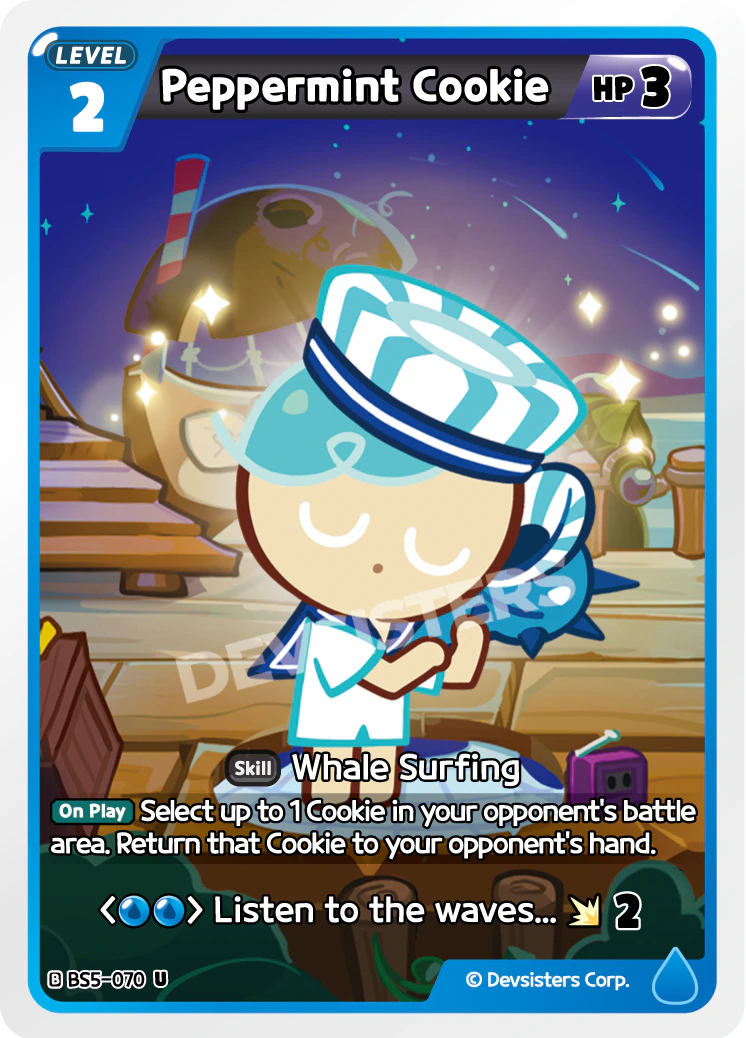
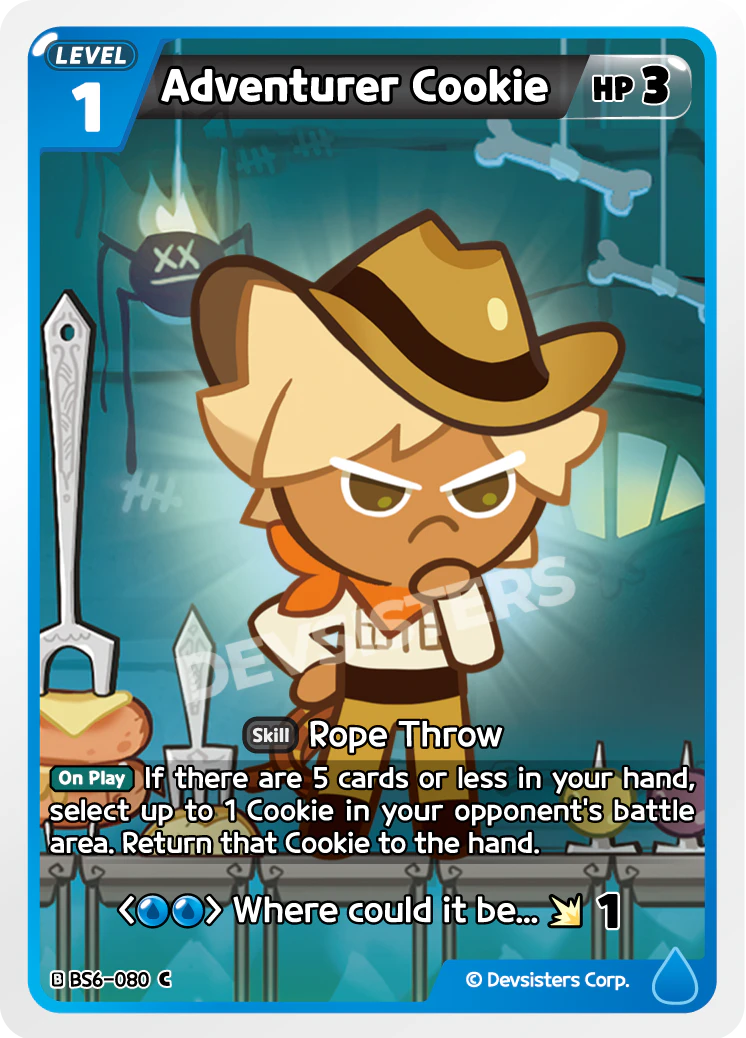
The proof is in the card text. Peppermint Cookie (BS5-070) is a Blue LV.2 Cookie with 3 HP whose On Play reads: "Select up to 1 Cookie in your opponent's battle area. Return that Cookie to your opponent's hand." That's a free bounce stapled to a 2-damage body - you're developing a threat and setting your opponent back a full development step in one card. Adventurer Cookie (BS6-080) does the same bounce at LV.1 with the condition that you have five or fewer cards in hand, so it costs you nothing when you're already spending down to apply pressure.
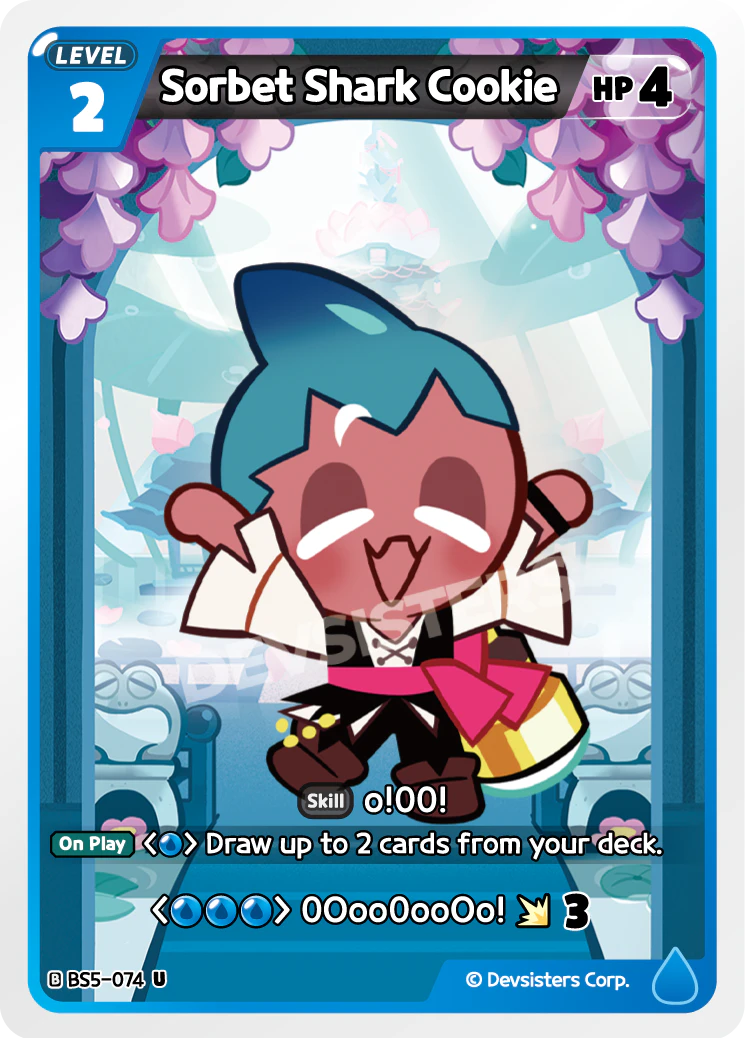
Then there's the refuel package that keeps tempo from flaming out. Sorbet Shark Cookie (BS5-074), a Blue LV.2 with 4 HP, has an On Play that lets you pay one Blue energy to "Draw up to 2 cards from your deck." Laurel Cookie (BS7-074), another Blue LV.2, draws up to 2 when you have three or fewer cards in hand - exactly the spot a tempo deck hits in the midgame. Blue gives you disruption and the gas to keep using it, which no other single color matches.
The tempo toolkit: cheap threats and free bounces
A tempo deck is built from three buckets, and the ratio between them is the whole skill of deckbuilding here.
Bucket 1 - efficient threats. These are bodies that advance your clock the turn they hit the board. Peppermint Cookie is the headliner: a LV.2 attacker that also disrupts. Sorbet Shark Cookie's attack deals 3 damage for three Blue energy, and its On Play refuels - a clean two-for-one of pressure and cards. Your threats should always be doing two things at once.
Bucket 2 - cheap disruption. Bounce is the purest tempo effect in the game right now, and Blue owns it. Adventurer Cookie and Peppermint Cookie both return an opponent's Cookie to hand, which doesn't kill it but forces the opponent to re-spend energy redeploying - a tax you collect every time. Bounce is best against the opponent's most expensive or most-developed Cookie; bouncing a LV.1 they'll just replay is a waste.
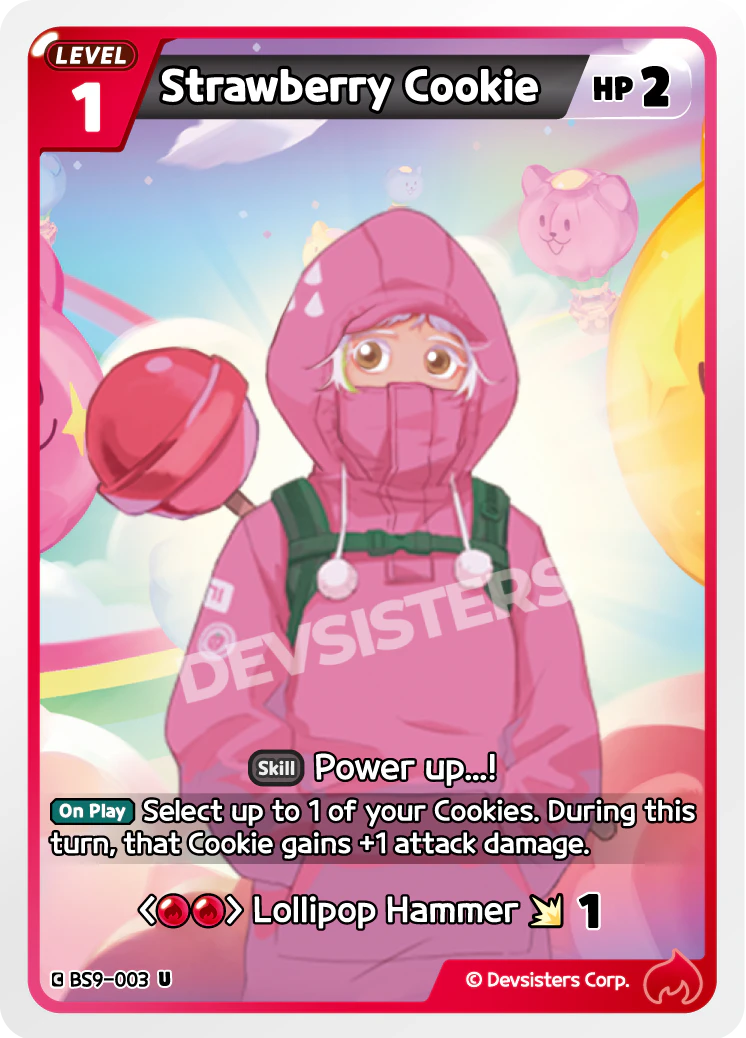
Bucket 3 - reach and combat tricks. This is your closer and your blowout protection. Strawberry Cookie (BS9-003), a Red LV.1 with 2 HP, has an On Play that gives a Cookie of yours +1 attack damage this turn - a cheap combat trick that turns a non-lethal swing lethal or wins a contested attack. Splashing a little Red here is what pushes the deck from "annoying" to "actually closes games." Our best Blue cards guide ranks which Blue cards earn a slot.
A sample Blue-Red tempo decklist
Braverse decks are exactly 60 cards, must contain at least one Cookie, and allow up to 4 copies of any single card number. Here's a Blue-base, light-Red-splash tempo shell built from verified cards. Treat it as a starting point and confirm current printings before an event - the English pool moves set to set.
LV.1 threats and enablers (your early board):
- 4x Adventurer Cookie (BS6-080) - Blue LV.1, On Play bounce when hand is low
- 4x Strawberry Cookie (BS9-003) - Red LV.1, On Play +1 attack combat trick
- 4x other cheap Blue LV.1 attackers to fill the curve
LV.2 engine (where the deck lives):
- 4x Peppermint Cookie (BS5-070) - Blue LV.2, On Play bounce + 2-damage body
- 4x Sorbet Shark Cookie (BS5-074) - Blue LV.2, On Play draw 2, 3-damage attack
- 4x Laurel Cookie (BS7-074) - Blue LV.2, On Play draw 2 when hand is low
Top end and reach:
- A small package of LV.3 Blue finishers to close stalled boards
- Items and Traps that protect your clock or push the last few points of damage
Energy and the rest: round out the 60 with an energy base weighted heavily Blue and a light Red splash for Strawberry Cookie, plus a couple of flex slots tuned to your local meta. The deckbuilding math is in our deck-building basics.
The shape to aim for: a low curve that tops out around LV.3, more LV.2 slots than any other archetype runs, and enough draw that you're rarely hellbent. Tempo wants to make a play every single turn, so the worst thing your deck can do is hand you a turn with nothing to cast.
How to pilot a tempo deck
Piloting tempo is half sequencing and half discipline. The deck is unforgiving of greed and equally unforgiving of passivity. The core loop:
- Develop a threat, then protect the clock. Your first job every turn is to make sure damage is advancing. Only after that do you ask whether a bounce is worth casting.
- Bounce the right Cookie. Return the opponent's most expensive or most-developed Cookie - the one that costs them the most to redeploy. Bouncing a one-drop they'll just recast is throwing away your tempo, not gaining it.
- Time your draw. Sorbet Shark and Laurel are at their best when your hand is genuinely low and you have energy to spare; firing them when your hand is full wastes the cards. Save your refuel for the turn it actually refuels.
- Hold the combat trick. Strawberry Cookie's +1 attack is a closer, not an opener. Keep it for the swing that goes lethal or the contested attack you have to win - showing it early just tells the opponent your hand.
- Count to 10 and steer your damage. Push damage onto the opponent's Cookies to drive their Break Area total toward 10, and avoid trades that feed your own Break total. If you've internalized the win conditions guide, this is second nature.
The mental model: you are slightly ahead on board every turn, and your job is to convert that small lead into damage before the opponent stabilizes. The moment you stop advancing damage, you've handed the game to whatever the other deck is trying to do.
Mulligan and opening hands
Tempo lives and dies on its opener. You want a hand that can act on every one of the first three turns - a curve, not a clump. The ideal keep has one or two LV.1 plays and a LV.2 follow-up so you're never skipping a turn.
Keep hands with at least one cheap threat and a clear line into your LV.2 engine. Ship hands that are all top end (you'll die before you cast them), all disruption with no threats (you'll bounce things and lose to nothing), or all energy with no plays. A hand of three LV.2 Cookies and no LV.1 is a soft mulligan - playable, but you'll fall a turn behind. Our mulligan guide is the full framework; tempo just applies it more strictly, because a single skipped turn is a real chunk of your win rate.
Tempo mistakes that quietly lose games
These are the errors that don't feel like mistakes in the moment but cost you the game three turns later:
- Bouncing with no clock in play. If you bounce an opponent's Cookie but aren't threatening damage yourself, you've spent a card to do nothing. They just replay it. Bounce while you're attacking, not instead of attacking.
- Hoarding your draw spells. Sorbet Shark and Laurel are tempo cards, not value cards - cast them the turn you need the gas, not the turn you "can afford to." A tempo deck that sits on its draw runs out of pressure.
- Trading down for no reason. Every trade that fills your own Break Area without advancing your clock is a gift to the opponent. Push damage at their board total, not into pointless even trades.
- Playing the combat trick early. Strawberry Cookie's buff is a finisher. Spend it on a midgame trade and you won't have it for the lethal turn - and you've shown the opponent exactly how to play around it.
- Coasting when you're ahead. Tempo's lead is fragile. The turn you "take it easy" because you're ahead on board is the turn the slower deck catches up. You're the clock; never coast. New players make this one constantly - the beginner mistakes guide covers more.
Tuning the deck as the meta shifts
Once the core is humming, upgrade in small steps rather than rebuilding every time a set drops:
- Adjust your bounce count to the field. More expensive, slow decks around you means bounce gets better - it taxes them hardest. A fast, cheap field means bounce is weaker (they just recast) and you want more raw threats instead.
- Tune the Red splash. If you're finding Strawberry Cookie's combat trick wins you games, lean harder into Red reach; if the splash is costing you consistency, trim it and go closer to mono-Blue.
- Match your draw count to your curve. If you're flooding out, cut a draw spell for a threat. If you're running dry by the midgame, add one. Tempo is a constant balance between gas and pressure.
- Watch new sets, but wait. New Blue tools can quietly upgrade the deck, but let the pool's verdict settle for a week or two after a release before you commit. Change one slot at a time so you can actually feel the difference.
Tempo is the deck that teaches you to read the game state, because every turn it asks the same question: am I still ahead, and what's the most efficient way to stay there? Build it, play it, and let each loss point you at the exact slot to tune next.
Quick Action Checklist
- Build Blue-base with a light Red splash - Blue owns the bounce and draw; Red gives you the closing combat trick.
- Run a low curve heavy on LV.2 Cookies - that's where the tempo engine (Peppermint, Sorbet Shark, Laurel) lives.
- Develop a threat first, disrupt second - never bounce with no clock of your own in play.
- Bounce the opponent's biggest Cookie - tax their most expensive redeploy, not a one-drop.
- Cast your draw when your hand is low - Sorbet Shark and Laurel are gas, not value; use them on time.
- Hold Strawberry Cookie for the kill - the +1 attack is a finisher, not a midgame trade.
- Count damage toward their Break Area total of 10 - steer damage at their board, never feed your own.
- Mulligan for a curve-out hand - keep a one-drop plus a LV.2 follow-up; ship clumpy hands.
- Verify current printings against the official database - the English card pool is young and shifts set to set.
Frequently Asked Questions
What is a tempo deck in Cookie Run: Braverse?
What is the best tempo deck color in Braverse?
How do you build a tempo deck in Cookie Run: Braverse?
How is tempo different from aggro in Braverse?
What does bounce do for a tempo deck?
Keep Reading
Related Guides

Cookie Run: Braverse Combo Deck Guide (Build & Pilot Purple Recursion)
Combo in Braverse isn't a one-card instant-kill - it's a Purple value engine that replays Cookies out of your trash until the opponent runs out of answers. Here's the real decklist, the loop, and how to pilot it without bricking.
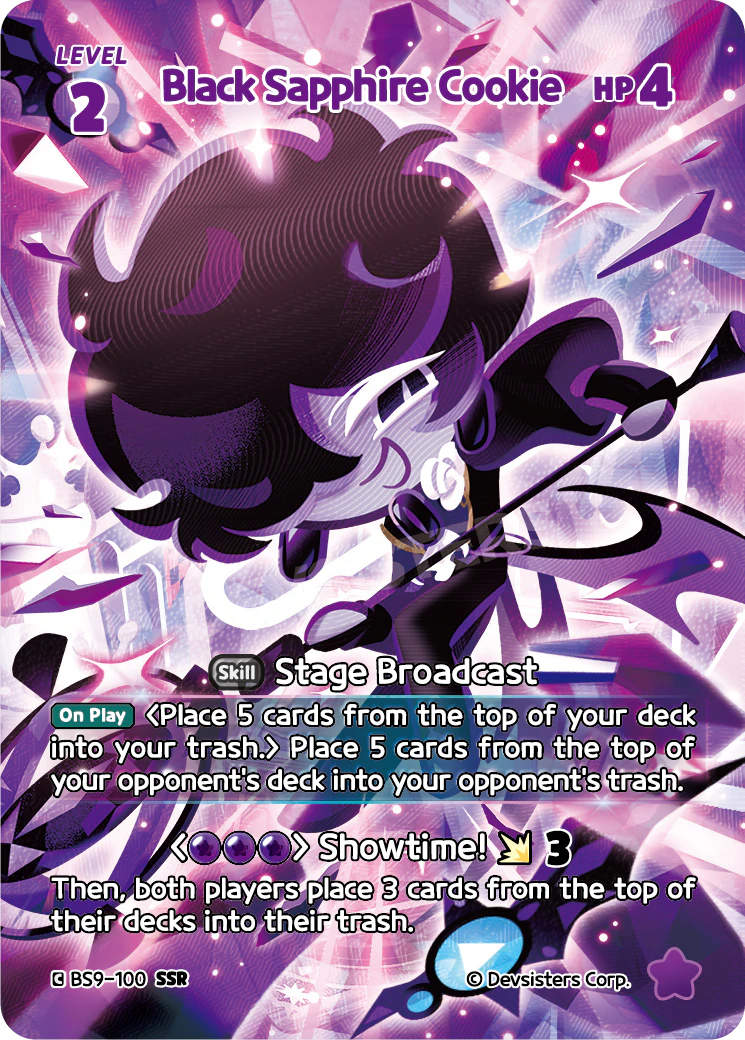
Cookie Run: Braverse Mill Deck Guide (Build & Pilot Purple Deck-Out)
Mill in Braverse won't deck someone to zero for an instant win - the game doesn't work that way. But a Purple deck-out shell weaponizes the opponent's trash, fuels its own payoffs, and starves their Cookie supply. Here's the real list.

Cookie Run: Braverse Control Deck Guide (Build & Pilot Blue/Purple Control)
Control is the deck that says "go ahead, swing" and then makes you regret it. Here's how to build a reactive Blue/Purple control shell in Cookie Run: Braverse, a real 60-card list of cards you can actually buy, and how to pilot it without drowning in your own clever answers.
Cookie Run: Braverse Midrange Deck Guide (Build & Pilot Green/Yellow Midrange)
Midrange is the deck that beats aggro because it's bigger and beats control because it's faster - and asks you to actually read the game to know which one you're being. Here's how to build a value-driven Green/Yellow midrange deck in Cookie Run: Braverse, a real 60-card list you can buy, and how to pilot it.

How to Play Cookie Run: Braverse - A Complete Beginner Guide
Cookie Run: Braverse is the rare TCG you can teach in a single match. This guide covers everything a first-time player needs: card types, setup, turn structure, how you pay for cards, the FLIP mechanic, and how to win.
Cookie Run: Braverse Meta Tier List — Best Decks & Archetypes Ranked
Which Cookie Run: Braverse decks are actually carrying right now? Here's a meta tier list of the strongest archetypes - the real cards that anchor each one, why they rank where they do, and what's overrated.