Cookie Run: Braverse Turn Structure & Phases Explained
Most Braverse misplays aren't bad cards - they're a phase mistake. Here's the full turn flow, Refresh to End, what you're allowed to do in each window, and the first-turn rules that trip up every new player.
Nine times out of ten, when a new Cookie Run: Braverse player loses a game they "should" have won, it isn't a card-quality problem. It's a phase problem. They forgot the first player can't attack on turn one. They dumped their whole Support and had nothing left to spring a Trap. They tried to set a Trap after declaring an attack. The turn structure isn't decoration - it's the actual ruleset that decides what's legal when, and learning it cold is the single biggest jump from "I know the cards" to "I know the game."
This is the full turn flow, phase by phase, grounded in the official rules. We'll keep it consistent with the rest of our coverage: the top-to-bottom beginner walkthrough lives in how to play, the resource economy gets its own energy and leveling guide, and the bracketed ability words you'll trigger mid-turn are in keywords explained. One symbol note up front: on the cards, {R} is a Red resource, {N} is any color, and {da} reads as "deals damage," so an attack written "two Red" is what the card actually demands you rest Support to pay.
Why the turn is the real rulebook
Braverse looks deceptively simple - you play Cookies, you swing, somebody fills up a Break Area. But almost every interaction in the game is gated by when in your turn it's allowed to happen. Costs are paid by resting Support cards, and those cards only stand back up at a specific moment. Traps are set during one window and fire during a different one, on your opponent's turn. An attack can only be declared after you've finished developing. Miss the ordering and you'll either lose a play you were entitled to or attempt one you weren't.
The good news: there are only four phases, they always run in the same order, and you finish one completely before starting the next. Memorize that spine and the rest of the game hangs off it cleanly.
The fast frame: a Braverse turn is "stand my stuff up, draw a card, do everything, pass." Every decision you make lives inside that sequence.
The four phases, in order
Here's the whole turn at a glance. We'll unpack each one below, but this is the shape to burn into memory:
| Phase | One-line job | Key restriction |
|---|---|---|
| Refresh | Stand up (un-rest) your rested Support cards so they can pay again | Nothing to refresh on your very first turn |
| Draw | Draw one card from your deck | The first player skips this on turn 1 |
| Main | Play Cookies, add one Support, set Traps, drop a Stage, use Items, and attack | This is where nearly everything happens |
| End | Resolve end-of-turn effects, then pass | Some skills specifically trigger here |
Some community guides label these windows slightly differently or fold attacking out into its own named "Battle" step, so if a precise phase name or ordering matters for a sanctioned ruling, confirm it against the official rulebook. The functional sequence - refresh, draw, do your turn, pass - is what every guide agrees on.
The Refresh phase
Your turn opens by standing your Support cards back up. Anything you rested last turn to pay a cost is now upright and available again.
This is the heartbeat of the Braverse economy. You pay for Cookies, attacks, skills, Items, and Traps by resting (tapping) cards in your Support Area; the Refresh phase is the moment all of that resource comes back. If you rested four Support cards last turn to slam a big play, all four refresh now, and your turn starts with a full tank.
A couple of things to internalize about Refresh:
- It happens automatically and first. You don't choose what to refresh - everything that's rested stands up.
- On your very first turn there's nothing to refresh, because you haven't rested anything yet. New players sometimes pause here looking for something to do; there isn't anything. Move on.
- Any "at the start of your turn" effect keys off this window, so this is also when those triggers resolve.
We dig into how the Support engine grows and why it ramps the way it does in the dedicated energy and leveling guide. For turn-structure purposes, just know Refresh is the "reload" step.
The Draw phase
Next you draw one card from the top of your deck. One card, every turn - with a single famous exception we'll cover below: the player who goes first does not draw on turn one.
There's not much decision-making in the draw itself, but two structural points matter:
- Your deck is exactly 60 cards, and it's the same deck that feeds the face-down HP stacks under your Cookies. Every card you draw is a card that wasn't protecting a Cookie's health, and vice versa. That tension is part of why Braverse decks are built at 60 and not padded out.
- Running out of cards to draw is a real, if rare, way to be put under pressure, so grindy decks have to respect their own library. For an aggro deck it almost never comes up; for a long control mirror it can.
Draw, then move to the part of the turn that actually decides games.
The Main phase: where the game happens
The Main phase is the turn. Everything that isn't "reload" or "draw" or "pass" lives here, and you can sequence these actions in whatever order makes sense - with one hard rule that catches everyone (more on that under attacking). Inside Main you may:
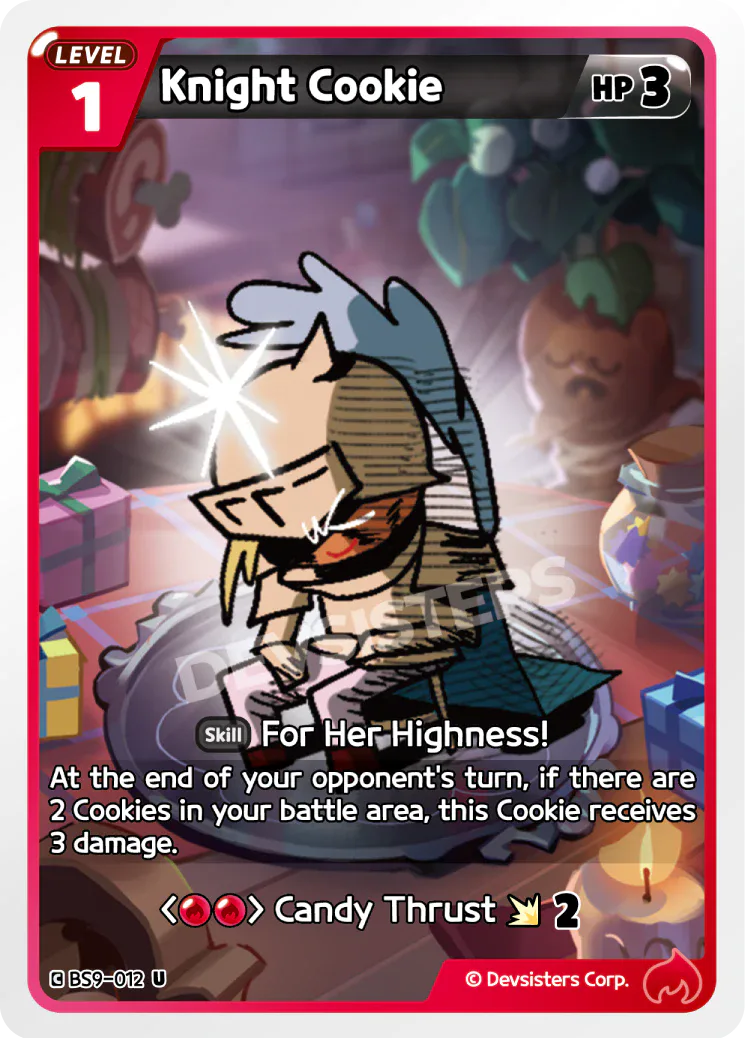
- Add one card to your Support Area. Exactly one per turn. This is how your resource base grows - slowly, one card at a time - so the Support card you choose to commit is a real decision, not an afterthought.
- Play Cookies into your Battle Area by resting Support to pay their cost. New Cookies build an HP stack from the top of your deck equal to their HP value.
- Set Traps face-down in your Support Area to spring on your opponent's turn.
- Drop a Stage to change the board's rules (one active Stage at a time).
- Use Items for boosts, burn, healing, and utility, resting Support to pay.
- Activate skills on your Cookies - the {On Play}, {Activate}, and {Once Per Turn} abilities covered in keywords explained.
- Declare attacks with your Cookies.
The skill you don't learn from a rulebook is sequencing. Because you rest Support to pay for everything, the order you do things in determines what you can afford. Play your cheap Cookie before you commit Support to a Trap and you might not have the resource left for both. Good Main phases are planned backwards from what you most want to happen.
Beginner tip: before you touch a card, count your available (upright) Support and decide what the turn's priority play is. Pay for that first. Spend the leftovers on everything else.
Attacking inside the Main phase
Attacking is part of the Main phase, but it carries the one ordering rule that trips up literally every new player: you develop first, then you attack. In practice, declare your attacks toward the back half of your Main phase, after you've added Support and played the Cookies you wanted out. Trying to retroactively "go back" and play more Cookies after you've started swinging is where rules disputes happen, so build, then battle.
When a Cookie attacks:
- You pay the attack's cost (the resource in pointed brackets, like {R}{R}) by resting Support.
- Damage comes off the defending Cookie's HP stack - and because that stack is face-down cards, your attack can flip a hidden FLIP card and hand the defender a free trigger. That's the core reason you read a board before swinging into a healthy Cookie you can't predict.
- A Cookie with a "Then," clause on its attack line resolves that follow-up after the damage.
This is also where defensive keywords live. A {Blocker} Cookie can redirect an incoming attack onto itself, and Traps your opponent set last turn can fire in response to your swing. The attack step is the most interactive moment in the game, which is exactly why you want your own board fully built before you start it.
The End phase
When you're done attacking and playing, you hit the End phase: resolve any "at the end of your turn" effects, then pass to your opponent.
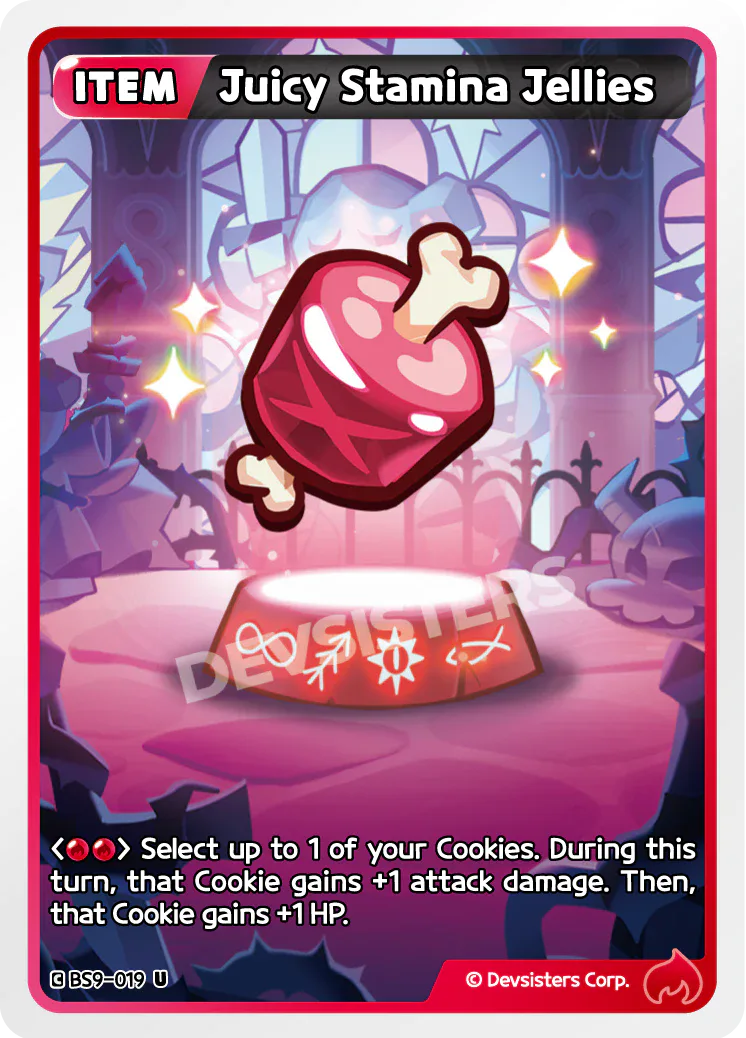
End is quieter than Main, but it's not a no-op. Some cards key specifically off this window or off your opponent's end step. Knight Cookie (BS9-012), for instance, carries a skill that reads "At the end of your opponent's turn, if there are 2 Cookies in your battle area, this Cookie receives 3 damage" - a downside that resolves in a specific end-of-turn window, not whenever you feel like it. Effects that say "during this turn" also wear off here, so a Cookie you buffed with an Item this turn loses that buff as the turn closes.
The practical takeaway: don't bank on "during this turn" effects sticking around. If an Item gave a Cookie +1 attack for the turn, use it this turn or lose it. End is the cleanup that makes those words mean what they say.
The first-player rules
Going first is an advantage - you develop your board a turn ahead - so Braverse taxes it with two restrictions that only apply to the player who takes the first turn of the game:
- The first player skips their Draw phase on turn one. They start the game with their opening hand and don't add to it until turn two.
- The first player cannot attack on turn one. They can develop - add Support, play a Cookie - but they can't swing.
Forgetting either of these is the most common turn-one rules slip in the game. The mental shortcut: if you went first, your turn one is "set up and shut up." Add a Support card, play your cheapest Cookie, pass. You'll attack starting turn two like everyone else. The player going second, by contrast, draws and (board permitting) attacks normally from their first turn. These first-turn limits are well-corroborated across the community, but as with any young game's rules, confirm the exact wording against the official rulebook before a sanctioned event.
Where the turn trips new players up
The recurring phase mistakes, and the fix for each:
- Attacking before you've finished developing. Build your board - Support, Cookies - then declare attacks. Don't start swinging and expect to slot in more plays afterward.
- Emptying your Support every turn. If you rest every card to pay for a big Main phase, you have nothing left to fire a Trap or an instant-speed answer on your opponent's turn. Leave one or two upright if you're holding reactive cards.
- Forgetting the first-player turn-1 limits. No draw, no attack on the opening turn if you went first. Develop and pass.
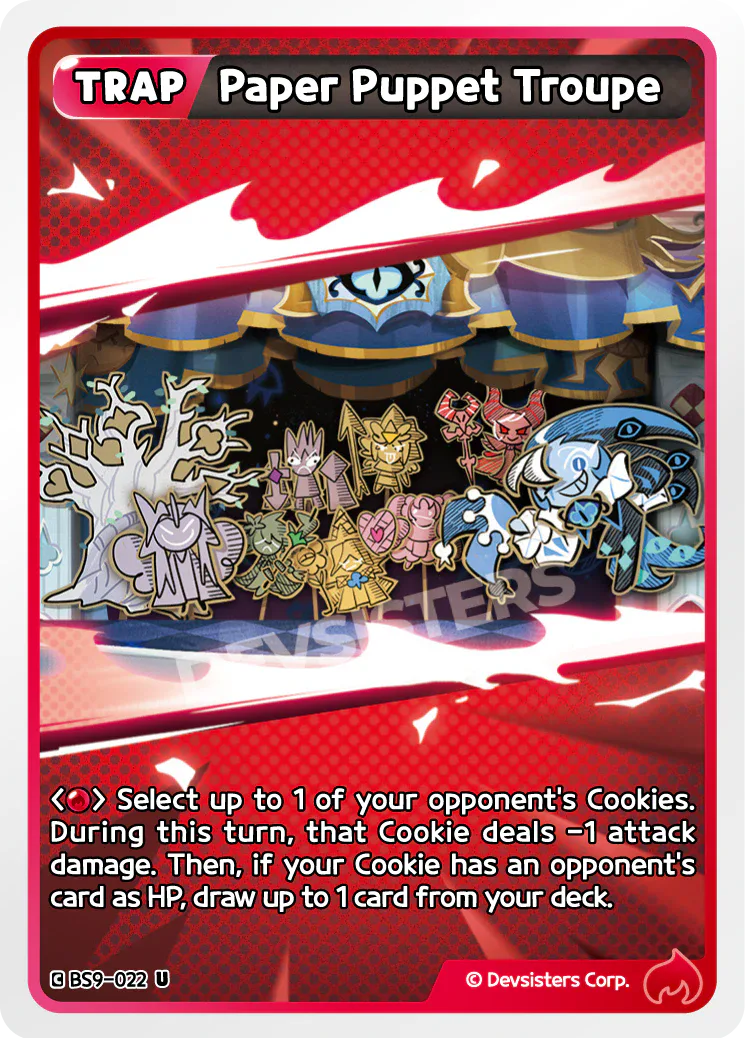
- Setting a Trap and expecting it to fire this turn. Traps are set during your Main phase and trigger on your opponent's turn, in response to their plays. They're not an instant you fire on demand.
- Misreading the skill line versus the attack line. A Cookie's standing skill (often gated by a keyword like {On Play} or {Activate}) and its attack-line "Then," clause fire in different windows. Read which zone an effect sits in before you assume it triggered.
- Letting "during this turn" buffs expire unused. Those effects vanish in the End phase. Cash them in the turn you create them.
The throughline: Braverse rewards players who treat the turn as a checklist, not a free-for-all. Refresh, draw, build, attack, clean up, pass - run it the same way every turn and the misplays evaporate.
Quick Action Checklist
- Run the spine every turn: Refresh -> Draw -> Main -> End. Finish each phase before the next.
- Refresh stands up all your rested Support - that's your resource reload; nothing to do here on turn one.
- Draw one card - unless you went first, in which case you skip your turn-1 draw.
- In Main, add exactly one Support card, then play Cookies, set Traps, drop a Stage, use Items, and activate skills - sequenced so you can afford your priority play.
- Develop first, attack second. Declare attacks in the back half of Main, after your board is built.
- Respect the first-player tax: no draw and no attack on your opening turn if you went first.
- Don't drain your whole Support - leave a card or two upright to spring a Trap or an instant-speed answer on your opponent's turn.
- Spend "during this turn" effects now - they wear off in the End phase.
Frequently Asked Questions
What are the phases of a turn in Cookie Run: Braverse?
Can the first player attack on turn 1 in Cookie Run: Braverse?
What can you do during the Main phase in Braverse?
When do you draw cards in Cookie Run: Braverse?
When do Traps trigger in Cookie Run: Braverse?
Keep Reading
Related Guides
Cookie Run: Braverse Energy & Leveling Explained
Energy is the engine that runs every Cookie Run: Braverse turn. Here's how energy types and color costs work, how the Support Area pays for your cards, and how leveling from LV.1 to LV.3 gates the whole game.
Cookie Run: Braverse Keywords & Abilities Explained
Braverse card text leans on a small set of keywords that mean the same thing on every card they appear on. Learn the ability words - On Play, Activate, Blocker, Equip - and the trait words - Ancient, Dragon, Beast, Arena - and the whole game reads cleaner.
Cookie Run: Braverse Battle Rules: How an Attack Resolves
Rule 7-1-3-1-1 settles FLIP timing in a single sentence, and it sits inside a four-step battle procedure. Here is every step of a Cookie Run: Braverse attack, read straight off the Comprehensive Rules Ver. 1.8, plus the March 2026 rule update that locked the damage number mid-resolution and moved multipliers to the end.

Cookie Run: Braverse 2-on-2 Rules and Winning Team Decks
Braverse's standard rulebook says it doesn't cover games with more than two players, so the official 2-on-2 format runs on two separate documents - and they change more than you'd think. One loss counter for two Break Areas, a four-copy limit that belongs to the team, and board wipes that hit your partner. Here are the rules, read off the source, plus what all five Asian 2-on-2 champion teams with published lists actually brought.

How to Play Cookie Run: Braverse - A Complete Beginner Guide
Cookie Run: Braverse is the rare TCG you can teach in a single match. This guide covers everything a first-time player needs: card types, setup, turn structure, how you pay for cards, the FLIP mechanic, and how to win.
Cookie Run: Braverse Meta Tier List — Best Decks & Archetypes Ranked
Which Cookie Run: Braverse decks are actually carrying right now? Here's a meta tier list of the strongest archetypes - the real cards that anchor each one, why they rank where they do, and what's overrated.