Cookie Run: Braverse FAQ: Common Questions Answered
Everything a new player actually asks about Cookie Run: Braverse, answered straight: how you win, deck size and copy limits, where to buy, whether it's like MTG or Pokemon, how FLIP works, how many colors there are, and whether it's pay-to-win.

If you've just heard about Cookie Run: Braverse - maybe a friend brought a Starter Deck, maybe you saw the card art online - you've probably got the same handful of questions every new player has. How do you actually win? Is it another money pit? Is it basically Pokemon with cookies? This page answers the real ones, in plain language, with no hype and no hand-waving.
We've pulled the questions from what new players genuinely ask, not from a keyword list. Each answer is short enough to settle the question and links to the deeper guide if you want the full version. And because Braverse is a young game whose English-language rules are still settling, we flag the few spots where you should confirm an exact ruling against the official rulebook before a sanctioned event, rather than pretending every edge case is locked down.
The questions new players actually ask
Here's the quick map of what's below. Skip to whichever one brought you here:
- How do you win? Two ways - and most beginners only play toward one.
- How big is a deck? Exactly 60, with copy limits and a FLIP cap.
- How does FLIP work? The signature mechanic, in one paragraph.
- How many colors? Five core, plus two special groups.
- Is it like Magic or Pokemon? Shared DNA, one big twist.
- Is it pay-to-win? The honest answer.
- Where do you buy and play it? Products and the official play hub.
If you want the full beginner walkthrough instead of a Q&A, our how to play Cookie Run: Braverse guide covers a complete game start to finish.
How do you win a game
There are two ways to win, and a smart player keeps both in mind:
- Fill the opponent's Break Area to a Level total of 10 or more. Every Cookie you defeat goes to its owner's Break Area, and each Cookie has a Level (1, 2, or 3). When the combined Level of the Cookies in your opponent's Break Area hits 10+, you win. This is the path that decides most games.
- Leave the opponent unable to field a Cookie. If a player's Battle Area is empty, they must immediately reveal a new Cookie from hand - even on the opponent's turn. If they have no Cookie to deploy, they lose.
Killing the other player's Cookies is the method, but win condition #1 means you should think in terms of Level, not just bodies: trading a small Cookie to take down a big one is often great math. The full strategy, including how to build toward both paths, is in win conditions explained. The exact Break Area threshold is worth confirming against the official rulebook before a sanctioned event.
How big is a deck, and the copy limits

A legal Cookie Run: Braverse deck is exactly 60 cards - no more, no less. The rest of the construction rules are short enough to memorize now:
- It must include at least one Cookie card (in practice, far more than one).
- You can run up to 4 copies of any single card number.
- You can include up to 16 FLIP cards (a cap that counts both dedicated FLIP-type cards and Cookies that carry a flip ability).
- Multicolor decks are allowed, so you're not locked into one color.
That's the entire deck-building law. The good news: a single Starter Deck is already a legal, ready-to-play 60-card deck, so you don't have to build anything to start. When you're ready to tune a list, deck-building basics turns these rules into actual decisions. These limits are well-corroborated, but the 16-FLIP cap in particular can move via errata, so check the current rulebook before a sanctioned event.
How does FLIP work
FLIP is the mechanic that makes Braverse feel different from every other TCG, and it's worth understanding before your first game. In Braverse, a Cookie's HP isn't a number - it's a face-down stack of cards placed beneath it from your deck. As the Cookie takes damage, those cards flip face-up one at a time.
Some of those cards are FLIP cards. When damage flips one face-up, its effect triggers immediately, mid-combat - and the trigger belongs to the defender, the player whose Cookie just took the hit. So attacking a healthy Cookie isn't pure upside: you might be the one setting off your opponent's hidden effect.
FLIP is both a card type (over 240 of them in the database) and an ability that some ordinary Cookies also carry. The trigger-on-flip is well established; the precise timing relative to the rest of combat is the game's most-cited rules ambiguity, so confirm it against the official rulebook before a sanctioned event. The full breakdown is in the FLIP mechanic explained.
How many colors are there

Braverse has five core colors, each a complete playstyle:
- Red - aggro, fast damage, the most beginner-friendly.
- Yellow - control, grindy late game, Break Area math.
- Green - ramp, building resources to snowball.
- Blue - combo, card cycling and explosive turns (highest skill floor).
- Purple - disruption and recursion, the home of trash-based strategies.
The color filter in the database also shows two special tags that aren't colors in the usual sense: Black, a self-contained villain faction with its own {K} energy, and Pure, a small set of universal cards that splash into any deck. For brand-new players, Red is the easiest place to start. The full breakdown is in the five colors explained, and the extras in Black and Pure cards explained.
Is it like Magic or Pokemon
Short answer: it shares DNA with both, but one mechanic sets it apart. Like Pokemon and Magic, Braverse is a two-player game where you build a board of fighters (Cookies) and try to remove your opponent's. What makes it its own game:
- Your HP is a stack of cards, not a number. A Cookie's hit points are physical face-down cards beneath it.
- The FLIP mechanic. Those HP cards can fight back - a hidden FLIP card triggers a surprise effect when damage flips it, which no Magic or Pokemon mechanic quite replicates.
- No mana or energy cards. You pay for everything by resting cards in your Support Area, adding one per turn, instead of drawing lands or attaching Energy.
If you're coming from another TCG, the muscle memory transfers, but the FLIP layer and the card-stack HP system are the two things you'll have to actually relearn.
Is it pay-to-win
Here's the honest take. Braverse is a collectible game, so there's a spending ceiling if you want to chase every Secret Rare and full-art - and the secondary market for chase cards can get pricey, same as any TCG. But "can you spend a lot" isn't the same as "do you have to spend a lot to compete."
In practice:
- Starter Decks are legal and playable straight out of the box, so the entry cost is low.
- Rarity is not power. A Secret version of a card usually plays identically to its common counterpart - chasing it is a collecting choice, not a competitive one. Plenty of Commons and Uncommons are deck staples.
- Singles beat packs for completing a competitive deck. If you need three copies of one card, buying that card is cheaper than ripping boosters hoping for it.
So it's "pay-to-collect" more than "pay-to-win." You can field a competitive 60-card deck at lower rarities or by buying the exact singles you need. The collecting layer is optional. Our rarities and collecting guide lays out a plan that doesn't break the bank, and we don't quote prices or pull rates we can't verify.
Where do you buy and play it
You buy Braverse the way you buy any TCG: Starter Decks (a complete 60-card deck for one color) and booster packs/boxes (random cards for collecting and upgrading), sold through hobby and card retailers. For a first purchase, a Starter Deck is the right call - it's the cheapest way to get a legal, ready-to-play deck. Our best starter deck guide ranks the boxes, and there's a budget deck path if you want to keep the spend low.
To actually play, you need one friend with their own 60-card deck and a flat surface - it's a two-player, in-person paper game. Devsisters runs an official site and a play hub with the card database (linked in the sources below); we don't quote prices because they vary by retailer and over time, so check a current listing before you buy.
Quick Action Checklist
- To win: fill the opponent's Break Area to a combined Cookie Level of 10, or leave them with no Cookie to deploy.
- Deck rules: exactly 60 cards, at least one Cookie, up to 4 copies of a card number, up to 16 FLIP cards, multicolor allowed.
- Start with a Starter Deck - it's a legal, playable 60-card deck out of the box, so you don't have to build anything.
- Understand FLIP before your first game: a hidden card in a Cookie's HP stack triggers for the defender when damage flips it.
- Pick a color that fits you; Red is the most beginner-friendly of the five.
- It's pay-to-collect, not pay-to-win - rarity is not power, and singles beat packs for building a deck.
- You need a second player and a flat surface; it's a two-player in-person game.
Frequently Asked Questions
How do you win in Cookie Run: Braverse?
How many cards are in a Cookie Run: Braverse deck?
How does the FLIP mechanic work in Cookie Run: Braverse?
How many colors are in Cookie Run: Braverse?
Is Cookie Run: Braverse like Magic: The Gathering or Pokemon?
Is Cookie Run: Braverse pay-to-win?
Where can I buy Cookie Run: Braverse, and do I need anything else to play?
How long does a game of Cookie Run: Braverse take, and how many people play?
Keep Reading
Related Guides
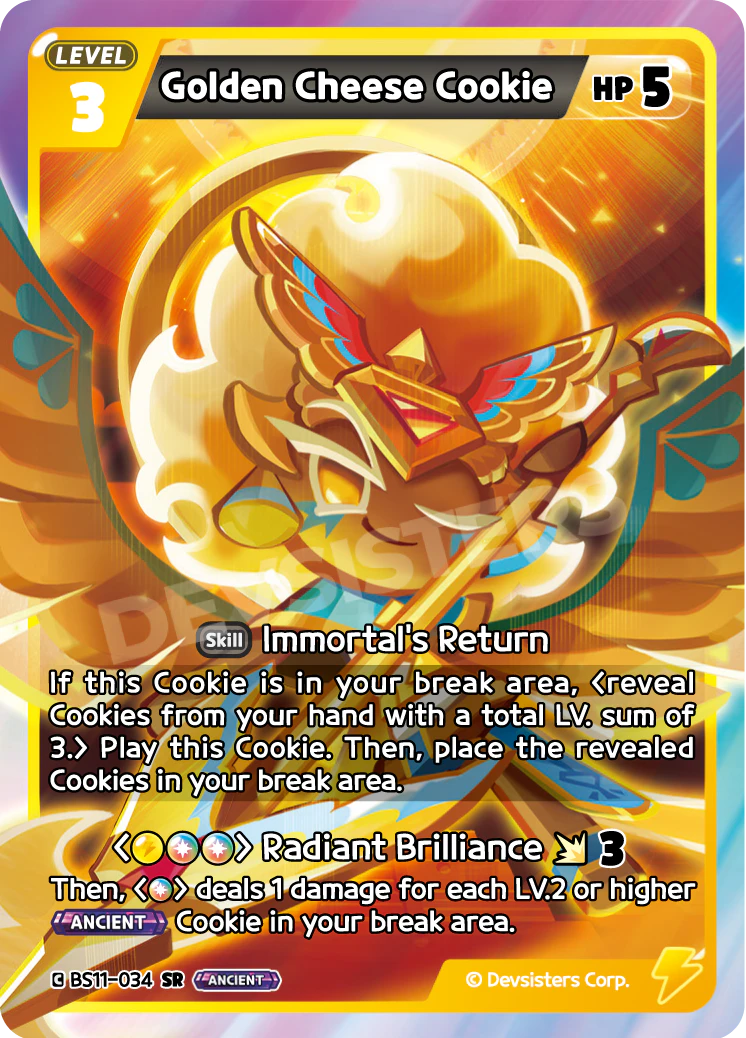
How to Read a Cookie Run: Braverse Card
Almost every element printed on a Braverse card face maps to a field in the official database. Here is the whole card decoded - the Level badge, the colored keyword pills, the attack line, the regulation letter - checked against all 2,093 entries.
Cookie Run: Braverse Glossary: Every Term Explained
Every Cookie Run: Braverse term in one place, defined plainly and consistently with our rules guides. Play areas, the card types, FLIP, the five colors, energy, Level, rarities, and keywords like Arena, Ancient, Beast, and Dragon.
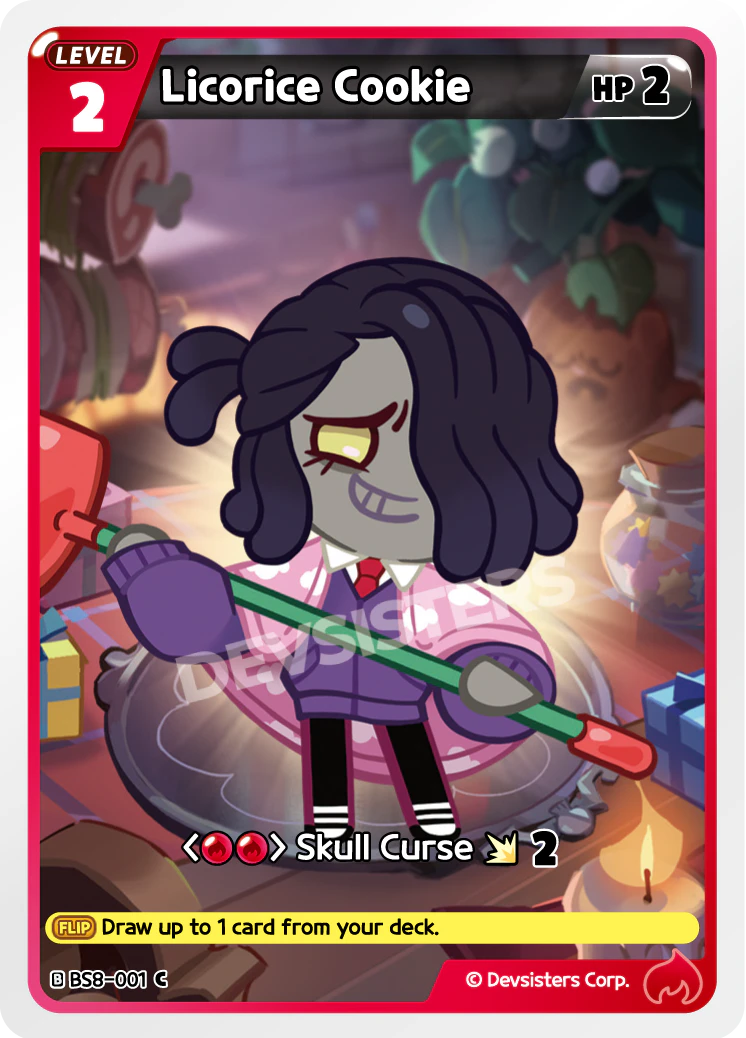
The FLIP Mechanic in Cookie Run: Braverse, Explained
FLIP is the mechanic that makes Braverse feel unlike any other TCG: a Cookie's HP can fight back. Here's exactly what FLIP is, when it triggers, and the misplays that lose games.
Cookie Run: Braverse Card Types Explained
The how-to-play guide gives you the speed-run. This is the deep dive: the four card types the rulebook defines, the seven labels the official database files cards under, what each one actually does, and how to think about each in your deck.
How to Play Cookie Run: Braverse - A Complete Beginner Guide
Cookie Run: Braverse is the rare TCG you can teach in a single match. This guide covers everything a first-time player needs: card types, setup, turn structure, how you pay for cards, the FLIP mechanic, and how to win.
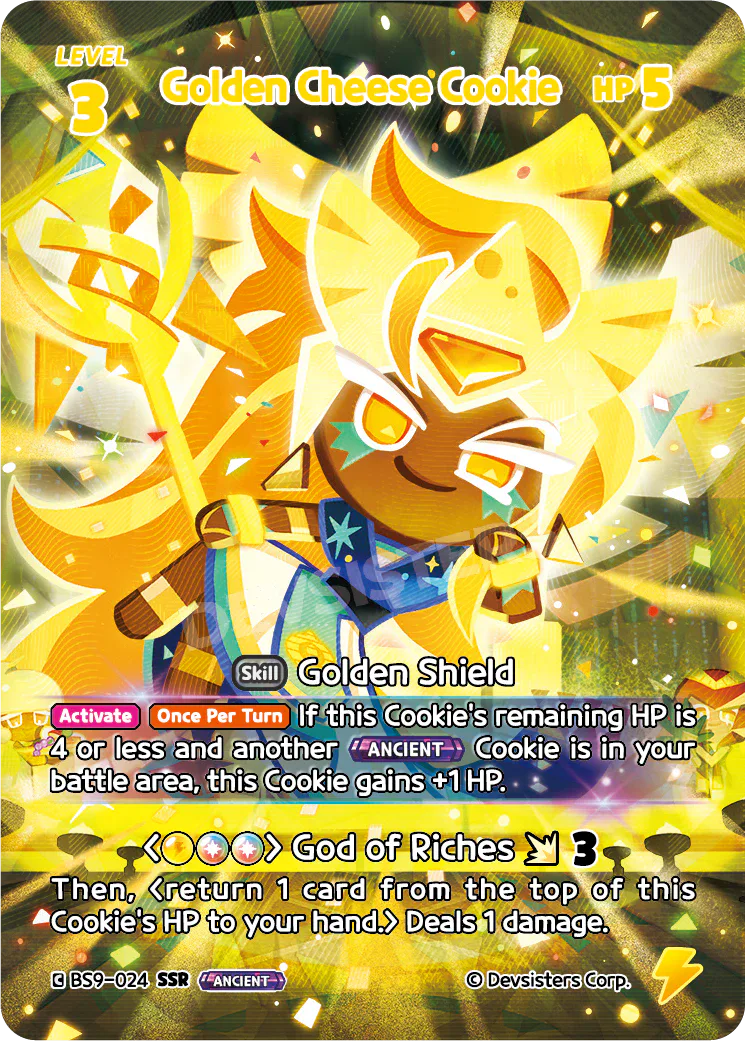
Cookie Run: Braverse Meta Tier List — Best Decks & Archetypes Ranked
Which Cookie Run: Braverse decks are actually carrying right now? Here's a meta tier list of the strongest archetypes - the real cards that anchor each one, why they rank where they do, and what's overrated.