Cookie Run: Braverse Mulligan and Opening Hand Guide
Most Braverse games are decided in the first ten seconds, before a single attack - when you look at your opening six and decide to keep or ship it. Here's how to read a hand: how many Cookies, what curve, how much Support fuel, and the traps that look fine but lose you the game.
You draw your opening six, fan them out, and you've got maybe ten seconds to make one of the most important decisions of the game: is this a hand that does something, or a hand that loses? Braverse doesn't have a mana base to brick on, but it has its own version of a dead hand - all top-end and no early plays, or no Cookies to deploy, or no way to fuel a single skill - and learning to spot it on sight is the highest-leverage skill a new player can pick up. It's free wins, and it costs nothing but paying attention before the first attack.
This guide walks through how to evaluate your opening hand: what a Braverse "mulligan" even is, the four jobs a hand has to do, how to read your Cookie count and Level curve, how Support fuel and color balance factor in, and a concrete picture of what a keepable hand looks like. If you haven't read how to play Braverse and deck-building basics yet, start there - this guide assumes you already know the turn structure and how you pay for cards.
What a mulligan actually is in Braverse
First, a reality check on the word "mulligan." In games like Magic or Pokemon, a mulligan is a formal rule: you reveal a bad hand, shuffle it back, and draw a fresh one (often one card smaller). Braverse is a young game and the English-language rules are still settling, so whether you can redraw an opening hand, and the exact procedure, is something to confirm against the current official rulebook before a sanctioned event - don't assume a Magic-style redraw exists just because the word "mulligan" does.
What absolutely does apply, every single game, is hand evaluation. Here's the setup, from the rules: you shuffle, draw an opening hand of 6 cards, place your first Cookie face-down, reveal it, and stack HP cards under it from the top of your deck. The moment you look at those six, you're making a keep-or-ship judgment - and even where no formal redraw exists, that judgment still drives every decision you make for the first three turns. This guide is about training that judgment. Think of "mulligan" here as shorthand for reading your opening hand and planning the early game around it.
The four things a hand must do
A keepable Braverse opening hand has to answer four questions with a yes. Miss one and you're in trouble; miss two and you're probably losing before you've drawn a card.
- Can I put a Cookie on the board early? Cookies are your win condition and your only blockers. A hand with no playable early Cookie is the worst hand in the game.
- Can I keep deploying for the next two or three turns? One Cookie isn't a plan. You want a follow-up so you're not topdecking by turn two.
- Can I fuel it? You add only one Support card per turn, so your economy ramps slowly. Your hand needs cards you can actually pay for on the curve you'll have - not a fistful of expensive skills you can't activate until turn five.
- Do my colors line up? Costs are paid in resources, and a hand split across colors you can't support yet is a hand full of cards you're staring at, not playing.
Everything below is just these four questions in more detail.
Reading your Cookie count
This is the single biggest factor. Cookies are the cards that fight, block, and win, and the second win condition punishes you hard for running out of them: if your Battle Area is empty and you have no Cookie in hand to deploy, you lose on the spot.
So the floor is brutally simple: a hand with zero playable early Cookies is an automatic problem. You set up your first Cookie face-down at the start of the game, but you need more Cookies in hand to keep a board going.
The target zone:
- Two to three Cookies in your opening six is the comfortable keep - one to play now, one or two to follow up.
- One Cookie is keepable only if the rest of the hand is good and that Cookie is cheap enough to deploy immediately. You're betting on drawing into more.
- Zero Cookies is the hand you most want to ship if your rules allow it - and if they don't, it's the hand you plan most carefully around, leaning on your face-down starting Cookie and praying you draw bodies fast.
Remember the deck-building heuristic from our deck-building basics: you're running roughly half your deck in Cookies, so two-to-three in a six-card hand is statistically the expected outcome. A no-Cookie hand isn't just bad luck, it's a hand that fights your own deck's math.
Reading your Level curve
Every Cookie has a Level (1, 2, or 3), and Level roughly tracks how strong and expensive a Cookie is. Because you only add one Support card per turn, your playable Level climbs slowly - so the shape of your hand's curve matters as much as its raw Cookie count.
What you want is a hand that does something on the cheap end and has a payoff later:
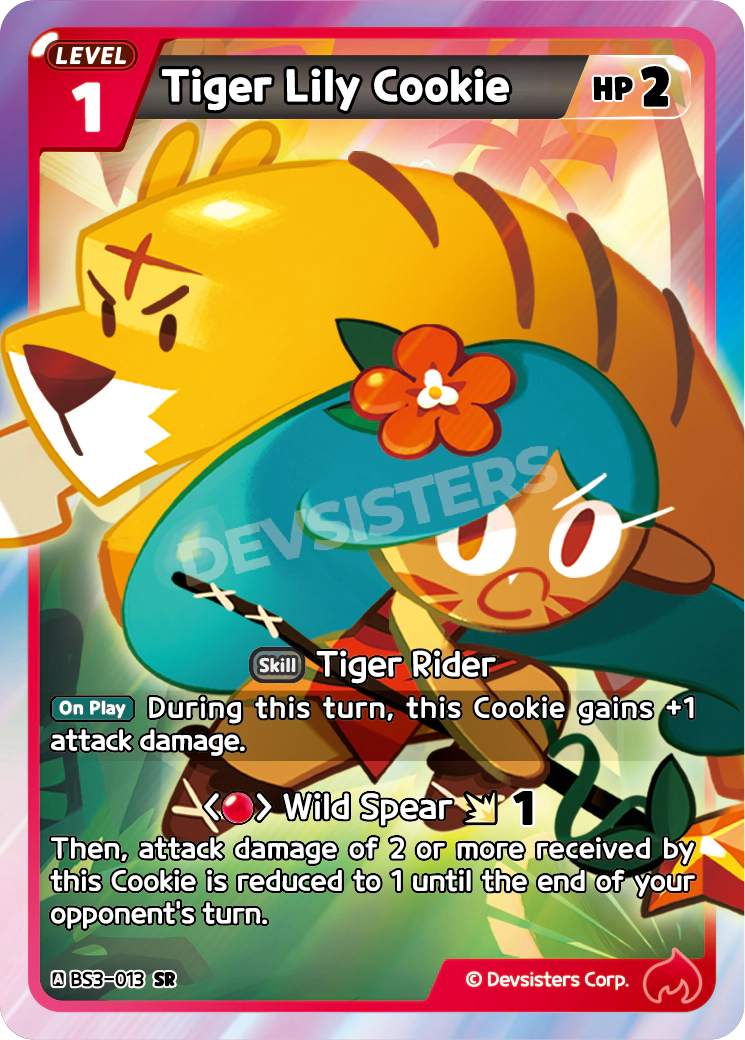
- At least one Level 1 (or otherwise cheap) Cookie you can deploy in the first turn or two. This is the non-negotiable. Tiger Lily Cookie (BS3-013), a one-resource Red LV.1 with built-in damage reduction, is the picture-perfect example of a card that makes an early turn live.
- A Level 2 to bridge into the midgame. A hand that goes "cheap body now, real threat in two turns" is exactly the curve you want.
- At most one big Level 3 finisher. A high-Level Cookie in your opener is fine as a goal to build toward - it is not fine as your only Cookie, because you'll do nothing for the early turns and likely die to a faster start.
The classic dead hand is all top-end: three Level 3 Cookies and a couple of expensive Items, with nothing you can cast before turn four. It looks powerful and it loses, because aggro decks (read our archetypes guide) will have built a board and started chipping your Break Area total toward 10 while you're still adding your second Support card. There's also a real downside to leaning on big Cookies early: when a high-Level Cookie falls, it hands your opponent a big chunk toward their win, so you don't even want to be racing with your top-end on the front foot.
Support fuel and color balance
Braverse has no mana cards, so "fuel" doesn't mean lands - it means cards you can afford to rest into your Support Area and still have a turn. Two things go wrong here.
Affordability. You add one Support card per turn, so on turn one you can pay roughly one resource, turn two roughly two, and so on (minus whatever you've rested for other costs). A hand where the cheapest thing you can do costs three resources is a hand that sits dead for two full turns. Mentally walk the first three turns: turn one I play X, turn two I add Support and play Y... If you can't narrate a sequence, the hand is too expensive.
Color balance. Costs are paid in colored resources, and the exact rules for how multicolor costs and color-matched Support work are worth confirming against the official rulebook - but the practical mulligan read is the same regardless: a single-color hand is almost always smoother than a hand smeared across colors you can't fuel yet. If you're playing a single-color deck this is a non-issue; if you've splashed, a hand that's all off-color in the early turns is a yellow flag even when the cards themselves are strong.
Rule of thumb: Don't evaluate a card by how good it is - evaluate it by when you can actually play it. A bomb you can't cast until turn five is, for mulligan purposes, a blank in your opening hand.
Play first or second changes the keep
The turn order shifts what counts as a keep, because of one specific rule: the player who goes first cannot draw or attack on turn 1.
- On the play (going first): you skip your turn-1 draw, so the six cards in your hand are all you have until turn two. That makes a thin hand riskier - you can't dig for the Cookie you're missing. Lean toward keeping hands that already have their early plays in place, and be more willing to ship a hand that's banking on drawing into action.
- On the draw (going second): you draw on turn 1, effectively making your opening hand seven cards deep over the first turn, and you get to attack first. A marginal hand with one Cookie and a plan is more keepable on the draw, because that extra card smooths it out.
It's a subtle adjustment, not a different rulebook, but it's the difference between keeping a one-Cookie hand and shipping it.
What a keepable hand looks like
Putting it together, here's the profile of a hand you keep without thinking twice, using real Red cards from Age of Heroes and Kingdoms as examples:
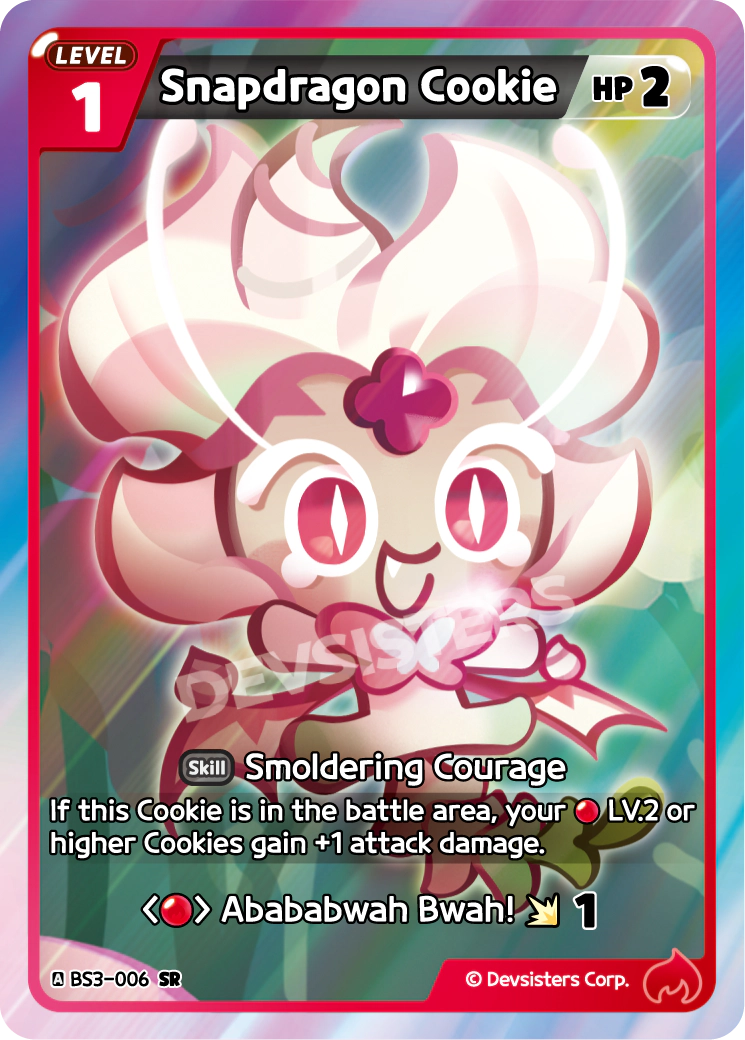
- A cheap early Cookie - say Tiger Lily Cookie (BS3-013) or Snapdragon Cookie (BS3-006) - you can deploy on turn one or two.
- A second Cookie to follow up, ideally a Level 2 so your board grows instead of stalling.
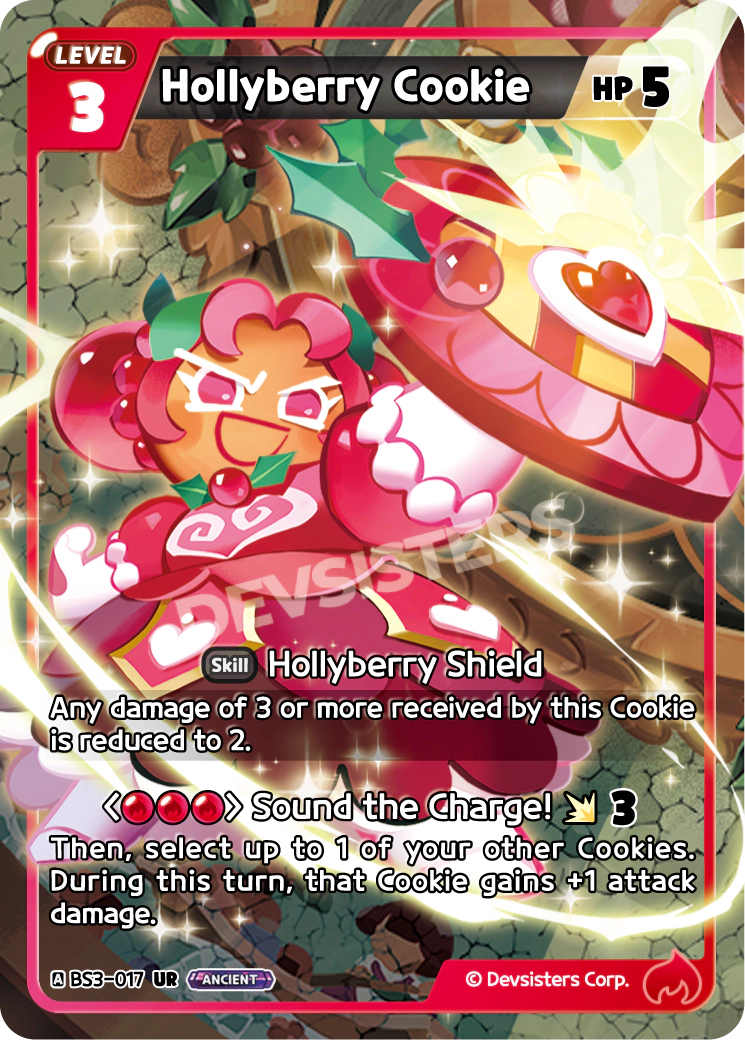
- One piece of interaction or a payoff - an Item, a Trap, or a bigger Cookie like Hollyberry Cookie (BS3-017) to build toward.
- Mostly one color, so everything is castable on the Support you'll have.
That hand answers all four questions: it deploys early, it follows up, you can fuel it, and the colors line up. You don't need a perfect curve or a bomb - you need a hand that acts for the first three turns. A boring hand that does something every turn beats a flashy hand that does nothing until turn five almost every time.
The mirror image - the ship - is a hand with zero or one expensive Cookie, two cards you can't cast for four turns, and a color split you can't support. That's the hand that loses while it's still "developing."
Common mulligan traps
These are the hands that look fine and aren't:
- The all-bombs hand. Three Level 3 Cookies and a premium Item feels stacked. It's a brick - you do nothing for four turns and lose the early game. Keep only if you also have a cheap play.
- The one-Cookie keep on the play. One Cookie is a gamble even on the draw; on the play, with no turn-1 draw to dig with, it's a much worse bet. Be stricter when you're going first.
- The "I'll draw into it" hand. Hoping to draw the Cookie or the Support you're missing is how you lose. Evaluate the hand you have, not the hand you wish you'd draw.
- The off-color splash hand. In a multicolor deck, a hand full of your splash color with no early support for it is dead weight. The cards are good; you just can't cast them yet.
- Keeping for a single great card. One amazing Cookie does not redeem five blanks. The question is never "is this card good," it's "does this hand do something for the next three turns."
- Forgetting your face-down starting Cookie. You always set up one Cookie at the start, so a hand with one more Cookie isn't truly down to a single body - factor your opener in before you panic about Cookie count.
Quick Action Checklist
- Draw your 6, and before anything else, ask the four questions: early Cookie, follow-up, fuel, colors.
- Two to three Cookies is the comfortable keep; one is a gamble; zero is the hand to ship (or carefully plan around if no redraw exists).
- Demand at least one cheap, early-castable Cookie. A hand of all top-end is a brick.
- Walk the first three turns in your head - if you can't narrate a sequence of plays, the hand's too expensive.
- Prefer one color of castable cards over a stronger but unfuelable split.
- On the play, be stricter (no turn-1 draw to dig with); on the draw, a marginal hand is more keepable.
- Confirm whether your event allows an opening-hand redraw against the official rulebook - don't assume a Magic-style mulligan exists.
- Count your face-down starting Cookie before you decide you're light on bodies.
Frequently Asked Questions
Can you mulligan in Cookie Run: Braverse?
How many Cookies should be in a good Braverse opening hand?
What makes a Braverse opening hand keepable?
Why is an all-high-Level opening hand bad in Braverse?
Does going first or second change how you mulligan in Braverse?
How does color affect a Braverse opening hand?
Keep Reading
Related Guides
Cookie Run: Braverse Win Conditions Explained
Braverse has two ways to win, and most new players only play toward one. Here's how the Break Area Level-10 path and the no-Cookie-to-deploy path actually work, how to build a deck that threatens both, and the on-board signs that tell you which one you're winning.
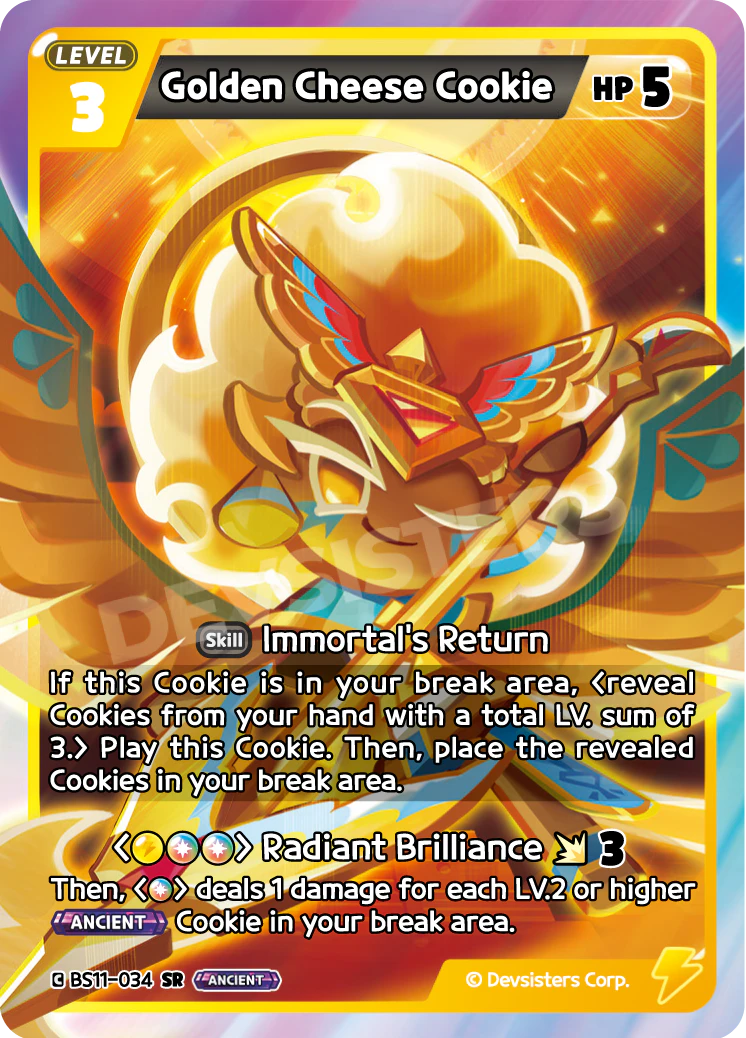
How to Read a Cookie Run: Braverse Card
Almost every element printed on a Braverse card face maps to a field in the official database. Here is the whole card decoded - the Level badge, the colored keyword pills, the attack line, the regulation letter - checked against all 2,093 entries.

Cookie Run: Braverse Glossary: Every Term Explained
Every Cookie Run: Braverse term in one place, defined plainly and consistently with our rules guides. Play areas, the card types, FLIP, the five colors, energy, Level, rarities, and keywords like Arena, Ancient, Beast, and Dragon.
Cookie Run: Braverse FAQ: Common Questions Answered
Everything a new player actually asks about Cookie Run: Braverse, answered straight: how you win, deck size and copy limits, where to buy, whether it's like MTG or Pokemon, how FLIP works, how many colors there are, and whether it's pay-to-win.
How to Play Cookie Run: Braverse - A Complete Beginner Guide
Cookie Run: Braverse is the rare TCG you can teach in a single match. This guide covers everything a first-time player needs: card types, setup, turn structure, how you pay for cards, the FLIP mechanic, and how to win.
Cookie Run: Braverse Meta Tier List — Best Decks & Archetypes Ranked
Which Cookie Run: Braverse decks are actually carrying right now? Here's a meta tier list of the strongest archetypes - the real cards that anchor each one, why they rank where they do, and what's overrated.