Elden Ring Rune Cost Per Level: The Full Price Curve
Your first level costs 673 runes. Your 150th costs 153,680 — more than killing Morgott. Elden Ring never shows you the curve you are climbing, only the number for the next step, and the shape of that curve decides when leveling stops being the best thing you can do with your runes.
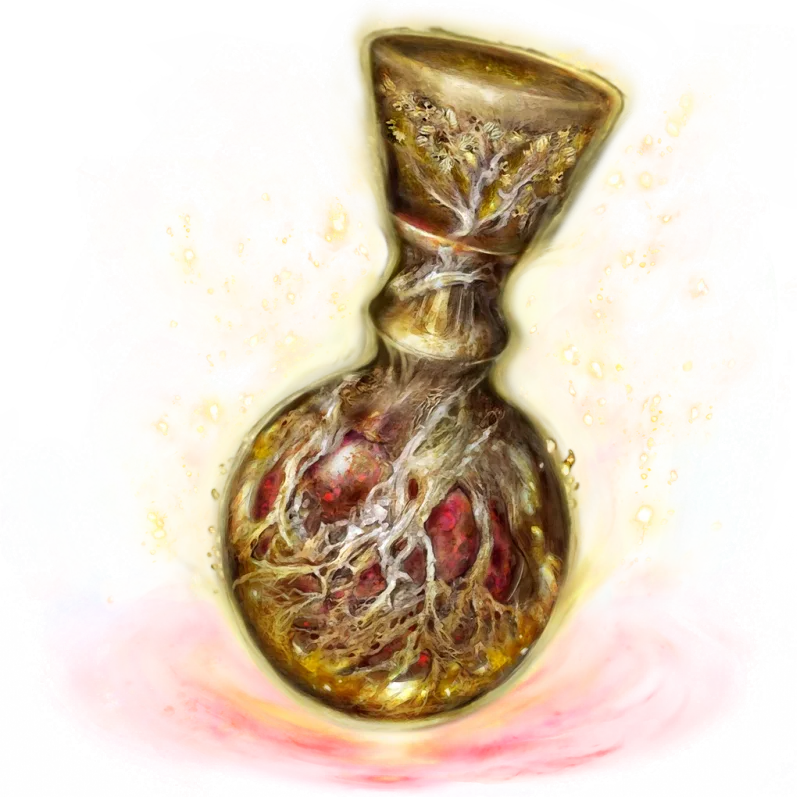
![The Golden Rune [13] item icon from Elden Ring, the largest of the standard Golden Rune consumables at 10,000 runes.](/images/blog/elden-ring/elden-ring-rune-cost-per-level/golden-rune-13.webp)
Your first level costs 673 runes. By level 58 a single level costs more than Godrick the Grafted drops for the whole fight. Your hundred-and-fiftieth costs 153,680, which is more than Morgott, the Omen King is worth.
Elden Ring never shows you that curve. The level-up screen shows one number, "Runes Needed", and it goes up every time you look at it. So here is the whole curve, the formula that generates it, and the three or four places where knowing the shape changes what you do with a pile of runes.
The formula, and the kink at level 12
The cost of the next level is generated from your current level by a single expression, published on the Fextralife wiki's Level page:
n = (Level − 11) × 0.02          (never below 0)
Rune Cost = ((n + 0.1) × (Level + 81)²) + 1
The result is rounded down. That is it — no per-attribute pricing, no discount for cheap stats. Raising Vigor from 10 to 11 and raising Arcane from 10 to 11 cost exactly the same, because the game charges for the level, not the attribute.
Two consequences fall straight out of the algebra:
- Below level 12,
nclamps to zero and the cost is one tenth of (Level + 81) squared, plus one. That is why levels 1 to 11 all sit in a narrow 673–847 band and each one costs only 16–18 runes more than the last. - From level 12 the
nterm switches on, and the whole thing becomes cubic. The jump from level 11 to level 12 raises the per-level increase from 18 runes to 191 in a single step, and it keeps climbing from there.
Punch level 1 into it and you get (0 + 0.1) × 82² + 1 = 673.4, rounded down to 673. Punch in level 12 and you get (0.02 + 0.1) × 93² + 1 = 1038.88, rounded down to 1,038. Both match the wiki's published level table exactly.
The price of every milestone level
"Cost of next level" is what the game shows you. "Total to reach" is the number it never shows you — every rune you have spent on levels by the time you arrive.
| Level | Cost of next level | Total runes to reach this level |
|---|---|---|
| 1 | 673 | 0 |
| 11 | 847 | 7,496 |
| 12 | 1,038 | 8,343 |
| 20 | 2,857 | 22,672 |
| 30 | 5,915 | 64,238 |
| 40 | 9,956 | 140,712 |
| 50 | 15,102 | 262,472 |
| 60 | 21,472 | 441,099 |
| 70 | 29,186 | 689,373 |
| 80 | 38,364 | 1,021,274 |
| 90 | 49,125 | 1,451,983 |
| 100 | 61,591 | 1,997,878 |
| 110 | 75,881 | 2,676,540 |
| 120 | 92,115 | 3,506,749 |
| 125 | 100,998 | 3,984,881 |
| 150 | 153,680 | 7,112,459 |
| 175 | 221,512 | 11,734,987 |
| 200 | 306,369 | 18,253,715 |
| 713 | — | 1,692,566,842 |
Level 80 is where the running total crosses a million. Level 125 is where a single level crosses six figures.
The level where a level costs more than a boss
This is the conversion the level-up screen refuses to do for you. Take the rune reward for a first, non-NG+ kill on each major boss — read off each boss's own Fandom page, because the wiki's summary rune-drop list disagrees with the Godrick page and is 5,000 low — then find the first level at which one single level costs more than that entire fight.
| Boss (first kill, NG) | Rune reward | First level costing more than that |
|---|---|---|
| Margit, the Fell Omen (Stormveil) | 12,000 | 45 (12,384) |
| Godrick the Grafted | 20,000 | 58 (20,094) |
| Rennala, Queen of the Full Moon | 40,000 | 82 (40,385) |
| Starscourge Radahn | 70,000 | 107 (71,395) |
| Morgott, the Omen King | 120,000 | 135 (120,373) |
| Fire Giant | 180,000 | 161 (181,549) |
| Maliketh, the Black Blade | 220,000 | 175 (221,512) |
| Godfrey, First Elden Lord / Hoarah Loux | 300,000 | 199 (302,625) |
| Malenia, Blade of Miquella | 480,000 | 240 (482,232) |
| Elden Beast | 500,000 | 244 (502,776) |
Read the middle of that table and the practical rule appears on its own: somewhere in the late fifties, killing a shardbearer stops being a level-up and starts being a down payment. By the time you are standing in front of Morgott at the level the boss order guide recommends, his 120,000 runes buy roughly two levels. At level 150 they buy less than one.

Where the money actually goes
Split a run to 150 into bands and the distribution is lopsided in a way the per-level number hides completely.
| Band | Runes spent | Share of a level 1→150 run |
|---|---|---|
| 1 → 50 | 262,472 | 3.7% |
| 50 → 100 | 1,735,406 | 24.4% |
| 100 → 125 | 1,987,003 | 27.9% |
| 125 → 150 | 3,127,578 | 44.0% |
The last 25 levels of a 150 build cost 44% of the entire build. Levels 100 to 150 cost 2.56 times everything spent to reach level 100.
That is the whole argument for stopping at a target level rather than drifting upward: past 100, every extra level is bought with runes that would otherwise upgrade a second weapon, buy out a Bell Bearing merchant's stock, or pay for the crafting materials you keep running out of. It is also the argument for picking a level and holding it if you care about summoning, because Elden Ring's co-op and invasion ranges are calculated from your level and drifting past a popular bracket is expensive to undo — respeccing with a Larval Tear reassigns your attributes but never refunds a level.
Your origin is worth 6,667 runes at most
The ten origins start at seven different levels — 1 for the Wretch, 10 for the Confessor — and those free levels have an exact rune price attached, because the table above tells you what it would cost to buy them.
| Origin starting level | Runes those levels would have cost |
|---|---|
| 1 (Wretch) | 0 |
| 5 (Bandit) | 2,791 |
| 6 (Astrologer) | 3,531 |
| 7 (Hero, Prophet) | 4,288 |
| 8 (Warrior) | 5,063 |
| 9 (Vagabond, Samurai, Prisoner) | 5,856 |
| 10 (Confessor) | 6,667 |
Six and a half thousand runes — one Golden Rune [11] at 6,200, plus change. The starting-class debate is about which attributes you begin with and which weapon is in your hand at the Stranded Graveyard, not about a meaningful head start on the rune bill.
Rune items are a savings account
Golden Runes and their relatives are consumables that convert to runes on use, and the Fandom wiki's own note on the Runes page is the important part: items that grant runes are not lost on death. Runes in your pocket are at risk. Runes still sitting in your inventory as items are not.
| Item | Runes | Notes |
|---|---|---|
| Golden Rune [1] | 200 | The smallest |
| Golden Rune [5] | 1,600 | |
| Golden Rune [8] | 3,000 | |
| Lands Between Rune | 3,000 | |
| Golden Rune [10] | 5,000 | |
| Golden Rune [12] | 7,500 | |
| Golden Rune [13] | 10,000 | Largest of the numbered Golden Runes |
| Numen's Rune | 12,500 | |
| Hero's Rune [1] | 15,000 | |
| Hero's Rune [5] | 35,000 | Largest of the Hero's Runes |
| Lord's Rune | 50,000 | Largest in the base game |
| Broken Rune | 500 | Shadow of the Erdtree |
| Shadow Realm Rune [7] | 30,000 | Shadow of the Erdtree |
| Leda's Rune | 40,000 | Shadow of the Erdtree |
| Rune of an Unsung Hero | 50,000 | Shadow of the Erdtree |
| Marika's Rune | 80,000 | Shadow of the Erdtree, largest listed |
The practical use of that table is timing. Hold rune items unspent while you are exploring somewhere lethal, then cash them at a Site of Grace when you are one purchase or one level short. A stack of Golden Runes survives a death that a raw rune balance does not.
Remembrances are a terrible payday after level 40
Every Remembrance can be consumed for runes instead of traded to Finger Reader Enia for the exclusive items it unlocks — usually a weapon or a spell, sometimes an Ash of War. Checked one by one against the Fandom item pages, all 25 Remembrances — 18 Legend and 7 Shardbearer, base game and Shadow of the Erdtree together — pay one of four amounts:
| Payout | Remembrances at that value |
|---|---|
| 20,000 | Grafted, Full Moon Queen |
| 30,000 | Blood Lord, Omen King, Regal Ancestor, Naturalborn, Lichdragon, Fire Giant, Black Blade, Dragonlord, Hoarah Loux, Dancing Lion, Twin Moon Knight, Putrescence, Lord of Frenzied Flame, Mother of Fingers, Saint of the Bud, Wild Boar Rider |
| 40,000 | Starscourge, Shadow Sunflower, Impaler |
| 50,000 | Elden Remembrance, Rot Goddess, Blasphemous, a God and a Lord |
So the ceiling on this trade is 50,000 runes. Cross-reference the cost table: at level 40 a level costs 9,956, so 50,000 buys five levels. At level 100 a level costs 61,591, so the top-paying Remembrance in the game does not buy one. Wandering Mausoleums and the DLC's Remembrance Coffins can each duplicate a Remembrance once, which is how you get both the item and the runes — consuming one otherwise trades a unique item for a number that shrinks in value every time you level.
Leveling buys defence you never asked for
Independent of which attribute you raise, the Fextralife Level page records that raising your overall level increases your defensive stats on a bracketed curve:
| Stat group | Level band | Gain per level |
|---|---|---|
| Physical, Magic, Fire, Lightning, Holy defence | 1 → 71 | +0.4 |
| Physical, Magic, Fire, Lightning, Holy defence | 72 → 91 | +1.0 |
| Physical, Magic, Fire, Lightning, Holy defence | 92 → 161 | +0.21 |
| Physical, Magic, Fire, Lightning, Holy defence | 162 → 713 | +0.03 |
| Immunity, Robustness, Focus, Vitality | 1 → 71 | +0.2 |
| Immunity, Robustness, Focus, Vitality | 72 → 111 | +1.0 |
| Immunity, Robustness, Focus, Vitality | 112 → 161 | +0.3 |
| Immunity, Robustness, Focus, Vitality | 162 → 713 | +0.03 |
The band starting at 72 is the one worth noticing: defence accrues at 1.0 per level there against 0.4 below it, and resistances at 1.0 against 0.2 — two and a half times the rate for defence, five times for resistances, arriving whether you spend the points on Strength or on Arcane. It is a small effect next to armour and negation, but it is free.
Note that this is defence, not damage. Where your points stop paying is a separate curve entirely, and it is covered in the weapon scaling guide.
How to lose fewer runes
The loss rules are simple and unforgiving. Die and your held runes drop where you fell. Die again before you retrieve them and they are gone permanently. Two mechanics soften that, and one makes it worse.
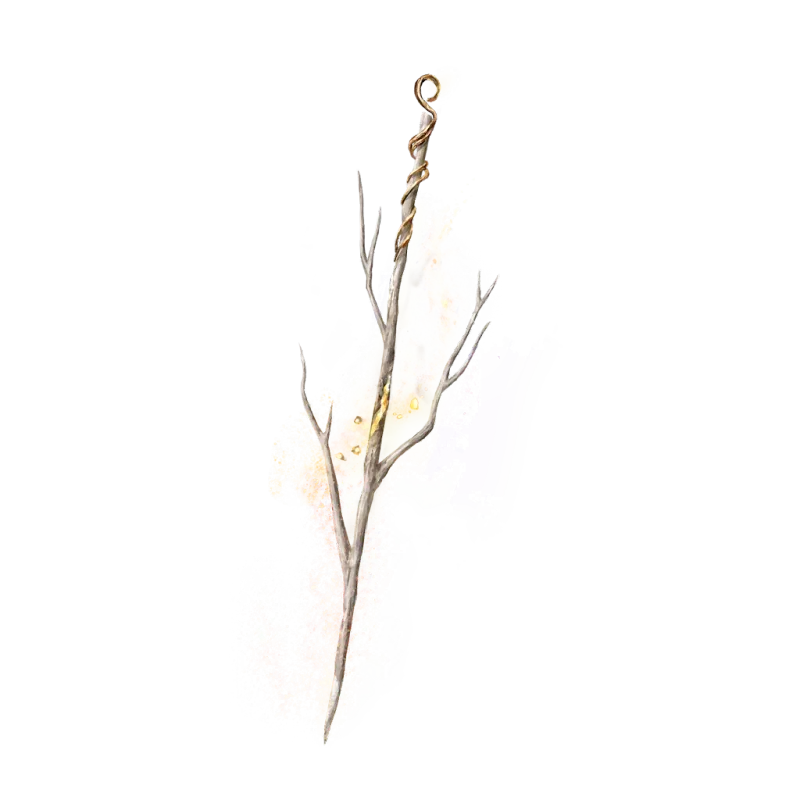
Sacrificial Twig. A consumable talisman, 1.0 weight, that is destroyed on death in place of your runes. It occupies a talisman slot that would otherwise be doing something, so it is a boss-run item rather than a permanent fixture. Patches sells them for 5,000 each in Murkwater Cave and later in Volcano Manor; the Isolated Merchant in the Weeping Peninsula sells three at 3,000. Nine are obtainable through normal means, and certain enemies drop them randomly with no cap. One exception is written into the effect and worth knowing before you rely on it: a Twig does not protect you from a death caused by Death Blight, and the Wormface enemies that drop Twigs are among the few things in the game that inflict it. At 3,000 runes each, a Twig pays for itself the moment you are carrying more than 3,000 — and past level 30 a single level costs about twice that, so any run where you are saving toward a level clears the bar.
Evergaols are safe ground. Die inside an evergaol and the runes are recoverable at the surface, outside the arena, rather than behind the boss — the Fandom wiki's note is that this makes evergaol bosses minimal-risk for runes, unlike a dungeon where the pile sits behind the thing that killed you.
Gostoc takes 30 percent in Stormveil
The one that makes it worse. Gostoc, the gatekeeper at Stormveil Castle, takes 30% of the runes you drop on any death inside the dungeon — he stalks you through the castle and loots what you leave behind. The stolen amount also appears in his shop inventory, listed as 200 runes plus 30% of your dropped runes.
He stops after you exhaust his dialogue in the right order, or once Godrick is dead. Until then, every death in Stormveil is a 30% haircut on top of the ordinary risk, which is a real argument for spending runes before you push deeper into the castle rather than banking them for a level you have not earned yet.
The multipliers, and what they are worth
The Fandom wiki's Runes page names three items that boost rune acquisition, and they matter far more at the top of the cost curve than the bottom.
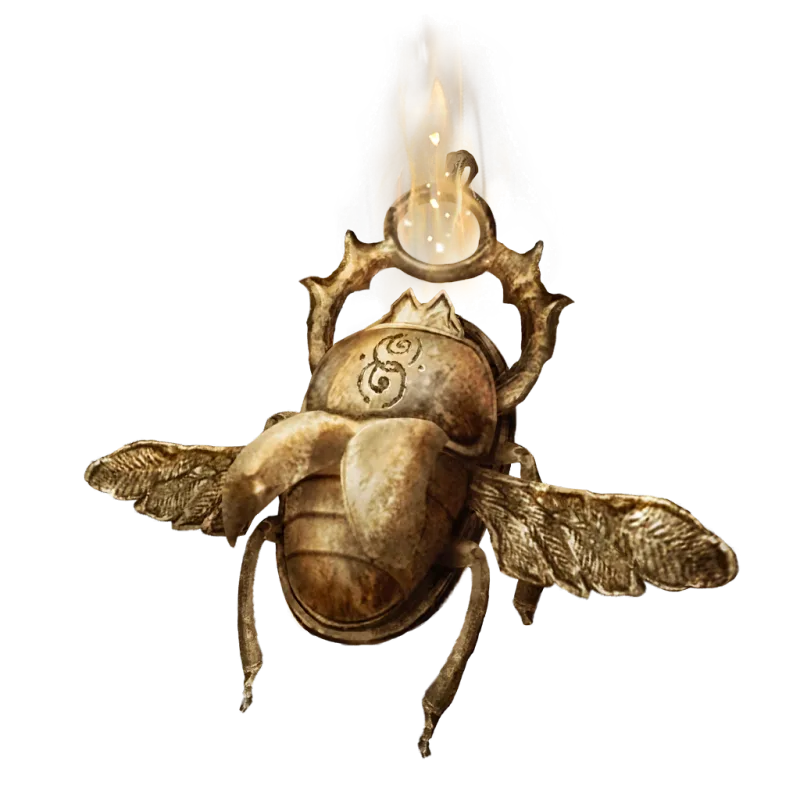
| Item | Effect | Where |
|---|---|---|
| Gold Scarab (talisman) | +20% runes from kills, 1.2 weight | Dual Cleanrot Knight, Abandoned Cave, Caelid |
| Gold-Pickled Fowl Foot (consumable) | +30% runes for 180 seconds | Craftable; Patches sells three |
| Golden Horn Tender (consumable) | +40% runes for 180 seconds | Shadow of the Erdtree; drops from Inquisitors |
The Gold Scarab stacks with either consumable — the Golden Horn Tender's wiki page records the two as stacking additively, so +40% and +20% land as +60%. The two consumables do not stack with each other: using one dispels the other, which is the same category-exclusivity rule that governs Elden Ring's temporary buffs generally.
One trap worth naming because the item names are nearly identical: the Silver-Pickled Fowl Foot and Silver Horn Tender raise item Discovery, not runes. Only the gold versions touch your rune income.
For the highest-density repeatable source, the Fandom wiki singles out the Palace Approach Ledge-Road grace in Mohgwyn Palace, where a hillside of Albinaurics can be cleared with area-of-effect damage, and notes that it is reachable after defeating a single shardbearer. It does not publish per-enemy rune values for the spot, so treat any specific runes-per-minute figure you read elsewhere as unverified.
The two ceilings: 713 and 999,999,999
The maximum character level is 713 — all eight attributes at their hard cap of 99. Reaching it costs 1,692,566,842 runes.
The maximum rune balance you can hold at once is 999,999,999.
Those two numbers do not fit together, and that is the point: the full price of a maxed character is roughly 1.7 times the largest balance the game will let you carry, so max level cannot be bought in one sitting no matter how much you bank first. It is a ceiling you walk to, not one you buy.
For reference, the entire cost of a level 150 build — 7,112,459 runes — is 0.42% of the cost of level 713.
Quick Action Checklist
- Know the shape. Levels 1–11 are nearly flat at 673–847 runes. From level 12 the curve turns cubic and never flattens again.
- Pick a target level and hold it. Levels 125–150 are 44% of the cost of a 150 build, and drifting upward past a co-op bracket cannot be undone by respeccing.
- Bank in items, not in runes. Golden Runes and Lord's Runes are not lost on death. Held runes are.
- Run a Sacrificial Twig on boss attempts once you routinely carry more than 3,000 runes. Patches and the Isolated Merchant both sell them.
- Spend before you enter Stormveil. Gostoc takes 30% of everything you drop there until Godrick is dead.
- Wear the Gold Scarab while farming, add a Golden Horn Tender for +40% on top, and never confuse it with the silver versions, which only affect Discovery.
- Think twice before eating a Remembrance past level 40. The top payout of 50,000 runes is five levels at 40 and less than one at 100 — the weapon keeps its value, the runes do not.
Frequently Asked Questions
How many runes does it take to level up in Elden Ring?
How many runes do you need to reach level 150 in Elden Ring?
What is the max level in Elden Ring and how many runes does it cost?
Do you lose Golden Runes when you die in Elden Ring?
Does Gostoc steal your runes in Elden Ring?
Should you eat Remembrances for runes in Elden Ring?
Which Elden Ring items increase runes from kills?
Keep Reading
- Level — Elden Ring Wiki (Fextralife)
- Runes — Elden Ring Wiki (Fandom)
- Godrick the Grafted — Elden Ring Wiki (Fandom)
- Golden Runes — Elden Ring Wiki (Fandom)
- Gold Scarab — Elden Ring Wiki (Fandom)
- Golden Horn Tender — Elden Ring Wiki (Fandom)
- Gold-Pickled Fowl Foot — Elden Ring Wiki (Fandom)
- Gold-Pickled Fowl Foot — Elden Ring Wiki (Fextralife)
- Sacrificial Twig — Elden Ring Wiki (Fandom)
- Gostoc — Elden Ring Wiki (Fandom)
- Remembrances — Elden Ring Wiki (Fandom)
- Palace Approach Ledge-Road — Elden Ring Wiki (Fandom)
- Origins — Elden Ring Wiki (Fandom)
Related Guides
Elden Ring New Game Plus: What Carries Over and What Scales
The Tree Sentinel gains 3,916 health when you start Journey 2. The Elden Beast gains 22. Elden Ring does not multiply the whole world when you start a new Journey — it multiplies the beginning of it, hard, and leaves the ending almost exactly where you left it. Here is the full carry-over list and the datamined scaling behind it.
Elden Ring Flask Guide: Golden Seeds and Sacred Tears
There are exactly 12 Sacred Tears in the Lands Between and the flask caps at +12, so every single one is load-bearing. Here is the full healing table, the Golden Seed cost curve, and the point where more upgrades stop being worth the detour.
Elden Ring Scadutree Fragments: The Real Numbers and the Blessing Level You Actually Need
Half of Shadow of the Erdtree's difficulty complaints were a stat problem, not a skill problem. Here is the full Scadutree Blessing table after patch 1.12.2, where every one of the 50 fragments lives, and the level where the curve quietly stops paying you.
Elden Ring Boss Order: The Critical Path Ranked by Level
Elden Ring is open-world, but its ending runs through a fixed spine of required bosses. Here is that spine in order, which of the big fights you can skip, and the level you actually want before each wall.
Best Elden Ring Starting Class: All 10 Origins Ranked
Every Elden Ring origin has exactly the same number of attribute points for its level — the only thing you are really choosing is where those points sit and what gear you get for free. Here is what that actually means for your first twenty hours.
Elden Ring Millicent Questline: Every Step, Both Rewards
Millicent's questline crosses four regions and ends with two summon signs. One pays the Rotten Winged Sword Insignia, the restored needle and Miquella's Needle; the other pays Millicent's Prosthesis. Here is every step, every gate, and what each side is worth.