Fortnite Squad Play Guide: How to Win as a Team
Four players who actually talk and trade beats four better aimers who don't. Here's how to play Fortnite as a squad — clear roles, real callouts, when to split vs group, reboot discipline, focus-firing, and sharing mats and heals so the whole team arrives at the endgame alive.
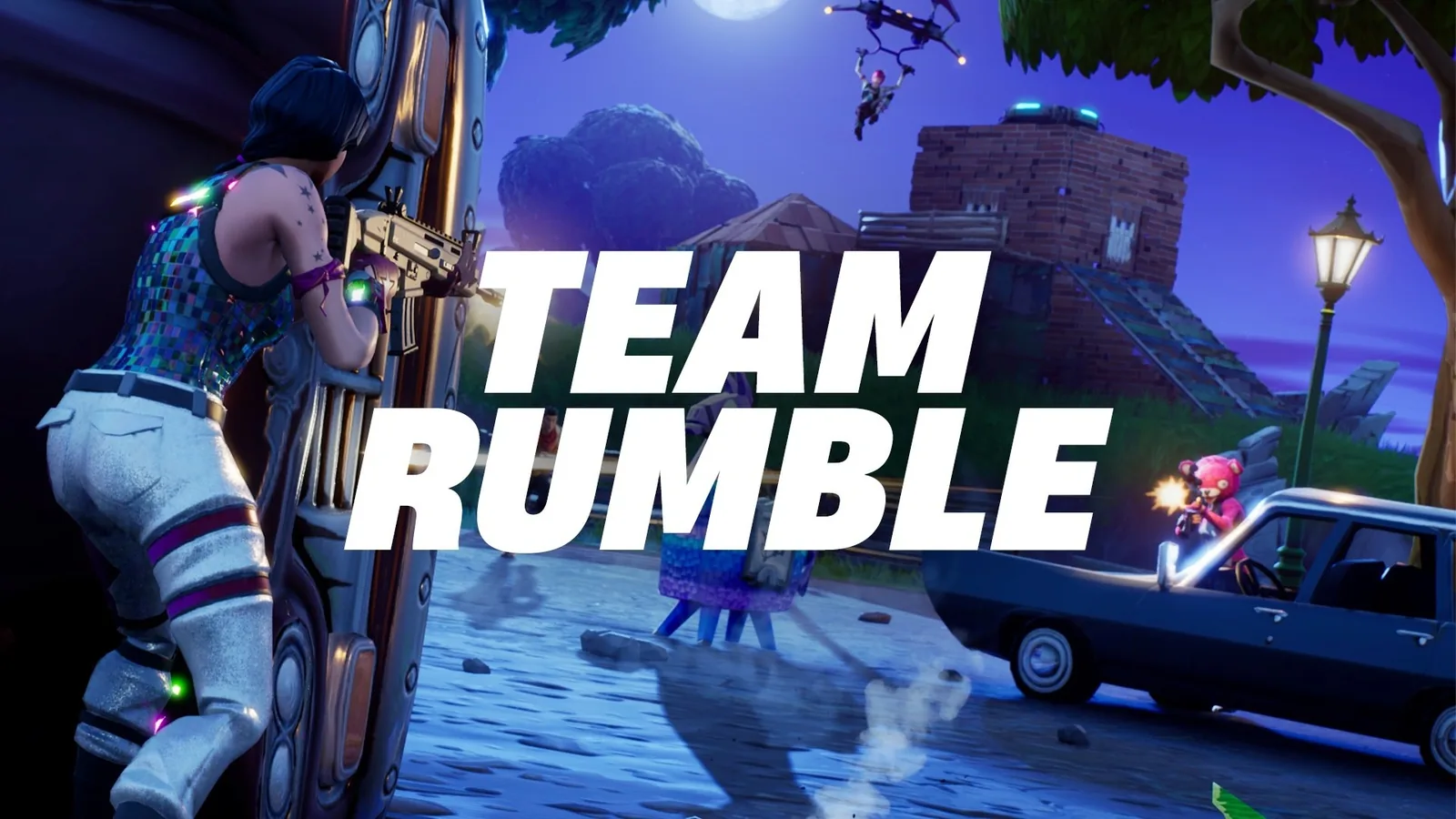
Four players who actually talk to each other will beat four better aimers who don't. That's not a feel-good team-building line, it's just how squads work in Fortnite: the game hands you mechanics — knocks, reboots, focus fire, shared loot — that only pay off if the squad operates as one unit instead of four people running solo matches in the same lobby. The most common way good players lose squad games isn't getting outgunned. It's getting picked off one at a time while their teammates are looting a different building and didn't hear the fight start.
This guide is squad play from the ground up: roles, the callouts that actually matter, when to split versus group, how to focus-fire and trade a down, reboot discipline, sharing mats and heals, and how four players third-party as a wrecking crew instead of a mob. It works whether you're running full Squads, Duos, or carrying randoms in fill — the principles don't change, only the headcount does.
A squad that talks beats a squad that aims
Here's the thing about a 4v4 in Fortnite: it's almost never four clean 1v1s happening at the same time. It's a numbers game. The moment your squad knocks one enemy, it becomes a 4v3 — and that advantage snowballs, because three players have less fire to put out, fewer angles covered, and a teammate on the ground to babysit. Squad fights are won by creating and pressing the numbers advantage, and you can only do that if everyone is in the same fight at the same time, looking at the same problem.
That's why comms beat raw aim at the team level. A squad on voice or quick-chat that calls "knocked one, push left" turns a knock into a kill and a kill into a wipe. A silent squad gets the same knock, hesitates, lets the enemy get rebooted or healed, and the advantage evaporates. The mechanical skill of each player matters far less than whether the four of them act on the same information at the same moment.
The mindset to drill into every teammate: you are never playing your own game. You're playing the squad's game. Your loot, your position, your heals, your knocks — all of it exists to win the team fight, not your personal one.
Give everyone a role
You don't need a coached lineup with assigned IGL duties to benefit from loose roles. You just need everyone to know roughly what their job is so four people aren't all trying to do the same thing. A practical squad breaks down like this:
- The IGL (in-game leader / shotcaller). One person makes the macro calls: when to rotate, when to push, when to disengage. Squads die to indecision — four people half-committing in four directions — and a single voice saying "we're rotating now, follow me" fixes most of it. The IGL doesn't have to be the best player, just the one with the clearest read on the map.
- The fragger / entry. The strongest fighter takes the aggressive angles — first into the box, first to peek, the one who starts the trade. They get the most resources because they spend them winning fights.
- The support. Builds for the team, drops the heals and mats, picks up the knocked, holds the safer angle, and watches the flank nobody else is watching. In Build mode the support's walls keep the fragger alive; in Zero Build they hold cover and call the third party.
- The flex / scout. Watches the off-angles, calls rotations and incoming squads, and plugs whatever gap opens up. In fill squads this is usually "whoever's left."
These roles flex constantly — the entry might be the one who gets knocked and needs support, and now someone else carries. The point isn't rigid assignments, it's that four players each cover a different responsibility instead of all four W-keying the same door while nobody watches the back.
Callouts that actually help
A good callout gives your teammates information they can act on instantly without asking a follow-up question. A bad callout is noise. The format that works: direction or location, then status, then intent.
- Compass and location, not "over there." Use the map names and the on-screen compass: "two enemies, north, in the brick house," not "guys they're shooting me." Your teammates can't see your screen.
- Health status on enemies. "One-shot the guy in blue" or "he's low, I cracked his shield" tells the squad where to focus fire. Calling damage is how four guns kill one target fast.
- Your own status. "Reloading," "I'm out of mats," "I'm knocked behind the rock," "low, backing off to heal." Teammates plan around what you can and can't do — a knocked player who calls their exact spot gets picked up; one who stays silent gets left.
- Intent before you move. "I'm pushing right," "rotating to the hill," "third party from the east, hold." Saying what you're about to do prevents your squad from getting split or trading you into a fight they didn't know started.
Keep it short and keep it calm. A squad screaming over each other communicates less than one clear voice. If you're in fill with no mics, the in-game ping and quick-chat wheel cover the basics — ping the enemy, ping the loot you're leaving, ping where you're going.
Split up or group up
The single most argued squad decision: do we spread out or stick together? The honest answer is it depends on the phase of the game, and good squads switch deliberately.
Group up when:
- A fight is happening or about to. The whole point of a squad is the numbers advantage — you only get it if you're together when the shooting starts. Splitting into a fight is how squads get cracked one at a time.
- It's mid-to-late game and the circles are small. The lobby is dense, third parties are everywhere, and a scattered squad is four easy picks.
- You're rotating through dangerous open ground. Cross together, build/cover together, so a single ambush can't isolate one player.
Split up (loosely) when:
- You're looting early after a drop. Spreading across a POI gets everyone geared faster — but stay within rotation distance, in the same building cluster, so you can collapse onto a fight in seconds. "Split" should mean different rooms, not different sides of the map.
- You're holding a position and want to cover multiple angles. Spreading to cover the approaches is good; wandering off alone is not.
The failure mode is the over-split: one teammate hares off to a POI across the map "to get a better gun" and is now a free 1v1 for any squad that finds them, while their team is effectively playing a 3v4. Loose spacing with fast collapse, yes. Genuine separation, almost never.
Focus fire and trade the down
This is the mechanical core of winning squad fights, and it's where most casual squads bleed games. Two rules:
Focus fire — everyone shoots the same target. Four players each tickling a different enemy means nobody dies and everybody reloads. Four players dumping into one enemy means an instant knock and a 4v3. When the IGL or whoever has eyes calls "focus the guy in the gold," everyone swaps to that target. Cracking and knocking one enemy fast is worth more than evenly chipping all four, because a knock removes a gun from the fight (and forces an enemy to either res or fight a man down).
Trade the down — punish the pickup. When an enemy gets knocked, their teammates have a choice: leave them or res them. A res means an enemy is stationary, channeling, and not shooting — that's your free kill. Trade the down: as they go for the pickup, you push or focus the reviver. Conversely, on your own side, don't suicide-res a teammate in the open mid-fight. Win the fight first or pull the knocked to safety, then res. The number of squads that wipe because all three living players ran into the open to res one knocked teammate is enormous. Win the gunfight, then collect your friend.
Reboots and respawns
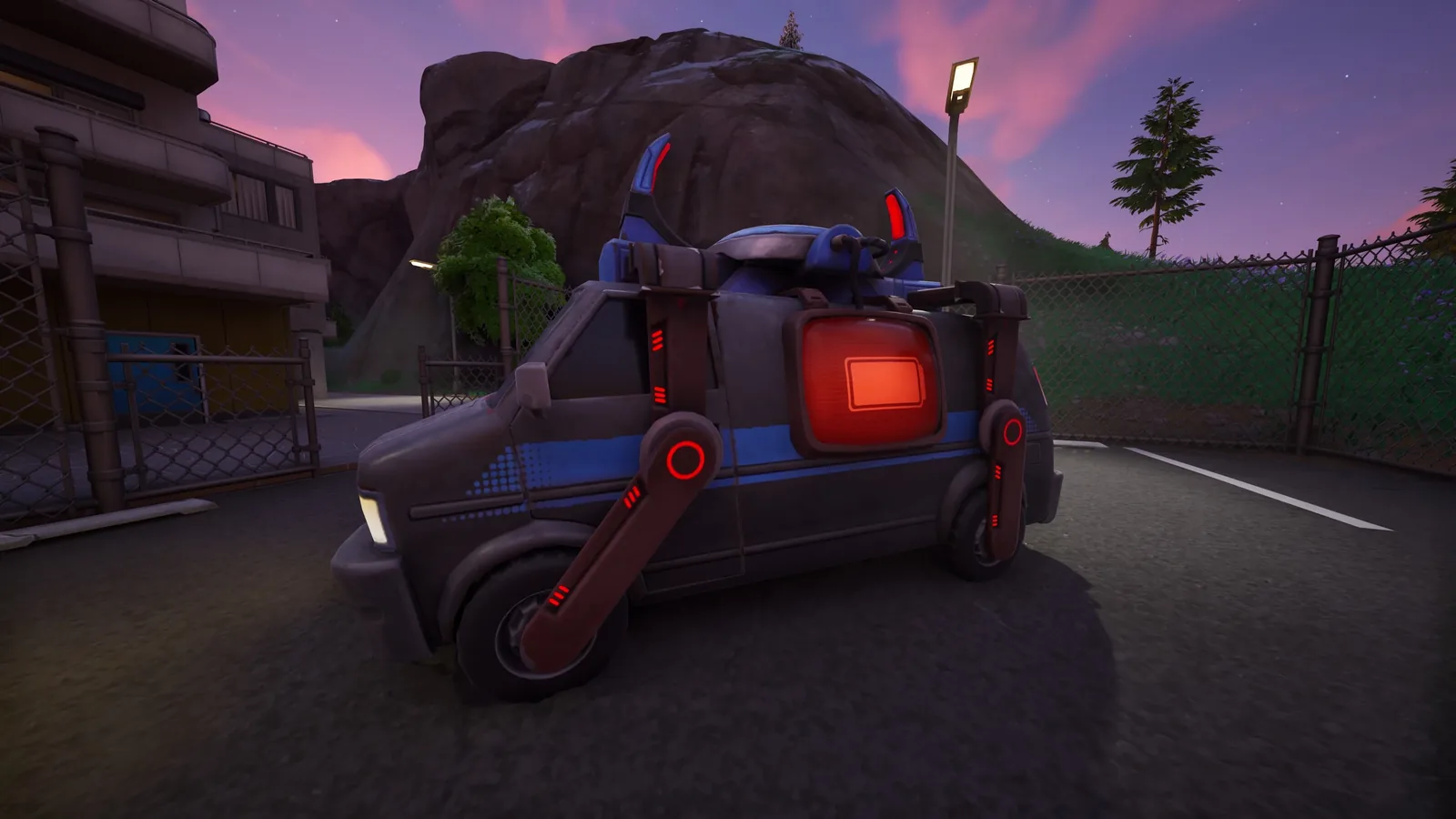
A knock isn't a kill until your teammates can't bring you back — and Fortnite gives squads two layers of comeback. Understanding them changes how aggressively you can play.
- Knocked (downed but in the game). When you're knocked you're in the "downed but not out" state: crawling, no shooting, bleeding out on a timer unless a teammate revives you. A teammate reviving you channels for a few seconds — vulnerable time. Pick up knocked teammates in cover or after the fight, not in the open mid-trade.
- Eliminated → Reboot Card. When a knocked player is fully eliminated, they drop a Reboot Card that stays available to grab for a window of time. A living teammate picks up the card and takes it to a Reboot Van to bring that player back into the match (they respawn with minimal loot, so re-gearing them is the squad's next job).
The strategic takeaways:
- Grab the Reboot Card before you leave the fight. It's easy to wipe a squad, loot, and forget your own teammate's card is sitting there on a timer. Designate someone to grab cards.
- Reboot Vans are loud and exposed. Using a van rebooting a teammate is a known, telegraphed action — squads camp them. Reboot when you've got a moment of safety, watch the angles, and re-gear the rebooted player immediately because they come back with almost nothing.
- Play a knock differently than a kill. If you knock an enemy but their squad is alive and near a van, that enemy isn't gone — push the advantage now before they res or reboot, rather than backing off and letting them reset to full.
The comeback mechanics cut both ways: they let your squad recover from a bad fight, and they mean a fight isn't over until the enemy's cards are gone or the vans are out of reach.
Share mats, heals, and ammo
Squads share a resource pool whether they act like it or not — the team is only as strong as its weakest-stocked member walking into the endgame. Hoarding is a solo-queue habit that loses squad games.
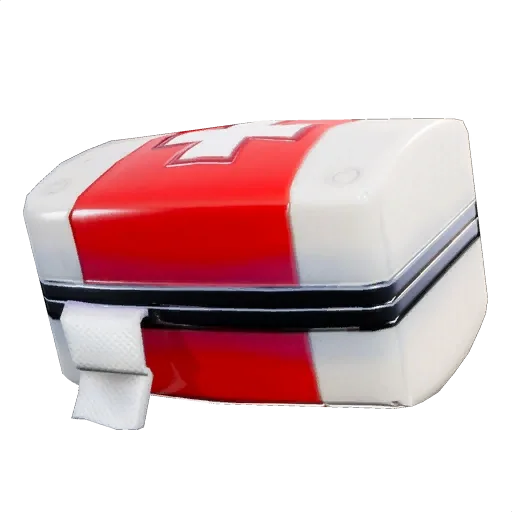
- Drop heals on the teammate who needs them. If you're sitting on six Med-Kits and your fragger is at half shield, drop them. A full squad of four players at full health and shield beats one fat-stacked player and three at half.
- Share mats in Build mode. The support and IGL can funnel wood, stone, and metal to the fragger doing the building in a fight. A teammate with 999 mats and a teammate with 50 is a misallocation — even it out so everyone can build cover. (Our endgame guide covers how brutal the late-game mat squeeze gets.)
- Pass ammo and the right guns. If one player's holding the squad's only sniper and never uses it, give it to whoever will. Spare ammo for the gun your fragger is actually shooting beats a balanced-but-useless personal stockpile.
- Top up before the circle, together. The whole squad should heal to full during the rotation lull, behind cover, as a group — not one at a time while exposed. Slow heals like a Med-Kit get used between fights; fast heals get saved for mid-fight.
The gut check before every endgame: is everyone full on shield, stocked on heals, and carrying mats? Fix the weak link now, because a squad enters the final circles as a unit, and one under-stocked teammate is the crack the enemy pushes.
Third-partying as a squad
Third-partying — hitting a squad that's already fighting another squad — is the single highest-value play in Fortnite, and a coordinated team does it far better than a solo. Two squads trading damage are both low, both out of position, and both distracted. You arrive as four fresh guns.
How to do it right:
- Wait for the commitment. Don't push the instant you hear a fight. Wait until both squads are genuinely committed — taking damage, building, focused on each other — then collapse. Pushing too early just turns it into a clean 4v4v4 you don't want.
- Take the high ground or the cover first. Arrive at the fight with position, not just bodies. In Build mode, take the height over both squads; in Zero Build, claim the cover that lets you shoot down into the mess.
- Focus the low squad, then reset. Clean up whoever's already cracked, expect a fourth party to hit you next (third-partying is contagious — if you can do it, so can someone else), and reset to cover/heals immediately after the wipe instead of standing in the open looting.
- Call it as a team. "Squad fighting east, we third-party on my call, take the hill first." A third party that everyone commits to at once wins; a third party where one player jumps in early and dies hands the kill to the squads you were trying to clean up.
The flip side: assume you're about to be third-partied every time you fight. Don't over-commit, keep an eye on the flanks, and break off a fight that's gone long and loud before the inevitable fresh squad shows up. (Reading those fights at the end is its own skill — see the endgame guide.)
Quick Action Checklist
The squad habits that actually win games:
- Play the squad's game, not your own — your loot, heals, and knocks exist to win the team fight
- Loose roles: one IGL/shotcaller, a fragger, a support, a flex — so four players aren't all doing the same job
- Callouts = location/compass + enemy status + your intent, kept short and calm
- Group up for fights and late game; only split loosely while looting, within fast-collapse distance
- Focus fire one target to knock fast and create the numbers advantage
- Trade the down — punish enemy reses, and win the fight before you res your own teammate
- Grab Reboot Cards before leaving a fight; reboot in safety and re-gear the returning player
- Share heals, mats, and ammo so the whole squad enters the endgame full and stocked
- Third-party as a team — wait for the commitment, take position first, focus the low squad, and expect a fourth party
Frequently Asked Questions
How do you win squads in Fortnite?
What roles should a Fortnite squad have?
When should a Fortnite squad split up vs stick together?
How do reboots work in Fortnite squads?
What does focus firing mean in Fortnite?
How do you third-party as a squad in Fortnite?
Keep Reading
Related Guides

Fortnite Third-Partying Guide: When to Push, When to Hold
Third-partying is the most reliable way to win a fight without earning it — you let two players gut each other, then collect. But the same logic points back at you the second you start shooting. Here's how to be the third party instead of the corpse two of them split.

Fortnite Duos & Trios Strategy: How to Win in Small Teams
Duos and Trios aren't just Squads with empty slots. With fewer guns, every knock swings the math harder, every res is riskier, and one bad split loses the game. Here's how to play 2s and 3s — roles, comms, trading, reboots, shared loot, and third-partying as a small unit.
Fortnite Weak Spots & Aiming Guide: Where to Aim
Two players land the same shots and one does way more damage. The difference isn't aim — it's where they're aiming. Here's the where: headshots and weak spots, crosshair centering, pre-aiming, tracking vs flicking, and aiming the gaps in someone's build.
Fortnite Tunneling Guide: Cross Open Ground Without Dying
Tunneling is how good players cross open ground while being shot at and live to fight in the next zone. It's the move-and-rebuild rhythm that turns a death-march across a field into a moving box nobody can crack. Here's how to actually do it.
Fortnite Weapon Tier List: How to Rank Any Loot Pool
Any Fortnite tier list is stale the second a patch drops. So instead of memorizing this season's gun names, learn how to rank weapons by class and role — the framework that's S-tier in every season.
Best Fortnite Settings for PC & Console
Half your settings menu is noise; a handful of options decide whether you can see, aim, and build. Here's what to change on PC and console, why, and the one number nobody else can pick for you.